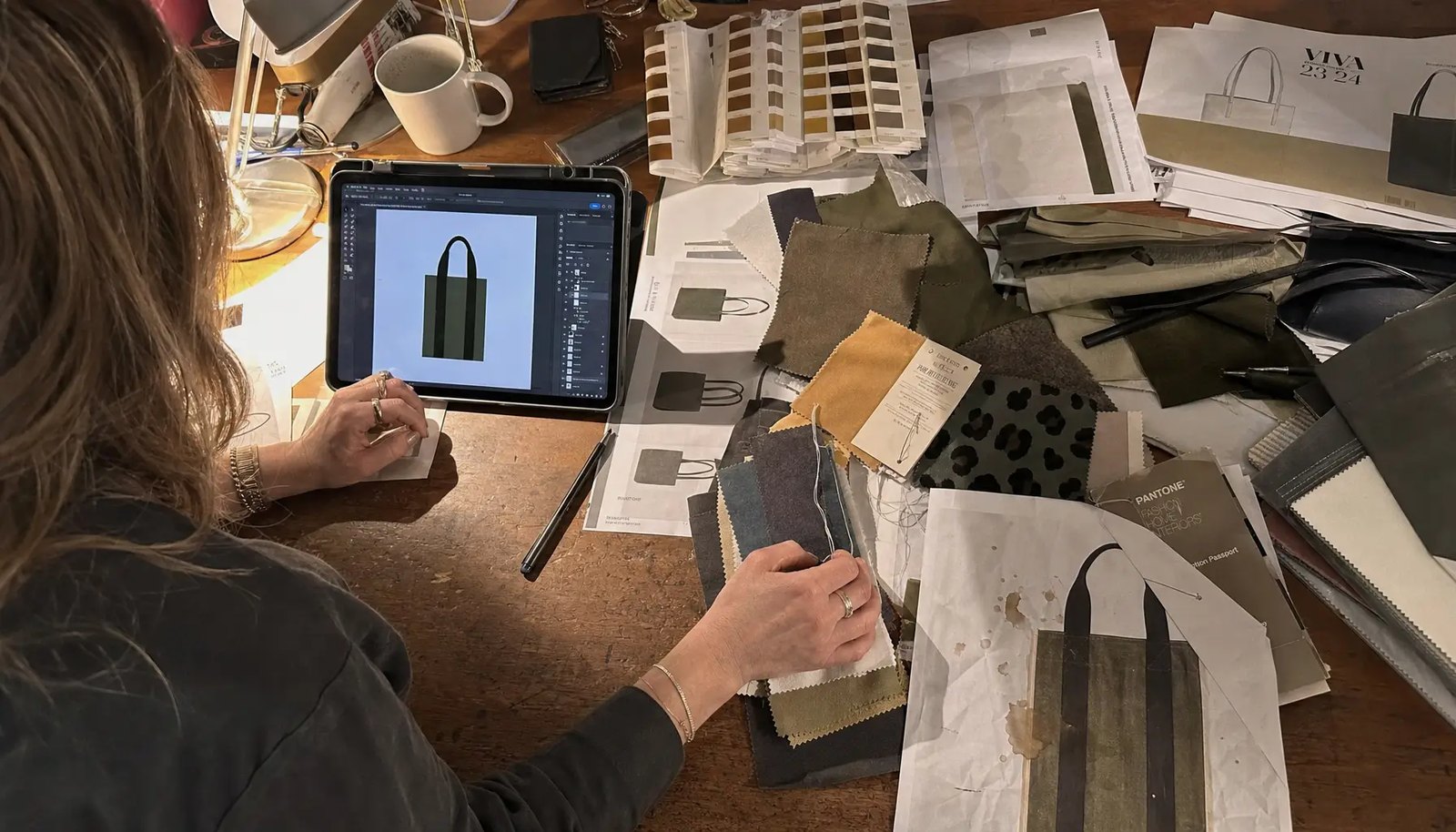
How to use this pricing worksheet as a procurement tool
This worksheet is designed for B2B procurement buyers at yoga studios or wellness brands who need to compare supplier quotes for organic cotton tote bags. It replaces vague price comparisons with structured data points: fabric weight, print method, MOQ, packing, QC standards, and landed cost. Use it to build your RFQ, evaluate samples, and approve orders with confidence.
A typical problem: two factories quote $2.50 and $2.80 for a similar tote. The cheaper quote excludes woven labels, uses 120 GSM fabric instead of 160 GSM, and packs in loose bundles. The higher quote includes labels, 180 GSM fabric, and individual polybags. Without the worksheet, the buyer orders the cheaper option and ends up with flats of mislabeled, thin-looking bags that fail customer expectations. The worksheet forces line-item comparison so you choose based on total value, not headline price.
Start by locking your product brief: define end use (retail, gift, or bulk distribution), target weight (140-180 GSM recommended), and print method (screen or digital). Then share the worksheet template with each supplier to standardize quotes.
- Define end use before sending RFQ: retail resale requires higher GSM and better packing; member gifts can use lighter spec.
- Lock the bag size and handle length in writing—do not leave room for supplier interpretation.
- Treat printing, labels, and packing as separate cost drivers—ask suppliers to itemize each line.
Fabric weight and construction: GSM, handfeel, and durability thresholds
The biggest pricing swing comes from fabric weight. A 120 GSM organic cotton tote costs 15-25% less than a 180 GSM equivalent, but feels flimsy under load—a yoga mat, water bottle, and towel cause visible sagging. For most yoga studio buyers, 140-180 GSM hits the practical sweet spot: it drapes well, holds screen print evenly, and survives daily carry without tearing. If the bag is for retail resale, lean toward 170-180 GSM for strong shelf appeal and repeat purchase.
Construction details matter even more than GSM. A flat tote with simple side seams is the lowest-cost build, but offers limited volume. A gusseted tote adds 20-30% usable space for the same body width, increasing fabric consumption by 10% and sewing time. Handle reinforcement with bartacks (stitching that crosses over itself) adds 2-3% cost but prevents handle separation under 5-7 kg load. Hem finish type (single-fold vs double-fold) affects edge durability—double-fold hems last 3x longer than raw-cut edges. Include these in your spec sheet to prevent supplier shortcuts.
Worst-case scenario: You approve a 120 GSM flat tote with no bartacks and single-fold hems. After 10 carries, handles tear, seams fray, and the tote looks worn. Cost savings evaporate, and you spend replacement costs plus lost brand goodwill.
- Flat tote: lower cost ($0.20-0.50/unit vs gusseted), less volume—suitable for light gifts or event giveaways.
- Gusseted tote: higher utility for retail or daily carry, 10-15% higher fabric and labor cost.
- Reinforced handles with bartacks: worth paying $0.05-0.10/unit extra if the bag carries books, towels, or bottles.
Print method cost drivers: screen vs. digital vs. woven labels
For a yoga studio tote with a single logo or two-color mark, screen printing is the most cost-effective method at quantities above 200 units. Setup cost ($30-60 per color per screen) spreads across the run, making per-unit print cost as low as $0.15-0.40 for 500+ units. Each extra color adds 5-10% to unit print cost. For short runs (50-200 units) or artwork with gradient/photo elements, digital print avoids screen setup and offers per-unit cost of $0.50-1.50, but opacity and wash durability can vary—request a wash test sample.
Woven labels offer a premium retail look for branding, at $0.10-0.30 per label plus sewing cost. They avoid print alignment risks and look professional on a shelf, but require higher MOQ (500-1000 labels per design) and slower lead time (1-2 extra weeks for weaving). Embroidery is rarely recommended on lightweight cotton totes: it adds $0.50-1.00 per tote, distorts fabric up to 20 GSM, and slows production.
Buyer action: When comparing print quotes, ask suppliers to quote the bag base price and print cost separately. A bundled quote hides which part is inflating. Confirm print registration tolerance (±2mm) and that ink opacity covers the original fabric color—especially if the tote is natural or undyed.
- Screen print: best for simple logos and 200+ unit runs; setup cost recovers with volume.
- Digital print: better for short runs (50-200) or multicolor artwork; compare opacity and wash test results.
- Woven labels: ideal for retail branding; budget $0.10-0.30/unit and plan for 1-2 week lead time.
MOQ thresholds and worst-case price projection
MOQ is a critical pricing variable for yoga studios. Factory-direct for a standard printed tote usually requires MOQ of 500-1000 units per color per artwork. Below that, unit prices spike 20-40%, and you may be forced into trader routes or stock-supported programs. Use the worksheet to ask: "What is the unit price at 200, 500, and 1000 units?" This reveals the worst-case price projection for a small pilot.
Example: Base tote (140 GSM, screen print 1 color, individual polybag) quoted at $2.80/unit at 1000 MOQ. At 300 MOQ, unit price jumps to $4.10—a 46% premium. That $1.30 difference may be worth paying for a trial, but budget accordingly. Alternately, ask if the supplier can combine colors into one production run to hit the lower price tier. For studios with multiple branches, consolidating orders quarterly can lock in the volume discount.
Worst-case scenario: You accept a low MOQ quote of $3.50/unit for 200 bags, but the factory uses lower-grade fabric (110 GSM instead of 140 GSM) and skips bartacks to save cost. Your per-unit savings vanish when 15% of bags develop handle tears within a week. The worksheet prevents this by requiring fabric GSM and construction details in the quote.
- Factory direct: best for 500+ units per color; expect 15-25% lower unit price vs. trader routes.
- Trader-supported: MOQ as low as 100-300, but unit price 20-40% higher and spec control may be weaker.
- Consolidation strategy: combine SKUs or colors into one production run to trigger lower MOQ tier.
Sample approval checklist with pass/fail criteria
The sample stage fixes 90% of potential defects—if you inspect systematically. Do not approve based on a quick glance. Use this checklist to authorize or reject:
1. Dimensions: Measure body width, height, gusset depth (if any), and handle length with steel tape. Pass: all within ±5mm of spec. Fail: any dimension outside ±8mm.
2. Fabric weight: Weigh the tote and calculate GSM from a 10x10cm cut. Pass: within ±5% of quoted GSM. Fail: more than 8% deviation.
3. Stitch density: Count stitches per centimeter on side seams and handle attachment. Pass: ≥4 per cm. Fail: ≤3 per cm or skipped stitches.
4. Print quality: Center the logo within ±2mm of spec. Inspect registration—each color should align within ±0.5mm. Pass: no bleeding or missing ink. Fail: misregistration over 2mm, cracks after 3-fold test, or opacity issues.
5. Label placement: Sew labels in approved location (±3mm). Pass: label lies flat, no distortion, text clear. Fail: crooked, upside-down, or covering stitching.
6. Handfeel: Compare across 3 samples from different production positions. Pass: consistent handfeel, no sticky or stiff patches. Fail: mixed handfeel indicating different fabric batches.
7. Final pack: Check inner pack count and carton label. Pass: matches PO. Fail: any mismatch or missing label.
- Use a steel tape measure—plastic tapes stretch and give false readings.
- Fold and reopen the tote 3 times to check for print cracks or seam distortion.
- Approve only after confirming label position and carton marking if the bag goes direct to sale.
Packing and carton data: avoid hidden labor costs
Many tote orders go wrong not in production, but in packing. A yoga studio may want totes delivered to one distribution point, split across branches, or prepared for direct shelf placement. If the packing spec is vague, the factory chooses the easiest carton configuration—which may create repacking labor and carton damage.
Ask for: inner pack quantity (e.g., 25 or 50 per polybag stack), master carton count (e.g., 100 or 200 per carton), carton dimensions (L x W x H in cm), gross weight, and carton labeling (SKU, color, quantity, PO number). If the tote goes retail-ready, individual polybags add $0.05-0.15 per unit but prevent dirt and dust—critical for shelf display. For bulk distribution, bundle in 10 or 25 units with a polybag wrap.
Example: A studio orders 500 totes shipped loose in one carton. The bags arrive crushed, dirty, and unsaleable. Repacking costs $200 in labor and materials. Including individual polybags at $0.10/unit adds $50 to the order—a clear value choice. Use the worksheet to specify packing method and verify on sample.
- Retail-ready program: individual polybag ($0.05-0.15/unit) and clear SKU label.
- Wholesale distribution: bulk bundle in polybag (10-25 units per stack) to reduce carton volume by 15-20%.
- Branch-split program: pack by branch in separate cartons with branch ID on label—avoid mixing.
Landed-cost comparison table with numeric example
The final buying decision depends on landed cost—total cost per unit delivered to your warehouse. Compare two quote paths side by side:
| Cost Component | Supplier A (Factory Direct) | Supplier B (Trader Route) |
|----------------|-----------------------------|---------------------------|
| Unit price (FOB) | $2.80 (1000 MOQ) | $3.50 (300 MOQ) |
| Print charge (1 color) | Included | Included |
| Woven label | $0.15 | $0.25 |
| Individual polybag | $0.08 | $0.12 |
| Packing (carton) | Included | Included |
| Freight (per unit) | $0.40 | $0.50 |
| Duty (5% of value) | $0.15 | $0.20 |
| Customs clearance | $0.05 | $0.08 |
| Local delivery | $0.10 | $0.15 |
| **Total landed cost/unit** | **$3.73** | **$4.80** |
Supplier B appears cheaper at $3.50 vs $2.80, but after weaving labels, freight, duty, and delivery, Supplier A is $1.07 cheaper per unit. For 1000 units, that's $1,070 in savings. The worksheet exposes these differences.
Worst-case projection: Supplier B's trader route may also have weaker QC (no AQL standard) and longer lead time (+2 weeks). Factor these risks into your total cost of procurement.
- Compare quote basis line by line—never trust a bundled headline price.
- Include freight, duty, customs handling, and local delivery before comparing suppliers.
- Use the same incoterm (FOB or DDP) from all suppliers for a fair comparison.
Stitch density, AQL values, and defect threshold guide
Quality control requires defined thresholds. For organic cotton totes, set these pass/fail criteria in your purchase order:
| QC Parameter | Acceptable Limit (AQL) | Defect Threshold | Test Method |
|---------------|------------------------|------------------|-------------|
| Stitch density | ≥4 stitches per cm | ≤3 stitches per cm = major defect | Count 10cm on 3 samples |
| Handle pull strength | Withstand 5 kg for 10 sec | Handle separation = critical defect (AQL 0.0) | Suspend weight with steel hook |
| Print registration | ±2mm from spec | >3mm = major defect; >5mm = critical | Measure with steel ruler |
| Color shade variation | ΔE ≤ 2 vs. Pantone reference | ΔE > 3 = major defect | Spectrophotometer or visual check under D65 light |
| Seam integrity | No open seams or skipped stitches | Any open seam >1cm = critical | Visual + pull test |
| Fabric contamination | No holes, stains, or foreign fiber | 1 stain >5mm = major; >3 stains = batch reject | Visual inspection of 10% of cartons |
Use AQL 2.5 for major and minor defects (standard for textile goods). For critical defects (e.g., handle separation, ink bleeding on brand logo), set AQL 0.0—zero tolerance. Inspect 10% of cartons or 20 units minimum per production lot.
- Request the supplier's factory QC sheet in advance—compare to your AQL standards.
- Perform random carton open checks on arrival: count 100% for first 3 cartons, then 10%.
- Reject any lot with >3 major defects per 100 units or any single critical defect.
Schedule risk and critical path buffer planning
Standard lead time for a printed organic cotton tote is 4-6 weeks after sample approval. But that number only holds if: (1) fabric is in stock, (2) screen/print setup is standard, (3) no custom labels or new color matching. For first-time orders with new artwork, budget 8-10 weeks total from RFQ to delivery. Break down the critical path:
| Activity | Typical Duration | Risk Factor | Buffer Recommendation |
|----------|-----------------|-------------|----------------------|
| Fabric sourcing (standard 140 GSM) | 1-2 weeks | Low (stock item) | Confirm mill stock before order |
| Fabric sourcing (custom color) | 3-5 weeks | High (dye lot, shade matching) | Add 2 weeks buffer |
| Screen/print setup | 1 week | Medium (artwork changes) | Finalize artwork before order |
| Sample production (strike-off + PP) | 2 weeks | Medium (revisions) | Allow 1 round of revisions |
| Bulk production | 2-3 weeks | Low (if specs are locked) | Monitor weekly |
| Packing and final inspection | 3-5 days | Low | Confirm packing spec early |
| Freight (ocean, FOB) | 3-5 weeks | Medium (port delays) | Add 1 week buffer |
For a studio planning a seasonal launch (e.g., yoga retreat in June), start sourcing by February to allow for delays. Worst-case: artwork revisions take 2 extra weeks, custom fabric dyeing slips 1 week, and port congestion adds 1 week—total 4 weeks of buffer.
- Ask whether the quoted lead time includes fabric procurement—many suppliers exclude it.
- Confirm that artwork approval resets the production clock—get a date-specific deadline.
- Allow extra time for branch-split packing or custom label weaving (1-2 weeks).
Final procurement checklist for placing the bulk order
Before you place the purchase order, verify every item below. This prevents common pitfalls like misaligned specs, hidden costs, and QC failures. Use this as your go/no-go checklist:
☐ Spec sheet pinned with end use, fabric weight, size, handle length, print method, and color count.
☐ Supplier quote itemized: base bag, printing, labels, packing, carton data, incoterm.
☐ MOQ confirmed per color and per artwork; worst-case unit price at lower volume calculated.
☐ Sample approved in writing against dimensional, print, and stitch density tolerances.
☐ QC criteria in PO: AQL 2.5 for major/minor defects, AQL 0.0 for critical defects.
☐ Packing method specified: individual polybag or bulk, carton count, labeling requirement.
☐ Lead time stated with critical path items; buffer for sample revisions and freight included.
☐ Landed cost calculated: unit price + print + labels + packing + freight + duty + local delivery.
☐ Incoterm selected consistently across all quotes (FOB or DDP).
This checklist is your worksheet template. Print it, fill it for each supplier, and compare side by side. The cheapest quote is rarely the cheapest after landed cost and QC risk.
- Finalize artwork as vector file before order—AI or EPS preferred, with fonts outlined.
- Request two samples: a blank for fabric check and a printed PP sample before bulk.
- Include a 5% overrun tolerance in the PO to cover manufacturing variance.
Specification comparison for buyers
| Spec decision | Recommended option | When it fits | Buyer risk to check |
|---|---|---|---|
| Fabric weight | 140-180 GSM organic cotton canvas or twill | Best balance for retail resale, studio merch, and daily carry | Too light (below 120 GSM) feels flimsy; too heavy (above 200 GSM) raises cost by 15-25% and makes quotes hard to compare |
| Bag size | 38 x 42 cm or similar medium vertical tote | Works for mats, accessories, water bottles, and impulse retail | Oversized bodies inflate fabric use by 10-20% and freight without adding value |
| Handle length | 60-70 cm shoulder handles | Fits studio customers carrying from class to commute | Short handles (<50 cm) reduce usability; long handles (>80 cm) can look sloppy if not controlled in spec |
| Print method | 1-2 color screen print for volume, digital print for short runs | Screen print suits repeat studio orders (>500 pcs); digital fits small seasonal drops (50-200 pcs) | Artwork complexity can change cost more than bag size—each extra color adds 5-10% to unit price |
| Logo placement | Single front panel, centered or slightly upper third | Keeps branding clear and lowers setup risk | Multi-location decoration raises setup cost by 15-25% and alignment failure risk |
| MOQ route | Factory direct for repeat volume (MOQ 1000+); trader or stock-supported route for small pilot orders (MOQ 100-500) | Direct sourcing works once artwork and volume are stable; trader route fits trials | Low MOQ quotes may hide 20-40% higher unit price, less control, or mixed fabric lots from different mills |
| Packing method | Bulk polybag with carton label for wholesale; simple individual polybag if retail-ready | Choose based on how the studio receives stock and distributes to branches | Overpacking can add 8-12% labor and carton volume; underpacking creates dirty goods claims |
| Quality standard | AQL 2.5 critical/major/minor defined in writing; stitch density ≥4 stitches per cm; print registration ±2mm | Needed when comparing multiple suppliers or planning retail sale | Without a written standard, sample approval becomes subjective and shipment disputes follow |
| Lead time model | 4-6 weeks for standard materials after sample approval; 8-10 weeks for custom fabric color | Reasonable for planned studio launches and reorders; longer for new color or label | Unclearly stated lead time often excludes fabric sourcing (1-2 weeks), sampling (1 week), or packing time (3-5 days) |
Buyer checklist before sampling
- Confirm bag size, handle length, and target fabric weight before requesting prices—lock these in a one-page spec sheet.
- State whether the tote is for retail resale, member gifts, or event distribution, because that changes packing and print choices.
- Send final artwork in vector form (AI, EPS, or PDF) and specify one-color, two-color, or full-color printing. Avoid JPEG or low-res PNG for screen printing.
- Request the same quote basis from every supplier: fabric GSM, print method, MOQ, packing, carton size, and incoterms—use FOB or DDP consistently across all quotes.
- Approve one signed sample against a written tolerance list for stitching (≥4 stitches/cm), color (Pantone reference), logo position (±2mm), and dimensions (±5mm).
- Ask for a landed-cost estimate that includes freight, duty, local delivery, and any import documentation fee—add 10-20% to ex-works price for a realistic total.
Factory quote questions to send
- What organic cotton fabric options do you recommend for this tote, and what is the exact GSM for each quote line? Provide a mill source and certificate type (GOTS or OCS).
- Does your price include printing (up to 2 colors), woven label, care label, and individual polybag, or are those separate charges? Itemize each line.
- What is your MOQ per color and per artwork version? If we order 300 vs 1000 units, what is the unit price for each?
- What sample will you send first: pre-production blank (fabric only), printed strike-off (print test on correct fabric), or full pre-production sample (finished bag with all trims)?
- What carton packing configuration do you recommend for export: inner pack quantity, master carton dimensions (L x W x H cm), and gross weight per carton?
- What is the production lead time after sample approval? State separately: fabric sourcing, sampling, production, and packing days so we can calculate critical path.
- What tolerances do you use for size (±mm), stitch density (stitches/cm), print alignment (±mm), and color matching (ΔE value)? Provide your factory QC sheet.
- Can you quote both FOB (named port) and DDP (to our warehouse zip code 90210) so we can compare total costs consistently?
Quality-control points to confirm
- Fabric weight matches the approved GSM within ±5% tolerance—weigh 3 random samples per batch.
- Organic cotton handfeel is consistent across cartons and does not show mixed shade lots unless approved—use a 3-point shade band test.
- Seams are straight, lockstitch quality is even (≥4 stitches/cm), and handle attachment points have reinforced bartacks—pull test each handle with 5 kg weight for 10 seconds.
- Print is centered within ±2mm, registration is clean, and ink cure does not crack after 3-fold test (fold tote, reopen, inspect print at 2x magnification).
- Bag dimensions are within ±5mm tolerance for body width, height, gusset if any, and handle length—use steel tape, not plastic tape.
- Labels are sewn in the approved location (±3mm), lie flat without distortion, and content matches purchase order—verify care label fiber composition.
- Carton labels match SKU, color, quantity (count 100% for first 3 cartons, then 10% random), and purchase order details—do not rely on verbal confirmation.
- Random carton open checks (10% of cartons or 20 units minimum) confirm no stains, oil marks, loose threads longer than 2cm, or odor (musty/mildew smell fails).