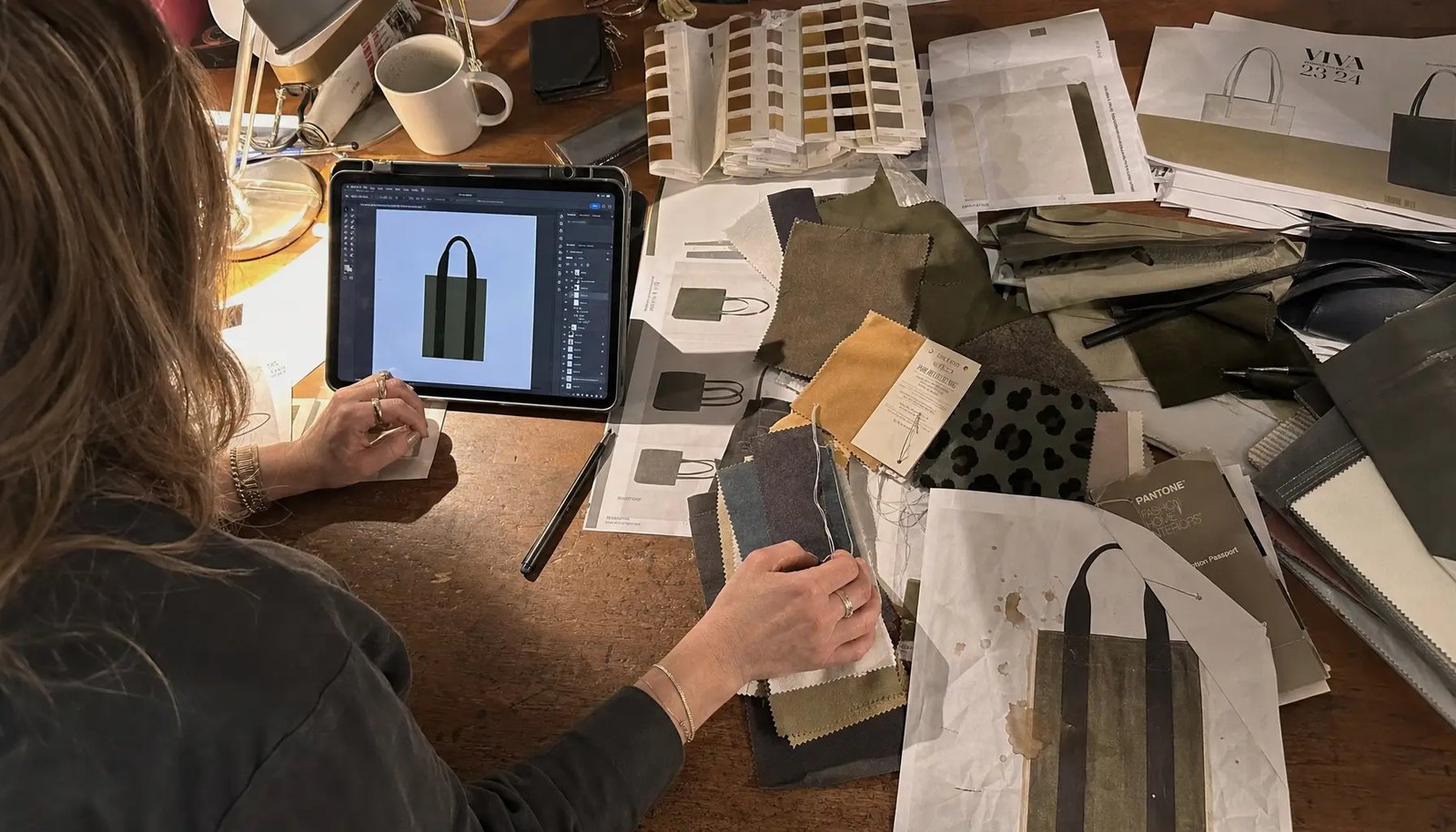
Start With the Real Job of the Tote
An organic cotton tote sounds like a simple buy: pick a bag, add a logo, place the order. In practice, a yoga studio buyer is usually purchasing a small branded product system. The tote may need organic cotton documentation, a defined fabric weight, artwork separations, print setup, handle construction, woven labels, hangtags, retail packing, barcode labels, carton marks, and delivery timing tied to a retreat, launch, teacher training, or membership campaign.
Most quote problems begin with unclear language. If a buyer asks for “500 organic cotton totes with logo,” suppliers can quote very different products and still answer the request honestly. One quote may be based on 6 oz plain-weave cotton, short handles, a small one-color print, and bulk packing. Another may include 10 oz organic canvas, a gusset, shoulder handles, cross-stitch reinforcement, a woven side label, individual folding, and stronger export cartons. The prices will not be comparable because the products are not comparable.
MOQ planning gives the buyer a better starting point. It turns the order from a vague promotional item into a controlled specification with known versions, costs, and risks. For yoga studios, that matters because the same tote may be used in several ways. A free open-house giveaway only needs to carry brochures and perhaps a water bottle. A new-member welcome tote may hold grip socks, a towel, a class card, and wellness samples. A teacher-training tote may be used for weeks. A retail tote sold in the studio shop must feel substantial, fold neatly, and look consistent on the shelf.
- A single natural tote with one common one-color print is the simplest MOQ structure.
- Multiple studio locations with different logos can reduce buying efficiency even when total volume is high.
- Dyed fabric, woven labels, embroidery, custom hangtags, printed belly bands, and barcodes may each create separate minimums.
- Retail totes need stronger fabric, cleaner sewing, and more consistent presentation than free event handouts.
- MOQ planning should include reorder timing, obsolete-inventory risk, and the number of versions inside the purchase order.
Build Quantity From Consumption, Not From a Supplier Minimum
Do not let the supplier’s MOQ become the demand forecast. Start with how the studio will actually use the bags. For welcome kits, multiply average new members per month by the number of months of stock you want to hold. Many studios plan for three to six months, then add a small allowance for staff use, damaged pieces, replacements, photography, and local events. For teacher training, begin with confirmed trainees, then add instructors and administrative staff. For retreats, use confirmed attendees and sponsor commitments; be cautious with date-specific artwork until the headcount is stable.
Retail orders need a different rhythm. If the design is new, a conservative first buy is often safer than chasing the lowest unit price. The price break between 500 and 1,000 pieces may look appealing, but unsold studio-branded stock ties up cash and can become obsolete if the logo, location, brand color, or seasonal message changes. An evergreen design is usually more flexible for a first organic cotton tote order because the same bag can serve welcome kits, retail shelves, staff gifts, and event bundles.
Multi-location yoga groups should separate the shared base tote from variable branding. If five locations can use the same size, fabric, handle, and main brand print, the order may gain efficiency in fabric cutting and sewing. Location-specific information can sometimes move to hangtags, inserts, belly bands, barcode labels, or cartons. That keeps the bag body consistent while reducing the number of print screens and the risk that one location runs out while another sits on slow stock.
- Welcome kits: monthly new members x 3-6 months, plus 5-10% for staff, samples, replacements, or damage.
- Teacher training: confirmed trainees + instructors + admin staff + 5-10% spare stock.
- Retreats: confirmed attendees + sponsors + staff; avoid printed dates until the event is final.
- Retail: test conservatively if artwork is new; prioritize evergreen branding for reorder flexibility.
- Studio chains: separate shared base tote quantity from location-specific print, label, barcode, and destination quantities.
- Corporate wellness gifts: confirm recipient count, gift-kit contents, and delivery deadline before locking fabric and packing.
Specify Organic Cotton, Fabric Weight, and Weave Clearly
Organic cotton tote sourcing needs more than the word “organic.” The RFQ should state the fiber composition, such as 100% organic cotton, but it should also state what evidence the buyer needs to support that claim. Some studios only need supplier-provided fabric documentation for internal purchasing records. Others sell through channels that require transaction certification or clearer chain-of-custody documentation. That requirement should be discussed before sampling because it can affect fabric sourcing, lead time, and cost.
Fabric weight is one of the biggest quote variables. In tote sourcing, buyers and suppliers use both ounces and GSM. The conversion is approximate because finishing changes weight, but practical planning values are useful: 6 oz is commonly around 200 GSM, 8 oz around 270 GSM, 10 oz around 340 GSM, and 12 oz around 400 GSM. The purchase order should state the target GSM and the acceptable tolerance after finishing, commonly +/-5% unless a different range is agreed. Without that control, a lighter fabric may be quoted and still described broadly as canvas.
Weave matters too. Plain weave is usually softer and lighter. Canvas is generally firmer and gives the tote more body. Drill or twill can show a diagonal texture and a different hand feel. Photos rarely tell the full story. A natural cotton bag may look sturdy online but feel limp in hand; another may photograph flat but have excellent structure. For any tote that will be sold or included in a premium studio kit, approve a swatch or sample made from the intended bulk fabric whenever possible.
- 6 oz / about 200 GSM: economical, foldable, suitable for light giveaways and brochures.
- 8 oz / about 270 GSM: useful for welcome kits, first retail tests, and member gifts.
- 10 oz / about 340 GSM: stronger choice for retail totes, repeat use, and premium welcome packs.
- 12 oz / about 400 GSM: premium structure but higher material, sewing, folding, and freight exposure.
- Plain weave: softer and lower cost, often better for simple promotional programs.
- Canvas: firmer hand feel and better shelf presence for retail or gift programs.
- Specify GSM tolerance, weave type, natural/bleached/dyed finish, and documentation requirements in the RFQ.
Choose Natural, Bleached, or Dyed Cotton With MOQ in Mind
Natural undyed organic cotton is often the easiest first choice for yoga studios. It avoids custom dye-lot MOQ, fits many wellness brand aesthetics, and works well for evergreen programs. It is not perfectly uniform, though. Natural shade may shift from warm cream to cooler beige, and small cotton specks can be visible. Those characteristics may be acceptable, even desirable, for a natural look. Still, they should be approved against a real swatch or bulk fabric reference, not against a screen image.
Bleached or optical white cotton gives some logos a cleaner background. It can be useful when the brand relies on crisp contrast or bright ink colors. It also changes the product story and may introduce different processing expectations. If the studio has strict chemical, certification, or sustainability requirements, raise them during quoting. White fabric can show dirt, handling marks, and storage stains more easily than natural cotton, so inspection and packing standards become more important.
Dyed organic cotton can be the right choice for a mature retail program. Colors such as sage, clay, sand, charcoal, indigo, or soft terracotta can make a tote feel more intentional and easier to merchandise. The trade-off is process. Dyeing adds lab dips, buyer approval, bulk dyeing, shade inspection, and possible shade-band control across panels. It can also raise fabric MOQ. If the first order is split across several colors, the real minimum may be driven by dye lots rather than sewing capacity.
- Use natural fabric for lower first-order complexity and easier reordering.
- Approve natural shade range and cotton speck level before bulk cutting.
- Use bleached fabric only after confirming processing expectations, shade target, and stain-control standards.
- Use dyed fabric when the brand color adds enough retail value to justify lab dip and dye-lot MOQ.
- For dyed fabric, ask for lab dip lead time, bulk shade tolerance, dye-lot minimum, and whether reorders can match the first batch.
- Avoid placing different dye lots in the same retail shipment unless shade variation is acceptable.
Understand How Factories Actually Calculate MOQ
MOQ is rarely one clean number. The finished-bag minimum may be flexible, while the real minimum comes from fabric rolls, dye lots, cutting efficiency, print setup, label production, packing materials, and export handling. A factory might accept 300 natural totes with a one-color print. The same factory may need a higher minimum for custom dyed 10 oz canvas, woven side labels, several artworks, and individual retail packing.
Printing is a common source of hidden version costs. One main logo printed in one color on 1,000 pieces is simple. Five location logos at 200 pieces each are more complicated, even though the total is still 1,000. Each logo may need its own screen, strike-off, production tracking, packing segregation, and carton marks. Labels create another layer. A woven label supplier may have a minimum that is higher than the bag MOQ, especially if each studio location needs a different label.
Packing can also create its own minimums. Printed belly bands, barcode stickers, hangtags, and custom cartons are often sourced separately from the bag body. If the purchase order includes 800 total bags with four artworks, two label versions, and three packing methods, it should be planned as multiple production versions, not one simple 800-piece run. The cleanest way to quote is to ask the supplier to break MOQ down by component and by version.
- Fabric MOQ: driven by roll length, fabric width, organic fabric availability, and dye lot.
- Cutting MOQ: lower when the bag size is standard and fabric utilization is efficient.
- Print MOQ: affected by artwork count, color count, print area, screen setup, and strike-off requirements.
- Label MOQ: woven labels, care labels, and hangtags often have separate supplier minimums.
- Packing MOQ: printed belly bands, barcode labels, stickers, and cartons may create extra minimums.
- Version MOQ: each artwork, fabric color, label version, or packing format should be treated as a separate line item.
- Shipment efficiency: very small export orders can carry high local handling, documentation, and freight cost per unit.
Know Which Specification Choices Move the Price
The largest cost drivers are usually fabric weight, fabric color, construction, print coverage, handle specification, bottom structure, and packing. This is why a low quote should be read carefully before it is celebrated. It may be based on 6 oz fabric, a flat body, short handles, basic seams, a small one-color print, no label, and bulk packing. A higher quote may include 10 oz organic canvas, shoulder handles, boxed bottom, reinforced handle stitching, woven label, folded retail packing, barcode label, and stronger export cartons. Both are valid products, but they serve different purposes.
Handle design deserves more attention than it often gets. Yoga studio totes frequently carry bottles, folded apparel, towels, notebooks, and sometimes blocks or other light accessories. Shoulder handles are usually more practical than short hand-carry handles, but they use more fabric and place more stress on the attachment points. The spec should include handle length, handle drop, and handle width. Narrow handles can dig into the shoulder when loaded. Wider handles feel better but add material and change the visual balance of the bag.
Bottom construction changes both usability and cost. A flat tote is cheaper, folds compactly, and works well for simple giveaways. A gusseted or boxed-bottom tote holds bulkier items and stands better when filled, but it requires more sewing time and increases folded size and carton volume. Add-ons such as inside pockets, zippers, snaps, metal hardware, or embroidery can be useful for premium retail, but they create more defect categories. For a first order, most buyers get better value from good fabric, accurate sizing, strong handles, and clean printing than from too many features.
- Higher GSM raises material cost and can increase carton weight or CBM.
- Large print coverage uses more ink, may need slower drying, and can feel heavier on fabric.
- Long shoulder handles increase material use and require reliable reinforcement.
- Boxed bottoms improve capacity but add sewing labor and increase folded size.
- Woven labels add retail polish but have their own MOQ, lead time, and version-control risk.
- Inside pockets, snaps, zippers, and metal hardware raise labor cost and defect categories.
- Individual packing, barcodes, and belly bands help retail handling but add material, labor, and QC checks.
Match the Print Method to Yoga Studio Artwork
Water-based screen printing is often the best starting point for yoga studio totes. It works well for solid logos, symbols, mantras, retreat names, and one- to three-color artwork on natural cotton. It also tends to give a softer hand feel than many heavy transfer applications. The buyer should specify print size, placement, Pantone target, number of colors, and whether screen setup is included. If the design will be reordered, ask whether repeat runs pay new setup fees.
Artwork should be checked for manufacturability before the sample stage. Thin mandala lines, pale beige ink on natural cotton, textured brush marks, and very small text may not reproduce clearly on canvas. As a practical starting point, lines below about 0.5-0.7 mm should be tested before bulk approval, especially on coarse fabric. Large solid ink areas can also be tricky. They may look uneven, feel stiff, or need careful curing. A strike-off on the actual fabric is far more useful than a digital mockup.
Other decoration methods have a place, but each carries a trade-off. Digital printing may suit gradients, watercolor-style retreat art, or multi-color illustrations, but opacity and rub or wash performance should be checked. Embroidery can look premium for a small mark, side logo, or patch, yet large embroidery on a soft tote can pucker and become expensive. Heat transfers can support detail or lower version quantities, but buyers should test edge lifting, cracking, hand feel, and colorfastness before bulk production.
- Use water-based screen print for simple logos, studio slogans, and 1-3 solid colors.
- Use digital print for gradients, illustrations, or many colors only after testing on the chosen fabric.
- Use embroidery for small premium marks; avoid large embroidery on light or unstable cotton panels.
- Use heat transfer only after checking hand feel, edge durability, cracking, and wash or rub resistance.
- Specify Pantone target, print dimensions, print placement, and acceptable position tolerance.
- Approve a strike-off on the same fabric weight and color planned for bulk production.
- Avoid low-contrast tonal artwork unless the studio has approved the actual printed result.
Use Samples to Freeze the Product, Not Just the Look
A sample should do more than prove that the logo looks attractive. It should freeze the measurable product specification. For organic cotton totes, that means fabric weight and hand feel, finished dimensions, handle drop, seam construction, print color, print position, label placement, and packing method. If approval happens only by photo, the factory has no reliable measurement standard for bulk inspection.
There may be two useful sample stages. A development sample can use available fabric to confirm size, shape, and general artwork position. A pre-production sample should use bulk fabric, final print method, final label, final thread color, and the intended folding method. When timing does not allow a true pre-production sample, the buyer should document what may change in bulk: shade, GSM, shrinkage, ink absorption, handle stiffness, label texture, or folded size.
Sample approval should be written and version controlled. Keep the approved artwork file, measurement sheet, material reference, Pantone references, packing instruction, and sample photos in one approval record. Yoga studio teams often involve several stakeholders—brand, retail, operations, instructors, or event staff. That is normal, but one project owner should consolidate comments. Late changes to artwork, label wording, or packing should trigger revised pricing and lead time because they may affect screens, labels, cartons, or production sorting.
- Measure width, height, gusset or boxed bottom, handle length, handle drop, and handle width.
- Check fabric GSM, weave, shade, cotton specks, odor, stains, shrinkage behavior, and hand feel.
- Check sewing: seam allowance, side seam straightness, handle reinforcement, corner consistency, and loose threads.
- Check print: color, opacity, edge sharpness, registration, hand feel, and measured placement.
- Check branding: woven label fold, wording, orientation, sewing position, hangtag, and barcode accuracy.
- Check packing: folded size, inner pack quantity, individual bag or belly band, carton quantity, and carton mark format.
- Freeze all approved details before bulk cutting and printing.
Plan Packing, Cartons, and Freight Before Production Starts
Packing is not just presentation. It affects receiving labor, retail handling, freight cost, and claim risk. Bulk packing can work when one studio will unpack and distribute the bags immediately. Multi-location groups, retailers, and distributors usually need more structure: consistent folding, SKU separation, inner bundles, barcode labels, and carton marks that match the purchase order. If barcodes are required, provide artwork files, size, placement, SKU mapping, and scan requirements before production begins.
Many yoga brands prefer low-plastic or natural-looking packaging, but every option has trade-offs. Individual polybags protect the print and fabric during transport, yet they may conflict with plastic-reduction goals. Recyclable polybags may be acceptable in some markets, but requirements vary. Kraft belly bands look retail-friendly, though thick cotton can spring open if the band size is not tested. Bulk paper wrapping can reduce plastic, but it may provide less protection from moisture or dirty handling during long-distance shipment.
Carton planning belongs in the quote stage, not the last week before shipment. Heavier fabric, boxed bottoms, and individual packing can increase carton CBM even when the unit price looks reasonable. Ask for estimated pieces per carton, carton dimensions, gross weight, net weight, and CBM per 1,000 pieces. For studio staff receiving cartons by hand, avoid cartons that are unnecessarily heavy. For distributors, carton marks should include PO number, SKU, artwork, fabric color, quantity, carton number, gross weight, net weight, and destination where needed.
- Bulk pack: lowest cost; suitable for internal distribution but weaker for retail and multi-location receiving.
- Inner bundle by SKU: useful for organized receiving without individual packing.
- Individual recyclable polybag: better protection and warehouse handling, but check sustainability policy and local requirements.
- Kraft belly band: retail-friendly, but test fit on the folded tote and confirm band strength.
- Barcode label: required by many retailers and distributors; must match SKU and artwork version.
- Carton marks: align with purchase order, packing list, and destination requirements.
- Mixed cartons: avoid unless the assortment is written clearly and the receiving warehouse can process it.
Protect the Launch Date With a Realistic Timeline
Yoga studio tote orders often connect to fixed dates: grand openings, retreats, teacher trainings, new-member campaigns, holiday gift sets, or wholesale delivery windows. Work backward from the required in-hand date, not the event date. The schedule should include artwork cleanup, sample making, sample revisions, print strike-off, lab dip if dyed, material purchasing, cutting, printing, sewing, inspection, packing, export handling, customs, and final delivery.
Lead-time language should be specific. A supplier’s “30 days” may start after deposit, after artwork approval, after sample approval, or after fabric and labels arrive. If woven labels, printed belly bands, or barcode labels come from separate suppliers, they can delay packing even when the bags themselves are sewn. Dyed organic fabric adds lab dip approval and bulk shade control before cutting. Organic documentation can also take coordination time, especially if transaction certification is required.
For immovable launch dates, build buffers instead of relying on rush production. If timing becomes tight, compare the cost of air shipping a smaller urgent quantity against air shipping the full order. A studio may only need enough bags for opening week while the balance can move by standard freight. That is usually safer than compressing QC, skipping a print strike-off, or approving packing details too late.
- Confirm whether lead time starts from deposit, artwork approval, sample approval, lab dip approval, or material arrival.
- Plan sample lead time, strike-off lead time, bulk production, inspection, packing, and shipping separately.
- Do not release bulk until fabric shade, print placement, labels, and packing are approved.
- Add buffer before retreats, grand openings, distributor delivery windows, and holiday retail periods.
- For repeat orders, reserve labels, fabric, and packing materials early if the reorder date is predictable.
- Use split shipment only with clear SKU, carton, and destination instructions.
- Avoid skipping pre-shipment inspection just to recover time unless the risk is clearly accepted by the buyer.
Specification comparison for buyers
| Spec decision | Recommended option | When it fits | Buyer risk to check |
|---|---|---|---|
| Fabric weight for yoga studio retail use | 10 oz / about 340 GSM organic cotton canvas, with agreed GSM tolerance of +/-5% unless otherwise stated | Retail shelves, premium welcome kits, teacher gifts, and studio merchandise where the tote needs body and repeat-use feel | Some quotes may substitute 8 oz fabric or use vague “canvas” wording; require actual GSM, weave type, swatch, and approved bulk fabric reference |
| Fabric weight for low-cost event giveaway | 6 oz / about 200 GSM organic cotton plain weave | Open-house days, retreat registration bags, sponsor handouts, and light brochure or apparel distribution | Thin fabric may show contents and may not support opaque printing; approve a print strike-off on the actual fabric and check seam strength |
| Middle-range first order | 8 oz / about 270 GSM organic cotton canvas or heavier plain weave | First retail test, membership welcome pack, or multi-location pilot where budget and quality both matter | Can feel soft compared with premium retail totes; confirm finished hand feel, handle reinforcement, and folded presentation |
| Minimum order quantity structure | Plan MOQ by fabric, size, artwork, print color count, label version, packing version, and destination—not only total pieces | Multi-location studios, retreat designs, teacher-training cohorts, and seasonal drops shipped in one purchase order | A supplier may accept 500 pcs total but add setup or sorting charges for each artwork, label, barcode, or carton assortment |
| Logo decoration method | Water-based screen print for 1-3 solid colors; specify Pantone target, print size, and curing requirement | Yoga studio logos, wellness slogans, retreat artwork, earthy color palettes, and natural cotton branding | Fine lines below about 0.5-0.7 mm, low-contrast beige-on-natural designs, or large solids can print weakly; require strike-off approval |
| Premium branding detail | Woven side label plus front print, with label fold type and sewing position defined | Retail totes, teacher gifts, studio shop inventory, and bundles with apparel, grip socks, towels, or mat accessories | Label MOQ may be higher than bag MOQ; confirm label lead time, unused label handling, label wording, and SKU/version control |
| Bag construction | Boxed bottom or gusseted tote with reinforced handle cross-stitch or bartack | Better for bottles, folded apparel, towels, blocks, notebooks, and welcome-kit inserts than a flat promotional tote | Boxed bottom changes folded size, carton CBM, sewing time, and freight cost; request estimated carton dimensions and gross weight |
| Color planning | Natural undyed organic cotton for first order; dyed fabric only when repeat demand or retail need justifies it | Small chains, new studio launches, first retail tests, or evergreen welcome-kit programs | Natural shade varies by batch and may show cotton specks; dyed fabric requires lab dip approval, dye-lot MOQ, shade tolerance, and longer lead time |
| Packing method | Consistent fold by SKU, bulk inner bundle or retail-ready packing depending on channel | Internal studio use, marketplace resale, distributor receiving, retail shelf display, or multi-location replenishment | Extra packing adds labor, material MOQ, carton volume, and QC checkpoints; define barcode, warning text, carton marks, and mixed-carton rules before quote |
Buyer checklist before sampling
- Define the tote’s commercial role: retail product, new-member welcome gift, retreat bag, teacher-training kit, corporate wellness gift, or promotional handout.
- Build the quantity forecast by program: new members per month, confirmed retreat attendees, teacher-training seats, retail sales target, wholesale commitments, staff gifts, sample needs, and safety stock.
- Separate total order quantity from version quantity. List quantities by artwork, print color count, fabric color, label version, packing version, and delivery destination.
- State the organic cotton requirement clearly: fiber composition, fabric certification expectation, certificate scope, and whether transaction certification is required for your market claim or sales channel.
- Specify fabric weight in oz and GSM where possible, including tolerance after finishing, weave type, natural/bleached/dyed status, and whether shrinkage testing is required.
- Decide whether natural cotton shade variation and cotton specks are acceptable; approve a swatch or bulk fabric reference instead of relying on screen images.
- Specify finished bag dimensions: width, height, gusset or boxed bottom, handle length, handle drop, handle width, seam type, seam allowance, thread color, edge finishing, and handle reinforcement method.
- Choose decoration based on artwork and MOQ: water-based screen print for simple solid logos, digital print for complex artwork, embroidery for small premium marks, and heat transfer only after abrasion and wash testing.
- Request a pre-production sample using bulk fabric, final print method, final label, final handle dimensions, and intended folding or packing method whenever schedule allows.
- Approve print placement by measurement from top edge and side seams, with a numeric tolerance, not by photo or visual centering only.
Factory quote questions to send
- What is the MOQ for the finished bag body, and what is the MOQ per artwork, print color count, fabric color, label version, packing version, and shipping destination?
- Is the quoted fabric organic cotton canvas, drill, twill, or plain weave? What are the target GSM and acceptable GSM tolerance after finishing?
- Can you provide available organic cotton documentation for the fabric, and is transaction certification available if we need to make a specific organic claim in our sales channel?
- Is the price based on natural, bleached, or dyed organic cotton? If dyed, what are the fabric MOQ, lab dip timing, shade tolerance, and approval process?
- What are the exact finished dimensions: width, height, gusset depth or boxed-bottom size, handle length, handle drop, handle width, seam allowance, and finished size tolerance?
- What stitching construction is included: single needle, overlock plus topstitch, French seam, handle cross-stitch, bartack, or other reinforcement?
- What print method is included, how many colors are included, what is the maximum print area, and what setup charges apply per screen, artwork revision, or repeat order?
- Will the development sample use stock fabric or actual bulk fabric? If stock fabric is used, what may change in bulk production, including shade, GSM, shrinkage, and ink absorption?
- What are the sample lead time, print strike-off lead time, lab dip lead time if dyed, bulk production lead time, inspection window, and packing completion time?
- How many pieces are packed per inner bundle and per export carton? What are the estimated carton dimensions, gross weight, net weight, and CBM per 1,000 pieces?
Quality-control points to confirm
- Fabric GSM should be checked against the approved specification with a realistic tolerance, commonly +/-5% unless the purchase order states a different range.
- Finished bag size should be measured flat before packing; define tolerances separately for width, height, gusset, boxed bottom, handle drop, handle width, and handle length. Common tote tolerances are often +/-1 cm for main dimensions and +/-0.5 cm for smaller details, but the PO should control the final standard.
- Handle attachment should use the approved reinforcement method, such as cross-stitch or bartack, with no skipped stitches, broken thread, loose thread tails over the agreed limit, open seams, or weak seam tension.
- Print position should be measured from top edge and side seams; define tolerance in millimeters or inches before production, such as +/-5 mm for small logos or a wider tolerance for large soft-fabric panels if agreed.
- Print color should match the approved strike-off under consistent lighting, allowing for the influence of natural cotton shade and ink absorption; do not approve color by mobile phone photo only.
- Print surface should be checked for pinholes, smudging, poor opacity, cracking after flexing, excessive hand feel, ink transfer, blurred edges, and inconsistent coverage across panels.
- Natural fabric inspection should separate acceptable cotton specks from defects such as oil marks, mildew odor, dirt, colored yarn contamination, holes, heavy slubs, weaving faults, and severe shade variation.
- Labels should be checked for correct wording, fold type, orientation, color, sewing position, and version by SKU, studio location, or sales channel.
- Carton quantity should match the packing list by SKU, artwork, fabric color, label version, and destination; mixed cartons should follow a written assortment rule and be marked clearly.
- Inner packing should protect the print face from scuffing and prevent mixed artwork inside one inner bundle unless approved in writing.