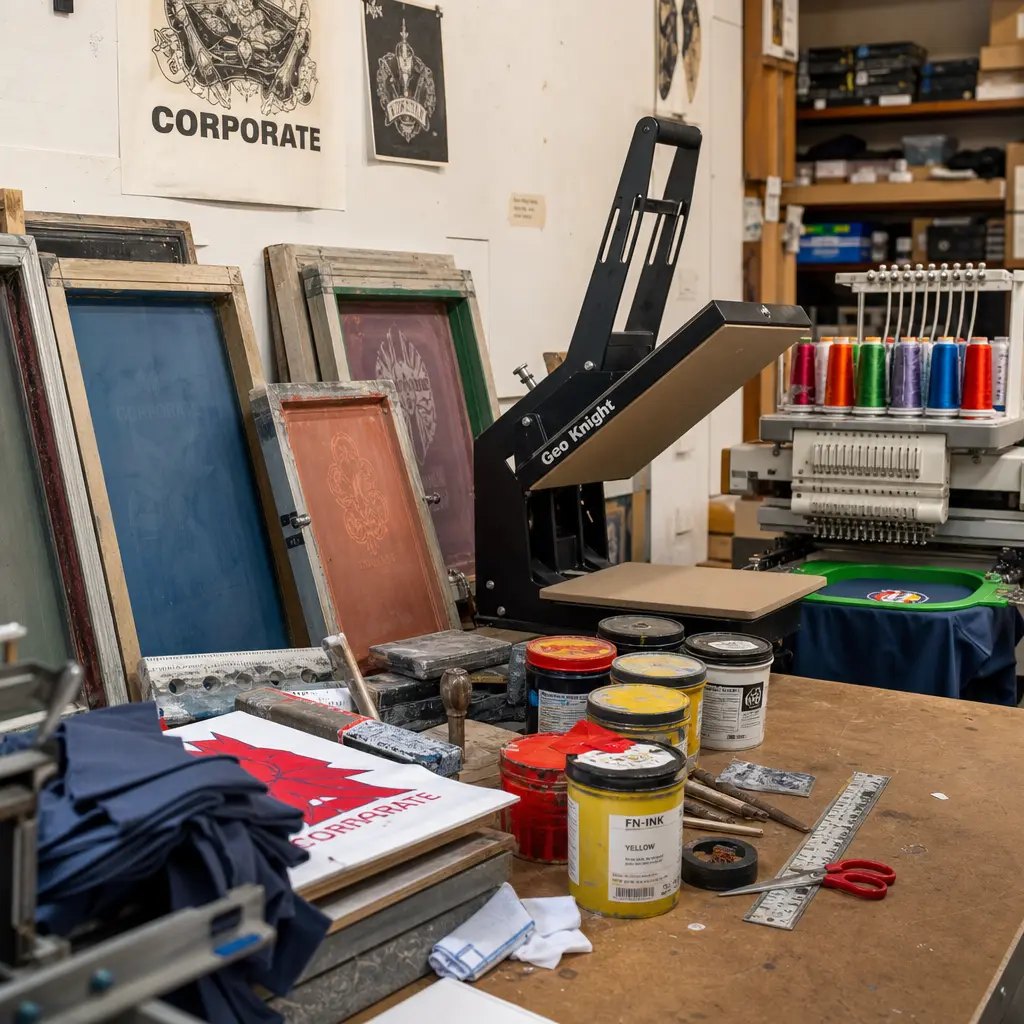
Why MOQ becomes a problem on organic cotton totes for startups
Startup teams often approach tote sourcing as a simple merch purchase: choose a bag, add a logo, and send it to the office or event site. The first quote usually proves that the process is less direct than it looks. On organic cotton totes, MOQ can be shaped by fabric mill minimums, print setup time, dyeing batch size, label sourcing, carton packing rules, and the factory’s sewing line efficiency. When procurement treats MOQ as one number, supplier quotes can look inconsistent, inflated, or impossible to compare.
For tech startups, the pressure point is usually speed plus restraint. The team wants a branded tote for a conference, onboarding kit, investor meeting, reseller drop, or premium giveaway, but the real order size may be far below a traditional retail run. That creates a squeeze: the buyer needs custom branding and polished presentation, while the supplier wants enough volume to justify fabric cutting, screen setup, and inspection time. Negotiation works better when the buyer understands which parts of the spec create true minimums and which parts are just preferences.
The practical fix is to separate hard MOQ drivers from optional customizations. A startup that accepts natural fabric, a one-panel screen print, and standard inner packing can often negotiate lower entry quantities than a buyer asking for dyed fabric, woven labels, individual retail polybags, barcode stickers, and split shipments. A strong procurement strategy is to simplify the base tote first, then add back only the features that matter commercially. That usually improves the quote and makes the supplier more willing to offer quantity breaks.
There is also a budgeting issue that procurement teams often miss. An order that looks cheap per unit can still be expensive if the factory builds in hidden assumptions about packing labor, print coverage, or unused fabric width. The real MOQ conversation is not simply “Can you make 300?” It is “What spec can you make at 300 without reducing quality, and what changes would lower the minimum further?”
- Fabric stock status often matters more than sewing capacity
- Natural organic cotton usually gives more flexibility than custom dyed fabric
- Print color count affects setup cost more than bag sewing time
- Split SKUs can raise the practical MOQ even when total order volume looks sufficient
- Small orders are easier when the bag body spec is standardized across programs
Start with the spec that actually controls MOQ
The fastest way to improve quote quality is to send a controlled RFQ with the fewest MOQ-sensitive decisions left open. For organic cotton totes, the core fields are fabric weight, bag size, gusset, handle construction, print method, finishing, and packing format. If the request is vague, suppliers fill in the blanks using their own assumptions. A line like “organic cotton tote, custom logo, around 500 pcs” sounds flexible, but it creates weak comparisons because one factory may price 8 oz fabric with short handles while another assumes 12 oz canvas, longer handles, and denser print coverage.
A stronger baseline spec for a startup buyer is usually natural organic cotton in about 240-320 GSM for standard merch use, standard tote size around 38 x 42 cm, no bottom gusset unless needed, self-fabric handles with box-X or reinforced bartack stitching, and one-color screen print on one side. This combination is commercially useful because many factories can source it from stock or near-stock material, sample it quickly, and produce it without unusual setup loss. It also keeps the first quote round focused on the details procurement needs to compare: unit price, sample cost, lead time, and production risk.
That does not mean every startup should buy the same tote. A company shipping boxed welcome kits may need a wider opening or gusset; a brand selling merch may need heavier canvas or a more premium label. The point is to let the use case drive the spec. Before asking for quotes, define what the tote must carry, where it will be distributed, whether it must fold flat, and whether it is meant to look promotional or retail-ready. That avoids overbuilding the bag and helps the factory quote the right construction from the start.
If the internal team is still debating design details, create a two-step RFQ. Step one is the base tote that can be produced at the target MOQ. Step two is a priced option list for upgrades such as dyed fabric, second-side print, woven label, or retail hangtag. That structure keeps the conversation practical and prevents the supplier from over- or under-specifying the first quote.
- Good RFQ baseline: natural organic cotton, about 240-320 GSM, one-color print
- Add a gusset only if the bag must carry boxed kits or larger retail products
- Specify handle drop in centimeters to avoid underbuilt quotes
- If laptop carry is expected, move to heavier canvas or wider handles
- Use an option list for upgrades instead of mixing every feature into the base quote
Fabric weight and construction: where startup buyers overpay or underbuy
Fabric weight is one of the easiest places to lose money. Many startup teams default to the heaviest fabric they can afford because they equate thickness with quality. That is not always the right move. For event giveaways and onboarding kits, about 240-320 GSM often gives enough body for a clean printed tote without turning the bag into a premium retail item. It can hold notebooks, water bottles, compact accessories, and lightweight brand kits while still folding neatly for distribution. For buyers whose main goal is visibility and usability, that range usually balances quality and cost well.
Moving to about 340-380 GSM makes sense when the bag itself is being sold, reused heavily, or expected to carry books, chargers, and heavier contents. In procurement terms, heavier canvas can be justified when the tote is part of a higher-value merch program or when the brand wants a more substantial hand feel. The tradeoff is not only unit cost; heavier canvas can also increase cutting waste, raise freight cost, and make the tote less flexible for bulk carton packing. If the tote is going into a conference bag or mailer, that extra stiffness may be a downside rather than an advantage.
The opposite mistake is chasing the lowest MOQ by going too light. Thin organic cotton can save some unit cost, but it may look weak after printing, wrinkle heavily in cartons, and create a lower perceived value at the event table. It can also affect seam stability if the bag is filled beyond its intended use. For brand teams, that matters because the tote is often a visible extension of the company. If the fabric feels flimsy or the handles buckle, the product can undermine the event experience even if the print itself is accurate.
Construction details matter almost as much as GSM. Buyers should confirm handle width, stitch density, top hem turn, side seam finishing, and whether the bag is built with a boxed corner, bottom gusset, or simple flat panel. A tote with a neat print but weak reinforcement can fail in use. The best negotiation position is to choose a weight range tied to a use case, then ask whether the supplier already stocks that range in organic cotton. If the fabric is stocked, MOQ and lead time are usually easier to manage.
- Approx. 240-320 GSM: suitable for conference giveaways and basic brand merch
- Approx. 340-380 GSM: better for paid merch, frequent reuse, and heavier contents
- Request actual GSM tolerance handling, not only nominal weight on the quote
- Ask whether the quoted price assumes canvas weave, plain weave, or brushed finish
- Confirm handle width and stitch density as part of the production spec
Print method decisions that change MOQ more than buyers expect
On organic cotton totes, print method is often the second biggest MOQ lever after fabric. Screen printing is usually the most startup-friendly route because setup cost is spread across the run and production speed is high once approved. A one-color logo on natural fabric is the standard low-friction option. It is easy to quote, relatively consistent across factories, and often gives the cleanest balance of price and durability for B2B giveaways. Adding more colors can still be reasonable, but every extra screen adds setup, registration control, and possible spoilage.
For procurement buyers, the key question is not just “What print method do you offer?” but “What method produces the best result on this fabric at this order size?” Heat transfer, DTG, or decorative methods may look attractive for very small batches, but the economics and appearance vary. On textured cotton canvas, some methods do not deliver the same durability or solid ink laydown as a well-executed screen print. If the brand artwork includes fine lines, tiny text, or a large solid block, those details need to be reviewed on actual fabric because cotton texture changes how ink sits.
Artwork preparation is part of the print decision. Many startup logos were designed for digital use and need simplification before they work on fabric. Thin lines can disappear, small text can blur, and gradients can lose definition. Good suppliers can advise on print-safe artwork, but the buyer should not assume that any logo can be transferred as-is. The best practice is to ask for a print-safe zone, recommended minimum line thickness, and a proof on the actual tote fabric rather than relying only on a screen mockup. That helps procurement reduce rework and makes the approval process more defensible internally.
If the project may expand later, ask for the cost of a second print color, a second print side, or a larger print area as separate line items. This reveals whether the MOQ risk is really in the print setup or in the bag itself. It also gives the startup a path to launch with a simple version now and scale to a more premium version later without redesigning the entire tote program.
- One-color screen print is usually the cleanest MOQ starting point
- Large solid ink areas can crack or feel heavy if print chemistry is poorly matched
- Very fine logo lines may need artwork simplification for cotton texture
- Print on one side first; adding a second side can change both setup and inspection time
- Ask for print-safe artwork guidance before final approval
How to negotiate MOQ without forcing weak quality concessions
The wrong way to negotiate MOQ is to push the factory for a lower quantity while keeping every custom feature in place. That often produces a quote that looks acceptable on paper but is supported by thinner fabric, smaller print area, shorter handles, less packing care, or weaker inspection discipline. The better route is to trade unnecessary complexity for lower entry volume. Buyers who state exactly which features are flexible usually get more honest factory solutions and fewer unpleasant surprises after sample approval.
A practical negotiation sequence is to first lock the bag body and print spec, then ask for alternate quantity scenarios. For example, request quote levels at 300, 500, and 1000 pieces using the same natural organic cotton and one-color print. Then ask separate adders for dyed fabric, woven label, second-side print, or individual polybag. This shows which costs are structural and which are optional. It also helps procurement defend the recommendation internally when stakeholders want more customization than the startup volume can support.
Another useful tactic is to negotiate around the real business outcome rather than the headline MOQ. If the tote is for a conference, ask whether a lower quantity can be offered in exchange for a simpler spec, consolidated shipping, or longer lead time. If the tote is for internal onboarding, ask whether the factory can combine your order with another production run of the same base bag body. Not every supplier will agree, but those questions help surface flexibility without asking for quality concessions. In many cases, suppliers respond better when they see a buyer who understands the production logic.
Procurement teams should also be careful about where they leave ambiguity. If the supplier does not know whether the order is for retail resale, giveaway distribution, or direct-to-consumer fulfillment, they may price conservatively. State the use case, target quality level, and expected delivery format. This makes it easier for the factory to decide whether the order is worth prioritizing and whether a lower MOQ is realistic without risking defects or rushed labor.
- Trade customization for lower MOQ rather than trading quality for lower MOQ
- Request quantity breaks on one fixed spec before adding options
- Separate base quote from adders such as woven labels, inserts, and barcode work
- Use one master artwork where possible and vary only carton labels or destination labels
- Negotiate around use case and delivery format, not just the lowest number
Sample approval: what to test before you commit to bulk
Samples should answer commercial questions, not just visual ones. A startup buyer often approves a sample because the logo looks acceptable in a photo. That is not enough. The sample stage should confirm fabric hand feel, actual body shape, handle comfort, seam strength, print coverage, and whether the bag folds and packs efficiently. If the bag will carry a laptop charger, notebook, or boxed welcome kit, load the sample with representative weight and observe handle distortion, top opening behavior, and whether the corners pull open in a way that changes usability.
For most projects, a digital layout or spec drawing comes first, followed by a pre-production sample made in the actual or nearest available fabric. If timing is tight, buyers can skip a full early prototype, but skipping the pre-production sample before bulk is risky when the order includes custom labels, exact print placement, or heavier GSM fabric. The sample should become the production reference, not just a visual suggestion. If a sample photo is the only approval record, it becomes harder to enforce print position, label placement, or handle length later.
To keep approval useful, structure the sample review like a mini QC audit. Measure width, height, gusset, handle drop, and print placement. Check the stitching at the handle attachment and side seams. Confirm that the print matches the approved artwork scale and that the ink coverage looks even under normal light. If the bag includes a woven label or care label, confirm both front-back orientation and stitch position. The buyer should also check whether the tote folds into the carton the way the factory described, because poor folding or overstuffed cartons can create transit issues.
If the order is time-sensitive, ask the supplier whether they can send fabric swatches, sewing photos, and a pre-production sample together in a compressed approval sequence. That is often faster than chasing multiple separate approvals and gives the buyer more confidence before bulk begins.
- Measure width, height, gusset, and handle drop from the physical sample
- Review print opacity on actual fabric under normal room light, not only studio photos
- Test a realistic carrying load if the bag is intended for kits or devices
- Approve folded condition if the bags must fit inserts, mailers, or retail shelves
- Use the sample as the production reference, not as a loose suggestion
Quote comparison: read beyond the unit price
A low unit price on organic cotton totes can hide expensive assumptions elsewhere. One factory may quote FOB with standard export carton packing and no individual polybag, while another includes retail-style inner packing and lower carton counts. One may quote a print size of 20 x 25 cm while another assumes 30 x 30 cm. A startup procurement team comparing only the top-line unit rate will almost always misread the real offer, especially when the internal audience is focused on quick savings rather than landed cost and fit-for-purpose quality.
Build the comparison around total delivered spec value. At minimum, compare fabric GSM, finished size, print coverage, included labels, sample charges, carton count, lead time basis, and tolerance handling. If one supplier is cheaper because they use a narrower handle, shorter drop, or lighter fabric, that is not a true savings if the product fails at the event or disappoints stakeholders. Procurement should compare like-for-like and document the differences explicitly so leadership can see where the cost delta comes from.
A useful internal method is to create a simple comparison sheet with three columns: what is included, what is not included, and what changes the MOQ. This makes supplier answers easier to review and reduces the chance of overlooking hidden assembly work. For example, care labels, barcode stickers, inserts, and destination split packing may each add labor even if the base tote is simple. If those costs are not visible, the first quote round will look attractive but the final order may grow quickly once the production plan is locked.
Also ask the factory to separate tooling, sampling, and production costs. When these are blended into a single unit figure, procurement loses visibility into where negotiation is possible. A clearer quote structure helps the startup decide whether to pay for better sampling now or keep the bulk order lean and standardized.
- Normalize quotes to the same print area and fabric weight before comparing
- Review sample refund policy and whether setup costs are embedded in unit price
- Check whether carton count changes freight efficiency
- Compare included QC level or final inspection support if offered
- Ask suppliers to separate tooling, sampling, and production costs
Packing decisions that affect both MOQ and landed cost
Packing is often treated as an end-stage detail, but it changes both cost and MOQ practicality. Flat-packed bulk totes in export cartons are usually the most efficient option for startup programs, especially for events, onboarding distribution, and warehouse replenishment. If each bag needs an individual polybag, barcode sticker, hangtag, and insert card, the project shifts from simple merch production to light retail assembly. That can raise labor time, reduce factory flexibility on small runs, and increase the chance of mispacks or label errors.
Carton planning also matters for downstream handling. Event agencies, 3PL warehouses, and ecommerce prep centers often impose carton weight or carton dimension limits. If those limits are not given early, the factory may pack to its own efficiency standard, which can create relabeling or repacking costs after arrival. Procurement should define whether the bags go direct to an event, to a master distributor, or to a fulfillment center before final quote approval. The delivery channel determines the practical packing design as much as the bag itself.
For sustainability-focused startups, packing is also a brand issue. Some teams want to avoid individual poly entirely; others need it to protect the bags from dust or moisture. Neither approach is automatically right. The decision should be based on storage time, shipping method, and how the bags will be distributed on arrival. If the bags are going from factory to warehouse to event within a short time, bulk flat pack is often enough. If the bags are being sold through retail or direct ecommerce, the packing spec may need to be more protective and more standardized.
When requesting quotes, include carton count, carton dimensions, net weight, gross weight, and whether palletization is required. Those fields help procurement estimate freight more accurately and make it easier to compare offers from multiple suppliers without surprises in transit planning.
- Bulk flat pack is usually best for low landed cost
- Individual poly should be justified by retail or protection need, not habit
- Set carton count and gross weight ceiling if shipping into managed warehouses
- Request carton dimensions in the quote to estimate freight impact
- Define destination channel before final packing approval
Lead time planning: where startup launch calendars usually slip
Lead time on organic cotton totes is not just sewing time. The total schedule includes artwork cleanup, sample review, possible organic fabric allocation, print screen preparation, bulk cutting, printing, sewing, packing, and shipment booking. Startups often assume a tote is a simple item and leave sourcing late. The result is rushed approvals, reduced inspection time, or expensive freight upgrades close to an event date. In practice, a short production timeline can become the most expensive part of the order if the buyer has not locked the spec.
The most common schedule risk is not factory delay but buyer-side indecision after the quote stage. If the team changes bag size, adds a second print color, or switches from natural to dyed fabric after sample approval, the entire plan may reset. Build a sourcing calendar that distinguishes fixed decisions from optional upgrades. Where timing is tight, natural fabric and standard screen print usually give the safest path because they reduce sourcing and setup complexity. That does not mean every startup should choose the simplest version forever, but it does mean the launch version should match the available calendar.
One overlooked lead-time issue is approval latency. If several stakeholders must approve artwork, sample photos, packaging details, and carton markings, the factory can be waiting while the internal team debates details. Procurement can reduce that risk by creating a single approval checklist and naming the decision owner upfront. The supplier should know exactly who signs off on print placement, which email thread is final, and what happens if an alternative is requested after the sample is approved. This simple process step can save days or even weeks.
It is also smart to ask the factory what typically extends lead time: fabric dyeing, screen rework, label sourcing, holiday shutdowns, or reinspection after quality issues. Those answers help the buyer build a realistic buffer into the launch plan instead of relying on the most optimistic completion date.
- Allow time for at least one pre-production sample approval cycle
- Dyed fabric usually carries more schedule risk than natural greige-based fabric
- Print artwork changes after sampling can reopen setup and approval steps
- Book freight around realistic production completion, not target event optimism
- Name one internal decision owner to reduce approval delays
Quality thresholds that should be written into the PO
If quality expectations are not written into the purchase order or approved specification, each factory will apply its own working standard. That is how disputes start over slightly off-center prints, loose threads, shade variation, or handle length differences. A startup buyer does not need a long legal document, but it does need measurable acceptance points tied to the approved sample and final inspection criteria. Without that, the supplier may meet their own internal tolerance while still missing the buyer’s expectations.
At minimum, define allowable tolerance for size, handle drop, print position, and fabric weight handling versus the approved sample. Clarify what counts as a major defect: holes, large stains, severe print smudge, wrong label, broken stitching, or carton mispack. Also define what natural cotton variation is acceptable. Organic fabric often has a more natural appearance, and buyers should distinguish normal character from real defects. This matters because procurement teams can otherwise reject good material for cosmetic reasons or, worse, accept product that looks acceptable in a photo but fails in distribution.
It helps to write QC criteria in plain language and attach photos where possible. For example, specify where the logo must sit relative to the top hem and side seam, how much overlap is permitted on the handle reinforcement stitch, and whether minor thread trimming is acceptable after final inspection. If the order includes care labels, barcodes, or shipping marks, those should also be checked against the approved pack plan. A clear PO reduces back-and-forth and gives the factory a visible target for production.
For larger or time-sensitive startup orders, consider asking for an in-process inspection point or photo report before packing. That allows issues to be corrected while they are still easy to fix. The goal is not to make the factory nervous; it is to make quality expectations unambiguous enough that both sides can deliver the same result the first time.
- Reference the approved pre-production sample as the visual standard
- List major defects that are not shippable
- Set measurable placement tolerance for logo location
- Document whether minor natural slubs are acceptable in the fabric appearance
- Attach plain-language QC notes and photos whenever possible
Specification comparison for buyers
| Spec decision | Recommended option | When it fits | Buyer risk to check |
|---|---|---|---|
| Fabric weight for startup giveaway totes | 8 oz to 10 oz organic cotton canvas, about 240-340 GSM depending on weave and finish | Best for event handouts, onboarding kits, and general brand merch where budget, packability, and easy distribution matter | Light cloth below about 220 GSM can show print strike-through or handle distortion; confirm actual GSM and finished hand feel, not just fabric name |
| Fabric weight for retail or paid merch | 12 oz organic cotton canvas, about 340-380 GSM | Fits ecommerce merch, conference retail booths, and bags expected to carry laptops, books, or groceries | Heavier canvas can increase freight and carton weight; confirm whether the factory stocks the target width and shade before quoting |
| Bag color strategy | Use natural body color and avoid custom dyed panels on first run | Best for lower MOQ projects because natural fabric avoids dye-lot setup and mill minimums | Natural shade varies by fiber lot; define acceptable shade range against an approved lab dip or sealed sample if appearance matters |
| Print method | 1-color or 2-color screen print | Most MOQ-friendly option for startup orders because plate/setup cost is manageable and print speed is high | Very fine text below about 4 pt or hairline graphics may fill in or blur on textured cotton; ask for print-safe artwork guidance |
| Logo size and placement | Keep print inside a defined safe area, often about 25 x 30 cm on one panel for standard totes | Helps maintain cleaner registration and lowers reject risk on standard tote sizes | Oversized prints near seams, gussets, or fold lines can skew; require a placement drawing with seam references |
| Handle construction | Self-fabric handles with box-X reinforcement or bartack plus top stitch, depending on weight target | Reliable for common startup merch programs and easier for factories to run consistently | If handle width, length, and drop are not specified, suppliers may quote different constructions and underbuild the carry load |
| MOQ split by artwork | One bag spec with split print colors or logo versions, but keep the same base bag | Useful when one startup wants separate event, investor, and employee versions under one production run | Split SKU orders can still trigger extra setup and packing labor; define minimum per artwork and per carton label in RFQ |
| Packing format | Flat packed in export carton, with inner poly only if required by storage or retail needs | Lowest landed cost for giveaways and warehouse distribution programs | Individual poly may conflict with sustainability goals or local retail rules; decide before quote stage and state it in the PO |
| Sampling route | Digital layout plus pre-production sample before bulk | Balanced approach for teams that need sign-off but cannot wait for repeated full custom proto rounds | Skipping pre-production sample saves time but raises risk on logo position, handle length, label placement, and fabric hand feel |
Buyer checklist before sampling
- Define the real use case first: conference giveaway, employee onboarding, retail merch, investor kit, or reseller stock
- State target order quantity and acceptable split by artwork, color, or shipping destination
- Specify fabric as organic cotton with target weight in GSM or oz, not just 'thick cotton'
- Choose whether natural fabric is acceptable or if dyed fabric is required
- Provide finished bag size, gusset requirement, handle width, handle length, and handle drop
- State print method preference, number of print colors, and whether both sides print or only one side
- Include print size and exact placement tolerance requirement relative to seams and top hem
- Decide whether inner care label, side label, hangtag, barcode sticker, or retail insert is needed
- Set packing format: bulk flat pack, master carton count, carton weight limit, and whether individual poly is allowed
- Request sample sequence: digital mock layout, material swatch or lab dip, pre-production sample, and bulk production sample photos
Factory quote questions to send
- What is your MOQ based on for this tote: greige fabric stock, dyed fabric, print setup, or sewing line efficiency?
- Can you quote three quantity breaks using the same spec, for example 300, 500, and 1000 pieces?
- Is the organic cotton fabric already stocked, and if yes, what GSM, weave, and width are available now?
- If we use natural fabric instead of dyed fabric, how much MOQ and lead time can be reduced?
- What print method are you quoting, and what setup charge changes if we add a second print color or second side?
- What is the minimum per artwork if we split one order into two or three logo versions?
- What handle construction is included in the quote: handle width, finished length, drop, and reinforcement stitch method?
- What sample cost is refundable against bulk production, and which sample stage is included in that fee?
- What carton dimensions, carton count, net weight, and gross weight per carton are you quoting?
- What is the finished size tolerance for width, height, and gusset, and what is the handle-drop tolerance?
Quality-control points to confirm
- Fabric weight should stay within the agreed tolerance from approved sample; many buyers use plus or minus 5 percent unless a stricter contract term is set
- Finished bag dimensions should match the approved spec with clear tolerance for width, height, gusset, and handle drop
- Handle reinforcement stitching must be consistent on all bags, with no skipped stitches, unraveling, or visibly uneven box-X pattern
- Print position should stay within the approved placement tolerance and not drift toward seams or gusset folds
- Printed logo coverage should be even, with no pinholes, major smudging, ink bleed, ghosting, or color mismatch against the approved standard
- Fabric must be free from major oil marks, mildew odor, obvious weaving defects, holes, broken yarns, and heavy slubs beyond accepted natural cotton character
- Side labels, care labels, barcodes, and shipping marks must match the approved artwork and packing list exactly
- Cartons should meet the agreed count and weight limits and protect the bags from moisture and transit compression
- If the order includes multiple logo versions, each version should be segregated and carton-labeled to avoid mix-ups
- Pre-shipment inspection should confirm seam integrity, trim cleanliness, print registration, and carton count before freight release