Why logo placement is a buying decision, not only a design choice
For wine clubs, an organic cotton tote serves multiple roles: carrying bottles from tasting room to car, protecting a membership pickup, acting as a reusable gift bag, and continuing brand advertising after first use. Logo placement controls whether that brand value is visible when the bag is full, folded, hung, photographed, or packed inside a member shipment.
The common mistake is approving a flat digital mockup without considering the loaded shape of the tote. Wine bottles create vertical pressure, rounded bulges near the base, and handle tension at the upper panel. A logo that looks centered on a flat PDF can appear too high, too low, or slightly warped after filling. Procurement should treat logo placement as a production specification with measurements, tolerance, and sample approval conditions.
The unboxing experience also matters. If a member receives a flattened tote in a kit, the first thing they see is the top fold. If the logo is creased or cracked because it sat on a fold line, perceived value drops immediately. Therefore, the placement decision must integrate with the packing decision, ensuring visual identity is protected from factory floor to member's hands.
Bottle dimension is another overlooked factor. Burgundy bottles (taller, wider) require a deeper bag, shifting the logo safe zone upward. Bordeaux bottles (shorter, narrower) allow more flexibility. Always specify bottle type in the RFQ to avoid logo misplacement.
- Use fixed references: distance from top seam, bottom seam, side seam, or center line.
- Evaluate the bag both empty and loaded with the intended bottle count.
- Keep the logo out of handle reinforcement zones and heavy bottom curvature.
- Specify the viewing situation: carried by hand, carried on shoulder, displayed on counter, or packed in cartons.
- Coordinate logo placement with packing fold lines to prevent ink cracking.
- Account for bottle dimension (Burgundy vs. Bordeaux) in bag pattern and logo zone.
Start with bottle count and bag construction before artwork
A wine club tote for one bottle has different logo behavior from a two-bottle or three-bottle carrier. Single-bottle bags are narrower, so the print area may be tall and slim. Two-bottle bags often need a wider front panel and a gusset, giving more branding space but also creating fold lines and side pull. If the buyer sends only the logo file and target quantity, suppliers may quote a standard tote not suited to bottle weight.
The RFQ should state finished dimensions, gusset style, and loaded weight target. For example, a two-bottle organic cotton tote may use a front panel around 320–380 mm wide, height around 350–420 mm, and a gusset around 100–140 mm depending on bottle diameter and any divider insert. These numbers are starting points for factory discussion. The key is that the logo safe area must be calculated after the tote pattern is confirmed.
Consider the base panel as well. A flat bottom (with a base seam) provides structure and protects the bottom print, but it changes the way the bag folds. A gathered bottom is cheaper but creates a 'belly' when loaded, which can distort a lower logo. Always clarify the base construction in the tech pack so the factory knows exactly how the bag will behave under load.
Bottle dimension variations matter here too. A Burgundy bottle (typically 750 ml, taller) may require a bag height of 400 mm or more, while a Bordeaux bottle (also 750 ml but shorter) may fit in 350 mm. This height difference directly impacts where the logo can be placed without being obscured by the bottle neck or base.
- Single bottle: narrow print zone, higher risk of logo wrapping around the curve.
- Two bottles: better front logo visibility, but more bottom bulge and gusset movement.
- Bottle plus inserts: reserve space for cards, tasting notes, or tissue without covering branding.
- Shoulder carry: longer handles may visually cross the upper logo area when the tote hangs.
- Base construction: flat bottom offers stability; gathered bottom requires higher logo placement.
- Specify bottle type (Burgundy, Bordeaux, or other) in the RFQ to guide bag dimensions.
Fabric weight and organic cotton grade affect logo sharpness
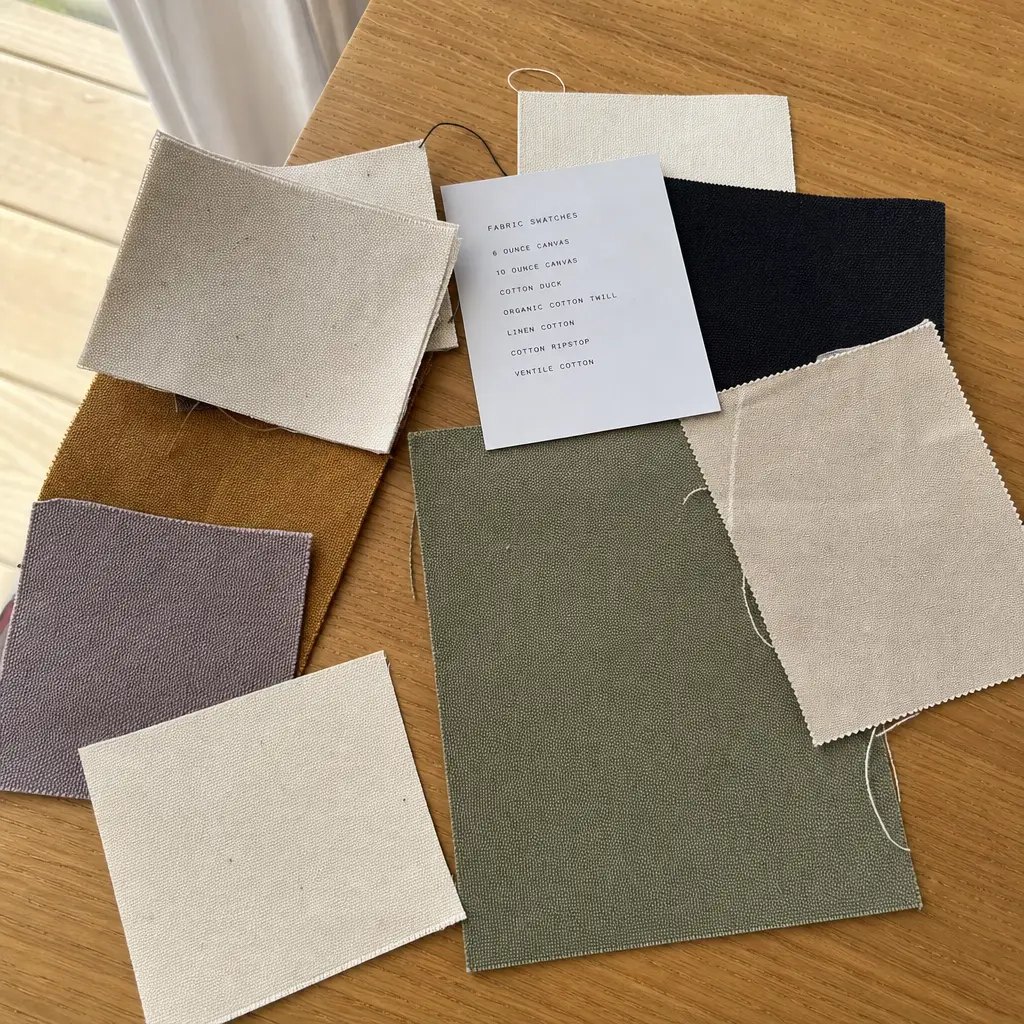
Organic cotton canvas for wine club totes commonly falls around 8–14 oz, or roughly 220–380 GSM depending on the weave. An 8 oz fabric can be acceptable for lightweight promotional use, but it may feel soft and collapse around bottles. A 10–12 oz fabric, roughly 270–340 GSM, is often a practical middle range for reusable wine club totes because it supports the bottle shape without becoming too heavy for freight and warehouse handling.
Logo placement and print quality change with fabric texture. Natural unbleached organic cotton usually has seed flecks and shade variation. This is attractive for eco-positioned brands, but it means fine text, small icons, and pale ink colors may not read cleanly. Heavier canvas with a pronounced weave can reduce edge sharpness in screen printing. Buyers should supply minimum line thickness requirements and approve print on actual bulk fabric, not on paper or a different cotton grade.
The preparation of the fabric also matters. Greige (unprocessed) fabric absorbs ink differently than scoured or bleached fabric. If you are using a natural unbleached look, ask the factory if the fabric is singed and desized, as residual sizing can cause ink to sit on the surface and flake off later. Understanding the fabric preparation ensures that the logo not only looks good at sampling but survives washing and abrasion in the member's hands.
Seam allowance is another nuance. A heavier fabric (12 oz) may require a larger seam allowance (e.g., 12 mm vs. 8 mm for lighter fabric) to prevent fraying. This reduces the usable print area. Always confirm seam allowance in the tech pack to avoid logo encroachment.
- 8 oz / about 220 GSM: lower cost and lighter freight, but less structure for bottles.
- 10 oz / about 270 GSM: good for many single-bottle and light two-bottle uses.
- 12 oz / about 320–340 GSM: stronger hand feel and better retail value perception.
- 14 oz / about 380 GSM: premium feel, higher material cost, heavier cartons, slower sewing.
- Natural organic cotton: expect shade variation; control branding with physical samples.
- Fabric preparation: confirm singeing/desizing to ensure proper ink adhesion.
- Seam allowance: heavier fabric may need larger allowance, reducing print area.
Best logo zones for wine club organic cotton totes
The safest main logo zone is usually the front center, below the bag opening and above the lower curved area. For many tote sizes, placing the top of the logo around 90–120 mm below the mouth gives enough separation from handles and top hem. Keeping the artwork at least 35 mm away from side seams helps prevent distortion from sewing and gusset shaping. For small logos, a lower front position can look premium, but it must stay above the base bulge.
Side labels are useful when the wine club wants seasonal artwork on the main panel or when distributors need a consistent manufacturer or house-brand mark across many designs. A woven side label avoids taking over the front panel, but it introduces its own MOQ, lead time, and approval process. If the side seam is thick or the bag has a gusset fold, the label can twist or hide, so its position should be shown on the pattern and confirmed on the physical sample.
Another consideration is the 'visual triangle' created by the handles and the bag opening. Logos placed within this triangle tend to draw the eye naturally. However, if the handles are long enough to be carried on the shoulder, they will cross this triangle when the bag is held. If your club prioritizes the 'carried' look, you may need to place the logo slightly lower or use a side label to ensure visibility when the straps are in use.
Bottle dimension also influences the visual triangle. A taller Burgundy bottle may push the bag opening higher, shifting the triangle upward. A shorter Bordeaux bottle allows more flexibility. Test both scenarios with a loaded sample.
- Main centered placement: best general option for visibility and repeat use.
- Lower front placement: premium and subtle, but avoid the base curve.
- Upper front placement: only if handle anchors do not interfere.
- Side seam label: good for quiet branding and multi-artwork programs.
- Inside print: useful for loyalty messaging, less useful for public visibility.
- Visual triangle: consider handle overlap when the bag is carried on the shoulder.
- Bottle dimension: test logo visibility with both Burgundy and Bordeaux bottles.
Print method selection for organic cotton wine club totes
Water-based screen printing is usually the most practical method for solid wine club logos, membership marks, and one to three spot colors. It gives a softer hand feel than heavy plastisol-style prints and suits the natural positioning of organic cotton. However, water-based ink can look different on natural, dyed, or bleached cotton. If the logo color is brand-critical, a fabric swatch and printed strike-off are more reliable than a Pantone number alone.
Heat transfer can reproduce complex artwork but may feel less aligned with an organic cotton product if the transfer film is noticeable. Embroidery can look premium on small logos, yet it adds cost, weight, and possible puckering on lighter fabric. For large front logos on canvas, embroidery is often less efficient than print. Buyers should match the method to the artwork size, expected hand feel, and club positioning instead of allowing the supplier to default to the cheapest decoration.
Discharge printing is another option for dark fabric, but it relies on removing the fabric dye rather than adding ink. It only works on dyed cotton, not natural unbleached, and requires strict chemical control to meet organic standards. If you are considering discharge, ensure the factory has the appropriate wastewater treatment and chemical management certifications to avoid compliance issues down the line.
Pigment printing is an alternative for natural fabrics, offering good color fastness without the need for extensive pretreatment. However, it may have a slightly stiffer hand feel. Test all options on the actual fabric before committing.
- Screen print: efficient for solid logos, clear marks, and medium to large quantities.
- Water-based ink: softer hand feel; needs curing control and rub testing.
- Embroidery: good for small premium marks; avoid very large stitched areas on soft cotton.
- Heat transfer: useful for gradients or complex artwork; test adhesion and hand feel.
- Woven label: consistent for small branding; separate artwork and label approval required.
- Discharge print: only for dyed fabric; verify chemical compliance for organic claims.
- Pigment print: good for natural fabrics; test hand feel and color fastness.
MOQ logic and cost drivers buyers should separate in the RFQ
The bag MOQ is not always the same as the organic fabric MOQ, print MOQ, side label MOQ, or custom packing MOQ. A supplier may accept a smaller cut-and-sew order if fabric is in stock, but a custom organic cotton shade or special GSM may require a larger fabric booking. Similarly, a woven side label may have a higher minimum than the bags, so the factory may amortize unused labels into the unit price or keep them for reorders.
Logo placement affects cost when it changes the production process. A standard centered front print can be efficient on semi-finished panels before sewing. A print that crosses seams, sits close to the gusset, or requires exact alignment with pockets or labels may slow loading on the print table and increase rejects. In your quote comparison, separate material cost, decoration cost, label cost, sample cost, packing cost, and inland/export handling so the cheapest line is not hiding a weaker specification.
Be aware of 'hidden' setup costs. For example, if your logo requires a specific mesh count for fine detail, the screen maker may charge a setup fee. If you require a custom paper band, the printer may have a plate fee. These costs are often amortized into the unit price only if the order reaches a certain quantity. If you order below that quantity, the unit price can jump significantly. Always ask for a transparent breakdown of fixed vs. variable costs.
Bottle dimension can also affect MOQ. If your bag pattern is optimized for Burgundy bottles, it may not fit Bordeaux bottles without pattern changes, which could increase MOQ for the custom pattern. Clarify this early.
- Quote separate quantities, such as 500, 1,000, 3,000, and 5,000 pieces, to see where price breaks actually occur.
- List each print color and print location; two small locations can cost more than one large front print.
- Identify whether organic cotton fabric is stock, booked to order, or dyed to order.
- Separate custom side label, hangtag, paper band, barcode label, and carton mark costs.
- Request estimated carton dimensions and gross weight for landed-cost comparison.
- Ask for fixed setup fees (screens, plates) vs. variable run costs to understand true MOQ economics.
- Consider bottle dimension impact on pattern MOQ.
Sample approval should test the loaded tote, not only the logo
A pre-production sample should use the same fabric weight, print method, handle tape, stitching thread, and intended logo position as bulk production. A prototype made from substitute fabric is useful for size discussion, but it is not enough for final approval. The buyer should mark the approved logo location directly on the sample record, including measurements from the bag mouth, side seams, and bottom seam.
Wine club samples should be loaded with real or equivalent bottle weight. This reveals whether the logo is covered by handle droop, pulled into the side curve, or distorted by the bottom bulge. It also exposes construction issues such as weak bar-tacks, thin handle tape, insufficient gusset width, or poor balance when carried. A sample that looks good empty on a table can fail when two glass bottles are inside.
Document the sample with standardized photography. Take photos of the bag empty, loaded, carried by hand, and hanging. Measure the logo position in the photos and compare it to the tech pack. This visual record becomes the reference point for QC and prevents disputes later if the bulk production looks different. A sample without documentation is just an opinion; a sample with measurements is a standard.
Test with both Burgundy and Bordeaux bottles if your club uses both. The difference in bottle height and diameter can shift the logo's visual alignment.
- Measure finished bag width, height, gusset, handle drop, and print position.
- Load with intended bottle count for a practical carry and display check.
- Photograph the sample empty, filled, carried, hanging, and folded for packing.
- Perform a dry and damp rub check on the printed logo after curing.
- Record acceptance or revision notes before authorizing bulk fabric cutting.
- Create a visual standard: annotated photos with measurements for QC reference.
- Test with both Burgundy and Bordeaux bottles if applicable.
QC tolerances for logo placement and sewing alignment
For cotton totes, reasonable logo placement tolerances depend on bag size, fabric stretch, and print method. Many buyers use a tolerance such as plus or minus 5 mm for print position on smaller logos and plus or minus 8–10 mm for larger prints on soft cotton canvas, but the final tolerance should be agreed with the factory before production. The important point is to define how the measurement is taken: from the top seam to the top of print, from center line to print center, and from bottom seam if lower placement matters.
Print skew is often more visible than a small height difference. A logo that is 5 mm off center may be acceptable, while a logo tilted against the bottom seam can look defective immediately. During inspection, samples should be laid flat with seams aligned and measured against the approved sample. Sewing QC should include handle symmetry, seam strength, skipped stitches, loose threads, and label orientation because these issues affect both appearance and carrying safety.
Implement a statistical approach to QC. Instead of checking every bag, use an AQL (Acceptable Quality Limit) standard such as ISO 2859-1 or ANSI/ASQ Z1.4. For example, inspect at Level II with an AQL of 2.5 for major defects and 4.0 for minor defects. Define what constitutes a 'major' defect (e.g., logo completely off-center, broken handle) vs. a 'minor' defect (e.g., loose thread, slight color variance). This gives the factory a clear target and the buyer a defensible rejection criteria.
Include a separate QC table for logo placement and sewing alignment to ensure consistency across inspections.
- Print position: define vertical and horizontal tolerance in millimeters.
- Print size: compare actual print width and height against approved artwork.
- Print color: approve against physical strike-off, allowing realistic natural cotton variation.
- Skew: measure angle or edge difference relative to the bottom seam.
- Handle alignment: left and right handle anchors should be symmetrical.
- Stress points: require bar-tack, box-X, or reinforced stitching according to load.
- AQL standards: use ISO 2859-1 or ANSI/ASQ Z1.4 for statistical sampling.
- Defect classification: clearly define major vs. minor defects before inspection.
Packing choices can protect or damage the logo
Wine club buyers often focus on the tote itself and leave packing to the supplier, but packing can create visible defects. Hard folds across a printed logo may crack ink, especially if the print has heavy coverage or was not fully cured. Tight carton compression can leave permanent creases on heavier organic cotton canvas. If the tote will be used in member kits, the first impression after opening the carton matters almost as much as the sample room appearance.
Flat packing with the logo facing outward is usually safer than deep folding through the artwork. Paper banding can support plastic-free programs, while individual polybags protect from dust and moisture but may conflict with sustainability requirements. Export cartons should not be overloaded simply to reduce freight cost. A carton that is too heavy increases warehouse damage risk, and a carton that is too tight can make the logo look wrinkled before the product reaches members.
Consider the moisture content during packing. Organic cotton is hygroscopic; if it is packed damp, it can develop mold or mildew during ocean freight. Ensure the factory measures the moisture content of the canvas before packing and includes desiccants or humidity indicator cards in the cartons if shipping through high-humidity routes. A moldy tote is a total loss, regardless of how perfect the logo placement was.
Bottle dimension also affects packing. Taller Burgundy bottles may require larger cartons, increasing freight cost. Plan carton dimensions accordingly to avoid excessive compression on the logo area.
- Define folding line so it does not pass through the main logo when possible.
- State whether packing must be plastic-free, recyclable, or retail-ready.
- Confirm pieces per inner pack and export carton before mass packing.
- Use carton dimensions that avoid excessive compression on the print area.
- Request one packed carton photo or packing sample for approval on larger orders.
- Moisture control: check fabric moisture content and use desiccants for ocean freight.
- Account for bottle dimension in carton sizing to prevent logo compression.
Lead time risks for organic cotton and decorated tote programs
Lead time for organic cotton totes includes more than sewing. Fabric availability, organic documentation, artwork proofing, print screen setup, sample approval, bulk cutting, sewing, curing, trimming, inspection, packing, and export booking all affect the final ship date. If the order requires a custom fabric weight, dyed fabric, woven side label, or plastic-free custom packing, the schedule should include those parallel steps rather than assuming they happen automatically.
For wine clubs, timing is often tied to release dates, club pickup weekends, or holiday gift shipments. A late logo approval can be more damaging than a slow sewing line because printing cannot be finalized without the artwork location and color. Procurement should set internal deadlines for artwork approval, sample comments, purchase order release, and final inspection. Rushed approvals are a common reason logos end up in the wrong position or printed on the wrong fabric shade.
Build buffer time into the schedule for revisions. The first pre-production sample rarely passes without comments. If you allocate zero days for revisions, a 2-day delay in sample approval can cascade into a missed vessel cutoff and a late delivery to the club. Plan for at least one round of sample revision in the critical path, and maintain open communication with the factory so they can adjust their material booking and line scheduling accordingly.
Supplier verification of organic claims can also delay lead time if documents are not ready. Request GOTS scope certificate or OCS transaction certificate early to avoid last-minute compliance issues.
- Artwork proof and print strike-off: plan time before bulk production.
- Fabric booking: confirm whether organic cotton is in stock or made to order.
- Side labels and hangtags: treat as separate components with their own approvals.
- Curing and drying: do not compress freshly printed goods too early.
- Inspection window: reserve time for correction or replacement before vessel cutoff.
- Buffer time: allocate days for sample revisions to prevent cascading delays.
- Supplier verification: request organic certification documents early to avoid delays.
Specification comparison for buyers
| Spec decision | Recommended option | Buyer scenario | Risk to check |
|---|---|---|---|
| Main front logo placement | Centered 90–120 mm below bag mouth, ≥35 mm from side seams | Membership gifts, tasting-room pickup, retail display where tote is upright | Too high: logo distorts under handle stress. Too low: hidden when boxed or folded |
| Lower front logo placement | Centered 70–100 mm above bottom seam, smaller mark or tagline | Premium clubs wanting quieter look, more visible natural fabric texture | Bottle weight creates bottom bulge; fine text away from curved lower panel |
| Side label branding | Small woven organic cotton or recycled polyester label in side seam | Main tote carries winery artwork; side label for consistent brand mark | Label MOQ and color limits separate from bag MOQ; confirm size, fold, seam location before sampling |
| Inside neck or pocket logo | One-color print on inside upper panel or interior pocket | External design clean, internal brand ID for loyalty programs | Inside print rubs against bottles/inserts; test abrasion and visibility after packing |
| Fabric weight | 10–12 oz organic cotton canvas (270–340 GSM) | Single or two-bottle use needing durability without excessive freight weight | Below 220 GSM: promotional feel, bottle outlines visible. Above 380 GSM: heavier cartons, slower sewing |
| Print method | Water-based screen print for solid logos; discharge or pigment after fabric/color testing | Medium to large runs where logo color consistency matters, artwork not photographic | Natural cotton shade varies by lot; request lab dip or fabric swatch, do not approve from digital proof |
| Handle position and drop | Webbing handles, 250–300 mm drop, box-X or bar-tack reinforcement | Shoulder carry for club pickup, clear space for front logo | Short handles overlap print area when hanging; long handles cover logo in photos or retail display |
| Packing style | Flat packed with tissue or paper banding, logo outward, carton sized to reduce hard creases | Member kits, warehouse kitting, retail replenishment | Tight folding across logo cracks heavier ink; permanent creases on natural canvas |
Buyer checklist before sampling
- Define exact bottle count (single, two-bottle, or three-bottle) and calculate loaded weight including glass, liquid, and inserts before choosing fabric GSM or handle reinforcement.
- Provide finished bag dimensions (width, height, gusset depth), handle drop, seam allowance, and logo artwork at actual print size (1:1 vector or high-resolution raster) to avoid scaling errors.
- Mark logo position using fixed physical references: specify exact millimeters from top seam, side seam, or bottom seam to print edge.
- State whether logo must remain visible when tote is carried by hand, on shoulder, displayed upright, hanging on a hook, or packed flat in a wine club gift box.
- Choose print method based on artwork complexity, fabric color, desired hand feel, and expected wash/rub cycles, not lowest unit price.
- Request a physical pre-production sample (PPS) using the exact approved fabric weight, handle construction, print method, ink type, and final packing fold intended for bulk.
- Set written tolerances for logo position (±5 mm), print size, color variance (Delta E ≤ 2.0), skew angle, and handle alignment before mass production.
- Confirm organic certification documents (GOTS or OCS) required for fabric only, finished bag, or transaction paperwork; ensure scope matches importing entity.
- Specify carton packing quantity, folding method, polybag or plastic-free requirement, carton marks, barcode/ASN labels, and palletization details for smooth warehouse receiving.
- Build lead time timeline around fabric booking, artwork proofing, sample revision rounds, bulk production, final inspection (AQL), and export packing, not just factory sewing days.
Factory quote questions to send
- What organic cotton fabric weights are available for this tote style, and are they greige, bleached, dyed, or natural unbleached?
- Can you quote 8 oz, 10 oz, 12 oz, and 14 oz organic cotton canvas separately for unit cost, carton weight, structural integrity, and perceived quality comparison?
- What is your recommended safe print area for the requested finished bag size after seam allowance, gusset shaping, and handle reinforcement?
- Which print method do you recommend for our specific logo artwork on this fabric, and what is the minimum line thickness (mm or points) you can hold without ink bleeding?
- What are the MOQs for the bag, print setup, woven side label, and custom carton or paper band packing? Are these cumulative or independent?
- Can the pre-production sample be made with the same fabric lot, ink type, handle tape, stitching thread, and folding method planned for bulk production?
- What position tolerance do you normally control for screen print placement on cotton totes, and how is it measured and recorded during in-line and final QC?
- How many pieces per export carton do you recommend for this GSM and bag size, and what are the estimated carton dimensions and gross weight?
- What organic certification documents can you provide, and will the certificate issuer, importer name, product description, and purchase order details match exactly?
- What are the sequential lead time steps from deposit and artwork approval to sample, bulk production, inspection, and ready-to-ship (EXW/FOB) date?
Quality-control points to confirm
- Measure logo placement from fixed seams (top, bottom, side) on approved samples and during bulk final inspection; do not rely on visual centering.
- Check print skew against both side seams and bottom seam, especially on gusseted bags that shift during sewing; ensure angle within agreed tolerance.
- Verify fabric GSM by cutting and weighing a sample swatch (e.g., 10x10 cm) or reviewing mill certificate alongside random physical confirmation.
- Load test the tote with intended bottle weight and inserts for 10–15 minutes to check handle stress, seam distortion, bottom bulge, and logo visibility under realistic conditions.
- Rub test the print with dry and slightly damp white cloth (AATCC Test Method 8) to identify weak curing, pigment transfer, or surface dusting that ruins member unboxing.
- Inspect handle bar-tacks or box-X stitching for skipped stitches, loose threads, tension issues, and needle cutting on heavier canvas.
- Open cartons from top, middle, and bottom layers to check if folding creates permanent creases across the logo or if compression causes ink cracking.
- Confirm carton quantity, shipping marks, barcode placement, inner packing materials, and plastic-free requirements against the purchase order before container loading.
- Verify organic certification documents (GOTS scope certificate or OCS transaction certificate) match the product description and purchase order details.