1. Why logo placement should be in the sourcing spec
Coffee roasters do not usually buy organic cotton totes as plain utility bags. The tote may sit beside whole bean coffee, grinders, mugs, drippers, subscription cards, or seasonal gift sets. It may be sold in cafés, added to e-commerce orders, used at events, or distributed through wholesale partners. In each channel, the logo needs to look intentional when the bag is flat, hanging, folded, filled, photographed, and carried.
A clean mockup is not enough for bulk production. It does not show the finished top hem, handle stitching, seam bulk, side gusset, print platen limit, cotton shrinkage, or the fold used for packing. Artwork that appears centered on a flat rectangle can look high, low, or crooked once the tote is sewn and handled.
The fix is simple: treat logo placement as a measurable manufacturing requirement. Define the finished bag size, printable zone, artwork bounding box, reference points, tolerance, print method, and packing fold before requesting prices. This makes supplier quotes comparable and gives QC a clear standard at inspection.
- Use finished sewn dimensions, not only digital mockup proportions.
- Define logo location in millimeters with reference points and tolerance.
- Approve physical samples before bulk production.
- Review visibility in the real channel: café peg, retail shelf, gift bundle, or e-commerce photo.
2. Decide the tote’s job before setting artwork size
The tote’s use should drive the specification. A retail resale tote needs cleaner margins, stronger handfeel, neat folding, and tighter cosmetic standards than an event giveaway. A gift-set tote holding coffee bags and a mug may need the logo slightly higher so it remains visible when the base expands. A café merchandise tote should still look balanced when it is hung from a peg or stacked behind the counter.
For coffee roaster merchandise, a finished body around 38 x 42 cm is a practical starting point. It can hold several coffee bags and small accessories without feeling oversized. On that body, a front logo width of about 180-240 mm works for many wordmarks, badge marks, and simple illustrations. It leaves enough side margin and reduces the chance that artwork crosses a seam or fold.
Contents affect presentation. A tote carrying two 250 g bags hangs differently from one carrying a 500 g bag, a ceramic mug, and a brewer. If the mark sits too low, the bottom bulge may bend it. If it sits too high, the top hem and handle stitching can crowd it. Ask the supplier to review the placement with actual contents or a realistic substitute if the tote is sold as a gift set.
- Retail totes need better cosmetic control than event totes.
- Gift-set totes should be reviewed filled, not only flat.
- Use artwork width based on the finished front panel.
- Tell the supplier the main viewing condition before sampling.
3. Specify fabric weight and construction with print in mind
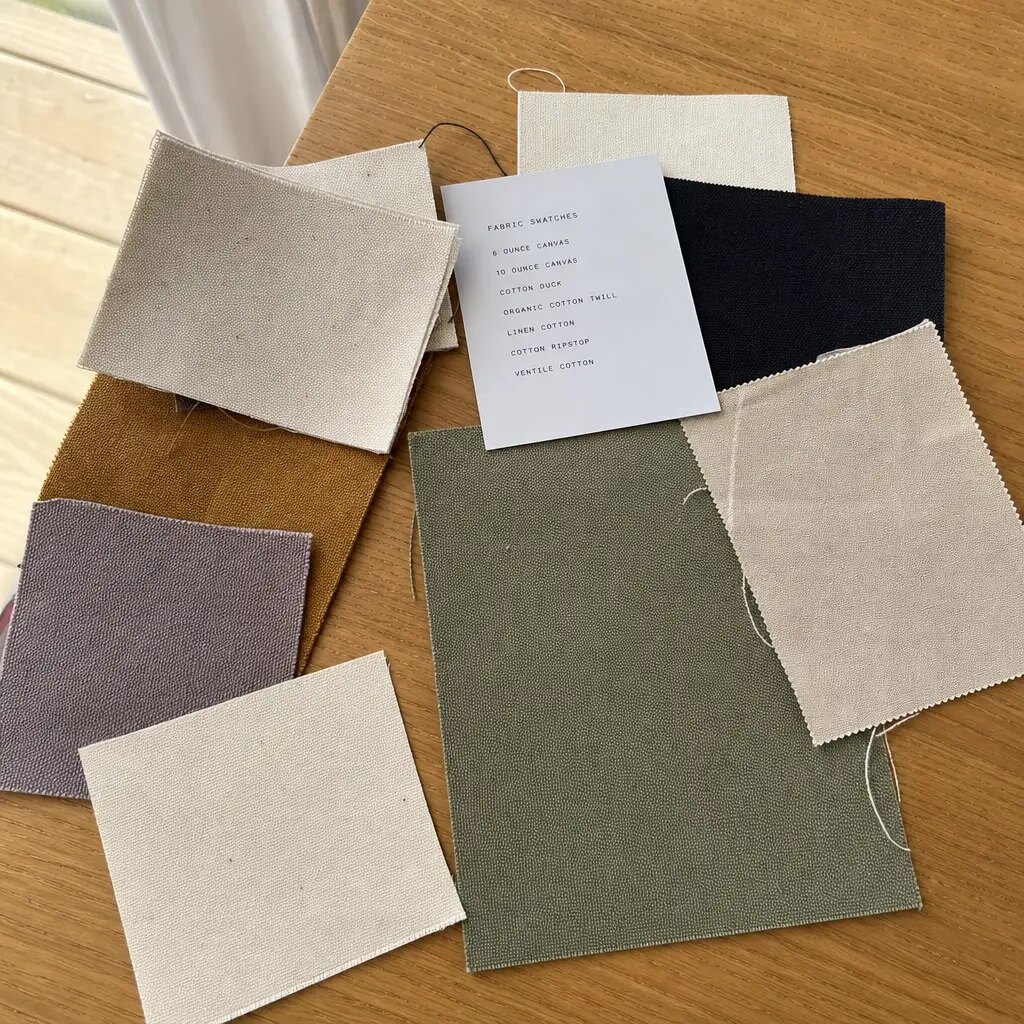
For wholesale organic cotton totes used by coffee roasters, 10-12 oz canvas, roughly 280-340 GSM, is often the best starting range. It feels more substantial than lightweight promotional sheeting, supports typical café merchandise, and still folds into cartons without excessive bulk. Lighter 180-240 GSM fabric can work for lower-cost events, but it may feel too soft for resale and can ripple around large prints.
Heavier canvas is not always better. Fabric above about 400 GSM can feel premium, but it raises unit weight, carton weight, and freight cost. Coarser yarns may also reduce fine-line clarity. If the logo includes origin text, small location names, thin serif lettering, or detailed illustration, approve a print strike-off on the selected fabric before release.
Do not rely on GSM alone. Two 300 GSM fabrics can behave differently because of yarn count, weave density, finishing, and washing. A usable spec might read: organic cotton canvas, natural unbleached, plain weave, unwashed, target 300 GSM, supplier tolerance +/- 5%, matching approved swatch A. Natural ecru cotton may show seed specks, slubs, and shade movement; approve what is acceptable before production. Dyed fabric needs lab dip approval and colorfastness checks, especially for dark totes that may contact light clothing or packaging.
- Use 280-340 GSM as a strong retail starting range.
- Ask for construction and finish, not only GSM.
- Approve natural cotton shade and surface character.
- For dyed totes, check shade, crocking risk, and print opacity.
- Run the strike-off on bulk-equivalent fabric.
4. Map the print zone: top edge, centerline, seams, and gussets
On a 38 x 42 cm flat tote, a reliable starting point is a centered front logo with the top of the artwork about 60-90 mm below the finished top edge. This keeps the print away from the top hem and handle stitch area while keeping the mark visible when the bag is carried or displayed. For round badges or tall illustrations, defining the artwork center point can be clearer than only defining the artwork top.
Reference points must be exact. Some factories measure from the finished top edge to the artwork top. Others measure to the artwork center. Some center across the full flattened width, while others center on the front panel excluding side gusset folds. These differences can move the logo enough to be visible in a retail set.
The production artwork should show the front panel outline, top hem, handle attachment, side seams or gusset folds, artwork bounding box, and dimension arrows. Keep critical details at least 20-25 mm from seams, hems, gussets, and bottom folds. If the design uses a lower-corner mark, approve it on a filled and folded tote because bottom bulging and retail bands can change the appearance.
- Start artwork top 60-90 mm below finished top edge on a 38 x 42 cm tote.
- State whether measurement is to artwork top, center, bottom, or bounding box.
- For gussets, clarify whether centering includes or excludes folded side panels.
- Keep key artwork 20-25 mm away from seams and fold lines.
- Approve the logo after folding if retail packed.
5. Match print method to logo detail and fabric color
Most coffee roaster logos are one or two colors, so water-based screen printing is usually the first method to evaluate for bulk totes. It can provide a softer handfeel than heavier surface prints and is repeatable at scale for simple wordmarks, badges, and illustrations.
Screen printing still requires testing. Cotton canvas is absorbent and textured. Fine strokes may break, small reversed-out text may fill, and distressed effects may print differently than the brand team expects. Ask the supplier to confirm minimum stroke width and small text limits for the selected GSM. A physical strike-off should show real color, opacity, edge quality, and handfeel.
Digital printing can help with short runs, gradients, or many-color seasonal artwork, but textured cotton may reduce edge crispness. Heat transfers can show sharp detail, although the handfeel may not fit an organic cotton brand position. Plastisol can be opaque but often feels heavier. Choose based on artwork, quantity, fabric color, handfeel, and durability expectations, not only unit price.
Curing matters. Water-based and high-opacity prints must be dried and cured before folding. If printed totes are packed too soon, ink can block, offset, or mark at folds. This is more likely with dark fabrics, white logos, large solid areas, humid conditions, and tight carton compression.
- Use water-based screen print for most 1-2 color bulk logos.
- Test fine lines, small type, dark fabrics, and large solids.
- Confirm underbase or extra passes for pale ink on dark cotton.
- Inspect folded samples for blocking, tackiness, and offset.
- Approve print method and packing together.
6. Build an RFQ suppliers can price accurately
A vague RFQ creates misleading quotes. One supplier may price 240 GSM cotton, simple screen print, loose bulk packing, and no pre-production sample. Another may include 320 GSM organic canvas, water-based print, woven label, retail belly band, barcode sticker, and lower carton quantity to protect presentation. Both may call the item a custom organic cotton tote, but the landed cost and risk are different.
Separate the cost drivers in the RFQ: finished body size, gusset, handle specification, fabric construction, GSM, fabric color, organic documentation, print method, print colors, artwork size, logo placement tolerance, labels, packing method, carton quantity, sample stages, and inspection support. If the tote is for retail resale, include folded dimensions, barcode position, hangtag, belly band, and display requirement. If it is for a gift set, state expected contents or target load.
Freight data should be quoted early. Organic cotton canvas has meaningful weight, and retail folding can reduce pieces per carton. Ask for carton dimensions, gross weight, net weight, pieces per carton, and CBM for the exact packing method. Compare landed cost, not only ex-works or FOB unit price.
- Require all suppliers to quote the same size, GSM, print method, and packing.
- Ask which samples and setup charges are included.
- Confirm print-before-sewing or print-after-sewing process.
- Request carton data for landed cost comparison.
- Include organic documentation requirements at RFQ stage.
7. Understand organic documentation and claim responsibility
Organic cotton sourcing has two different concerns: material traceability and claim control. A supplier may have a scope certificate showing it is certified for certain activities, products, and standards. That certificate is useful, but it does not always prove that a specific shipment is certified or that every downstream buyer can make certified organic claims in retail copy.
For shipment-level traceability, ask whether a transaction certificate, material declaration, or other traceability document can be issued for the actual order. Requirements depend on the certification system, supply chain structure, and market. If your café tag, website, or packaging says certified organic cotton, confirm whether your company, the supplier, or another party in the chain must hold certification to make that claim legally and accurately.
If you only need internal assurance that the tote is made from organic cotton, your documentation requirement may be lighter. If you plan to print or sell with formal certified organic language, involve your compliance team before approving copy. Keep the wording specific and supportable, such as organic cotton canvas, made with organic cotton, or certified organic cotton only when the chain-of-custody documents allow it.
- Ask for the supplier’s current scope certificate.
- Ask what shipment-specific document can be issued.
- Do not assume a supplier certificate covers your retail claim.
- Confirm who is certified to make organic claims in your market.
- Keep approved claim wording in the purchase file.
8. Manage MOQ, artwork splits, and café-location versions
MOQ is rarely one number. It can depend on fabric availability, dyeing minimums, cutting efficiency, print setup, artwork versions, woven labels, belly bands, barcode stickers, and carton separation. A 2,000-piece order split across four café logos, two fabric colors, and several retail inserts may behave like many smaller production runs.
The cleanest structure is usually one shared base tote: same fabric color, size, handle, main placement, and packing. If location-specific information is needed, consider a hangtag, sticker, belly band, or insert card rather than changing the tote print. This preserves production efficiency while allowing local merchandising.
If multiple artwork versions are required, ask for MOQ and setup cost by version. A one-color logo split across a few designs may be manageable. A multi-color design split into many small runs increases screens, registration checks, strike-offs, and carton separation. Confirm whether versions can be mixed in cartons or must be packed as separate SKUs.
Agree overrun and underrun terms before deposit. Custom cutting, printing, and QC rejection can create small quantity variance. A few percent may be acceptable for one shared design but problematic when each café needs an exact count.
- Use one base tote specification where possible.
- Move location details to tags or bands when practical.
- Quote MOQ by artwork version and packing SKU.
- Define carton mixing and SKU separation rules.
- Agree overrun and underrun policy before production.
9. Approve samples the way bulk will be produced
Sampling should not stop at a blank tote. A blank sample confirms body size, handle drop, stitching, fabric handfeel, and general construction, but it does not prove print quality or logo placement. For branded coffee merchandise, the key approval is a pre-production sample using final or bulk-equivalent fabric, final artwork size, final print method, final handle construction, and intended packing.
Measure the sample. Record finished width and height, gusset depth, handle width, handle drop, top hem width, artwork top position, side margins, and artwork centerline. Photograph the tote flat with a ruler. For dyed fabric, approve the lab dip or shade standard before final print approval.
Review the tote in use. Hang it from a peg, carry it by the handles, load it with coffee bags or equivalent weight, fold it into the retail format, and add the belly band, barcode, hangtag, or insert if included. Many problems appear only after loading or folding.
Keep one approval record. Procurement, marketing, and the supplier should not work from separate email threads. The approval sheet should include sample date, version number, fabric GSM, color reference, print method, ink reference, artwork file name, approved dimensions, packing reference, and accepted deviations. Use precise change language, such as move logo down 10 mm or reduce logo width to 210 mm.
- Approve a printed pre-production sample, not only a PDF proof.
- Measure construction, handles, hem, and artwork position.
- Test flat, hung, carried, filled, folded, and packed.
- Use one signed approval sheet with artwork file name.
- Do not release bulk if sample materials differ without documenting risk.
10. Plan packing and final inspection before shipment
Packing changes first impression. For operations or events, bulk flat packing may be enough. For café retail, e-commerce, or gift sets, buyers may need a neat fold, belly band, hangtag, barcode sticker, insert card, or individual bag. Each option affects labor, carton quantity, freight cost, receiving accuracy, and shelf presentation.
Check whether the logo remains visible and undamaged after folding. Avoid fold lines through fine type or pale ink. If the tote sits on a retail shelf, define folded dimensions and band position. If it will be photographed online, approve the packed sample before bulk packing materials are ordered.
Final inspection should cover appearance, function, packing, and documents. Compare production to the approved pre-production sample and strike-off. Measure logo placement using the approved diagram. Check print opacity, edge sharpness, curing, stains, shade, sewing, handle strength, labels, carton marks, and SKU separation. Sample across cartons, fabric lots, and artwork versions rather than only from the top carton.
Critical defects should be listed before inspection. Examples include wrong artwork, wrong fabric color, severe print offset, open seam, broken handle, oil stain on the logo area, mold odor, missing barcode, or incorrect SKU packing. Clear acceptance criteria reduce subjective arguments and make release, sorting, rework, or claim negotiation faster.
- Approve fold line, folded dimensions, and band position.
- Check cured prints for blocking, offset, tackiness, and crease damage.
- Request carton dimensions, weights, pieces per carton, and CBM.
- Inspect across cartons, lots, and artwork versions.
- Define critical defects before the final inspection.
Specification comparison for buyers
| Spec decision | Practical B2B recommendation | When it fits | Buyer risk to check |
|---|---|---|---|
| Finished body size | Common coffee merchandise range: 36 x 40 cm to 40 x 45 cm. A useful default is 38 x 42 cm finished body, with +/- 10 mm body tolerance. | Works for 250 g and 500 g coffee bags, mugs, small brewers, café retail, gift sets, and e-commerce add-ons without becoming oversized. | Confirm dimensions are finished sewn dimensions, not cut-panel dimensions. Hemming, seams, and gussets can shift the printable area. |
| Fabric weight | Retail tote starting range: 10-12 oz organic cotton canvas, about 280-340 GSM. For event use, 180-240 GSM may be acceptable; for premium heavy totes, 360-400 GSM may be reviewed. | Balances handfeel, printability, carton efficiency, and perceived value for coffee roaster merchandise. | GSM alone is not enough. Yarn, weave density, washing, and finishing affect drape, shrinkage, ink absorption, and logo sharpness. |
| Handle specification | Typical shoulder-carry handle: 2.5-3.5 cm width, 55-65 cm total length, about 25-30 cm handle drop. Specify box-cross stitch or bartack reinforcement. | Useful for café customers carrying coffee, mugs, and daily items while keeping the bag comfortable enough for reuse. | If handle drop varies between left and right handles, the tote hangs crooked and makes a centered logo look off. |
| Main logo placement | For a 38 x 42 cm flat tote, start with a centered front logo, artwork top 60-90 mm below finished top edge, or define artwork center point. | Good for peg displays, shelf stacks, online photos, and walking brand visibility. | Placement must state the reference point: artwork top, artwork center, finished top edge, side seam, or front-panel centerline. |
| Artwork size | Typical front logo width: 180-240 mm on a 380 mm wide body. Keep critical details at least 20-25 mm from seams, gusset folds, bottom fold, and heavy stitch zones. | Keeps the mark visible while preserving clean margins and reducing distortion on textured canvas. | Oversized art can cross fold lines, lose edge sharpness, or appear off-center if the sewn bag varies within tolerance. |
| Placement tolerance | Common target: +/- 5 mm horizontally and vertically for standard flat totes. Use +/- 7-10 mm for gusseted, washed, or post-sewn printed bags if supplier confirms. | Creates an objective inspection standard and reduces disputes between marketing, procurement, and factory QC. | A tolerance without a measurement method is weak. Put the measurement diagram into the approved sample sheet. |
| Print method | Water-based screen print for most 1-2 color roaster logos. Digital print or transfer only after testing for complex art, short runs, or gradients. | Screen print is usually the most practical bulk method for simple marks on organic cotton canvas. | Cotton texture can blur fine details. Dark fabric requires opacity checks, underbase control, and curing verification. |
| Organic documentation | Ask for supplier scope certificate, material traceability documents, and transaction certificate availability where applicable. Confirm who is certified to make claims. | Important if the tote, packaging, website, or retail copy uses organic cotton claims. | A supplier’s certificate does not automatically allow every buyer to make certified organic retail claims. Confirm chain-of-custody requirements for your market. |
| Packing format | Bulk flat pack for operations; folded with belly band, hangtag, barcode, or individual bag for retail resale. | Controls café display quality, receiving accuracy, and e-commerce presentation. | Fold lines can damage or hide the logo. Approve packed sample before bulk folding and carton loading. |
Buyer checklist before sampling
- State finished bag dimensions in centimeters, including body width, body height, gusset depth if any, and tolerance.
- Specify organic cotton fabric type, target GSM or ounce weight, construction, color, finish, and acceptable GSM tolerance.
- Define handle width, total handle length, handle drop, attachment position, and reinforcement stitch pattern.
- Provide production artwork with millimeter dimensions, not only a lifestyle mockup.
- Mark logo placement from fixed reference points, such as finished top edge and front-panel centerline.
- State whether centering is across the full flattened bag width or the front panel excluding gusset folds.
- Confirm print method, number of colors, ink type, maximum print area, and setup charges.
- Provide Pantone references, but approve physical fabric and print strike-offs before bulk.
- List required sample stages: swatch, lab dip if dyed, blank fit sample, print strike-off, and pre-production sample.
- Ask which organic documents can be issued for the shipment and who can legally make organic claims.
Factory quote questions to send
- What exact fabric construction, target GSM, ounce weight, and GSM tolerance are included in the quote?
- Is the quoted material organic cotton at yarn, fabric, or finished-goods stage, and what documents can be issued for this shipment?
- Can you provide your current scope certificate, and can a transaction certificate or equivalent shipment traceability document be arranged if required?
- What finished body size, gusset depth, top hem width, handle length, handle width, handle drop, and stitch reinforcement are included?
- Will the tote be printed before sewing or after sewing, and what placement tolerance can you reliably hold for this construction?
- What print method, ink type, number of colors, screen/setup charges, and maximum print area are included?
- Can the main logo be held within +/- 5 mm from the approved reference points on a standard flat tote? If not, what tolerance do you recommend and why?
- Which sample steps are included in price: fabric swatch, lab dip, blank fit sample, print strike-off, pre-production sample, and packed sample?
- What is the MOQ by fabric color, bag size, artwork version, woven label, belly band, barcode SKU, and packing format?
- What are the carton dimensions, pieces per carton, gross weight, net weight, and estimated CBM for the quoted packing method?
Quality-control points to confirm
- Confirm finished body width and height against approved tolerance before judging logo position.
- Measure logo placement from the approved diagram, such as artwork centerline to bag centerline and artwork top to finished top edge.
- Check print color against the approved physical strike-off, allowing for realistic cotton absorbency variance.
- Reject major print defects such as severe ghosting, double image, ink drag, excessive feathering, missing ink, scorch marks, or unreadable small text.
- For dark fabric, inspect white or pale logos for opacity, underbase registration, cracking, strike-through, and carton-to-carton consistency.
- Open folded samples from multiple cartons to check blocking, tackiness, offset, crease damage, and print transfer.
- Check top hem width and handle attachment alignment because uneven sewing can make correct placement look crooked.
- Measure handle pair length and handle drop so the tote hangs straight and does not twist on display.
- Inspect handle reinforcement for correct box-cross stitch or bartack pattern, loose threads, skipped stitches, and broken stitches.
- Check side seams, bottom seams, and gusset joins for open seams, exposed raw edges beyond spec, holes, puckering, and weak lock stitches.