1. Start with the warehouse need-by date, not the tote design
Lead time planning for organic cotton totes fails when procurement starts with unit price and leaves the calendar until the final quote comparison. For a retail launch, wholesale drop, trade show, loyalty program, or gift-with-purchase event, the real deadline is not the supplier's ex-factory date. It is the date your warehouse, 3PL, distributor, or retail partner must have received usable stock with enough time for inbound scanning, labeling, put-away, allocation, and outbound shipping.
A useful organic cotton totes lead time planning guide for eco apparel brands works backward. Start with the launch or sell-by date. Subtract warehouse receiving and allocation time. Subtract domestic delivery, customs clearance, international freight, export documentation, final inspection, bulk packing, decoration, sewing, cutting, fabric arrival, sample approval, and buyer-side artwork or compliance review. That reverse calendar quickly shows whether a fully custom dyed tote is realistic or whether the launch should use natural totes, stocked blanks, or split shipments.
The most common calendar mistake is mixing buyer-controlled time with supplier-controlled time. A factory cannot accurately start bulk lead time when artwork is still changing, barcode data is missing, deposit has not arrived, or compliance has not approved claim wording. Procurement should make buyer-side approvals visible in the same calendar as production milestones. If a sample takes six working days to make and four days to ship, but then waits eight days for marketing comments, the delay is not factory production time.
Ask every supplier to state when their quoted lead time starts. Some suppliers count from deposit; others count from approved PP sample, fabric arrival, or final artwork approval. For B2B planning, 30 days production is too vague unless the trigger date and excluded steps are defined. That single clarification often explains why two quotes look similar on paper but behave very differently in real scheduling.
- Work backward from the warehouse need-by date, not the PO date or quotation date.
- Separate buyer-side approvals from supplier-side production stages.
- Name the approval owner for artwork, sample comments, barcode data, packing, compliance documents, and payment release.
- Add time for final inspection, export documents, customs, trucking, and warehouse receiving.
- Treat artwork, packing, size, or label edits after PP approval as schedule changes, not harmless admin updates.
- Ask the supplier to quote lead time in calendar days or working days and define exactly what is included.
2. Turn the tote specification into a process map
Organic cotton totes look simple, but every specification choice adds or removes factory steps. A flat natural canvas tote with standard handles and one-color screen print may pass through fabric receiving, cutting, sewing, print, curing, trimming, folding, and carton packing. A heavier retail tote with gussets, dyed fabric, contrast handles, inside pocket, embroidery, woven label, hang tag, barcode sticker, and plastic-free band becomes a multi-stage production program with more approvals and more queues.
Fabric weight is one of the first schedule and cost drivers. Many lightweight promotional or entry retail totes sit around 140 to 160 GSM. More substantial retail bags often move toward 180 to 220 GSM, sometimes higher when the brand wants a heavier hand feel. Heavier fabric can improve perceived value, but it can also affect cutting yield, needle choice, seam thickness, folding volume, and print appearance. Buyers should not compare quotes unless every supplier is quoting the same GSM and confirming whether it is greige weight or finished weight.
Construction details also influence calendar reliability. Flat totes are faster than gusseted totes because gussets require more accurate folding and seam control. Long shoulder handles use more fabric and need secure reinforcement. Bottom gussets, boxed corners, contrast panels, inside pockets, snaps, zippers, French seams, binding, or bottom reinforcement can be appropriate, but each should be frozen before the factory reserves materials and line time.
Decoration changes the path again. Screen printing may be efficient for simple artwork, but multi-color registration, large solid coverage, fine lines, and strict opacity requirements can require a strike-off. Embroidery needs digitizing and stitch-density checks. Woven labels require separate label production. Heat transfer and digital print require adhesion and hand-feel review. The supplier cannot responsibly promise a final production date until construction, decoration, and packing are reviewed together.
- Include width, height, gusset depth, handle length, handle width, fabric GSM, weave, seam type, reinforcement method, and measurement tolerances in the RFQ.
- Use the same measurement unit and method across all suppliers; confirm whether dimensions are measured flat, filled, before wash, or after wash.
- For many commercial tote specs, buyers negotiate practical tolerances such as body measurements around plus or minus 0.5 cm to 1.0 cm and print placement around plus or minus 0.5 cm, but the agreed tolerance must be written.
- Confirm whether decoration is printed before sewing, after sewing, or after washing because placement tolerance and defect risk change.
- Flag processes that need separate queues: dyeing, washing, embroidery, woven labels, hang tags, barcode labeling, testing, or retail pack-out.
- Do not approve a delivery date until the factory has reviewed the final tech spec, artwork, packing, and document requirements together.
3. Plan sampling as approval gates, not as one mystery sample
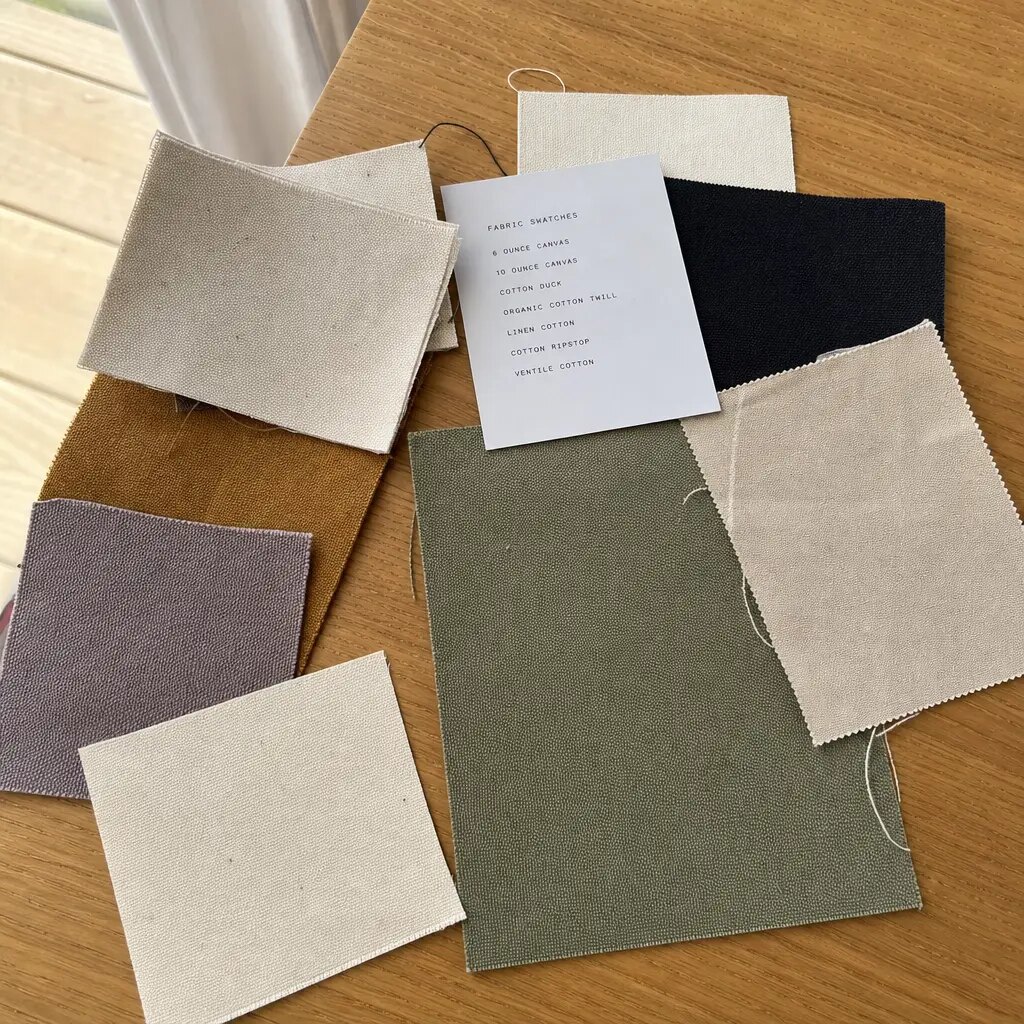
Sampling should reduce risk, not become an open-ended development loop. One sample cannot always answer construction, fabric, print, label, folding, barcode, and carton questions at the same time. For a repeat tote, one PP sample may be enough. For a new custom order, procurement should separate sample purposes: fabric swatch for hand feel and weight, lab dip for dyed color, development sample for construction, print or embroidery strike-off for decoration, PP sample for final production standard, and packed sample for warehouse presentation.
Physical sample approval is still important. Photos are useful for fast comments, but they do not reliably show fabric weight, true color, print hand feel, seam strength, or handle reinforcement. If timing forces photo approval, document the risk and state which details remain subject to physical inspection. Keep one master reference sample, mark it with style number and approval date, and tell the factory which earlier samples are obsolete.
For natural organic cotton, define acceptable variation. Seed flecks, slight slubs, and natural shade differences may be normal, but stains, oil marks, mildew odor, holes, shade mixing, and dirty handling should not be accepted. If your brand logo uses light ink or fine lines, approve a strike-off on the actual fabric. A white digital mockup is not a reliable guide to opacity on natural cotton canvas.
Internal approval service levels matter. A good supplier calendar can still fail if a sample sits on a buyer's desk. Procurement should set expected response times: for example, sample measurement comments within two business days, artwork approval within one business day, compliance document review within three business days, and final PP sign-off by one named decision maker. Clear turnaround times are one of the easiest ways to keep tote projects from drifting.
- Use separate gates for fabric, construction, decoration, packing, and documentation when the order is new or complex.
- Approve measurements, handle attachment, seam construction, print position, label placement, folding method, and packaging with written notes.
- Request a decoration strike-off on actual fabric when color, opacity, fine lines, registration, or logo scale matters.
- Mark the approved master sample and maintain a sample change log.
- State whether PP approval allows bulk fabric cutting, bulk printing, or both.
- Set internal deadlines so sampling does not expand unpredictably.
4. Check fabric sourcing, organic documentation, and color before the PO becomes urgent
Organic cotton tote lead time is often controlled by fabric availability, not sewing capacity. If the supplier has suitable organic cotton canvas or twill in stock, the order can move faster after approval. If fabric must be woven, dyed, washed, or reserved from a mill, the calendar depends on mill capacity, minimum lots, color approval, finishing time, and transport to the sewing facility. Ask whether the quote is based on stocked fabric, reserved fabric, new weaving, or stocked blank totes.
Organic documentation should be reviewed early because it affects claim approval, invoice wording, labels, and customer-facing product descriptions. Depending on your market and claim wording, your team may need certificates, transaction documents, supplier declarations, or chain-of-custody records. The practical sourcing rule is alignment: RFQ, PO, invoice, packing list, label, carton mark, and marketing claim should describe the product consistently. A claim that cannot be supported should not be printed on a label or product page.
Natural, dyed, and washed totes have different risks. Natural organic cotton avoids dye approval and can shorten lead time, but shade should still match the approved reference within a defined range. Custom-dyed totes need lab dips, a selected standard, bulk shade control, possible colorfastness review, and agreement on shade-band tolerance. Washed or garment-dyed totes can shrink, twist, soften, or change print appearance. If washing happens after sewing, the factory must build shrinkage allowance into pattern cutting and inspect final dimensions after the wash.
Eco apparel brands should also avoid stacking unsupported sustainability claims. Organic cotton, undyed, plastic-free packed, reusable, and low-impact dyed are different claims. Each requires appropriate support. Procurement should ask for documents that match the exact commercial language the brand intends to use. If the packaging or online product copy uses a sustainability claim, the factory paperwork should not contradict it.
- Ask whether fabric is in stock, reserved, or subject to new weaving, dyeing, finishing, or mill booking.
- Confirm organic cotton documentation before PP approval, not after finished goods are ready to ship.
- Use consistent product wording across RFQ, PO, invoice, packing list, product label, carton marks, and marketing copy.
- For dyed totes, approve lab dips or a physical color standard and define acceptable shade variation before bulk dyeing.
- For washed totes, confirm shrinkage allowance, twist risk, measurement point, and whether print happens before or after washing.
- Do not let suppliers add sustainability language to a quote unless your brand can substantiate it.
5. Select the sourcing route based on timing risk, not only unit price
The supplier route changes both lead time and quote reliability. A direct factory with sewing, decoration, trimming, and packing under one management system may give stronger milestone visibility for repeat programs. Fewer handoffs can make it easier to track fabric arrival, cutting, print, curing, packing, inspection, and shipment readiness. But direct does not automatically mean faster: a strong factory may be fully booked, while a smaller factory may accept a PO quickly and then struggle with capacity.
Trading companies and agents can be useful when a buyer needs mixed accessories, local communication, document chasing, or one PO across several items. The risk is that the quoted lead time may not be based on a confirmed factory slot. Ask who the production factory is, whether inspection can occur at the production site, which steps are subcontracted, and what happens if a subcontractor misses a milestone. The answer should be specific, not simply reassuring.
Nearshore or domestic production can protect launch dates when transit time is the largest risk. Unit cost may be higher, but shorter freight, faster sampling, and easier communication can reduce emergency air freight and missed retail windows. Stocked organic cotton blanks decorated locally can be the fastest option, but buyers must confirm blank specs and documentation instead of assuming all blanks are interchangeable.
A hybrid plan is often practical: use stocked blanks or nearshore production for the first launch quantity, then move repeat volume to a custom offshore factory once specs and demand are stable. If you do this, control consistency. Match GSM, finished dimensions, handle length, logo placement, label wording, folded size, barcode location, and carton configuration across both sources.
- Choose direct factory production when repeatability, detailed QC, and production visibility matter most.
- Use agents or trading companies when their factory access, accountability, and documentation role are clear.
- Use nearshore or domestic suppliers when transit time is the main launch risk.
- Use stocked blanks for urgent needs, but verify GSM, dimensions, handle stitching, organic documentation, and continuity.
- Ask every supplier for a milestone calendar instead of one broad lead-time number.
- Compare quotes only when specs, approval path, Incoterm, packing, inspection, documents, and freight assumptions match.
6. Read MOQ as a clue about material, setup, and variant complexity
MOQ is rarely arbitrary. It usually reflects fabric booking minimums, cutting efficiency, decoration setup, line scheduling, label production, and packaging procurement. A sewing factory may be willing to make a low quantity, while the fabric mill, printer, label supplier, or packaging vendor has a higher minimum. When MOQ seems high, ask which component is driving it.
Clarify whether MOQ is per order, per body color, per handle color, per size, per artwork, per print color set, per label version, or per packing configuration. A 5,000-piece order can become inefficient if split into five body colors, four artworks, two handle colors, and channel-specific packing. Each split creates additional setup, counting, carton separation, inspection complexity, and risk of mixed SKUs.
Price breaks should be read as operational signals. A lower price at 3,000, 5,000, or 10,000 pieces may reflect fabric utilization, screen-print efficiency, carton buying, or freight consolidation. Understanding the reason helps procurement decide whether to raise quantity, reduce variants, simplify packaging, or pay more for a safer first order.
Packing can also create hidden MOQ. Individual polybags, printed belly bands, hang tags, barcode labels, tissue, kraft sleeves, and custom cartons all require material purchase and labor planning. If those details arrive after sewing, the tote order may sit finished while the factory waits for packing materials. That delay is easy to miss during quote comparison and expensive to fix later.
- Ask whether MOQ is per order, color, size, artwork, print method, label version, or packing style.
- Limit first-order complexity by reducing colorways, artwork splits, and channel-specific pack-outs.
- Identify the MOQ driver: fabric, print setup, woven labels, hang tags, packaging, or line scheduling.
- Request price breaks using the same spec, Incoterm, packing, testing, and inspection assumptions.
- Ask whether leftover fabric, labels, or packaging can be held for replenishment and who pays for them.
- Do not force an unrealistic MOQ if it will create hidden surcharges, weak QC, or unstable scheduling.
7. Freeze artwork, labels, and decoration standards before production scheduling
Decoration is where many tote orders lose time. Buyers approve the bag body, then keep changing logo scale, slogan text, ink color, placement, side-label wording, or hang tag content. The factory cannot confidently order screens, digitize embroidery, produce woven labels, or schedule the print line until those details are final. For multi-stakeholder apparel brands, procurement should freeze artwork before PP sample approval and require any later edit to trigger a revised calendar.
Screen print is common because it is efficient for clean tote artwork. The schedule depends on number of colors, ink mixing, screen setup, registration checks, print area, curing, and strike-off approval. Large solid prints on natural cotton may need opacity review. Fine lines can fill or break on textured canvas. Multi-color artwork requires registration tolerance, and small shifts are more visible when the logo is geometric or text-heavy.
Embroidery can look premium but requires digitizing, thread approval, stitch density review, and placement testing. Dense embroidery can pucker lighter cotton fabric, especially around 140 to 160 GSM. Woven labels require separate artwork conversion, label material approval, fold or cut type, production MOQ, and sewing placement control. If a label includes organic cotton or other claim wording, compliance should approve it before bulk label production.
Placement must be specified numerically. Centered logo is not enough for a factory floor. State print width, print height, distance from top edge, distance from side seam or center line, measurement point before or after wash, and tolerance. If the tote has a gusset, confirm the printable flat area. If artwork crosses a seam or fold, ask the factory to confirm distortion and cracking risk before approval.
- Freeze artwork before PP sample approval and document any later change as a schedule and cost review.
- For screen print, specify number of colors, ink references, print size, placement, opacity expectation, and curing or handling requirement.
- For embroidery, approve digitizing, thread color, stitch density, backing if used, placement, and puckering tolerance.
- For woven labels, approve size, fold type, material, text, claim wording, color, and sewing position.
- Provide artwork in the supplier's required format with fonts outlined and color references clearly stated.
- Approve a strike-off when logo detail, ink opacity, or natural fabric texture affects final appearance.
8. Decide packing and warehouse requirements before sewing is finished
Packing is often treated as an end step, but it can add real lead time. A factory may finish sewing and printing, then lose days waiting for barcodes, hang tags, belly bands, revised carton marks, or routing-guide corrections. Simple folded bulk packing is usually fastest. Retail-ready packing can work well, but it must be specified early enough for the factory to buy materials and train packers.
Plastic-free packing needs practical QC planning. Removing individual polybags can reduce plastic use, but it changes moisture, dust, wrinkle, and handling risk. Paper bands, kraft sleeves, tissue, or master-carton-only packing may be acceptable if the buyer defines presentation standards. If totes go directly to a 3PL or retailer, barcode placement, carton labels, case quantities, and routing guides may override the brand's preferred presentation.
Carton configuration affects freight and warehouse efficiency. Too many totes per carton can create crushing, heavy cartons, and counting errors. Too few increases carton use and freight volume. Define pieces per inner pack, master carton quantity, carton dimensions where required, gross weight limits, carton marks, SKU separation, and pallet rules. Many warehouses prefer single-SKU cartons; mixed cartons should be allowed only if receiving systems can manage them.
A packed sample or pack-out photo should be approved before bulk packing starts. If the order includes multiple SKUs, artwork versions, or channel allocations, the packing instruction should include a clear matrix. Late repacking can be more disruptive than a minor sewing issue because finished cartons must be opened, resorted, relabeled, and resealed. That usually costs more time than brands expect.
- Define folded size, fold direction, inner pack count, master carton quantity, carton dimensions, and gross weight limit.
- Decide between individual polybag, no polybag, paper band, belly band, kraft sleeve, tissue, or another plastic-free format.
- Provide barcode files, SKU labels, hang tag files, carton marks, and routing-guide rules before bulk packing.
- Confirm whether cartons must be single-SKU or whether mixed cartons are permitted.
- Set moisture, dirt, wrinkle, odor, and handling-mark expectations for cotton goods packed without individual bags.
- Approve a packed sample, pack-out photo, or first-carton check before the factory seals bulk cartons.
9. Write QC criteria that cover function, appearance, packing, and documents
Quality control for organic cotton totes should be broader than a quick visual check. The bag must function as a carry item, represent the brand cleanly, match the approved pack-out, and support the organic cotton claim used commercially. A tote with valid paperwork but weak handle stitching is not acceptable. A well-sewn tote with inconsistent claim documents is also not fully acceptable for a brand making organic claims.
Functional QC starts with measurements and construction. Inspect width, height, gusset, handle length, handle width, seam allowance, stitch density, handle reinforcement, bottom seam security, pocket position, and label placement. Obvious defects include twisted panels, asymmetric gussets, uneven handles, skipped stitches, weak bartacks, open seams, needle damage, and excessive loose threads. If the bag is meant to carry books, groceries, apparel, or event materials, define a practical load test before production. The test should state weight, duration, and pass or fail criteria rather than strong handles.
Appearance QC should cover fabric and decoration. Natural organic cotton can show flecks and texture, but oil stains, water marks, mildew odor, holes, shade mixing, dirty hand marks, or visible contamination should not pass. Print inspection should check color, registration, opacity, edge sharpness, placement, cracking, smudging, and ink transfer after normal handling. Embroidery inspection should check thread color, missing stitches, loose ends, puckering, and backing if used.
Use a recognized inspection approach when appropriate. Many buyers use AQL sampling for general consumer goods; for example, AQL 2.5 for major defects and 4.0 for minor defects is common in many soft goods programs, while critical defects should not be accepted. The exact plan must be agreed in the PO or inspection booking. Documentation QC should happen before shipment: confirm invoice, packing list, carton marks, certificates, and traceability wording match the approved order.
- Create an inspection checklist covering measurements, stitching, reinforcement, decoration, cleanliness, packing, cartons, and documents.
- Define critical, major, and minor defects before inspection day.
- Use agreed measurement tolerances; do not let the inspector decide tolerances from memory.
- Measure random cartons, not only top samples prepared by the factory.
- Check print or embroidery after normal handling for cracking, flaking, smudging, transfer, loose thread, or puckering.
- Verify carton count, barcode position, SKU separation, inner pack quantity, and carton marks against the warehouse plan.
- Review organic cotton documentation and product wording before final payment or shipment release where possible.
10. Protect the calendar with milestones, buffers, and recovery options
The biggest tote delays are often seasonal and administrative rather than technical. Sewing a straightforward tote is usually not the hardest step. Risk comes from fabric availability, overloaded print lines, holiday shutdowns, buyer approval delays, port congestion, customs issues, and late routing-guide changes. Identify major local holidays, peak retail production periods, and freight cutoffs before placing the PO. If the order is close to a shutdown, ask whether fabric, labels, and packing materials can be booked before the break and when the line will actually restart.
A strong production calendar includes milestones, not just one promised ship date. Useful checkpoints include final artwork received, deposit received, sample start, sample dispatch, sample approval, fabric booking, fabric arrival, cutting start, sewing start, decoration start, curing or drying complete, trimming, packing start, inspection date, document completion, ex-factory date, freight handover, estimated arrival, customs clearance, and warehouse delivery. Each milestone should have an owner and a date.
Recovery options should be discussed before the order is late. Possible actions include splitting shipment, sending a small launch quantity by air, prioritizing one SKU, simplifying packing, moving inspection earlier, adding overtime, or using stocked blanks for a stopgap quantity. Each option has tradeoffs. Air freight may save an event but can damage margin. Overtime may help sewing but not fabric booking. Simplified packing saves time only if packing is the bottleneck.
Compare suppliers by landed cost and launch risk, not only ex-factory price. A lower tote price can become more expensive if it forces emergency freight, causes warehouse rework, misses a sales window, or lacks documentation for the claim. The best sourcing decision balances cost, timing, compliance, and quality control. That is the real procurement job, not just choosing the lowest quote.
- Add buffer before holiday shutdowns, peak production periods, and high-volume freight seasons.
- Request a milestone calendar with responsible departments or named contacts for each stage.
- Track buyer-side approvals separately from factory production time.
- Define the latest acceptable warehouse date and escalation trigger before production starts.
- Pre-agree recovery options such as split shipment, partial air freight, simplified packing, or prioritized SKUs.
- Compare landed cost, document readiness, and launch risk rather than ex-factory tote price alone.
Specification comparison for buyers
| Spec decision | Recommended option | When it fits | Buyer risk to check |
|---|---|---|---|
| Stocked organic cotton blank + local decoration | Fastest route for urgent launch quantities, often measured in days to a few weeks after artwork approval | Event stock, PR kits, short launches, and replenishment when custom construction is not required | Verify blank GSM, finished measurements, handle reinforcement, stock continuity, decoration limits, and whether the organic cotton claim is documented for the blank |
| Custom natural tote, standard construction | Best balance for regular B2B orders when size, GSM, handles, and one print are fixed | Eco apparel brands ordering repeatable retail or gift-with-purchase totes without dyeing or washing | Confirm whether base fabric is in stock; ask for a calendar from PP approval to ex-factory, not a vague production lead time |
| Custom-dyed organic cotton tote | Use when brand color is critical and the calendar allows lab dips and bulk shade control | Retail tote programs with seasonal colorways or brand-specific Pantone or TCX direction | Lab dip approval, shade band tolerance, shrinkage after dyeing, colorfastness testing, and mill MOQ can extend the calendar |
| Washed, enzyme-washed, or garment-dyed tote | Plan as a longer development route with additional measurement and shade checks | Soft hand feel, vintage look, pigment finish, or deliberately relaxed appearance | Confirm shrinkage allowance, twist tolerance, post-wash measurement point, print sequence, and whether decoration changes after washing |
| Screen print on natural cotton | Efficient for clean logos, solid artwork, and medium-to-large quantities | Most apparel brand tote orders with one to three print colors and defined placement | Check ink opacity on natural fabric, registration tolerance, curing, rubbing or transfer risk, and whether a strike-off is approved before bulk |
| Embroidery or appliqué branding | Useful for premium positioning, but slower than simple print | Small logos, side branding, capsule programs, or retail totes where texture matters | Digitizing, stitch density, puckering on lighter fabric, thread color approval, and machine time can affect both cost and lead time |
| Woven label or claim label | Strong for subtle branding and compliance wording when approved early | Side labels, inside care or claim labels, hang labels, or SKU identification | Label supplier MOQ, artwork conversion, fold type, cut tolerance, claim wording, and sewing position must be approved before bulk label production |
| Direct factory with in-house sewing and decoration | Best for stable repeat orders and tighter control of milestones | You know the tote size, GSM, artwork, packing, inspection standard, and approval owner | Confirm which steps are truly in-house versus subcontracted: weaving, dyeing, washing, printing, embroidery, testing, labeling, or packing |
| Trading company or agent-managed production | Useful for mixed accessory programs or when communication and document follow-up are needed | You need one PO across totes, pouches, labels, or packaging, or you need local supplier management | Ask for the actual production site, inspection access, delay accountability, and whether the quoted slot is confirmed |
Buyer checklist before sampling
- Lock the final tote width, height, gusset depth, fabric GSM, weave, handle length, handle width, seam allowance, reinforcement method, print area, and measurement tolerances before requesting final dates.
- State whether the order is natural, custom-dyed, garment-dyed, enzyme-washed, pigment-washed, printed after sewing, or made from stocked organic cotton blanks; each route changes sampling, shrinkage, and finishing time.
- Confirm whether quoted GSM is greige fabric weight or finished fabric weight. For many cotton canvas programs, buyers use a practical GSM tolerance such as plus or minus 5% to 7%, but the agreed tolerance must be written into the PO.
- Set finished measurement tolerances by area: body width and height, gusset, handle length, handle width, print placement, label position, and folding size. Avoid approving only a visual mockup.
- Specify decoration details up front: method, artwork file format, number of colors, ink or thread references, print size, placement from top edge and side seams, opacity expectations, and whether artwork can cross seams or gussets.
- Define packing before bulk starts: folded size, individual polybag or plastic-free band, barcode placement, inner pack count, master carton quantity, carton dimensions, gross weight limit, carton marks, pallet rules, and moisture protection.
- Ask for a production calendar that separates artwork proof, sample making, sample transit, sample approval, fabric booking, cutting, sewing, decoration, curing or drying, trimming, packing, inspection, documentation, and dispatch.
- Request a quote that separates base tote cost, fabric surcharge if any, decoration cost, label cost, special finishing, packing cost, testing cost, inspection cost, freight assumption, Incoterm, payment terms, and validity period.
- Confirm which organic cotton documents are available for your claim wording and market before approving bulk material. Align RFQ, PO, invoice, packing list, label wording, and product page language.
- Approve a pre-production sample or signed reference sample before bulk cutting or printing. Name the buyer-side approver and define how many business days your team has to comment.
Factory quote questions to send
- What is your standard lead time for this exact tote specification from approved pre-production sample to ex-factory readiness, stated in calendar days or working days?
- When does your quoted lead time start: deposit received, PO received, artwork approved, fabric available, trims available, or physical PP sample approved? Please define the trigger date.
- Do you have the specified organic cotton fabric or blank tote in stock? If not, what is the mill booking time, fabric MOQ, and earliest fabric arrival date?
- Which steps are in-house, and which are subcontracted: fabric weaving, dyeing, washing, cutting, sewing, screen printing, digital printing, embroidery, woven labels, hang tags, packing, testing, or final inspection?
- What fabric GSM are you quoting, is it greige or finished weight, and what production tolerance do you apply? Please also state weave, yarn or count if available, and shrinkage expectations.
- What finished measurement tolerances do you recommend for body width, height, gusset, handle length, handle width, print placement, and label placement?
- If the tote is dyed or washed, what shrinkage allowance will be built into pattern cutting, and will final measurements be checked after the final wash or finish?
- How does MOQ change by body color, handle color, artwork version, print method, label type, packing method, and carton configuration?
- What sample stages do you recommend for this order: fabric swatch, lab dip, development sample, print strike-off, embroidery strike-off, PP sample, packed sample? How many working days does each take?
- Can you produce a decoration strike-off on the same fabric before bulk printing or embroidery? What are your normal tolerances for print position, registration, and ink shade?
Quality-control points to confirm
- Fabric weight matches the agreed GSM within the written tolerance, and the supplier confirms whether the quoted weight is finished fabric or greige fabric.
- Fabric hand feel, weave, shade, slubs, seed flecks, and natural cotton speckling match the approved reference sample within agreed limits, without unacceptable shade mixing across cartons.
- Finished measurements stay within the approved spec for width, height, gusset, handle length, handle width, pocket position, label position, and print placement. Typical commercial tolerances should be agreed in writing rather than assumed.
- Cutting is square enough that side seams, bottom seams, gussets, and printed artwork do not twist or lean visibly when the tote is laid flat and lightly shaped.
- Stitching is even, secure, and appropriate for intended use, with no skipped stitches, broken stitches, loose bartacks, exposed raw edges where not specified, or weak handle joins.
- Handle reinforcement is verified by visual inspection and a practical load test based on intended use, especially for grocery, book, event, or gift-with-purchase programs.
- Print registration is aligned, ink opacity is acceptable on natural cotton, edges are clean, and decoration does not crack, flake, bleed, rub off, or transfer after basic handling.
- Ink color, embroidery thread, woven label color, and logo placement are checked against the approved artwork, strike-off, or signed sample, not against a verbal description or digital mockup only.
- No excessive oil stains, water marks, mildew, loose threads, holes, broken needle contamination, mixed fibers, sharp objects, odor, dirt, or insect contamination appear during random carton inspection.
- Packing matches the approved folded size, inner quantity, master carton count, barcode location, carton mark, SKU separation, and gross weight limit.