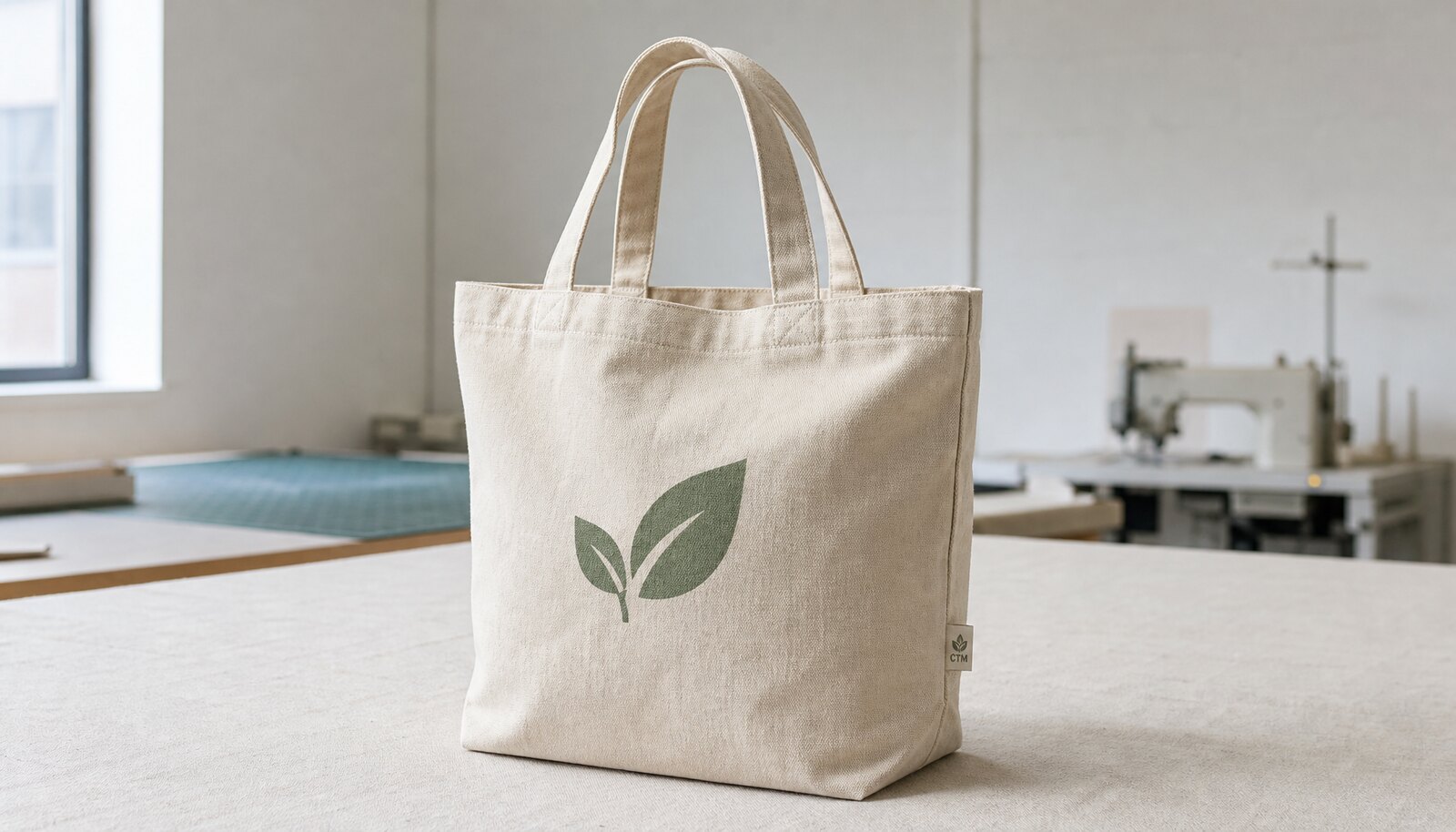
Why lead time planning is different for organic cotton totes
Organic cotton totes look simple, but the schedule is usually driven by more than sewing capacity. Procurement teams often focus on the sewing days and miss the earlier steps: fabric booking, loom or knitting availability, print setup, sample approval, and packing approval. If the campaign has a fixed gift date, those upstream steps matter more than the nominal bulk production time.
For corporate gifting, the bag is also part of a wider kit. That means the tote may need to arrive with notebooks, pens, drinkware, or inserts already staged. The real lead time is not just bag manufacturing; it is the time needed to lock artwork, approve materials, finish packing, and book freight without taking shortcuts that create avoidable defects.
- Lead time risk increases when artwork is not final before sampling.
- Organic cotton programs can slow down if the supplier must source a specific dyed yarn or undyed natural base.
- Packing requirements often add more days than buyers expect, especially for retail-ready or mail-ready formats.
Start with the bag spec, not the deadline
The fastest way to lose time is to treat the tote as a generic item. A buyer should define the bag by finished size, gusset, fabric weight, handle style, and print area before requesting quotes. A 38 x 42 cm tote in 140 gsm cotton with self-fabric handles is a different production job from a 42 x 38 x 10 cm tote in 200 gsm cotton with webbing handles and a two-color logo.
Fabric weight affects both cost and schedule. In many corporate gifting programs, 140–170 gsm is enough for paper inserts, flyers, and lightweight merch. If the tote needs a premium feel or repeated use, 200 gsm or above can be justified, but it adds material cost, sewing resistance, and carton weight. The buyer should align the fabric choice with the gift value, not with a vague idea of quality.
- Use GSM as the starting point for quote comparison; do not compare only by unit price.
- Specify whether the cotton is organic, bleached, unbleached, or dyed, because each route affects raw material booking.
- Write down handle drop and reinforcement requirements so the factory can estimate sewing time correctly.
A practical supplier comparison: which sourcing route fits the order
Organic cotton tote lead times depend heavily on who is quoting the job. A direct factory usually gives the best control over sewing capacity and material planning, while a trading company may help if the order includes mixed items, consolidation, or compliance paperwork. The right route depends on your internal workload and how much visibility you need into the production floor.
For a single tote program with fixed artwork and a clear shipping date, a direct factory quote is usually easier to verify. For a gift campaign with multiple SKUs, packaging inserts, or shared freight, a sourcing partner can save coordination time. The buyer still needs to compare the route, not just the price, because a lower quote can hide slower feedback loops or less reliable material control.
- Compare how quickly the supplier returns artwork comments and revised timelines.
- Look for evidence of in-house cutting, sewing, printing, and packing rather than a vague “full service” claim.
- Ask who owns material booking and who signs off on final carton counts.
Use the quote to separate real cost from schedule risk
A good RFQ should force the supplier to break the tote into production steps. When the quote only shows one unit price, buyers cannot see whether the delay risk is hidden in printing, packing, or material sourcing. Ask for the cost structure by fabric, printing, sewing, packing, and extra inserts. That makes it easier to compare suppliers who use different fabric weights or print methods.
For example, screen printing often has a setup charge but becomes efficient on larger runs with one or two colors. Heat transfer can look cheaper on paper for small or variable runs, but it can add time if the artwork is complex or if each bag needs a name, event code, or location. A buyer comparing quotes should make sure the pricing method matches the production method being proposed.
- Request a line-item quote or a clear breakdown into material, decoration, packing, and export prep.
- Ask whether the quote assumes one-sided print or both sides; that detail changes lead time and ink usage.
- Check whether the supplier included spare units for QC rejects or final replacements.
Comparison table: what changes lead time and landed cost
The table below is useful when procurement is deciding whether to stay with a low-friction standard spec or move to a more premium build. The point is not to over-engineer the bag. The point is to match the route to the campaign and avoid a spec that looks attractive in the quote but creates delay in bulk production.
A buyer should use this as a sourcing filter before collecting samples. If the schedule is tight, choose the option with the fewest variables: stable fabric, one-color print, standard packing, and a supplier who has already run similar tote programs at scale.
- Write decisions in measurable language, not only descriptive wording.
- Ask for sample photos plus one physical approval sample for important orders.
- Keep quotation, sample approval, and inspection notes tied to the same spec version.
Sample approval is where many tote programs lose a week
A real sample should be treated as a production decision, not a courtesy item. Buyers often approve only the logo position and forget to measure the body width, seam balance, handle drop, and printed area after pressing. For organic cotton totes, natural fabric can shrink or relax slightly depending on washing and finishing, so the sample must reflect the actual production route rather than a generic prototype.
Approve the sample only after it matches the agreed spec under normal handling. A common mistake is accepting a sample that looks fine on the table but has weak handle joins, crooked print placement, or a size that changes after pressing. Those problems become expensive when repeated across a bulk order.
- Measure sample width, height, and gusset after pressing.
- Rub the print area to see whether the ink or transfer is stable.
- Load the bag with the intended contents if the final use case is known.
Packing choices affect both damage rate and warehouse efficiency
Packing should be decided together with the buyer’s receiving team. Bulk packing is often the best route for low-cost corporate gifting because it reduces labor, lowers carton volume, and speeds up dispatch. Individual polybags make sense when the totes will be distributed directly to end users or need to stay clean during a long warehouse cycle.
The more complex the packing, the more time you should add. Insert cards, barcode stickers, size labels, and retail-style fold standards all create labor touchpoints. Those details matter if the bags are going into an e-commerce fulfillment flow, but they should not be added casually to a normal gifting order because they can slow packing and create carton count errors.
- Confirm whether the factory will fold, stuff, or stack bags before carton sealing.
- Specify carton marks, gross weight limits, and any pallet requirements early.
- If the tote has a natural cotton finish, protect against staining from ink, dust, and tape residue.
Lead time planning by project type
Not every organic cotton tote program should use the same schedule. A straightforward one-color conference tote may move quickly if the fabric is standard and the artwork is ready. A premium employee welcome kit tote can take longer because the buyer may need better hand feel, multiple print placements, and more careful packing. The schedule should reflect the number of approvals, not just the order quantity.
For event-driven buying, work backward from the delivery date and include three buffers: sample approval, production contingency, and freight booking. If the order is going by sea, the freight window can be the real bottleneck. If the order is small and moving by air, the supplier still needs time for packing and export documents, so do not assume fast transit removes production risk.
- Simple tote programs usually need fewer approval loops and can move faster.
- Custom packaging, inserts, or retail folding extend the critical path.
- Freight method should be chosen after confirming production readiness, not before.
The order details that protect your schedule and margin
The best RFQs are easy for a factory to quote because they remove ambiguity. Include the bag sketch or dieline, target fabric GSM, print dimensions, quantity by color, packing method, and ship-to requirement. If the tote is part of a branded gift set, mention whether the bag will be packed with inserts or shipped empty. Those details change both labor and carton utilization.
Buyers also need to write acceptance criteria in plain language. For example, acceptable print tolerance, seam quality, handle symmetry, and stain limits should be in the spec. That protects the order during bulk production and gives the supplier a clear finish line. Without it, a factory can ship something that is technically close but not acceptable for brand presentation.
- Include a target overrun or underrun tolerance if your internal receiving plan allows it.
- Specify whether neutral kraft cartons or branded cartons are required.
- Define whether the tote must be folded to a fixed finished size for gift box inclusion.
Specification comparison for buyers
| Spec decision | Recommended option | When it fits | Buyer risk to check |
|---|---|---|---|
| Fabric weight | 140–170 gsm organic cotton for general gifting; 200+ gsm for premium feel | Use 140–170 gsm when the tote will hold brochures, catalogs, or light promo items; move higher when the bag is part of a premium welcome kit | Too-light fabric looks weak and may show print through; too-heavy fabric increases cost, sewing time, and carton weight |
| Handle style | Self-fabric handles or reinforced cotton webbing handles | Self-fabric for lower-cost bulk gifting; webbing when the tote will carry heavier inserts or be reused often | Handle seam strength, handle drop length, and whether the handle twists during sewing |
| Print method | 1–2 color screen print for volume; heat transfer only for short runs or variable art | Screen print suits stable artwork and repeat orders; heat transfer suits small quantities or multiple names/locations | Fine text, gradient logos, and exact Pantone matching can fail if the method is chosen too late |
| Supplier route | Direct factory for custom bulk; trading company only if they add compliance, consolidation, or artwork control | Direct factory works best for simple tote programs and predictable schedules | Middleman markups, slower artwork feedback, and unclear factory capacity can distort lead time |
| MOQ logic | Base MOQ tied to fabric width, print screens, and cut/sew setup, not just bag count | Use lower MOQ only when artwork is simple and color count is limited | A low bag MOQ can still carry high setup costs if print screens, dye lots, or packaging inserts are complex |
| Packing format | Bulk packed in one master carton with size labeling, or individual polybags only if required by end client | Bulk pack for warehouse distribution and lower freight; individual pack for retail-ready or mail-out kits | Overpacking adds labor and carton volume; underpacking can cause staining, creasing, and missing inserts |
| Sample route | Pre-production sample after artwork proof and materials approval | Use when logo placement, size, and hand feel matter to the buyer approval chain | Skipping a real sample risks print shift, wrong dimensions, and handle-length complaints |
| Supplier evidence | Factory photos, line capacity, material traceability, and finished sample photos | Best for procurement teams comparing multiple quotes from different regions | A low quote without production evidence often hides schedule slippage or inconsistent quality |
| Lead time strategy | Build buffer for fabric booking, sample sign-off, and carton artwork approval | Use for event-driven gifting, trade shows, employee welcome kits, and holiday campaigns | Most missed deliveries happen because the buyer only counts sewing days and ignores sample and packing approvals |
Buyer checklist before sampling
- Final tote size, seam allowance tolerance, and handle drop length are written into the RFQ.
- Fabric target is defined by GSM and whether the cotton must be organic, unbleached, or dyed.
- Artwork file is print-ready, with Pantone targets, print size, and placement marked on the dieline.
- Packing method is confirmed: bulk, folded, polybagged, with or without inserts and carton marks.
- Target ship date includes sample approval time, production time, and freight booking buffer.
- Acceptance criteria for stitching, print registration, and stain control are written before sample approval.
Factory quote questions to send
- What fabric options do you recommend for this bag size, and what GSM does each option use in production?
- How many days are needed for raw material booking, sample making, bulk sewing, printing, and packing separately?
- Is the MOQ driven by fabric roll minimums, print screen setup, or carton packing requirements?
- What is included in your quote: fabric, printing, sewing, packing, cartons, inner bags, and shipping readiness?
- Can you provide finished bag dimensions, handle length tolerance, and acceptable print position tolerance on the sample?
- What quality checks do you do before shipment, and what defects would trigger rework or replacement?
Quality-control points to confirm
- Measure finished bag size after pressing; confirm tolerance is within the agreed range, not just a nominal pattern size.
- Check stitch density at stress points, especially handle joins and side seams, for skipped stitches or loose thread ends.
- Confirm print registration, opacity, and cure; rub test the logo for smearing or cracking before bulk approval.
- Inspect fabric for oil stains, slubs, holes, and color variation from one carton to another.
- Verify handle symmetry, handle drop, and bag opening alignment so the tote hangs evenly when loaded.
- Review carton count, pack marks, and any inserts before dispatch to avoid missing units at distribution centers.