1. Define the audit objective before you visit or qualify a supplier
A factory audit for organic cotton yoga studio totes should answer one practical question: can this supplier repeatedly make the exact bag you intend to sell, give away, or pack into a retreat kit, with the documentation and quality level your brand needs? That is different from asking whether the factory can make a generic cotton bag. Yoga studio buyers often need a tote that feels premium in a retail corner, carries apparel or water bottles without handle failure, and supports credible sustainability wording.
Start by classifying the program. A low-cost event handout, a teacher training welcome tote, a retreat merchandise bag, and a retail tote sold beside mats and apparel do not carry the same risk. The audit should focus on the processes that affect that use: organic cotton chain of custody, fabric weight, handle strength, print durability, packing cleanliness, and delivery reliability. If the tote will carry an organic claim on the product page, hangtag, or label, documentation becomes a core audit item, not an afterthought.
Do not let the audit become a general factory tour. Ask to see the flow of your actual order type: fabric receiving, fabric storage, cutting, printing, curing, sewing, trimming, final inspection, packing, and finished-goods storage. If the supplier says some operations are done outside, record the subcontractor’s role and control method. Undisclosed subcontracting is one of the most common reasons that sample quality, bulk quality, and paperwork fail to match.
- Confirm the intended use: giveaway, retail item, welcome kit, retreat bag, or premium merchandise.
- List high-risk points before the audit: organic claim, GSM substitution, print curing, handle strength, moisture, and SKU packing.
- Ask which processes are in-house and which are outsourced; do not assume printing or dyeing is controlled by the sewing factory.
- Use the audit to validate capability before deposit, not to solve quality problems after shipment.
2. Build a factory-ready tote specification
A clear specification is the foundation of a useful audit. Without it, every factory will make assumptions, and the lowest quote may simply reflect a thinner fabric, shorter handle, simpler stitch, or weaker documentation. For yoga studio totes, the practical retail range is often 10 oz to 12 oz organic cotton canvas, roughly 280 to 340 GSM. Lighter fabric may work for short-event giveaways, but it can feel less substantial when customers carry clothing, towels, notebooks, bottles, or studio accessories.
Specify finished dimensions, not only a reference photo. A common studio tote might be around 38 x 42 cm with a 10 cm bottom gusset and 60 to 70 cm handles, but your required size depends on whether the bag must hold folded apparel, a blanket, retail bundles, or event documents. The factory should explain how it converts finished dimensions into cutting dimensions, including seam allowance and shrinkage. During the audit, check whether operators work from a written spec sheet or from a sample photo. Written work instructions reduce rework and disputes.
Also specify construction details that influence cost and durability: flat tote or gusseted bottom, side seams or boxed bottom, handle width, handle material, inner pocket, zipper, snap, woven label, hangtag, and folding method. A small change such as an inner pocket or barcode sticker can add operations and create a new quality checkpoint.
- Size: finished width, height, gusset depth, and acceptable tolerance.
- Handles: width, length, drop, fabric type, reinforcement pattern, and stitch color.
- Fabric: organic cotton canvas or twill, GSM or oz, natural/bleached/dyed shade, finish, and shrinkage expectation.
- Branding: print method, artwork file, Pantone or approved visual standard, print size, placement, label, and hangtag wording.
- Packing: pieces per carton, folding style, carton marks, SKU labels, plastic-free or protected packing requirements.
3. Audit organic certification and chain-of-custody controls
Organic cotton claims require precision. GOTS and OCS are not interchangeable labels for every situation. GOTS covers organic textile processing with environmental and social criteria across certified processing stages, while OCS verifies organic material content and chain of custody. The correct choice depends on the claim you want to make, the processes involved, and which entities in the supply chain are certified. If your yoga studio only wants fabric made with organic cotton and will not make a certified product claim, documentation needs may be simpler. If the bag, hangtag, packaging, invoice, or website uses certified wording, chain-of-custody control matters.
During the audit, ask who is certified: the fabric mill, the bag factory, the printer, the exporter, or only an upstream supplier. A scope certificate shows that an organization is certified for certain product categories and processes, but it is not the same as proof that your shipment is certified. For many certified transactions, a transaction certificate or equivalent shipment-level document is needed to connect the specific goods to the certified chain. The supplier should understand this process before the order starts, not after production is complete.
Labeling is another risk. Do not print GOTS, OCS, or certified organic wording on the tote or hangtag unless the certification body rules and chain-of-custody documents support that exact claim. If printing is subcontracted outside the certified scope, the finished-product claim may be affected. The factory should segregate certified and non-certified fabric, identify rolls by batch, and maintain records from fabric receipt through cutting and packing.
- Check certificate holder name, address, standard, scope, product category, process coverage, and expiry date.
- Confirm whether transaction certificates can be issued for your order and how long documentation will take.
- Verify that certified fabric rolls are identified, stored separately when needed, and linked to cutting records.
- Review whether printing, washing, labeling, and packing are covered or controlled for the claim you intend to make.
- Avoid broad marketing language such as “100% certified organic bag” unless the documentation supports it.
4. Inspect production flow, capacity, and subcontracting controls
A true factory audit looks at how orders move through the site. Start in the sample room, then follow the path a tote order takes: incoming fabric, warehouse storage, cutting, printing or embroidery, curing, sewing, trimming, in-line inspection, final inspection, packing, and finished-goods storage. Look for work orders, bundle cards, size or style identification, and clear separation between approved, in-process, rejected, and repaired pieces. A clean tour is helpful, but document control is what prevents the wrong fabric or artwork from entering bulk production.
Capacity should match the promised lead time. Ask how many sewing lines can work on totes, whether bartack or reinforcement machines are available, how many print tables or curing units are used, and what other orders are scheduled during your production window. A factory may have enough sewing machines but limited printing capacity, or it may rely on an outside printer with its own queue. If your order has several yoga studio logos, separate SKUs, or location-specific cartons, packing capacity can also become a bottleneck.
Subcontracting is not automatically bad, but it must be disclosed and controlled. Dyeing, screen printing, washing, and special labels are often handled by partners. The audit should record which subcontractors are used, whether they understand the specification, and how samples and rejected goods are controlled. If a supplier refuses to disclose outside processing while also quoting aggressive lead times, treat that as a procurement risk.
- Ask for a process map showing every production step and location.
- Review work orders and whether operators receive written specifications, not just photos or chat messages.
- Check machine availability for cutting, sewing, reinforcement, printing, curing, trimming, inspection, and packing.
- Confirm how rejected pieces are marked, segregated, repaired, or scrapped.
- Record all subcontracted processes and require approval before any undisclosed change.
5. Verify fabric weight, texture, shade, and storage conditions
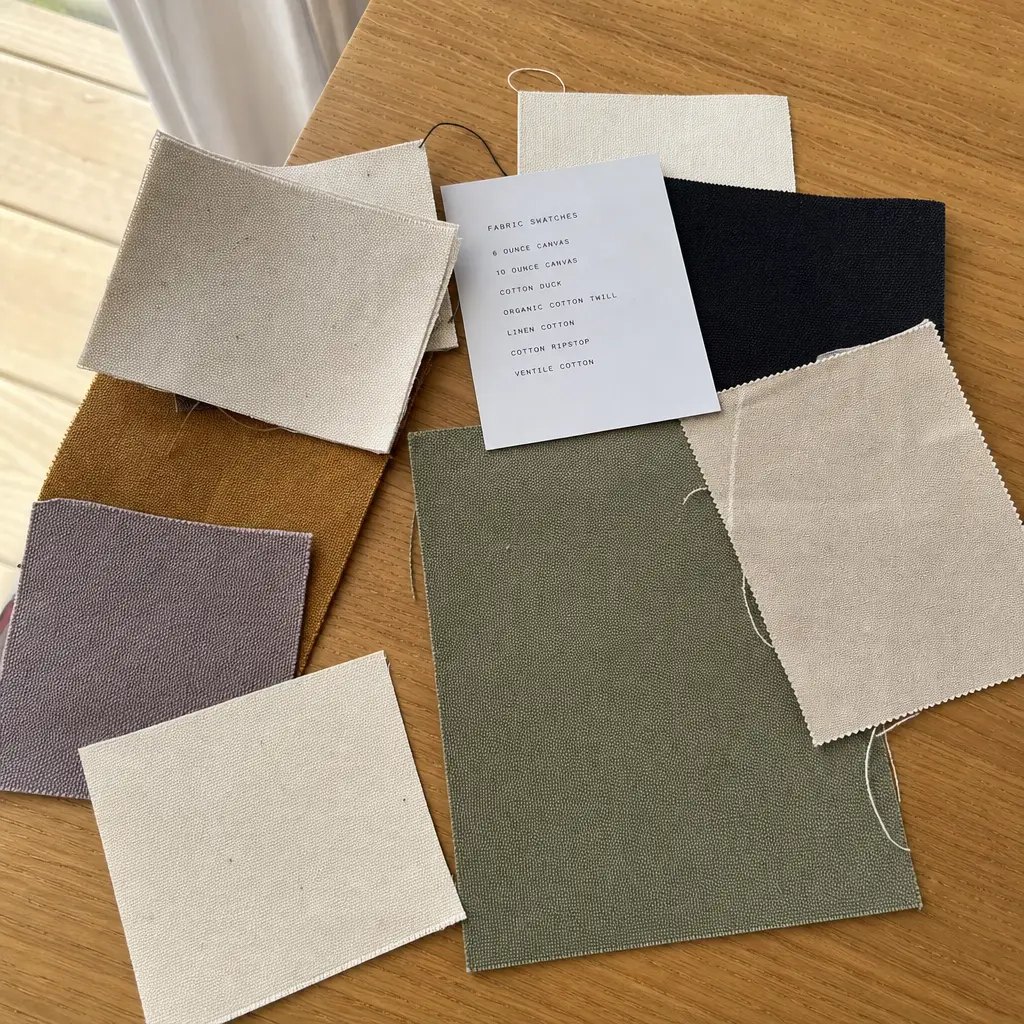
Fabric is the largest cost driver and the easiest place for substitution. A quote for 12 oz organic canvas should not be compared with a quote based on 8 oz promotional cotton. During audit or pre-production review, ask the factory to show the exact fabric quality, roll labels, purchase records, and GSM test method. A reliable factory can cut a measured sample, weigh it, and calculate GSM rather than relying only on supplier invoices.
Handle the fabric as a retail buyer would. Natural organic cotton may show seed flecks and minor shade variation, which many yoga brands accept. However, oil stains, mildew smell, weak spots, excessive slubs, dirt streaks, damp rolls, or chemical odor should not be normalized as “natural.” If the tote will be dyed, washed, or repeatedly reordered, shade control becomes more important. Ask how the factory separates dye lots and whether it can keep a retained swatch for future comparison.
Storage conditions are part of the audit. Cotton absorbs moisture and odor. Fabric rolls should be stored off the floor, away from leaks, dust, chemicals, and direct contamination. Finished bags should not sit in damp cartons or be compressed under heavy loads. Moisture damage may not be obvious in a photo but can arrive as odor, mildew marks, or weakened cartons.
- Verify GSM against the approved swatch and quote before cutting begins.
- Record accepted fabric tolerance, such as target GSM with allowed percentage or numeric range.
- Check fabric roll labels, batch traceability, and separation of certified and non-certified materials.
- Set a shade standard for natural, bleached, dyed, or washed cotton.
- Reject damp storage, fabric on bare floor, strong odor, mold marks, or mixed unidentified rolls.
6. Audit sewing quality, handle reinforcement, and safety controls
For a yoga studio tote, the handle joint is usually the highest-stress point. Customers may carry water bottles, apparel, books, small props, or retail purchases after class. The audit should confirm how handles are folded, cut, aligned, attached, and reinforced. Box stitch, cross stitch, or bartack reinforcement is usually more suitable for heavier totes than a simple single-line seam. The selected method should be visible on the approved sample and repeated in bulk.
Review stitching standards at the line. Ask about stitch density, thread type, seam allowance, trimming, and operator training for gusset corners and handle placement. Uneven handles can make the bag hang poorly on a shoulder and look inconsistent on a retail display. Loose threads, skipped stitches, broken seams, and puckered gussets are not only cosmetic issues; they often indicate weak process control.
Safety and contamination controls also belong in the audit. Sewing areas should have a needle policy with broken-needle logs and replacement control. Loose blades, pins, or metal fragments should not be present near finished goods. If your market or customer requires metal detection, confirm whether the factory has access to that process. At minimum, the factory should be able to explain how it prevents needle or sharp-object contamination.
- Compare handle reinforcement on the line with the approved sample.
- Measure handle drop and placement symmetry, not only body dimensions.
- Inspect stress points: handle joints, side seams, bottom corners, pocket seams, zipper ends, and label attachment.
- Ask for a defined load test using agreed weight and duration.
- Review broken-needle records, tool control, trimming standards, and rejected-piece handling.
7. Check printing, curing, and artwork control
Yoga studio tote artwork is often simple, but simple does not mean risk-free. Natural cotton absorbs ink differently from paper, polyester, or coated fabric. Fine mandala lines, small text, pale ink, and large solid areas can shift in appearance after curing. A digital mockup is not enough for print approval. Require a strike-off on the intended fabric or the closest approved swatch before bulk printing.
During the audit, inspect screen storage, print tables, ink mixing, curing equipment, and print inspection habits. The printer should control placement, registration, curing time and temperature, and drying before packing. If the print feels sticky, powdery, thick, cracked, or transfers during rubbing, the tote may fail in retail handling even if it looks good in photos. For water-based screen print, soft hand feel is often desirable, but curing must still be adequate.
Artwork control matters when multiple studios, retreat dates, or locations are ordered together. Ask how the factory prevents mixing screens, labels, and carton marks. Each design should have a work order, approved artwork file, print size, placement measurement, and visual standard. If printing is subcontracted, the same controls should apply at the outside workshop.
- Approve physical strike-offs for color, edge sharpness, coverage, hand feel, and placement.
- Define print position using measurements from top edge, side seam, and bottom fold or gusset.
- Set tolerance for skew, registration, and visible ink variation.
- Check curing control and dry/wet rub or wash test plan where relevant.
- Require written approval before changing ink type, print method, artwork size, or printing site.
8. Set a practical QC inspection framework before production
A strong QC plan removes ambiguity. Before production starts, define the inspection standard, sample size, defect classification, test methods, and acceptance criteria. Many buyers use ANSI/ASQ Z1.4 or ISO 2859-1 sampling, often General Inspection Level II for visual consumer-goods inspection. AQL levels vary by buyer risk, but a common starting point is 0 for critical defects, 2.5 for major defects, and 4.0 for minor defects. The important point is to agree before the order is made.
Defect classification should reflect tote use. Critical defects include mildew, sharp contamination, wrong certification label, severe odor, or unsafe foreign objects. Major defects include wrong fabric weight, wrong artwork, open seams, weak handle reinforcement, print peeling, severe stains, incorrect SKU packing, or dimensions outside tolerance. Minor defects may include small loose threads, slight shade variation within standard, or minor wrinkles if they do not affect saleability.
Add simple performance checks. Measure GSM, finished size, handle drop, print placement, and carton count. Perform a defined load test on sample units. For washable products, run a wash and shrinkage check. For printed bags, perform rub testing appropriate to the ink system, even if that starts with a controlled hand-rub screen and escalates to lab testing for larger retail programs. Keep photos and records, especially for failed inspections and corrective actions.
- Use the approved sample, spec sheet, and strike-off as inspection standards.
- Define AQL, sample size, defect categories, and reinspection rules in the purchase order.
- Measure rather than estimate: GSM, width, height, gusset, handle drop, print position, and carton quantity.
- Test risk points: load, seam strength, shrinkage, dry/wet rub, print adhesion, and moisture/odor.
- Require corrective-action records for repeated defects, not only sorting at the end.
9. Review packing, warehouse, document control, and corrective actions
Packing choices should balance brand values and export risk. Many yoga studios prefer reduced plastic, but cotton totes can be damaged by moisture, dirt, compression, and odor during storage and transit. Bulk fold packing in lined export cartons can work well if cartons are clean, dry, strong, and not overloaded. Individual polybags provide more protection but may conflict with sustainability expectations. Paper bands or compostable bags may be possible, but they need testing for scuffing, moisture exposure, and packing efficiency.
During the audit, walk the finished-goods warehouse. Cartons should be stored off the floor, away from damp walls, leaks, chemical odors, food, and direct sunlight. Carton marks should match the packing list and buyer requirements. If there are multiple studio locations, retreat designs, or barcode SKUs, check how the factory separates and verifies them. Packing errors can be as costly as sewing defects when goods arrive at multiple retail or event destinations.
Document control and corrective-action handling show whether the factory learns from problems. Ask to see past inspection reports, defect summaries, and corrective actions. A useful corrective action identifies the root cause, owner, deadline, and verification method. “Workers will be more careful” is not enough. For example, repeated print skew might require a placement jig; repeated handle failures might require stitch standard revision and in-line pull checks; repeated carton moisture might require palletization and desiccant changes.
- Define pieces per inner pack and master carton, folding method, carton size, gross weight limit, and carton marks.
- Confirm barcode, SKU, country-of-origin, hangtag, and carton-label requirements before packing starts.
- Check storage for dry pallets, clean aisles, separated rejected goods, and no moisture-damaged stock.
- Require packing verification for mixed designs or multi-location shipments.
- Review corrective-action records for root cause, owner, deadline, and effectiveness check.
10. Red flags that should pause supplier approval
Some supplier risks appear before sampling. An unusually low price may be legitimate, but it should trigger verification of fabric weight, certification scope, print method, packing, and freight assumptions. If a supplier quotes 12 oz organic cotton but cannot identify GSM tolerance, fabric source, certificate scope, or transaction certificate process, the quote is not yet comparable. A very low MOQ can also be a warning if it depends on leftover fabric, mixed lots, or undocumented organic stock.
Be cautious with certificate screenshots that hide names, expired certificates, certificates for another product category, or documents belonging to a trading company with no clear link to the production site. Also watch for suppliers who promise certified labeling but cannot explain who issues transaction certificates or whether printing and packing are in scope. For yoga brands, the reputational risk of unsupported organic claims can outweigh small unit-cost savings.
Operational red flags include undisclosed subcontracted printing, damp warehouse conditions, finished goods stored on the floor, no needle policy, no final inspection records, and production areas where operators rely only on phone photos. If the factory resists a pre-shipment inspection, refuses to classify defects, or says all problems can be fixed after delivery, pause approval and request corrective evidence before paying the balance.
- Fake or weak certificates: expired, wrong company, wrong address, wrong scope, or no shipment-level document process.
- GSM substitution: quote says 10 oz or 12 oz but swatch feels lighter and factory cannot test it.
- Unrealistic MOQ or lead time: supplier promises any quantity or urgent delivery without checking fabric and print capacity.
- Hidden subcontracting: printing, dyeing, or packing is moved outside without approval.
- Moisture risk: damp cartons, mildew odor, fabric rolls on floor, or finished goods stored near chemicals.
- QC weakness: no AQL support, no defect classification, no needle control, no corrective-action records.
- Price gaps: quote excludes labels, packing, certification documents, sample fees, carton marks, or reinspection cost.
Specification comparison for buyers
| Audit area | Pass criteria | Documents or evidence to review | Red flags |
|---|---|---|---|
| Organic claim control | Factory can explain whether the order is GOTS, OCS, or organic material only, and can show valid scope for the claimed stage | Current certificate, scope certificate details, supplier invoices, transaction certificate process, fabric roll traceability | Certificate belongs to another company, expired scope, vague organic wording, no batch link between fabric and order |
| Production flow | Cutting, printing, sewing, trimming, inspection, and packing flow is clear and mostly controlled by the audited site or disclosed partners | Factory layout, production schedule, work orders, subcontractor list, in-line QC records | Undisclosed outside printing, goods moving without work orders, no separation of approved and rejected pieces |
| Fabric weight control | Bulk fabric matches quoted GSM or oz within agreed tolerance and is checked before cutting | Fabric roll labels, GSM test records, approved swatch, cutting-room inspection sheet | Unusually low quote, 10 oz quoted but 8 oz fabric on floor, no scale or GSM cutter, mixed fabric lots |
| Sewing and handle strength | Handle joints use approved reinforcement, seams are secure, and stress points are inspected during production | Approved sample, stitch density standard, in-line inspection records, load-test record | Single-line handle stitching on heavy tote, skipped stitches, loose bartacks, operators working from photos only |
| Printing control | Ink, screen, curing, print position, and rub resistance are checked before bulk release | Strike-off, ink mixing record, curing temperature/time record, print inspection sheet | Wet or powdery print, no curing control, color approved only by phone photo, subcontracted printer not audited |
| Warehouse and packing | Cotton fabric and finished bags are stored dry, off the floor, protected from odor, dust, and moisture | Warehouse walk-through, pallet storage, carton spec, desiccant or liner plan, carton drop or compression expectations | Damp cartons, mildew smell, fabric rolls on floor, finished goods near chemicals, overloaded export cartons |
| QC system | Factory uses defined inspection stages and can support AQL-based final inspection with defect classification | Incoming material QC, in-line QC, final inspection report, defect list, corrective-action records | Only 100% visual checking claimed with no records, no defect classification, no corrective-action owner |
| Lead time and capacity | Factory has machine capacity and material plan that match the requested delivery date | Machine list, operator count, current order board, fabric ETA, sample calendar, shipping plan | Lead time promised before fabric availability is checked, capacity shared with another urgent order, no buffer for certification documents |
Buyer checklist before sampling
- Write a finished product spec: width, height, gusset, handle width, handle drop, fabric type, target GSM or oz, color, print size, print position, label, and packing method.
- State the claim level: GOTS certified product, OCS certified product, certified organic cotton content, or organic cotton material without finished-product certification wording.
- Ask the factory to identify which processes are in-house and which are subcontracted: weaving or fabric purchase, dyeing, cutting, printing, sewing, washing, labeling, inspection, and packing.
- Require certificate scope, expiry, address match, product category, and transaction certificate process before approving any organic claim on bag, hangtag, carton, or website copy.
- Set measurable tolerances for dimensions, GSM, shade, print position, stitch quality, handle strength, shrinkage, rub fastness, stains, odor, and carton count.
- Request a fabric swatch, print strike-off, and full pre-production sample made with intended fabric, construction, print, label, and packing where possible.
- Define inspection framework before production: AQL level, sample size, critical/major/minor defects, test methods, and who pays for reinspection if the order fails.
- Check warehouse conditions: dry storage, pallets, clean cartons, fabric roll identification, segregation of rejected goods, and moisture-control practices.
- Clarify MOQ by fabric, dye color, artwork, print color, label, packing style, and shipping split so competing quotes are comparable.
- Keep a sealed approval sample or controlled photo/spec file and use it as the final inspection reference before shipment.
Factory quote questions to send
- Which company name and address will appear on the commercial invoice, organic certificate, transaction certificate if applicable, and export documents?
- Is this order quoted as GOTS, OCS, certified organic cotton content, or organic cotton material only? What exact wording can we legally use?
- Is the organic cotton fabric in stock? If yes, how many meters and which GSM? If not, what is the fabric procurement lead time?
- What is the exact fabric construction, weight in GSM and oz, and accepted bulk tolerance? Can you test GSM before cutting?
- Which production steps are done in-house, and which are subcontracted? If printing is subcontracted, can we audit or at least approve that workshop?
- What machine capacity is available for this order: cutting tables, sewing lines, bartack machines, screen-print tables, curing equipment, and packing staff?
- What reinforcement will be used at the handle joint: box stitch, cross stitch, bartack, or another method? What load test can you perform?
- Which print method and ink do you recommend for our artwork, and what curing, dry rub, wet rub, or wash checks can you provide?
- What AQL level do you support for final inspection, and how do you classify critical, major, and minor defects?
- What is your MOQ by bag body, fabric color, print design, print color, label, and packing style?
Quality-control points to confirm
- Use an inspection plan such as ANSI/ASQ Z1.4 or ISO 2859-1, commonly General Inspection Level II for visual checks unless the buyer specifies otherwise.
- Define AQL before production. A common consumer-goods starting point is 0 for critical defects, 2.5 for major defects, and 4.0 for minor defects, but buyers should set levels based on risk and sales channel.
- Classify critical defects as safety, contamination, wrong organic claim label, needle/metal contamination, mildew, severe odor, or mixed unauthorized material.
- Classify major defects as wrong size beyond tolerance, low GSM beyond tolerance, weak handle attachment, open seam, wrong artwork, print peeling, severe stain, wrong SKU count, or incorrect label.
- Verify GSM with a measured cut sample and scale, not only by supplier invoice. Record fabric lot and compare to approved swatch.
- Measure finished dimensions after sewing and pressing. Common tolerances are plus or minus 1 cm for body width/height and plus or minus 1.5 cm for handle drop unless tighter tolerances are agreed.
- Perform a practical load test on approved sample and random bulk pieces, using an agreed weight and duration. Record handle seam distortion, broken stitches, and fabric tearing.
- Check seam strength and handle reinforcement by visual inspection plus pull or hanging-weight test suitable for the tote size. Stress points should not open, crack, or distort severely.
- For washable totes, test shrinkage on a sample using the buyer’s care expectation. Record width, height, handle drop, print change, and seam twisting before and after washing.
- Check print curing and rub resistance. At minimum, run dry hand-rub checks on bulk pieces; for retail programs, request dry/wet rub or wash test results suitable for the ink system.