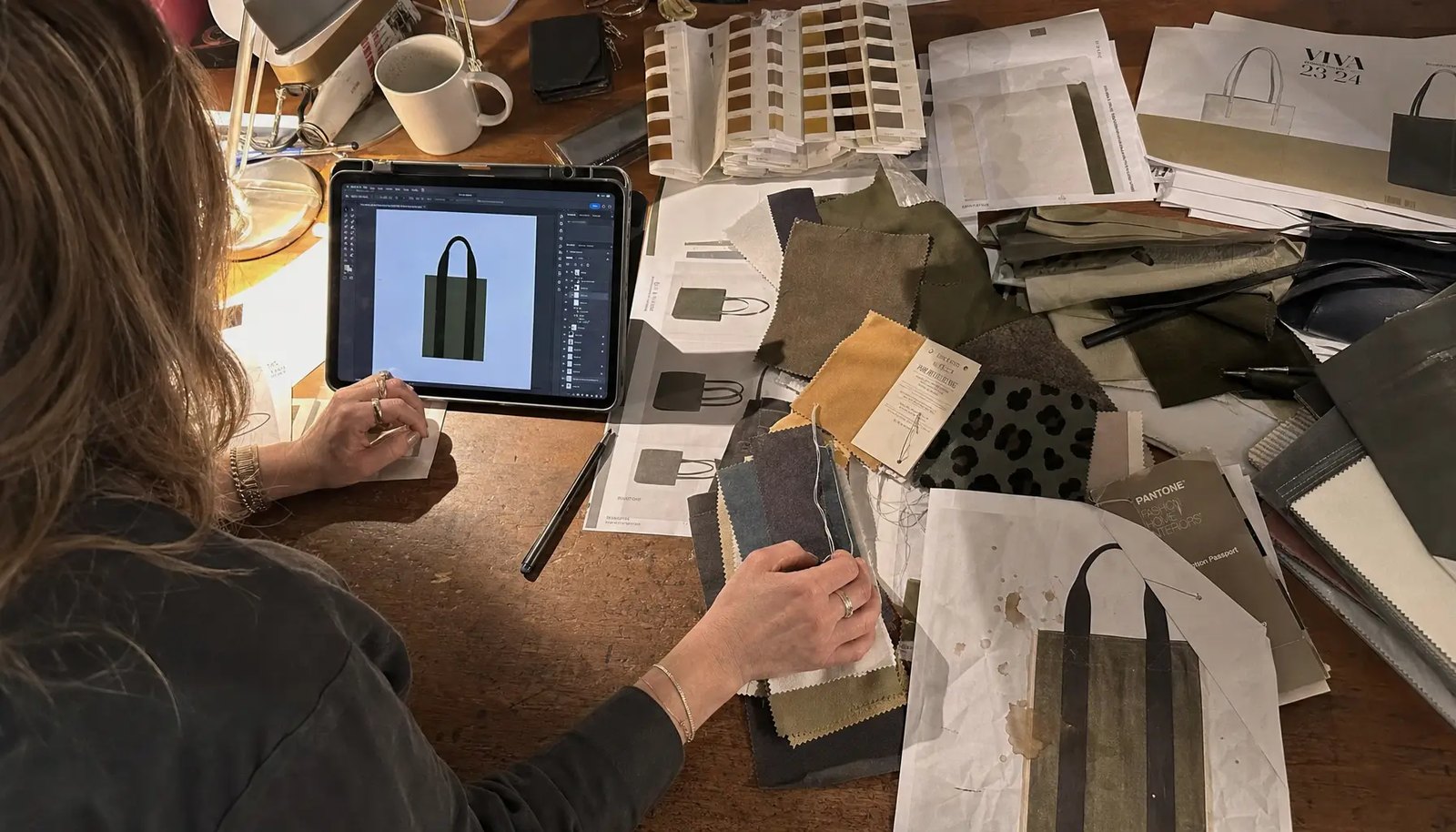
1. Start with the audit purpose: reduce sourcing risk, not just confirm a supplier exists
An organic cotton tote looks like a low-complexity item, but spa retail programs add several risks: visible natural fabric, clean wellness branding, retail-ready folding, possible organic claims, and seasonal delivery windows. A useful audit does more than prove the supplier has sewing machines. It verifies whether the supplier can control material identity, light-color handling, print consistency, strength at stress points, packing cleanliness, and export documentation.
For a buyer, the audit should turn a vague inquiry into a controlled RFQ. Without that discipline, one supplier may quote an 8 oz non-certified cotton tote with a one-color print, while another prices a 12 oz certified organic canvas bag with documented material route and retail packing. The unit prices will not be comparable. The audit should expose assumptions before the purchase order is placed, because after bulk fabric is cut, disputes become slower and more expensive to fix.
- Use the audit to identify the real manufacturer, subcontractors, material source, and QC controls.
- Treat certification evidence, print approval, needle control, and packing condition as commercial requirements, not optional paperwork.
- For standard import orders, a document audit plus live or recorded production walkthrough may be enough; for high-value or first-time programs, consider an independent onsite audit.
- Do not release bulk production against a showroom sample if the bulk fabric, logo method, packing fold, and document route are not confirmed.
2. Define the spa tote specification before comparing factories
A factory cannot be judged properly until the bag is defined. “Natural organic cotton tote” is not a specification. The audit should start with the use case: a small skincare purchase bag, a gift-with-purchase tote, a retail robe carrier, a resort welcome kit, or a distributor resale item. Each use case changes the fabric weight, handle length, strength requirement, packing method, and acceptable unit cost.
For spa retail, a practical base specification is often a 10-12 oz cotton canvas, roughly 280-340 GSM depending on weave and finishing. This range feels more substantial than lightweight promotional cotton while staying manageable for sewing and freight. Flat totes may sit around 35 x 40 cm. Gusseted shopping totes may be closer to 38 x 42 x 10 cm. Shoulder handles commonly need a 25-30 cm drop, but confirm this against the products being carried and the target customer experience.
The audit should check whether the factory understands tolerances. Finished cotton bags move during cutting, sewing, and pressing, so the PO should define acceptable variation. If a tote must fit a boxed robe set or a precise retail fixture, tighter dimensional control may be needed.
- Budget giveaway: 6-8 oz, about 170-240 GSM, lower structure and lower perceived retail value.
- Core spa retail: 10-12 oz, about 280-340 GSM, suitable for product kits, shopping bags, and reusable retail totes.
- Premium kit or heavier load: 12-14 oz, about 340-400 GSM, higher structure but more freight and sewing cost.
- Typical tolerances to define: width/height +/-1 cm, gusset +/-0.5 cm to +/-1 cm, handle drop +/-1 cm to +/-1.5 cm, print placement +/-5 mm to +/-10 mm depending on artwork.
3. Verify organic cotton documentation with the correct standard and claim scope
Organic cotton evidence must match the claim the spa retailer plans to make. If the tote hangtag, website, invoice, or marketplace listing says “certified organic cotton,” the buyer needs a stronger documentation route than a supplier statement. The most likely routes are GOTS, which covers organic textiles with processing criteria and chain-of-custody controls, or OCS, which verifies organic content through the supply chain. The right route depends on the product claim, buyer policy, and certification availability in the supply chain.
A scope certificate and a transaction certificate are not the same. A scope certificate shows that a company is certified for certain product categories, processes, and time periods. It does not by itself prove that a specific shipment of tote material belongs to your order. A transaction certificate, when required and available under the chosen certification route, links a certified material transaction to specific parties, quantities, and product descriptions. For finished tote claims, confirm whether the fabric mill, printer, cut-and-sew factory, exporter, and buyer’s claim are all aligned.
If the spa brand only wants organic cotton as an internal material preference and will not make a formal certified claim, purchase records and supplier declarations may be enough for internal review. That should be decided before RFQ, because certified chain-of-custody handling can affect cost, MOQ, and lead time.
- Request current GOTS or OCS scope certificates where relevant, including certificate number, validity dates, certified company name, product categories, and process scope.
- Ask whether a transaction certificate can be issued for the fabric or finished goods tied to your PO, quantity, and shipment route.
- Do not accept an expired certificate, a screenshot with hidden supplier name, or a certificate that covers yarn while the supplier implies finished-bag certification.
- Avoid printing certification logos unless the brand is authorized and the entire claim route is supported.
- Keep certificates, fabric swatches, invoices, and sample approvals in one technical file for the order.
4. Audit factory capability and subcontracting honestly
A tote audit should follow the physical production flow: fabric receiving, fabric inspection, storage, cutting, sewing, trimming, printing or embroidery, curing or finishing, final inspection, packing, and warehouse storage. The purpose is not to admire a clean showroom. It is to see whether light-colored cotton can move through the facility without stains, size drift, mixed panels, weak handle sewing, or print damage.
Many tote suppliers subcontract at least one process, commonly printing, embroidery, dyeing, washing, or sometimes sewing overflow. Subcontracting is not automatically a problem, but undisclosed subcontracting is. If the print house is outside the main factory, ask who approves strike-offs, how panels are transported, who checks curing, and who pays for rejections. If sewing is subcontracted, ask how needle control, line inspection, and final QC are standardized across locations.
For remote audits, request dated photos and a video walkthrough. The video should show the entrance sign or identifiable location, fabric rolls, cutting tables, sewing line, inspection table, packing area, needle-control process, and finished cartons. A supplier that only sends polished office photos has not provided production evidence.
- Ask for a machine list and compare it with the expected order size and lead time.
- Check that cutting templates, patterns, and fabric layer control are used to prevent size variation.
- Look for clean tables and storage for natural cotton; stains and oil marks are highly visible on spa retail bags.
- Confirm whether printing is in-house; if not, require subcontractor name, process controls, and approval flow.
- Require evidence of final QC records, not only verbal claims that every piece is checked.
5. Build an evidence checklist with pass, fail, and hold criteria
An audit becomes stronger when evidence requirements are explicit. Instead of asking a supplier to “send factory information,” give a checklist and define what will pass, fail, or require clarification. This saves time and reduces the chance that a factory submits marketing files that do not answer procurement questions.
A practical pass result means the supplier has proven identity, relevant tote production, material route, process flow, QC system, and packing capability. A hold result means the supplier may still qualify but must clarify missing documents, certificate scope, subcontracting, sample substitution, or carton data. A fail result should be used when the supplier cannot identify the production site, refuses to explain certification evidence, hides subcontracting, lacks needle control, or cannot provide a credible pre-production sample route.
Buyers should also request photo evidence at key milestones, not only during the initial audit. Before shipment, request photos of bulk fabric rolls, cut panels, in-line sewing, print curing or finished print, inspection table, packed cartons, carton labels, and moisture-protected warehouse storage. These photos do not replace inspection, but they create a useful audit trail.
- Documents to request: license, factory profile, machine list, capacity estimate, organization chart or QC contact, organic certificate copies, fabric invoices or supplier route, sample approval sheet, inspection template, packing specification.
- Photos/videos to request: fabric storage, cutting table, sewing line, handle reinforcement close-up, print/embroidery area, curing/drying setup, needle-control board, QC table, clean packing area, finished cartons off the floor.
- Pass criteria: production site is identifiable, process ownership is clear, documentation matches the quoted claim, PP sample can use final materials, and QC plan is measurable.
- Hold criteria: certificate scope needs confirmation, subcontractor details are incomplete, carton data is estimated, or sample uses substitute fabric but final sample is promised before bulk.
- Fail criteria: unverifiable factory, expired or unrelated certification, refusal to disclose production location, no broken-needle process, repeated stains in sample photos, or pressure to skip PP sample approval.
6. Compare quotes using the same cost drivers
Organic cotton tote quotes often vary because suppliers are not pricing the same product. The largest drivers are fabric weight, bag size, gusset, handle type, print method, number of logo colors, certification route, packing style, order quantity, and delivery term. A 12 oz gusseted tote with long self-fabric handles and water-based print is not comparable with an 8 oz flat tote using short webbing handles and generic cotton.
MOQ should be reviewed by component, not only by finished bag count. If the factory has stock natural organic cotton canvas, MOQ may be lower. If the buyer needs custom dyeing, a special handle color, woven side labels, multiple spa-location logos, or individual barcode packing, MOQ and setup waste increase. For spa groups, a common cost-saving approach is to standardize the base bag and vary only the logo, hangtag, or carton label where possible.
Ask suppliers to quote carton data with the unit price. A slightly cheaper bag can become more expensive landed if packing is bulky, carton gross weight is impractical, or individual polybags add labor and compliance issues.
- Quote comparison inputs: finished size, gusset, fabric GSM/oz, natural/bleached/dyed finish, handle drop, handle construction, print method, print colors, label, packing, inspection, certification route, Incoterm.
- Ask for setup charges separately: screens, artwork revision, label mold or weaving, sample fee, courier, certificate or document handling if applicable.
- Request carton estimate: pieces per carton, carton dimensions, gross weight, CBM, carton marks, and whether palletization is included.
- Clarify whether price includes final random inspection support, rework if defects exceed AQL, and replacement of rejected pieces.
- Do not accept “same as sample” as a quote basis unless the sample specification is documented.
7. Control samples, printing, and branding before mass production
The sample path should move from material to artwork to full construction. First approve the fabric swatch and shade. Then approve the print strike-off or embroidery sample on the actual or approved-equivalent fabric. Only after those are accepted should the buyer approve a full pre-production sample with final dimensions, handles, seams, labels, logo, and packing fold.
Spa branding is often minimal: one-color logos, muted ink, a small side label, or a tonal mark. Water-based screen print is usually a good fit because it keeps a softer handfeel on cotton canvas, but it must be cured properly. Pale inks can shift on natural cotton, and very fine logo lines can fill in if the screen and ink are not controlled. Embroidery can look premium for small marks but may pucker lightweight fabric and is inefficient for large filled artwork.
The PP sample should become the control standard. Keep one signed sample at the factory and one with the buyer or inspection company. The approval sheet should state whether the sample is approved for appearance only, approved for size only, or approved for full production. This avoids a common dispute where the supplier treats an early showroom sample as full authorization.
- Approve artwork with dimensions, not only a PDF mockup; define print width, height, and distance from top/side edges.
- Define color by Pantone or approved physical sample, then judge the actual ink on natural cotton under consistent lighting.
- Test print adhesion and curing with agreed dry rub and wet rub checks; add wash or damp-cloth testing if the tote may contact spa products or towels.
- Confirm the packing fold during PP sample approval so a crease does not run through the logo.
- Reject PP samples with substitute fabric unless they are clearly marked as construction reference only and a final PP sample is scheduled.
8. Set buyer-grade QC: AQL, strength, needle control, and moisture checks
Quality control must be written into the order before production starts. For final inspection, many buyers use ANSI/ASQ Z1.4 general inspection level II with agreed AQL limits, such as 2.5 for major defects and 4.0 for minor defects, while critical defects are not accepted. The exact level should match the buyer’s risk tolerance, order value, and retailer requirements. What matters is that the supplier knows the sampling plan and defect definitions before shipment.
For spa retail, appearance defects are commercially important because the tote may sit next to skincare, candles, robes, or gift boxes. Stains, mildew odor, print smears, crooked logos, and dirty handling can make a bag unsellable even if it is structurally usable. Strength still matters: handles should be reinforced and tested against the intended product load. A practical load test can suspend a loaded bag at the expected carry weight plus a safety margin for a defined time, with photos and results recorded. For heavier kits, ask the supplier to test more aggressively and confirm seam performance.
Needle and contamination control should not be skipped. Sewing factories should track needle issuance and broken-needle recovery. If a needle breaks, affected work should be isolated until all fragments are found or the area is cleared under the supplier’s procedure. Natural cotton should also be checked for moisture before packing, because damp fabric and wet cartons can cause mildew during export transit.
- Major defects: wrong fabric, wrong logo, incorrect certification claim, severe stain, broken seam, weak handle attachment, crooked handle, print smear, missing label, wrong carton mark.
- Minor defects: small loose thread, slight slub variation, minor fold mark outside logo area, small natural seed fleck if approved as part of fabric character.
- Measurement defects: bag width/height, gusset, handle drop, or print placement outside agreed tolerance.
- Strength checks: handle pull or suspension test, seam inspection at stress points, bottom-corner seam review, and repeat testing on random finished bags.
- Safety and cleanliness checks: broken-needle log, foreign matter review, trimming, oil marks, dust, dampness, mildew odor, and carton dryness.
9. Specify packing for shelf condition, freight efficiency, and lower waste
Packing decisions affect landed cost and retail presentation. Flat folding usually gives the cleanest appearance and reduces hard creases through the logo, but it increases carton volume. Half folding saves space, but the fold line must be tested on the PP sample. Rolling can work for gift kits but adds labor and may reduce carton efficiency. Individual polybags should not be automatic; many wellness brands prefer less plastic, while some distributors require individual protection, barcode labels, or dust control.
A strong packing specification includes fold method, pieces per inner bundle, pieces per master carton, carton dimensions, gross weight limit, carton marks, SKU labels, PO number, destination, country of origin marking, and moisture protection. Carton gross weight should remain practical for handling, often under 15-18 kg where possible, but buyer warehouse rules should control the final limit.
During audit and final inspection, look for clean packing surfaces and finished cartons stored off the floor. Cotton totes should not be compressed so tightly that handles are crushed or print areas develop permanent creases. If the buyer has multiple logos or spa locations, mixed cartons should be clearly authorized; otherwise require one SKU or logo version per carton.
- Use flat fold for premium spa retail presentation when carton volume is acceptable.
- Use half fold only after approving crease recovery and logo position on a packed sample.
- Avoid individual polybags unless needed for warehouse receiving, barcode control, humidity protection, or retail handling.
- Request carton photos before shipment: open carton, folded bags, carton mark, SKU label, gross weight, and storage condition.
- Include moisture prevention expectations, such as dry cartons, warehouse storage off floor, and no loading of damp goods.
10. Plan realistic lead time from approval, not inquiry date
Lead time should start when the supplier has everything needed to produce: approved artwork, approved fabric route, confirmed certification requirement, approved PP sample, packing instruction, deposit or payment arrangement, and shipping instructions. Counting from the first inquiry creates false confidence and often compresses QC or inspection time at the end.
For first orders, realistic benchmarks may be: 3-7 days for quote clarification when specifications are complete; 5-10 days for fabric swatch and print strike-off if materials are available; 7-14 days for PP sample making and courier review; 10-25 days for fabric sourcing depending on stock, certification route, dyeing, and mill schedule; 15-30 days for cutting, printing, sewing, trimming, and packing for many standard tote orders after all approvals; 1-3 days for final inspection booking and execution, plus rework time if defects are found; and several days to more than a week for export booking, depending on shipment mode and season. Custom fabric, certification documentation, multiple logo versions, or holiday congestion can extend the timeline.
The audit should ask what is on the critical path. Sometimes sewing capacity is not the bottleneck; the delay may be certified fabric availability, print screen approval, label production, third-party inspection scheduling, or carton mark confirmation. Build a calendar with approval dates and decision owners so the supplier is not blamed for delays caused by missing artwork or late packing instructions.
- Do not authorize bulk cutting before PP sample approval is recorded in writing.
- Book final inspection early enough to allow sorting, rework, and re-inspection before vessel or courier cutoff.
- For repeat orders using the same fabric, logo, and packing, lead time may shorten, but confirm fabric stock and certificate route again.
- For seasonal spa launches or resort openings, add buffer for sample courier time, buyer review, and document correction.
- Ask the factory to state the last safe date for artwork approval, fabric approval, PP approval, inspection booking, and shipment handover.
Specification comparison for buyers
| Audit area | Evidence to request | Acceptable sign | Red flag |
|---|---|---|---|
| Factory identity and production role | Business license, factory address, production flow photos/video, machine list, recent tote order records with sensitive buyer data removed | Supplier can show cutting, sewing, trimming, QC, packing, and warehouse areas for cotton totes | Only office photos, no production floor, unclear subcontracting, or refusal to identify where bags are sewn |
| Organic cotton route | GOTS or OCS scope certificate where applicable, transaction certificate for order material when required, fabric/yarn invoices, mill name, lot references | Certificate scope matches material route and supplier role; TC can be issued for certified material movement when needed | Generic certificate screenshot, expired certificate, wrong company name, or certificate covering yarn only while finished-bag claim is implied |
| Fabric specification | Swatch, GSM/oz test, weave description, width, shrinkage record, color/shade approval, fabric inspection report | Quoted fabric weight and finish match sample and PO, such as 10-12 oz canvas around 280-340 GSM | Supplier quotes “canvas” without GSM, substitutes stock fabric, or cannot explain natural shade variation |
| Cutting and sewing capability | Cutting table video, pattern templates, stitch type, seam allowance, handle reinforcement method, line QC record | Consistent sizing, reinforced handle attachment, clean seam finish, no oil marks on light fabric | Crooked panels, weak bar tacks, dirty tables, excessive loose threads, or no in-line checks |
| Printing or branding control | Artwork proof, print strike-off, Pantone or approved color reference, ink type, curing process, subcontractor details if used | Print on bulk fabric is approved before mass printing; placement tolerance and rub test are defined | Digital mockup treated as approval, no curing test, wet ink stacking, or unknown print subcontractor |
| Sample approval | Fabric swatch, print strike-off, full pre-production sample, packing sample, signed sample file | PP sample uses bulk fabric, final handle length, final logo method, label, and packing fold | Showroom sample made with substitute fabric is used to authorize bulk cutting |
| Final inspection plan | AQL level, sampling plan, measurement sheet, defect list, carton count record, photos of packed goods | Inspection uses a recognized sampling approach, commonly ANSI/ASQ Z1.4 general inspection level II with agreed AQLs | Supplier says “100% checked” but cannot provide defect categories, sampling records, or measurement data |
| Needle and contamination control | Needle issue/breakage log, metal detection policy where used, trimming process, clean packing area photos | Broken needles are recorded and recovered; finished goods are checked for threads, stains, and foreign matter | No broken-needle procedure, cutting dust in packing area, mildew smell, wet cartons, or cartons stored on floor |
| Packing and export readiness | Packing instruction, carton dimensions, gross weight, carton marks, barcode/SKU labels, moisture protection method | Carton data supports landed-cost comparison; fold line does not damage logo presentation | Carton quantity unknown before shipment, mixed SKUs, over-compressed bags, or no moisture prevention |
Buyer checklist before sampling
- Define the tote use case: retail shopping bag, gift-with-purchase, treatment-room amenity, robe carrier, product kit, or distributor resale item.
- Specify finished dimensions, gusset depth, handle drop, fabric weight in GSM or oz, seam type, handle reinforcement, logo size, and packing method.
- Decide whether the organic claim must be certified under a route such as GOTS or OCS, or whether organic cotton is an internal sourcing preference only.
- Ask whether the supplier is the actual cut-and-sew factory and which steps are subcontracted, especially fabric sourcing, dyeing, printing, embroidery, washing, and packing.
- Request a document audit pack: license, factory profile, capacity summary, machine list, organic certificate copies, fabric purchase route, QC process, and recent inspection template.
- Require visual audit evidence: dated photos or video of fabric storage, cutting, sewing, print area, inspection table, packing zone, needle-control board, and finished carton storage.
- Approve fabric swatch and print strike-off before the full pre-production sample; approve the PP sample before bulk cutting or printing.
- Set measurement tolerances, commonly +/-1 cm for width/height, +/-0.5 cm to +/-1 cm for gusset where applicable, and +/-1 cm to +/-1.5 cm for handle drop unless design requires tighter control.
- Define print controls: ink type, Pantone or approved physical color, print size, position from fixed edges, placement tolerance, curing/rub test, and acceptable shade variation on natural cotton.
- Include QC rules in the PO: inspection sampling plan, AQL levels, defect classification, load test, seam strength expectation, moisture check, needle/broken-needle procedure, and photo report requirements.
Factory quote questions to send
- Are you the factory cutting and sewing the totes, or are you a trading company or coordinator using another workshop?
- Which processes are in-house and which are subcontracted: fabric sourcing, dyeing, printing, embroidery, washing, inspection, and packing?
- Can you provide a current GOTS or OCS scope certificate if applicable, and can a transaction certificate be issued for the certified material used in this order if our claim requires it?
- Whose company name will appear on the certificate or material transaction documents: your factory, the fabric mill, exporter, or another supplier?
- What exact fabric is included in the quote: GSM or oz, weave, natural/bleached/dyed finish, shrinkage range, fabric width, and expected shade tolerance?
- What finished size, gusset, handle drop, seam type, and handle reinforcement are included? Please state normal production tolerances.
- Is the quoted sample made from bulk fabric or substitute stock fabric? Can the pre-production sample be made with final fabric, final print method, final label, and final packing fold?
- Which logo method is included, how many print colors are included, what ink type is used, and what are the setup charges for extra screens or artwork revisions?
- How do you test print curing and adhesion on natural cotton: dry rub, wet rub, tape test, wash test, or another agreed method?
- What MOQ applies to one base bag and one logo? What changes if we need two spa location logos, two handle colors, or mixed carton packing?
Quality-control points to confirm
- Use an agreed inspection sampling plan, commonly ANSI/ASQ Z1.4 general inspection level II for final random inspection, with AQL levels agreed in the PO, for example 2.5 for major defects and 4.0 for minor defects unless the buyer requires stricter limits.
- Test bulk fabric weight from production rolls and compare against the approved GSM or ounce range; do not rely only on the sales sample.
- Measure finished width, height, gusset, handle drop, and print position from randomly selected finished bags, not only from top-of-carton pieces.
- Classify critical defects as wrong material claim, wrong logo, unsafe contamination, broken needle risk, mildew, severe stains, or structurally failed handle attachment.
- Check handle strength with an agreed load test, such as suspending the filled tote at the intended product load plus a safety margin for a defined period; record weight, time, and result photos.
- Expect reinforced handle attachment with secure bar tack, cross stitch, or box stitch as specified; reject broken stitches, skipped stitches, loose bar tacks, or seam slippage at stress points.
- Inspect side seams, bottom corners, gusset joins, and top hem for consistent seam allowance, no open seams, no needle holes outside the seam, and no exposed raw edges unless intentionally designed.
- Verify print curing and adhesion using the agreed method, such as dry rub and wet rub on water-based ink; reject smearing, tacky ink, severe pinholes, cracking, and color outside approved range.
- Control needle safety with a needle issue log, broken-needle recovery record, line sweep process, and finished-goods contamination check; document any incident and quarantine affected pieces until resolved.
- Check natural cotton shade under consistent lighting against the approved swatch; define acceptable variation because untreated cotton can show seed flecks and lot-to-lot tone differences.