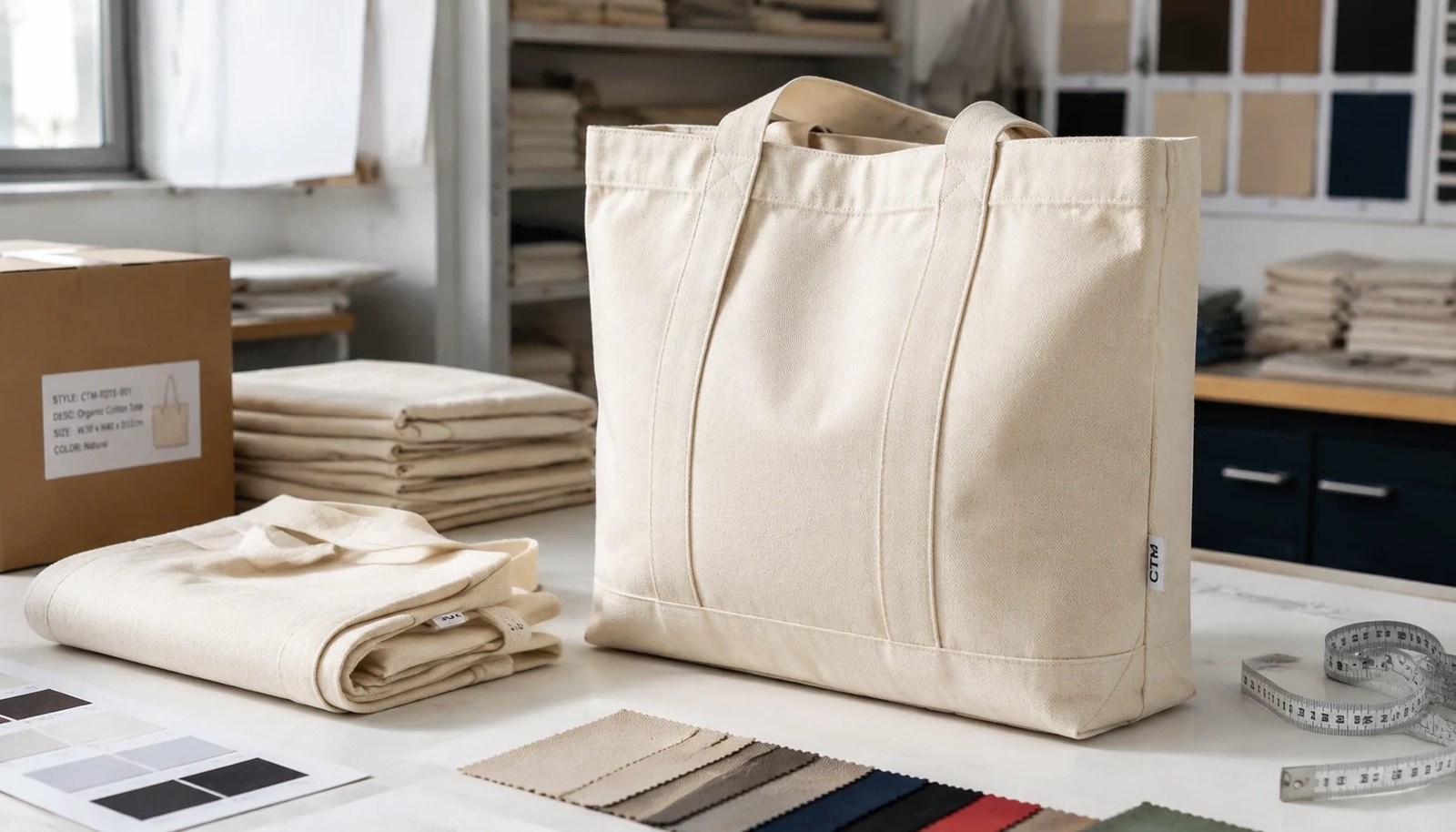
Why the factory audit matters more for museum shop totes
Museum shop tote programs often appear straightforward because the product category is simple: a cotton bag, one or two prints, standard labels, and cartons for store delivery. In practice, the buying risk is not in the basic shape. The buying risk sits in repeatability. Museum buyers usually need the bag to function as merchandise, branded packaging, and a visible extension of the institution's identity. A tote that feels limp, prints inconsistently, or arrives with stains can look out of place beside books, exhibition catalogs, and licensed gift items. That means the audit has to judge whether the supplier can deliver controlled, repeatable retail quality, not just whether they can make one acceptable sample.
This is why a factory audit for an organic cotton tote should go beyond general compliance summaries or a polished presentation deck. Museum retail teams need to understand the operating discipline behind the sample. Can the factory segregate fabric lots? Do they control print placement with guides instead of eye judgment? Are natural-cloth bags inspected for shade variation before packing? Can they keep small reorders aligned with the original specification? A supplier that answers those questions with records and process evidence is much safer than one that only shows photos of previous work.
The museum context also changes the commercial threshold for defects. Event giveaway bags can tolerate more variation because the use case is promotional and the price point is often lower. Museum shops, by contrast, sell into a curated environment where visitors expect the product to feel intentional. Slightly crooked handles, visible soiling, weak gusset seams, or uneven natural cloth tone are more likely to create returns or staff complaints. A good audit helps buyers identify these risks before deposit payment, when corrective leverage is strongest.
- Retail-facing totes need stronger consistency than event giveaway bags or conference totes.
- Natural organic cotton exaggerates shade variation, slub variation, and print contrast issues, especially under store lighting.
- Museum shops often reorder small to medium runs over time, so process repeatability matters more than one strong initial sample.
- A useful audit focuses on process control in fabric, printing, sewing, final inspection, and packing, not only factory scale or sales presentation.
Start the audit with the right tote specification
A factory audit becomes weak if the product itself is vague. Buyers should define the core tote specification before comparing suppliers, because the same audit question can mean very different things on a light sheeting bag versus a heavy canvas retail tote. For most museum shop programs, 10 oz to 12 oz organic cotton canvas, roughly 280 to 340 GSM finished, is a safer working range than lightweight sheeting. It presents better on hooks and shelves, reduces transparency, and carries heavier items such as books without looking underbuilt. If the target price point is lower and the intended use is lighter, an 8 oz range can still work, but the quotation and quality expectation must reflect that choice clearly.
Construction details also drive the audit scope. A flat tote may be acceptable for postcards, brochures, or low-cost impulse sales, but a bottom gusset of around 8 to 10 cm increases capacity and helps the bag keep a cleaner front face when filled. For museum stores that sell books, catalogs, or bundled gifts, this matters. The handle specification is equally important. Buyers should state handle width, total length, drop, and reinforcement method in the RFQ. A common setup is a 2.5 to 3 cm self-fabric handle with box-X or cross-stitch reinforcement. If a sample uses one stitch method and the bulk quote assumes another, the audit should treat that as a material inconsistency, not a minor note.
Fabric finish deserves explicit review because it affects hand feel, shrinkage, and appearance. Natural organic canvas can vary in slub level, surface smoothness, and tone depending on the mill and finishing process. Washed or enzyme-finished fabric can feel softer but may affect size stability and quote cost. Dyed fabric introduces additional shade control requirements. Museum buyers should lock down whether the bag is natural, dyed, washed, pre-shrunk, or untreated so they can evaluate suppliers on the same technical basis rather than comparing loosely similar samples.
- Common museum-shop tote size: about 38 x 42 cm body with an 8 to 10 cm bottom gusset.
- Typical handle target: 60 to 70 cm total length, giving roughly 25 to 30 cm shoulder drop.
- State whether measurements are finished measurements after sewing and finishing, not cut-panel dimensions.
- Define the inside seam finish in the spec because it affects both cost and retail appearance.
Audit the organic claim like a document trail, not a slogan
For this keyword topic, the central compliance question is not whether the supplier markets itself as sustainable. The real question is whether the factory can support the exact organic claim that museum shops intend to make. Procurement teams should treat the term organic cotton as a traceability issue tied to documentation and production flow. Some suppliers can show a general certificate from a fabric mill or a broad company statement, but they cannot demonstrate which rolls were used on a particular purchase order. That gap creates risk for museums with internal sustainability review, public reporting obligations, or licensing partners that ask for substantiation.
During the audit, ask the supplier to explain the movement of material through the order. How are incoming rolls identified? How are organic rolls separated from conventional stock? How is roll issuance recorded when panels are cut? If labels or claim language appear on packaging, where is the support file maintained? If printing, washing, or packing is subcontracted, can the supplier still preserve lot identity and documentation through those stages? Buyers do not need to request unnecessary paperwork, but they do need to know whether the evidence supports claims such as organic cotton material, certified supply chain, or another precisely defined statement.
This section matters because museum buyers frequently work with marketing, legal, and store operations at the same time. If the product page, hangtag, or shelf sign says organic cotton, the procurement team needs to know exactly what sits behind that wording. An audit that establishes claim boundaries early prevents later disputes about what can and cannot be printed on labels or used in product copy. That is especially useful when comparing several suppliers, because one may have stronger material traceability while another is only offering a generic sustainability narrative.
- Request transaction-level or lot-linked evidence where applicable, not only a generic certificate image.
- Confirm whether printing, washing, or labeling is done in-house or by subcontractors and whether traceability follows the order through those steps.
- Ask the supplier to state what claim language their documentation supports for product pages, hangtags, and cartons.
- Check whether incoming organic fabric is physically segregated or clearly identified in storage to reduce mixing risk.
What to inspect on the production floor
A practical organic cotton tote factory audit should follow the product path through the factory rather than staying at the office level. Start with raw material storage. Fabric rolls should be dry, labeled, and stored in a way that preserves lot identity. On natural cotton canvas, shade variation between rolls can be subtle in the warehouse but obvious after cutting and printing. Ask whether the cutting team mixes rolls within one order and how they handle visible tone differences. For museum shop orders, especially those with clean front graphics, mixed roll tone can create a visibly uneven retail presentation across one carton or one display wall.
Move next to cutting and panel preparation. The audit should check whether marker usage is organized, whether defective fabric sections are marked, and whether cut panels from different lots are kept separate when needed. If the supplier claims strong capacity, look for simple signs of discipline: bundle tickets, quantity control, and clear work-in-progress identification. These are basic controls, but they affect whether the right print goes on the right shell and whether mixed-SKU museum programs stay sorted. Buyers sourcing several exhibition artworks in one PO should pay special attention here because order mix-ups often begin during bundling, not at final packing.
In printing, the key questions are setup control and compatibility with artwork. Water-based screen printing is often the safest default for museum totes with 1 to 3 colors, line art, or text-based designs because it balances cost, feel, and durability on natural canvas. The audit should check whether registration is controlled by guides, whether strike-offs are approved before bulk, and whether curing is documented in some form. If the factory proposes digital printing for more detailed artwork, ask to see examples on fabric close to your specified canvas weight and surface. Fine details that look clean on a smooth sample cloth can soften or break on textured heavy canvas. On the sewing side, inspect handle placement guides, reinforcement consistency, seam trimming, and whether inline QC happens before defects accumulate.
- Inspect actual jigs, templates, or guides used for handle positioning and print placement.
- Review whether bulk panels are checked for shade variation before printing starts.
- Ask how the factory isolates defective print panels and whether they record rework or replacement quantities.
- Check whether final thread trimming and stain inspection happen before packing, not after cartons are closed.
Sample approval should mirror bulk, not idealized development work
One of the most common sourcing mistakes in museum tote programs is over-trusting a development sample. A development sample is useful for shape, layout, and basic commercial direction, but it is often produced under conditions that do not resemble bulk production. The sample operator may be the most experienced sewer in the room. The print may be adjusted slowly by hand. The fabric may be similar but not the same as the booked bulk fabric. If that sample becomes the only approval reference, the buyer has very little leverage when bulk differs in weight, drape, shade, or print sharpness.
The stronger approach is to separate approval stages clearly. First, use a development sample to confirm size, artwork scale, and price direction. Then require a pre-production sample made in the actual bulk fabric, with the actual print method, labels, seam finish, and intended packing method. For museum shop procurement, this matters because presentation details that seem small at sample stage can become significant at retail. A slightly warmer natural cloth tone, shorter handle drop, or narrower seam allowance may all be acceptable in isolation, yet together they change the product enough to affect perceived quality and repeat orders.
Approval records should be measurable, not just visual. Keep notes on finished body size, gusset, handle total length and drop, fabric GSM target, print size, print position, label placement, and packing format. For natural organic cotton, it is also useful to retain an approved base-fabric swatch and one approved print strike-off with date and supplier reference. These physical references help if a later shipment drifts in shade or print hand feel. They also make third-party inspection more objective because the inspection team can compare against a defined production standard instead of a casual photo approval thread.
- Approve one physical pre-production sample as the sealed bulk reference whenever the program value justifies it.
- Record body size, gusset, handle measurements, print dimensions, fabric GSM target, and packing method in the approval notes.
- If woven labels, care labels, barcode stickers, or hangtags are included, approve them on the assembled bag rather than as separate trim photos.
- State what variation is acceptable on natural cloth character so the factory does not overcorrect normal slub while ignoring real shade issues.
MOQ logic and why low-quantity quotes can mislead
Museum shops often buy in moderate volumes, split across several exhibition designs, institutional logos, or store locations. That makes MOQ structure more important than the headline MOQ printed on a quotation. A supplier may advertise a low MOQ per style, but the actual constraint may sit in fabric booking, printing setup, or label minimums. One factory may treat 500 pieces across three artworks as acceptable because the bag shell is shared and only the print differs. Another may quietly assume 500 pieces per artwork. Unless the quote and audit discussion break this down, buyers can think they are comparing like for like when they are not.
For organic cotton totes, MOQ typically starts with material availability. If the specified organic canvas is a standard stocked construction, the supplier may be able to support smaller split runs. If it requires custom booking, the fabric minimum can dominate the commercial structure. Print method also matters. Water-based screen printing usually has setup economics tied to color count and screen preparation, while trims such as custom woven labels or hangtags can impose their own minimums. Museum buyers should therefore ask the supplier to separate MOQ by fabric, print, and trims, then explain which of those can be shared across multiple SKUs.
This is also where a factory audit reveals whether the supplier understands museum replenishment patterns. A useful supplier can discuss how to standardize one shell size, one base cloth, and one handle build across changing artworks so reorders stay efficient. They may be able to print later in the process, split one PO across several graphics, or hold a shared label program. Those details can reduce unit cost volatility without weakening quality. By contrast, a supplier that handles every artwork as an entirely separate production run may look flexible at sample stage but become inefficient and error-prone once the assortment grows.
- Break MOQ into fabric MOQ, print MOQ, and trim MOQ rather than accepting one headline number.
- Ask whether one purchase order can be split into several artworks using the same base bag shell.
- Compare unit price at realistic reorder quantities, not only at the initial launch volume.
- Check whether lower MOQ pricing depends on shared production with other customers, because that can affect timing and consistency.
Quote comparison: what should be separated in the cost sheet
A tote quote is difficult to evaluate when it arrives as one all-in number. Museum shop procurement teams should request a structured cost sheet or at least a clearly itemized commercial summary. The goal is not necessarily to force full cost transparency from the factory. The goal is to understand which variables drive price and which assumptions differ between suppliers. At minimum, the quote should identify fabric specification, bag construction, print method and colors, label package, packing type, carton specification, sample charges, and trade term. Without that structure, the buyer may compare two unit prices that are actually built on different GSM, different print methods, or different packing assumptions.
For example, a supplier quoting 280 GSM organic canvas in bulk pack and another quoting 340 GSM with individual polybags are not offering the same landed-cost proposition even if the FOB prices look close. A gusseted bag increases both sewing time and carton volume. A digital print may suit detailed art but can change both rejection risk and color expectations on textured fabric. Organic material sourcing itself may introduce a premium that should be clearly stated rather than buried inside an opaque line item. Museum buyers benefit from a separated quote because it allows them to test alternative builds without losing commercial visibility.
This cost structure also helps internally. Museum store teams often need to align procurement, merchandising, and finance. If one department wants a cleaner retail presentation and another needs tighter freight control, the quote must show the commercial effect of choices such as individual polybag packing, woven labels, or heavier canvas. A supplier that can explain these tradeoffs clearly is usually easier to work with during revisions and repeat orders. The audit conversation should therefore test whether the factory understands landed cost, not just ex-factory pricing.
- Useful quote lines: fabric specification, print method, color count, label package, sample charges, packing type, carton spec, and incoterm.
- Request any premium for organic material sourcing separately from the base bag cost when possible.
- Ask how quote validity is affected by cotton market movement, approval delay, or late fabric booking.
- Rebuild competing quotes to the same basis before comparing unit prices or negotiating.
Set QC thresholds before production starts
Quality control works best when the acceptance standard is written before bulk starts, not after issues appear. For museum shop totes, the defects that actually matter are usually straightforward: print off-center, visible shade mismatch, soil on natural fabric, uneven handle length, open seams at gusset corners, wrong labels, and inaccurate carton assortments. These are normal production risks, not unusual exceptions. Buyers should convert them into pass-fail rules that the supplier, inspector, and internal team all understand in the same way.
Where possible, use measurable criteria. A centered front print can often be controlled to within plus or minus 5 mm. Bag width and height may need a tolerance of around 1 cm depending on construction and finishing, but the number should be stated in writing. Handle drop should have its own tolerance because shoulder use and visual symmetry both matter at retail. Fabric GSM should have a defined acceptable range. If the tote will carry books or other heavier merchandise, handle reinforcement should be part of the QC plan, and the factory should explain whether they use any pull-test or load-check routine internally. Even a simple documented method is better than an assumption.
The QC standard should also distinguish major from minor issues. On natural cotton, a small inherent slub may be acceptable if it sits within the approved fabric character, but an oil mark, mildew odor, broken stitch, or obvious print blur is not. Write these distinctions early and include them in the PO or production spec pack. Buyers that rely only on broad language such as good quality or export standard often discover at inspection stage that the factory interprets those terms much more loosely. The stronger the pre-production QC definition, the less room there is for shipment disputes.
- Define major defects: holes, broken stitches, obvious stains, severe print blur, wrong artwork, wrong label package, or wrong carton assortment.
- Define minor defects: small thread ends, slight fold marks removable after unpacking, and approved natural-cloth slub within the sample standard.
- State the inspection basis: inline checks, final random inspection, and any third-party final inspection requirement.
- Ask the factory to show its internal check sheet for measurement, print, sewing, and packing so your standard matches its workflow.
Packing standards affect both retail readiness and freight cost
Packing decisions shape both landed cost and the store's receiving experience. For museum shops, the right packing method depends on how the tote will move from port or warehouse to floor display. Individual polybags can protect natural cotton from transit soil and simplify unit handling, but they add labor, packaging material, and carton bulk. Bulk inner packing by 25 or 50 pieces may better fit sustainability policies and reduce cubic volume, provided the receiving team can unpack and process the bags without losing cleanliness or assortment control. Buyers should make this decision intentionally rather than accepting the supplier's default.
Carton design is equally important. Heavy organic canvas can create cartons that are cumbersome if the pack quantity is too high, especially for gusseted bags. This affects warehouse handling, staff safety, and carton damage risk. The supplier should specify units per carton, carton dimensions, gross weight, and how assortments are separated. If the order includes several museum graphics, exhibition SKUs, or barcode labels, the packing list and carton marks need to be precise. A factory that sews well but labels cartons inconsistently can still create receiving delays, stock errors, and unnecessary store labor.
Museum buyers should also consider transit conditions. Natural cotton is vulnerable to visible soiling and can absorb moisture. Depending on route and season, buyers may want to discuss carton liners, desiccant, or other moisture-prevention measures for ocean shipment. These are not always mandatory, but they should be reviewed during the audit and quotation stage. Packing is one of the easiest areas to standardize across repeat orders, so it is worth documenting thoroughly once and then holding the supplier to that standard.
- Common export pack ranges: 25 to 100 pieces per carton depending on GSM, gusset, fold method, and polybag requirement.
- Keep carton gross weight within the buyer's warehouse handling limit, often around 12 to 18 kg as a practical range.
- Confirm barcode placement, carton marks, assortment ratio, and whether inner carton separation is needed for multi-SKU orders.
- Discuss moisture protection for ocean freight if the destination climate or transit time increases mildew or carton-softening risk.
Lead-time risk usually sits in fabric and approvals
The quoted lead time for an organic cotton tote order can look simple, but the real schedule is a chain of dependencies. Fabric booking is often the first risk point, especially if the buyer wants a specific organic canvas weight or finish that is not held as permanent stock. Sampling is the second common bottleneck. If development sample approval, print strike-off approval, and label approval happen sequentially rather than in parallel, days turn into weeks quickly. Museum shop procurement teams should therefore request a stage-by-stage lead-time map instead of relying on one headline shipment date.
This matters even more for museum programs tied to exhibition openings, event calendars, or coordinated retail launches. A general promise of 35 to 45 days is not useful unless the supplier defines what starts the clock. Does production begin after deposit receipt, after artwork approval, after pre-production sample sign-off, or after fabric arrival? If those triggers are unclear, buyers cannot manage internal milestones or compare suppliers properly. The audit should also ask which materials or processes need early commitment. Some factories must book fabric before final artwork approval to protect the schedule, while others can wait without major timing risk.
A reliable supplier will usually identify its own critical path without being pushed. They can explain where the queue is tight, whether printing capacity is constrained in peak periods, and when vessel cutoff becomes the real shipment gate. That level of specificity is useful because it helps buyers decide where to build buffer time. In most museum tote orders, the biggest timing gains come from locking the specification early, shortening approval cycles, and making sure artwork, label, and packing instructions are complete before bulk fabric is booked.
- Typical timeline components: fabric booking, sample making, print strike-off, bulk cutting and sewing, final inspection, packing, and dispatch.
- Ask which stage can begin before final PO release and which cannot.
- Confirm whether the quoted lead time starts from deposit receipt, artwork approval, sample approval, or fabric arrival.
- Build time for third-party inspection and document review if the museum requires additional compliance sign-off before shipment.
Specification comparison for buyers
| Spec decision | Recommended option | When it fits | Buyer risk to check |
|---|---|---|---|
| Fabric weight | 10 oz to 12 oz organic cotton canvas, about 280 to 340 GSM finished | Best for museum shops selling logo totes, exhibition totes, and bookstore-adjacent bags expected to carry catalogs or gift items | Some suppliers quote loom-state weight or lighter sheeting while showing heavier samples; confirm finished GSM tolerance, test method, and whether the figure is before or after washing |
| Bag construction | Bottom gusset 8 to 10 cm with boxed corners and inside overlock or binding | Useful when stores want capacity for books, catalogs, postcards, and gift bundles without collapsing the bag face | Flat bags can quote cheaper but carry less and twist on hooks; verify seam allowance, gusset measurement, and corner stitching after finishing |
| Handle method | Self-fabric handles with box-X or cross-stitch reinforcement, 60 to 70 cm total length | Works for shoulder carry in mixed visitor traffic and supports better perceived quality at retail | Handle drop often drifts in bulk if guides are weak; audit sewing jigs, stitch density, bartack consistency, and any pull-test routine |
| Print method | Water-based screen print for 1 to 3 solid colors on natural fabric | Best for museum logos, exhibition titles, line art, and typography where hand feel and clean solids matter | Digital print may suit detailed art but can behave differently on textured canvas; confirm artwork line thickness, color expectation, and curing records |
| Organic claim evidence | Factory with transaction certificate trail and lot-level material traceability | Needed when museum procurement, licensing, or sustainability teams require support for organic labeling language | A mill declaration alone is not enough if the cut-and-sew site cannot link incoming rolls to your order and finished packing records |
| MOQ structure | Base MOQ by fabric color and print setup, then split by artwork colorway where possible | Good for museum shops running one bag body across multiple exhibition graphics or store locations | Low MOQ promises can hide higher unit cost, shared production risk, or mixed-shade repeats; ask what MOQ applies to fabric, printing, and trims separately |
| Packing format | Individual flat fold in recycled polybag only if required, otherwise bulk inner pack by 25 to 50 pieces | Fits buyers balancing retail cleanliness, lower packaging waste, and lower carton volume | Overpacking inflates cubic volume and labor; underpacking can create creasing, soiling, or receiving confusion if SKU labeling is weak |
| Sampling path | Pre-production sample in actual bulk fabric and print method, plus sealed swatch for color reference | Important when museum branding teams are sensitive to cloth tone, print color, and presentation finish | Prototype samples in substitute cloth can hide shrinkage, slub level, print edge behavior, and true handle drape |
| Inspection standard | Written AQL or buyer defect standard with print, measurement, and stain rules defined before bulk | Useful for teams that need repeatable acceptance criteria across seasonal or repeat orders | Without written criteria, factories may pass bags with visible shade variation, off-center prints, or uneven handles as commercial quality |
Buyer checklist before sampling
- Confirm whether the factory that cuts and sews the tote is the same site shown in the audit evidence, not only the trading office or showroom.
- Request the organic material document trail from yarn or fabric purchase through incoming roll records, cutting issue records, and finished packing records.
- Specify target finished fabric weight in GSM with tolerance, and state whether the figure is before or after washing or finishing.
- Define tote body size, gusset width, handle width, handle total length, handle drop, seam allowance, and reinforcement stitch method in the RFQ.
- State print method, print size, print location tolerance, artwork color count, and whether Pantone match is required on natural organic cotton.
- Ask for a pre-production sample made in bulk fabric with actual print, actual labels, actual inside seam finish, and actual packing method.
- Review whether the factory uses in-house printing or subcontract printing, and whether the same traceability and QC controls extend to that process.
- Set AQL level or acceptance standard for print defects, stitching defects, stains, measurement tolerance, missing labels, and carton count accuracy.
- Compare quote validity against cotton market movement, fabric booking window, and whether price changes if the approval cycle delays fabric purchase.
- Verify lead time by stage: fabric booking, sample making, print strike-off, sewing, packing, inspection, and vessel or air cutoff.
Factory quote questions to send
- What is the finished fabric composition and GSM, and what tolerance do you apply in bulk production on the completed bag fabric?
- Is the quoted organic cotton material backed by transaction certificates, chain-of-custody records, or only by a fabric supplier declaration?
- Is the factory in your quote the actual cut-and-sew site, and can you provide audit scope covering printing, labeling, packing, and any subcontract process?
- What is your MOQ by size, fabric color, print color count, and trim package, and can one PO be split across multiple artworks using the same bag shell?
- Which print method is included in the quote, and what artwork limitations apply to line width, halftones, distressed art, fine text, and maximum print area?
- What sample stages are chargeable: development sample, print strike-off, pre-production sample, shipment sample, and any courier cost?
- Does the quote include woven label, care label, barcode sticker, hangtag attachment, carton mark, and export carton standard, or are these extra-cost items?
- What packing method is included, and how does changing from bulk pack to individual polybag affect units per carton, carton size, and freight volume?
- What in-house QC records do you keep for fabric shade segregation, print curing, needle control, final measurement inspection, and packing accuracy?
- What lead-time assumptions are built into the quote, and which materials must be booked before artwork approval or deposit receipt?
Quality-control points to confirm
- Finished fabric GSM must match the approved range and should be tested from bulk fabric, not only from development swatches or mill declarations.
- Base cloth shade should be consistent across cutting lots; mixed roll tone is highly visible on natural organic cotton under retail lighting.
- Print position tolerance should be defined, commonly within plus or minus 5 mm for centered front prints on standard totes unless artwork layout requires tighter control.
- Print curing must resist rub and light washing without cracking, tackiness, ghosting, or severe color loss on the approved print area.
- Handle attachment stitches must be even, locked, and reinforced; skipped stitches, weak back-tacking, or visibly unbalanced box-X reinforcement are major defects.
- Bag width, height, gusset, and handle drop should be measured after finishing and compared against approved tolerance on a documented inspection sheet.
- Inside seam finish must be clean with no loose threads, missed overlock sections, seam grin, or raw-edge exposure that reduces durability or retail appearance.
- No oil marks, rust spots, finger soil, mildew odor, water stains, or heavy shade contamination should be accepted on natural cotton bags for museum retail.
- Carton count, assortment ratio, barcode labeling, SKU marks, and shipping marks must match the packing list and PO instructions exactly.
- Metal detection or needle control records should be available where required by the buyer's product safety policy or store compliance standard.