Start With the Bookstore Use Case
A university bookstore tote is rarely just a light giveaway bag. It may carry textbooks, hoodies, water bottles, laptops, notebooks, or bundled orientation materials. The durability checklist should begin with the real load and distribution channel, because the right spec for a free admissions event bag is not the same as a paid retail tote sold beside licensed apparel.
For RFQ purposes, write the use case in operational terms. A supplier can quote more accurately when they know whether the tote will sit on retail shelves, ship through an online bookstore, or be handed out flat at a campus event. This affects fabric weight, handle length, folding method, print durability, barcode placement, carton marks, and inspection priorities.
- For paid bookstore retail, prioritize fabric body, clean sewing, print finish, and folded appearance.
- For orientation kits, prioritize load capacity, carton packing efficiency, and predictable delivery date.
- For alumni or donor gifts, prioritize certification documentation, presentation packing, and lower visual defect allowance.
- For online fulfillment, prioritize individual packing, barcode or SKU labeling, and carton drop resistance.
Choose Fabric Weight by Load, Not by Slogan
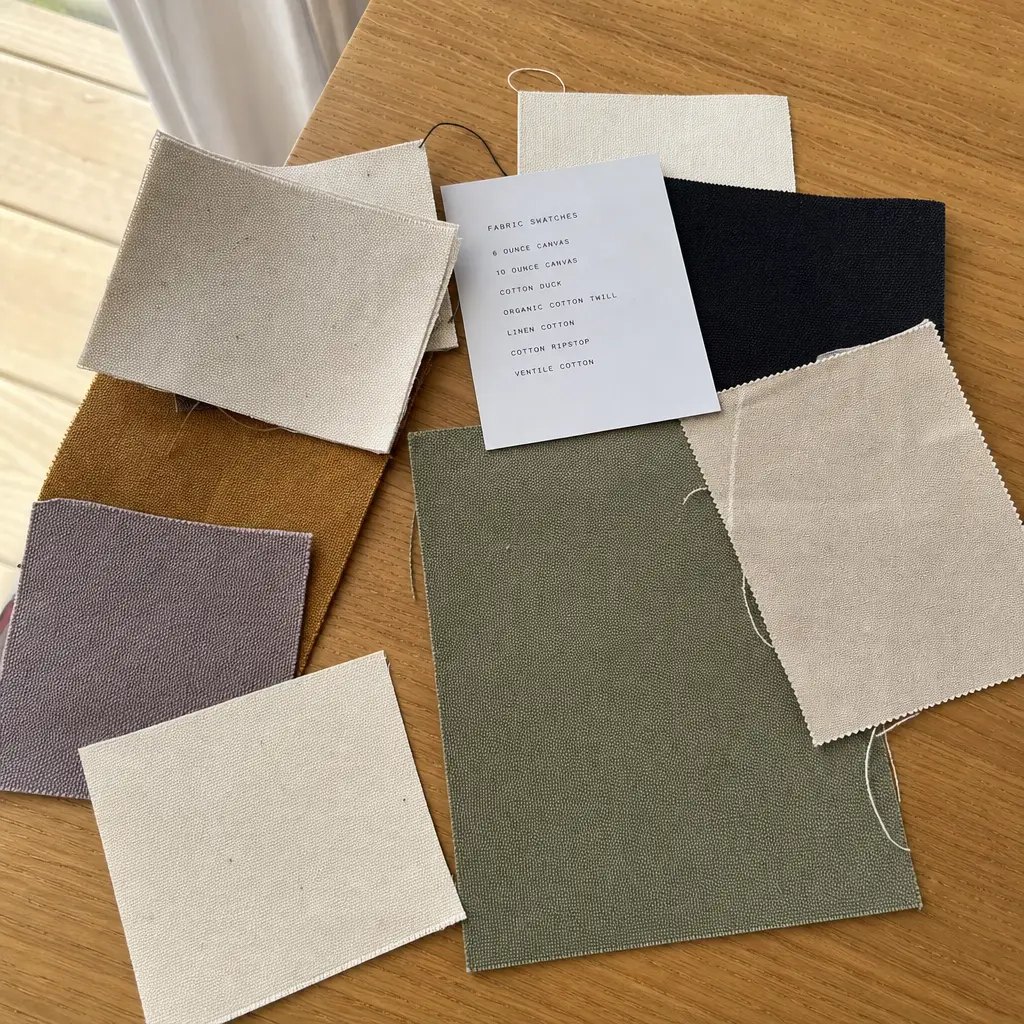
Organic cotton tote quotes often look similar until the fabric is handled. The words organic cotton tote do not tell you whether the bag uses light sheeting, midweight twill, or heavy canvas. For university bookstore use, 10 oz to 12 oz canvas, roughly 340 to 407 GSM, is a practical range for durability without making the bag too stiff or expensive. Lighter 6 oz to 8 oz fabric can work for giveaways, but it should not be accepted as equal to a retail bookstore tote.
GSM should be written into the RFQ with tolerance. Many factories quote by ounce, but different markets use different conversion habits and fabric finishes can change the perceived thickness. A useful quote names both ounce and GSM, plus construction such as plain weave canvas or twill. For natural undyed organic cotton, also note whether small seed flecks are acceptable; they are normal in less processed cotton but may surprise a retail buyer expecting a bright white surface.
- 6 oz to 8 oz: suitable for low-cost event distribution, limited load, and short-term use.
- 10 oz: common balance for bookstore merchandise with moderate book and apparel load.
- 12 oz: better for paid retail, boxed bottom styles, and heavier campus merchandise kits.
- 14 oz and above: premium handfeel, higher freight weight, thicker seams, and higher sewing cost.
Build Durability Into the Sewing Spec
Most tote failures happen at the handles, top hem, side seam, or bottom corners. The durability checklist should therefore describe how the bag is sewn, not only how large it is. A double-fold top hem gives the handle a more stable base. Cross-stitch reinforcement or bartack stitching helps distribute load where the handle enters the bag body. For heavy bookstore use, handle width around 2.5 cm to 3 cm is more comfortable and less likely to twist than very narrow handles.
Stitch density matters. A bag can look acceptable in photos while using long, loose stitches that open under load. For RFQ language, require consistent stitching with no skipped stitches and define the target stitches per inch. The exact number depends on fabric thickness and thread, but 8 to 10 stitches per inch is a common practical range for canvas totes. If the supplier proposes a different stitch density, they should explain the reason and show samples.
- Top hem: double-fold preferred for retail and load-bearing bookstore totes.
- Handle reinforcement: cross-stitch or bartack should be visible and consistent on all four handle ends.
- Side seams: overlock plus lockstitch, French seam, or bound seam depending on appearance and cost target.
- Thread: polyester thread is usually stronger and more stable than cotton thread for load-bearing seams.
- Corners: boxed bottom styles need extra attention at corner stress points during load testing.
Set a Realistic Load Test
A durability checklist is weak if the load test is vague. Instead of writing strong handles, define the test weight, hang time, and pass criteria. For a bookstore tote, a practical internal test may use 8 kg to 12 kg depending on bag size and intended contents. The bag should be filled in a way that puts stress on the bottom and handles, then hung or carried for a fixed period. After the test, there should be no handle pullout, seam burst, fabric tearing, or severe distortion.
The test should match the product promise. If the tote will be used for textbooks and course packs, the higher range is sensible. If it is a light welcome bag, a lower test may be enough. Over-specifying can raise cost by forcing heavier fabric and more labor than the buyer needs. Under-specifying creates returns, poor campus store reviews, and uncomfortable conversations when a student loads the bag exactly as expected.
- Write the target load in kilograms or pounds and keep it consistent across suppliers.
- Test a pre-production sample and then random bulk units from different cartons.
- Record whether failure occurs at handle stitches, body fabric, bottom seam, or side seam.
- Reject samples with needle-hole tearing around the handle base.
- For boxed bottom bags, test with rigid books or flat items, not only soft fabric.
Match Print Method to Organic Cotton Texture
University bookstore graphics often include school names, mascots, department marks, event dates, or licensed art. On organic cotton canvas, the surface may be slightly uneven, so the print method should be chosen around the artwork and the buyer's handfeel target. Water-based screen print is a strong option for one to three solid colors because it can keep the fabric feeling natural. Plastisol may give stronger opacity on darker dyed cotton, but it can feel heavier and may not match the sustainability positioning.
Print durability should be checked before bulk. A cured print should pass reasonable rub, tape, and fold checks without cracking, flaking, or transferring. If the bag will be folded tightly into retail packing, the print area should be tested after folding pressure. Large print areas on heavy canvas may also change the drape of the tote, so approve both artwork appearance and handfeel.
- Water-based screen print: good for natural cotton look and solid bookstore graphics.
- Discharge print: possible on some dyed cotton, but needs fabric and dye compatibility testing.
- Heat transfer: useful for detailed small runs, but edges and wash performance need review.
- Embroidery: premium look for small logos, higher cost, and possible puckering on lighter fabric.
- Woven side label: useful for subtle branding, but does not replace front graphic approval.
Use MOQ to Read the Supplier's Production Route
MOQ is not just a sales rule; it often reveals how the supplier plans to produce the bag. A low MOQ may mean the factory is using stock fabric and standard handles. That can be efficient for a small campus event, but it may limit organic certification documentation, fabric shade control, and custom dimensions. A higher MOQ may be linked to fabric weaving, dyeing, printing setup, or cutting efficiency.
For wholesale organic cotton totes for university bookstores, many practical orders start around 500 to 1,000 pieces per design or colorway, depending on fabric and print complexity. A buyer can still request lower quantities, but the quote should make clear what changes: stock fabric, higher unit price, fewer color options, simplified packing, or limited certification paperwork. Comparing MOQ without these details usually leads to false savings.
- MOQ per fabric color affects dyed organic cotton orders more than natural cotton orders.
- MOQ per print design affects screen setup, color matching, and production scheduling.
- MOQ per size affects cutting efficiency and sewing line changeover.
- Below MOQ, suppliers may quote sample-room production instead of normal line production.
- For multi-campus programs, combining locations into one production run can improve price and shade consistency.
Approve Samples Like a Production Tool
A showroom sample is useful for first review, but it should not be treated as production approval. The approval sample for a bookstore tote needs to use final fabric weight, final handle construction, final print method, final dimensions, and final packing approach. If one of those elements changes later, the durability result can change as well. Keep one signed or sealed approved sample with the buyer and one with the factory.
Sampling should include measurement, handling, print checks, and a small load test. For licensed university graphics, artwork approval may also require the campus brand office or licensing partner. Build that review time into the schedule. A common mistake is approving the physical bag while the logo file, print size, or color target is still moving. That creates re-sampling, delays fabric cutting, and makes the final inspection harder to judge.
- Measure width, height, gusset, handle drop, handle width, and print placement.
- Compare bulk fabric swatch to approved fabric under consistent light.
- Fold the bag in the proposed packing method and inspect crease effect on the print.
- Check inside seams for loose threads, raw edges, and skipped stitches.
- Photograph the approved sample with a ruler and keep the approval record with the purchase order.
Define Packing Before the Price Is Final
Packing can change unit cost, carton size, labor time, and landed cost. A tote sold as retail merchandise may need individual polybags, paper bands, hangtags, barcodes, size or origin labels, and clean folding. A giveaway tote may only need bulk packing by fixed quantity per carton. Neither approach is wrong, but the RFQ must say which one the supplier is quoting.
University bookstore logistics often involve limited storage space and fixed campus receiving windows. Carton quantity should be practical for staff handling and not so heavy that cartons fail or become difficult to move. For heavier 12 oz canvas totes, carton gross weight can rise quickly. Compression also matters: forcing too many bags into one carton may reduce freight cost but create deep creases that make a paid retail tote look cheap on arrival.
- Retail packing: individual fold, polybag or paper band, barcode label, and carton SKU marking.
- Event packing: bulk packed by department, campus, event date, or distribution station.
- Export cartons: adequate board strength, moisture protection, and clear shipping marks.
- Carton data: pieces per carton, carton dimensions, gross weight, net weight, and total CBM.
- Inspection access: cartons should be packed so random units can be checked without destroying the entire lot.
Compare Quotes on the Same Cost Drivers
Two tote quotes can differ by 20 percent or more because they are not quoting the same bag. Fabric weight, organic documentation, handle reinforcement, print colors, packing, carton quantity, and inspection assumptions all affect cost. The lowest quote is only useful if it meets the same durability and compliance level. Otherwise it is just a different product with a similar name.
A better comparison sheet separates product cost from documentation, sampling, packing, inland freight, export carton data, and testing. For importers and distributors, this makes landed-cost comparison cleaner. For brand owners, it also protects internal approvals because the team can see why one supplier is more expensive: heavier GSM, stronger sewing, retail packing, or better organic claim support.
- Fabric: weight, construction, organic claim level, color, and shrinkage expectation.
- Sewing: handle reinforcement, seam finish, thread, stitch density, and tolerances.
- Decoration: print method, number of colors, print size, ink type, and color matching standard.
- Packing: individual or bulk, carton quantity, barcode labels, hangtags, and carton marks.
- Quality: sample count, inspection level, test reports, and rework responsibility.
- Logistics: lead time, EXW or FOB terms, carton CBM, and shipment-ready date.
Plan Lead Time Around Approvals and Material
Lead time starts becoming real only after the supplier has the final specification, artwork, sample approval, and deposit terms. Organic cotton fabric can require more planning than generic cotton, especially if the buyer needs documented material flow. Natural stock fabric may be faster, while custom dyed organic cotton, special GSM, or custom weave may add time before cutting even begins.
For a university bookstore, schedule risk is often tied to immovable dates: semester start, orientation week, alumni weekend, homecoming, or graduation. The RFQ should include the required delivery date, not only the desired production time. Suppliers can then work backward through sample making, artwork approval, bulk material preparation, printing, sewing, inspection, packing, and freight handover. A strong schedule also includes a final decision date for the buyer, because late artwork approval is one of the easiest ways to lose the production window.
- Separate sample lead time from bulk production lead time.
- Lock artwork and Pantone or color targets before pre-production sample approval.
- Add review time for university licensing or brand compliance teams.
- Reserve extra time for third-party testing if certification or lab reports are required.
- Do not schedule final inspection on the same day goods must leave the factory.
Specification comparison for buyers
| Spec decision | Recommended option | When it fits | Buyer risk to check |
|---|---|---|---|
| Fabric weight | 10 oz to 12 oz organic cotton canvas, about 340-407 GSM | Daily campus retail, textbooks, apparel, drinkware, and orientation kits | Supplier may quote lighter sheeting or loose weave cotton while using the same ounce description |
| Handle construction | Self-fabric handles with cross-stitch reinforcement, 2.5-3 cm width | Bookstore totes expected to carry books or laptops without handle tearing | Handle stitch density and bartack size may be reduced in bulk to save labor |
| Bottom format | Flat tote for lower cost; boxed bottom for better shelf and load performance | Flat for giveaway volume, boxed bottom for paid retail or course material kits | Boxed bottom changes fabric consumption, carton cube, and unit cost |
| Print method | Water-based screen print for one to three solid colors | Organic positioning, bookstore logo, event graphics, and repeat replenishment orders | Under-cured ink can crack or transfer; thick ink can stiffen the organic cotton handfeel |
| Seam standard | Double-fold top hem, inside overlock or bound seams, minimum 8-10 stitches per inch | Retail bags that need clean appearance and reasonable wash resistance | Open raw edges, skipped stitches, or weak thread can pass visual review but fail load testing |
| MOQ logic | 500-1,000 pcs per color for efficient organic cotton dyeing or greige fabric allocation | Campus programs with multiple bookstore locations or semester campaigns | Very low MOQ quotes may use stock non-organic fabric or mixed lot shade variation |
| Packing method | Individual folded polybag or paper band for retail; bulk inner packing for giveaway | Retail floor display, online bookstore fulfillment, alumni packs, and orientation distribution | Over-compressed cartons create hard creases that reduce perceived retail value |
| Testing sample | Pre-production sample made in final fabric, final handles, final print, and packed as bulk | Any paid retail tote or large seasonal order before deposit balance release | A nice sales sample does not prove bulk durability unless it matches production inputs |
| Supplier evidence | Transaction certificate or scope certificate support plus fabric test report where required | University programs that need organic cotton claims documented for internal compliance | Certification language can be vague; buyer should verify what level of organic claim is being made |
Buyer checklist before sampling
- Define the tote use case: paid retail item, orientation giveaway, course material kit, alumni gift, or event merchandise.
- Specify organic cotton fabric by construction and weight, not only by the words natural cotton or eco tote.
- Set a target fabric range, such as 10 oz to 12 oz canvas for durability-focused bookstore use.
- State finished size, gusset or no gusset, handle length, handle width, and expected carry load.
- Require reinforced handle stitching with visible cross-stitch or bartack dimensions on the pre-production sample.
- Approve print method, ink type, logo size, print position, and cure test before bulk printing.
- Request a physical sample made with final fabric and final thread, not only a blank stock tote.
- Run a load hang test with realistic bookstore contents and record pass or fail by seam, handle, and fabric distortion.
- Review shrinkage and colorfastness expectations if the tote may be washed by end users.
- Confirm whether packing is retail-ready, bulk packed, or prepared for campus store distribution by carton.
Factory quote questions to send
- What is the exact fabric construction, weight in oz and GSM, and tolerance range for bulk production?
- Is the cotton organic certified at fabric level, yarn level, finished product level, or supplied only as claimed organic cotton material?
- Can the quote include the certification documents or transaction certificate support available for this order?
- What handle width, handle length, stitch pattern, thread type, and stitch density are included in the quoted price?
- Is the quoted tote flat, side-gusseted, bottom-gusseted, or boxed bottom, and what is the finished tolerance?
- Which print method is included, how many colors, what maximum print area, and what ink curing standard will be used?
- What is the MOQ per design, per fabric color, and per print colorway, and what happens to unit price below that level?
- How many pre-production samples are included, what is the sample lead time, and are sample courier costs separate?
- What packing method, carton quantity, carton size, gross weight, and marks are included in the quote?
- What is the normal production lead time after sample approval and deposit, and what dates are material cut-off dates?
Quality-control points to confirm
- Fabric weight should be measured from bulk fabric with an agreed tolerance, commonly plus or minus 5 percent unless stricter terms are written.
- Finished tote dimensions should be checked flat and under light tension, with separate tolerance for width, height, gusset, and handle drop.
- Handle attachment should show consistent reinforcement, no skipped stitches, no loose thread nests, and no fabric tearing around needle holes.
- Load testing should use the buyer's realistic carry weight, held for a fixed time, with no seam burst, handle pullout, or major distortion.
- Print adhesion should be checked by rub, tape, and fold tests after curing, especially on heavy canvas texture.
- Print placement should be measured from bag edges, not judged by eye, because organic cotton fabric can shift during sewing.
- Bulk color and fabric handfeel should be compared against the approved sample under consistent lighting.
- Carton packing should be checked for moisture protection, crease control, barcode placement, and carton strength for export handling.
- Random finished units should be opened from top, middle, and bottom carton layers to catch compression, shade, and sewing variation.
- Final inspection should separate critical, major, and minor defects so cosmetic issues do not hide functional failures.