Why Spa Retailers Need a Component-Level Cost Breakdown for Organic Cotton Totes
Spa retailers order organic cotton totes for multiple use cases: gift bags for retail purchases, branded carry-outs for loyalty programs, promotional items for seasonal campaigns, and packaging for subscription boxes. Each use case has different cost and quality requirements. Without a component-level cost breakdown, you risk overpaying for features you don't need or receiving a bag that damages your brand image.
This guide breaks down every cost driver—fabric weight, print method, handle type, packing, MOQ, lead time, and landed cost—with specific price ranges, sourcing context, and procurement best practices. You'll learn how to write a precise RFQ, compare supplier quotes, and avoid common production mistakes. The goal is to help you make informed decisions that balance cost, quality, and delivery time for your spa retail business.
- Understand the cost impact of fabric GSM: 140 GSM vs. 160 GSM can add $0.15–$0.25 per bag
- Learn why print method matters: screen print is cheaper but less durable than woven label
- Know how packing choices affect landed cost: polybag adds $0.03–$0.08 per bag
- Plan for MOQ and lead time: smaller orders cost more per unit and take longer to produce
Fabric Weight (GSM) and Its Cost Impact: 140 vs 160 vs 180 GSM
Fabric weight is the single biggest cost driver for organic cotton totes. Most spa retailers choose between 140 GSM and 160 GSM. A 140 GSM bag is lighter and softer, suitable for lightweight items like a small towel or a lotion bottle. A 160 GSM bag is more durable and holds shape better, but it costs about $0.15–$0.25 more per bag. For a 1000-piece order, that's $150–$250 extra.
If your spa tote will carry heavier items like a full-size shampoo bottle or a robe, go with 160 GSM. If it's purely a gift bag with a few samples, 140 GSM is sufficient. Always request a fabric swatch to feel the weight and texture before committing. Also, confirm the organic certification (GOTS or OCS) for the fabric batch—some suppliers may use blended organic cotton to lower cost, which affects the feel and certification.
- 140 GSM: soft, lightweight, good for small gift items; cost $0.80–$1.20 per bag (FOB)
- 160 GSM: durable, holds shape, good for heavier items; cost $1.00–$1.50 per bag (FOB)
- 180 GSM: premium feel, but adds $0.30–$0.50 per bag; only if your brand requires it
- Always request a fabric swatch and verify GSM with a scale upon sample arrival
Print Method: Screen Print vs. Woven Label vs. Embroidery – Cost and Durability Trade-offs
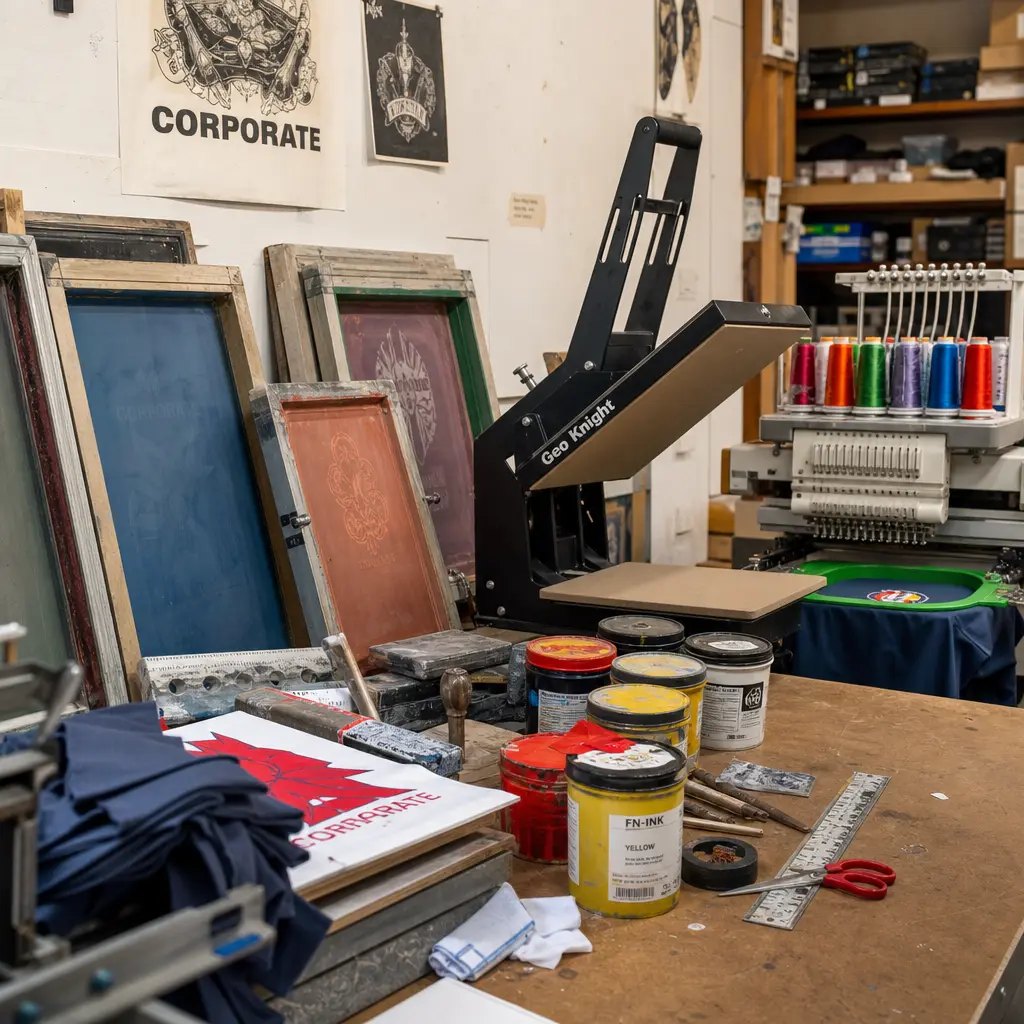
The print method affects both cost and durability. Screen print is the most common for spa totes: it's cheap, fast, and works well for simple logos with 1–2 colors. Cost per bag is about $0.10–$0.30 for a single-color print. However, screen print can crack or fade after multiple washes if not cured properly. For a spa bag that will be reused, this can be a problem.
Woven labels are more durable and look premium. They are sewn onto the bag and cost about $0.20–$0.50 per bag, plus a higher MOQ (500–1000 pieces per label design). Embroidery is the most expensive ($0.50–$1.00 per bag) and is best for small logos on the front or handle. For spa retailers, a woven label on the side seam or a small screen print on the front is a good balance of cost and quality.
- Screen print: $0.10–$0.30 per bag for 1–2 colors; MOQ as low as 100 pcs
- Woven label: $0.20–$0.50 per bag; MOQ 500–1000 pcs; more durable and premium
- Embroidery: $0.50–$1.00 per bag; best for small logos; MOQ 200–500 pcs
- Ask for a print proof or sample label before production to confirm color and placement
Handle Type and Attachment Cost: Self-Fabric vs. Cotton Webbing vs. Looped vs. Stitched-On
Handles are another cost variable. Self-fabric handles (cut from the same fabric as the bag body) are the cheapest option, adding about $0.05–$0.10 per bag. They give a uniform look but may fray if not double-stitched. Cotton webbing handles are more durable and cost $0.15–$0.30 per bag. They are better for heavier loads and look more polished.
Handle attachment method also matters. Looped handles (where the handle is sewn into the side seam) are stronger but add sewing time. Stitched-on handles (attached with a bar tack) are faster but may pull out under heavy weight. For spa totes that will carry bottles or jars, choose looped handles with double stitching. Ask your supplier for a pull test result to confirm handle strength.
- Self-fabric handles: $0.05–$0.10 per bag; uniform look but may fray
- Cotton webbing handles: $0.15–$0.30 per bag; more durable and polished
- Looped attachment: stronger but adds $0.05–$0.10 per bag in sewing cost
- Stitched-on attachment: cheaper but risk of handle pull-out under heavy load
Bottom Gusset: When to Add It and How It Affects Cost and Freight
A bottom gusset adds depth to the bag, allowing it to stand upright and hold more volume. For spa retailers, a gusset is useful if the bag will carry bottles, jars, or boxes. A 1-inch gusset adds about $0.10–$0.20 per bag in fabric and sewing cost. A 2-inch gusset adds more, but may be overkill for most spa products.
If your bag is purely for flat items like a towel or a brochure, skip the gusset to save cost. The bag will pack flat, reducing shipping volume and freight cost. If you need a gusset, specify the depth in inches and ask for a sample to confirm the bag stands upright without tipping over.
- No gusset: flat packing, lower cost, good for lightweight items
- 1-inch gusset: adds $0.10–$0.20 per bag; good for bottles or small jars
- 2-inch gusset: adds $0.20–$0.35 per bag; only if you need to hold larger items
- Gusset also increases carton volume, which may increase freight cost by 5–10%
Sample Approval: Pre-Production Sample (PPS) Is Non-Negotiable – What to Check
Skipping the pre-production sample (PPS) is the most common mistake spa retailers make. Without a PPS, you risk color mismatch, print misalignment, size deviation, or fabric quality issues. A PPS costs $30–$80 (including shipping) and takes 7–10 days to produce. It is a small investment compared to a $5,000–$10,000 bulk order that goes wrong.
When you receive the PPS, check the fabric weight, color, print placement, handle attachment, and overall construction. Use a ruler to measure dimensions and a scale to check weight. If anything is off, reject the sample and ask for a revised one. Do not approve the PPS until it meets your specifications exactly. Once approved, keep a signed copy of the approval for your records.
- PPS cost: $30–$80 (including shipping); production time 7–10 days
- Check: fabric GSM, color, print placement, handle strength, dimensions
- Reject if any spec is off; ask for a revised sample before bulk production
- Keep a signed approval document to avoid disputes later
Packing and Its Impact on Landed Cost: Polybag, Master Carton, Hang Tags, and Carton Marking
Packing is often overlooked but can add 5–10% to your landed cost. Most spa retailers require each bag in a polybag to protect from dust and moisture during shipping. Polybag cost is about $0.03–$0.08 per bag. If your buyer requires eco-friendly packing (e.g., compostable polybags), the cost can double. Master cartons cost $0.50–$1.00 each, depending on size and quality.
Carton marking is also important. You need to specify barcode, weight, country of origin, and handling instructions. If your bags are for retail distribution, you may also need hang tags or price stickers. These add $0.05–$0.15 per bag. Ask your supplier for a packing cost breakdown and include it in your quote comparison.
- Polybag: $0.03–$0.08 per bag; eco-friendly option adds $0.06–$0.15 per bag
- Master carton: $0.50–$1.00 each; holds 50–100 bags depending on size
- Hang tags: $0.05–$0.15 per bag; include barcode, price, and care instructions
- Carton marking: specify barcode, weight, country of origin, and handling instructions
MOQ and Lead Time: Planning for Seasonal Launches and Avoiding Late Delivery
MOQ for organic cotton totes typically ranges from 300 to 500 pieces per design. If you need a lower MOQ, expect a higher unit price—sometimes 20–30% more. For first-time orders, start with 500 pieces to get a reasonable price and test the market. If you need a custom woven label, the MOQ for the label itself may be 500–1000 pieces, so plan accordingly.
Lead time is usually 30–45 days from sample approval. Rush orders (15–20 days) may add a 15–20% premium. For seasonal launches (e.g., Mother's Day or holiday gift sets), plan 2–3 months ahead to allow for sample approval, production, and shipping. Include a late-delivery penalty clause in your purchase order (e.g., 1% of order value per week of delay) to protect your timeline. Alternatively, use buffer timelines and staged approvals to reduce risk.
- MOQ: 300–500 pcs per design; lower MOQ adds 20–30% to unit price
- Custom woven label MOQ: 500–1000 pcs; factor this into your total order
- Lead time: 30–45 days from sample approval; rush orders add 15–20% premium
- Plan 2–3 months ahead for seasonal launches; include late-delivery penalty clause or use buffer timelines
Landed Cost: FOB vs. CIF vs. DDP – Complete Cost Math with HS Code and Duty Assumptions
Landed cost is the total cost to get the bags to your warehouse. It includes FOB price (factory price), freight, insurance, import duties, and inspection fees. Many spa retailers only compare FOB quotes and are surprised by the final cost. Freight can vary by 30–50% depending on the port, container load, and shipping method (sea vs. air).
Always ask for a CIF (cost, insurance, freight) quote to your nearest port. This gives you a more accurate comparison. For smaller orders, consider courier/air freight (LCL vs parcel) which may be faster but more expensive. Also, factor in import duties (typically 5–15% depending on your country and the bag's material composition, under HS code 4202.22). If you use a third-party inspection service, add $200–$500 per shipment. A landed cost estimate should be within 10% of the actual final cost.
- FOB price: factory price excluding shipping; use for supplier comparison
- CIF quote: includes freight and insurance to your port; more accurate for budget
- Freight cost: $500–$1500 per 20-foot container depending on route and season
- Import duties: 5–15% of CIF value; check your country's tariff code for cotton bags (HS 4202.22)
- Inspection fee: $200–$500 per shipment; recommended for first-time orders
Final Inspection and Acceptance Criteria: AQL 2.5 Sampling Explained Correctly
Before the shipment leaves the factory, you should conduct a final random inspection. Use AQL (acceptable quality level) 2.5 for normal inspection. This means that in a random sample of a certain size (e.g., 125 pieces for a 500-piece lot), you accept the lot if the number of defective items found is less than or equal to the acceptance number (e.g., 7 for AQL 2.5). It is not a flat 2.5% defect rate. Common defects include print misalignment, loose threads, stains, size deviation, and handle weakness. If the defect rate exceeds the AQL 2.5 acceptance number, reject the shipment and ask for a rework or discount.
You can hire a third-party inspection company (e.g., SGS, Bureau Veritas, or QIMA) to perform the inspection at the factory. They will check a random sample of 10–20% of the cartons and report defects. If you are ordering directly from the factory, you can also request photos and videos of the inspection. Do not accept the shipment until you have a passing inspection report.
- AQL 2.5: use sampling plan (e.g., 125 pieces for 500-piece lot, accept if ≤7 defects); not a flat 2.5% defect rate
- Common defects: print misalignment, loose threads, stains, size deviation, handle weakness
- Third-party inspection: $200–$500 per shipment; recommended for first-time orders
- Request photos and videos of the inspection if you cannot be present
Specification comparison for buyers
| Cost Component | FOB (Factory) Estimate | CIF (Port) Estimate | Landed (Warehouse) Estimate | Key Variables |
|---|---|---|---|---|
| Fabric (140 GSM GOTS) | $0.80–$1.20/pc | $0.80–$1.20/pc | $0.80–$1.20/pc | GSM, certification type, supplier region |
| Screen print (1 color) | $0.10–$0.30/pc | $0.10–$0.30/pc | $0.10–$0.30/pc | Number of colors, print area, ink type |
| Woven label (sewn-in) | $0.20–$0.50/pc | $0.20–$0.50/pc | $0.20–$0.50/pc | Label size, thread count, MOQ 500–1000 |
| Self-fabric handles | $0.05–$0.10/pc | $0.05–$0.10/pc | $0.05–$0.10/pc | Stitching type, handle length |
| Cotton webbing handles | $0.15–$0.30/pc | $0.15–$0.30/pc | $0.15–$0.30/pc | Webbing width, double stitching |
| Bottom gusset (1 inch) | $0.10–$0.20/pc | $0.10–$0.20/pc | $0.10–$0.20/pc | Gusset depth, fabric waste |
| Polybag packing | $0.03–$0.08/pc | $0.03–$0.08/pc | $0.03–$0.08/pc | Material (standard vs compostable) |
| Master carton (per 100 pcs) | $0.50–$1.00 | $0.50–$1.00 | $0.50–$1.00 | Carton size, printing |
| Pre-production sample | $30–$80 (one-time) | $30–$80 (one-time) | $30–$80 (one-time) | Shipping method, destination |
Buyer checklist before sampling
- Confirm fabric GSM (140 or 160) and organic certification type (GOTS vs OCS) before sample order
- Request a color swatch card and a fabric swatch to match your brand colors exactly
- Specify print method and number of colors; ask for a print proof before production
- Define handle length and attachment method (looped vs stitched-on) for ergonomic comfort
- Set acceptable tolerance for bag dimensions (±0.5 inch) and print placement (±0.25 inch)
- Agree on packing: polybag type (standard or compostable), master carton, and carton marking (barcode, weight, country of origin)
- Request a pre-production sample (PPS) and approve it in writing before bulk production
- Confirm lead time and include a late-delivery penalty clause (e.g., 1% of order value per week) or use buffer timelines and staged approvals
- Ask for a landed cost estimate including FOB, freight, insurance, import duties, and inspection fees
- Plan for a final random inspection using AQL 2.5 normal inspection level (not a flat 2.5% defect rate)
Factory quote questions to send
- What is the unit price for 140 GSM GOTS-certified organic cotton tote bags at MOQ 500, 1000, and 2000 pieces?
- Do you offer a discount for using a standard size (e.g., 14x16 inches) vs. custom size?
- What is the cost difference between screen print (1 color) and woven label (sewn-in)?
- Can you provide a sample of the exact fabric and print before I place the bulk order?
- What is the lead time for sample production and bulk production?
- Do you include a pre-production sample (PPS) in the quoted price, or is it extra?
- What is the packing cost per bag for polybag + master carton?
- Can you provide a CIF (cost, insurance, freight) quote to my nearest port?
- What is your AQL (acceptable quality level) for final inspection and how is it applied?
- Do you have any minimum order quantity for custom woven labels or hang tags?
Quality-control points to confirm
- Fabric weight: Verify GSM using a fabric scale; tolerance ±5%
- Color fastness: Test for color bleeding in wash (ISO 105-C06) for screen-printed bags
- Stitch strength: Check seam strength (minimum 15 lbs per inch) for handles and bottom
- Print alignment: Measure print placement from bag edge; tolerance ±0.25 inch
- Handle attachment: Pull test handles with 20 lbs weight for 30 seconds; no tearing
- Bag dimensions: Measure length and width; tolerance ±0.5 inch
- Packing condition: Check polybag seal, carton condition, and carton marking accuracy
- Organic certification: Verify GOTS or OCS scope certificate and transaction certificate for fabric batch
- Overall appearance: Inspect for stains, loose threads, or uneven stitching