Why carton packing matters more than buyers expect on coffee roaster tote programs
For coffee roasters, organic cotton totes often look simple on the artwork side but become expensive on the freight side. The common mistake is to approve the bag spec first and leave packing details until the purchase order stage. That creates two avoidable problems: cartons that cube out before they weigh out, and packed bags that arrive heavily creased or with print transfer because the fold plan was never tested. On a low-margin retail program, that can wipe out the savings from choosing a cheaper tote supplier.
A proper carton packing plan should be built at the same time as the bag specification. Procurement teams need to know how GSM, gusset depth, handle length, print coverage, and individual polybag decisions affect pieces per carton and container utilization. Coffee roasters especially need this because their tote orders are often tied to launch kits, seasonal blends, event merchandising, or store replenishment schedules where late packing revisions cause missed delivery windows.
- Packing is not only a warehouse issue; it changes freight cost, delivery risk, and retail presentation
- Natural organic cotton creases differently from synthetic shopping bags and needs a realistic fold method
- Bags carrying coffee packs or gift sets usually need gussets, which directly reduce carton density
- If the tote is part of a mixed merchandise shipment, carton count accuracy becomes more important than chasing the maximum pcs per carton
Set the tote specification first, but only to the level needed for packing math
The most useful starting point is a functional specification, not a decorative one. For coffee roasters, the tote usually falls into one of three uses: retail resale, promotional giveaway, or gift-with-purchase. That use case decides the practical fabric range. Retail resale usually needs 10oz to 12oz organic cotton canvas, roughly 280 to 340 GSM, because buyers expect shape retention and better handle feel. Giveaway bags can work at 6oz to 8oz, around 170 to 230 GSM, but only if the expected load is light and the brand is comfortable with a softer body.
Do not over-specify details that do not help the quote or the packing plan. For example, saying 'premium thick organic cotton tote' does nothing for a supplier. Saying '15 x 16 inch body, 4 inch bottom gusset, 1 inch webbing-style self-fabric handles, 12oz natural organic cotton, one-color front print' lets a factory estimate panel consumption, folding style, and carton count quickly. That is what produces comparable quotes.
- Useful RFQ spec fields: body size, gusset, handle drop, fabric weight, fabric color, print size, print colors, and target packing style
- GSM and oz should both be shown if your team works with mixed supplier regions
- A soft 8oz bag and a firm 12oz bag may look similar in a staged sample photo but pack very differently
- If the bag is sold at retail, include a target finished appearance after unpacking from the carton
Choose fabric weight and construction with freight efficiency in mind
Many buyers select heavier organic cotton because it feels safer, but weight alone does not solve performance. For coffee roaster totes, a well-stitched 10oz to 12oz bag with reinforced handles is usually enough for beans, accessories, and general retail shopping. Going thicker than that can reduce pieces per carton sharply and increase sea or air freight costs with little gain in user value. Heavier canvas also creates more fold memory, so deep crease lines become more visible if cartons are packed too tightly.
Construction choices also matter. A flat tote packs more efficiently than a gusseted tote, but coffee brands often prefer a gusset because the bag stands better and accommodates boxed gift sets or multiple coffee bags. If you need a gusset, build the carton plan around it from the first quote. A supplier who quotes the same carton count for a flat bag and a 4 inch gusset bag is usually estimating too loosely.
- 6oz to 8oz organic cotton: lower cost, lighter freight, softer body, lower load confidence
- 10oz to 12oz organic cotton: balanced structure for retail and coffee merchandise
- 14oz and above: only justify if the brand specifically wants a heavy premium hand feel
- Cross stitch or box stitch at handles is usually worth the small sewing cost increase
- Washed or pre-shrunk fabric can improve hand feel but may widen size tolerance and affect packing density
Print method changes both unit price and carton behavior
Most coffee roaster tote graphics are logo-led, which makes water-based or plastisol screen print the practical choice for medium and large runs. Screen print is usually the cleanest option when the artwork is 1 to 2 solid colors and the bag is natural cotton. It scales well in production and typically gives the best balance between setup cost and piece price. The buyer issue is not just print cost. Heavy ink coverage or oversized front-and-back artwork can stiffen folded panels, making the tote harder to compress consistently into export cartons.
For small runs or artwork with detailed gradients, digital print or transfer methods can make sense. But these methods need tighter quote comparison because one factory may include a different print technology than another while using the same product description. If the artwork changes every season, a higher print cost can still be commercially sensible because it reduces screen setup and lowers obsolete inventory risk. The point is to compare the right print route for the order pattern, not only the cheapest line item.
- Screen print usually suits simple coffee logos and store merchandise programs
- Large dark areas on natural cotton need strike-off approval because the fabric base affects shade perception
- Digital print helps with multi-color artwork but can raise piece cost and alter hand feel
- Request artwork size in the quote; a small chest logo and a full front print should never be priced as if they are equal
- If packing is tight, ask whether fresh print curing time affects when bags can be folded and cartoned
Build the carton packing plan from dimensions, not guesswork
A usable carton plan needs four numbers from the factory: folded bag size, pieces per inner bundle, pieces per master carton, and master carton dimensions with gross weight. Without all four, the quote is incomplete. Coffee roaster teams often receive only a unit price and a vague note like '100 pcs/carton.' That is not enough to estimate warehouse handling, pallet fit, or freight cube. One supplier may achieve 100 pieces because the bags are folded neatly in bundles of 10; another may reach 100 only by compressing the cartons until the print marks transfer onto the opposite panel.
As a working range, many organic cotton totes for coffee roasters ship at 80 to 120 pieces per carton, depending on fabric weight, gusset, print area, and polybag choice. For example, a flat 10oz natural tote with one-color front print and no individual polybag may pack near the high end. A 12oz gusseted tote with longer handles and retail polybag packing may fall much lower. The commercial value is in optimizing freight without damaging presentation.
- Request carton dimensions in centimeters and inches for internal logistics teams
- Set a target gross carton weight your warehouse can handle comfortably, often around 12 to 18 kg depending on destination rules
- Use one SKU per carton unless mixed assortment is necessary for store allocation
- If cartons will be palletized after import, ask whether the carton dimensions stack cleanly on standard pallet footprints
- For sea freight, ask whether cartons include a liner bag or desiccant recommendation for humid routes
Sample approval should include a packed-carton review, not only a bag review
Buyers often approve a pre-production tote sample and assume packing will be fine. That is where expensive surprises begin. A tote can pass visual approval on the table and still perform poorly after folding, bundling, and compression inside the export carton. For coffee programs with natural cotton and visible front prints, the sample stage should include at least one packed-carton simulation using the actual fold direction and proposed bundle count. This is the easiest way to spot print offset risk, crease severity, handle distortion, or carton bulging before bulk sewing begins.
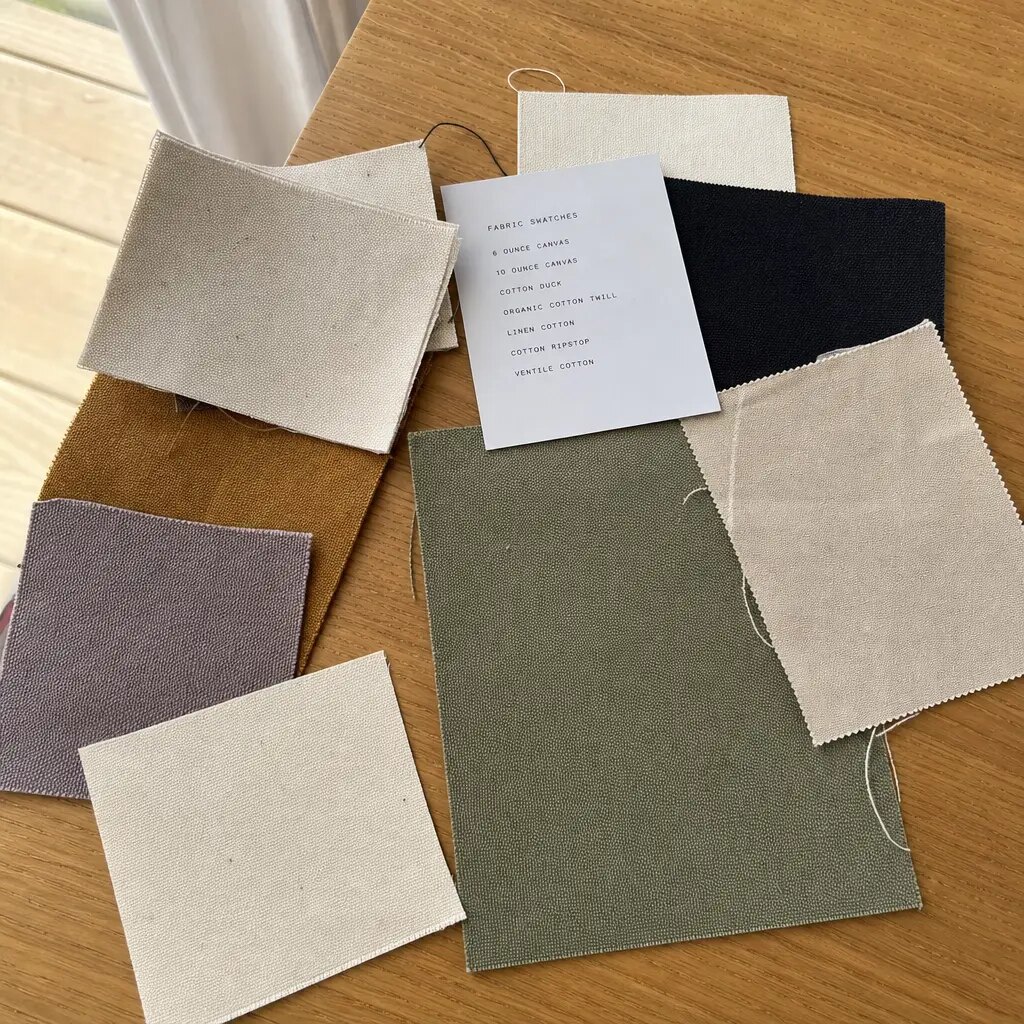
The sample sequence should also be practical. First approve material swatch and print strike-off. Then approve a sewn pre-production sample with exact handle length and print location. Finally, request either a packed mini-carton simulation or photos of the approved bag folded in the intended bundle format. This extra step costs little compared with fixing a full order that arrives over-compressed.
- Approve print on actual fabric quality, not on paper or a different cotton base
- Measure handle drop from the same reference points each time
- Review bag after 24 hours folded if the supplier wants a dense pack ratio
- If individual polybags are required, inspect whether trapped air makes the carton unstable
- For retail programs, decide what level of fold crease is acceptable at store opening
Understand the main quote drivers before comparing supplier offers
On organic cotton totes, the biggest quote drivers are usually fabric consumption, fabric weight, print method, print coverage, sewing complexity, and packing labor. Carton packing itself becomes a cost driver when buyers require individual polybags, barcode labels, mixed carton assortments, or low carton quantities for store-level distribution. A quote that looks lower at the unit price stage can become worse after adding the exact packing and labeling rules your distribution center needs.
MOQ logic is another area where buyers misread offers. One supplier may quote a low MOQ because they are using stock natural fabric and standard bag dimensions. Another may quote a higher MOQ because the same program includes custom dyed fabric, longer handles, or oversized front print setup. The right comparison is not low MOQ versus high MOQ in isolation. It is whether the MOQ is aligned with the fabric source, print setup, and packing labor behind the actual order.
- Fabric cost rises with GSM, width utilization, and whether the fabric is stock or custom dyed
- Gussets increase cutting and sewing time and usually lower carton density
- Multi-color screen print adds setup and registration labor
- Individual polybags, insert cards, and barcode stickers add real labor and material cost
- Low MOQ offers can hide surcharge-heavy pricing that becomes expensive at reorder stage
Use clear QC thresholds so the factory and inspector judge the same bag
Quality control on tote programs should focus on measurable acceptance points, not vague standards like 'good quality' or 'export quality.' For coffee roasters, the most visible defects are usually uneven print shade on natural cotton, off-center logos, crooked handles, and weak sewing at the handle join. The most costly hidden defect is incorrect carton quantity or carton dimensions that do not match booking assumptions. A QC sheet that ignores packing accuracy is incomplete because the landed cost depends on the cartons as much as the bags.
Write tolerances into the order. Size tolerance, print position tolerance, handle placement tolerance, and packed quantity tolerance should all be shown. If your brand cares about retail appearance, define how severe a fold line can be after unpacking. If your warehouse needs barcode-readable labels, include carton marking legibility in final inspection standards. These details shorten the argument loop between buyer, factory, and third-party inspector.
- Example body size tolerance: plus or minus 0.5 inch
- Example print position tolerance: plus or minus 0.3 inch from approved location
- Example handle left-right placement tolerance: keep symmetrical within approved visual and measured range
- Reject open seams, skipped stitches, severe print smudging, and carton underpack or overpack
- Inspect random cartons for actual count, fold orientation, and internal bundle packing
Plan lead time around material booking, print setup, and packing labor peaks
Lead time on organic cotton totes is rarely just sewing time. Material sourcing and print preparation often drive the schedule first. If the order uses stock natural organic cotton and a simple one-color screen print, sampling and bulk can move relatively quickly. If the fabric must be dyed, pre-shrunk, washed, or matched to a strict brand requirement, the front end becomes longer. Coffee roaster programs often bunch around seasonal launches and holiday gift periods, so print lines and packing teams can become the real bottleneck even when sewing capacity is available.
The buyer should separate sample lead time from bulk lead time in the RFQ. Then break bulk into fabric booking, cutting, printing, sewing, and final packing. This exposes where the risk sits. A factory that says '30 days total' without stage detail may still be workable, but it gives procurement little control if artwork approval slips or carton marks change late. Stage-level timing makes it easier to decide whether to split shipments, reduce SKUs, or simplify packing if the launch date tightens.
- Sample timing should include fabric swatch, strike-off, and sewn sample steps separately
- Custom dye or special finish can add more time than sewing
- Dense retail packing and barcode application often slow the final 10 percent of the order
- Peak season labor pressure can affect packing accuracy before it affects sewing output
- If delivery is fixed, decide in advance which spec can be simplified without harming the program
Reduce landed cost by balancing carton cube, labor, and damage risk
The cheapest unit price does not always produce the cheapest landed cost. For coffee roasters distributing to multiple stores or wholesale accounts, over-engineered packing can quietly add cost at several points: more labor at origin, larger carton cube, higher destination handling time, and more waste disposal at store level. On the other hand, under-packed totes may save a little on origin labor but create wrinkled presentation, recounting work, or even resale rejection. The practical target is an export pack that protects the bag enough while staying simple for freight and warehouse operations.
A useful landed-cost comparison asks three questions. First, how many saleable bags arrive per cubic meter shipped? Second, how much labor is embedded in the pack format? Third, what is the probability that the bag needs rework after unpacking? Procurement teams should use these questions when comparing a lower-cost quote with dense bulk packing versus a slightly higher quote with cleaner bundle management and safer carton dimensions.
- Removing unnecessary individual polybags can cut both material and cube cost
- Overfilled cartons may lower carton count but increase damage and claim risk
- Store-ready mixed packs save destination sorting time but usually raise origin labor cost
- A slightly larger carton can be cheaper overall if it prevents print transfer and retail rejects
- Quote comparison should include unit price, carton data, and likely post-arrival handling effort
Specification comparison for buyers
| Spec decision | Recommended option | When it fits | Buyer risk to check |
|---|---|---|---|
| Fabric weight for daily retail tote | 10oz to 12oz organic cotton canvas, about 280 to 340 GSM | Best for coffee bean retail, merch counters, and reusable shopping use where structure matters but carton weight must stay controlled | Low GSM can feel too soft after folding; high GSM raises carton weight and may reduce pcs per carton enough to increase freight cost |
| Fabric weight for promo giveaway tote | 6oz to 8oz organic cotton, about 170 to 230 GSM | Fits launch events, lighter merchandise, and price-sensitive distribution where the bag is mainly for brochures, samples, or one coffee pack | Buyers often approve a visual sample but miss handle stress performance; request a loaded sample photo or test comment before bulk |
| Bag construction | Bottom gusset or side-and-bottom gusset with cross-stitched handles | Useful when roasters want the tote to carry coffee bags, cups, or gift sets without collapsing too much on shelf | Flat totes pack denser, so gusseted totes need revised carton count and carton dimensions early in the quote stage |
| Print method for coffee branding | Water-based screen print for 1 to 2 solid colors | Best for most roaster logos on natural cotton when artwork is bold and order volume is medium to high | Fine lines, halftones, and dark coverage on raw fabric can vary; approve print strike-off on actual fabric lot if color control is tight |
| Print method for detailed artwork | Digital print or heat transfer only when image detail is essential | Fits seasonal retail graphics or small runs where artwork changes often and screen setup costs are hard to absorb | Print hand feel, washfastness, and per-piece cost can shift sharply; do not compare quotes without matching artwork size and coverage |
| Inner packing style | Flat folded in bundles of 10 or 20, no individual polybag unless retail compliance requires it | Most efficient for coffee roaster wholesale or distributor replenishment where buyers unpack into store stockrooms | Individual polybags add labor, material cost, and carton cube; they can also hide moisture if bags are packed before fabric is fully conditioned |
| Master carton count | 80 to 120 pcs per carton depending on GSM, gusset, and handle length | A workable range for export handling, mixed warehouse stacking, and freight efficiency without pushing carton weight too high | Factories may quote a high pcs per carton target that compresses print or creates carton bulging; require packed carton weight and dimensions in writing |
| MOQ logic | Tie MOQ to fabric color, print color count, and size rather than one blanket number | Helps buyers compare offers fairly when one supplier is using greige stock and another is dyeing fresh fabric for the same order | A low MOQ quote can hide surcharge-heavy setup cost or unstable color matching if the run is below efficient print and cutting volume |
Buyer checklist before sampling
- State finished bag size in inches and centimeters, including gusset depth and handle drop
- Specify fabric as organic cotton with target GSM range and acceptable tolerance, for example 280 to 300 GSM with plus or minus 5 percent
- List whether the fabric is natural, dyed, washed, pre-shrunk, or enzyme finished
- Define print method, artwork size, print position, Pantone reference if needed, and whether print strike-off approval is required
- Declare handle width, handle length, reinforcement style, and whether cross stitch or box stitch is required
- Confirm folding method, bundle quantity, individual polybag requirement, carton liner requirement, and desiccant use
- Request export carton dimensions, packed carton gross weight, net weight, and carton count per SKU
- State whether mixed-size or mixed-artwork cartons are allowed or if one SKU per carton is required
- Include barcode, carton mark, PO number, and destination warehouse labeling rules in the RFQ
- Set sample approval sequence: material swatch, print strike-off, pre-production sample, and packed carton photo
Factory quote questions to send
- What organic cotton fabric weight are you quoting in GSM and oz, and what tolerance do you allow in bulk?
- Is the fabric from stock greige material or a fresh production lot, and does that affect MOQ or lead time?
- What print method are you using for this artwork, and what is the expected hand feel and color variance on natural cotton?
- How many pieces fit per master carton using the proposed folding method, and what are the carton dimensions and gross weight?
- Does your quoted carton count avoid handle distortion, print offset, and carton bulging during long transit?
- Are individual polybags included, and if yes, what bag thickness and venting style are used?
- What is the sample sequence before bulk production, and which approvals are chargeable or refundable against bulk order?
- What sewing reinforcement is included at the handles, and do you have an internal load test standard for this bag style?
- What is the standard lead time for sample, material booking, bulk production, and final packing under this spec?
- Which part of the quote changes first if quantity drops, print colors increase, or gusset depth changes?
Quality-control points to confirm
- Fabric GSM should stay within the approved tolerance range; random checks should be taken from bulk-cut panels, not only from mill swatches
- Bag size tolerance should be defined, for example plus or minus 0.5 inch on body width and height, with gusset measured under the same method across inspections
- Handle placement and handle drop should be symmetrical within an agreed tolerance to avoid twisted carrying feel at retail
- Print registration, shade consistency, and edge sharpness should be inspected on the actual natural cotton base because unbleached fabric can change logo appearance
- Needle damage, open seams, loose threads, and skipped stitches around the handle box stitch area should be counted as major defects
- Carton packed quantity must match the approved packing plan exactly; random carton audits should verify bundle count and fold orientation
- Cartons should remain square, tape-sealed, and free from over-compression that can transfer print marks or crease gusset panels permanently
- If polybags are used, verify vent holes and dry packing condition to reduce trapped moisture risk during ocean transit