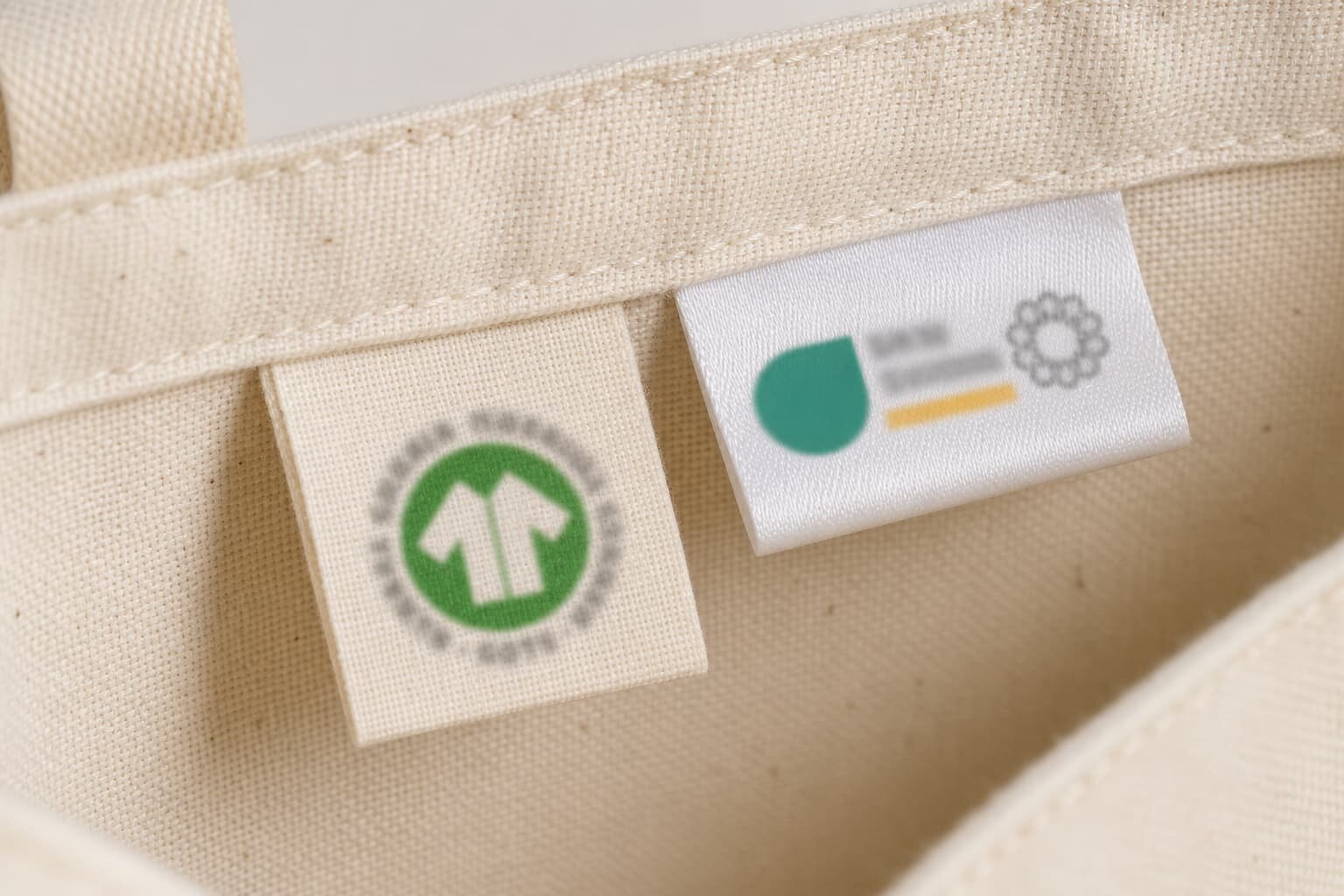
Why organic cotton tote quotes look similar but land very differently
The biggest mistake buyers make is treating every organic cotton tote bag quote as if it is pricing the same product. Two suppliers can use the same size, the same logo, and the same destination port, yet the bags can still differ in fabric weight, yarn quality, shrinkage, stitching density, print setup, and packing method. That is why a low quote is not always a better quote. If the factory is assuming a lighter fabric, looser tolerances, or a simpler packing spec, the price will look attractive and the landed result will not match your brief.
For procurement teams, the goal is not to ask for a prettier offer sheet. The goal is to create a quote request that forces each factory to price the same construction. When the spec is clear, you can compare line by line and see where a supplier is stronger, where they are trimming costs, and where a hidden risk sits. For tote bags, the difference usually shows up in the parts buyers forget to define: GSM, print method, handle reinforcement, sample standard, and carton packing.
- Treat the quote as a manufacturing document, not a sales response.
- Compare the bag spec first, then the price.
- Make hidden assumptions visible before the factory starts sampling.
Define the tote before you ask for a price
A useful RFQ starts with the physical bag, not the branding. For organic cotton totes, the factory needs the body size, gusset depth, handle length, seam allowance, and finished look before they can give you a quote that means anything. A simple flat tote with no gusset can be radically different from a boxed-bottom retail tote, even if both carry the same logo. The same is true for handle style: self-fabric handles, cotton webbing handles, and stitched-on handles all carry different sewing time and failure points.
You also need to be specific about the organic cotton requirement. Some buyers want certified fiber, some want unbleached natural cotton, and some want a visual marketable claim without defining what sits behind it. A factory quote should state exactly what fabric is needed, what color the base cloth should be, whether the cloth is pre-shrunk, and whether there is any wash requirement. If you skip those points, you will get comparisons that are impossible to trust.
- Lock size, gusset, handle length, and seam type before discussing unit cost.
- State whether the bag is retail-grade, promotional, or heavy-duty.
- Define the fabric finish: natural, bleached, dyed, brushed, or pre-washed.
Choose the right GSM and construction for the job
Fabric weight is one of the first things buyers should control because it affects hand feel, opacity, sewing behavior, and freight. For a lightweight event tote, 140-160 GSM may be acceptable if the use is short-term and the bag carries only flyers or soft items. For a more reliable retail or brand-merch bag, 180-220 GSM is usually the safer range because it holds its shape better, prints more cleanly, and feels closer to a real retail product. Above 240 GSM, you move into a heavier, more premium feel, but you also pay for more material and slower sewing.
Construction matters just as much as GSM. A heavy fabric with weak stitching can fail faster than a lighter bag with good reinforcement. Ask the factory how they are finishing the corners, what seam allowance they use, whether the stress points are bar-tacked, and whether the handles are stitched through the body or attached in a simpler way. If the bag is intended for books, laptops, wine bottles, or grocery use, the quote should reflect a stronger build rather than just a thicker cloth.
- Use 140-160 GSM only when weight, cost, and simple branding matter more than long-term durability.
- Use 180-220 GSM for most commercial organic cotton tote programs.
- Use 240+ GSM when you want a premium feel, better structure, and higher carrying confidence.
Compare print methods before the artwork goes to the factory
Print method changes the quote just as much as fabric choice. For a simple logo on organic cotton, screen printing is still the most common commercial route because it gives solid color coverage and predictable unit economics. Water-based inks are usually the right starting point for cotton because they sit well on the fabric and keep the finish natural. If you need small quantities or many colors, the factory may suggest another method, but the buyer should still test whether that method gives the right look, hand feel, and wash performance for the end market.
Do not send art and ask for a blind price. Give the factory the logo in vector format, the number of print colors, the exact print area, and the placement. If you need a front print, a back print, a side label, or a woven brand tab, call them out separately. Buyers often get surprised when a quote seems cheap and then rises after the factory adds a second setup, a larger screen, or a more careful color match. That is not a hidden scam; it is a spec that was never defined.
- Keep the logo simple if you want better print consistency and lower setup risk.
- Specify whether the print needs to pass a rub test, wash test, or both.
- Ask for a digital proof or strike-off before bulk approval.
Understand MOQ logic so you do not compare the wrong numbers
MOQ is rarely one number. A factory may have one MOQ for the bag body, another for the print design, and another for a custom label or packaging style. That is why a quote can look flexible at first and still become expensive when the buyer adds multiple colors, multiple SKUs, or branded inserts. For an organic cotton tote bag factory quote guide, the real task is to separate the MOQ logic into clean parts: fabric color, bag size, print setup, and packing format.
The same applies to tiered pricing. Ask for at least two or three quantity bands so you can see the cost curve instead of a single unit price. Small runs usually carry a heavier share of setup cost, artwork prep, and inspection time. Larger runs should improve the unit cost, but the factory must still show you where the break happens. If the numbers do not improve in a logical way, the offer is probably built on assumptions you have not yet seen.
- Ask for MOQ by size, by print design, and by packaging style.
- Request quantity tiers so setup cost and scale effect are visible.
- Check whether the MOQ changes if you switch from blank to printed or from flat pack to retail pack.
What a useful factory quote should actually contain
A clean quote is more than a unit price. It should list the exact fabric spec, bag dimensions, handle construction, print method, number of colors, packing method, and any additional labeling or inserts. It should also show what is included and what is excluded. If the supplier only sends a price line and a lead time line, the offer is not ready for internal approval because no one can tell whether the bag is the right one or just a close guess.
The best quotes also separate one-time charges from recurring charges. Screen setup, artwork conversion, sampling, woven label production, and special carton printing should not be buried inside an unclear unit rate. When those costs are listed properly, procurement can see the true landed impact and decide whether a design change, packaging simplification, or print reduction would improve the commercial result without harming the product.
- Exact bag size, fabric GSM, and weave description.
- Print method, print colors, and print placement.
- Sample charges, bulk lead time, and quote validity period.
- Packing spec, carton quantity, carton size, and gross weight.
- Tolerance notes for size, seams, print, and handles.
Use samples to test the quote before you trust it
Samples are not a formality. They are the only way to confirm that the factory understood your brief and can repeat it at scale. For tote bags, the sequence should usually be blank sample, pre-production sample, then bulk approval sample or photo proof depending on the order size. A blank sample tells you about fabric feel, size, handle balance, and shape. A pre-production sample tells you whether the print, label, and packing decisions still work once the production process is involved.
When you review the sample, do not just hold it up and ask whether it looks good. Measure it. Open the seams. Check whether the gusset sits square. Look at the stitch line around the handle anchor points. Rub the print. Fold the bag the way it will be packed. If the sample is already hard to fold, over-pressed, or uneven at the seams, those problems tend to multiply in bulk production rather than disappear.
- Measure finished size after pressing, not only before sewing.
- Check print registration, color density, and edge sharpness under normal light.
- Verify handle length, grip feel, and stress point reinforcement.
- Ask for approval photos of the actual pre-production sample, not just a rendered mockup.
Packing and lead time can change the landed cost more than buyers expect
Packing decisions affect freight, warehouse handling, and sometimes even the bag appearance at receipt. Flat-fold bulk packing is usually the most efficient for importers, but some retail programs need individual polybags, hang tags, size stickers, barcode labels, or a folded insert so the bag opens correctly at shelf. Each of those choices adds labor and material. If you do not define the packing method early, one factory may quote a bulk pack and another may quote a retail-ready pack, which makes the prices impossible to compare.
Lead time should be broken into steps. Sample lead time is not the same as bulk sewing time, and bulk time is not the same as carton packing time. A realistic quote should say when material is booked, when the print is scheduled, when sewing starts, when inspection happens, and when the order is ready for handoff. For planning purposes, organic cotton tote programs often sit in the mid-range of soft-goods lead times because fabric preparation, print setup, and packing all need sequencing. Ask for the timeline in working days, not vague language.
- Define whether the order ships flat folded, polybagged, or retail packed.
- Ask for carton count, carton dimensions, and packed weight.
- Request a schedule that separates sampling, bulk sewing, inspection, and packing.
- Confirm any artwork approval gate that can pause production.
How to compare suppliers without getting misled by the lowest line
Once the quotes come back, compare them in a strict order. First, check whether the spec is the same. Second, check whether the included work is the same. Third, check whether the quality controls are the same. A lower unit price means very little if the supplier has assumed a thinner fabric, a simpler print, a looser tolerance, or a different packing style. The quote comparison should expose those differences before anyone starts arguing over price alone.
A practical way to review suppliers is to score them on quote completeness, sample quality, communication speed, and willingness to clarify exclusions. The best factory is not always the cheapest, but it is usually the one that makes the commercial risk visible early. If a supplier refuses to answer basic spec questions, does not separate setup costs, or avoids giving tolerance data, that quote is a warning sign even if the number looks sharp.
- Do not compare prices until fabric, print, packing, and sample scope match.
- Look for hidden exclusions such as labels, setup fees, or carton changes.
- Prefer the quote that is easiest to audit, not just the one that is easiest to accept.
- If two quotes are close, choose the one with clearer QC language and sample discipline.
Specification comparison for buyers
| Spec decision | Recommended option | When it fits | Buyer risk to check |
|---|---|---|---|
| Fabric weight / GSM | 180-220 GSM organic cotton canvas or drill | Retail, brand merch, trade show, and repeat-use shopping bags | Too-light fabric can turn translucent, curl at the seams, or feel cheaper than the quote suggests |
| Print method | 1-3 color screen print with water-based or low-migration ink | Simple logos, strong brand marks, and medium-to-high volume runs | Fine detail, small type, and gradients may need a different method or a cleaner artwork file |
| Bag structure | Flat tote with 8-12 cm gusset and reinforced stress points | General-purpose carry, retail resale, and heavier inserts | Poor gusset control can twist the body and shift logo placement |
| Handle construction | Self-fabric or cotton webbing handles with bar-tack or X-stitch reinforcement | Bags that will be carried daily or loaded with books, groceries, or catalogs | Short handles or weak stitch density create comfort complaints and early failure |
| Packing spec | Flat-fold bulk packing with carton count and inner protection defined | Importers optimizing freight, warehouse space, and unpacking speed | Different folding styles change carton volume, creasing, and packed quantity per carton |
Buyer checklist before sampling
- Confirm the exact bag size, gusset, handle length, and finished seam allowance before asking for price.
- State the fabric weight in GSM and whether you want plain weave, canvas, drill, or brushed finish.
- Attach artwork as vector file and specify print colors, placement, and approved Pantone references if needed.
- Ask for sample types separately: blank sample, pre-production sample, and photo proof of print layout.
- Request MOQ by color, by print design, and by packaging option so hidden breaks are visible.
- Define the required packing style, carton count, carton marks, and any retail inserts or barcodes.
- Ask for the quoted lead time to be split into sample, bulk production, inspection, and packing stages.
- Request tolerances for dimensions, print position, stitch quality, and acceptable defect rate in writing.
Factory quote questions to send
- What exact fabric weight, weave, and shrinkage allowance are you quoting for this tote?
- Is the quote based on blank bags only, or does it include printing, labels, and packing?
- What is the MOQ for this size, this fabric color, and this print method separately?
- Can you quote two or three quantity tiers so we can see the pricing break clearly?
- What sample types are available, and what are the sample charges and sample lead times?
- What are the carton size, gross weight, and packed quantity per carton for this spec?
- What tolerance do you hold for size, stitching, print alignment, and handle length?
- What is excluded from the price that could appear later as a setup, artwork, or packing charge?
Quality-control points to confirm
- Fabric GSM matches the agreed spec and feels consistent across the roll, not thin at the edges.
- Bag dimensions, gusset depth, and handle length stay within the approved tolerance after sewing and pressing.
- Seam allowance is even, stress points are reinforced, and bar-tacks or X-stitches are placed consistently.
- Print color, placement, and opacity match the approved proof, with no blur, cracking, or overspray.
- Labeling, side tags, and care marks are attached in the agreed location and match the artwork file.
- Bulk folding method keeps the bag shape clean and does not create permanent creases or print damage.
- Carton count, carton marks, and inner packing match the packing list and export instructions.
- Random carton checks confirm no smell, loose threads, open seams, broken stitches, or obvious contamination.