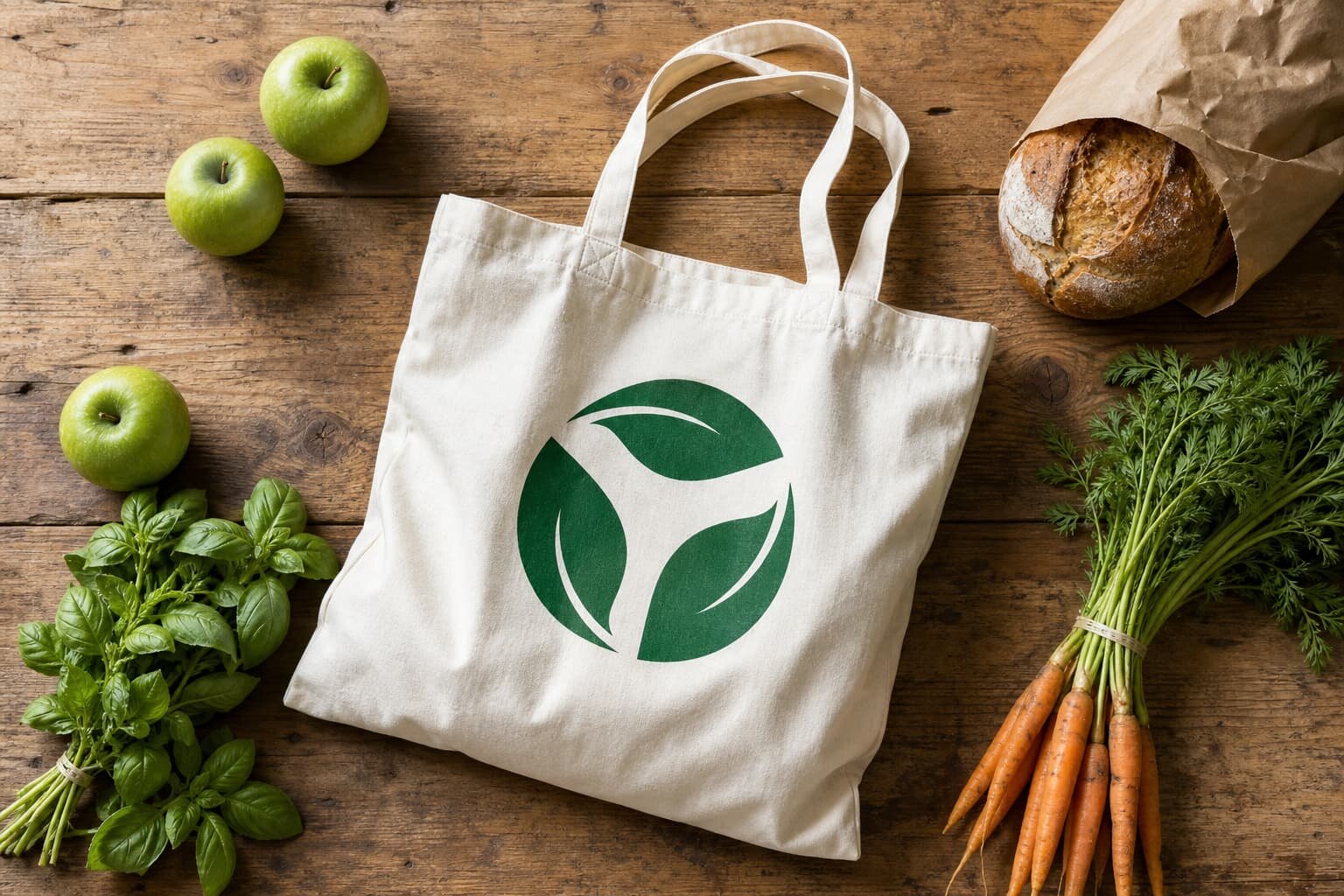
Why Organic Cotton Tote Quotes Are Hard to Compare
Most quote disputes start because buyers compare totals, not assumptions. Two factories can both say they are quoting an organic cotton tote bag, but one may be using a 140 GSM body, the other 180 GSM; one may include screen setup, another may leave it out; one may pack in bulk, another may polybag each piece. If the commercial basis is not aligned, the cheapest quote is often the least useful one.
For procurement teams, the goal is not to find the lowest number on the page. It is to identify the supplier who can repeat the same tote bag spec at the same quality level without surprise charges later. A clean comparison starts by freezing the bag size, fabric, handles, print method, packing, and delivery terms. Once those items are fixed, the quote becomes a usable sourcing tool instead of a sales pitch.
- Compare like for like: same size, same GSM, same print method, same packing.
- Ask whether the quote includes sample fees, setup fees, and export packing.
- Make sure the factory is quoting the same Incoterm and payment basis.
- Treat unclear assumptions as a risk, not a minor detail.
Lock the Product Spec Before You Ask for Price
An organic cotton tote bag quote only means something when the product spec is fixed. You need finished bag size, fabric type, fabric GSM, handle width and length, seam allowance, reinforcement points, and whether the bag has a gusset, bottom board, or inner pocket. If those points are still open, the factory will fill the gaps with its own default, and each supplier will default differently.
The same applies to brand details. A simple one-color logo on the front panel is a very different cost profile from a two-sided full-area print with a woven side label. If you are buying for retail, the bag also needs a commercial standard for folding, inner packing, and shelf presentation. Put those details into the RFQ before asking for a unit price.
- State the finished dimensions, not just the open width of the fabric.
- Specify body fabric and any contrast parts separately.
- Define whether the tote needs a gusset, piping, or reinforcement tape.
- Describe the brand finish: print, woven label, sewn patch, or side tag.
Fabric Weight and Construction Drive Real Unit Cost
Fabric weight is one of the fastest ways to understand whether a quote is realistic. For organic cotton totes, 140-170 GSM is a common practical range for retail and promotional programs. Lighter fabric can lower cost, but it may look thin, distort under print, or lose shape after repeated use. Heavier fabric improves handfeel and durability, but it also increases material cost and can change how the bag folds and packs.
Construction matters just as much as GSM. A straight-stitched tote with basic handles is simpler than a bag with reinforced handle anchors, inside seam finishing, and a clean top hem. If one quote uses box stitch plus bar-tack reinforcement and another uses a minimal single line stitch, they are not the same product. Ask the factory how many stitch operations are included and whether handle reinforcement is part of the quoted process or treated as an extra.
- Confirm fabric GSM in finished condition, not only in greige fabric terms.
- Ask for the construction method: simple seam, overlock, topstitch, or reinforced anchor.
- Check whether handle width and handle length are standard or custom.
- Request a production sample if the tote must hold heavier retail loads.
Compare Print Method, Artwork Setup, and Logo Risk
Print method changes both price and production risk. A single-color screen print is usually the most predictable option for cotton totes because it is stable, readable, and easy to repeat. Multi-color screen print, heat transfer, embroidery, woven labels, or emboss-style branding each adds setup complexity. The factory may quote the unit price only, but the real cost includes plate charges, color separation, alignment risk, and extra handling.
When you compare quotes, make sure every supplier is quoting the same art format and print area. A front-panel logo centered at 20 x 20 cm is not equal to a larger edge-to-edge print or a second-side imprint. Ask for a print proof that shows the exact placement, finished size, and color count. If your artwork has fine text or thin lines, you should also ask how the factory will prevent blur, pinholes, or edge roughness during printing.
- Define the exact logo size and print location before quoting.
- Ask whether the price includes one or two print sides.
- Confirm color count, setup charge, and repeat-order setup policy.
- For detailed art, ask for a pre-production print strike or approved proof.
Use MOQ Logic to Compare Real Order Economics
MOQ is not just a factory limit; it is a cost structure. Organic cotton tote bags often have MOQ pressure from fabric cutting efficiency, print setup, label sourcing, and packing labor. A lower MOQ may be possible, but the unit cost can rise because the factory loses batching efficiency. A high MOQ may give a better unit price, but only if you can absorb the inventory and the colorway is stable.
Do not accept a single global MOQ without asking how it breaks down. A supplier may quote one MOQ for blank bags, another for printed bags, and another for multiple colorways. If you need several sizes or artwork variations, get the MOQ by SKU, by color, and by print version. That is the only way to see whether a quote is truly workable for your launch plan.
- Ask for MOQ by size, color, and artwork version.
- Check whether sample orders are counted toward bulk MOQ.
- Watch for hidden price jumps when you add a second print color or second SKU.
- Balance MOQ against your forecast, not against the supplier's preferred batch size.
Sample Checks That Save a Bad Bulk Order
Samples are not just a formality. For an organic cotton tote bag, the sample should confirm more than the look of the logo. Check the actual fabric feel, bag dimensions, handle length, stitch quality, print placement, seam alignment, and folding behavior. If the sample already shows loose threads, poor trim, or inaccurate sizing, the bulk order will not improve by itself.
Build a simple sample approval checklist and use it on every supplier. Ask for a pre-production sample that reflects the final fabric, final print method, and final packing method. The factory sample room can often make a pretty one-off piece that does not reflect bulk output, so you want the version that is intended to be repeated. If the sample includes a woven or sewn CTM side label, verify the label position, stitch density, and edge finish as well.
- Measure the finished sample and compare it to the agreed spec sheet.
- Test handle pull strength with a practical load, not just visual inspection.
- Inspect print edges under light for smearing, gaps, or color bleed.
- Verify that the sample reflects the same fabric and packing as the intended bulk order.
Packing and Lead Time Change the Total Quote
Packing affects both landed cost and warehouse handling. A bulk-packed tote is usually cheaper to produce and ship, but retail programs may need folded pieces in polybags or custom inner packs. If you compare two quotes without checking packing, one supplier may look cheaper simply because the bags are shipped in a less finished state. Ask for the packed unit format, pack count per carton, carton dimensions, and gross weight before you compare freight estimates.
Lead time also needs to be split into stages. Sample lead time, artwork approval time, raw material booking, and bulk production lead time are not the same thing. A factory that says 20 days may mean 20 days after final sample approval and deposit. Another factory may be including sample production inside the lead time. Write down the start point and end point for every supplier so you can compare schedules fairly.
- Define whether the tote is bulk packed, folded, polybagged, or retail-ready.
- Ask for carton size and carton count for freight planning.
- Separate sample lead time from bulk production lead time.
- Confirm when lead time starts: deposit, artwork approval, or sample sign-off.
Read the Factory Quote Line by Line
A good factory quote should be broken into clear commercial pieces. At minimum, it should show blank bag unit price, print or decoration cost, sample fee, setup or plate fee, packing spec, lead time, quote validity, and the Incoterm. If the supplier sends one line with a total and no detail, you cannot tell whether the price is driven by fabric, labor, printing, or packaging. That makes it hard to negotiate and even harder to control the final order.
Compare quote data against your own spec sheet, not against memory. If a factory has quietly changed the fabric weight, excluded a sewn label, or switched from reinforced handles to standard handles, the quote is no longer comparable. Put every supplier into the same spreadsheet and score them on the same fields. The goal is to isolate real differences, not let small wording changes hide a major production change.
- Blank bag price should separate from print and packing charges.
- Setup or plate fees should be visible, not buried inside the unit price.
- Quote validity and payment terms must be noted for each supplier.
- The quote should match the RFQ spec field by field.
How to Compare Suppliers Fairly and Avoid Price Traps
Once the spec is frozen, compare suppliers on total value, not only unit cost. A stronger factory may quote slightly higher because it uses better stitch control, cleaner print registration, or more reliable packing. That can be worth more than a small savings if the order is for retail, gifting, or brand resale. The cheaper quote is a problem if it creates rework, rejects, or late shipments.
Build a simple sourcing workflow: RFQ, quote normalization, sample approval, pre-production confirmation, then bulk release. At each step, capture the same data points from every factory. If two quotes differ materially, ask why. The reason may be legitimate, such as heavier GSM or better packing, or it may reveal a hidden gap in the supplier's understanding. The best comparison is the one that makes those gaps visible before the order is placed.
- Score each supplier on spec compliance, quote clarity, sample quality, and lead time credibility.
- Reject quotes that do not identify packing, setup, or artwork assumptions.
- Treat unusually low pricing as a signal to check construction and materials again.
- Release bulk only after written approval of the pre-production sample and packing spec.
A Practical Buyer Workflow for RFQ and Order Release
If you want a clean comparison, use a consistent order flow. Start with one spec sheet that defines the tote bag and one quote request that all suppliers receive at the same time. Then collect sample fees, unit prices, and lead times in the same format. After that, review the samples with a measurable checklist instead of a subjective yes or no. That keeps the decision commercial and defensible for procurement, merchandising, and finance teams.
Before bulk release, send one final confirmation that includes artwork, fabric GSM, construction, packing, and carton mark details. This is also the right moment to confirm any label or barcode placement if the product will go into retail or distribution channels. A factory that can repeat the sample faithfully is usually the one that wins the long-term business, even if it is not the lowest on the first spreadsheet.
- Use one RFQ file for all suppliers.
- Keep sample approval separate from price negotiation.
- Lock the packing spec before bulk production starts.
- Confirm carton markings, labels, and SKU details before shipment.
Specification comparison for buyers
| Spec decision | Recommended option | When it fits | Buyer risk to check |
|---|---|---|---|
| Fabric weight | 140-170 GSM organic cotton canvas | Retail, promo, and general-use totes that need a clean handfeel and reliable print surface | Too light can feel flimsy; too heavy can raise cost and affect foldability |
| Handle construction | Self-fabric or reinforced handles with X-stitch or box stitch | Medium-load bags, repeated carry use, and brand programs that expect better durability | Check stitch density, bar-tack placement, and whether handle length matches the final carrying position |
| Print method | 1-2 color screen print or heat transfer for small artwork; multi-color print only when art demands it | Simple logos, promo runs, and repeat orders with stable artwork | Confirm setup fees, color count, print area, and wash or rub resistance expectations |
| MOQ logic | MOQ tied to fabric width, print setup, and colorway count | When multiple sizes, colors, or print versions are involved | Low MOQ can hide higher unit cost, limited color control, or weak packing efficiency |
| Packing spec | Bulk packed, folded to a fixed size, with carton count and inner pack defined | Wholesale and import programs where cube efficiency matters | Compare carton dimensions, pack quantity, and whether polybags are included or excluded |
| Lead time | Sample lead time separated from bulk production lead time | Any order that has artwork approval, fabric booking, or testing steps | Ask whether lead time starts after deposit, final sample approval, or artwork sign-off |
Buyer checklist before sampling
- Confirm bag size, fabric GSM, handle length, handle attachment method, and seam reinforcement before collecting quotes.
- Ask each factory to quote the same print method, print area, and color count.
- Separate sample fee, plate/setup fee, and bulk unit price so you can compare real production cost.
- Request MOQ by size, color, and artwork version, not just one headline minimum.
- Check whether packing is bulk packed, polybagged, folded to spec, or cartonized for export.
- Verify lead time for sample, pre-production sample, and bulk order, and note when the clock starts.
- Ask for carton dimensions, carton quantity, and gross weight if you need freight estimates.
- Compare quote validity, payment terms, and Incoterms on the same basis.
- Request clear acceptance criteria for stitching, print alignment, shade tolerance, and measurement tolerance.
- Keep one internal comparison sheet so all suppliers are scored against the same spec.
Factory quote questions to send
- What exact fabric GSM, weave, and finished bag size are you quoting?
- Is the quote based on blank bags, printed bags, or bags with woven or sewn labels?
- What is included in the sample fee, and is it deductible from the bulk order?
- How many print colors are included, and what is the setup charge per color or per side?
- What is the MOQ by color, size, and artwork version?
- What handle construction and stitch reinforcement are included in the quoted price?
- What packing method is included, and what carton quantity and carton size will you use?
- What is the lead time for sample approval and for bulk production after approval?
- Which Incoterm is quoted, and does the price include export documents and inland handling?
- What tolerances do you apply for size, color, print placement, and stitch quality?
Quality-control points to confirm
- Fabric GSM matches the approved spec within an agreed tolerance.
- Bag dimensions, handle length, and gusset depth match the approved sample.
- Stitching is even, with secure handle reinforcement and no skipped stitches.
- Print registration is clean, with no major smearing, cracking, or color shift.
- Any woven label, sewn label, or side label is aligned and securely attached.
- Fabric shade and print color are consistent within the agreed lot tolerance.
- Folded size, inner pack method, and carton count match the packing spec.
- Cartons are labeled correctly for SKU, color, size, and quantity.
- There are no oil marks, loose threads, holes, or visible contamination.
- Pre-production sample and bulk production share the same approved materials and construction.