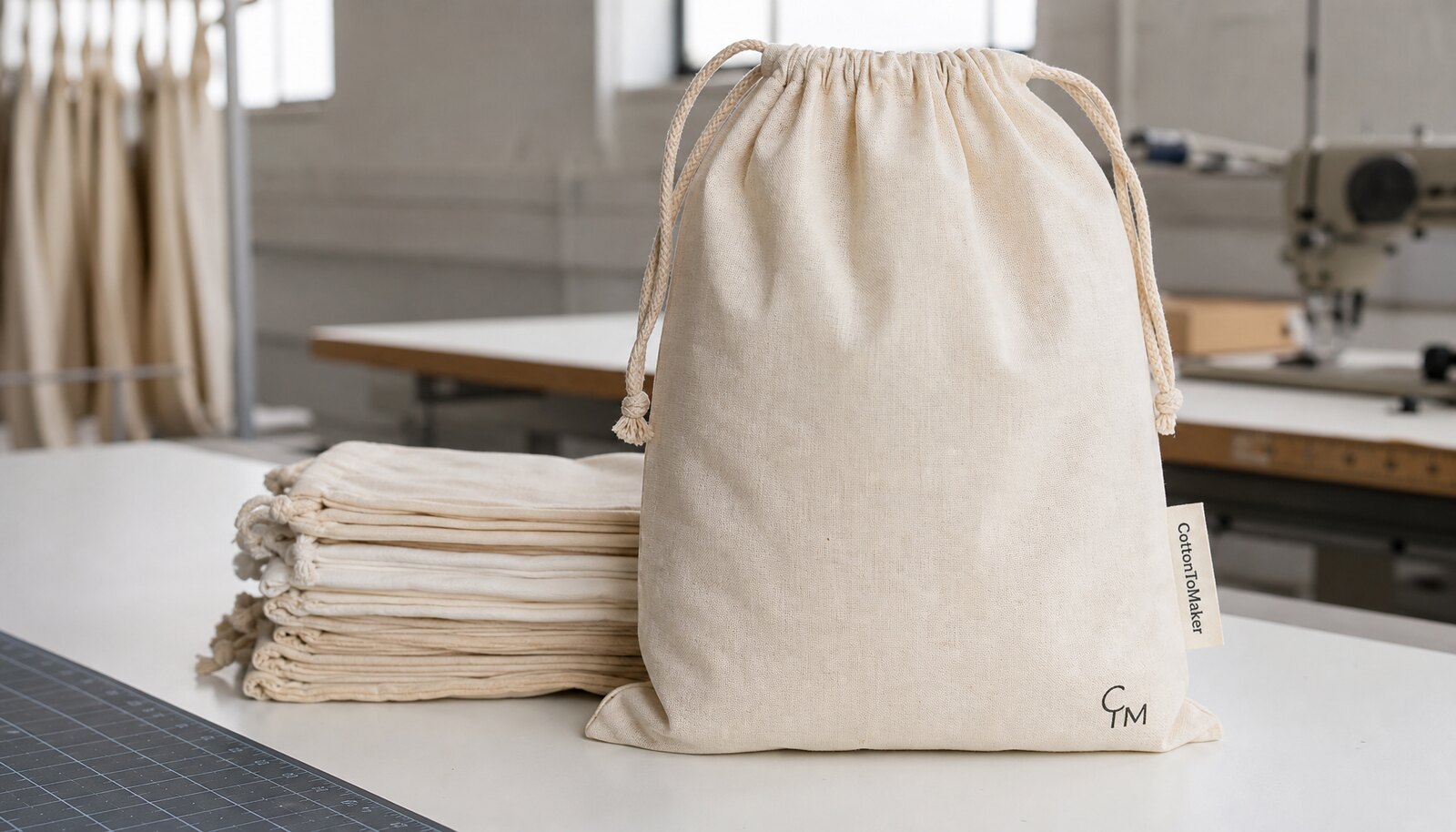
Why ecommerce buyers need a tighter spec on produce bags
Organic cotton produce bags look simple, but ecommerce makes them harder to source than a basic promotional pouch. The bag has to survive repeated handling, fit neatly into retail packs, photograph well, and arrive to the fulfillment center in a count and carton format that does not slow receiving. If the spec is vague, suppliers will fill in the gaps with their own assumptions, and those assumptions usually affect GSM, stitch count, and print size.
The main buying problem is not the bag body itself. It is the mismatch between the product page promise and the factory build. A buyer may want an “organic cotton” bag set for produce storage, but the supplier may quote a light muslin bag, an unwashed body that shrinks, or a print method that looks fine on the sample but breaks down in carton pack-out. A useful RFQ needs to convert the ecommerce promise into measurable factory terms.
- Define the selling use: produce storage, grocery refills, subscription add-on, or retail multipack.
- Separate visual requirements from functional requirements: transparency, washability, breathability, and label space.
- Treat the bag as a packaged retail unit, not only a sewn item.
Choose the right fabric weight before you talk price
For most organic cotton produce bags for ecommerce, 120–150 GSM is the practical range. Below that, the bag may feel too thin, show the contents too clearly, and crease heavily in the pack. Above that, the bag becomes more expensive, bulkier in shipping, and less attractive for buyers who want a light reusable pouch rather than a heavy storage sack. For small herb bags, 100–120 GSM can work if the listing does not promise premium structure. For larger produce bags or mixed fruit bundles, 140–150 GSM is usually safer.
The weave matters as much as GSM. A tighter plain weave gives better appearance and better print clarity; a looser weave improves breathability but can make the print softer and the bag less premium. Buyers often compare quotes only by unit price, but the cheapest quote may be using a lower yarn count or wider weave that looks acceptable on one sample and then disappoints when stacked in ecommerce photos or shelf displays.
- Ask for GSM, weave type, yarn count if available, and expected shrinkage range.
- If the bag will be washed, request a prewash or wash test sample before bulk approval.
- For premium retail sets, specify a cleaner weave and tighter stitching even if the cost rises.
Size planning: avoid the one-size trap
Ecommerce buyers often ask for one size because it simplifies quoting, but produce is not one size. Herbs, citrus, apples, onions, and mixed fruit bundles need different volumes, and customers quickly notice when a bag is either too small to use or too large to feel practical. A better setup is a two- or three-size range, usually small, medium, and large, with the dimensions tied to the product mix and the pack configuration you plan to sell.
A useful size sheet should include finished dimensions, seam allowance, and the tolerance allowed after stitching and wash. This avoids the common dispute where a supplier cuts to nominal size but delivers a bag that runs short after seam take-up. If the bag is going into a retail assortment, make sure the size spread looks intentional on shelf and in carton packing, not like three unrelated SKUs.
- Small sizes suit herbs, garlic, and snack produce.
- Medium sizes suit apples, citrus, and general pantry reuse.
- Large sizes suit mixed produce packs or value bundles.
Print method and branding: keep it simple enough for production
Most organic cotton produce bags for ecommerce should use one- or two-color branding. Screen printing is usually the best value when the artwork is simple and the order is repeatable, because it gives consistent color and reasonable unit cost at volume. Heat transfer can work for fine details or multicolor logos, but it adds process sensitivity and may feel less natural on cotton. Digital print is possible in some factories, but it is not always the best route for a reusable cotton bag that needs a durable, low-maintenance finish.
The real risk is artwork that looks good in a PDF and becomes muddy on fabric. Thin lines, small type, and low-contrast logos lose clarity on woven cotton. A factory should show a print strike-off or sampling method that matches the production process, not a generic image proof. If the bag is natural cotton, the base fabric tone will also affect the ink color, so the quote should state whether the supplier is matching to a Pantone target or only to a visual approximation.
- Keep logo size large enough for a visible ecommerce thumbnail and carton opening.
- Use simple vector art with limited line detail.
- Specify placement tolerance so every bag prints in the same position.
How to read MOQ logic without getting trapped by a low headline number
MOQ on organic cotton produce bags is often quoted as a single number, but that number can hide separate setup limits for fabric, size, color, and print. A factory may accept 3,000 bags in total but still require 1,000 per size, 1,000 per color, or one print plate per design. If you split your order across multiple sizes or logos, the effective MOQ rises fast. That is why procurement teams should ask for MOQ by variant, not just by style.
When comparing quotes, separate the true variable costs from setup costs. Fabric cutting, sewing, and packing are variable; screen setup, labels, special cartons, and color matching can be fixed. A supplier with a slightly higher unit price but lower setup fees may be cheaper on a mixed-SKU launch. On the other hand, if you expect repeat replenishment, it can pay to accept the setup cost once and push the unit price down for the second and third order.
- Request MOQ by size, color, and print method.
- Identify fixed charges such as screen fees, plate fees, and label setup.
- Model total cost at launch volume, not only at full container volume.
Comparison of sourcing routes for ecommerce buyers
The best sourcing route depends on order size, product complexity, and how much control you need over the build. Factory direct is usually the strongest option when the buyer wants exact fabric control, repeatable prints, and better root-cause handling on defects. Trading companies can be useful when you are bundling multiple product types into one purchase order or testing a small market with less internal sourcing resource. Domestic stockists can be fast, but the buyer usually gives up customization and often pays more per unit for a less controlled spec.
For organic cotton produce bags, the route matters because the wrong middle layer can blur the chain of responsibility. If the bag fails a wash test or comes in under GSM, you need to know who actually controlled the fabric and sewing. For importers and retail buyers, the right partner is the one who can name the fabric source, show packing logic, and give a realistic production calendar—not the one with the neatest quote sheet.
- Use factory direct for repeatable branded programs.
- Use a trading route only when you need mixed-category consolidation or very small trial runs.
- Use local stock only if customization is secondary to speed.
Sample approval: what a good pre-production sample must prove
A sample should prove more than appearance. It needs to show the fabric hand feel, bag opening width, drawcord tension, print clarity, and seam behavior under use. For organic cotton produce bags, the most common sample mistake is approving a nice-looking item that later shrinks, twists, or opens too loosely after packing and handling. A production-ready sample should be measured, photographed, and tested in the same way the bulk order will be received.
Before approving bulk, buyers should run a simple internal check: fit produce into the intended size, close and reopen the cord repeatedly, inspect the print after rubbing, and compare actual measured dimensions against the quote sheet. If your business will list the bags as washable or reusable, wash the sample once or twice in the expected manner and document the result. That one step prevents a lot of post-shipment disputes.
- Measure finished size, not cut size.
- Test cord pull strength and opening/reclosing behavior.
- Check whether the sample photo matches the sellable product listing language.
Packing, carton marks, and ecommerce fulfillment details
Packing is where many otherwise good bags become a warehouse problem. Organic cotton produce bags are light, but they occupy volume, so the inner pack count and carton size affect landed cost more than many buyers expect. For ecommerce, flat packing with a clear inner quantity is usually the safest route. If the bags are prepacked into consumer sets, make sure the pack quantity is consistent and that the outer carton is not overfilled, which can crush seams and distort the bag shape.
Carton marks should be detailed enough for warehouse receiving: style, size, color, quantity, carton number, and barcode if needed. If the bags are going to a 3PL or marketplace prep center, ask the factory to share carton dimensions and estimated CBM before shipment. That lets the buyer compare air versus sea freight, palletization, and receiving efficiency before the goods leave the factory.
- Specify inner pack count and whether bags are folded or rolled.
- Confirm carton dimensions early because CBM can change the freight mode decision.
- Use clear size/color separation in cartons if the order includes multiple variants.
Lead time, schedule risk, and the hidden delays buyers should model
A standard production cycle for custom organic cotton produce bags is often around 25–35 days after sample approval, but only when fabric is available and artwork is settled. If the supplier needs to weave fabric to order, match a special color, or source a specific label, the timeline expands quickly. Buyers should separate sampling time from bulk production time in the project plan. Rushing both stages usually creates shortcuts in testing and packing verification.
The biggest schedule risks are not always the sewing line. They are material shortages, late print approvals, and packing changes after production starts. If the ecommerce launch depends on a fixed go-live date, keep at least one buffer layer: approved artwork, approved sample, and approved carton spec before the bulk order is released. That way the factory is building to a stable instruction set instead of a moving target.
- Plan separate time for sample, bulk, and shipping.
- Avoid changing size or print after production is underway.
- Hold a small buffer for rework, labeling corrections, or freight delays.
Land the quote properly: compare more than unit price
A quote for organic cotton produce bags should be compared on total landed cost, not just ex-factory price. The visible unit price may look attractive, but if the bag is packed in oversized cartons, needs expensive screen setup, or requires a longer lead time that pushes you into costly freight, the real cost rises. Procurement teams should line up fabric, sewing, print, packing, carton volume, and freight assumptions in one comparison sheet so the supplier quotes can be evaluated on the same basis.
A helpful practice is to calculate three cost views: factory cost, shipment cost, and arrival cost. For example, a slightly heavier bag may increase the factory price but reduce customer complaints and improve perceived quality. A very thin bag may save a few cents but create returns or negative reviews. The right choice is the one that protects margin and product reputation together.
- Compare quotes using the same size mix and pack format.
- Include carton CBM and freight mode in the evaluation.
- Measure supplier value by consistency, not only by first-order price.
Specification comparison for buyers
| Spec decision | Recommended option | When it fits | Buyer risk to check |
|---|---|---|---|
| Fabric weight | 120–150 GSM organic cotton for most ecommerce packs | Best balance of hand feel, washability, and price for reusable produce bags sold online | Too light can show contents and shrink after washing; too heavy raises freight and makes bulk packs bulky |
| Bag size | 2–3 standard sizes: small for herbs, medium for produce, large for mixed vegetables | When the assortment includes multiple fruit and vegetable SKUs or bundle sets | A single “one size fits all” bag often fails on market baskets, shipping cartons, and retail shelf presentation |
| Closure type | Cotton drawcord with reinforced channel | When customers need quick opening and closing without metal or plastic parts | Weak stitching at the channel causes cord pullout; loose cords create packing complaints and returns |
| Print method | 1–2 color screen print or heat transfer for simple branding | For low- to mid-color artwork and repeatable ecommerce replenishment | Fine lines can fill in on coarse weave; poor ink cure leads to cracking or wash fade |
| Certification route | Organic cotton documentation plus traceable material declarations | For retail buyers that need organic claims support in product listings or compliance files | Do not rely on a verbal claim; request lot-level traceability and document the exact fiber statement used on the quote |
| Supplier type | Factory direct for repeat volume; trading company only for mixed-category bundles or smaller test orders | When the buyer needs control over fabric, sewing, and packing details | Trading layers can hide the real MOQ, delay samples, and weaken root-cause control if defects appear |
| Packing format | Flat packed with quantity per polybag and carton label by size/color | For ecommerce fulfillment, FBA prep, or DC receiving | Loose packing increases counting errors, while overpacked cartons can crush seams and distort bags |
| MOQ approach | MOQ by color and print plate, not only by total style count | When the same bag body is used with multiple prints or sizes | Low total MOQ can still become expensive if each variant needs separate fabric dyeing, screen setup, or labeling |
| Lead time planning | Sample approval first, then 25–35 days production for standard builds | When the launch calendar allows a normal development cycle and shipment buffer | Rushed schedules often skip shrink tests, carton compression checks, or print cure validation |
Buyer checklist before sampling
- Bag size sheet with finished dimensions, seam allowance, and tolerated shrinkage after wash
- Fabric spec showing organic cotton content, GSM, weave type, and approved color if dyed
- Artwork file with print size, ink count, placement, and acceptable color tolerance
- Stitch spec for side seams, bottom seam, drawcord channel, and reinforcement points
- Packing spec with bag quantity per inner pack, carton count, carton marks, and barcode needs
- Sample approval notes covering hand feel, transparency, cord tension, and print durability
- Target order split by sizes and colors so MOQ is calculated correctly before RFQ
- Landed-cost inputs including carton volume, CBM, freight mode, and destination duties
Factory quote questions to send
- What exact GSM, weave, and organic cotton source are you quoting, and can you separate fabric cost from sewing and print cost?
- What is the MOQ by size, by color, and by print method, and which part of the MOQ is fixed by material setup?
- Can you confirm finished dimensions, seam allowance, and expected size tolerance after cutting and washing?
- Which print method do you recommend for this artwork, and what is the ink or transfer durability after handling and light washing?
- How are the bags packed per inner polybag and carton, and can you quote carton size and estimated CBM?
- What samples will you provide before bulk, how many revisions are included, and what is the sample lead time?
- What production lead time applies after sample approval, and what changes it if fabric is in stock or must be woven to order?
- What inspection standard do you follow for stitching, print placement, and defect rate, and can you share QC photos or checklist items?
- What document set can you provide for organic fiber traceability, carton labels, and shipping marks?
- If we change bag size or print count after the quote, which costs move first and which are fixed?
Quality-control points to confirm
- Finished dimensions within an agreed tolerance band, usually tight enough to keep retail packs uniform but realistic for woven cotton
- GSM and fabric hand feel consistent across the lot, with no thin spots, slubs beyond agreed limit, or visible weaving gaps
- Drawcord channel stitching even and secure, with no skipped stitches, loose ends, or cord pullout after tension pull test
- Print alignment within the approved placement window, with no ink cracking, bleeding, or misregistration on repeated samples
- Shrinkage and wash performance acceptable for the bag’s intended use, especially if the ecommerce listing mentions reuse or washing
- Carton count and inner pack quantity matching the packing list, with bag sizes and colors separated exactly as specified
- Needle damage, seam puckering, and oil marks controlled to a retail acceptable level
- Labeling, barcode placement, and carton marks readable for warehouse receiving and fulfillment scanning