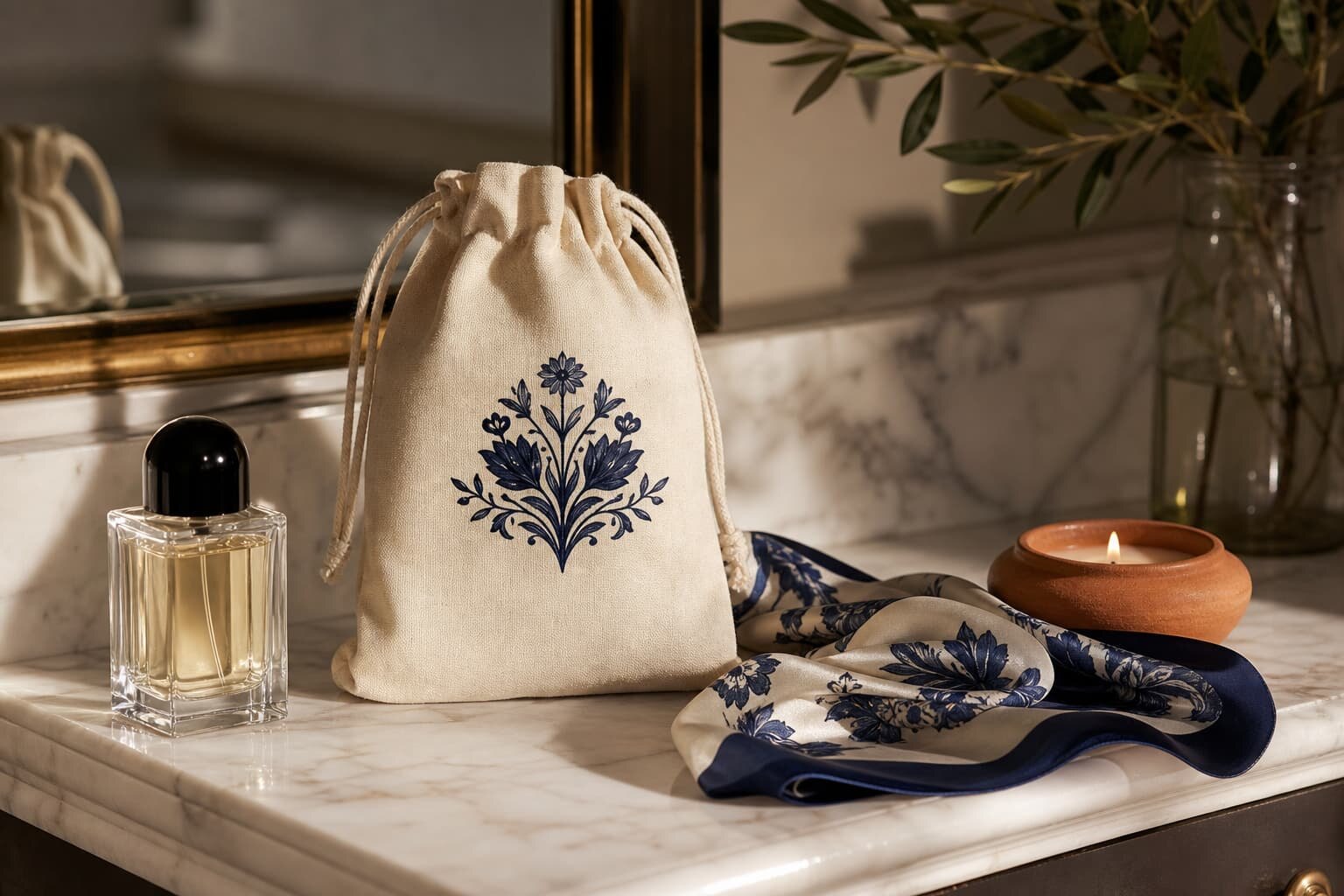
1. Why organic cotton pouch reorders fail after the first buy
Most procurement problems with an organic cotton pouch are not about finding a maker. They happen when the first order is treated as a sample-led purchase and the reorder is treated as a price-only purchase. The second lot often exposes weak specs: the GSM is lighter than expected, the pouch shrinks more than the buyer planned, the print loses sharpness, or the factory changes packing to protect margin. That is why the reorder plan has to start with the approved production spec, not the last invoice.
For procurement teams, the commercial risk is simple. If the pouch is used for retail packaging, gift sets, or brand inserts, even a small change in hand feel or printed appearance can trigger complaints from downstream teams and distributors. A good bulk reorder plan defines what must stay fixed, what can be optimized, and what needs re-approval before the next release.
- Treat the first approved sample as a control sample, not just a visual reference.
- Lock the key variables: fabric weight, size, print method, cord type, and packing.
- Record any production deviation allowed by the buyer before the PO is issued.
2. Start with the use case, not the pouch name
An organic cotton pouch can mean very different things to different buyers. A cosmetic brand may need a soft, neat pouch with a clean front print and uniform seam trim. A distributor may need a low-cost pouch for bundle inserts. A retailer may care about shelf appearance, barcode labeling, and carton efficiency. If you do not define the use case first, each supplier will quote a different construction and you will compare apples to oranges.
The right RFQ should describe how the pouch will be used after it leaves the factory. Will it hold small accessories, jewelry, skincare, stationery, or seasonal gift items? Will it be reused many times or only given once with a purchase? That answer changes the GSM, the seam strength, the closure style, and sometimes the print method.
- For retail packaging: prioritize consistent print, label placement, and carton presentation.
- For repeated consumer use: prioritize fabric weight, seam strength, and wash behavior.
- For promotional kits: prioritize stable cost, fast lead time, and packing efficiency.
3. Fabric weight, finish, and hand feel: where the cost really moves
For organic cotton pouches, the most common GSM range is 140 to 180 GSM for standard retail and gift use. Lower GSM can work for light insert packaging, but it usually feels thin and shows contents more easily. Higher GSM gives a sturdier body and better print stability, but it raises fabric cost and can make small pouches look bulky if the pattern is not adjusted. Buyers should ask suppliers to quote the same GSM and clarify whether the weight is measured before or after finishing.
The finish matters as much as the weight. A lightly brushed surface may improve feel but can affect ink sharpness. An unbleached natural cotton look is usually easier to source and better aligned with organic positioning, but color variation can be more visible lot to lot. If your brand uses a very white or very clean beige tone, you need to ask how the mill controls shade banding and what the acceptable color range is for reorder lots.
- Ask for fabric construction: plain weave, twill, or canvas-like structure.
- Confirm whether shrinkage allowance is already included in the cutting size.
- Request the same shade reference for all repeat POs.
4. Print method choice: what to quote for a stable reorder
The print method should match both artwork complexity and reorder volume. For one- or two-color logos, screen printing is usually the most economical and repeatable method. It works well when the logo placement is stable and the brand accepts small variations in ink lay on natural cotton. If the artwork has fine lines or multiple colors, you may need a different method, but that should be tested on the actual pouch fabric, not on paper artwork alone.
A woven label or sewn side label is often the safest option for repeat programs when the pouch itself needs a clean natural look. It adds cost, but it reduces the risk of print fading, wash issues, or batch-to-batch color drift. The buyer should compare not only the unit price but also the rejection risk, especially if the pouch will pass through retail QA or customer-facing packaging control.
- Screen print: best for simple logos, stable volume, and predictable unit cost.
- Heat transfer: useful for fine detail, but verify durability and surface compatibility.
- Woven or sewn label: good for premium look and repeat orders that need consistency.
5. MOQ logic: how to avoid hidden cost on reorder lots
MOQ on an organic cotton pouch is rarely just a single number. In practice, it can be split by fabric color, size, print color, closure style, and packaging format. A supplier may offer a low headline MOQ but then charge extra for each artwork version or each label change. Procurement teams should ask for MOQ logic in writing so the reorder plan reflects actual production constraints rather than a sales quote headline.
The best way to compare suppliers is to request a pricing matrix. For example, ask for the price at one size with one print color, then the same size with two print colors, then the same pouch with individual packing. This shows where the cost steps occur. It also helps you decide whether to simplify the program by reducing SKU count or standardizing the pouch across multiple brand lines.
- Separate MOQ by pouch body, print, label, and packing requirement.
- Ask whether partial replenishment is allowed after the first bulk run.
- Check if the supplier can combine multiple sizes into one production lot.
6. Sample checks that prevent expensive bulk mistakes
A reorder should not move to bulk until the pre-production sample is checked against the approved spec. The sample is where procurement catches problems that are cheap to fix: wrong cord length, loose stitching, off-center print, awkward opening width, or poor label positioning. If the sample is only reviewed visually, small errors can slip into thousands of units and become warehouse work later.
When you approve a sample, measure it. Check finished dimensions flat, seam allowance, print location, and pack count. If the pouch will be used in a retail set, also test how it sits with the intended product inside. A pouch that looks fine empty can become distorted or too tight once filled, especially when the opening tolerance is not controlled.
- Measure width, height, and cord drop on at least three sample pieces.
- Check print registration on light and dark natural cotton surfaces.
- Confirm that the sample matches the quoted fabric weight and construction.
7. Packing, carton count, and warehouse handling
Packing is often treated as a small detail, but for bulk reorders it directly affects receiving labor, damage rate, and store-ready efficiency. For simple replenishment, bulk inner packing may be the cheapest option. For retail distribution, you may need each pouch individually polybagged, labeled, or barcode-stickered. The wrong choice can add repacking time in your warehouse and create inspection issues if the carton count changes from the purchase order.
Ask the factory to confirm not only the pack method but also the count per inner bag and per carton. If the pouch is soft, over-compression can leave permanent folds. If the pouch is printed, friction inside a carton can cause scuffing. Good packing spec work also includes carton marks, gross weight, master carton size, and any pallet requirements your warehouse needs.
- Define whether the order is bulk-packed, inner-packed, or retail-ready.
- Confirm carton count, label placement, and master carton markings.
- Ask for a packing photo from the first run if the order is for distribution centers.
8. Lead time planning for a repeat procurement cycle
For an organic cotton pouch reorder, the lead time is usually driven by three items: raw fabric availability, artwork approval, and production queue. A realistic planning model is often sample in 5 to 10 days and bulk production in 20 to 35 days, but those numbers shift if the order includes new artwork, special packing, or a higher-volume order. Buyers should not treat the factory’s earliest estimate as a promise; they should ask what must happen before the clock starts.
Good procurement planning also includes a reorder trigger point. If the pouch is tied to seasonal launches or campaign kits, calculate when the next PO must be released to avoid stockouts. For repeat programs, it is safer to place the new order after the previous lot passes incoming inspection, not after the inventory is already below the minimum threshold.
- Ask when lead time starts: artwork approval, sample approval, or deposit receipt.
- Build time for rework if the first sample needs corrections.
- Include shipment booking and export documentation time in the project plan.
9. How to compare factory quotes without getting misled by unit price
A clean quote comparison should isolate the variables. If one supplier quotes a cheaper pouch but uses lighter fabric, another charges more because of woven labels, and a third includes individual polybags, the unit price alone is not useful. Procurement teams should build a comparison sheet with the same pouch size, same GSM, same print method, same packing, and same shipment terms. Only then can you see the real delta between suppliers.
It also helps to break the price into the main cost drivers: fabric, labor, print, packing, and overhead. You do not need the factory to reveal every internal cost, but you do need enough detail to understand why a quote is high or low. When a supplier refuses to explain the main cost driver, that is often a warning sign that the quote is incomplete or not anchored to the spec you requested.
- Ask for an itemized quote or at least a structured quote with separate line items.
- Match all quote assumptions before comparing price.
- Check whether samples, plates, screens, labels, or tooling are included.
10. Acceptance criteria and a reorder-ready buyer workflow
The most reliable bulk reorder plan is simple: approve a standard, measure every future lot against that standard, and keep the supplier quote tied to that same standard. For an organic cotton pouch, acceptance criteria should cover fabric weight, dimensions, print quality, stitching, closure function, and packing. If those items are documented in the PO, disputes are easier to resolve and repeat production is less likely to drift.
Your workflow should also include a post-receipt review. After the first delivery, check whether the lot matches the approved sample and whether warehouse handling creates any issues. If the next reorder is due in the same quarter, feed those findings back into the RFQ. A good procurement team does not only buy; it improves the spec with every cycle.
- Use one approved reference sample per SKU and keep it labeled by PO date.
- Record any production deviations and make them part of the next RFQ.
- Do a lot review after receipt before approving the next release.
Specification comparison for buyers
| Spec decision | Recommended option | When it fits | Buyer risk to check |
|---|---|---|---|
| Fabric weight | 140–180 GSM organic cotton twill or canvas | Retail pouch, gift set, premium brand packaging, repeated use | Too light means weak hand feel and seam stress; too heavy can raise cost and reduce print clarity |
| Print method | 1–2 color screen print or woven label | Simple logos, repeat orders, stable artwork | Fine details can fill in on textured fabric; confirm wash and rub resistance |
| Closure style | Drawstring with cotton cord or flat fold top | Accessory pouch, cosmetic insert, promo pack, travel set | Cord length, knot security, and finished opening size must be checked on PPS |
| MOQ strategy | Price by size/material/print color, not only by total pieces | Multiple SKUs or mixed reorder programs | Supplier may quote one low MOQ but charge heavily for each variant |
| Packing format | Bulk inner pack with controlled carton count, or labeled polybag if required | Warehouse receiving, retail allocation, or kitting | Wrong pack spec creates repacking labor, label confusion, and carton damage |
| Lead time | Sample 5–10 days, bulk 20–35 days depending on order size and print complexity | Standard replenishment planning | Artwork approval and raw fabric availability often delay shipments more than sewing capacity |
Buyer checklist before sampling
- Confirm the exact pouch size, fabric weight, closure style, and print position before requesting quotes.
- Send a measured reference sample or approved tech pack with seam allowance, cord length, and acceptable tolerance.
- Ask every supplier to price the same spec: fabric GSM, print colors, packing method, and carton count.
- Request a pre-production sample or gold seal sample before bulk cutting.
- Check whether MOQ is per size, per color, per print artwork, or per order total.
- Agree on carton markings, inner pack labels, and barcode requirements before production starts.
- Define inspection points for fabric defects, print alignment, cord length, stitching, and odor.
Factory quote questions to send
- What is your quoted fabric weight in GSM, and is it finished weight after washing or raw fabric weight?
- Is the pouch made from certified organic cotton fabric, and what proof can you share with the quote?
- What is the MOQ by size, by print color, and by artwork version?
- Which print methods are available for this pouch, and what are the cost and durability differences?
- Can you quote with and without individual polybag packing, hangtags, or barcode stickers?
- What tolerance do you allow for finished size, cord length, and print position?
- Will you provide a pre-production sample, and what changes are allowed after approval?
- What is the standard lead time for sample, bulk production, and shipment booking?
- How many units fit in one carton, and what is the carton size and gross weight?
- What defects are checked before packing, and what is your replacement policy for confirmed issues?
Quality-control points to confirm
- Fabric GSM matches the approved spec within agreed tolerance.
- Fabric surface is clean, evenly woven, and free from holes, oil stains, and heavy slubs that affect print.
- Finished pouch size is within tolerance for width, height, and seam allowance.
- Stitching is straight, dense enough for repeated use, and secure at stress points.
- Cord length, knotting, and draw closure function consistently across the lot.
- Print is centered, aligned to spec, and cured properly without cracking, smudging, or off-register color.
- Side label or woven tag is attached in the approved position and with clean trimming.
- Packing count, inner pack labeling, and carton marks match the purchase order.
- No strong odor, loose threads, mixed sizes, or mixed artwork appear in finished cartons.