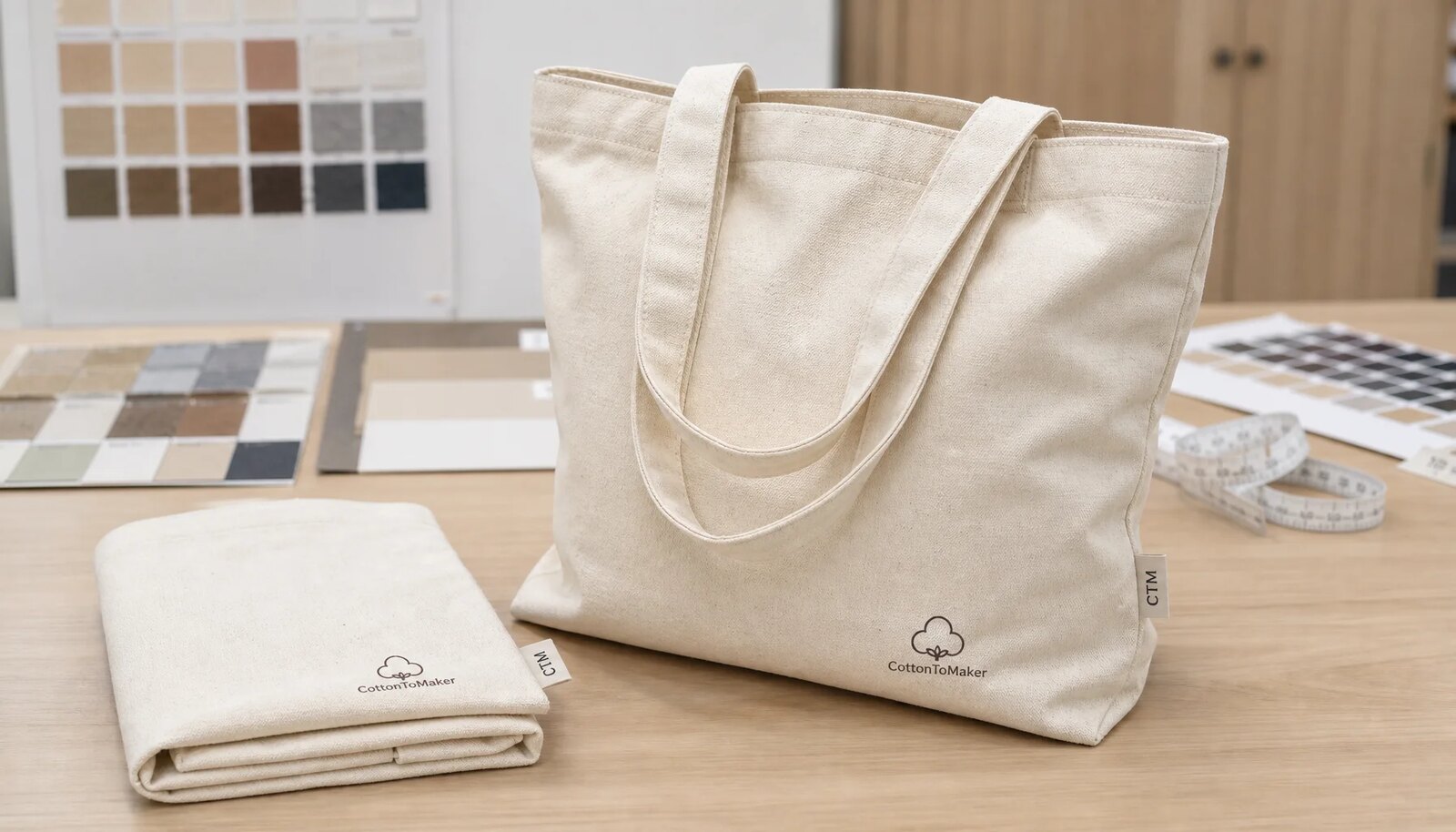
Start With The Hotel Retail Use
Organic cotton totes for hotel retail are different from low-cost event giveaways. The bag is often sold in a boutique, spa shop, resort market, or lobby retail corner where the guest can touch the fabric and judge the logo finishing before buying. That means the inspection standard must cover shelf appearance as well as carrying strength. A tote that passes as a conference handout may still fail as a paid retail item if the fabric feels limp, the print is heavy, or the packing leaves crease marks across the logo.
The buying problem is usually not whether a factory can make a tote. Many factories can. The harder question is whether the quote, sample, production, and final inspection are all based on the same retail standard. Procurement teams should define the use case before collecting prices, because a beach shop tote, spa product tote, and in-room amenity resale tote may need different fabric weight, handle length, packaging, and labeling.
- Gift shop tote: prioritize clean shelf presentation, barcode labeling, and consistent logo placement.
- Spa retail tote: use softer fabric handfeel, low-odor print, and restrained branding.
- Beach or pool retail tote: consider heavier canvas, longer handles, and stronger bottom seams.
- Welcome amenity resale tote: balance cost with neat packing and property-level allocation.
- Boutique merchandise tote: allow tighter shade, print, and sewing tolerances because the bag may sit beside apparel or premium accessories.
Set Fabric Weight Before Comparing Quotes
Fabric weight is one of the largest cost drivers and one of the easiest places for quotes to become misleading. A quote for 8 oz organic cotton is not comparable with a quote for 12 oz organic cotton, even if the tote size and logo look similar on paper. For hotel retail, a practical range is usually 10 oz to 12 oz canvas, roughly 280 to 340 GSM. This range gives enough body for shelf display while still folding and shipping efficiently.
Heavier fabric can look premium, but it also increases material cost, carton weight, and freight CBM. Very heavy canvas may also create bulkier seams and thicker folded units that take more shelf and storage space. For most hotel retail buyers, the right fabric is the one that supports the intended retail price, logo style, and guest use without pushing landed cost into a range the property cannot absorb.
- 8 oz or about 230 GSM: acceptable for lower-cost amenity bags, but often too light for paid retail.
- 10 oz or about 280 GSM: good entry point for natural organic cotton hotel totes with simple branding.
- 12 oz or about 340 GSM: stronger retail feel, suitable for resort shops and higher perceived value.
- 14 oz or above: useful for structured premium totes, but confirm folding, seam bulk, and freight impact.
- GSM tolerance: write the acceptable range into the RFQ, such as 320 GSM plus or minus 5 percent.
Choose Organic Claims Carefully
The word organic can mean different things in supplier quotations. Some suppliers mean the yarn or raw cotton is organic. Others mean the finished fabric is supported by GOTS documentation. Some can provide transaction certificates only when the order quantity and supply chain are arranged in advance. Hotel groups and retail buyers should not rely on a hangtag claim unless the required evidence is written into the purchase order.
The stricter the claim, the more the sourcing route matters. Certified fabric may need a longer lead time, a higher MOQ, or a limited color range. If the hotel brand only needs an organic cotton material claim for internal merchandising, the documentation burden may be lighter. If the product will carry certification language on a tag, label, website, or retail barcode system, the buyer should involve compliance early.
- State whether the bag must be made from organic cotton, GOTS-certified fabric, or a fully certified finished product.
- List the exact claim that will appear on the hangtag, label, or product page.
- Request the document type before sampling, not after bulk production.
- Separate certification cost from unit price when comparing quotes.
- Do not print certification logos unless the brand and supplier have the right approval path.
Build The RFQ Around Real Construction
A useful RFQ for organic cotton hotel retail totes should read like a production note, not a mood board. Dimensions, gusset, handle length, seam type, fabric weight, print method, packing, and inspection standard all affect price. If these details are missing, suppliers may quote their easiest standard tote and the buyer will only discover the gap at sample stage.
For hotel retail, common body sizes include 35 x 40 cm for a simple boutique tote, 38 x 42 cm for a general shopping tote, and larger gusseted formats for beach or resort stores. A gusset increases usable volume but also adds cutting and sewing time. Longer handles improve comfort, but they must be reinforced properly because guests may carry towels, bottles, books, or spa products.
- Body size: width, height, and gusset in centimeters or inches, with measurement tolerance.
- Handle: length, width, fabric type, and reinforcement style.
- Seams: overlock, bound seam, French seam, or other required finish.
- Load expectation: define normal carrying use, such as 5 kg or 8 kg, if relevant.
- Retail finish: thread trimming, pressing, folding, labels, barcode, and unit packing.
Match Print Method To Retail Finish
Most hotel retail totes use simple branding, which is usually best handled with water-based screen printing. It gives a softer handfeel than heavy plastisol and can look clean on natural or dyed cotton when the artwork is not too complex. For one to three spot colors, screen printing is normally the most stable commercial choice. The buyer should still define print size, color reference, position, and acceptance limits.
Digital transfer, heat transfer, or other methods may fit detailed artwork, gradients, or small batch personalization, but they change the feel and inspection points. Transfers can create edge marks, shine, or cracking if not chosen carefully. Embroidery may look premium for small logos, but it adds cost and may pucker lighter cotton. Woven side labels are useful when the front design should stay minimal.
- Screen print: best for clean hotel logos, line art, and solid colors on medium to large runs.
- Water-based ink: softer feel, but needs proper curing and rub resistance control.
- Transfer print: useful for complex graphics, but inspect edges, adhesion, and surface feel.
- Embroidery: good for small premium marks, but not ideal for large filled logos on thin fabric.
- Woven label: clean option for understated retail branding and multi-property programs.
Use Samples As Approval Tools
A sample should prove the construction that will be used in bulk production. A nice-looking sample made from substitute fabric or a different print method has limited value. Procurement teams should require the pre-production sample to use actual or clearly identified equivalent fabric, actual handle construction, actual logo process, and intended packing. If any part is temporary, the supplier should state it in writing.
Sample review should be more disciplined than a quick photo approval. Measure the body, gusset, and handles. Check the front panel under bright light for stains, slubs, oil marks, and print defects. Turn the bag inside out and review seam finishing. Load the tote with a realistic weight and inspect handle attachment. Keep the signed sample as the reference for final inspection.
- Measure body size against RFQ, not only against the supplier proforma invoice.
- Compare fabric weight and handfeel with the agreed GSM target.
- Rub the printed logo with a dry and slightly damp white cloth for a quick warning sign.
- Review the folded unit because hotel receiving teams will see the packed presentation first.
- Photograph approved print position, seam details, label, packing, and carton mark for inspection reference.
Define Inspection Thresholds
Quality inspection for hotel retail totes should cover appearance, measurement, construction, print, odor, and packing. A purely visual check at the factory table is not enough. The inspector should open cartons from different parts of the shipment, compare units with the approved sample, count packing quantities, and record defects by severity. For larger orders, a standard AQL approach helps avoid emotional arguments about whether defects are acceptable.
Defect classification should reflect retail reality. A small thread inside the seam may be minor. A stain on the front panel, a crooked logo, or a broken handle stitch can make the unit unsellable. For hotel retail, the front face of the bag deserves a stricter standard than hidden inner surfaces. The purchase order should define major and minor defects before production starts.
- Critical defects: unsafe sharp object, mold, severe contamination, wrong certification label, or serious odor.
- Major defects: front stain, hole, broken seam, failed handle reinforcement, wrong logo, wrong packing, or barcode error.
- Minor defects: small loose thread, slight internal seam irregularity, or small non-front fabric slub within agreed limit.
- Measurement tolerance: commonly plus or minus 1 cm for body size and handle length unless tighter retail specs are needed.
- Print tolerance: define acceptable logo position shift, color variance, registration, and maximum visible defects.
Control Packing For Hotel Receiving
Packing is often treated as a secondary detail, but hotel retail teams care about receiving labor, shelf cleanliness, and property allocation. If bags arrive loose in a carton, they may collect dust, wrinkle unevenly, and require extra labor before they can be sold. Individual polybags, recyclable bags, or paper belly bands can improve presentation, but each option changes cost, packing time, and sustainability positioning.
For multi-property hotel groups, carton marks and inner packing matter as much as the tote itself. A shipment may need to be split by property, SKU, color, or language version. The RFQ should include barcode labels, hangtags, retail price stickers if used, and carton allocation instructions. The factory quote should state carton quantity, carton dimensions, gross weight, net weight, and estimated CBM so freight and storage costs can be calculated.
- Individual polybag: best protection against dust and moisture, but may conflict with plastic reduction goals.
- Paper belly band: clean retail presentation, but less protection during humid shipping routes.
- Hangtag: useful for organic cotton story, care notes, barcode, and retail SKU control.
- Inner carton or bundle: helps hotel distribution centers allocate units quickly.
- Carton marks: include PO number, SKU, color, quantity, destination property, and country of origin if required.
Understand MOQ And Cost Drivers
MOQ for organic cotton totes depends on fabric availability, dyeing, print setup, packing, and certification requirements. A natural-color tote using stock organic cotton fabric may have a lower MOQ than a dyed tote with custom labels and property-specific carton allocation. When buyers compare quotes, they should separate base tote cost from setup and compliance costs. Otherwise a low unit price can hide expensive screens, sample fees, labels, or documentation charges.
Cost drivers are not always visible in the product photo. Fabric yield changes with tote size and gusset. Wide handles use more fabric. Bound seams and reinforced stitching increase sewing time. A large front print uses more ink and longer drying time. Individual packing adds material and labor. Certification paperwork may require a specific fabric source. Each line should be understood before the buyer presses suppliers for a lower number.
- Material cost: organic cotton fabric weight, width, color, shrinkage, and cutting yield.
- Labor cost: sewing complexity, handle reinforcement, trimming, pressing, folding, and inspection.
- Print cost: number of colors, print area, screen setup, ink type, curing, and reject rate.
- Packing cost: polybag, paper band, hangtag, barcode, inner carton, and master carton.
- Compliance cost: certification documents, testing, third-party inspection, and special labeling.
Plan Lead Time Around Approvals
Lead time should be counted from approved artwork, approved sample, confirmed packing, and deposit, not from the first inquiry date. Organic fabric sourcing, lab dips, print trials, and sample shipping can add meaningful time before bulk production starts. If the hotel retail launch is tied to a resort opening, seasonal campaign, or conference week, the schedule should include approval buffers and inspection time.
A realistic production calendar separates sampling, material preparation, cutting, printing, sewing, packing, inspection, and shipping. Rush orders create risk in print curing, thread trimming, packing accuracy, and final inspection. If the order is split across several properties, build time for allocation and carton labeling. The cheapest quote is not useful if the supplier cannot protect the launch date with a practical production plan.
- Artwork review: confirm file format, Pantone colors, logo size, and placement before sampling.
- Material stage: allow time for organic fabric sourcing, dyeing if needed, and shrinkage control.
- Pre-production sample: approve the actual construction before bulk cutting.
- Bulk production: sequence printing, drying, sewing, trimming, pressing, and packing with enough quality control time.
- Final inspection: schedule before shipment release, with enough days to rework if defects are found.
Specification comparison for buyers
| Spec decision | Recommended option | When it fits | Buyer risk to check |
|---|---|---|---|
| Fabric weight | 10 oz to 12 oz organic cotton canvas, roughly 280 to 340 GSM | Most hotel retail shops, spa boutiques, resort gift stores, and welcome amenity resale programs | Below 250 GSM may feel too thin on shelf; above 380 GSM raises cost and freight without always improving retail sell-through |
| Fabric construction | Plain weave canvas with stable yarn count and controlled shrinkage | Clean retail totes where print clarity and neat folding matter | Loose weave can distort logos, expose slubs, and create inconsistent panel shape after washing or steam pressing |
| Handle style | Self-fabric handles, 60 to 65 cm total length, reinforced cross stitch | Shoulder carry for guests buying towels, spa products, books, or beach accessories | Short handles make the tote feel like a giveaway bag; weak bartacks fail during loaded display or guest use |
| Print method | Water-based screen print for 1 to 3 spot colors; transfer only for complex artwork | Hotel logos, resort marks, boutique line art, or simple retail branding | Thick plastisol or low-cure ink can crack, smell, or feel too promotional for premium hotel retail |
| Color choice | Natural, bleached white, dyed brand color, or yarn-dyed stripe after lab dip approval | Natural for organic positioning; dyed versions for brand programs or seasonal shop drops | Dyed organic cotton needs shade tolerance and rub testing; natural fabric can vary lot to lot |
| Interior finishing | Bound seams or neat overlock with minimum 7 to 9 stitches per inch | Retail bags that may be inspected by hotel buyers and sold at visible price points | Raw-looking seams, skipped stitches, and loose threads quickly make a paid tote look like a free amenity |
| Packing format | Individual recyclable polybag or belly band, then flat pack in export carton | Hotel retail stores that need clean units, barcode labels, and fast shelf replenishment | Bulk loose packing saves cents but creates dust marks, crushed corners, and extra receiving labor |
| Inspection level | AQL inspection with appearance, measurement, print adhesion, seam strength, and packing checks | Bulk orders shipped to hotel groups, distributors, or multiple property locations | A visual-only inspection may miss handle strength, carton labeling errors, and fabric shade mixing |
Buyer checklist before sampling
- Define the retail use first: gift shop sale, spa boutique, welcome amenity resale, beach shop, conference retail, or minibar-style room offer.
- Set the fabric target in oz and GSM, including tolerance. For most hotel retail totes, 10 oz to 12 oz organic cotton canvas is the practical starting range.
- Specify certification expectations clearly: organic cotton claim only, GOTS-certified material, transaction certificate requirement, or other chain-of-custody evidence.
- Lock the tote dimensions, handle length, seam type, and reinforcement method before requesting price comparison.
- Send artwork with Pantone references, logo size, print position, and acceptable registration tolerance.
- Request one pre-production sample using actual fabric, actual handle construction, actual logo method, and intended packing.
- Review sample fabric handfeel, odor, shade, print feel, thread color, seam straightness, and panel symmetry under good light.
- Set measurement tolerances for body size, gusset, handle length, print placement, and carton weight.
- Define packing by unit: polybag, paper belly band, hangtag, barcode, carton mark, inner pack quantity, and master carton quantity.
- Include inspection timing in the purchase order: during production if the order is large or split by property, and final random inspection before shipment.
Factory quote questions to send
- What exact fabric weight will be used in oz and GSM, and what tolerance do you control during bulk cutting?
- Is the cotton certified organic material, GOTS-certified fabric, or only organic cotton yarn? What documents can be supplied with the shipment?
- Will the quote use greige, natural, bleached, or dyed organic cotton, and is the dyeing process included in the lead time?
- What is the minimum order quantity for this fabric weight, color, and print method, and what price breaks apply at higher quantities?
- Which print method do you recommend for this artwork, and what test results can you provide for adhesion, rubbing, and washing if required?
- Will the sample be made with actual bulk fabric and actual print method, or a close substitute?
- How many stitches per inch, what seam type, and what handle reinforcement will be used?
- What are the expected cutting, sewing, printing, drying, inspection, and packing lead times after deposit and artwork approval?
- How will units be packed for hotel retail receiving: individual polybag, paper band, hangtag, barcode label, inner carton, or bulk carton?
- What inspection standard do you support, and can you accept third-party final random inspection before balance payment or shipment release?
Quality-control points to confirm
- Fabric weight within agreed GSM tolerance, normally plus or minus 5 percent unless the buyer defines a tighter range.
- Body measurement within agreed tolerance, commonly plus or minus 1 cm for width and height on standard tote sizes.
- Handle length consistent across the lot, with no twisting, fraying, or uneven attachment points.
- Seam strength suitable for the stated load, with reinforced handle attachment and no skipped stitches at stress points.
- Print position aligned to approved sample, with no obvious tilt, pinholes, bleeding, ghosting, cracking, or ink contamination.
- Logo color matched against approved Pantone or signed sample under consistent lighting.
- Organic cotton claim supported by the agreed documentation, not only hangtag wording.
- No unacceptable fabric defects on the front retail face, including stains, oil marks, large slubs, holes, or dark foreign fibers.
- No strong odor from dye, ink, storage, or packing materials.
- Packing matches purchase order, including unit labeling, barcode placement, carton marks, inner quantity, and export carton strength.