Buying Problem: The Proof Becomes the Commercial Standard
For wholesale organic cotton totes for hotel retail, the first quote is only a starting point. The approved physical proof is what usually becomes the commercial standard. A line item may say 10 oz organic cotton canvas, one-color logo, and flat packing, yet those words do not show how natural canvas shifts ink shade, whether the logo still looks centered when the gusset opens, or whether a packing fold cuts across the artwork. Procurement should use the proof to test the full product: material, construction, artwork, label, barcode, and packing together.
Hotel retail buyers are not buying a disposable giveaway. The tote may sit beside spa products, robes, candles, local food, beach accessories, or resort merchandise. Guests judge it as part of the property experience. Distributors judge it by carton sorting, barcode readability, shelf-readiness, and reorder consistency. A muddy logo, weak handle, skewed hem, or hard crease through the emblem can make a technically acceptable cotton bag feel below retail standard.
Problems often start when different teams approve different things. Brand approves a PDF. Procurement approves the lowest quote. The factory makes a sample from available fabric instead of the planned bulk fabric. To avoid that split, the purchase order should state that bulk production starts only after a signed physical pre-production sample is approved with tolerances attached. If any part of the sample differs from planned bulk production, the supplier should disclose it in writing before approval.
- Use the print proof to lock fabric shade, logo scale, print placement, ink coverage, construction, label position, and packing fold together.
- Approve one physical sample as the production reference and record PO number, SKU, revision, approval date, and approver name.
- Treat digital mockups as layout tools only; they do not prove ink absorption, curing, handfeel, edge sharpness, or fold resistance.
- Ask the supplier to list all differences between sample and planned bulk production before the buyer signs approval.
- Keep buyer and factory reference samples from the same approval batch for inspection and reorder comparison.
Organic Cotton Specification and Documentation
Organic cotton needs two separate decisions: the material specification and the paperwork requirement. A supplier may quote organic cotton fabric as a material, but that does not automatically include transaction documents, chain-of-custody records, or certification paperwork suitable for retail claims. Hotel groups, distributors, and retail partners should decide early whether they need documented certified organic cotton or simply prefer organic material for the product story.
The RFQ should state what evidence is required and when it must be delivered. Some buyers need a supplier scope certificate, transaction certificate, fabric declaration, test report, or social compliance file before shipment or before final payment. Others only need fabric composition confirmation and careful labeling that avoids unsupported claims. The cost and lead time can differ. Certified fabric availability can also influence color, GSM, and MOQ because the supplier may need to reserve a specific lot instead of using open-market stock.
Be careful with the language on hangtags, product pages, invoices, and carton marks. If the hotel wants to sell the bag as organic cotton, procurement should confirm what documentation the sales channel and destination market expect. If certification documentation is not included, avoid wording that implies verified chain of custody. Strong sourcing is not about making the boldest claim; it is about matching product, paperwork, and marketing language before production starts.
- State whether organic documentation is mandatory, preferred, or not required for the transaction.
- Ask which documents are available for this PO, not only for the supplier in general.
- Confirm whether labels, hangtags, and product pages will make organic claims that require supporting files.
- Separate the price of certified documentation and administration from the base tote price where relevant.
- Require document delivery dates, especially if distributor onboarding or retail compliance depends on them.
Fabric Weight, Finish, and Natural Cotton Limits
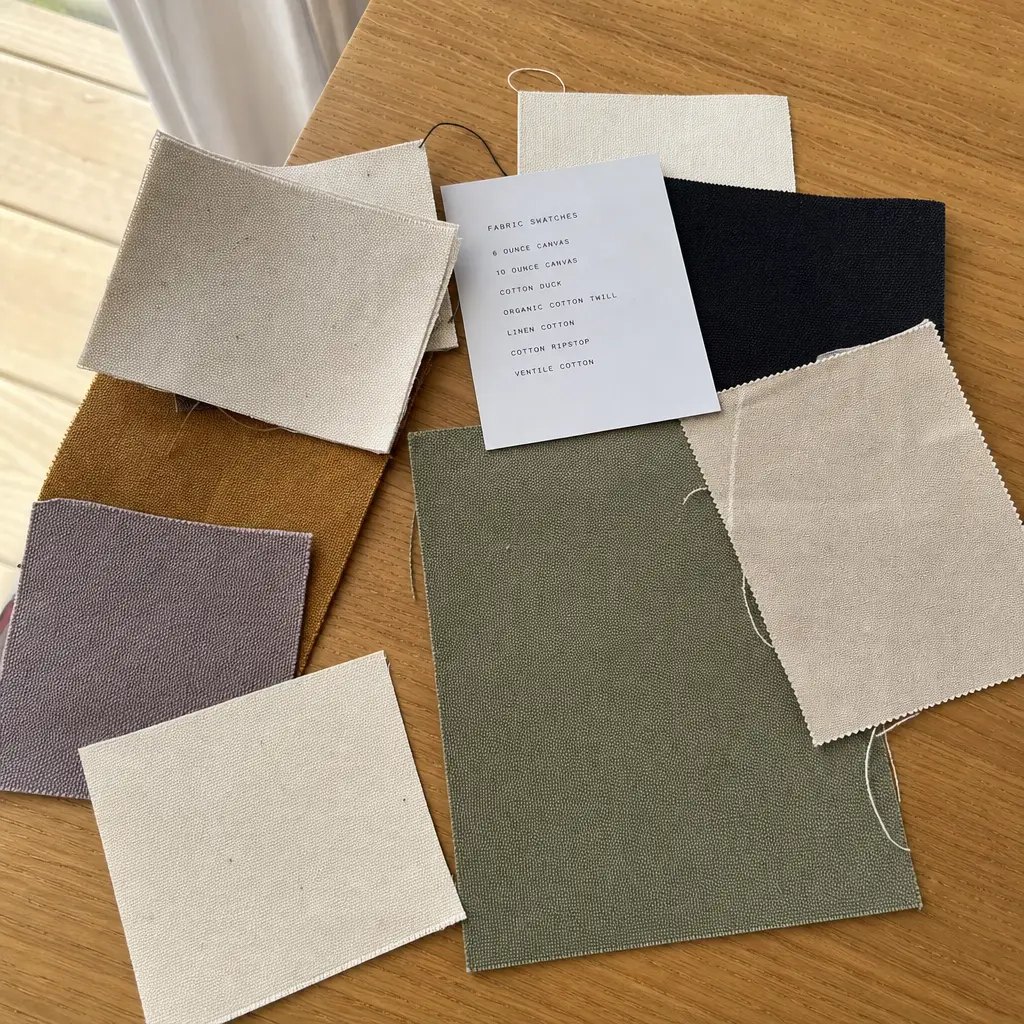
Fabric is the first major cost driver and one of the easiest places for quotes to drift apart. For hotel retail totes, 10 oz canvas, commonly around 280-300 GSM after finishing, is a practical starting point. It gives more body than light promotional cotton while keeping sewing, folding, and shipping manageable. Lighter 6-8 oz cotton can work for amenity packs or low-load guest gifts, but it may look thin in a boutique display. Heavier 12 oz canvas can feel premium, yet it also increases cost, carton volume, crease risk, and sewing stress.
Do not compare suppliers by ounce description alone. Ounce ratings are used inconsistently, and two fabrics described the same way can differ in finished GSM, yarn count, weave density, shrinkage, handfeel, and opacity. Ask whether GSM is measured before or after finishing, then request a tolerance. Many cotton canvas programs work within a GSM range rather than an exact number, so the acceptable range should be written before bulk fabric is purchased.
Natural unbleached cotton has character. Hotel retail still needs limits. Seed specks, mild slubs, and slight shade variation may support the natural look; dark contamination, oil marks, weaving bars, large knots, and stains do not. Set stricter rules for the front logo panel than for hidden seams or the inside bottom. That keeps the QC standard realistic while protecting the part guests actually see.
- Use 280-300 GSM as a practical starting range for most paid hotel retail totes.
- Use 170-240 GSM only when the tote is light-use, low-load, or budget driven.
- Use 340-380 GSM only when the brand accepts higher cost, higher CBM, and stronger crease-management needs.
- Specify natural, bleached, dyed, washed, brushed, or laminated finish because each changes print color and handfeel.
- Set front-panel limits for seed specks, slubs, stains, dark fibers, weaving bars, and oil marks.
Construction Details to Lock Before Pricing
A tote specification should describe the finished product, not just the fabric and logo. Finished width, height, gusset depth, handle width, handle length, handle drop, top hem depth, seam construction, stitch density, and reinforcement method all affect cost and perceived quality. Two suppliers can quote the same GSM and logo but deliver different bags if one uses a narrow handle, shallow top hem, and simple stitch while another uses reinforced handles and a cleaner seam.
Hotel retail programs usually need the tote to carry guest purchases, spa products, beach items, or welcome-pack contents without looking stretched. Handle drop matters more than many RFQs suggest. Short handles suit hand carry; longer handles support shoulder carry but can look oversized on a small tote. Gusset depth also changes the way artwork reads. A logo may appear centered when the bag lies flat but look slightly shifted once the gusset opens.
Approve construction by measurement, not by appearance alone. Ask the supplier to measure several points on the sample and state bulk tolerances. Many simple cotton tote programs can work with plus or minus 0.5 cm to 1.0 cm on finished dimensions, but the right tolerance depends on size, fabric, seam type, and wash or finish process. For repeat hotel programs, keep the tote body spec separate from the print spec so one approved body can support several property logos.
- Specify finished width, height, bottom or side gusset, handle width, handle length, and handle drop in centimeters.
- Define seam type such as overlock, bound seam, French seam, double needle, or reinforced top hem where relevant.
- Require handle reinforcement details including box stitch, X-stitch, bar tack where used, thread color, and stitch density target.
- Confirm whether the bag should fold flat, stand with contents, or remain soft for amenity placement.
- Measure the approved sample at multiple points and record actual dimensions beside the target tolerances.
Print Method Selection for Hotel Logos
Screen printing is usually the safest choice for wholesale organic cotton totes with solid hotel logos, property names, coordinates, line icons, maps, or one to four spot colors. It can provide strong opacity and repeatability when the printer controls screen mesh, ink viscosity, squeegee pressure, drying time, and curing. On textured cotton canvas, however, the yarn surface can break fine details or absorb ink unevenly. The proof needs to show whether edges, color, and coverage are good enough for retail.
Other methods can fit specific design needs. Heat transfer can reproduce gradients and fine detail, but it must be tested for edge adhesion, handfeel, cracking, and blocking when bags are stacked. Digital print can support complex artwork or smaller runs, though color on natural cotton may be less predictable than on smooth synthetic surfaces. Embroidery can feel premium for small marks but may pucker lightweight cotton and is not ideal for large filled artwork. Woven labels and hangtags are useful when the hotel wants subtle branding and lower front-panel print risk.
Ask the supplier to recommend a method and explain its limits. Pale beige ink may disappear on unbleached cotton. Heavy white ink may need multiple passes and can feel stiff. Fine serif text may fill in. Large solid blocks can show pinholes or pressure marks. These risks are manageable at proof stage; they become expensive once bulk panels are printed.
- Use screen print for clean logos, slogans, property names, simple illustrations, and solid brand marks.
- Use transfer only after checking handfeel, edge adhesion, fold resistance, and carton stacking behavior.
- Use digital print for complex artwork or small runs only after checking shade consistency on final fabric.
- Use embroidery for small premium logos, not large filled panels on lightweight cotton.
- Confirm ink type, curing method, minimum line thickness, minimum gap, and minimum readable text height.
Artwork Proofing for Procurement and Brand Teams
A useful proof file shows more than a logo on a rectangle. It should identify finished bag size, visible front panel, gusset depth, top hem, handle attachment zone, logo width and height, distance from top hem, distance from side seams, and whether the artwork is centered on the flat panel or visually centered when filled. Without those references, the printer may make a reasonable placement decision that still misses the brand team's expectation.
Procurement should request vector artwork at quoting stage. AI, EPS, or editable PDF files with outlined fonts reduce the risk of font substitution, raster blur, and jagged edges. Pantone references are helpful targets, but they are not guarantees on natural cotton. The approved color standard should be the physical printed proof viewed under consistent lighting and compared with the brand target. If color is strict, ask whether a custom ink mix, white underbase, or different fabric shade is needed.
Fine details deserve early attention. Thin lines can break on coarse canvas. Small text can fill in. Tight two-color registration can shift during manual or semi-automatic printing. Large ink coverage can stiffen the bag and crack across folds. If the supplier flags a risk, adjust artwork before screens are made. Increasing line thickness, simplifying small copy, or moving the logo away from seams is cheaper than rejecting printed panels.
- Provide vector artwork with outlined fonts, embedded images, Pantone targets, and clear front/back panel identification.
- Specify print width, print height, placement from top hem and side seams, and whether the logo is centered flat or filled.
- Write placement tolerance in millimeters, using fixed points rather than subjective language such as centered or slightly lower.
- Ask the printer to confirm minimum line thickness, minimum gap, and smallest reliable text size on the chosen canvas.
- Approve final color against a printed sample on actual or approved-equivalent cotton, not only against a digital mockup.
MOQ, Price Breaks, and Quote Normalization
MOQ is not only a sewing quantity. A wholesale organic cotton tote quote may include fabric lot minimum, fabric dyeing minimum, cutting loss, screen setup, ink mixing, label minimum, hangtag minimum, barcode printing, carton marking, and packing labor. A supplier offering a very low MOQ may be using available fabric, manual printing, or a shared production window. That can be useful for a trial order, but it may not provide stable repeat cost or lot consistency for a hotel group.
For multi-property hotel programs, one base tote with several print designs is often the cleanest structure. Ask for body quantity pricing and separate print-design pricing. The sewing MOQ may be based on total units, while screens and print setup apply per property logo. This lets procurement decide whether to consolidate orders, reduce print variations, or use hangtags and barcode labels to distinguish properties instead of multiple front-panel prints.
Quote comparison should isolate unit price from fixed charges and landed cost inputs. Screen fees, sample fees, custom label tooling, hangtag printing, barcode stickers, and special packing may be one-time or repeat charges. Heavier fabric and retail packing can also increase carton volume. A quote that looks lower ex-factory may cost more after freight, rework risk, or missing accessories are included.
- Request price breaks at practical volumes such as 500, 1,000, 3,000, 5,000, and 10,000 pieces if the program may scale.
- Ask for separate line items for fabric, sewing, printing, screens, samples, labels, hangtags, barcode stickers, and packing.
- Clarify MOQ per tote body, print design, property logo, fabric color, label, hangtag, and retail pack.
- Compare only quotes based on the same GSM, finished size, handle length, print colors, packing method, inspection requirement, and Incoterm.
- Request carton dimensions, pieces per carton, gross weight, and CBM before judging landed cost.
Pre-Production Sample Approval Process
A pre-production sample should be as close to bulk production as possible. It should not be a showroom tote printed with a different ink or sewn from convenient stock fabric unless the difference is clearly declared and accepted. The sample should use final or approved-equivalent organic cotton, target GSM, final dimensions, handle construction, thread color, print process, ink target, label, hangtag or barcode if applicable, and planned packing fold.
Approval should be measurable. A signed sample helps, but a signed sample without a spec sheet leaves room for disputes. The approval record should list actual finished measurements, print dimensions, placement distances, fabric weight reference, stitch density where practical, handle drop, label position, packing method, and known deviations. Add photos of the front panel, back panel, gusset, bottom, handle reinforcement, inside seam, label, hangtag, barcode, and folded retail view.
Buyers should also run simple use checks. Fold the tote along the intended packing line and reopen it. Rub the print with a clean white cloth after curing. Check whether ink transfers or blocks against another bag surface when stacked. Load the handles to a level consistent with intended retail use. These checks do not replace formal lab testing, but they reveal many avoidable issues before bulk production starts.
- Approve only after measuring the tote, checking the print, reviewing the accessories, and opening the folded retail pack.
- Record actual dimensions, handle drop, print size, print position, fabric GSM reference, stitch density, and packing fold.
- Test the print with folding, dry rub, tape pull where appropriate, and a basic blocking check after curing.
- Confirm the logo is not too close to seams, handle reinforcement, gusset folds, hangtags, or barcode stickers.
- Keep one buyer-retained approval sample and require one matching factory-retained sample for inspection reference.
QC Tolerances and Defect Classification
Quality control should separate critical, major, and minor defects before inspection begins. Critical defects may include wrong logo, wrong fabric, wrong size category, missing required barcode, unsafe contamination, open handle seam, or severe ink transfer. Major defects may include visible front-panel stains, print misplacement outside tolerance, poor registration, skipped stitches at stress points, severe puckering, wrong carton marks, mixed SKUs, or unreadable barcodes. Minor defects may include small loose threads or natural slubs that do not affect retail presentation.
Inspection tolerances should be practical and written. Finished dimensions may be set at plus or minus 0.5 cm to 1.0 cm depending on construction. Print placement may use plus or minus 3 mm to 5 mm for many simple layouts, but the right tolerance depends on logo size, panel size, and print method. Color should be compared to the approved physical sample under consistent lighting, not to a phone photo or monitor. Natural cotton shade variation should be considered separately from print color deviation.
The front print panel deserves stricter grading than hidden areas. Natural cotton may include seed specks and slubs, but they should not interfere with the hotel logo or look like dirt. Inspectors should check print width, height, placement, opacity, pinholes, bleeding, lint marks, smears, cracking, registration shift, and cure. Sewing checks should cover top hem straightness, seam allowance, stitch density, skipped stitches, reinforcement, handle symmetry, and loose threads.
- Attach critical, major, and minor defect definitions to the PO, approved sample, or third-party inspection booking.
- Measure finished width, height, gusset, handle drop, print size, and print placement during inspection.
- Check print color under consistent lighting against the approved physical sample.
- Run dry rub, fold, tape pull where suitable, and blocking checks on sample prints before bulk approval.
- Separate acceptable natural cotton specks from unacceptable stains, oil marks, dark fibers, weaving faults, and contamination in the logo area.
Packing, Cartons, and Hotel Retail Receiving
Packing affects presentation, receiving accuracy, and landed cost. Flat packing usually works well for organic cotton totes because it keeps pieces easy to count and limits deformation. The fold line still needs approval. A fold through heavy ink can leave a permanent crease, cause cracking, or make the logo look damaged on the shelf. If the tote will be sold in a hotel shop, require the sample to be packed exactly as planned for shipment and then reopened for review.
Retail accessories should be specified early because they change labor, MOQ, and inspection. A belly band can improve shelf presentation and reduce individual plastic. A hangtag can communicate material and care information but needs artwork approval and stringing labor. Barcode stickers support distributor receiving but must not cover branding or damage fabric. Kraft sleeves, paper wraps, carton dividers, and carton liners can support plastic-reduced packing, but they add cost and may increase volume.
Warehouse requirements should be written by SKU and destination. If one order includes several properties, cartons should not mix SKUs unless the distributor approves mixed cartons. Carton marks should include PO number, SKU, property name where relevant, quantity, gross weight, net weight if required, carton number, destination, and handling marks. Moisture protection matters for ocean shipments, while sustainability goals may limit individual polybags. Choose between carton liners, desiccants, paper bands, recycled polybags, or plastic-free options based on the actual channel.
- Define whether bags are bulk packed, flat folded, belly banded, hangtagged, sleeved, individually packed, or barcode labeled.
- Approve the physical fold and avoid fold lines through heavy ink coverage, small text, or delicate logo details.
- Specify barcode position, SKU sorting, carton quantity, carton sequence, property-level marks, and mixed-carton rules.
- Confirm carton dimensions, pieces per carton, gross weight, estimated CBM, and carton strength before freight booking.
- Check that handles are not twisted, crushed, or folded in a way that weakens shelf presentation.
Specification comparison for buyers
| Spec decision | Recommended option | When it fits | Buyer risk to check |
|---|---|---|---|
| Sourcing route | Use a factory or managed supplier that can coordinate fabric, cutting, sewing, printing, labeling, inspection, and export packing under one written spec | Hotel groups, resort boutiques, spa shops, distributors, and branded retail programs that need repeatable SKUs across properties | Confirm which steps are in-house and which are subcontracted. Outside printing, label application, or packing can affect lead time, color control, rework ownership, and inspection access |
| Fabric weight | Start with 10 oz canvas, commonly around 280-300 GSM after finishing, then adjust by use case | Paid hotel retail totes, welcome packs, spa merchandise, boutique shopping bags, and moderate daily reuse | Do not compare ounce labels only. Verify finished GSM tolerance, weave density, shrinkage allowance, fabric width, and whether weight is measured before or after washing or finishing |
| Lightweight option | 6-8 oz cotton, often around 170-240 GSM depending on construction | Amenity bags, event welcome kits, low-load in-room gifts, or budget-sensitive promotional programs | May look thin on retail shelves, show contents, wrinkle more easily, and provide less print opacity for pale or detailed logos |
| Heavyweight option | 12 oz canvas, often around 340-380 GSM depending on supplier standard | Premium resort retail, higher price-point merchandise, structured shelf display, or heavier expected contents | Higher fabric cost, higher CBM, harder folding, more sewing stress, and greater risk of visible creases through large printed areas |
| Organic documentation | Decide whether organic cotton is a material description only or whether certification and transaction documentation are required | Hotel groups, distributors, and retail channels making documented organic cotton claims | A low quote may exclude certified fabric availability, transaction documents, scope certificate review, chain-of-custody administration, or document timing |
| Print method | Screen print for solid logos and one to four spot colors; test transfer, digital print, embroidery, or woven labels when artwork requires them | Hotel logos, property names, coordinates, simple illustrations, retail slogans, and limited-color brand marks | Ask for ink type, curing method, minimum line thickness, rub and fold checks, and print placement tolerance before bulk printing |
| Proof standard | Physical pre-production sample using final or approved-equivalent fabric, final dimensions, final artwork scale, final ink, final label, and intended packing fold | Any tote that will be sold, barcoded, displayed, shipped to multiple properties, or reordered | Digital mockups do not prove cotton shade, ink absorption, edge sharpness, curing, handfeel, blocking, or fold damage |
| MOQ structure | Separate MOQ by tote body, fabric color, print design, label, hangtag, barcode, and packing accessory | Hotel groups using one base tote across several property logos, regional SKUs, or seasonal retail launches | A low MOQ can hide manual printing, leftover fabric, limited color control, shared screens, higher reorder cost, or weaker lot consistency |
| Packing format | Flat packed in export cartons with approved fold; add belly band, hangtag, barcode sticker, carton liner, divider, or sleeve only when needed | Hotel retail shelves, distributor receiving, property-level inventory control, and plastic-reduced packing programs | Over-tight folding can damage print; loose packing increases CBM; mixed cartons can cause receiving errors |
Buyer checklist before sampling
- Define finished width, height, gusset depth, handle width, handle length, handle drop, top hem depth, seam type, thread color, stitch density target, reinforcement method, and finished fabric GSM before requesting price.
- State whether certified organic cotton documentation is mandatory, preferred, or not needed; list required scope certificates, transaction certificates, fabric declarations, test reports, or supplier compliance files.
- Specify fabric finish: natural unbleached, bleached white, dyed, washed, brushed, or laminated; define acceptable shade variation, seed specks, slubs, weaving bars, stains, and front-panel cleanliness.
- Send vector artwork with fonts outlined, Pantone or brand color references, print dimensions, placement from fixed seams, minimum line requirements, and acceptable registration and placement tolerance.
- Confirm the print process, ink system, curing process, maximum printable area, expected handfeel, and whether artwork needs adjustment for textured organic cotton canvas.
- Require a pre-production sample made with final or approved-equivalent fabric, final dimensions, final print method, final ink, final label, final hangtag or barcode if applicable, and intended packing fold.
- Compare quotes using the same GSM, bag size, handle length, gusset, print color count, setup charges, MOQ, packing method, carton quantity, inspection requirement, and Incoterm.
- Set acceptance criteria for finished size, handle drop, print color, print placement, opacity, rub resistance, fold resistance, stitch quality, load suitability, packing fold, barcode readability, and carton marks.
- Reserve schedule and budget for at least one proof correction round before bulk printing; do not approve from a PDF layout when color, fabric texture, or retail packing matters.
- Confirm whether barcodes, hangtags, belly bands, kraft sleeves, inner cartons, carton liners, desiccants, individual bags, recycled polybags, or plastic-free packing are included in the quoted unit price.
Factory quote questions to send
- What is the finished GSM or ounce weight of the organic cotton canvas after finishing, and what tolerance do you apply in bulk production?
- Is the organic cotton fabric in stock, booked after deposit, or woven and dyed to order, and what documentation can be supplied specifically for this PO?
- Can you quote material-only organic cotton separately from certified documentation, custom labels, hangtags, barcode stickers, sample fees, print setup, and special packing?
- Which print method do you recommend for this artwork on natural cotton canvas, and what are your minimum line thickness, minimum text height, and registration limits?
- What ink system will be used, how will it be cured, and what dry rub, wet rub, tape pull, scratch, fold, or blocking checks can you perform before approval?
- What is the maximum printable area after allowing for top hem, side seams, gusset expansion, handle reinforcement, and sewing variation?
- Can the pre-production sample use final fabric, final GSM, final thread, final label, final ink, final packing fold, and the same print process planned for bulk?
- How many print colors are included in the quoted unit price, and what are the screen, setup, ink-mix, artwork adjustment, sample, and repeat setup charges?
- What MOQ applies to the tote body, and what MOQ applies to each print design, hotel property, colorway, woven label, hangtag, barcode, or retail pack?
- What tolerances do you include for print color, print placement, finished width and height, gusset, handle drop, stitch density, carton quantity, and carton dimensions?
Quality-control points to confirm
- Finished size tolerance should be agreed before cutting; many simple cotton totes use about plus or minus 0.5 cm to 1.0 cm depending on size, fabric behavior, gusset depth, and sewing method.
- Print placement tolerance should be written in millimeters from fixed reference points such as top hem, side seam, bottom seam, handle centerline, or panel centerline, not described only as centered.
- Pantone matching on natural unbleached cotton should allow realistic visual tolerance because base shade, yarn texture, ink absorption, drying, and curing change the final color.
- Screen print curing should be checked by dry rub, wet rub where relevant, tape pull, scratch resistance, fold resistance, and blocking risk before bulk approval.
- Handle attachment should be inspected for box stitch or X-stitch consistency, skipped stitches, thread breaks, bar tack alignment where used, reinforcement position, and load suitability for intended use.
- Seams should be checked for stitch density, loose threads, raw edge control, seam allowance, puckering near the gusset, top hem straightness, and open seam risk.
- Fabric defects should be graded by visibility and location; the front logo panel usually needs stricter limits than inside seams, bottom folds, or hidden gusset areas.
- Print defects should be separated into color deviation, pinholes, uneven opacity, bleeding edges, registration shift, ink smears, lint marks, cracking, contamination trapped in ink, and incomplete cure.
- Packing should protect the print surface from rubbing, moisture, hard creasing, excessive compression, handle deformation, and carton abrasion during export handling.
- Carton checks should include piece count, SKU separation, barcode readability, carton mark accuracy, carton strength, gross weight, carton dimensions, and carton number sequence for freight planning.