Why this audit matters before you release a PO
An organic cotton bag wholesale supplier audit is not about finding the cheapest quote. It is about checking whether the supplier can actually deliver the same bag, in the same construction, at the same quality, every time. With cotton bags, small wording changes in a quote can hide big production differences: a lighter GSM, weaker stitching, different print method, or packing that looks fine on paper but creates warehouse problems later.
Buyers usually lose money in the gaps between the sales email and the factory floor. The quote may say "organic cotton tote," but it may not define fabric weight, shrinkage, seam allowance, print area, or carton pack. If you do not audit the supplier before PO release, you end up approving samples that are not truly comparable and paying for corrections after the order is already in motion.
- Audit the quote, not just the price.
- Treat undefined specs as hidden risk.
- Assume every missing detail will reappear as a production issue.
Start with a spec sheet the factory can actually follow
The first mistake buyers make is asking for a quote before they define the bag. A useful spec sheet should name the bag type, finished dimensions, fabric weight/GSM, weave, color, handle length, handle fold width, seam allowance, and print area. If the bag is meant for retail, add folding direction, carton count, and any hangtag or barcode requirement. If the supplier has to guess any of these points, the quote will be less reliable and the sample process will take longer.
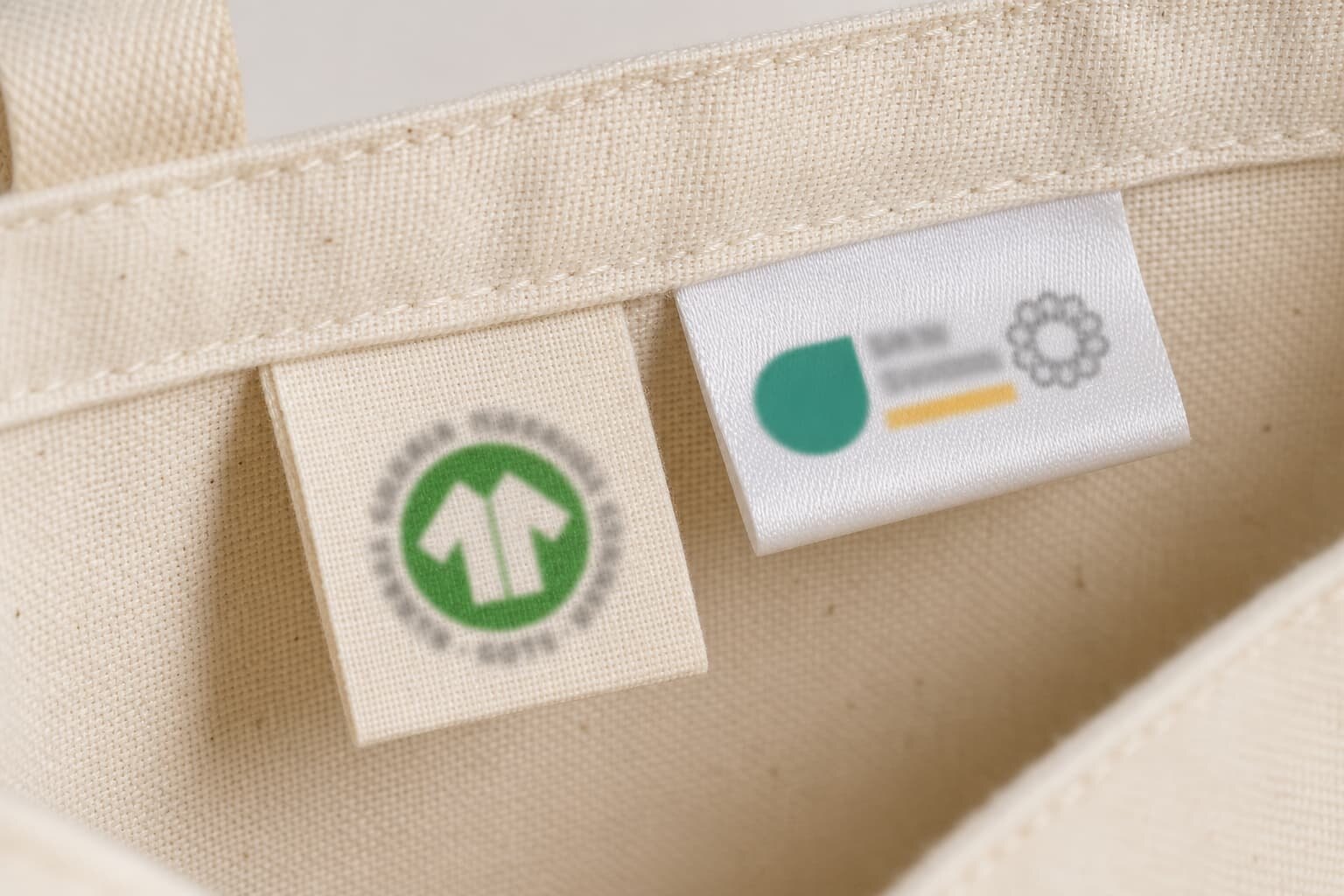
For organic cotton, you also need the proof trail, not just the fabric description. Ask what document supports the organic claim and whether the named seller on the quote is the same legal entity that will invoice and ship the goods. A buyer can still use a trading company, but the paper trail must be clear. If your brand or retailer needs a specific organic status, verify that the supplier can provide the right documentation before you price the order.
- Use one written spec sheet for size, GSM, print, and packing.
- Match the selling entity, factory, and invoice details early.
- Do not assume a generic "organic" label is enough for your compliance file.
Audit fabric, weaving, and sewing before you compare quotes
Fabric weight is one of the easiest numbers to misunderstand. A tote quoted at 150 GSM will behave very differently from one at 200 GSM, even if both look like "cotton tote bags" in a product photo. For most wholesale programs, a midweight range around 150-180 GSM is a practical starting point because it balances hand-feel, print appearance, and cost. Lighter fabric can work for giveaways, but it tends to show more distortion and feels less stable once the bag is packed.
Construction matters just as much as GSM. Ask how the side seams are finished, how the handles are anchored, and whether the bag uses a single-needle or reinforced seam in the load-bearing areas. On higher-use bags, a narrow seam allowance or weak handle stitch will fail long before the fabric does. Also ask about shrinkage, because a bag can pass a visual sample check and still come back shorter after finishing if the fabric was not controlled properly.
- Compare finished GSM, not just raw fabric claims.
- Ask for seam type, seam allowance, and handle reinforcement details.
- Check shrinkage assumptions before you size the print area.
Use the right comparison when you choose the bag spec
Buyers often compare suppliers by unit price only, but the right comparison is spec versus use case. A lightweight promotional tote may be fine for brochures or soft goods, while a heavier grocery tote needs stronger seams and a more stable body. If you price them as if they are the same product, you will either overpay for a simple program or under-spec a bag that has to survive repeated use.
Use the table below as a sourcing lens, not as a fixed rule. The best option depends on how the bag will be used, how it will be printed, and how much defect risk your team can absorb. A procurement team should always ask which detail is driving the quote: fabric, decoration, packing, or labor. That is where hidden cost usually sits.
- Treat one quoted price as a bundle of decisions.
- Match spec strength to the actual use case.
- Ask the supplier which element is driving the highest cost.
Compare print methods against artwork and volume
Print method is where many organic cotton bag orders go off track. A simple one-color logo is usually best suited to screen printing, especially when the run is large enough to justify setup. If the artwork has fine text, multiple colors, or exact brand colors, ask how the factory will control registration and curing. A sample that looks good in a photo can still fail in bulk if the ink bleeds into the weave or cures unevenly.
If a supplier proposes heat transfer, digital transfer, embroidery, woven patches, or a sewn label, ask why that method is better for your bag and whether the finish matches the intended retail position. For some buyers, a woven label or side tag is more durable and cleaner than direct print. For others, direct screen print is easier to control and cheaper at scale. The audit question is simple: does the print method fit the art, fabric, and reorder plan?
- Screen print is usually strongest for simple logos and larger runs.
- Ask for color count, print area, curing method, and setup cost.
- If a print is decorative, test rub resistance and edge sharpness.
Read MOQ and pricing like a factory, not a catalog
MOQ is not one number; it is a set of constraints. One supplier may have a low MOQ on the bag body but a higher MOQ for one print color or one fabric shade. Another may quote a low unit price only if you accept the factory's standard carton pack or pre-existing fabric stock. If you do not ask how the MOQ is calculated, you may end up paying extra for every small change: logo position, label type, or folded pack size.
A good quote should break out the cost logic in a way your team can audit. You should know whether the quoted price includes cutting, sewing, printing, labels, inner packing, outer cartons, and export marks. Ask for tiered pricing by quantity, because the first break often reveals whether the factory is really set up for your target volume. A supplier that cannot explain why the price changes between 1,000 and 5,000 units is usually not quoting a stable production model.
- Separate MOQ by style, fabric color, and print complexity.
- Ask for cost lines, not a single all-in number.
- Compare price breaks only after the spec is fully locked.
Use sampling to catch problems the quote will not show
Sampling is where you find the difference between a sales promise and a real factory process. For organic cotton bags, ask for at least one pre-production sample that reflects the final fabric, final print method, and final packing style. If the factory sends a "reference sample" from a different order, treat it as a visual guide only. The goal is not to admire the sample; the goal is to confirm that the bulk order can be made exactly that way.
When you review the sample, check the details that affect production consistency: handle stitching, panel alignment, thread color, print registration, fold style, and label placement. If the sample passes but the supplier cannot explain how it was made, you still have risk. A good factory can tell you which machine was used, what changed from the first sample to the final approved sample, and which points will be controlled during bulk production.
- Approve one signed pre-production sample as the bulk reference.
- Check the sample under the same lighting your QC team will use.
- Confirm that the sample includes the final packing method.
Inspect packing, carton marks, and warehouse readiness
Packing is where many wholesale programs create avoidable costs. A bag that is folded neatly for the factory can still create damage or warehouse inefficiency if the carton pack is wrong. Ask whether the bags ship bulk packed, individually polybagged, or with a specific retail fold. Then confirm carton count, carton dimensions, gross weight, and whether the carton marks are printed or label-applied. These details affect freight, storage, and receiving accuracy.
If the bags are going to retail or direct-to-store distribution, ask about moisture protection and carton integrity. Cotton is not fragile like glass, but it does absorb odors and moisture if the pack is sloppy. If your channel needs barcodes, hangtags, or country-of-origin labeling, confirm who applies them and at what stage. Packing changes after sample approval are a common source of rework because the bag itself may be correct while the shipper carton is not.
- Confirm folding method, inner pack, and carton count before bulk starts.
- Check whether carton size fits your warehouse or freight plan.
- Make shipping marks and barcode placement part of the approval sample.
Pressure-test lead time and production control
Lead time should be broken into steps, not quoted as one number. A supplier that says "30 days" without explaining material booking, sample approval, cutting, sewing, printing, inspection, and packing is giving you a weak answer. The real schedule often moves when artwork is revised, when packing changes, or when the factory has to wait for a fabric lot. Your audit should find out where the supplier loses time and what they do to prevent it.
Ask how many lines or machines will be assigned to your order and whether the factory has a high-season bottleneck in sewing, printing, or final packing. If a supplier has strong stitching capacity but limited printing capacity, the real lead time depends on the print queue, not the sewing line. Buyers who understand this can negotiate better and build a safer reorder plan. The important thing is not the shortest lead time; it is the lead time the factory can repeat.
- Ask for lead time by stage, not one combined promise.
- Find the bottleneck before you commit to your customer date.
- Build a buffer for artwork sign-off and packing changes.
Set your quality control points before shipment
The best time to define quality control points is before the PO, not after a defect appears. Your audit should define the acceptable tolerance for size, print placement, seam appearance, and carton count. For a simple organic cotton bag, the most expensive defects are usually not dramatic failures; they are small issues that multiply across a large order: a slightly crooked logo, handles stitched off-center, inconsistent fold, or short shipment in a carton group.
Build a short inspection list that mirrors real buyer risk. Ask the factory to check the same points you will inspect on arrival, and make sure they understand which issues are rejectable and which are cosmetic. If your program is retail-facing, a bag that is structurally fine but visibly inconsistent can still hurt sell-through. The supplier audit should make those standards clear before production begins.
- Use measured tolerances for size, print location, and carton count.
- Define which defects are critical, major, and minor.
- Require a pre-shipment check against the signed sample.
Specification comparison for buyers
| Spec decision | Recommended option | When it fits | Buyer risk to check |
|---|---|---|---|
| Fabric weight / GSM | 150-180 GSM for most reusable totes | General wholesale, retail resale, and brand giveaways | Too light can show print-through and feel flimsy; confirm finished weight, not only greige fabric |
| Bag structure | Flat tote with reinforced handles and bottom seam | Low to mid-cost programs with broad use cases | Weak handle anchors and narrow seam allowance fail under load |
| Print method | Single or two-color screen print | Simple logos and larger run sizes | Ask about curing, wash rub, and registration tolerance |
| Organic status proof | Supplier scope certificate plus transaction documents when applicable | Any order where the buyer must claim organic content | Do not rely on verbal claims; verify the exact factory and trading entity on the paperwork |
| Packing format | Flat folded bulk pack with carton marks | Wholesale shipments to DCs, importers, and retail distribution | Confirm carton count, moisture protection, and final fold size before production starts |
Buyer checklist before sampling
- Confirm the exact bag size, fabric weight/GSM, color, handle length, seam allowance, and print area in one spec sheet.
- Ask for the organic cotton proof trail that matches the seller, factory, and finished goods order.
- Request a costing breakdown that separates fabric, sewing, printing, packaging, labels, and any extra setup charges.
- Approve one signed pre-production sample that matches the final artwork, thread color, and packing method.
- Check whether MOQ is driven by fabric stock, print color count, or sewing line efficiency.
- Verify carton pack, master carton dimensions, gross weight, and shipping marks before the PO is released.
- Ask who owns the artwork files, print screens, and sewing patterns after sample approval.
- Lock in lead time by stage: material booking, sample approval, production, inspection, and packing.
- Define acceptable defects and the inspection standard your team will use on arrival.
- Get a written confirmation that any spec change after approval will trigger a revised quote and timeline.
Factory quote questions to send
- What exact fabric weight/GSM, weave, and shrinkage allowance are you quoting?
- Is the quote based on stock fabric, reserved fabric, or a fresh production run?
- How is MOQ calculated for this style: by bag style, fabric color, print color, or carton pack?
- What is included in the quoted unit price: sewing, print, labels, hangtags, inner packing, and carton packing?
- How many print colors and print positions are included, and what is the add-on per extra color or placement?
- What sample types do you provide before bulk: hand sample, pre-production sample, and print strike-off?
- What is the production lead time after sample approval, and which step usually creates delays?
- What carton size, pack count, and moisture protection do you quote for export packing?
- What inspection step do you perform before shipment, and can you share the defect criteria?
- If we change artwork, size, or packing after approval, how will the price and timeline change?
Quality-control points to confirm
- Finished dimensions within the agreed tolerance for width, height, and gusset depth.
- Fabric weight and hand-feel consistent with the approved sample, with no obvious thin spots.
- Straight, even stitching with no skipped stitches, loose threads, or seam puckering.
- Handle anchor points reinforced and aligned, with no twisting or asymmetry.
- Print color, registration, and edge sharpness matching the signed-off artwork.
- No oil marks, weaving defects, holes, or contamination on visible panels.
- Shrinkage and distortion controlled after the required wash or steam test if relevant.
- Carton count, fold direction, and inner packing matching the packing spec.
- Labeling, barcode, and shipping marks present and readable where required.
- Random pull test on handles and seams to confirm the bag can survive normal retail use.