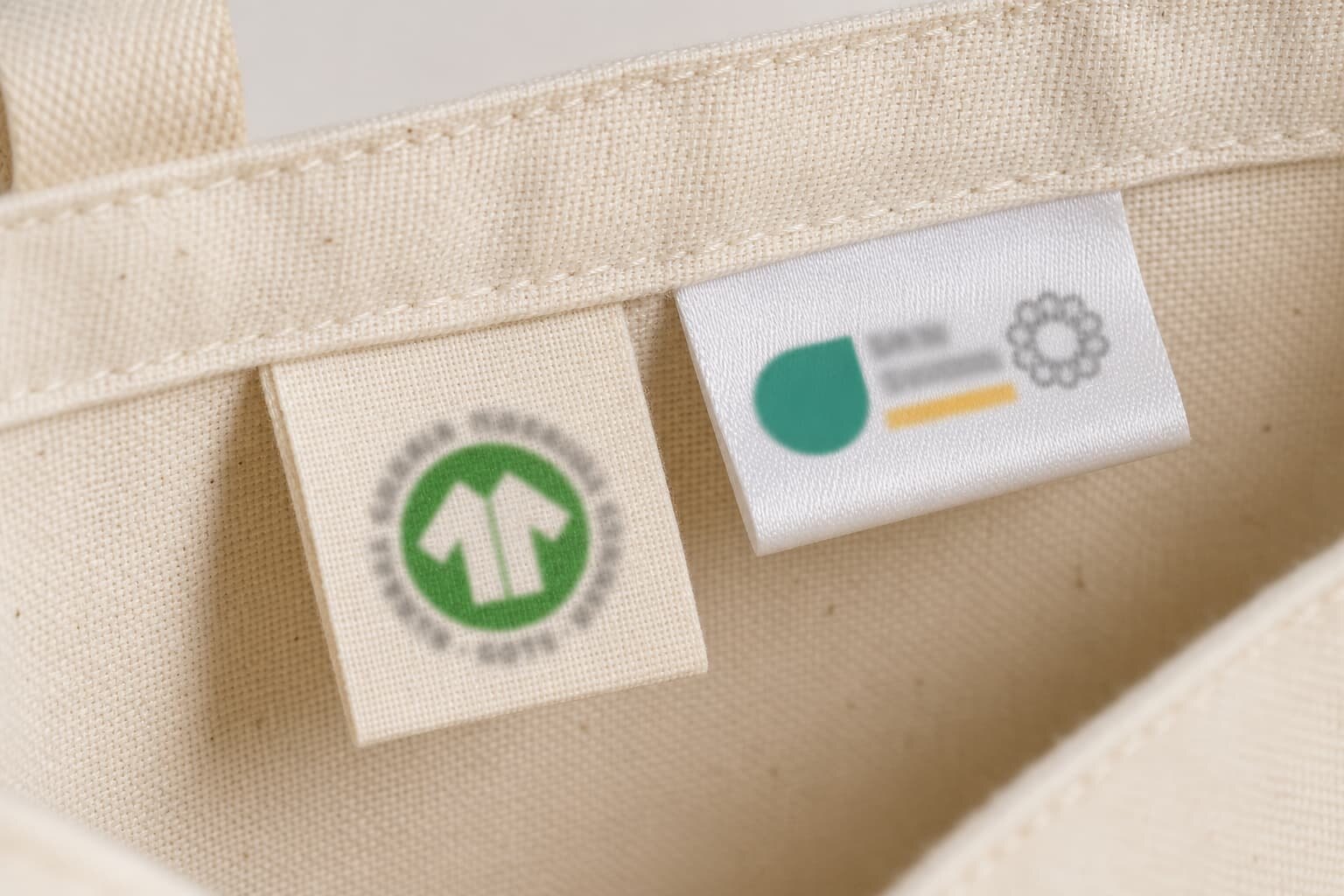
Start with the buying scenario, not a generic bag description
A useful quality control plan for wholesale organic cotton bags begins with the commercial use of the bag. A lightweight event giveaway, a retail tote sold at checkout, a grocery carrier, and a dust bag for apparel may all be called organic cotton bags, but they do not need the same fabric weight, seam strength, packing, or documentation. Procurement teams should first define the risk of failure: customer complaint, retail return, brand claim problem, warehouse receiving delay, or product damage in transit.
Turn that scenario into a measurable brief before comparing suppliers. For a promotional event bag, the buyer may prioritize low cost, clean logo placement, and on-time delivery. For a resale tote, the buyer may need heavier fabric, better stitching, stronger handles, retail labels, and stricter cosmetic standards. For a sustainability-branded program, the organic cotton claim must be supported by documents before the logo or hangtag is approved.
The phrase quality control plan should not mean a long email full of preferences. It should mean a shared file that connects the RFQ, sample, production, inspection, packing, and repeat order. If a supplier quotes without knowing GSM, dimensions, decoration method, certification evidence, or AQL, the price is not comparable. It is only an estimate based on assumptions.
- Write the bag’s use case in the RFQ: giveaway, resale, packaging, grocery, or premium gift.
- List the top three risks for the order, such as late delivery, weak handles, unverified organic claim, or logo defects.
- Separate must-have requirements from preferred options so suppliers can price alternatives clearly.
- Ask the supplier to identify any requirement that changes MOQ, tooling, lead time, or inspection cost.
Define organic cotton evidence before discussing marketing claims
Organic cotton bags require more care than ordinary cotton bags because the buyer may use the product to support environmental or brand claims. Procurement should confirm what level of evidence is needed before the supplier prints labels, hangtags, or website copy. A factory saying organic cotton in a quote is not the same as having order-specific chain-of-custody evidence.
At minimum, ask who holds the certification, what product scope is covered, and whether shipment-level documentation is available. Depending on the buyer’s claim and market, documentation may include a valid scope certificate, transaction certificate or equivalent order-level record, fiber composition statement, and invoices that match the PO. If the buyer only needs an internal material preference and will not make a certified claim, record that too; unclear claims create disputes later.
Organic cotton also has natural visual variation. Undyed natural cotton may show seed flecks, slight shade variation, and small slubs. These are often acceptable if defined in advance. Dyed organic cotton adds questions about colorfastness, dye lot variation, and whether the dye process is covered by the buyer’s sustainability requirements. Do not let the approval sample hide these realities; state what level of natural variation is acceptable.
- Confirm whether the final product will carry an organic claim, a certified claim, or no consumer-facing claim.
- Request certificate holder name, certificate number if applicable, validity date, product scope, and shipment linkage.
- Do not approve printed organic wording until documentation responsibility is clear.
- Define acceptable natural cotton characteristics, including seed flecks, slubs, and shade variation.
Specify fabric weight, weave, color, and shrinkage in numbers
Fabric is the largest driver of both price and perceived quality. A quote for a 140 GSM plain weave bag and a quote for a 280 GSM canvas tote may both look like organic cotton bag pricing, but they are not equivalent products. Buyers should request GSM or oz/yd², weave, yarn appearance, color, finish, and whether the fabric is pre-shrunk or expected to shrink after washing.
Useful ranges depend on the application. Lightweight drawstring or event totes may use about 120-160 GSM. Standard retail totes often sit around 180-240 GSM. Heavier canvas-style totes may use 280-340 GSM or more. These numbers are not universal rules, but they help procurement identify suspiciously low quotes. If the supplier will not state fabric weight, the buyer cannot compare value.
Shrinkage matters when bags are washable, sold to consumers, or used for fitted packaging. A practical RFQ can state a target such as shrinkage not more than 5% after one agreed wash cycle, or a different limit if the use case requires it. If no washing is expected, state that the bag is not intended for washing and still ask for fabric stability during normal handling and storage. This prevents later arguments about whether size change is a defect.
- Record target GSM and tolerance, for example 220 GSM +/-5%, instead of saying medium thickness.
- Specify weave: plain weave, canvas, muslin, twill, or other agreed construction.
- For natural undyed bags, approve a fabric shade standard and define acceptable flecking.
- For dyed bags, request lab dip approval and note color tolerance under a named light source if required.
- State shrinkage limit and test condition if washability or post-wash size matters.
Lock dimensions, handles, seams, and load expectations
Many bag complaints come from construction details that were never measured. The body width, height, gusset, handle length, handle drop, handle width, seam allowance, and logo position should be listed as finished measurements. Common tolerances may be +/-1 cm for many small and medium bag dimensions or +/-2% for larger panels, but the buyer should choose limits that match the product’s use and retail expectation.
Handle construction deserves separate attention. A bag can look acceptable on a table and still fail when loaded. Buyers should specify whether handles are self-fabric, webbing, cord, or drawstring; whether they use bartack, box stitch, cross stitch, or reinforced seam insertion; and where stress points are located. Stitch density can be stated as a target, such as 7-9 stitches per inch, with no skipped stitches or open seams in stress areas.
Load testing should be practical and agreed before production. For example, the buyer can require the supplier to suspend an agreed weight for an agreed time and inspect for seam slippage, tearing, handle distortion, or stitch breakage. The exact weight should match the use case, not a random high number. Grocery totes and premium retail totes need different load assumptions from lightweight event bags.
- Create a measurement table for body width, height, gusset, handle length, handle drop, and logo position.
- Define stitch density target and unacceptable sewing defects before bulk sewing starts.
- Ask for close-up photos of handle reinforcement on the approval sample and first bulk output.
- Set a realistic static load test requirement and require photos or video of the result.
- Classify open seams and failed handle reinforcement as major or critical depending on the use case.
Control decoration quality on natural cotton surfaces
Logo decoration is often where a good bag becomes an unusable shipment. Organic cotton fabric can be uneven, absorbent, flecked, or textured, especially in natural and canvas constructions. Screen printing, digital printing, embroidery, woven labels, and heat transfers each behave differently on these surfaces. The RFQ should ask the supplier to recommend the method and explain the risk, not simply apply the artwork.
For printing, specify color reference, print size, placement tolerance, edge sharpness, curing, and whether slight texture show-through is acceptable. A placement tolerance such as +/-5 mm may be reasonable for many tote programs, while stricter retail presentation may need tighter control. For embroidery, watch for puckering, thread tension, needle holes, and backside finishing. For labels, inspect edge alignment, stitching, fraying, and whether the label claim matches the certification evidence.
A strike-off or pre-production sample is valuable because digital artwork does not show ink absorption, color shift, or print feel. If the supplier changes fabric weight, dye lot, or print process after approval, the decoration result can change too. Keep the approved strike-off tied to the final bulk fabric, not just to a file name.
- Specify logo method, size, colors, placement point, and placement tolerance.
- Request a strike-off on the actual or representative bulk fabric before mass printing.
- Check print adhesion, rub resistance, cracking after folding, and ink transfer where relevant.
- For embroidery, inspect puckering, thread tension, backside neatness, and alignment.
- Do not print sustainability claims until organic documentation and wording are approved.
Build a quote comparison that exposes real cost drivers
A strong wholesale quote separates cost drivers instead of hiding them inside one unit price. Ask suppliers to break out fabric, sewing, decoration setup, sample fee, labels, packing, carton requirements, certification documentation cost if any, inspection support, and freight handover term. This makes it easier to identify whether a low price is based on lighter GSM, no sample, weaker packing, or missing documentation.
MOQ should be explained by production reality. Custom dyed organic cotton may require a fabric dye lot MOQ. Special webbing, custom labels, or uncommon carton rules may add minimums. Multi-color printing can add setup cost. A heavier canvas may reduce fabric options and extend booking time. When suppliers explain these drivers clearly, procurement can negotiate intelligently: adjust GSM, reduce print colors, use natural fabric, or standardize packing without weakening essential quality.
Price breaks should be compared against total landed work, not only unit price. A 5,000-piece order may have a lower unit cost than 1,000 pieces, but if warehouse cartons exceed weight limits or if labels are wrong, the receiving cost erases the saving. For repeat programs, also ask whether screens, patterns, and approved samples are retained and whether reorders can use the same standard.
- Request pricing at practical quantities such as 500, 1,000, 3,000, 5,000, and 10,000 pieces if relevant.
- Separate sample cost, setup cost, unit cost, packing cost, and document cost.
- Ask which specification changes alter MOQ or lead time.
- Compare quotes only after GSM, dimensions, construction, logo method, packing, and QC scope match.
- Record whether price includes rework responsibility for supplier-caused inspection failure.
Use sample approval as the production reference, not a formality
Sample approval should create the reference for bulk production. For a new bag program, a physical pre-production sample is strongly preferred because hand feel, stiffness, seam quality, print texture, and handle comfort are difficult to judge from photos alone. Photos are still useful, but they should support the signed sample rather than replace it for important orders.
The approval record should include front, back, inside, side, gusset, handle reinforcement, logo close-up, label, seam, thread color, and packed presentation. Measurements should be written on a sample sheet. Any accepted deviation must be stated clearly. For example, if the buyer accepts slightly visible cotton flecks on natural fabric, that approval should be recorded so final inspection does not reject normal material character.
For repeat orders, buyers can sometimes approve by retained sample and updated production photos, but the supplier must confirm that fabric weight, source, dye lot standard, print method, pattern, and packing have not changed. If any key input changes, treat the order as a new approval rather than a repeat.
- Keep one signed gold seal sample or retained reference sample for new or high-risk orders.
- Photograph all important views: front, back, inside, handles, seams, logo, label, and packing.
- Measure the sample using the same method planned for final inspection.
- List approved deviations instead of leaving them to memory.
- For repeat orders, confirm no change in fabric, process, trim, print, or packing before skipping a new sample.
Set the inspection workflow, AQL, and defect classifications
Inspection should happen in stages. Incoming material checks catch fabric weight, shade, stains, and documentation issues. First-output checks catch cutting, sewing, handle position, and print placement before the full lot is produced. In-line checks monitor drift during production. Final inspection verifies the packed goods before shipment release. Relying only on final inspection can turn a small early mistake into a full-lot rework problem.
Use a recognized sampling approach when possible, such as ANSI/ASQ Z1.4 or ISO 2859-1. Many general consumer goods inspections use General Inspection Level II, with AQL values chosen by the buyer’s risk tolerance. A common example structure is 0.0 for critical defects, 2.5 for major defects, and 4.0 for minor defects, but the buyer should confirm suitability for the order, sales channel, and contract. The key is to define the rule before production, not after a dispute.
Defect classification must be specific to organic cotton bags. Critical defects can include mold, contamination, needle fragments, unsafe sharp parts, false certification claim, or wrong product identity. Major defects can include wrong size beyond tolerance, failed seam or handle load, wrong fabric weight outside tolerance, wrong logo, serious stains, mixed SKU, missing required label, or failed carton count. Minor defects may include small loose threads, slight cosmetic variation within approved natural cotton limits, or minor folding inconsistency.
- Define inspection timing: incoming fabric, first output, in-line, final, and reinspection if needed.
- Agree AQL, inspection level, lot definition, and sample size before the order is released.
- Create defect classes with examples for critical, major, and minor defects.
- Require measurement photos, defect photos, and a summary of checked quantities.
- State actions clearly: pass, fail, rework, sort, re-inspect, hold shipment, or accept with written deviation.
Add product-specific tests: shrinkage, colorfastness, seam strength, and carton checks
Organic cotton bag QC should include checks that match the material and use. For washable bags, shrinkage testing is important. Record the initial measurements, wash method, drying method, final measurements, and percentage change. If the bag is not intended to be washed, avoid making washability claims and focus on dimensional stability during normal use.
Dyed or printed bags need color and surface checks. Depending on the buyer’s risk, this can include dry rub, wet rub, color transfer, print adhesion, fold cracking, and visual comparison to an approved color standard. Natural cotton may not match coated paper color references exactly, so approve the actual result on fabric, not only a Pantone number.
Packing tests prevent warehouse problems. Inspectors should open cartons, count pieces, verify SKU separation, scan barcodes if applicable, check carton marks, and look for moisture, odor, crushing, or mixed goods. For export or long storage, buyers may request moisture readings, desiccant placement, carton gross weight limits, and a basic carton drop or handling review. These checks do not make the product better, but they prevent a good product from arriving in poor condition.
- Shrinkage check: compare pre-wash and post-wash dimensions and record percentage change.
- Color check: compare bulk to approved standard under consistent lighting.
- Print check: inspect adhesion, cracking after folding, rub transfer, and registration.
- Seam check: inspect stitch density, seam slippage, open seams, and handle reinforcement after load test.
- Carton check: verify count, marks, barcode, gross weight, moisture condition, and carton strength risk.
Control packing, shipment release, and repeat orders
Packing is part of the specification because it affects receiving speed, damage risk, and customer presentation. The buyer should define whether bags are folded flat, rolled, banded, individually packed, bulk packed, or retail packed. State inner quantity, master carton quantity, carton dimensions if important, maximum gross weight, barcode or SKU label position, carton marks, and whether plastic reduction rules apply.
Before shipment, collect evidence in one release pack: final inspection report, measurement sheet, defect summary, close-up photos, packed carton photos, packing list, carton label proof, certification documents if required, and deviation approvals. Balance payment or shipment release should depend on this evidence, especially for new suppliers or strict retail programs.
Repeat-order control is where a quality plan saves time. After the first order, keep the approved sample, final spec, artwork, color standard, carton label, inspection report, and lessons learned. For the next PO, ask the supplier to confirm whether any material, process, subcontractor, print screen, label, or packing method changed. If there is a change, update the QC plan before production starts. This turns one successful order into a repeatable procurement standard rather than a lucky result.
- Approve a packed sample or packing photo set before bulk packing starts.
- Set carton count tolerance at zero for wrong count unless the buyer approves otherwise.
- Require buyer approval for mixed SKU cartons unless intentionally planned.
- Hold shipment if final inspection fails critical defects or unapproved major defects exceed AQL.
- For repeat orders, compare new production to the retained sample and last inspection report.
Specification comparison for buyers
| Procurement decision | Recommended measurable detail | Acceptable supplier evidence | How to score supplier responses |
|---|---|---|---|
| Organic cotton claim | State whether fabric must be certified organic cotton, organic in conversion, recycled blend excluded, or conventional cotton not accepted. Require chain-of-custody documents where applicable. | Valid scope certificate from the certified entity, transaction certificate or equivalent shipment-level evidence when required, fiber composition statement, invoice consistency, and labeling claim review. | 5 = complete documents match supplier and order; 3 = certificate exists but shipment evidence unclear; 1 = only marketing wording or generic logo use. |
| Fabric weight and weave | Typical tote ranges may be 120-160 GSM for lightweight promotional bags, 180-240 GSM for standard retail totes, and 280-340 GSM for heavy canvas. Specify plain weave, canvas, muslin, or twill. | Swatch card, GSM test report or factory measurement, fabric roll photos, pre-production sample, and written tolerance such as target GSM +/-5% or agreed oz/yd² equivalent. | 5 = GSM, weave, and tolerance stated; 3 = hand feel sample only; 1 = quote says cotton bag without weight. |
| Dimensions and shrinkage | Record finished size, handle length, gusset, seam allowance, and washing expectation. Common dimensional tolerance: +/-1 cm for small/medium bags or +/-2% for larger panels. Shrinkage target often <=5% after one standard wash if washability is claimed. | Measurement sheet for sample and bulk, washing/shrinkage test method, photos with ruler, and signed approval of any natural cotton variation. | 5 = finished and post-wash limits included; 3 = dimensions only; 1 = no tolerance. |
| Construction strength | Define seam type, stitch density, bartack or cross-stitch reinforcement, thread type, and load target. Example: 7-9 stitches per inch, reinforced handle box stitch, no skipped stitches, and static load test at agreed weight for agreed time. | Close-up seam photos, in-line stitching records, pull or load test photos/video, inspector measurement of stitch density, and rework rule for weak seams. | 5 = numeric stitch and load requirements; 3 = reinforcement mentioned but not tested; 1 = only says strong handles. |
| Decoration method | Specify screen print, digital print, embroidery, woven label, heat transfer, or undyed/no-logo. Include logo size, color reference, placement tolerance, and adhesion or colorfastness expectation. | Artwork proof, strike-off, color standard such as Pantone reference, print rub or tape test record when relevant, wash/rub check for dyed or printed bags. | 5 = method, color, placement, and durability evidence; 3 = artwork only; 1 = logo file sent without production limits. |
| AQL and defect classification | Use a defined inspection standard, commonly ANSI/ASQ Z1.4 or ISO 2859-1. For many bag orders buyers use General Inspection Level II, with example AQL 0.0 critical, 2.5 major, 4.0 minor, adjusted by risk and contract. | Inspection plan showing lot size, sample size code, accept/reject numbers, defect list, inspector photos, and corrective action record. | 5 = AQL and defect classes agreed before production; 3 = final inspection promised but no sampling plan; 1 = factory self-check only. |
| Packing and moisture control | Define folding, inner pack quantity, carton quantity, carton dimensions, gross weight limit, SKU separation, barcode/carton marks, desiccant use if needed, and moisture threshold for storage conditions. | Packed sample photos, carton label proof, carton drop or compression-risk review, moisture meter photos when requested, packing list tied to PO and SKU. | 5 = warehouse-ready packing specs; 3 = carton quantity stated only; 1 = packing to factory standard. |
| Lead-time checkpoints | Break timing into document approval, lab dip or strike-off, pre-production sample, material booking, cutting, in-line QC, final inspection, rework buffer, and shipment handover. | Production calendar with buyer approval dates, sample due date, inspection booking window, and latest release date before balance payment or shipment. | 5 = dated checkpoints with owner; 3 = total lead time only; 1 = vague ready soon wording. |
Buyer checklist before sampling
- Define bag use case: giveaway, retail resale, grocery tote, dust bag, apparel packaging, event kit, or premium gift. Match fabric weight and construction to that use.
- Confirm organic claim level before quoting: certified organic cotton, organic cotton content percentage, undyed natural cotton, dyed organic cotton, or no claim on packaging.
- Specify fabric: weave, target GSM or oz/yd², color, finish, natural fleck allowance, shrinkage limit, and whether pre-shrunk fabric is required.
- Set finished measurements: body width and height, gusset, handle width and length, seam allowance, logo placement, and tolerance for each dimension.
- Define construction: seam type, stitch density target, thread color, bartack or cross-stitch reinforcement, loose thread limit, and load test requirement.
- Choose decoration method and evidence: artwork proof, strike-off, color reference, placement tolerance, rub/adhesion check, and accepted variation on natural cotton.
- Ask suppliers to separate unit price, setup fee, sample fee, certification document cost if applicable, custom dye cost, inner packing, carton cost, and freight handover term.
- Require a pre-production sample or gold seal sample for new programs. For repeat orders, confirm whether a retained sample and updated photos are sufficient.
- Agree on AQL level, sample size, defect classifications, inspection timing, and who pays for reinspection if the order fails for supplier-caused defects.
- Lock packing: fold method, pieces per polybag or paper band, carton quantity, carton marks, barcode, SKU separation, gross weight limit, and moisture protection.
Factory quote questions to send
- What exact fabric is included in your quote: weave, GSM or oz/yd², yarn count if available, color, finish, and expected shrinkage?
- Is the cotton certified organic for this order, and which documents can you provide: scope certificate, transaction certificate or shipment-level evidence, fiber composition statement, or only a supplier declaration?
- What MOQ applies to this specification, and which changes increase MOQ: custom dyed fabric, heavier GSM, special handles, custom labels, print colors, or warehouse packing?
- What stitch type and reinforcement are included at the handles and stress points? Can you quote a target stitch density such as 7-9 SPI and a load test requirement?
- Which logo method do you recommend for this fabric and why? What are the risks for ink bleeding, cracking, puckering, registration drift, or color variation on natural cotton?
- Can you provide a pre-production sample made with the actual bulk fabric and final logo process? If not, what will differ from bulk production?
- Which dimensional tolerances will you accept in writing for body size, gusset, handle length, logo placement, and carton quantity?
- What AQL standard, inspection level, and defect classification will you follow for final inspection? Will critical defects be zero tolerance?
- What in-line QC checks occur before all fabric is cut and before all bags are sewn? Who signs off on fabric shade, GSM, first sewing output, and first print output?
- How will you test or verify seam strength, handle load, shrinkage, colorfastness, print adhesion, and carton condition? Which tests are internal and which need third-party lab support?
Quality-control points to confirm
- Verify organic cotton documentation before production claims are printed or used in sales material. Document names, certificate holder, validity dates, product scope, and PO linkage should match the order.
- Check incoming fabric for GSM or oz weight, weave, shade, odor, contamination, holes, oil marks, slubs beyond approved natural variation, and roll-to-roll color difference.
- Measure pre-production sample dimensions flat and under the same method the final inspection will use. Record body width, height, gusset, handle length, handle drop, logo position, and seam allowance.
- Inspect stitch density and sewing quality: skipped stitches, broken stitches, uneven tension, open seams, crooked handles, weak bartacks, sharp thread ends, and loose threads.
- Run an agreed handle and seam strength check. For example, suspend an agreed load for an agreed time, inspect for seam slippage, handle tearing, fabric distortion, and stitch breakage, then photograph the result.
- For washable or dyed bags, check shrinkage and colorfastness expectation before bulk approval. Record wash method, drying method, percentage change, and visible bleeding or fading.
- For printed bags, inspect color, registration, edge sharpness, placement, curing, adhesion, cracking after folding, rub resistance, and ink transfer to adjacent surfaces.
- Use defined defect classes: critical for safety, contamination, wrong claim, mold, or needle fragments; major for wrong size, failed seam, wrong logo, serious stain, or wrong packing; minor for small thread ends or slight cosmetic variation within limit.
- Apply an agreed sampling plan such as General Inspection Level II with AQL values suitable for the buyer’s risk. Do not replace sampling rules with a few attractive photos.
- Perform in-line inspection after first output and during sewing/printing, not only at the end. Early checks reduce rework if handle position, logo placement, or fabric shade is drifting.