Why wash care proof matters before you approve an organic cotton bag
Most buyers only find wash problems after the first customer complaint: a logo cracks, the bag shrinks two centimeters, or the care label peels off in retail handling. For organic cotton bags, wash care proof is not a cosmetic detail. It affects how the bag looks on shelf, how long the print stays presentable, and whether the product still fits the dimensions promised in the spec sheet.
A good proof also protects your quote comparison. One factory may quote a lower price because it uses a lighter ink load, skips pre-shrink treatment, or prints on fabric that has not been properly stabilized. Another may include better curing, tighter cutting allowances, and a proper wash test sample. If you do not define proof clearly, you compare numbers that are not built on the same production assumptions.
- Set the wash expectation before sampling, not after bulk approval.
- Treat shrinkage, print durability, and seam stability as one package.
- Ask factories to quote the exact same test standard so bids are comparable.
Start with the bag build, not the logo
Wash performance begins with fabric. Organic cotton bag buyers should state the GSM, weave, and finishing condition in the RFQ, because a 140 GSM plain weave behaves very differently from a 220 GSM twill or canvas-style fabric. Lower GSM bags feel lighter and cost less to ship, but they may show more distortion after wash and give the print fewer fibers to anchor to. Heavier fabric usually handles laundering better, but it can increase cost, MOQ pressure, and lead time if the mill runs are less flexible.
You also need to define the bag construction. A flat tote with long self-fabric handles has different stress points than a gusseted shopper or a drawstring pouch. If the bag will be washed, ask for reinforced handle stitching, controlled seam allowance, and a stable top hem. These are small production decisions, but they determine whether the bag comes out of wash with a clean shape or with twisted corners and waviness around the opening.
- State raw, bleached, or dyed cotton up front.
- Specify whether the bag is flat, gusseted, lined, or unlined.
- Call out reinforcement at handles, corners, and mouth hem.
Choose the print method by wash risk, not by artwork preference
For buyer RFQs, the decoration method is one of the biggest wash-care variables. Water-based screen print is usually the first option for organic cotton bags because it gives a soft hand feel, works well on natural fibers, and can be economical at scale. But the buyer still needs to define ink type, curing temperature, mesh count, and print coverage. A wide solid block of ink will behave differently from a small line logo, and a poor cure can pass visual inspection while failing after the first wash.
If the logo needs a more durable appearance, ask the factory to quote embroidery, woven patches, or a sewn side label instead of relying on a large printed panel. Those options can improve wash resistance, but they introduce other risks: stitch density can pucker lighter fabrics, patch edges can lift, and a label can change the product feel. The right answer depends on your retail channel, target price, and how the bag will be used. A premium brand bag and a promotional giveaway should not use the same decoration assumption.
- Request the print method in writing, not just as artwork artwork notes.
- Ask whether the ink is tested on the exact fabric lot.
- Confirm if the approved sample is washed before or after final curing.
Use a clear comparison table when you evaluate supplier options
A wash care proof guide works best when you compare suppliers against the same decision points. Do not let one quote hide a lighter bag, a cheaper print, or a looser tolerance. Put the options side by side using the same language: fabric weight, decoration method, care label location, and packaging method. That is how procurement teams avoid buying a low sticker price that later creates QC claims.
When you review samples, focus on what changes after laundering, not just how the bag looks fresh out of the carton. A good sample can still fail if the print edge softens, the seam puckers, or the bag body grows unevenly. Ask suppliers to label their sample with the same spec code used in the quote so your internal team can trace which combination of fabric, print, and packing actually passed.
- Compare only like-for-like specs across suppliers.
- Keep one sample seal for the approved fabric and one for the approved decoration.
- Record the test method beside every visual approval.
Build the wash test around the real use case
The right proof standard depends on how the bag will be sold and used. If it is a retail tote that the end user may wash at home, the factory should test with a realistic home-laundry routine: moderate water temperature, mild detergent, normal agitation, and air drying or low tumble drying if that is relevant to the market. If the bag is meant for light promotional use and occasional cleaning, you may not need harsh testing, but you still need a consistent minimum standard so the sample approval means something.
Do not let the factory substitute a vague internal test for a defined buyer requirement. Ask for the number of cycles, the water temperature range, and the pass/fail criteria. For many organic cotton bags, the practical concern is not zero change; it is whether the change stays inside acceptable limits. A small amount of softening is normal. Problems begin when shrinkage shifts the bag size, the print loses contrast, or the shape no longer looks retail-ready.
- Define temperature, cycle, detergent, and drying method.
- State the number of wash cycles before approval.
- Set pass/fail rules for print, size, and hand feel separately.
Sample checks that catch problems before bulk production
A real proof process should include more than a photo of the sample bag. Ask for a pre-production sample, then a wash-tested sample, and then a sealed reference sample that the factory and buyer both keep on file. During review, measure the bag before and after wash, check the placement of the logo, inspect the handle attachment points, and compare the hand feel against the approved spec. If the bag has a side label or care label, rub it with damp cloth and check whether the print or weave remains legible.
One common mistake is approving a sample based only on front appearance. That can hide issues in the seams or hem. Turn the bag inside out and inspect thread tension, needle marks, bartacks, and seam allowances. On lighter organic cotton, a tight decorative stitch or overly aggressive washing may cause rippling that is easy to miss in a clean photo. A buyer should insist on physical sample review when the order will be repeated or distributed across multiple retail channels.
- Measure body width, height, gusset depth, and handle length before and after wash.
- Inspect front, back, side seam, bottom corners, and handle anchor points.
- Keep a signed seal sample with the exact fabric and decoration combo.
How MOQ and quote structure change when wash proof is included
Wash proof requirements often affect MOQ more than buyers expect. If the bag body is simple but the decoration has multiple colors, a separate wash-test run or extra sampling round can increase setup time and add cost to the first order. The same is true if the buyer asks for a special care label, a custom woven label, or a nonstandard packing format. A factory may need to align sewing, printing, and packing teams before it can confirm the final bulk price.
Ask the supplier to break the quote into line items if your team wants to compare options. Useful quote data includes fabric cost by GSM, print charge by color, label cost, sample charge, test charge, packing cost, and carton specs. This helps you see whether a lower unit price is hiding a higher sample fee or whether a more durable print method is actually cheaper over a repeat program because it reduces complaint risk. For recurring programs, the cheapest first order is rarely the best sourcing decision.
- Request MOQ by fabric, print color, and label type.
- Separate sample fee, test fee, and bulk production price.
- Ask whether quote validity changes after wash-test approval.
Packing details matter because wash-proof bags still get damaged in transit
Even a properly tested bag can arrive with issues if the packing method is sloppy. Organic cotton bags usually ship flat, but the folding direction, carton fill ratio, and moisture protection all affect presentation on arrival. If the bag has a printed panel, repeated compression can leave crease lines across the artwork. If the bag uses a sewn label or embroidery, overpacking can flatten the raised details and make the product look different from the sealed sample.
Ask the factory to describe the packing sequence: whether each bag is folded with the print inward, whether a single polybag is used, whether desiccants are added for ocean freight, and how many pieces go into each master carton. Buyers who distribute to retailers should also request a carton mark that matches the PO, size, and colorway. If the product is meant for warehouse shelf handling, a clean packed bag that stays flat often matters as much as the wash result itself.
- Confirm fold direction to protect print and label surfaces.
- Set carton count so handles and corners are not crushed.
- Use moisture protection if the route includes long sea transit.
The failure modes buyers should write into the RFQ
A strong RFQ does not just say what success looks like. It also states what failure looks like. For wash care proof on organic cotton bags, the common failures are print cracking, color transfer, shrinkage beyond tolerance, seam twisting, label detachment, and hand-feel change that makes the bag look cheap after one wash. If your internal team already knows which defects are unacceptable, put them into the RFQ so the factory can engineer the product around them.
This is also where many disputes are avoided. If the buyer does not define acceptable visual change, the factory may consider a faded print normal while the brand team rejects it. If the buyer does not define shrinkage tolerance, a one-size tote may come back too small for retail inserts or packaging cartons. Write the failure modes in plain production language, not marketing language. That gives your supplier a real target and gives your QC team a basis for final inspection.
- Call out cracking, bleeding, curling, and label lift as explicit rejects if they are not acceptable.
- Define shrinkage tolerance in centimeters or percentage, not in general terms.
- Add a visual standard for print sharpness and edge definition after wash.
A practical sourcing workflow for repeat orders
For repeat organic cotton bag programs, the best workflow is simple: lock the fabric, test the print, seal the sample, and only then confirm the bulk plan. That sequence reduces rework and makes reorders easier. If you let the factory switch fabric lot, ink system, or packing method between orders, your wash performance can drift even when the product name stays the same. Buyers who run retail replenishment programs should insist on a stable production record for every PO.
The goal is not perfection on paper. The goal is predictable production. Use one approved spec sheet, one sample seal, and one photo record of the wash-tested sample. Then add a short handoff note for the factory that covers the exact GSM, the printed area, the washing standard used for approval, and the packing format. That makes reorder quotes cleaner, QC faster, and cross-team communication much easier when multiple buyers or regions are involved.
- Freeze the fabric and decoration combo before bulk scheduling.
- Keep an approved sample set for reorder reference.
- Attach wash-proof notes to the production handoff file.
Specification comparison for buyers
| Spec decision | Recommended option | When it fits | Buyer risk to check |
|---|---|---|---|
| Decoration method | Water-based screen print | Best for simple logos, retail promos, and repeat bulk orders | Ask for wash test results on the exact ink, mesh count, and curing method |
| Decoration method | Embroidery or woven patch | Best when you want a more durable mark and lower wash fade risk | Check stitch density, backing, and whether the patch distorts on lighter GSM fabrics |
| Fabric weight | 140-180 GSM organic cotton | Best for standard tote bags that need a soft hand feel and lower freight cost | Confirm shrinkage after wash, transparency, and whether the bag still holds shape |
| Fabric weight | 200-240 GSM organic cotton | Best for premium retail bags, heavier loads, and better print stability | Check if higher GSM changes MOQ, lead time, and dye lot availability |
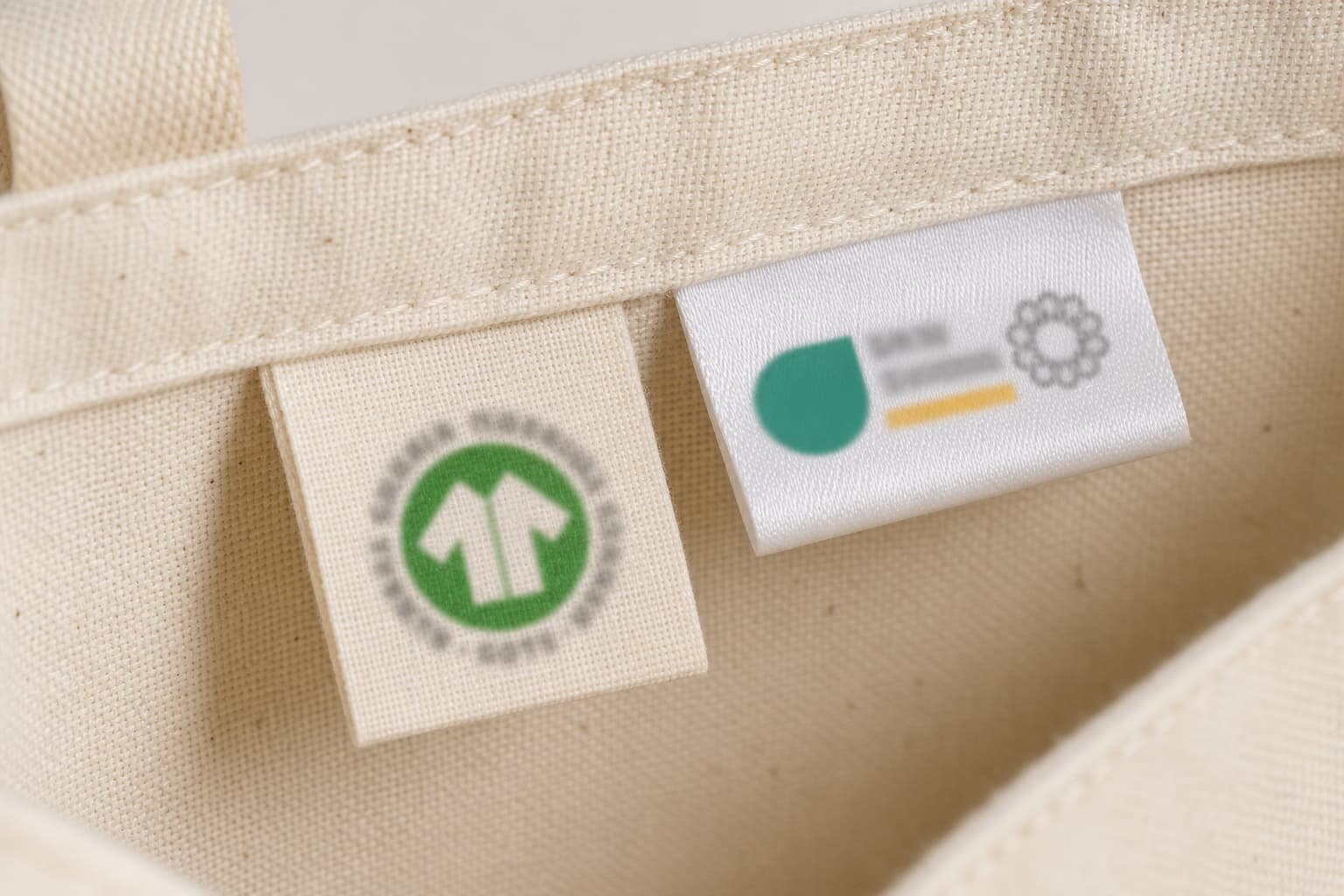
| Care label location | Side seam woven label or inner print label | Best when the buyer wants permanent care instructions without changing the front design | Verify the label stays legible after wash and does not irritate the user |
| Packaging | Flat packed with size sticker and master carton mark | Best for distributor shipments and easier warehouse counting | Confirm pack count, carton compression, and whether creasing affects print appearance |
Buyer checklist before sampling
- Confirm the exact bag size, fabric GSM, weave type, and whether the cotton is raw, bleached, or dyed.
- State the wash standard in the RFQ: water temperature, cycle type, detergent type, drying method, and number of cycles.
- Specify decoration method, ink system, curing method, and acceptable change in print sharpness after washing.
- Ask for pre-production sample photos, physical wash-tested samples, and a signed sample seal before mass production.
- Set measurement tolerances for bag body, handle length, seam allowance, and any label placement after wash.
- Request packaging details, including folding method, carton quantity, polybag use, and moisture protection for sea freight.
- Confirm MOQ by fabric color, print color count, and whether a separate wash test sample charge applies.
- Ask for the factory's lead time from artwork approval to bulk shipment, including sample and lab-test timing.
Factory quote questions to send
- What exact fabric GSM, yarn count, and weave structure will you quote for this bag?
- Which print or decoration method do you recommend for wash resistance, and why?
- What wash test standard will you use on the sample: home wash, abrasion, or both?
- How many wash cycles can the sample pass before visible fading, cracking, or seam distortion becomes unacceptable?
- Is the quoted price based on one-color print, multi-color print, embroidery, or woven label?
- What is the MOQ for the bag body, decoration color, and packaging configuration?
- What sample stages are included before bulk production, and how long does each stage take?
- How will you control shrinkage, size tolerance, and handle length after wash?
- What packing method do you recommend to reduce wrinkles, edge curl, and carton damage in transit?
- Which details can change the quote most: GSM, bag size, print area, label type, or carton pack count?
Quality-control points to confirm
- Fabric GSM matches the approved spec and is checked before cutting, not after printing.
- Wash-tested sample shows no major cracking, peeling, bleeding, or color transfer on contact fabric.
- Post-wash dimensions stay within the agreed tolerance for body width, height, and handle length.
- Seams, bar tacks, and handle attachment points do not twist, pucker, or open after wash.
- Care label remains readable and securely attached after the specified wash cycle.
- Print placement stays centered and aligned after fabric relaxation and finishing.
- Master cartons are packed to avoid compression marks, moisture damage, and crushed handles.
- Bulk lot is checked against the sealed sample for color, hand feel, print sharpness, and stitching consistency.