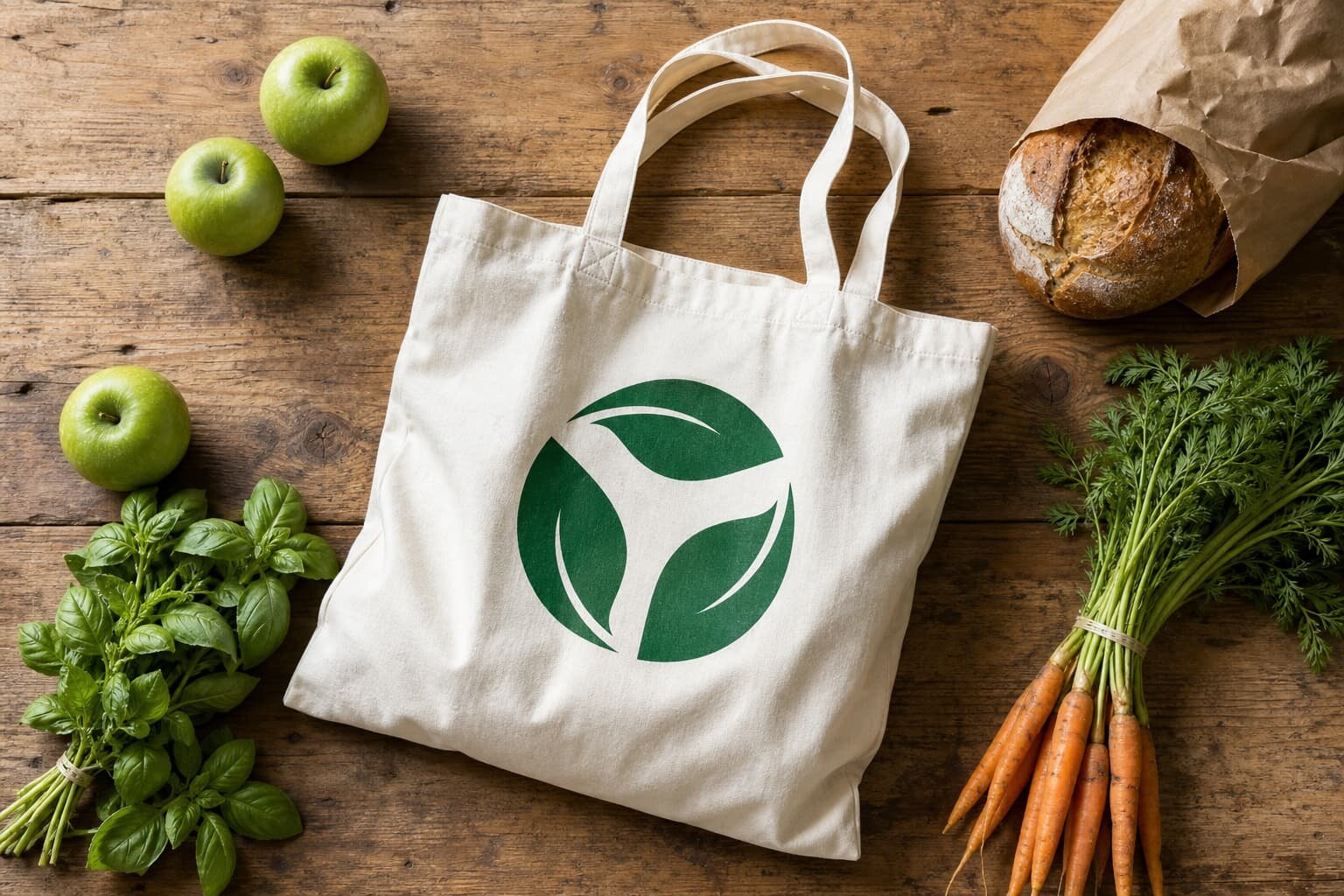
Why this checklist matters before the first quote
Most organic cotton bag problems do not start in production. They start when the buyer accepts a vague quote that only says "organic cotton tote" and assumes every supplier means the same thing. One factory may be quoting 140 GSM fabric with a simple one-color print. Another may be planning 220 GSM fabric, a different weave, and a slower sewing method. If those details are not locked, the lowest quote is usually the least comparable quote.
Vendor risk on this product is usually practical, not dramatic. The bag is simple, which makes it easy for suppliers to gloss over important details. You need to control the basics that affect cost and performance: fabric weight, shrinkage, print method, stitch quality, packing count, and realistic lead time. If the vendor cannot answer those clearly, you are not yet buying a product. You are buying a guess.
- Treat the quote as a technical document, not only a price sheet.
- Make the supplier prove the fabric, not just describe it.
- Use one approval sample and one written spec so the bulk order has a target.
Lock the bag spec before you ask for pricing
The fastest way to reduce vendor risk is to define the bag the way a factory will build it. Start with finished size, fabric weight, color, handle length, gusset depth, print area, and whether the bag must stand upright or fold flat. A retail tote that will be used every day needs a different spec than a giveaway bag that only needs to carry a catalog and a water bottle. Buyers often ask for a quote first and a spec later. That usually creates revision loops, hidden surcharges, and mismatched samples.
For most organic cotton bag programs, fabric weight is one of the first decisions that changes both price and outcome. A 140-160 GSM bag is often suitable for lightweight promotions or low-cost event use. A 180-220 GSM bag usually feels more stable for shopping and brand retail. If the bag needs premium handfeel or higher load tolerance, 240 GSM and above may be more appropriate, but the sewing cost and lead time can rise with it. The best GSM is not the heaviest GSM; it is the GSM that matches the use case without wasting margin.
- Write the spec in one page before requesting vendor pricing.
- Include fabric weight, dimensions, handle length, and print area in the RFQ.
- State the intended use so the supplier can recommend a realistic construction.
Check fabric evidence and organic traceability
A vendor saying "organic cotton" is not enough for procurement. You need to know what the claim refers to: raw fiber, yarn, fabric, or finished bag. Ask the supplier to identify the fabric source, the mill if available, the lot number, and the documentation they can actually share. If your program requires certified organic supply chain control, the factory should be able to show the paperwork trail, not just a marketing sentence in the quotation.
The buyer risk is not only compliance paperwork. Fabric inconsistency can change the entire bag outcome. Two bags that look identical in sample form may behave differently in bulk if the yarn count, weave density, or finishing step changes. Ask how the factory confirms GSM, whether they test incoming rolls, and how they keep lot numbers tied to finished cartons. A supplier that cannot separate fabric lot from finished bag lot will make traceability harder when a problem appears later.
- Ask what part of the supply chain the organic claim covers.
- Request fabric lot numbers and the method used to verify GSM.
- Confirm whether the same mill and same fabric specification will be used for bulk.
Inspect construction quality, not just the look of the sample
Organic cotton bags fail in boring ways: a handle stitch opens, a corner seam twists, the print cracks after folding, or the bag shrinks enough to miss the buyer's dimensional tolerance. That is why you need a construction review, not only a visual review. Check seam allowance, stitch density, top-stitch consistency, and handle attachment. If the bag will carry weight, ask the factory how they reinforce stress points and what load they use when checking samples internally.
The best sample in the room is not always the best production control tool. You want to know what the sample is proving. Is it only showing artwork placement, or is it also proving seam strength, bag dimensions, and packing method? Ask the vendor to identify the exact sample stage you are approving. For a tote, pay attention to whether the body is square, whether the corners sit flat, whether the handle width is even, and whether the printed area remains centered after folding.
- Check handle attachment points, bottom corners, and side seams first.
- Measure the finished bag after sample washing or steam setting if the program will face moisture or heat.
- Reject any sample that looks good visually but is unstable at seams or dimensions.
Match print method to artwork, quantity, and tolerance
Print method is a risk decision, not just a design choice. For simple logos and repeat orders, water-based screen print is often the most practical option because it is efficient and handles flat artwork well. It also forces the vendor to think about screen setup, cure process, and print registration. If your artwork has fine type, multiple colors, or tight alignment, you need to ask whether the factory can hold registration across the full run without smudging or color shift.
The more complex the decoration, the more the quote needs to break out setup and risk. Some suppliers will push a cheaper method because it looks easy on paper, then charge back later for touch-ups or reject too many units at final inspection. Ask how many colors are included, whether the price changes by print area, and what the reprint policy is if the first pass is off. For organic cotton bags, you also want to know whether the ink and cure method affect the fabric handfeel, because a stiff print can change retail acceptance even if the logo is technically correct.
- Use screen print for simple, stable graphics and higher repeat volume.
- Ask for print registration tolerance and curing method in writing.
- Confirm whether extra colors, oversized prints, or back-side prints create separate setup charges.
Treat MOQ and lead time as linked variables
MOQ only makes sense when you know what it is tied to. On organic cotton bags, MOQ can change with fabric color, print colors, label type, and packing style. A factory may offer a low MOQ for a plain bag but require a higher MOQ once you add a custom print, woven label, or retail polybag. If the supplier gives you one blanket MOQ for everything, ask them to split it by spec line. That is the only way to compare vendors fairly.
Lead time should also be separated into stages. A useful quote should distinguish sample lead time, fabric sourcing time, production time, and packing time. If the supplier is sourcing custom fabric or waiting on print approval, the schedule can stretch. Ask what causes the biggest delay in their own workflow: fabric availability, screen preparation, sewing capacity, or final packing. For planning, many buyers find it safer to ask for separate dates for sample approval, bulk start, and ready-for-shipment, rather than accepting one vague delivery promise.
- Request MOQ by size, color, artwork, and packaging.
- Ask for separate timing for samples, production, and packing.
- Do not compare a low-MOQ quote with a high-volume quote as if they are the same order.
Use samples to verify the bulk order, not to admire it
A sample should answer a list of technical questions. Does the bag match the approved dimensions? Does the fabric weight feel consistent with the target GSM? Is the print centered, sharp, and properly cured? Does the bag fold and pack the same way every time? If the answer to any of those is unclear, ask for a new sample stage rather than assuming bulk will fix itself. The most expensive mistake is treating a pretty sample as proof of production control.
Ask the vendor to label the sample stage clearly. Reference sample, pre-production sample, and first bulk sample are not interchangeable. The pre-production sample should represent the exact material, print method, trim, and packing that will go into bulk. If the factory sends a sample made from different fabric or with a temporary label, note that in the approval record so the team does not approve the wrong thing. For high-risk programs, ask for photos of the sample laid flat with measurement marks and close-ups of print and stitching details.
- Approve only the sample stage that matches the real bulk materials.
- Check flat measurements, not only handfeel.
- Require close-up photos of seams, print edges, and labels before bulk signoff.
Review packing, labeling, and shipping readiness
Packing is a common place where organic cotton bag orders lose quality. A bag that leaves sewing in good condition can still arrive creased, marked, or short counted if folding and carton control are weak. Ask for the exact fold direction, inner pack quantity, polybag use or no polybag use, carton size, and whether the cartons will have moisture protection. If the bags are going to retail, the label location and carton marks matter as much as the bag itself because your warehouse team will judge the shipment on how easy it is to receive and unpack.
Do not assume the vendor's standard packing is acceptable for your channel. E-commerce, wholesale, and retail distribution all have different needs. A bulk shipment to a warehouse may prefer flat-folded bags with clear carton marks and no extra retail packaging. A branded retail line may need individual inserts, barcodes, hangtags, or side labels placed in a fixed position. Ask the supplier to quote these options separately so you can see what packaging changes the landed cost and what changes the handling risk.
- Confirm fold method and inner pack count before approval.
- Ask whether the cartons are designed for long transit and warehouse stacking.
- Verify label placement, barcode placement, and carton marks on the packing sheet.
Read the quote like a cost sheet, not a headline number
The unit price can hide a lot. One factory may include screens, labels, and carton marks. Another may quote only sewing and fabric, then add the rest later. When you compare quotes, separate the cost buckets so you can see where the money is going: fabric, printing, sewing, labels, packaging, testing, and export handling. If the quote does not specify the Incoterm, ask whether it is EXW, FOB, or another basis, because shipping responsibility changes the real landed cost.
You should also watch for price changes across quantity breaks. A good quote should tell you what happens at 1,000 units, 3,000 units, and 5,000 units, or whatever tiers fit your program. That lets you see where setup cost gets absorbed and where the unit price actually becomes efficient. If the vendor refuses to separate the tiers, it becomes harder to know whether the price is truly competitive or just averaged to look good. The same logic applies to extras: ask what changes if the artwork gains a second color, if the bag is packed individually, or if you need a woven side label instead of a printed neck mark.
- Break the quote into fabric, print, sewing, label, packing, and export handling.
- Compare prices at the same quantity break and same Incoterm.
- Ask for every add-on cost before you approve the sample.
Use a vendor scorecard before you release the PO
Before you place the order, score the vendor on a few practical risk questions. Can they explain the fabric? Can they repeat the spec without confusion? Did they quote the same sample stage you approved? Did they separate MOQ and lead time by option? Can they tell you what happens if there is a print error or a sewing defect? The goal is not to create paperwork for its own sake. The goal is to force the supplier to show whether they understand the order or only know how to quote it.
A simple go or no-go review keeps the buyer team from signing off too early. If the vendor cannot provide a spec sheet, quote detail, sample stage, and packing method that all match each other, the risk sits with procurement, not the factory. If they can provide those things clearly, you have a much better chance of getting repeatable bulk quality and fewer unpleasant surprises on arrival. Use the checklist as a gate, not as a nice-to-have reference.
- Go only when the sample, quote, and packing sheet all match.
- Stop if the vendor cannot explain fabric source or print method.
- Hold the PO until the approval record is complete and readable.
Specification comparison for buyers
| Spec decision | Recommended option | When it fits | Buyer risk to check |
|---|---|---|---|
| Fabric weight | 140-160 GSM organic cotton | Light promo totes, event bags, low-cost campaigns | Bag can feel thin, distort under load, and show print strike-through |
| Fabric weight | 180-220 GSM organic cotton | Retail tote programs, daily shopping use, brand merch | Check shrinkage, seam strength, and whether the finished handfeel still matches the sample |
| Print method | Water-based screen print for 1-3 colors | Simple logos, repeat runs, and stable artwork | Confirm cure temperature, print registration, and rub or wash fastness |
| Handle construction | Self-fabric handles with reinforced cross-stitch | Most standard totes and midweight bags | Verify handle length, stitch density, and whether the load test matches the intended use |
| Packing format | Flat fold with carton insert and clear carton marks | Export orders, warehouse handling, and retail distribution | Check folding consistency, carton count, moisture protection, and label placement |
Buyer checklist before sampling
- Confirm the exact bag spec: size, GSM, fabric color, handle length, gusset, seam allowance, print area, and packing method.
- Ask for fabric proof: yarn or fabric source, GSM test method, lot traceability, and any organic claim documents the factory can actually provide.
- Match print method to artwork complexity, color count, and order volume before you compare unit prices.
- Request sample stages separately: reference sample, pre-production sample, and first bulk sample with measurement checks.
- Get MOQ, lead time, and surcharge logic in writing for each size, color, print method, and packing option.
- Review packing spec: folding direction, inner pack count, polybag use, carton dimensions, gross weight, and carton marks.
- Ask for hidden cost items: screens, plates, embroidery setup, labeling, testing, and special packing.
- Check whether the factory has a clear defect handling rule for print misregistration, stitching skips, stains, and count shortages.
- Compare at least two quotes using the same tech pack and the same acceptance criteria.
- Do not release a PO until the approved sample, quote, and packing sheet all match.
Factory quote questions to send
- What exact GSM, weave, and finished fabric width are you quoting for the bag?
- Can you separate MOQ and unit price by size, color, print method, and packing format?
- What is included in the quote: screens, setup, labels, hangtags, polybags, carton marks, and export carton size?
- How many sample stages do you provide, and which sample is the one you use for bulk approval?
- What is your standard lead time for fabric sourcing, sampling, production, and packing, and what can extend it?
- Which print method do you recommend for this artwork, and what are the registration or curing risks?
- How do you control shrinkage, seam strength, and measurement tolerance before bulk packing?
- What is your accepted tolerance for GSM, dimensions, print placement, and carton count?
- Can you provide lot traceability for the fabric and finished goods packing record for each shipment?
- What is your policy if the bulk shipment does not match the approved sample or agreed spec?
Quality-control points to confirm
- Measure finished bag width, height, gusset, handle length, and placement against the approved spec and allow only pre-agreed tolerance.
- Check fabric GSM on the quoted base material, not only on the sample bag handfeel.
- Inspect seams, corner stitches, bar tacks, and handle attachment points for skipped stitches, loose thread, or needle damage.
- Review print registration, edge sharpness, color consistency, and ink cure on the actual production lot.
- Test the bag under realistic load for handle pull, seam stretch, and body distortion.
- Verify folding method, carton count, and whether the packed bags recover without permanent creasing or visible marks.
- Confirm that labels, side tabs, and care tags are placed exactly where the buyer approved.
- Check for odor, stains, oil marks, yarn slubs, and fabric contamination before cartons are sealed.