Start With the Unit-Cost Map
An organic cotton bag unit price is never just one number. It is a bundle of fabric, cutting, sewing, printing, thread, labels, packing, factory overhead, and scrap allowance. If a supplier gives you only a finished price, you cannot tell whether the quote is efficient or simply vague. The first job in any RFQ is to force the factory to show the cost logic behind the number.
This matters even more when you are comparing suppliers. Two factories can quote the same-looking bag and still be pricing different assumptions about fabric loss, handle construction, print setup, or carton packing. The quote should be tied to one exact specification, one artwork version, and one packing plan. If the spec moves, the price should move with it. That is how you avoid surprise cost creep later in sampling or bulk.
- Ask for a line split that shows fabric, sewing, print, packing, and any setup charge.
- Confirm whether the quote includes labels, hangtags, barcode stickers, and carton marking.
- Check whether the price is based on EXW, FOB, or another Incoterm before comparing vendors.
Fabric Weight and Construction Set the Floor
For organic cotton bags, GSM is usually the biggest cost driver before branding starts. A lighter fabric around 140 to 160 GSM can work for promotional giveaways or low-load use, but it will feel softer, crease more, and may show light color through the weave. A more common retail choice is around 180 GSM because it balances price, print stability, and daily carry performance. Once you move above that, you are paying for more yarn, more fabric weight, and often more sewing time.
Construction matters just as much as GSM. A wider bag body uses more fabric. A gusset adds cutting steps and seam work. Reinforced handles, bar tacks, and cross-stitches take time at the sewing line, but they also reduce complaints about tearing. A buyer who asks only for size and logo but ignores stitch detail is usually comparing incomplete quotes. If the factory does not state the finished GSM, seam allowance, and handle build, the unit cost is not reliable.
- Confirm finished GSM after any washing or finishing process, not just the raw fabric target.
- Ask whether the bag uses self-fabric handles, webbing, or folded handles, because each changes labor and yield.
- State whether the bag has a gusset, bottom seam, or side seam reinforcement, since those details affect both cost and strength.
Print Method Can Move Cost More Than Buyers Expect
Printing is where a simple bag can become a complex quote. For most organic cotton bags, single or two-color screen printing is still the most cost-efficient method at scale because the setup cost is spread across more pieces. The downside is that each extra color adds screens, setup time, and registration risk. If the design is large, dense, or needs full-color detail, the factory may switch to another method, but that does not automatically mean a better unit cost. It may mean a higher per-piece charge and more quality control risk.
Buyers should also think about how the print sits on the fabric. A logo that looks fine on a flat digital proof can become too heavy on a light bag, bleed through the reverse side, or crack if the curing is weak. Screen print, heat transfer, embroidery, and woven patches all have different cost logic. If the artwork is simple, screen print often wins. If the order is small and the design is complex, another method may be practical, but the quote should show why.
- Ask for print setup cost by color, not just one blended printing fee.
- Confirm print size in centimeters, print position, and whether one side or both sides are included.
- Request the factory's maximum acceptable ink coverage so the bag does not become stiff or show through.
MOQ Logic: Why a Low Minimum Can Still Be Expensive
MOQ is not just a sales number. It reflects the factory's material purchase, cutting yield, printing setup, and sewing line efficiency. If you ask for a very low quantity, the supplier may still quote you, but the unit price rises because the setup cost is spread over fewer bags. In some cases, the factory may also rely on stock fabric or partial material substitution to hit your minimum, which can change color tone or texture.
You should also expect MOQ to shift with spec complexity. A plain natural bag with one small print may have a lower threshold than the same bag with a woven label, multiple print colors, or special packing. Bag size matters too, because nesting and fabric width decide how much waste is created at cutting. The right question is not just what the MOQ is, but what MOQ applies to this exact spec and what happens if you change one variable.
- Ask for MOQ by size, fabric weight, print method, and packing format.
- Check whether the quote assumes stock fabric or newly produced fabric.
- Ask for the surcharge if you want a trial run below the normal MOQ.
Samples, Swatches, and the Real Cost of Getting It Right
Sampling is part of cost control, not a courtesy item. A clean pre-production sample tells you whether the factory understood the spec, whether the print sits correctly, and whether the sewing line can actually build the bag the way you expect. A sample made from a similar blank bag is useful for visual review, but it does not prove that the final production setup is correct. For a real unit-cost decision, you need to know whether the sample includes the actual fabric, the final print method, and the final label or packing plan.
The most expensive mistake is approving a sample on the wrong basis. If the sample is shorter, lighter, or differently packed than the bulk order, the unit price may look attractive and then change after production starts. Buyers should check dimensions, handle length, stitch quality, label placement, print alignment, and the folding method. If any of those points are unclear in the sample stage, the factory will likely ask for a correction later, and that correction often costs more than the original sample.
- Approve against a written spec sheet, not only against a photo or chat message.
- Keep one sealed reference sample so bulk inspection has a clear benchmark.
- State which changes require a new sample approval, especially size, fabric, print, and packing.
Packing and Carton Math Affect Landed Cost
Packing can add more to your landed cost than many buyers expect. A bag that is bulk folded and carton packed is cheaper to process than one that needs individual polybagging, a belly band, a barcode label, or a retail insert card. Each extra step takes labor and materials. Even when the bag itself is simple, the packing spec can turn a clean unit price into a messy one if it is not written clearly in the RFQ.
Carton planning matters because carton count and carton size affect warehouse handling and freight efficiency. A carton that is too loose wastes space and can crease the product. A carton that is too tight increases labor and can damage seams or print. If you want an eco-friendly pack, say so, but still define how the product is protected in transit. The factory should tell you whether packing labor, labels, and carton print are included in the price.
- Specify inner pack count, master carton count, and whether the bag is folded flat or tucked.
- Confirm if any retail-ready insert, hangtag, or barcode sticker is part of the quote.
- Ask for carton dimensions so you can estimate warehouse fit and freight efficiency.
Lead Time Is Part of Cost
A quote that looks good on paper can become expensive if the lead time is too tight. Organic cotton bag production depends on fabric availability, cutting schedule, print queue, sewing capacity, and packing material readiness. If the fabric is already in stock, the factory can move faster. If it must be woven, finished, or booked into a full sewing line, the schedule stretches. Buyers should ask which step is the bottleneck before assuming the quoted lead time is realistic.
Rush orders usually create hidden cost through overtime, split lots, material substitution, or air shipment of urgent components. The factory may not call it a rush premium, but the effect shows up in the unit price. A good RFQ states the required ship date, the approval date, and what starts the production clock. That makes it easier to compare two quotes that promise the same delivery month but rely on very different assumptions.
- Ask for lead time from artwork approval and from sample approval, because they are not the same.
- Check whether the factory has quoted normal production or a priority schedule.
- Confirm what happens if you change artwork after sample approval, since that can reset the clock.
How to Compare Quotes Line by Line
The cleanest way to compare suppliers is to normalize every quote into the same spec. Start with the same size, same GSM, same print method, same handle construction, same packing, and same delivery term. Then compare the numbers line by line. If one factory quotes a lower unit price but excludes labels, carton packing, or print setup, that quote is not actually cheaper. It is just less complete.
A useful quote comparison sheet should separate the base bag from optional extras. This helps you see whether one supplier is better on fabric cost, another is better on sewing efficiency, and a third is hiding setup fees in a blended line. For procurement teams, the real goal is not to find the lowest number on the page. It is to find the lowest total cost for the exact item you can approve, receive, and reorder without rework.
- Compare quotation date, validity period, payment terms, and Incoterms before judging price.
- Separate optional items such as woven labels, individual packing, or extra print positions.
- Ask each supplier to quote the same quantity tiers so volume breaks are visible.
The RFQ Data That Prevents Costly Surprises
Most quote mistakes start with incomplete RFQs. A buyer may send a size, a logo, and a target quantity, but leave out the fabric weight, seam standard, packing method, or label position. The factory then makes assumptions, and those assumptions become the reason a quote changes later. If you want a reliable unit-cost breakdown, send a tech pack that reads like a production instruction, not a marketing brief.
The most useful RFQ data is practical. Include final dimensions with tolerances, GSM, color reference, artwork file type, print positions, handle length, packing count, and the quantity ladder you want priced. Also state what the factory must flag back if it is missing. That one habit cuts down on surprises, shortens sampling, and makes the quote truly comparable between suppliers.
- Include dimension tolerances, print placement, and carton count in the RFQ.
- Tell the supplier to flag any assumption before quoting, especially around GSM and packing.
- Require a revised quote if any part of the spec changes after the initial response.
Build a Costing Template You Can Reuse
For repeat programs, the best control is a reusable costing template. Save the exact spec, approved sample photo, artwork version, packing method, and supplier quote structure in one sheet. That makes it much easier to spot whether a later quote is truly the same item or just a similar one. It also helps when a brand owner asks why one factory can match a lower cost and another cannot. The answer is usually in the details, not the headline number.
A good template should also protect you on reorder. Keep the last approved GSM, seam details, print count, label spec, and carton count on record. If the supplier changes a material or process, the difference should be visible immediately. For procurement teams, this is where unit-cost breakdown becomes a sourcing tool rather than a one-time exercise. The longer the program runs, the more valuable that baseline becomes.
- Track base bag cost, setup cost, sample cost, packing cost, and freight terms in one sheet.
- Store the approved artwork file name and revision date so old files do not re-enter production.
- Use the same costing template for new suppliers so quote comparison stays consistent.
Specification comparison for buyers
| Spec decision | Recommended option | When it fits | Buyer risk to check |
|---|---|---|---|
| Fabric weight | 180 GSM organic cotton for most retail and distributor programs | When you need a bag that feels substantial, prints cleanly, and handles daily carry | Check whether the quote uses finished GSM and whether shrinkage is already allowed for |
| Print method | 1 to 2 color screen print for repeat bulk orders | When the logo is simple and the order volume justifies setup | Check screen count, registration tolerance, and whether setup is included in the unit price |
| Handle build | Self-fabric handles with cross-stitch or bar tack reinforcement | When the bag is meant for regular use and moderate loads | Check handle length, stitch density, and whether pull strength was tested on the actual spec |
| Packing format | Bulk folded in master cartons with a fixed carton count | When the shipment is for wholesale, distribution, or warehouse handling | Check crease level, carton size, and whether packing labor is included |
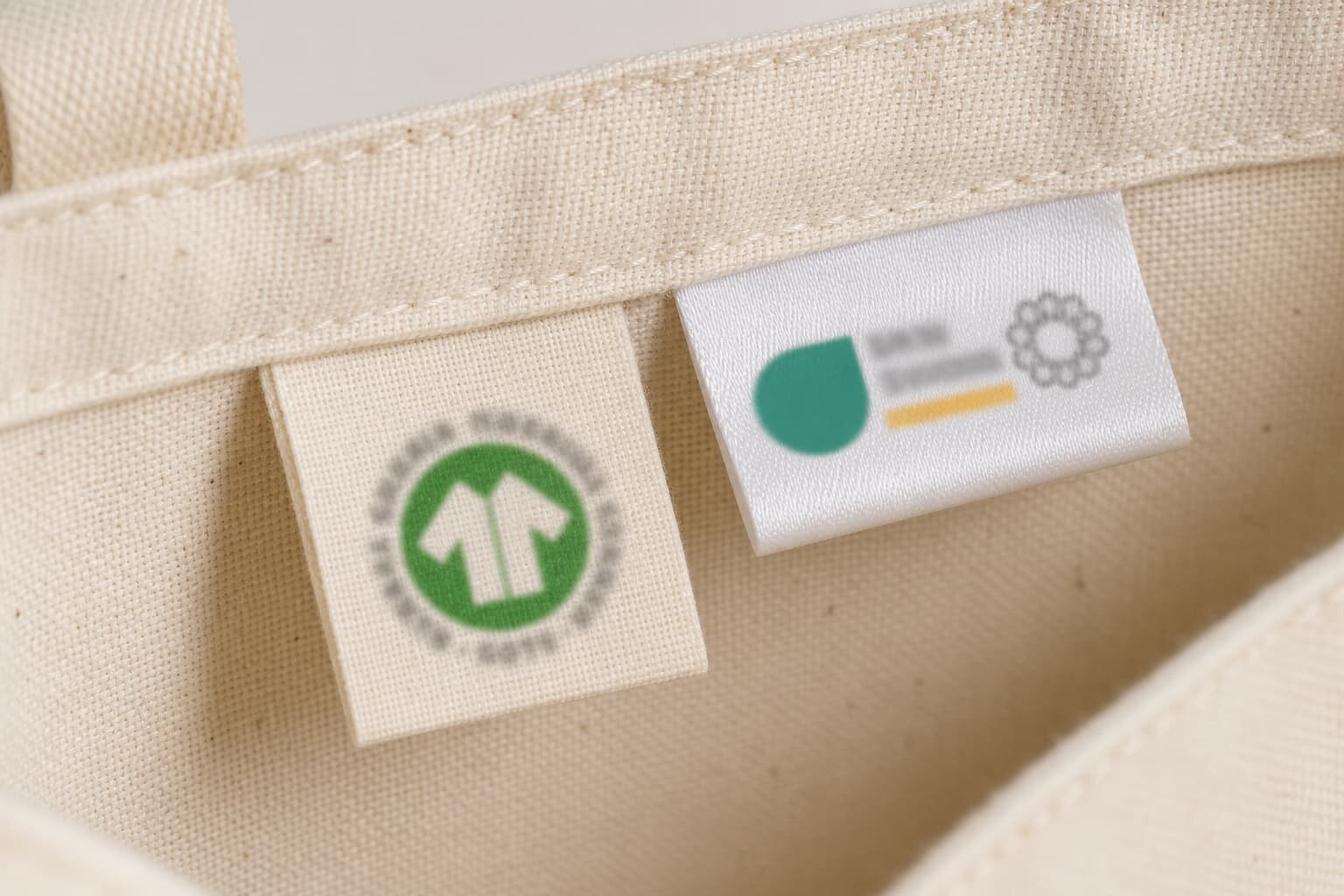
| Labeling | Sewn woven side label or clean inside label | When brand identity and reorder consistency matter | Check placement, spelling, attachment stage, and whether the label is in the quoted cost |
Buyer checklist before sampling
- Lock the final bag size, handle length, gusset, and seam construction before asking for quotes.
- State the fabric GSM after finishing, not just the target yarn or greige weight.
- Specify the print method, print area in centimeters, color count, and whether both sides are printed.
- Ask the factory to split the quote into fabric, sewing, print, packing, and any setup charges.
- Confirm the MOQ for the exact spec, not the factory's generic bag MOQ.
- Request a pre-production sample or sealed reference sample before bulk cutting starts.
- Define the packing method, carton count, barcode label needs, and any retail-ready requirements.
- Ask for lead time from artwork approval and from sample approval, because they are often different.
Factory quote questions to send
- What exactly is included in the unit price, and what is excluded?
- What finished GSM, bag size, handle construction, and seam allowance are you quoting against?
- How many print colors, print positions, and setup steps are included?
- What is the MOQ for this exact spec, and does it change if we adjust the print or packing?
- Is the sample cost separate, and will it be credited against bulk if we proceed?
- What packing method is included, and how many pieces per inner or master carton are quoted?
- What is the production lead time from artwork approval and from sample approval?
- Are there any material substitutions, fabric loss assumptions, or hidden process steps in this quote?
- What price breaks apply at different quantity tiers?
- If we change size, GSM, or print coverage after approval, what triggers a re-quote?
Quality-control points to confirm
- Check finished dimensions against the approved spec sheet and allow only the agreed tolerance.
- Verify fabric GSM, weave consistency, and hand feel on random pieces from the bulk lot.
- Inspect print alignment, ink coverage, curing, and color consistency on both sides if applicable.
- Pull-test handles and inspect reinforcement stitching at the stress points and top seam.
- Confirm label placement, spelling, orientation, and attachment quality before packing.
- Look for frayed edges, loose threads, seam skip, and needle damage around gussets and corners.
- Check folding method, carton count, and carton strength against the approved packing plan.
- Compare the first bulk pieces to the approved sample and stop shipment if the bulk deviates.