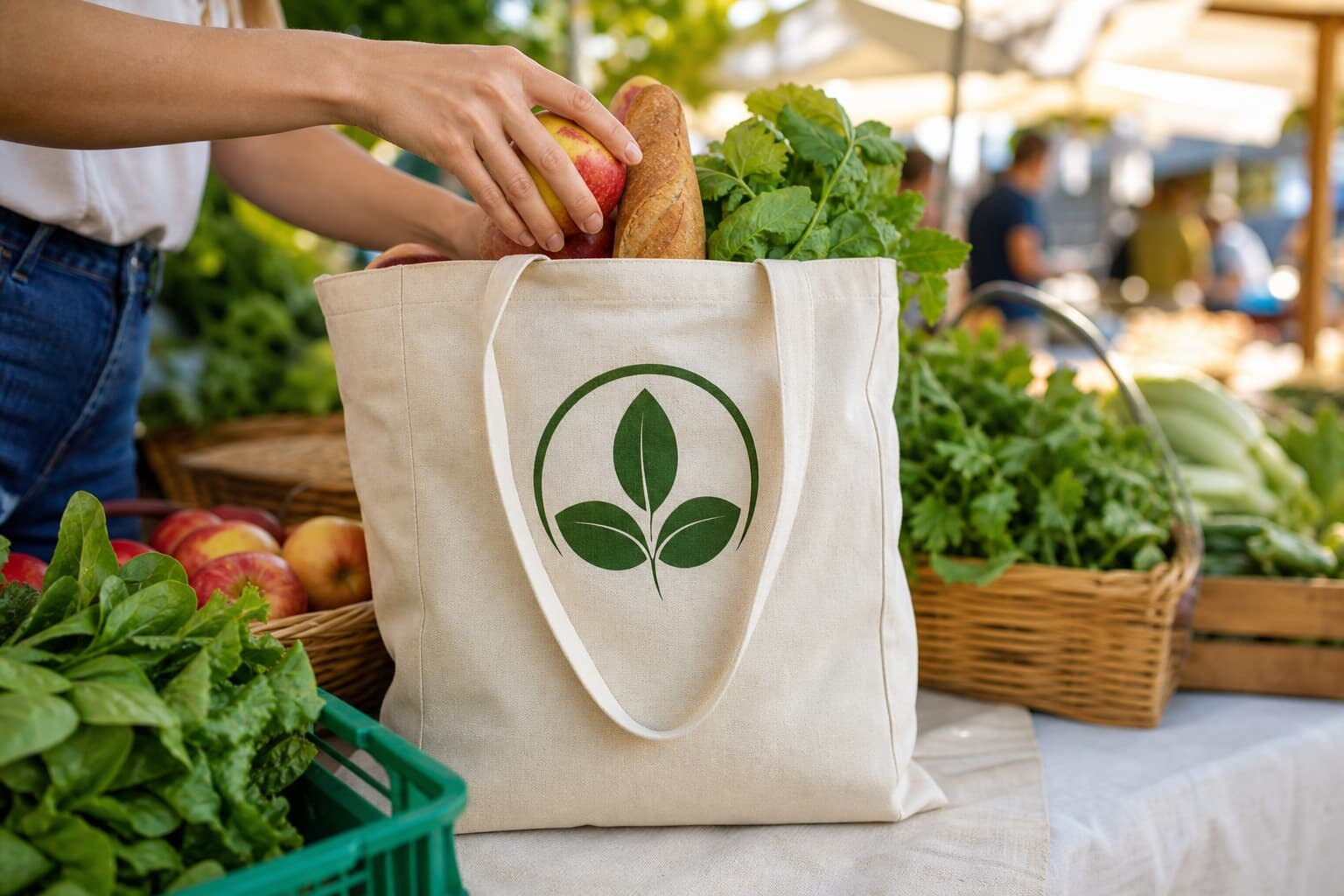
Why undyed organic cotton needs a tighter RFQ
An undyed organic cotton bag looks like an easy item until the buyer receives three supplier quotes that are not really comparable. One factory may quote 5 oz natural cotton, another may quote 8 oz organic canvas, and a third may price a greige fabric that has not been finished for stable sewing. The photos may all look similar, but the cost, performance, document trail, and production risk are different.
The main buying problem is that undyed fabric removes the color approval step but adds other controls. Natural shade variation, cotton seed flecks, shrinkage, print absorption, and certification scope all need to be defined before price comparison. If the RFQ only says organic cotton tote bag, suppliers will fill the gaps based on their cheapest available fabric.
- Use this guide when the bag will be sold as organic, included in a branded retail program, or used as a premium reusable packaging item.
- Do not treat natural cotton color as a fixed Pantone color; it is a material appearance with a tolerance range.
- Ask for construction and finishing details early, because later changes can affect MOQ, cutting yield, and sample timing.
Define the fabric before discussing price
For organic cotton bags, the fabric line item normally controls most of the unit cost. Buyers should specify fabric weight in GSM or ounces, weave type, finishing, and acceptable tolerance. A 140 GSM light cotton bag and a 340 GSM canvas tote can both be described as natural organic cotton, but they serve different markets and should not be compared as equal quotes.
Undyed does not always mean unprocessed. Fabric can be greige, scoured, washed, calendared, enzyme finished, or pre-shrunk without being dyed. Each finishing route changes hand feel, print quality, shrinkage, and surface appearance. For export retail goods, completely raw greige fabric can feel too harsh, shed lint, or shrink more than expected.
- Lightweight flat tote: about 120 to 180 GSM, often used for events, mailers, and low-cost promotional use.
- Standard reusable tote: about 180 to 260 GSM, suitable for brand packaging, bookstores, and light shopping.
- Heavy canvas tote: about 280 to 420 GSM, used for premium retail bags, grocery bags, and long-life merchandise.
- Common tolerance: plus or minus 5 percent is more realistic than expecting exact GSM on every fabric roll.
- Ask whether the quoted fabric width creates cutting waste for your bag size; poor yield can increase cost.
Natural shade is a tolerance, not a color code
Undyed organic cotton usually has a warm natural tone, but the exact shade depends on cotton origin, yarn lot, fabric preparation, moisture level, and finishing. Some lots look creamy, some more beige, and some contain more visible cotton specks. If the brand expects a clean ivory surface, the RFQ must say so. If seed flecks are acceptable as part of the natural look, that should also be written.
The practical approach is to approve a shade range using physical swatches or approved sample bags. A single photo is not enough because phone cameras and studio lighting hide real variation. For bulk production, the factory should keep cut panels from the same fabric lot together when possible, especially if the bag has front and back panels that will be visually compared side by side.
- Acceptable: small cotton flecks, mild slub texture, and natural shade difference within approved swatches.
- Not acceptable unless approved: dark oil marks, large black seed clusters, yellow storage stains, mildew spots, or panel-to-panel mismatch.
- For retail packs, ask the factory to avoid mixing very different shade lots in one carton.
- If the buyer needs a cleaner look, request unbleached but scoured fabric and approve the surface before printing.
Choose GSM by use, not by photo
Photos do not show fabric weight accurately. A 6 oz tote can look strong in a flat image but feel thin when loaded with catalogues or groceries. A 12 oz canvas bag can look premium but may be too stiff for folding into a mailer or too expensive for a giveaway. The buyer should connect GSM to the bag use, expected load, retail price point, and packing method.
When comparing quotes, check whether the weight is stated as fabric before cutting, finished fabric after washing, or only an approximate marketing description. Some suppliers quote in ounces per square yard, others in GSM. Convert and confirm so that the procurement team is not comparing a 6 oz fabric against a 10 oz fabric while assuming both are standard canvas.
- 5 oz to 6 oz: low-cost promotional bags, light documents, short-term campaigns, lower freight weight.
- 7 oz to 8 oz: better hand feel, still foldable, suitable for many brand packaging programs.
- 10 oz to 12 oz: stronger structure, better perceived value, higher material and sewing cost.
- 14 oz and above: premium canvas, higher needle and machine requirements, longer sewing time, heavier cartons.
- For wide gusset bags, increase GSM or reinforce stress points because the bag will be used for heavier contents.
Match print method to undyed fabric behavior
Undyed cotton is not a neutral white print base. The natural surface color changes how ink appears, and fabric hairiness can soften logo edges. Water-based screen printing is usually the safest choice for simple logos because it keeps a soft hand feel and fits the natural product positioning. However, very fine lines, small reversed text, and pale ink colors may lose contrast on beige fabric.
Digital pigment printing can work for lower MOQ or multicolor artwork, but buyers should test color density and rubbing resistance on the actual fabric. Heat transfers may give sharper artwork, but they can look less natural and may not suit a sustainability-driven product story. For premium minimalist branding, a woven side label or cotton label can reduce print risk and make shade variation less obvious.
- One or two solid colors: water-based screen print is usually economical and stable.
- Detailed artwork or many colors: request digital pigment sample on the final fabric weight.
- Small logo near seam or gusset: check placement tolerance because sewing can shift natural canvas.
- Large front print: confirm fabric is cut and printed before sewing, and request panel alignment checks.
- Low-contrast natural ink: approve under the buyer's real retail lighting, not only factory office light.
Construction details that affect function
A bag made from good organic cotton fabric can still fail if the sewing construction is weak. Buyers should define finished size, gusset, handle width, handle drop, seam type, stitch density, and reinforcement method. For a shopping tote, handle comfort and attachment strength are often more important than a small difference in fabric GSM.
Undyed bags also show workmanship problems clearly. Crooked seams, uneven top hems, dirty thread, and puckering stand out on a plain natural surface. If the bag will be sold in retail, specify appearance criteria as well as strength. A low-cost promotional bag may allow more slub and stitch variation, but a premium brand tote should have tighter acceptance standards.
- Top hem: folded and stitched evenly, with no exposed raw edge unless intentionally designed.
- Side and bottom seams: lockstitch or overlock plus safety stitch depending on fabric weight and target strength.
- Handle reinforcement: cross stitch, box stitch, or bar tack depending on load requirement and visual style.
- Handle drop: define measured distance from bag top edge to handle apex when laid flat.
- Thread: cotton-look or polyester thread should be approved for shade, strength, and shrinkage behavior.
MOQ logic for undyed organic cotton bags
MOQ is not only a factory sales rule. It is linked to fabric availability, certification document handling, cutting efficiency, print setup, and sewing line planning. If the supplier has suitable undyed organic cotton fabric in stock, MOQ may be lower. If the buyer requires a special GSM, width, weave, or certified chain-of-custody route, MOQ can increase because the fabric mill must run a separate lot.
Buyers should separate sample MOQ, production MOQ, print MOQ, and certification-related MOQ in the RFQ. This prevents a common misunderstanding where a factory agrees to make 500 bags but later explains that the organic fabric mill requires more fabric than the bag order consumes. The extra fabric cost must either be absorbed, stored for repeat orders, or built into the unit price.
- Low MOQ is more realistic when using factory-stock natural organic cotton fabric and a simple one-color print.
- Higher MOQ is likely when requesting special GSM, exact fabric width, custom woven label, or documented organic chain for finished goods.
- Screen print setup may make very small runs expensive even when sewing MOQ is flexible.
- Ask whether leftover fabric can be held for repeat orders and whether shade matching is possible later.
- For distributors, consider a base undyed bag with variable printed logos to improve order efficiency.
Sampling sequence that prevents bulk disputes
The first sample should prove size, construction, handle comfort, print position, and fabric direction. It does not always prove bulk shade, because sample fabric may come from stock while production fabric comes from a new lot. The buyer should ask the factory to identify whether the sample is made from available stock, nominated bulk fabric, or a substitute for structure approval only.
Before bulk cutting, request a pre-production sample or at least a fabric-and-print approval set from the actual production material. For undyed fabric, this step is important because the same artwork can look sharper or duller depending on fabric surface. If the buyer skips this check, disputes about print color, natural shade, or shrinkage become difficult to resolve after thousands of panels are already cut.
- Prototype sample: confirms dimensions, stitching route, handle length, and general appearance.
- Fabric swatch approval: confirms GSM, weave, natural shade range, surface hairiness, and hand feel.
- Print strike-off: confirms ink color, edge sharpness, opacity, curing, and rubbing performance.
- Pre-production sample: confirms all approved details using bulk materials before mass cutting.
- Shipping sample or top-of-production sample: confirms bulk line output after sewing begins.
Packing and storage risks for natural fabric
Undyed cotton bags show dirt faster than dyed black, navy, or printed full-coverage bags. Packing must protect against dust, moisture, carton abrasion, and warehouse handling marks. If bags are pressed too tightly, heavy canvas can develop fold lines. If they are packed while moisture is high, natural fabric can yellow or develop odor during long sea transit.
The RFQ should state whether bags are bulk packed, bundled, individually polybagged, kraft wrapped, or retail packed with hangtags. Buyers with sustainability goals may prefer plastic-free packing, but export handling still needs moisture control. A compromise is counted bundles inside a clean master polybag or recyclable inner liner, depending on the buyer's compliance rules.
- Require clean sewing tables and final packing tables for undyed fabric orders.
- Set maximum carton weight so heavy canvas bags do not crush lower cartons or create warehouse handling issues.
- Use inner protection if cartons may be exposed to humidity, dust, or mixed cargo.
- Ask for carton dimensions and gross weight before booking freight.
- For retail distribution, confirm barcode label position, hangtag attachment, and folding method at sample stage.
Lead time and quote data buyers should compare
A useful quote should separate the time needed for sample making, fabric preparation, printing, sewing, inspection, packing, and export handover. Undyed does not automatically mean faster. Organic fabric availability, document checks, and print strike-off approval can add time. If the buyer has a launch date, approve the critical path instead of only asking for the final shipment date.
When comparing supplier quotes, do not focus only on unit price. A lower price may exclude certification documents, print setup, carton marking, testing, retail packing, or pre-shipment inspection support. Ask each factory to quote against the same specification sheet and to list exclusions clearly. This makes negotiation cleaner and reduces surprise charges after purchase order release.
- Quote should include fabric GSM, weave, finish, bag size, handle size, print area, print colors, packing, carton quantity, and estimated CBM.
- Ask for sample lead time separately from bulk lead time.
- Confirm whether lead time starts after deposit, artwork approval, fabric approval, or pre-production sample approval.
- Request a line item for optional testing if the buyer needs colorfastness, load testing, fiber content, or restricted substance checks.
- Compare carton quantity and CBM because freight can change the real landed cost.
Specification comparison for buyers
| Spec decision | Recommended option | When it fits | Buyer risk to check |
|---|---|---|---|
| Fabric weight | 5 oz to 8 oz for lightweight retail totes; 10 oz to 12 oz for premium reusable bags | 5 oz works for giveaways and foldable bags; 10 oz+ works for grocery, bookstore, and brand merchandise programs | Ask whether the quoted GSM is before washing, after finishing, or theoretical yarn weight; tolerance should be stated |
| Fabric color | Undyed natural cotton, unbleached if required, with approved shade range | Best for low-impact positioning, natural retail look, and brands avoiding optical brighteners | Natural shade varies by cotton lot; approve a range, not one perfect lab dip |
| Weave construction | Plain weave canvas for most totes; twill only when a softer drape is desired | Plain weave gives stable print and square bag shape; twill feels softer but can skew more visibly | Check bowing, skew, and seam twisting after sewing or washing |
| Print method | Water-based screen print for simple logos; pigment digital print for lower MOQ multicolor artwork | Screen print is economical for one to three solid colors; digital helps when artwork changes often | Undyed fabric absorbs ink unevenly if surface hairiness is high; request print strike-off on bulk fabric |
| Handle material | Same organic cotton fabric or organic cotton webbing, matched by GSM and width | Fabric handles fit natural tote styles; webbing improves strength and production consistency | Handle shade may not match bag body if made from another fabric lot |
| Shrinkage control | Pre-shrunk fabric or declared shrinkage allowance before cutting | Important for size-critical retail packs and printed logo placement | If no shrinkage data is quoted, final bag size and print position may drift |
| Certification document need | Organic claim supported by supplier scope and transaction documents where applicable | Needed when the buyer sells the bag as organic rather than only using organic-style material | Factory may quote organic cotton fabric but not have chain-of-custody coverage for finished bags |
| Packing method | Flat packed by counted bundles with moisture protection and carton weight limit | Suitable for importer warehousing, retail kitting, and distributor repacking | Undyed bags show dirt and carton rub marks easily; require clean inner polybag or kraft wrap |
Buyer checklist before sampling
- State whether the bag is organic certified, made with organic cotton, or only natural undyed cotton appearance.
- Specify fabric GSM or oz, weave type, yarn feel, and acceptable tolerance instead of only saying canvas.
- Approve a natural shade range for undyed fabric, including acceptable seed flecks and cotton specks.
- Confirm finished bag dimensions, gusset depth, handle length, and whether sizes are measured flat or opened.
- Request shrinkage data if the bag will be washed, pressed, printed edge-to-edge, or packed into retail sets.
- Match print method to artwork: water-based screen print, discharge-style effect, pigment print, heat transfer, or woven label.
- Ask for a print strike-off on the same undyed bulk fabric, not only on white cotton test cloth.
- Define seam type, stitch density, handle reinforcement, and minimum load expectation for the intended use.
- Check whether MOQ is driven by fabric weaving, dye-free fabric stock, print setup, or certification paperwork.
- Set packing rules for clean handling, carton weight, moisture protection, and carton marking before production starts.
Factory quote questions to send
- Is the quoted fabric undyed, unbleached, or merely natural-color dyed cotton?
- What is the fabric weight in GSM and oz per square yard, and what tolerance do you apply?
- Is the fabric greige, washed, calendared, enzyme finished, or pre-shrunk before cutting?
- Can the natural shade be kept within an approved range across the full order quantity?
- Is the organic cotton claim covered at fabric level only or through finished bag production?
- What certificates and transaction documents can be provided, and at which production stage?
- What MOQ applies for this exact GSM and width of undyed organic cotton fabric?
- Can you print on the bulk fabric before sewing, and can you provide a strike-off using the same fabric lot?
- What handle reinforcement method is included in the quote: cross stitch, box stitch, bar tack, or folded seam capture?
- What is the estimated lead time for sample, fabric preparation, printing, sewing, inspection, and export packing?
Quality-control points to confirm
- Measure fabric GSM from production fabric, not only from the approved sample.
- Check natural shade variation under D65 light and compare against approved shade range samples.
- Inspect fabric for excessive slubs, dark seed flecks, oil stains, weaving holes, and uneven hairiness.
- Verify finished size tolerance after sewing and pressing, especially width, height, gusset, and handle drop.
- Test print adhesion and rubbing resistance on the undyed surface before approving bulk printing.
- Check logo position from top edge, side seam, and gusset fold because natural bags often distort slightly.
- Pull-test handles and inspect reinforcement stitching for skipped stitches, loose thread, and seam bite.
- Confirm carton cleanliness, inner packing, moisture protection, and carton weight before shipment release.