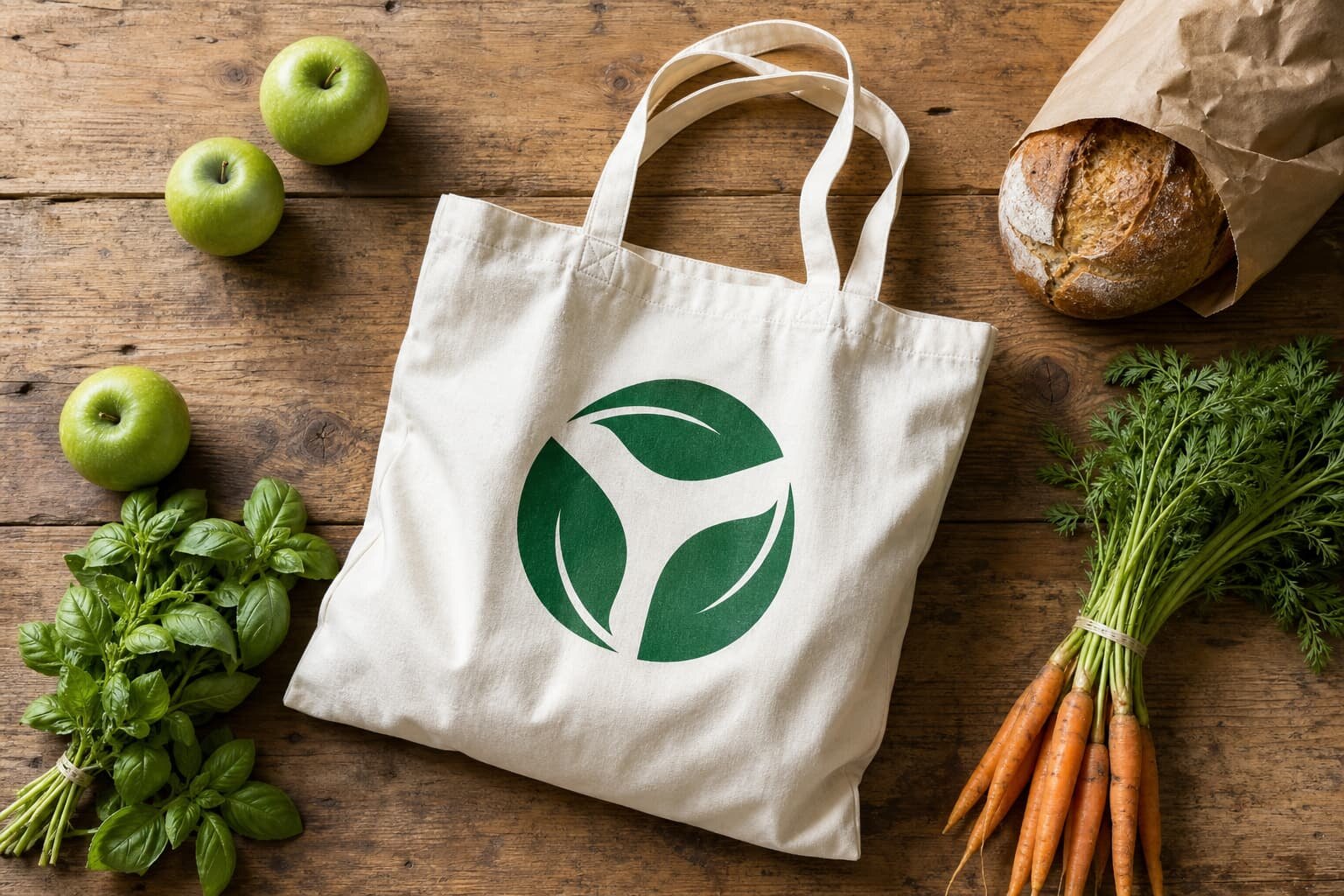
Why the top hem fold deserves its own risk register
Most buyers treat the top hem as a minor finishing detail, then discover too late that it controls how the entire bag behaves. On an organic cotton tote or shopper, the hem sets the mouth shape, influences how flat the bag lies in packing, and decides whether a print sits cleanly below the fold or gets damaged during use. If the fold is vague, the quote will be vague too, and the factory will make its own assumption about width, stitch count, and handling.
A top hem fold risk register is useful because it turns a soft detail into a buying control. Instead of asking for a bag that is simply folded and stitched, you identify the failure modes before production starts: raw edge exposure, mouth waviness, print cracking, puckering, and carton compression marks. That helps procurement compare quotes on the same basis and prevents the common problem where the cheapest sample becomes the most expensive bulk order.
- The hem affects shape retention, not just appearance.
- A vague fold spec creates quote noise and sample disputes.
- The right register helps buyers compare factories on the same basis.
Lock the hem spec before you compare quotes
If you want a usable RFQ, write the hem as a measurable construction, not as a style note. State the finished hem depth, the turnback width, whether it is single or double turned, how many stitch lines you want, and how far the stitch sits from the edge. For many organic cotton bags, a double-turn hem in the 18-20 mm finished range works better than a narrow fold because it hides the raw edge more reliably and gives the opening a cleaner profile.
You should also connect the hem to the rest of the bag spec. Fabric GSM, bag size, and intended use all change what is acceptable. A 140 GSM promotional tote may tolerate a simpler fold, while a 180-220 GSM retail bag usually needs more structure. If the bag will carry product weight or be packed into a dense export carton, add a note on shrinkage allowance, thread type, and any required backtack at stress points.
- Write the finished hem depth in millimetres.
- State stitch line count and stitch density.
- Link the hem spec to fabric GSM and intended load.
What can fail at the mouth of the bag
The top hem fails in predictable ways, and each one has a commercial cost. The most common issue is hem waviness, where the opening no longer looks straight because the fold was pressed unevenly or the stitch tension pulled the fabric off line. Another common problem is raw edge peeking, which happens when the turnback is too small or the operator misses the inside edge on a fast sewing line. Both problems can pass a quick photo check and still create buyer complaints after bulk arrival.
Print damage is the other risk buyers underestimate. If artwork sits too close to the fold line, the repeated stress of folding, carton packing, and shelf handling can crack the print or make it look distorted. Skipped stitches and loose threads are not just cosmetic either; they often signal poor needle control or a mismatch between fabric weight and thread size. A good risk register shows the cause, the likely production point, and the inspection step that should catch it.
- Waviness usually comes from uneven folding or stitch tension.
- Raw edge exposure usually comes from a shallow turnback.
- Print cracking usually comes from artwork placed too close to the fold.
- Skipped stitches often show a needle, tension, or speed mismatch.
Fabric weight and stitch choices that hold the fold
Fabric weight changes the whole hem conversation. On lighter organic cotton bags around 140-160 GSM, the mouth needs enough structure to avoid limpness, but too much fold can make the edge bulky and slow the sewing line. On midweight bags around 180-220 GSM, a wider double fold usually performs better because the cloth has enough body to stay flat after pressing and packing. Once you move above that range, the buyer should ask whether the factory has adjusted needle size, stitch density, and thread strength for the heavier body fabric.
Thread and stitch density should be selected together, not separately. A fine thread on heavy cloth can look neat but break under tension, while an oversized thread on lighter cloth can pucker the hem and make the opening stiff. For most buyer programs, a strong core-spun polyester thread and a consistent 7-8 stitches per inch give a practical balance between appearance and durability. If the bag is intended for organic retail, ask for the exact thread spec in the quote so you can compare strength, appearance, and colour match across suppliers.
- 140-160 GSM usually needs a lighter, cleaner fold.
- 180-220 GSM usually supports a more stable double hem.
- Thread size and stitch density should be quoted, not assumed.
- If the fabric is pre-shrunk, ask for the method and residual shrinkage.
Print method and decoration around the fold
The hem can ruin an otherwise good print if the artwork is placed too high. For screen print, heat transfer, or any decoration that needs a smooth surface, keep the design safely below the fold line so the print is not forced to bend at the mouth. A good practical rule is to leave at least 25-30 mm between the fold and the nearest printed detail, then confirm that distance on the sewn sample, not just the artwork file. Buyers who work from a flat mockup often miss the fact that the fold removes visible space from the finished bag.
The decoration method also changes the risk profile. Water-based screen print usually feels softer and behaves better on cotton, but it still needs correct curing and placement. A stiff transfer or a dense embroidery patch near the mouth can make the top edge rigid and harder to fold, which creates packing and retail presentation problems. If your program includes a side label, woven label, or embossed mark, make sure it does not interfere with the fold line or the seam path. The safest approach is to test the print and hem together as one system.
- Keep artwork below the fold line, not near it.
- Check printed samples after folding, stacking, and reopening.
- Avoid stiff decorations where the mouth must stay flexible.
Sample checks that expose hem problems early
Do not approve the hem from a flat artwork proof. Approve a sewn sample, then a printed sample, and finally a packed sample, because each stage can reveal a different defect. The sewn sample shows whether the fold is straight and secure. The printed sample shows whether the artwork still reads cleanly after stitching. The packed sample shows whether the hem survives carton pressure and mass handling. If any of those three stages looks right only in isolation, the bulk order is still at risk.
The sample check should be practical and fast, not theatrical. Measure hem depth on multiple bags, inspect the start and finish points of the stitch line, check that loose threads are trimmed, and fold the bag several times to see whether the opening springs back. If the supplier uses a pre-production sample, make sure the exact fabric lot, thread, and print method match the production intent. Otherwise the sample is only a design reference and not a reliable bulk approval.
- Measure hem depth and stitch distance on three or more samples.
- Fold and reopen the bag several times to check memory and recovery.
- Approve the packed sample carton, not only the sewn sample.
- Confirm the same fabric lot and print method will be used in bulk.
How to compare factory quotes without missing hidden cost
A clean quote for an organic cotton bag should separate the work that drives the hem from the work that surrounds it. If the supplier gives only one unit price, you cannot tell whether a lower quote reflects a simpler fold, weaker thread, thinner fabric, or lighter packing. Ask for line items for fabric, cutting, hem sewing, print, labels, packing, and carton work. That lets procurement see the real cost of one extra stitch line or a wider fold instead of comparing numbers that are not built the same way.
Also ask each factory to state what is included in the MOQ price break. Many suppliers can quote a low number for a plain bag but quietly move to a much higher MOQ once you add a woven label, a second print colour, a reinforced hem, or individual polybagging. That is not a problem if you see it early. It becomes a problem when the buyer discovers the MOQ jump after sample approval and has already aligned retail timing around the first number.
- Request separate pricing for fabric, sewing, print, packing, and carton work.
- Ask which quote items change the MOQ.
- Compare factories on the same hem depth and stitch count.
MOQ logic and lead time for hem-heavy bag programs
MOQ is usually driven by how many setup decisions the factory must lock in before the line can run efficiently. A stock natural fabric bag with one-colour screen print and a standard double hem can often be produced at a lower MOQ than a bag that needs custom fabric width, a special thread colour, a woven side label, and retail-ready individual packing. The buyer should not look for one universal MOQ number; instead, ask for the MOQ at each design level so the sourcing team can see how much each upgrade costs in volume commitment.
Lead time should be split into sample time and bulk time. For many factories, a first sample can take about 5-10 working days depending on fabric availability and print complexity, while bulk production often lands in the 25-45 day range after approval, subject to season, fabric sourcing, and line capacity. If the supplier is waiting for custom material, the lead time may stretch. The useful question is not whether the factory can promise a fast date, but what approval step starts the clock and what material inputs are already in hand.
- Lower MOQ usually follows stock fabric and one-colour print.
- Higher MOQ usually follows custom fabric, labels, or retail packing.
- Split lead time into sample stage and bulk stage.
- Ask what approval event starts production, not just when delivery might happen.
Packing and transport controls that protect the hem
Packing is where a good hem can become a bad customer experience. If bags are stuffed too tightly, folded inconsistently, or compressed in an overfilled carton, the mouth can take a set that never fully disappears. That matters on a retail shelf, where the buyer wants the bag to hang cleanly and open evenly. Ask the factory to show how the top hem sits inside the fold before carton closure, because the carton shape and bundle size can create more damage than the sewing line ever did.
The best packing instruction is usually simple but specific. State whether bags should be flat folded, bundled in fixed counts, or inserted with a board. Ask for carton dimensions, gross weight, inner pack count, and whether a carton photo can be shared before mass packing starts. If the buyer is shipping through long transits or mixed consolidation, a little extra packing discipline is often cheaper than accepting return risk later.
- Do not let the hem sit under a hard carton edge.
- Ask for a packed carton photo before bulk packing starts.
- Keep bundle counts and fold method fixed across the order.
- Use packing that preserves mouth shape, not just cube efficiency.
Acceptance criteria and final inspection for bulk approval
A buyer should close the loop with measurable acceptance criteria. The hem must match the approved depth, the stitch lines must be straight and secure, the print must sit below the fold without distortion, and the mouth must open flat without visible twist. If the bag is intended for retail presentation, add a simple visual rule: no raw edge exposure, no skipped stitches, no loose thread longer than the agreed limit, and no carton-induced crease that survives a quick hand press. That gives the QC team something concrete to defend when they find variation.
Final inspection should follow the risk register, not a generic checklist. Pull bags from the top, middle, and bottom of cartons so you see whether pressure or packing changes the hem. Check a small sample of each size and colour if the order includes variants. If the buyer wants a strict release, require a first article sign-off from sewn, printed, and packed samples before the bulk lot is cleared. That is the cleanest way to keep the top hem fold from becoming the reason a good order misses retail launch.
- Set a numeric hem tolerance and stick to it.
- Reject any visible raw edge, fold twist, or skipped stitch.
- Inspect samples from different carton positions.
- Use sewn, printed, and packed sign-off before bulk release.
Specification comparison for buyers
| Spec decision | Recommended option | When it fits | Buyer risk to check |
|---|---|---|---|
| Hem construction | Double-turn top hem, 18-20 mm finished depth | Retail-ready totes and shoppers that need a clean mouth and better shape retention | Too narrow a fold can wave, curl, or expose raw edge after handling |
| Stitch pattern | Two parallel topstitch lines with 7-8 SPI | Most organic cotton bags above 140 GSM that will be packed flat or carry product weight | A single line often twists the mouth and gives less control on heavy corners |
| Thread choice | Core-spun polyester thread matched to body colour | When the buyer wants stronger seam security and lower break risk in bulk sewing | Cotton thread can look authentic but may break faster under tension and transport stress |
| Print placement | Artwork kept at least 25-30 mm below the fold line | Screen print or transfer on bags where the mouth must stay visually clean | Prints too close to the fold can crack, distort, or block when stacked warm |
| Packing method | Flat-folded with a board or controlled bundle size | Carton packing for export where cartons will be compressed in transit | Loose packing or random folding can set a permanent crease at the hem |
Buyer checklist before sampling
- Confirm the finished hem depth, turnback width, stitch count, and stitch distance from the edge in writing before quote comparison.
- Ask the factory to state the fabric GSM, shrinkage assumption, and whether the cloth is pre-shrunk, compacted, or greige.
- Check that the print placement keeps all artwork safely below the fold line and away from the needle path.
- Approve one sewn sample, one printed sample, and one packed sample, not just a flat artwork proof.
- Request a quote that separates fabric, cutting, stitching, printing, labels, packing, and carton costs.
- Verify MOQ by option set: blank bag, printed bag, woven label, and individual retail packing should not be merged into one number.
- Ask for a packed carton photo and carton dimensions so you can judge compression risk and freight efficiency.
- Set a simple reject rule for skipped stitches, hem distortion, print cracking, and any visible raw edge at the mouth.
Factory quote questions to send
- What exact top hem construction are you quoting: single turn, double turn, or binding, and what is the finished hem depth in millimetres?
- What fabric GSM, weave width, and shrinkage allowance did you use for the quotation?
- How many stitch lines, what stitch density, and what thread type are included in the quoted price?
- How far is the print area from the fold line, and does your quote include adjustment if artwork must move lower?
- What is the MOQ for this exact spec, and how does it change if we add a woven label, hangtag, or individual polybag?
- What are the sample lead time and bulk lead time separately, and what approval step starts the production clock?
- What packing method is included: flat fold, bundle pack, insert board, polybag, or carton only?
- Can you break out any extra cost for a second stitch line, wider hem, colour matching, or carton strengthening?
Quality-control points to confirm
- Measure hem depth on the first article and check that it matches the approved spec within a tight tolerance.
- Inspect stitch alignment, backtack security, and loose thread length at the top mouth.
- Confirm that the print sits below the fold line and shows no cracking after folding and refolding.
- Check for puckering, twisting, or waviness along the bag opening when the bag is laid flat.
- Run a light load or pull test to see whether the mouth stays square and the hem remains stable.
- Open sample cartons from the top, middle, and bottom of the stack to check for compression marks and fold memory.
- Reject any carton pattern that presses the hem so hard that the mouth is permanently bent or creased.