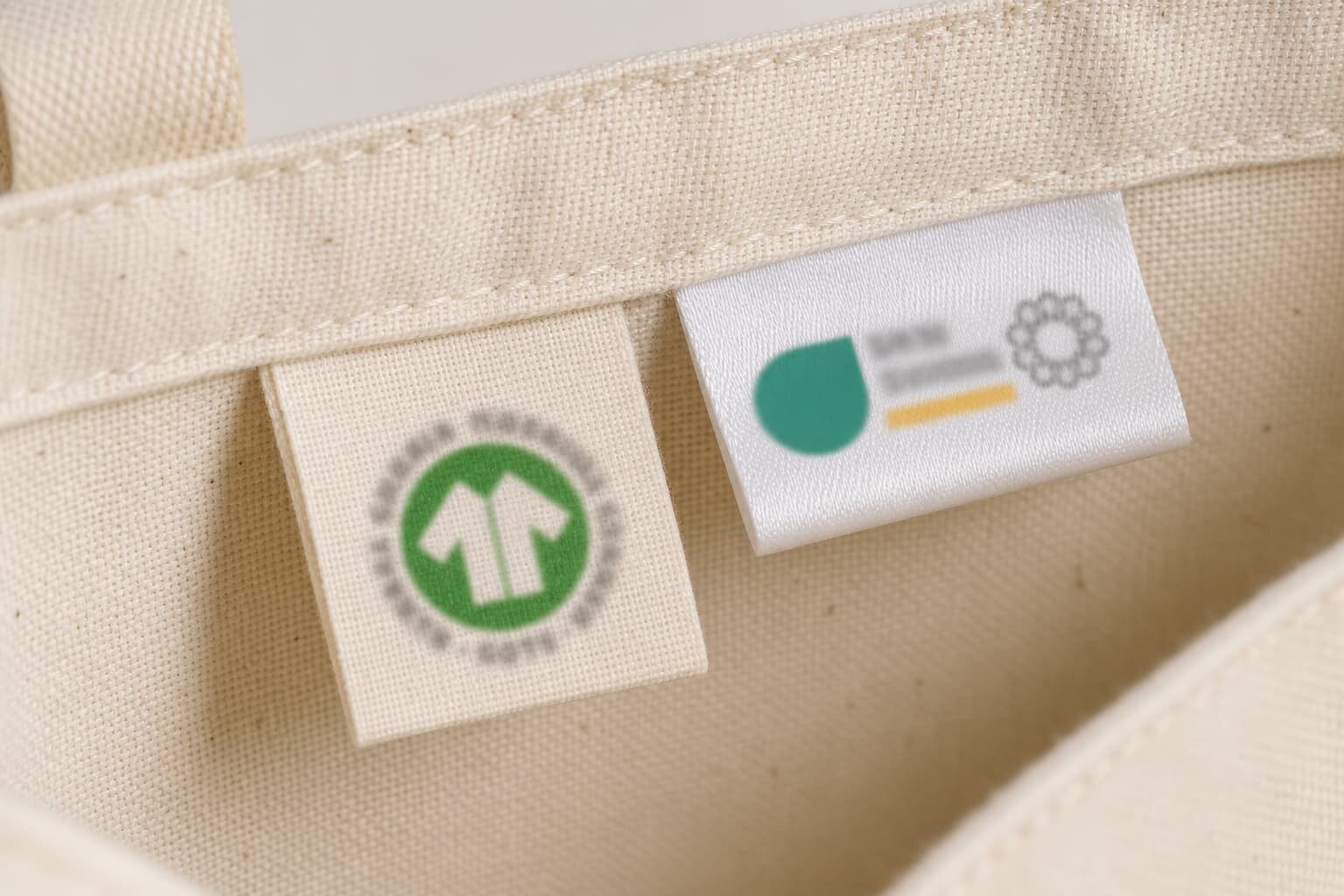
Why Social Audit Evidence Belongs in the Bag RFQ
An organic cotton bag order can look simple on the quotation: fabric, size, print, quantity, packing, and shipment date. The compliance risk is usually hidden in the production route. A tote bag may use organic cotton fabric from one mill, drawcords from another supplier, screen printing in a separate workshop, woven labels from a trim vendor, and packing at the sewing factory. If your RFQ only asks for price and delivery, you may receive a quote that looks competitive but cannot pass a retailer compliance review.
A social audit evidence worksheet turns vague supplier claims into buyer-checkable information. It does not replace a formal audit, but it helps procurement teams identify whether the quoted factory can show basic proof for labor control, working hours, subcontracting, safety, and production traceability. For importers and distributors, this worksheet is also useful when comparing two suppliers with similar FOB prices but different risk levels.
- Use the worksheet before deposit, not after bulk fabric has been booked.
- Tie every evidence request to the actual organic cotton bag specification and production address.
- Ask for document names, issue dates, expiry dates, and open corrective actions.
- Do not accept a factory profile PDF as proof of social compliance.
Define the Product Scope Before Asking for Evidence
The first mistake is asking for a general social audit file while the product specification is still loose. A 140gsm flat cotton shopper with one-color screen print is not the same production route as a 280gsm canvas tote with zipper, inner pocket, woven label, and individual retail packing. The more trims and finishing steps you add, the more evidence points you need to control.
Your worksheet should start with the commercial specification: bag type, finished size, fabric GSM, fabric color, handle construction, print method, label or tag requirement, packing method, target quantity, and shipment window. This gives the factory a clear boundary. It also prevents suppliers from answering with evidence from a different facility or a previous product line that will not handle your order.
- Record whether the bag is natural, bleached, dyed, or pigment printed.
- State if the order includes totes, drawstring pouches, zipper business bags, or mixed styles.
- Separate organic cotton fabric evidence from social audit evidence; both may be needed, but they answer different risks.
- If the order is split by SKU, list each SKU in the worksheet so evidence gaps are visible.
Map the Real Production Route
For organic cotton bags, the quoted factory may not perform every process under one roof. Cutting and sewing are often in the main bag factory. Screen printing may be inside the factory or handled by a local print partner. Fabric dyeing, zipper production, woven labels, hangtags, and barcode labels are usually outside processes. This is normal, but it must be declared before order approval.
The worksheet should ask the supplier to map each step from fabric receiving to export carton sealing. For each process, request the site name, address, contact department, and whether the site is covered by an existing audit or buyer-approved subcontractor list. This is especially important for retailers that prohibit undisclosed subcontracting. If the supplier refuses to identify the print or packing site, treat the quote as incomplete.
- Fabric warehouse: confirm storage is dry, clean, and separated by lot.
- Cutting: confirm marker control, panel count, and shade lot separation.
- Printing: confirm ink type, curing method, ventilation, and waste handling.
- Sewing: confirm line location, needle control, machine safety, and worker records.
- Packing: confirm carton count, barcode control, and final inspection area.
Evidence to Request Without Overloading the Supplier
A practical worksheet should not ask for every document in the factory. Too much paperwork slows quotation and encourages copy-paste answers. Focus on evidence that helps you decide whether the supplier is safe enough for sampling, deposit, and bulk production. For a first order, request the latest social audit report if available, the corrective action plan, business license, factory address proof, worker age verification procedure, wage and attendance sample records, safety training records, fire drill records, and subcontractor declaration.
The key is to ask for evidence linked to your order departments. If the bags will be printed, ask for print workshop safety and chemical handling evidence. If the bags include metal snaps or zippers, ask about needle and sharp tool control plus trim supplier declaration. If the order is only unprinted natural cotton drawstring pouches, the evidence burden may be lighter, but you still need to know where cutting, sewing, and packing happen.
- Accept redacted wage samples if worker personal data is protected, but require period, department, and approval stamp.
- Ask for corrective action closure photos or reports, not only a list of findings.
- Request audit validity date and audit scope page showing the correct factory address.
- Flag any evidence that is older than the buyer's compliance policy allows.
Connect Fabric GSM, Print Method, and Labor Risk
Fabric GSM is not only a cost line. It affects cutting speed, sewing needle choice, print curing, carton weight, and labor time. A 140gsm organic cotton bag is faster to cut and sew, but it can wrinkle more easily and may need careful print pressure control. A 220gsm or 280gsm canvas bag looks more premium, but it requires stronger sewing, better handle reinforcement, and more careful folding to avoid bulky cartons.
Print method also affects evidence requirements. Water-based screen print is common for organic cotton bags because it works well on natural cotton and has a softer hand feel. Pigment print, heat transfer, embroidery, and woven labels each add different process controls. If the print shop is subcontracted, you need its address and compliance status. A cheap print quote may hide outsourced night work or uncontrolled ink handling, which becomes your risk when a retailer asks for proof.
- For 140-180gsm bags, check print-through, shrinkage, and seam puckering.
- For 200-280gsm canvas bags, check handle bartack strength, needle size, and folding bulk.
- For water-based print, ask for ink SDS, curing temperature guidance, and rub test result.
- For embroidery or woven label options, identify the trim or embroidery subcontractor.
Use MOQ Logic to Detect Hidden Subcontracting
MOQ is often the first commercial signal that the production route is not as simple as it sounds. If a supplier offers a very low MOQ for a dyed organic cotton bag with multiple print colors and custom trims, ask how they plan to combine fabric, dyeing, printing, and sewing efficiently. Sometimes the answer is legitimate stock fabric. Sometimes the answer is an undeclared workshop or mixed lots from different suppliers.
A buyer-friendly RFQ should ask the factory to separate MOQ drivers. Fabric MOQ may be based on greige fabric purchase or dye vat size. Print MOQ may be driven by screen setup and ink mixing. Label MOQ may be set by the label supplier. Packing MOQ may change if individual barcode stickers or retail hangtags are required. When these MOQ drivers are transparent, you can compare supplier quotes more fairly.
- Ask whether quoted MOQ uses stock organic cotton fabric or fresh production.
- Confirm whether multiple SKUs can share the same fabric roll and cutting plan.
- Check if small repeat orders will use the same fabric weight and shade standard.
- Treat vague answers like 'MOQ flexible' as a reason to ask more production questions.
Sample Checks That Support the Evidence File
A social audit evidence worksheet is stronger when it connects to physical sample checks. The approved sample proves what the supplier intends to produce, while the evidence file proves where and how the production will happen. For organic cotton bags, do not approve only a beauty sample. Check fabric weight, dimensions, handle drop, stitch density, print position, print feel, label placement, seam strength, and packing method.
Ask the factory to provide photos or videos from the pre-production sample process where reasonable: fabric weighing, print strike-off, first sewing output, and packed carton sample. These do not replace inspection, but they help catch mismatches early. For example, a sample sewn in the sample room may look clean, while bulk production on a faster line may show skipped stitches around thick canvas handles. Your worksheet should mark which sample checks are approved, pending, or rejected.
- Cut a small fabric swatch and weigh it to verify GSM against the quote.
- Measure bag width, height, gusset, and handle drop after the sample is relaxed.
- Rub the print with dry and slightly damp white cloth to check obvious ink transfer.
- Load test the handle with a realistic weight based on the bag's intended use.
- Photograph the folded packed sample so carton packing is not decided at the last minute.
Quote Data That Should Match the Worksheet
A good supplier quote should not be a single line saying 'organic cotton bag, FOB price.' It should include enough data for procurement, compliance, and quality teams to review the same order without guessing. At minimum, request item description, size, fabric composition, GSM, color, print method, print size, label details, packing method, pieces per carton, estimated carton dimensions, gross weight, MOQ, sample cost if any, lead time, payment terms, and quote validity.
The social audit evidence worksheet should sit beside the quote. If the quote says screen print, the worksheet should identify whether printing is in-house or outsourced. If the quote includes woven label, the worksheet should list the label supplier or at least confirm it is a declared outside trim process. If the quote lead time is very short, the worksheet should show whether compliance document review and sample approval are included in that schedule.
- Compare quotes on the same GSM and finished size, not only on bag type.
- Ask whether FOB price includes export carton, carton mark, barcode label, and inner packing.
- Request separate pricing for optional tests, inspection, special packing, and extra samples.
- Record quote assumptions directly in the worksheet to avoid later commercial disputes.
Packing and Carton Evidence for Import Teams
Packing is often treated as a warehouse detail, but it affects audit evidence, quality control, freight planning, and receiving accuracy. Organic cotton bags can be flat packed, folded once, folded into individual polybags, bundled with paper bands, or packed with hangtags for retail. Each choice changes labor time, carton size, plastic use, barcode control, and inspection method.
Your worksheet should request the packing workflow: who folds, who counts, who applies labels, who scans barcodes if required, and who seals cartons. For importers, the carton mark should be approved before bulk packing starts. Include PO number, SKU, item description, quantity, carton number, gross and net weight, country of origin, and barcode if required. If the brand has plastic reduction rules, state whether recycled polybags, paper bands, or no individual bags are required.
- Confirm pieces per carton and estimated carton dimensions before freight booking.
- Set a maximum gross weight if cartons will be handled manually by warehouse teams.
- Ask for carton drop or compression expectations if the bags are heavy canvas.
- Require a packed sample photo showing fold direction, label visibility, and carton mark.
Acceptance Criteria and Red Flags
The worksheet should finish with acceptance criteria so the supplier knows what evidence is enough for order approval. For many buyers, acceptable evidence means the factory address matches the quote, subcontractors are declared, audit report scope is relevant, open corrective actions are not critical, sample checks pass, and the production schedule allows normal working hours. This is not about making the factory perfect; it is about reducing unknown risk before your deposit is committed.
Red flags should be defined in advance. Examples include refusal to share the actual production address, audit report with a different factory name, no explanation for print subcontracting, missing worker age control, repeated overtime findings without corrective action, sample made from a different GSM than quoted, or lead time that depends on starting bulk before sample approval. When these appear, pause the PO or request a corrected quote rather than hoping inspection will solve it later.
- Approve: evidence matches factory, process route, product spec, and quote assumptions.
- Approve with condition: minor document gaps have a clear deadline before shipment.
- Hold: audit scope, subcontractor route, or sample specification does not match the order.
- Reject or re-source: supplier refuses to declare production site or provides inconsistent evidence.
Specification comparison for buyers
| Spec decision | Recommended option | When it fits | Buyer risk to check |
|---|---|---|---|
| Fabric weight for promotional tote | 140-180gsm organic cotton plain weave | Price-sensitive campaigns, light retail giveaways, simple one-color print | Thin fabric can show yarn slubs and print-through; confirm shrinkage and handle reinforcement before approving |
| Fabric weight for retail reusable bag | 200-280gsm organic cotton canvas | Brand stores, paid merchandise, heavier grocery or apparel use | Higher GSM increases carton weight and sewing time; verify needle marks, seam strength, and folding method |
| Logo method for audit-sensitive order | Water-based screen print with approved ink records | Large flat artwork, natural cotton ground, buyer wants lower hand feel and traceable consumables | Ask for ink SDS, curing record, and production print panel; do not rely only on digital artwork |
| Small branding detail | Woven side label or organic cotton label sewn into seam | Retail bags needing brand ID without a large front print | Confirm label supplier name, label content, and needle policy; label subcontracting is often missed in audits |
| MOQ structure | One fabric GSM and one construction, multiple print colors if artwork permits | Buyers needing assortment while controlling fabric purchasing and cutting waste | Too many sizes or dyed lots can trigger split production and undocumented subcontracting |
| Packing format | Flat pack 50 or 100 pcs per export carton with carton mark and polybag decision stated | Importer needs efficient receiving, barcode control, and lower repacking work | Unclear packing causes quote gaps; confirm carton dimensions, gross weight, and any recycled polybag requirement |
| Audit evidence timing | Collect before deposit and refresh before shipment | First order, new factory, new material chain, or retailer compliance handoff | Documents received after production starts have less value; missing wage or attendance proof may delay shipment approval |
Buyer checklist before sampling
- Define the exact product scope covered by the social audit evidence: bag style, size, GSM, print method, label, packing, and expected order quantity.
- Request the factory business license, production address, export license if applicable, and a floor plan showing cutting, printing, sewing, inspection, and packing areas.
- Confirm whether organic cotton fabric weaving, dyeing, printing, label making, embroidery, washing, or packing is subcontracted, and record each site name and address.
- Collect the latest social audit report if available, but also ask for corrective action closure evidence, not only the audit certificate or cover page.
- Ask for worker attendance records, wage records, age verification procedure, working hour policy, and safety training records for the departments that will handle the order.
- Match the audit evidence to the production route: fabric warehouse, cutting table, print workshop, sewing line, trimming, needle control, final inspection, and export carton packing.
- Check that the quoted lead time allows audit document review, counter sample approval, fabric booking, print strike-off, bulk sewing, inspection, and packing without unrealistic overtime.
- Require sample evidence: fabric GSM test, shrinkage check, print rub test, seam pull check, handle load test, label placement photo, and carton packing photo.
- Record carton mark, barcode, inner packing, polybag choice, desiccant if needed, and gross weight target before issuing the purchase order.
- Keep one shared evidence worksheet for supplier answers, document file names, expiry dates, open risks, and buyer approval status.
Factory quote questions to send
- Which factory address will cut, print, sew, inspect, and pack this organic cotton bag order, and which processes will be handled outside that address?
- What organic cotton fabric options can you quote for 140gsm, 180gsm, 220gsm, and 280gsm, and what are the expected shrinkage and width for each option?
- What is the MOQ by fabric weight, bag size, print color count, and packing method, and which part of the MOQ is driven by fabric purchase or printing setup?
- Can you provide the latest social audit report, corrective action plan status, and evidence linked to the actual production departments for this order?
- What print method do you recommend for our artwork, and can you provide ink type, curing process, wash or rub test result, and print strike-off before bulk production?
- Will labels, drawcords, zippers, snaps, or other trims be sourced from outside suppliers, and can you identify those suppliers in the evidence worksheet?
- What sample stages are included in the quote: material swatch, pre-production sample, print strike-off, packed sample, and final shipment sample?
- How many pieces per carton do you recommend, what are the estimated carton dimensions and gross weight, and can the carton mark include our PO, SKU, barcode, and country of origin?
- What is the normal lead time for this specification after sample approval and deposit, and what part of the schedule is most sensitive to audit or material delays?
- Which quote items are excluded, such as third-party inspection, audit renewal, special testing, individual polybags, hangtags, barcode labels, or fumigation-free pallets?
Quality-control points to confirm
- Verify fabric GSM from a cut panel, not only from the supplier quotation, because organic cotton canvas can vary by finishing and moisture content.
- Check finished bag size after pressing or washing if applicable, and state the allowed tolerance for width, height, gusset, and handle drop.
- Pull test handles and side seams according to the intended loading use; a retail grocery tote needs stronger acceptance criteria than a conference giveaway bag.
- Inspect print position, ink coverage, hand feel, curing, dry rub, wet rub, and registration before allowing bulk print to continue.
- Confirm label content, label position, seam capture, and needle damage around labels or handle bartacks.
- Review thread trimming, loose fibers, stains, oil marks, broken stitches, skipped stitches, and panel twisting under normal daylight.
- Check carton packing count, folding direction, barcode scanability, carton strength, gross weight, and carton mark against the purchase order.
- Keep retained samples from approved pre-production sample, first bulk output, and final packed shipment for dispute control.