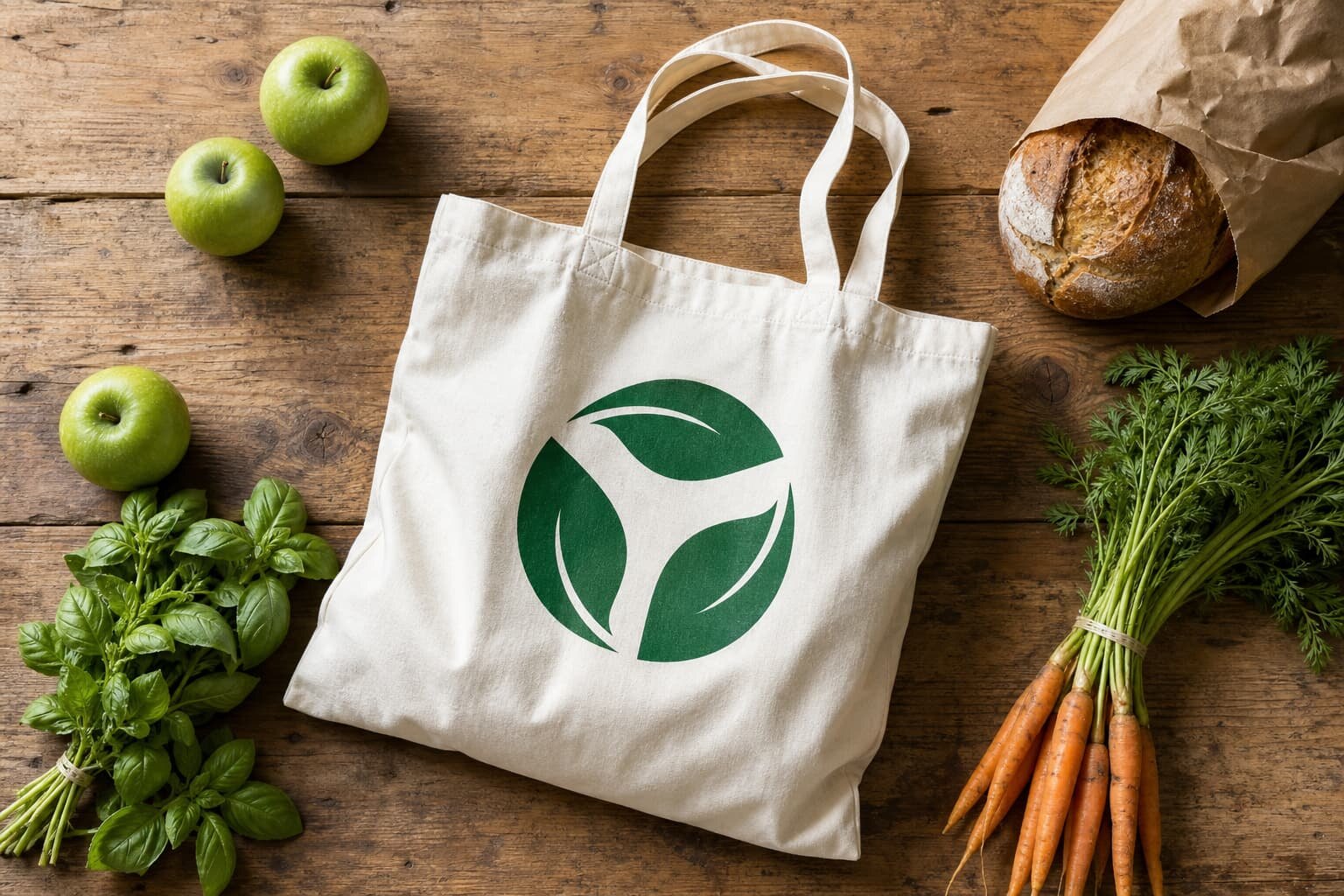
Why Sample Revision Requests Often Go Wrong
An organic cotton bag sample revision request looks simple: adjust the handle, correct the print, change the fabric, or improve the folding. In real production, each of those changes can affect fabric sourcing, cutting markers, sewing time, print setup, packing volume, MOQ, and lead time. If the request is written as a casual email, the factory may fix only the visible issue and miss the commercial impact behind it.
The buyer’s goal is not to make the sample room produce a nicer one-off piece. The goal is to define a repeatable bulk production standard that can be quoted, inspected, packed, and shipped without argument. A good revision request tells the factory what failed, what must change, what tolerance is acceptable, and whether the quotation must be updated before the order proceeds.
- Use sample revision to lock production specifications, not to collect design opinions.
- Separate appearance corrections from cost-changing specification changes.
- Ask the factory to confirm whether each revision changes MOQ, unit price, or lead time.
- Keep one approved counter sample at the factory after the revision is accepted.
Start With the Latest Approved Specification
Before commenting on a sample, confirm which document the factory used to make it. Many sample problems come from version confusion: artwork from one email, size from another, and packing instructions from an old quotation. For an organic cotton bag, even a small mismatch in GSM, handle length, or print placement can change both cost and buyer acceptance.
A clean revision request should reference one master file. This may be a tech pack, RFQ sheet, artwork proof, or marked sample approval form. If you send photos with arrows but do not attach the current specification, the sample room may repair the visible issue but continue using the wrong bag size or fabric description.
- State the sample code, date received, factory quotation number, and buyer project name.
- Attach the latest bag size, GSM, artwork, label file, packing instruction, and carton mark.
- Mark old files as cancelled if they are no longer valid.
- Ask the supplier to confirm the revision against the same document version in writing.
Check Fabric GSM Before Asking for Changes
Organic cotton bag samples are often made from available sample-room fabric. That does not always mean the bulk order will use the same fabric. A sample that feels firm may be made from 260 GSM canvas, while the quote was based on 180 GSM. A sample that feels too soft may be unwashed, loosely woven, or a different construction from the intended production fabric.
Do not approve or reject only by handfeel. Ask the factory to identify the fabric weight, weave, yarn count if available, finish, and expected shrinkage. For lightweight promotional bags, 140-180 GSM may be acceptable if the loading requirement is low. For reusable retail totes, 220-280 GSM is more common. For heavier premium canvas bags, 300 GSM and above may be suitable, but it increases material cost, sewing difficulty, carton weight, and freight volume.
- Ask whether the sample fabric is organic cotton stock, greige fabric, dyed fabric, or substitute fabric.
- Define GSM tolerance, such as plus or minus 5%, if acceptable for your order.
- Confirm whether natural cotton specks, slubs, and shade variation are acceptable.
- Check if a GSM increase changes fabric MOQ or production lead time.
- Do not request heavier fabric unless the target retail use justifies the cost and freight impact.
Review Bag Size, Shape, and Handle Engineering
Most sample comments say the bag is too small, the handle is too long, or the gusset does not look right. The useful revision request gives measured values. Measure the bag flat after sewing, not only by the pattern size. Cotton can shrink during finishing, and seam allowance can reduce the final usable space. If your product must hold a shoe box, wine bottle, catalogue, or folded apparel set, test it with the actual item.
Handle revision deserves special attention because it affects comfort, cost, and strength. A longer handle uses more fabric and may require stronger reinforcement if the bag carries weight away from the body. A wider handle feels better but changes cutting yield. For heavier organic cotton tote bags, box-x stitching or cross-stitch reinforcement is usually safer than a single straight stitch at the handle base.
- Measure width, height, bottom gusset, side gusset, handle length, and handle drop.
- State whether dimensions are measured flat, including or excluding gusset expansion.
- Define tolerance for bulk production, such as plus or minus 1 cm for common tote sizes.
- Check handle attachment after loading the bag with realistic weight for several minutes.
- Confirm whether handle fabric is self-fabric, webbing, rope, or another construction.
Control Print Revisions With Production Method in Mind
Print comments should not stop at color and position. Organic cotton fabric absorbs ink differently from synthetic fabric or coated paper. Natural cotton surface texture can soften fine lines, and seed specks may show through light ink colors. If the bag uses water-based screen print, ask about mesh, ink curing, underbase, and rub resistance. If the artwork has gradients or small text, confirm whether screen print is still suitable or whether heat transfer is being proposed.
A common mistake is approving a digital-looking sample print without asking how bulk will be produced. A one-off sample may be made by digital print or heat transfer because it is faster, while the bulk quote assumes screen printing. The revised sample should use the same print method as mass production whenever possible, especially for brand color approval and retail programs.
- Confirm print method: water-based screen print, pigment print, discharge print, heat transfer, digital print, embroidery, or woven label.
- Check logo size, placement from top edge and side seam, Pantone color, and print orientation.
- Ask whether the same ink and curing process will be used in bulk production.
- Test dry rub and light wet rub if the bag will be handled frequently.
- Avoid very small reverse text on coarse canvas unless the factory confirms readable output.
Separate Cosmetic Defects From Specification Changes
Not every sample problem should trigger a new quotation. Loose threads, dirty marks, crooked folding, or a slightly uneven sample-room stitch may be workmanship defects. A change from 180 GSM to 280 GSM, natural color to dyed black, screen print to embroidery, or loose packing to individual recycled polybag is a specification change. Mixing these two categories makes supplier responses unclear.
When you send the revision request, label each item as either correction required or specification change. This helps the factory answer properly. Corrections should be fixed without changing the quoted specification. Specification changes should be priced, timed, and confirmed before the revised sample is made.
- Correction example: print is 2 cm off-center compared with approved artwork.
- Correction example: handle stitching is uneven and must follow the agreed reinforcement style.
- Specification change example: increase fabric from 180 GSM to 240 GSM.
- Specification change example: add inner label, barcode sticker, or individual retail packing.
- Specification change example: change from natural cotton to custom dyed Pantone color.
Understand How Revisions Affect MOQ and Unit Cost
A sample revision can move the order into a different cost structure. Fabric is usually the largest cost driver for organic cotton bags, but printing, labels, packing, and labor also matter. A heavier GSM increases fabric consumption and sometimes needle requirements. A dyed fabric may require a minimum dye lot. A woven label may have its own MOQ even if the bag order is small.
For RFQ comparison, ask the factory to update the quote with the revised specification and show what changed. You do not need every supplier to expose their full margin, but you do need enough data to compare quotes fairly. If one supplier quotes 220 GSM with screen print and another quotes 180 GSM with transfer print, the lower price is not a real saving; it is a different product.
- Ask for revised unit price by quantity breaks, such as 500, 1,000, 3,000, and 5,000 pieces if relevant.
- Confirm fabric MOQ separately from finished bag MOQ.
- Check whether print setup, screen charge, label setup, and sample fee are included or separate.
- Ask whether carton size and gross weight changed after the revision.
- Request the Incoterm, currency, validity period, and estimated production lead time on the revised quote.
Use Acceptance Criteria Instead of Vague Comments
A vague comment such as make the stitching better is difficult for production teams to use. A useful comment says what must be improved and how it will be checked. For example: handle attachment must use box-x stitching, thread color natural, minimum 8 stitches per inch, no skipped stitches, no loose thread longer than 3 mm, and no seam opening after a 10 kg static load test for 5 minutes. The exact values should match your product use, but the format should be measurable.
Acceptance criteria also protect the buyer during pre-shipment inspection. If the approved sample only looks good but has no tolerance, the inspection team may argue with the factory over what is acceptable. Define tolerances for size, print position, color shade, carton quantity, and workmanship before production begins.
- Size tolerance: define acceptable variance for width, height, gusset, and handle drop.
- Print tolerance: define position tolerance from top edge, side seam, or bag centerline.
- Color tolerance: use Pantone reference and physical approved sample when possible.
- Workmanship tolerance: define limits for stains, holes, loose threads, seam puckering, and print defects.
- Packing tolerance: define pieces per carton, folding method, carton marking, and moisture protection.
Confirm Packing During the Sample Revision Stage
Packing is often left until the end, but organic cotton bags can pick up dirt marks, moisture odor, and compression creases if packing is not tested. Natural and light-colored cotton shows contamination easily. If the bag is for retail sale, ecommerce kits, corporate gifting, or brand presentation, the packing method should be included in the sample revision review.
Do not assume individual packing is always better. It adds labor, material cost, compliance questions, and carton volume. For wholesale distribution, folded bulk packing inside a clean liner carton may be enough. For retail, a paper band, hangtag, barcode sticker, or recycled polybag may be needed. The revised quote should reflect the actual packing method, not a general carton packing assumption.
- Approve folded size if bags must fit shelf trays, mailers, or kitting boxes.
- Confirm individual pack material, thickness, warning text, and recycling marks where required.
- Check carton quantity, carton dimensions, gross weight, and whether cartons bulge after packing.
- Ask whether desiccant is needed for long sea shipment or humid storage conditions.
- Make sure carton marks match buyer warehouse, SKU, PO, and destination requirements.
Build a Clear Revision Workflow Before Bulk Production
A sample revision request should end with a decision path. The factory needs to know whether the revised sample is for design confirmation, cost confirmation, pre-production approval, or shipment reference. If the buyer keeps adding comments without a decision deadline, material booking is delayed and lead time becomes unstable.
For commercial orders, use a simple workflow: review first sample, issue numbered revision comments, receive factory confirmation, approve revised cost and lead time, receive revised sample, sign off pre-production sample, then release bulk production. If testing is required, include test timing before final approval. This workflow prevents the common situation where the buyer approves the look of the bag but has not approved the actual production standard.
- Set a deadline for factory reply to revision comments.
- Ask the factory to confirm which comments affect price and lead time before making the revised sample.
- Require photos of the revised sample before courier shipment if timing is tight.
- Sign, date, and photograph the final approved sample from front, back, inside, handle, print, label, and packing views.
- Tell the factory not to start bulk cutting until the production sample and revised quote are both approved.
Specification comparison for buyers
| Spec decision | Recommended option | When it fits | Buyer risk to check |
|---|---|---|---|
| Fabric weight | 180-220 GSM organic cotton canvas for light retail totes; 260-340 GSM for premium reusable bags | Use lighter GSM for events, giveaways, and low unit cost; use heavier GSM for retail sale, books, groceries, or gift packaging | Do not approve only by handfeel. Ask for measured GSM tolerance, shrinkage, and whether the bulk fabric will be the same lot or same construction. |
| Construction | Lockstitch seams with reinforced handle cross-stitch or box-x stitching | Required when the bag carries catalogues, bottles, apparel bundles, or groceries | A nice-looking sample can still fail at handle pull. Confirm stitch density, thread type, and handle attachment size. |
| Print method | Water-based screen print for simple logos; heat transfer only for fine gradients or small MOQ artwork | Screen print works well on natural cotton texture and scales better for bulk orders | Check ink absorption, edge sharpness, curing, rub resistance, and whether white ink needs an underbase. |
| Sample color approval | Approve by physical sample and Pantone reference, not screen photos | Important for dyed organic cotton, brand colors, and retail packaging programs | Natural cotton shade varies by batch. Define acceptable shade range and whether optical brighteners are prohibited. |
| Packing | Individual fold with paper band or recycled polybag only when retail cleanliness is required | Use loose carton packing for wholesale distribution; use individual packing for retail shelves or kitting | Over-packing can increase labor, carton volume, and plastic compliance issues. Under-packing can cause dirt marks on natural fabric. |
| Revision quantity | One revised pre-production sample plus retained counter sample at factory | Suitable before PO release or before mass production cutting | If only the buyer receives a sample, the sewing line may not have a controlled reference. Require factory retention sample with signature or seal. |
| MOQ impact | Confirm whether revised spec changes fabric MOQ, dye lot MOQ, print setup, or packing MOQ | Necessary when changing GSM, bag size, dyed color, woven label, zipper, or custom carton | A small sample change can move the order into a different fabric or accessory MOQ bracket. |
| Lead time control | Separate revision lead time, approval time, material booking time, and bulk production time | Useful when launch dates are fixed or shipment is tied to retail promotion | Factories may quote a total lead time but not include buyer approval delays, lab testing, or holiday capacity pressure. |
Buyer checklist before sampling
- Compare the sample against the latest tech pack, artwork file, PO draft, and quotation line by line.
- Measure bag width, height, gusset, handle length, handle width, seam allowance, and folded packing size with a ruler.
- Check fabric weight in GSM and ask whether the sample fabric is production-ready organic cotton or only available sample-room stock.
- Confirm fabric construction, shrinkage, color shade, smell, surface slubs, and whether natural specks are acceptable for the brand.
- Test handle strength manually with a realistic loading weight and inspect the handle attachment after stress.
- Review print position, print size, Pantone match, ink coverage, edge sharpness, curing, rub resistance, and wash or moisture behavior if relevant.
- Check stitching density, thread color, seam straightness, backstitch, loose threads, bottom corner reinforcement, and inside seam finishing.
- Review labels, care label wording, country of origin marking, organic claim wording, barcode position, and carton marks before approval.
- Confirm folding method, individual packing, carton quantity, carton size, gross weight, moisture protection, and whether packing matches the quote.
- Send revision comments in a numbered list with photos, measurements, tolerance, approval status, and required factory confirmation date.
Factory quote questions to send
- Is the revised sample made from the same fabric construction and GSM that will be used for bulk production?
- What GSM tolerance, size tolerance, and color shade tolerance do you recommend for this organic cotton bag?
- Does the requested revision affect fabric MOQ, dyeing MOQ, print setup cost, label MOQ, packing MOQ, or carton volume?
- Which print method are you quoting for bulk production, and is it the same method used on the sample?
- Can you provide a revised unit price showing fabric, cutting, sewing, printing, labels, packing, testing, and inland logistics as separate lines where possible?
- How many days are needed for the revised sample, buyer approval, material booking, production, inspection, and export packing?
- Will you keep one signed counter sample in the factory sample room and issue the same approved sample instructions to cutting, printing, and sewing teams?
- What tests or internal checks will be performed before shipment, such as GSM check, size check, print rub test, handle pull test, needle inspection, and carton drop check?
- If natural cotton shade, slubs, or seed specks vary in bulk fabric, how will you control and communicate the acceptable range?
- What information do you still need from us before you can issue a final production-ready quotation?
Quality-control points to confirm
- Fabric GSM must be checked from the actual sample fabric and reconfirmed against bulk fabric before cutting.
- Bag dimensions should be measured flat after sewing, with tolerance agreed before production approval.
- Handle length and attachment reinforcement must match the expected carrying load, not only the visual design.
- Print color and position should be checked against artwork, Pantone reference, and actual bag seam placement.
- Ink curing and rub resistance should be checked before the sample is approved for repeated handling or retail use.
- Seam strength, stitch density, loose threads, and bottom corner stress points should be inspected on the revised sample.
- Labels and claims must be reviewed for legal accuracy, especially organic wording, fiber content, and origin marking.
- Packing method should be tested with the actual folded bag to avoid carton bulging, creasing, and dirty fabric marks.
- The approved sample should be signed, dated, photographed, and kept as the standard for pre-shipment inspection.