Why Sample Archive Photos Prevent Expensive Approval Disputes
An organic cotton bag sample archive is not a marketing folder. It is the buyer's technical memory of what was approved before bulk production. When a tote bag, drawstring pouch, wine bag, or cotton gift bag is sampled, many small decisions are made quickly: fabric weight, handle length, print position, label wording, seam style, folding method, and carton packing. If those decisions are not photographed and filed in a usable way, the approved sample becomes hard to defend when bulk goods arrive.
The most common dispute is not that the factory ignores the sample. It is that the sample was never defined clearly enough. One person approves a front photo by email, another person negotiates a lower price based on a lighter fabric, and a third person issues the PO using old dimensions. A disciplined organic cotton bag sample archive photo checklist gives procurement, merchandising, quality control, and the supplier the same reference point.
- Use sample archive photos to lock visual details before deposit and bulk material purchase.
- Keep a physical golden sample because photos cannot prove fabric hand feel, thickness, or stiffness.
- Do not mix catalog images with approved sample images in the same folder.
- Add the archive folder link to the PO, quote comparison sheet, and inspection booking form.
Define the Sample Stage Before You Photograph Anything
Buyers often ask factories for sample photos without naming the sample stage. That creates confusion. A proto sample confirms shape and construction. A print strike-off confirms artwork, ink, placement, and color. A pre-production sample confirms the final material, size, sewing, print, label, and packing before mass production. A shipment sample confirms what was actually produced. Each stage needs photos, but they do not carry the same approval weight.
For organic cotton bags, the highest-risk handoff is usually between the sales sample and the pre-production sample. Sales samples may be made from available stock fabric, while bulk production may use a new fabric lot. If the archive does not clearly label the stage, a buyer may approve a nice-looking sample that is not what the quotation covers.
- Label each folder as proto, strike-off, pre-production, golden sample, or shipment sample.
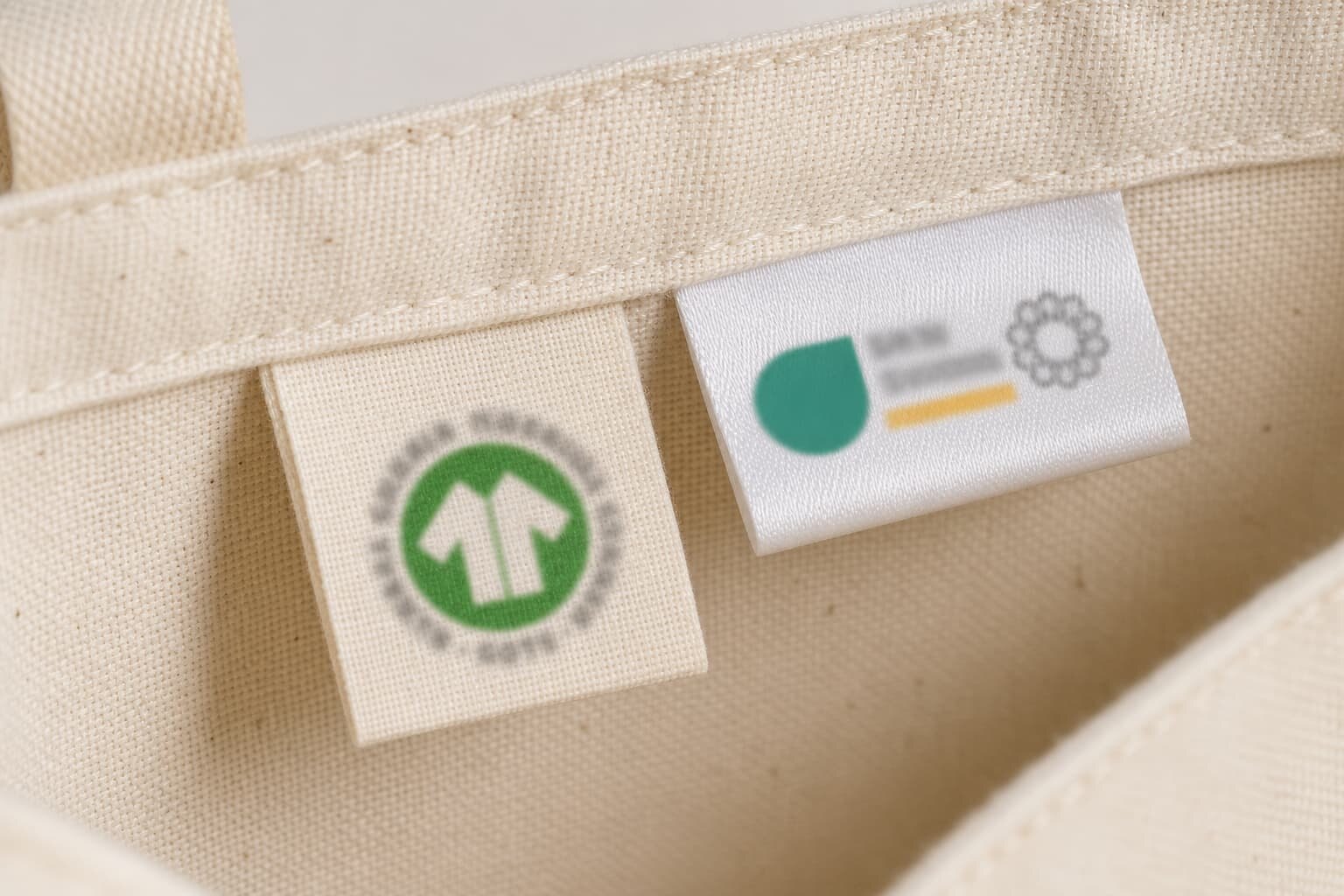
- Photograph the sample tag showing supplier name, buyer item code, sample date, version number, and fabric specification.
- Reject sample photos that only show the front panel without construction and measurement views.
- If a sample is approved with comments, photograph the corrected area again after the factory updates it.
Photograph Fabric Weight, Weave, and Organic Cotton Details
Fabric weight drives cost, hand feel, durability, print result, and shipping weight. A 5 oz organic cotton bag can work for lightweight promotional use, but it should not be compared directly with a 10 oz canvas tote quote. For reusable retail totes, many buyers choose 10 oz to 12 oz canvas, roughly 340 to 407 GSM. For drawstring pouches, wine bags, and garment packaging, lighter 5 oz to 8 oz fabrics may be suitable if the product load is controlled.
Your archive should make the fabric decision visible. Take a full-panel photo to show drape, a close-up weave photo, and a thickness or edge photo if possible. If the factory states GSM, record whether it is measured before or after dyeing, washing, printing, or finishing. Organic cotton fabric can vary in shade and speck level, especially for natural unbleached bags, so the archive should include a neutral-light photo showing the approved color character.
- Record quoted fabric as oz and GSM where possible, for example 10 oz, about 340 GSM.
- Photograph natural cotton flecks, weave openness, slubs, and any visible seed marks.
- Ask whether the fabric is organic cotton canvas, plain weave cotton, muslin, twill, or a blended construction.
- For dyed bags, include lab dip, bulk fabric swatch, and final sewn sample photos in the archive.
- For washed bags, photograph before-wash and after-wash dimensions if shrinkage affects the final size.
Capture Dimensions and Construction With Measurement Evidence
A sample photo without a ruler is useful for appearance but weak for production control. Organic cotton bags are cut and sewn products, so small tolerance differences are normal. The problem starts when the buyer never defines which dimensions matter. A 2 cm difference in handle drop may be acceptable for a giveaway tote but not for a shoulder tote sold at retail. A small gusset change may affect carton quantity, retail shelf fit, or product loading.
For each approved sample, photograph the bag flat with a ruler across the width and height. Then photograph handle length, handle width, gusset depth, bottom fold, side seam, inner seam, and label placement. If the bag has a zipper, drawstring, snap, inner pocket, or messenger strap, each functional part needs a separate photo. The goal is not to create an art shoot. The goal is to give the inspector and production line a clear picture of what must be repeated.
- Define size tolerance by product type, not as a vague statement like normal tolerance accepted.
- Measure handle drop from top edge of bag to highest point of handle when laid flat.
- Photograph reinforcement: box-cross, bartack, double row stitching, or folded seam construction.
- Include thread color and stitch density close-ups when the sewing appearance is part of the brand standard.
- If the product is a pouch, photograph drawcord diameter, cord end treatment, channel height, and knot style.
Archive Print Method, Artwork Position, and Color Limits
Print is where many organic cotton bag approvals fail because the buyer approves a clean digital artwork file instead of a real printed sample. Cotton canvas is textured, so ink does not behave like it does on paper or polyester. Water-based screen print is common for one-color and two-color logos because it gives a softer hand feel. Digital pigment print may fit detailed artwork or low MOQ multi-SKU programs, but edge sharpness and color density need realistic approval.
Your photo checklist should capture the full print area and several close-ups. Photograph the logo with a ruler showing print width, height, distance from top seam, and distance from side seam. For multi-color prints, include registration details. For heavy ink coverage, photograph the reverse side to show strike-through or stiffness. If the bag will be folded through the print area, photograph the approved folding line because cracking or pressure marks can appear after packing.
- Archive the print method: water-based screen print, discharge print, pigment print, heat transfer, embroidery, woven label, or patch.
- Photograph print color beside the approved Pantone reference or buyer color card where possible.
- Record acceptable variation for natural cotton fabric because base fabric shade can affect perceived ink color.
- Check fine lines, small letters, QR codes, and barcode readability on the real fabric before approving bulk.
- For repeat orders, compare new strike-off photos with the previous golden sample before mass printing.
Connect the Photo Archive to MOQ and Quote Comparison
A sample archive only becomes commercially useful when it is tied to quote data. Two suppliers may both quote an organic cotton tote, but one quote may use 7 oz fabric, standard screen print, no individual packing, and 30-day lead time. Another may use 10 oz canvas, custom dyed fabric, retail hangtag, barcode label, and a longer fabric procurement cycle. Without sample-linked quote notes, procurement may compare unit prices that are not built from the same specification.
MOQ logic also changes with material and decoration. Natural stock organic cotton fabric usually supports lower MOQ than custom dyed fabric. One-color screen print has a different setup cost profile than four-color artwork. Multiple bag sizes or logo versions can increase cutting, printing, and packing complexity even if the total order quantity looks large. Your archive should show which sample belongs to which quote version so later cost changes can be traced.
- Attach sample code to each quoted line item, not only to the general project name.
- Record whether the quote is based on stock fabric, made-to-order fabric, or custom dyed fabric.
- Separate unit price from setup charges, sample fees, lab dip fees, screen charges, and courier cost.
- Ask if MOQ is per style, per size, per color, per artwork, or per total order.
- When a supplier lowers price, request a revised sample archive if fabric, print, packing, or construction changes.
Use Packing Photos to Avoid Warehouse and Retail Problems
Packing is often treated as an afterthought, but it affects print condition, carton strength, receiving speed, and retail presentation. Organic cotton bags may be packed flat, folded, bundled, banded with paper, individually packed in polybags, or packed plastic-free according to the buyer's sustainability policy. Each method changes labor cost and carton volume. If packing is not photographed at the sample or pre-production stage, the first clear evidence may arrive too late during final inspection.
For distributors and retail buyers, archive photos should show folding direction, inner quantity, carton liner, moisture protection, carton label, barcode placement, and any hangtag or sticker position. If the bag is natural cotton, carton cleanliness matters because oil, dust, and wet marks are highly visible. A packing photo set also helps warehouse teams understand what they will receive and helps procurement challenge vague quote lines such as standard export packing.
- Photograph one open carton showing inner arrangement, not only the closed carton mark.
- Record units per inner bundle and units per master carton.
- Confirm whether polybag, paper band, tissue, hangtag, barcode sticker, or retail header card is included in the quote.
- Check that print panels are not folded face-to-face if ink transfer is a risk.
- For plastic-free packing, confirm moisture protection and carton strength before approving the change.
Set Acceptance Criteria Before the Factory Starts Bulk Production
Photos are only useful if they support an acceptance decision. Before bulk production, define what the inspector should compare against the archive. For example, fabric must match approved weight and hand feel within agreed tolerance; print position must be within the approved measurement tolerance; handle reinforcement must match the golden sample; stains, broken stitches, skipped stitches, and severe print defects must be classified clearly. This prevents the final inspection from becoming a subjective debate.
Acceptance criteria should be practical. Cotton bags are sewn products made from natural fabric, so very tiny slubs or shade character may be normal. But severe stains, wrong GSM, missing labels, weak handle stitching, wrong logo size, incorrect carton labels, and packing that damages the print should not be treated as harmless variation. The archive gives the buyer a fair basis to accept normal material character while rejecting avoidable production mistakes.
- Define critical defects: wrong material, wrong logo, unsafe component, missing required label, or incorrect barcode.
- Define major defects: visible stains, broken seams, severe print misplacement, weak handle attachment, or wrong carton quantity.
- Define minor defects: small thread ends, slight natural cotton specks, or small visual variation within approved limits.
- Include approved sample photos in the inspection checklist given to third-party QC or the buyer's own inspector.
- Ask the factory to send first-line production photos before cutting or printing the full order.
Build a Simple Folder System Buyers Can Actually Use
A sample archive fails when the folder is too complicated or when files are named randomly. The best system is simple enough for sales, sourcing, QC, and the supplier to follow. Use one folder per item code and sample version. Put full photos, measurement photos, print close-ups, packing photos, quote sheet, artwork file, and approval email in the same location. File names should include date, sample stage, view, and version.
For repeat orders, do not overwrite the previous archive. Organic cotton bag programs often run for several seasons with small changes in logo, fabric shade, or packing requirement. If last year's golden sample disappears, the buyer loses leverage when comparing a reorder. Keep a locked final approval folder and a separate working folder for changes.
- Use a naming format such as CTM-TOTE-001-PPS-front-2026-03-15-v2.
- Keep rejected samples in a rejected folder with reason notes so the same mistake is not repeated.
- Save artwork approval, color approval, and sample approval separately instead of relying on email chains.
- Photograph the physical sample label before sealing it in the sample archive cabinet.
- Review the archive at PO release, pre-production meeting, inline inspection, and final inspection.
Common Mistakes This Checklist Helps Buyers Avoid
The biggest mistake is approving appearance without locking specification. A natural cotton tote can look acceptable in a front photo while hiding a lighter fabric, shorter handle, weaker seam, or different packing. Another common mistake is using supplier showroom samples as a quality promise. Showroom samples may not use the same fabric lot, sewing line, print ink, or packing method as the bulk quote.
Procurement teams also lose money when they request quote revisions without updating the sample record. If the buyer asks for a lower unit price, the supplier may propose thinner fabric, simpler packing, or different print handling. Those changes can be reasonable, but they must be visible. The sample archive should show exactly what the final price buys.
- Do not approve bulk from only one front-view photo.
- Do not compare quotes unless fabric GSM, print method, size, handle construction, and packing are aligned.
- Do not assume organic cotton wording on the quote automatically covers label, hangtag, and document requirements.
- Do not let a lower MOQ hide higher setup cost, longer lead time, or weaker material availability.
- Do not release final payment without checking shipment samples or final inspection photos against the archive.
Specification comparison for buyers
| Spec decision | Recommended option | When it fits | Buyer risk to check |
|---|---|---|---|
| Fabric weight for reusable retail tote | 10 oz to 12 oz organic cotton canvas, about 340 to 407 GSM | Brand merchandise, grocery, gift-with-purchase, bookstore, and event tote orders needing a structured hand feel | Supplier may quote lower GSM or open weave fabric while calling it 10 oz; archive close-up weave photos and measured sample weight |
| Fabric weight for lightweight promo bag | 5 oz to 7 oz organic cotton, about 170 to 240 GSM | Budget campaigns, flat mailer inserts, light apparel packaging, and low-load giveaways | Thin fabric can show print strike-through and weak seams; photograph print reverse side and handle stress points |
| Print method for simple logos | Water-based screen print, one to two colors | Most natural cotton totes, drawstring pouches, and simple retail bag branding | Ink shade changes after curing or washing; archive wet-approved color target and final cured sample under neutral light |
| Print method for detailed artwork | Digital pigment print or fine screen print after artwork test | Small MOQ, gradients, illustrations, or multiple SKUs with changing graphics | Fine lines can blur on coarse canvas; photograph macro details beside ruler and confirm acceptable edge sharpness |
| Handle construction | Self-fabric handles with box-cross reinforcement or reinforced bartack | Reusable tote bags carrying books, apparel, grocery items, or wine gift packs | Bulk may reduce stitch density or skip reinforcement; archive underside and close-up handle attachment photos |
| Sample archive format | Physical golden sample plus dated photo set and measurement record | Orders with repeat production, multiple factories, or distributor reorders | A photo-only archive cannot prove fabric hand feel; keep sealed approved sample and matching digital folder |
| Packing reference | Flat pack with carton liner, export carton label, and inner bundle count photo | Retail distribution, Amazon-style receiving, warehouse scanning, and multi-SKU shipments | Carton compression can crease printed panels; archive packing method before bulk packing starts |
Buyer checklist before sampling
- Assign one sample code that appears on the physical tag, photo folder, quote sheet, and PO line.
- Photograph the full front, full back, side gusset if any, bottom seam, handles, inside seam, label, and packing method.
- Record fabric type, organic cotton claim wording, GSM or ounce weight, yarn appearance, weave, color, shrinkage allowance, and approved hand feel.
- Measure bag width, height, gusset, handle length, handle width, print size, print position, label position, and carton size with a ruler visible in photos.
- Take close-up photos of print edges, color density, ink cracking risk, reverse-side show-through, and any registration tolerance.
- Confirm whether the archived sample is proto sample, pre-production sample, shipment sample, or golden sample.
- Save photos in dated folders before sample is used, washed, cut, or sent to another department.
- Link the archive to quote data: MOQ, unit price basis, setup charges, sample fee, lead time, packing standard, and validity date.
- Keep one sealed physical sample per approved production version, especially for repeat orders and private-label distributor programs.
- Do not approve bulk production from lifestyle photos, sales images, or factory catalog photos without technical sample photos.
Factory quote questions to send
- What fabric construction is quoted: organic cotton canvas, plain cotton, twill, muslin, or blended fabric, and what is the exact GSM or ounce weight?
- Is the quoted fabric greige, bleached, dyed, or washed, and will the bulk hand feel match the sample after finishing?
- What minimum order quantity applies to this exact fabric, color, print method, and packing requirement?
- Are sample charges, screen charges, printing setup, lab dip, strike-off, and courier cost included or listed separately?
- Which sample stage does the quote include: proto sample, print strike-off, pre-production sample, or shipment sample?
- What print method is quoted, and what artwork limitations apply to line width, ink coverage, halftone, metallic ink, or edge sharpness?
- What is the quoted lead time after artwork approval, after deposit, and after fabric or lab dip approval?
- What packing is included: individual polybag, plastic-free banding, inner carton, master carton, barcode label, or retail-ready packing?
- What inspection standard will be used for seam strength, print defects, stains, size tolerance, needle holes, and carton condition?
- Can the factory provide dated sample archive photos before production and retain one sealed duplicate sample until shipment release?
Quality-control points to confirm
- Fabric GSM must be checked against the approved sample, not only against the supplier quotation.
- Bag dimensions should be measured after normal finishing because cutting, sewing, dyeing, washing, and pressing can change size.
- Print color should be compared to the approved strike-off under consistent light, with the final cured print photographed before packing.
- Handle attachment should show reinforcement, stitch count, and thread color matching the approved sample.
- Organic cotton wording on labels, hangtags, and carton marks should match the buyer-approved compliance language.
- Packing photos should prove inner quantity, folding method, carton liner, carton marks, and barcode placement before mass packing.