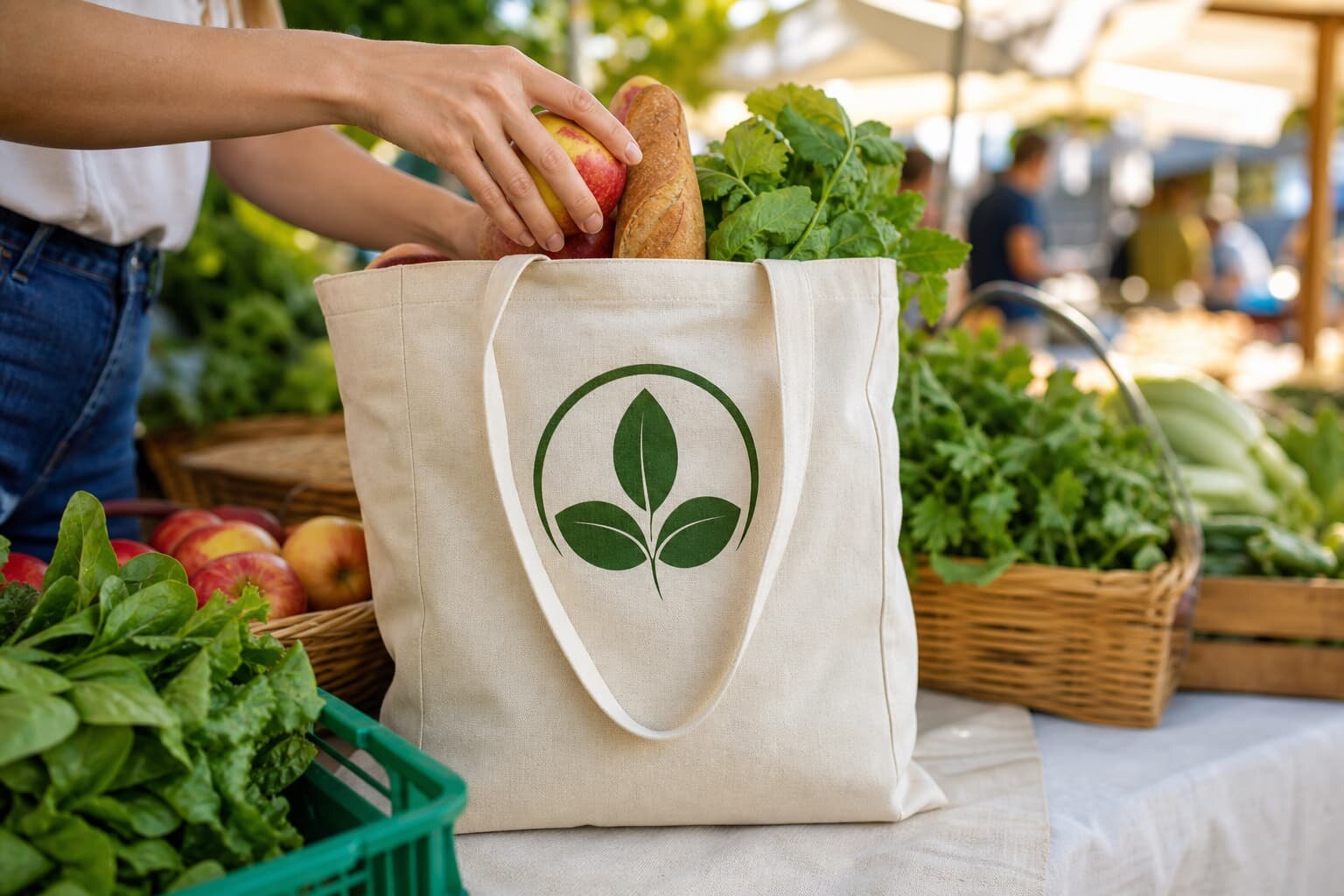
1. Start With The Claim Scope
The main buying problem with an organic cotton bag recycled claim is simple: suppliers often use the word recycled before they explain what is actually recycled. That can mean recycled fiber in the body, recycled polyester in the thread, recycled paper in the hangtag, or recycled packaging only. If you do not define the scope early, three factories can send quotes that look similar but are not comparable at all.
For procurement, the safest approach is to write the claim at component level, not as a broad marketing sentence. Ask the supplier to state whether the recycled content applies to the body fabric, yarn, sewing thread, label, zipper tape, print film, or outer packaging. Once that is clear, the quote can be judged on real construction and not on a vague sustainability line that sounds good but does not survive audit or label review.
- Name the exact component carrying the recycled claim.
- Keep body fabric, trims, and packaging as separate line items.
- Reject quotes that only say recycled bag without explaining the material mix.
- Align the claim wording with the product label and invoice language.
2. Compare The Claim Structures, Not Just The Fabric
Most quotes for this product fall into three structures. The first is a pure organic cotton body with no recycled content in the bag itself, only recycled packaging or recycled trims. The second is an organic cotton body with one recycled supporting part, such as thread or label. The third is a blended body fabric where recycled cotton or recycled polyester is part of the weave. These are not the same product, not the same cost base, and not the same claim risk.
A buyer should decide which structure matches the brand story before asking for pricing. If the shopper-facing message is clean organic fabric, a recycled thread may be enough for internal sustainability goals but not enough for a front-of-pack recycled-content claim. If the product is meant to compete on price or structure, a blended body might make more sense, but then the GSM, shrinkage, and handfeel need tighter control because recycled fiber can change the fabric behavior.
- Pure organic cotton is simplest to audit but may not support a recycled-content claim.
- Recycled trims help with compliance stories but rarely justify a body-fabric claim.
- Blended body fabric needs the most attention on handfeel and shrinkage.
- Choose the claim structure first, then compare quotes.
3. Lock The Fabric Spec Before You Compare Prices
Fabric weight drives a large part of the quote spread. A light promotional tote around 140 to 160 GSM behaves very differently from a retail-ready bag at 180 to 220 GSM or above. The heavier bag uses more yarn, costs more to cut and sew, and often holds print better. If one factory quotes a 150 GSM canvas and another quotes a 210 GSM twill, the price gap is not a mistake; it is a different product.
The same logic applies to weave, shrinkage, and surface finish. A plain weave can feel flatter and print cleanly, while a twill can look more premium but may cost more and show less sharp print detail at small sizes. Recycled fiber can change the handfeel again, so you should ask for the fabric composition, GSM tolerance, and expected shrinkage together. Do not approve a sample just because the color looks close if the fabric weight or weave is off.
- Write the target GSM and acceptable tolerance into the RFQ.
- State the weave or fabric build, not only the bag style name.
- Ask whether the recycled component changes shrinkage or stiffness.
- Compare samples only after you confirm the same fabric family.
4. Match Print Method To The Fabric And Claim
Decoration is where many buyers lose time and margin. A one-color screen print on organic cotton is usually the easiest to control, but a dense multi-color print, foil, puff effect, or heat transfer can change both handfeel and cost. If the bag is meant to carry a clean organic or low-waste story, the decoration should support that story instead of adding a finish that makes the product look over-processed.
Print choice also affects how the supplier quotes MOQ and lead time. Screen printing may need separate setup by color, while digital print can reduce setup but may shift the cost structure on small runs. If the quote includes recycled content in the bag body, do not let the decoration process blur the claim. Printing is decoration, not recycled material evidence. Ask the factory to separate print cost, screen or plate cost, and any special curing or wash steps so you can compare suppliers fairly.
- Use the same print method across suppliers when you compare quotes.
- Count setup cost separately from unit cost.
- Ask for print rub resistance if the bag will be folded, shipped, or carried often.
- Treat decoration as a performance decision, not just an artwork decision.
5. Read MOQ And Lead Time Correctly
MOQ is rarely one number. For this kind of bag, the fabric MOQ, yarn MOQ, color MOQ, print MOQ, and packing MOQ can all be different. A factory may quote a low bag MOQ if they already have base fabric, but the same factory may need a higher minimum if the recycled yarn is special order, the label is custom woven, or the carton pack count is custom. If you only ask for a final unit MOQ, you miss the real constraint.
Lead time should be broken into material booking, sample approval, bulk production, and packing. A clean quote should tell you whether the recycled component extends the booking window, whether artwork approval can hold the job, and whether the factory needs extra time for pre-production testing. For planning, compare not only the total lead time but also the latest date the factory can still change the recycled claim without causing a shipment slip. That matters more than a vague promise to ship fast.
- Ask for MOQ by component, not just by style.
- Separate material booking time from sewing time.
- Check whether special labels or recycled trims change the minimum order.
- Compare quotes on the same shipping term and same pack format.
6. Use Sample Stages To Catch Mismatches Early
For a claim-sensitive bag, one sample is not enough if the first sample is made from stock material and bulk will use a different material order. The best process is to review at least a proto sample for construction, then a pre-production sample for the actual fabric and print, and only then release bulk. This avoids the common problem where the approved sample looks good but the shipment arrives with a softer, thinner, or darker body because the factory changed material source.
On the sample, check the exact points that affect buyer acceptance: bag size, seam allowance, handle attachment, label placement, print register, and fold behavior. If the recycled element is in the body fabric, compare the sample against the target handfeel and not against a generic cotton tote. If the recycled element is in trims or packaging, confirm that the sample still reflects the final BOM. The sample is not only for approval; it is the control document for the production line.
- Request proto, pre-production, and bulk reference samples when timing allows.
- Check the sample against the final BOM, not an assumed BOM.
- Measure size, handle length, and print position before approval.
- Keep one signed sample on file for inspection at shipment.
7. Build A Packing And Labeling Spec Buyers Can Use
Packing often gets ignored until the last week, but it can change both cost and the claim story. A bag packed flat in a simple polybag has a different labor cost from a folded retail pack with barcode label, insert card, and carton division. If your channel is retail, the packing spec should say how many bags per inner pack, whether a hangtag is required, whether the side label is visible, and whether the carton needs printing or a barcode. If your channel is wholesale, keep the packing simple and save cost where the market will not pay for presentation.
Labeling is also where recycled claims can go wrong. If the side label says one thing, the hangtag says another, and the carton mark uses a third phrase, the factory will create confusion at the dock and your QA team will spend time correcting paperwork. The safest approach is to define one approved claim sentence, one product code format, and one packing layout before bulk starts. That keeps the production team, freight team, and buyer on the same page.
- Specify inner pack count, outer carton count, and carton mark format.
- Keep the claim wording identical across bag label, hangtag, and invoice.
- Decide early whether the bag needs retail presentation or bulk packing.
- Do not let packaging changes happen after sample approval without re-approval.
8. Ask For Evidence That Matches The Quoted Batch
A recycled claim is only useful if the evidence matches the exact batch you are buying. The factory should be able to explain the material source, the blend ratio, and the document trail for the quoted style. That may include a material declaration from the yarn or fabric supplier, an internal BOM, purchase references, and test reports if the buyer requires them. The point is not to collect paperwork for its own sake; the point is to prove that the quote and the shipment refer to the same material plan.
Be careful with generic certificates or old documents that do not line up with the current order. A document tied to a different color, different factory, different season, or different composition does not help when the bag arrives and the claim is challenged. Ask the supplier to identify which document supports which component, and which lot or batch it covers. If they cannot tie the evidence to the exact order, treat the recycled claim as unverified until they can.
- Request evidence tied to the current material batch, not a general marketing file.
- Match documents to the body fabric, trims, and packaging separately.
- Check that the quote wording and the evidence wording use the same material description.
- Escalate any claim that cannot be traced back to the quoted BOM.
9. Avoid The Usual Sourcing Mistakes
The biggest mistake is comparing unit price before comparing the spec. If one factory includes recycled labels, custom packing, and preproduction samples while another is quoting only the sewn bag, the lower price is not really lower. Another common mistake is assuming that a recycled-looking fabric is enough to support a recycled claim. Color and texture are not evidence. Only the actual material mix and the supporting documents matter.
A second category of mistake is failing to control the approved sample. If procurement approves a sample made from stock fabric, but bulk uses a different recycled blend or different GSM, the shipment may still look similar while failing on handfeel, shrinkage, or label wording. Do not let the order move to production until the factory confirms the exact source of the body fabric, thread, labels, and pack materials. This is where buyers save the most money: not by squeezing the last cent from the quote, but by preventing the wrong lot from being produced.
- Do not compare prices before matching GSM, print, pack, and claim scope.
- Do not approve a sample made from a different material source than bulk.
- Do not accept recycled-looking color as proof of recycled content.
- Do not let labels, cartons, and invoices use different claim language.
10. Use A Quote Comparison Workflow That Holds Up In Review
The cleanest way to compare suppliers is to force every quote onto one line sheet. Start with the same bag size, same fabric weight, same claim scope, same print method, same packing, and same shipping term. Then ask each factory to break out fabric, sewing, print setup, recycled trims, labeling, sample cost, and carton packing. That gives procurement a real basis for comparison instead of a mixed bundle of assumptions.
Once the quotes are normalized, look for the drivers, not just the final number. If one factory is cheaper because they use a lower GSM body, a simpler pack, or no proof documents, note that as a decision tradeoff, not a discount. If another factory is higher because they quoted a clearer recycled component and better label control, that may be the safer choice for retail or brand programs. The goal is not to buy the cheapest quote; it is to buy the quote that matches the product brief without hidden correction costs later.
- Use one line sheet for all suppliers and keep the spec identical.
- Break out fabric, trims, print, packing, and sample costs separately.
- Record which quote uses stock material and which quote uses fresh booking.
- Compare the risk of rework, not only the unit cost.
Specification comparison for buyers
| Spec decision | Recommended option | When it fits | Buyer risk to check |
|---|---|---|---|
| Body fabric claim | 100% organic cotton body with recycled claim only if the body yarn or fabric truly includes recycled fiber | Best when the brand wants a clean organic story and a simple product claim | Do not let a recycled thread or recycled bag insert get described as recycled body fabric |
| Trim claim | Organic cotton body with recycled polyester thread, label, zipper tape, or hangtag | Works when the bag body must stay pure organic but the program still wants a recycled component | Check whether the recycled share is too small to matter for marketing or purchasing approval |
| Mixed-fiber body | Organic cotton blended with recycled cotton or recycled polyester in the body fabric | Fits retail programs that need a lower-cost or more structured fabric build | Confirm blend ratio, handfeel, shrinkage, and whether the claim wording matches the real mix |
| Decoration method | Water-based screen print or simple one-color print on a stable cotton body | Best when you want decoration without adding plastic-heavy finishes | Do not assume printing alone creates a recycled-content claim |
| Packaging claim | Recycled polybag, recycled carton, or recycled paper insert | Useful when the product story includes lower-waste packaging | Separate packaging claims from bag-content claims so the RFQ stays clear |
Buyer checklist before sampling
- State exactly which component carries the recycled claim: body fabric, yarn, thread, label, zipper tape, packaging, or none.
- Lock the target fabric weight in GSM and the weave or knit structure before asking for prices.
- Ask the factory to quote the same bag size, handle length, print method, and packing format across all suppliers.
- Request the blend ratio or material breakdown for every claimed recycled component, not only the finished bag description.
- Confirm whether the quote includes sampling, artwork setup, plates/screens, and packaging materials.
- Check shrinkage, seam strength, and print durability on the sample before approving bulk production.
- Verify whether MOQ changes when recycled yarn, recycled trim, or special labeling is added.
- Compare lead time by raw material booking, sample approval, and bulk production separately.
- Review carton pack count, inner pack, and retail labeling so the final shipment matches the sales channel.
- Keep the claim wording on the quote, sample, carton mark, and invoice aligned.
Factory quote questions to send
- Which exact component is recycled, and what is the percentage or blend ratio?
- Can you quote body fabric, trims, print, and packing as separate line items?
- What is the fabric GSM before and after washing, and what tolerance do you use?
- Is the MOQ driven by fabric color, recycled yarn order, print setup, or packaging?
- Which print method do you recommend for this fabric weight, and why?
- How many sample rounds are included before bulk production starts?
- What is the realistic lead time for fabric booking, sample approval, and mass production?
- What size, stitch, seam, and handle checks do you use on the pre-production sample?
- What document can you provide to support the recycled claim for this specific batch?
- How will the bags be packed, labeled, and carton-marked for our destination market?
Quality-control points to confirm
- Confirm the finished bag matches the approved sample in size, construction, handle length, and label position.
- Check the fabric GSM against the agreed range, not just the supplier's description of heavy or light fabric.
- Measure shrinkage after wash or steam if the bag will face retail use or repeated handling.
- Inspect stitch density, seam straightness, and stress points at the handle and side seams.
- Test print registration, ink coverage, and rub resistance on the approved decoration method.
- Check that recycled labels, side labels, hangtags, and carton marks all use the same claim wording.
- Verify that the BOM lists each material separately and that recycled items are not mixed into vague wording.
- Open random packed units to confirm fold style, pack count, and carton arrangement match the PO.
- Review color consistency between sample, bulk fabric, and any recycled trim components.
- Hold back approval if the factory cannot tie the claimed recycled material to the quoted batch.