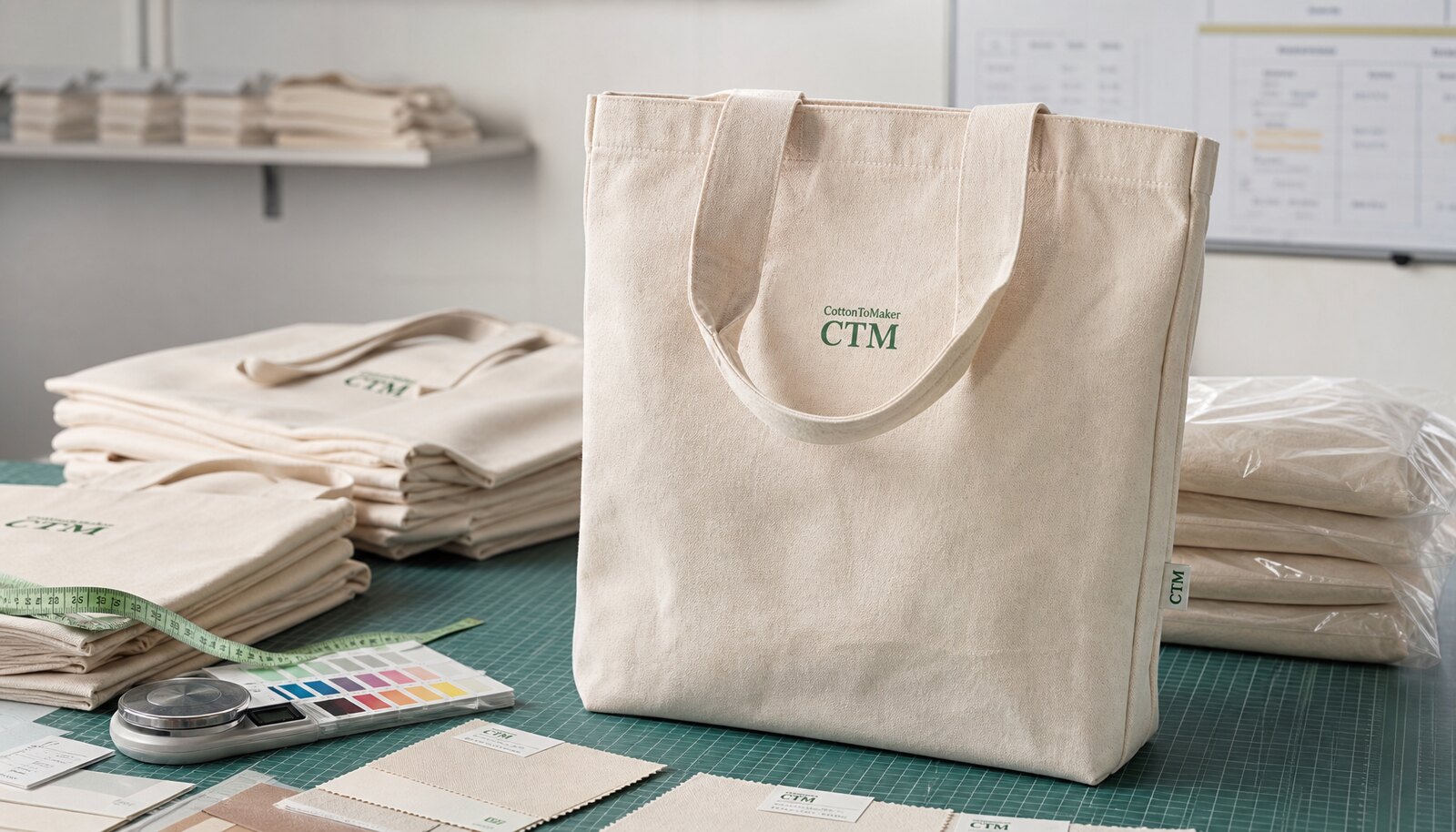
Start With The Inspection Risk, Not The Bag Name
Procurement teams often send an RFQ that says “organic cotton bag, natural color, printed logo” and expect factories to quote the same item. In practice, that sentence can produce several different products: a light 5 oz giveaway tote, a heavier 10 oz retail shopper, a drawstring pouch, or a cotton bag made from fabric that is only claimed as organic without enough documentation for your internal compliance file. The buying problem is not finding a factory that can make a cotton bag. The problem is controlling the specification before price comparison and then inspecting the bulk order against the same standard.
A good inspection guide for organic cotton bags should connect sourcing, sample approval, production, and shipment release. If your RFQ is too loose, the inspection team will only find problems after the factory has already cut fabric, printed panels, and packed cartons. At that stage every correction is expensive. The practical goal is to define the measurable details early: GSM, fabric finishing, bag size tolerance, stitching, print method, label wording, packing, and document requirements.
- Use “organic cotton bag” as the category, not as the full specification.
- Separate product quality requirements from organic material documentation requirements.
- Approve one physical sample and one written specification sheet before bulk cutting.
- Make the final inspection checklist match the RFQ and the approved sample.
Fabric GSM And Hand-Feel Decisions
Fabric weight is one of the first quote drivers and one of the most common sources of misunderstanding. Organic cotton bags are often quoted in ounces per square yard or GSM. A 5 oz cotton bag is roughly in the light promotional range, while 8 oz feels more suitable for repeat use. For retail reusable bags, 10 oz to 12 oz cotton gives a stronger hand-feel but increases fabric consumption, sewing difficulty, carton weight, and freight cost. If a supplier quotes a much lower price, check whether they reduced GSM, used narrower handles, changed the weave, or quoted a smaller bag.
For natural organic cotton, buyers should also check the fabric surface. Natural cotton may show small seed flecks, slight shade variation, and a less uniform base than bleached fabric. That can be acceptable if your brand wants an undyed look, but it must be approved before bulk production. If you need a cleaner surface for detailed printing or retail presentation, specify combed yarn, tighter weave, bleaching, or better fabric grading. Each choice affects price and lead time.
- 5 oz to 6 oz: suitable for lightweight events, insert bags, and lower-cost promotional programs.
- 7 oz to 8 oz: balanced option for brand merchandise, conferences, and general retail giveaway use.
- 10 oz to 12 oz: stronger retail reusable tote, better structure, higher cost and freight weight.
- Natural fabric: expect some seed flecks unless a cleaner grade is specified and sampled.
- Dyed fabric: confirm colorfastness, shade lot control, and whether dyeing MOQ changes the order minimum.
Organic Claim Control
The word organic creates a documentation responsibility. Some buyers only need a marketing material declaration from the supplier. Others need chain-of-custody documents or certification-related paperwork for retail, marketplace, or internal ESG review. Do not assume every organic cotton quote includes the same document level. Some factories can sew organic cotton fabric but may not be certified for processing under the standard your company requires. That distinction matters before a purchase order is placed.
Your RFQ should state exactly what document package is required. If you require certified organic cotton, ask what certificates apply to the fabric supplier, the dyeing or finishing facility, the printing process, and the sewing factory. If your company only needs material declaration, say so clearly and avoid paying for paperwork that is not required. Quality inspection should include a document check alongside physical product checks, because a visually correct bag can still fail your procurement file.
- Ask whether the quoted price includes organic cotton documentation or only organic cotton fabric.
- Confirm whether printing, dyeing, washing, and sewing are covered by your required standard if applicable.
- Request document samples before order confirmation when compliance approval is slow.
- Make label wording match the documents; avoid unsupported claims on care labels, hangtags, or packaging.
Bag Construction And Stitching Criteria
An organic cotton bag can look fine in a product photo and still fail in daily use because of weak handles, shallow seam allowance, or poor reinforcement. Procurement teams should define the construction style before comparing quotes. For a flat tote, the key points are body size, top hem height, side seam type, bottom seam, handle material, handle width, and reinforcement stitch. For a gusseted shopper, add bottom gusset depth, corner alignment, and whether the side gusset is folded or sewn as a separate panel.
For most tote bags, handle reinforcement should be more than a straight line of stitching. A box stitch with cross stitch gives better load resistance, especially on 8 oz and heavier bags. Stitch density should be consistent and suitable for the fabric weight; too few stitches look rough and weaken seams, while too many can perforate lighter fabric. During sample approval, pull the handle by hand, inspect the back side of the stitch area, and check whether the reinforcement is centered and symmetrical on both handles.
- State finished size tolerance, for example plus or minus 0.5 cm for small bags or plus or minus 1 cm for larger totes.
- Specify handle drop, not only total handle length, because handle drop affects shoulder use.
- Check thread color, thread thickness, backstitching, and loose thread trimming.
- Use a simple load test standard, such as agreed test weight and hang time, for functional acceptance.
- Reject open seams, skipped stitches, broken needles marks, twisted handles, and uneven top hems as major defects.
Print Method And Artwork Approval
Printing is where many organic cotton bag orders lose consistency. Water-based screen printing is a common choice for simple logos and solid color artwork because it gives a softer hand-feel on cotton. Pigment printing can work for larger coverage, but opacity and curing must be controlled. Heat transfer may be useful for detailed artwork or short runs, but it can feel less integrated with the fabric and may not match the buyer’s sustainability expectations. The correct method depends on artwork, quantity, fabric weight, color, and target price.
Do not approve print from a PDF alone. Approve print size, position from bag edges, number of colors, Pantone or target color, ink type, and acceptable tolerance. Natural cotton base color can change the perceived print shade, especially for light ink colors. Ask the factory to print on the actual bulk fabric or the closest available fabric during sampling. For inspection, check print adhesion, rubbing resistance, edge sharpness, pinholes, ink buildup, registration, and whether the print is distorted by seam or handle placement.
- Use screen print for simple one-to-three color logos and repeatable bulk production.
- Use digital print only when artwork detail justifies it and sample approval confirms hand-feel and wash behavior.
- Avoid placing fine text too close to seams, folds, or heavy weave texture.
- Confirm whether the print is on cut panels before sewing or on finished bags after sewing.
- Keep an approved strike-off or pre-production sample for final inspection comparison.
MOQ And Cost Drivers
MOQ for organic cotton bags is not only a factory preference. It usually comes from fabric sourcing, dyeing lot size, printing setup, label production, and line efficiency. A supplier may accept a low bag quantity if natural stock organic cotton fabric is available. The same supplier may require a higher MOQ for custom dyed organic cotton, custom webbing handles, special labels, or certified documentation. Procurement teams should ask what creates the MOQ so they can adjust the specification intelligently instead of only pushing for a lower number.
When comparing quotes, look for hidden specification changes. One factory may quote 8 oz fabric, another may quote 6 oz. One may include individual polybags, another may quote bulk pack. One may include a pre-production sample, another may charge separately. A quote that is 8 percent cheaper but excludes certification documents, packing, or inland delivery may not be cheaper after all. Ask suppliers to show the cost-sensitive items clearly so your comparison is commercial, not just numerical.
- Fabric: GSM, organic status, dyeing, finishing, fabric width, and wastage affect cost.
- Labor: gussets, lining, zipper, pockets, and reinforced handles increase sewing time.
- Printing: color count, print area, setup, curing, and artwork position affect price.
- Labels: woven labels, care labels, hangtags, and barcodes add material and handling cost.
- Packing: individual bags, paper bands, retail cartons, and moisture protection change both cost and freight.
Sampling Workflow
A reliable sample workflow prevents expensive arguments later. The first sample can be a fit or construction sample if the fabric is not yet ready, but it should be labeled clearly as a substitute-material sample. For approval before mass production, procurement should request a pre-production sample using actual fabric weight, actual color or natural base, actual print method, actual handle construction, labels, and packing method. This is the sample the factory and buyer should sign off as the inspection reference.
Sample comments should be written as measurable corrections. “Make it stronger” is not enough. Write “change handle reinforcement to box cross stitch, 2.5 cm wide handle, 65 cm total handle length, 28 cm handle drop, 8 stitches per inch.” If the logo is wrong, state the target print width, distance from top edge, distance from side seams, and color reference. The sample approval record should include photos, dimensions, material notes, and any accepted deviations.
- Development sample: checks size concept, construction, and rough appearance.
- Print strike-off: checks artwork color, ink coverage, and hand-feel on selected fabric.
- Pre-production sample: checks all final materials and workmanship before bulk cutting.
- Packing sample: checks folding, label position, barcode scan, carton count, and presentation.
- Golden sample: kept by buyer, factory, and inspection team for final shipment comparison.
Incoming And In-Line Inspection
Quality control should start before sewing. Incoming fabric inspection checks GSM, width, shade, stains, holes, slubs, odor, and roll consistency. For organic cotton, this step is especially useful because natural fabric may have visible flecks and shade variation. The buyer should decide what is acceptable during sample approval, then the factory can sort fabric panels accordingly. If the inspection only happens after finished packing, fabric defects may already be printed and sewn into bags.
In-line inspection should focus on repeat defects that can be corrected while production is running. Check cut panel size, print position, print curing, handle length, seam allowance, stitch density, and label placement. If a print jig is drifting or a sewing operator is attaching handles unevenly, the factory can correct the line before thousands of units are affected. Procurement teams should ask suppliers whether in-line checks are standard and whether they can share simple production photos or internal QC records during the order.
- Before cutting: verify fabric roll, GSM, shade, and defect level.
- Before sewing: check printed panels for position, color, curing, and stains.
- During sewing: check handle placement, seam strength, label position, and loose threads.
- Before packing: remove dirty, misprinted, misshaped, or poorly pressed pieces.
- Before shipment: inspect cartons, counts, markings, moisture condition, and random finished units.
Final Inspection Acceptance
Final inspection should be practical and written for the actual bag. A generic soft goods checklist may check quantity and appearance but miss the details that matter for organic cotton bags: fabric GSM, print adhesion, handle load, shrinkage expectation, label wording, and packing compression. The inspection team should measure a sample set from different cartons and compare them with the approved pre-production sample. If the product is packed for retail, barcode scanning and hangtag placement should be included.
Define defects before inspection. A wrong organic claim on the label is not a minor issue if it creates market compliance risk. A print color that is slightly outside tolerance may be minor for a promotional insert bag but major for a retail brand launch. Handle detachment, open seams, strong odor, mold, wrong carton marking, and mixed sizes should be treated as major or critical depending on order use. Written acceptance criteria reduce emotional negotiation when shipment is waiting.
- Critical defects: unsafe contamination, mold, wrong required compliance claim, or unusable construction.
- Major defects: wrong fabric weight, wrong print, broken seams, weak handles, wrong size, or incorrect packing count.
- Minor defects: small loose threads, slight press marks, or tiny natural flecks within approved tolerance.
- Measure across multiple cartons, not only top pieces from one carton.
- Record accepted deviations in writing before shipment release.
Packing, Lead Time, And Quote Data
Packing affects both product condition and landed cost. Organic cotton bags are often shipped flat packed in inner polybags, master polybags, paper bands, or bulk cartons depending on the buyer’s channel. Individual polybags protect goods but may conflict with sustainability goals. Paper bands look cleaner for retail or distributor handling but can scuff if cartons are loose. Very tight carton compression reduces volume but can crease prints or deform bags. Ask for carton dimensions and gross weight before booking freight.
Lead time should be broken into stages. A realistic schedule includes document confirmation, sample making, sample revision, material booking, fabric production or dyeing, printing, sewing, trimming, inspection, packing, and export handover. When the order is urgent, the factory may be able to shorten sampling or production only if fabric and trims are already available. Procurement teams should request quote data in a structured way so suppliers are easier to compare and later inspection has a firm reference.
- Quote data to request: bag size, GSM, fabric type, color, handle spec, print method, label, packing, MOQ, lead time, payment terms, and trade term.
- Packing data to request: units per inner pack, units per carton, carton size, gross weight, net weight, carton marks, and pallet requirement if any.
- Lead time data to request: sample days, bulk material days, production days, inspection window, and shipment handover date.
- Inspection data to request: factory internal QC steps, acceptable tolerance, and whether third-party inspection is supported.
- Commercial data to request: validity period, tooling or setup fees, sample fee, document fee, and cost change trigger for fabric or exchange rate.
Specification comparison for buyers
| Spec decision | Recommended option | When it fits | Buyer risk to check |
|---|---|---|---|
| Fabric weight | 5 oz to 8 oz organic cotton for giveaway totes; 10 oz to 12 oz for retail reusable bags | Promotional orders, retail gift-with-purchase, bookstore or grocery reusable bags | Low GSM can feel weak after washing; high GSM increases freight, sewing time, and unit cost |
| Fabric construction | Plain weave natural cotton with pre-shrunk or controlled-shrinkage finishing | Simple flat tote bags, drawstring bags, pouch sets, and unlined shopper bags | Uncontrolled shrinkage can distort print registration, bag size, and carton count after steam or wash testing |
| Print method | Water-based screen print for solid logos; pigment print for larger coverage; heat transfer only for complex artwork with buyer approval | Brand logos, campaign graphics, simple retail designs, and seasonal promotions | Ink hand-feel, cracking on heavier ink layers, color tolerance, and print placement drift across bulk production |
| Handle construction | Self-fabric handles with box stitch plus cross stitch, or cotton webbing handles for higher load use | Daily-use totes, grocery bags, conference bags, and retail merchandise bags | Handle tearing, uneven length, skipped stitches, and poor reinforcement hidden under folded seams |
| MOQ logic | Base MOQ on fabric availability, dyeing or printing setup, and packing type rather than only bag quantity | Small brand programs, distributor stock orders, and repeat seasonal procurement | Very low MOQ may force stock fabric, limited color control, higher unit cost, or mixed-lot fabric shade |
| Sample approval | Approve a pre-production sample with exact fabric, size, print, stitching, label, and packing before bulk cutting | New artwork, new bag size, new factory, or first organic cotton program | Sales samples may use substitute fabric or faster print method unless the sample status is clearly written |
| Packing format | Flat pack by inner polybag or paper band, then export carton with moisture protection | Retail display, ecommerce fulfillment, distributor warehousing, or shipment to decoration partner | Over-compressed cartons can crease prints; loose packing increases carton volume and freight cost |
| Inspection level | AQL inspection with extra checks for fabric defects, print adhesion, handle strength, and carton marking | Most export orders where procurement needs release evidence before balance payment | Generic inspection may miss organic claim documents, shade lots, and functional load testing |
Buyer checklist before sampling
- Confirm the organic cotton claim required by your market and whether you need transaction documents, scope certificates, or only supplier material declaration.
- Write fabric GSM, weave, color, shrinkage expectation, and acceptable shade tolerance in the RFQ instead of asking only for an organic cotton tote bag.
- State finished bag size after sewing, not only cutting size, and include tolerance for width, height, gusset, and handle drop.
- Ask the factory to quote the same print method, ink type, number of colors, print area, and print position for every supplier comparison.
- Request a pre-production sample using actual bulk fabric and actual printing process before authorizing mass cutting.
- Check handle reinforcement style, stitch density, seam allowance, thread color, and load-bearing expectation before approving the sample.
- Review packing method, carton size, carton weight, carton marking, and moisture control before confirming final price.
- Ask for lead time broken into material preparation, sampling, bulk production, inspection, and packing instead of one general delivery date.
- Compare quote data line by line: GSM, fabric width loss, print setup, label cost, packing cost, inspection cost, and inland delivery terms.
- Keep an approved sample, signed specification sheet, and artwork placement file as the reference for final inspection.
Factory quote questions to send
- What organic cotton standard or material documentation can you provide for this order, and is it included in the quoted price?
- Is the quoted fabric greige, natural, bleached, or dyed, and what is the actual GSM tolerance after finishing?
- Will the bulk fabric be newly woven, stock fabric, or shared from an existing lot, and how will shade variation be controlled?
- What is the finished bag size tolerance for width, height, gusset, and handle drop after sewing and pressing?
- Which print method is quoted, what ink type will be used, and what is the maximum print area included in the price?
- How many stitches per inch will be used on side seams, top hem, and handle reinforcement?
- What load test can the factory perform on the handle and seam construction, and what test weight and duration will be used?
- Does the MOQ come from fabric production, print setup, label production, packing material, or factory line efficiency?
- What packing format is included, and can the carton size and gross weight be confirmed before mass packing?
- What are the separate timelines for sample making, sample revision, bulk material preparation, production, inspection, and export packing?
Quality-control points to confirm
- Measure fabric GSM from the approved bulk roll and compare it with the signed sample specification.
- Check finished bag dimensions after sewing, including width, height, gusset depth, handle width, and handle drop.
- Inspect weave defects, oil marks, slubs, shade bands, contamination, and excessive loose fibers on visible panels.
- Verify print color, position, opacity, edge sharpness, ink hand-feel, curing, and adhesion before carton packing.
- Test handle strength and seam reinforcement with a practical load standard agreed before production.
- Confirm labels, hangtags, care labels, organic material wording, and barcode placement against the artwork file.
- Review packing count, folding direction, polybag or paper band choice, carton marking, and carton compression.
- Check moisture level and odor risk before shipment, especially for natural cotton packed in humid seasons.
- Compare the final inspection report against the approved pre-production sample, not against a vague product photo.
- Hold shipment release until major defects, wrong claims, wrong print, and carton marking errors are corrected or commercially accepted.