1. Start with the buying decision, not the fabric catalog
The strongest organic cotton bag RFQ begins with the commercial job the bag must do. A conference tote that carries brochures for one day, a bookstore tote sold at checkout, and a grocery tote expected to hold heavy weekly use may all be called organic cotton bags. They should not receive the same fabric weight, handle construction, logo method, certification review, or packing plan.
Procurement teams often receive weak quotes because the first request is too broad: “Please quote an organic cotton tote bag.” That allows suppliers to choose the lowest workable fabric, simplify stitching, exclude document handling, and leave packing assumptions unstated. A better request explains the use case, expected load, target presentation, claim requirements, and distribution route. This is the practical starting point for an organic cotton bag for procurement teams material selection guide.
Before asking for prices, decide whether the bag is mainly a cost-controlled giveaway, a reusable customer-facing item, a retail product, or packaging that supports a sustainability message. That decision sets the acceptable trade-offs. A low-cost event bag can tolerate lighter fabric and simpler packing. A retail tote cannot tolerate poor handle alignment, dirty natural fabric, weak seams, or inconsistent print position.
- For event giveaways, prioritize low unit cost, low carton weight, simple artwork, stock fabric, and fast lead time.
- For retail resale, prioritize consistent handfeel, clean sewing, durable print, controlled presentation, and barcode-ready packing.
- For grocery or utility use, prioritize fabric strength, handle reinforcement, seam security, and a defined load test.
- For brand packaging, prioritize natural shade approval, print cleanliness, folding method, carton handling, and claim-control documentation.
- For distributor programs, prioritize comparable quote data, repeatable specifications, carton efficiency, and clear substitution rules.
2. Select the fabric family before choosing GSM
Organic cotton bag material is not one fabric. Suppliers may offer sheeting, plain weave canvas, twill, duck canvas, drill, or blends containing organic and recycled fibers. The fabric family changes price, surface texture, opacity, sewing behavior, carton volume, and the way the finished bag hangs. A 170 GSM sheeting bag can be suitable for an event insert, but it will not feel like a 10 oz canvas retail tote even if both are described as organic cotton.
GSM and ounces matter, but they are not the whole specification. Weave density, yarn quality, finishing, washing, and moisture content can change measured weight and handfeel. A tightly woven 280 GSM canvas may feel stronger than a loose fabric with a higher nominal weight. Natural unbleached cotton may include seed specks and shade variation, which can look appropriate for an organic product but unacceptable for a very clean white retail presentation.
Ask suppliers to identify whether the fabric is stock, newly woven, greige, finished, washed, or dyed. Also ask whether the quoted weight is measured before finishing or after finishing. This one question prevents many price comparisons from going sideways, because a lower quote may be based on greige weight or a looser fabric that will not match the approved sample.
- Organic cotton sheeting: lighter, softer, easier to fold, and better for simple flat giveaway bags.
- Organic cotton canvas: stronger handfeel and better shape retention, common for reusable totes and retail programs.
- Organic cotton twill: softer drape with diagonal weave, useful for fashion-style bags but usually more expensive than basic canvas.
- Organic cotton duck canvas: dense and strong, suitable for heavy-use bags, but bulkier to sew and pack.
- Natural unbleached finish: lower processing look and faster development, but requires approval for shade, specks, slubs, and opacity.
- Washed or softened finish: improved handfeel, but may change shrinkage, shade, dimensions, and print performance.
3. Choose fabric weight by use case and landed cost
Procurement teams usually discuss organic cotton tote bag weight in GSM or ounces. As a working reference, 5 oz is often around 140 GSM, 8 oz around 220-240 GSM, 10 oz around 280-300 GSM, 12 oz around 340 GSM, and 16 oz around 450 GSM. These conversions are approximate, so the RFQ should state the target finished weight and tolerance instead of relying only on a familiar ounce number.
The right weight depends on the bag’s role. A light event bag may be successful at 5-6 oz because it is inexpensive, folds flat, and keeps freight weight down. A daily retail tote often needs 10 oz canvas because it feels credible in the hand and resists light wear. A premium or grocery-use bag may need 12-16 oz, but heavier fabric brings consequences: higher material cost, slower sewing, more needle stress, thicker seams, fewer pieces per carton, and higher freight cost.
For repeat programs, ask for a side-by-side swatch set and keep the approved swatch as a purchasing reference. If the brand is moving from conventional cotton to organic cotton, do not assume the same weight will feel identical. Organic cotton supply, yarn type, finishing, and weave can affect the handfeel. The best approval decision considers weight, opacity, stiffness, print surface, durability, and total landed cost together.
- 5-6 oz / about 140-170 GSM: suitable for low-cost promotional totes, short campaigns, and lightweight inserts.
- 8 oz / about 220-240 GSM: a middle option for light retail, brand packaging, and programs needing lower carton weight.
- 10 oz / about 280-300 GSM: common for durable retail tote programs, bookstore bags, and repeat brand merchandise.
- 12 oz / about 340 GSM: stronger perceived value for resale and heavier everyday use.
- 14-16 oz / about 400-450 GSM: premium heavy-duty feel, but higher cost, larger cartons, and more demanding sewing.
- Tolerance target: define an acceptable finished fabric weight range, for example plus or minus 5 percent where practical and agreed.
4. Control organic certification and claim evidence
Organic cotton procurement is not complete when a supplier says the fabric is organic. The buyer needs to understand what claim will be made, where it will appear, and what documentation is required to support it. The risk is not only marketing language. Chain-of-custody gaps can appear when cotton fiber, yarn, fabric, dyeing, printing, sewing, labeling, or trading are handled by different parties.
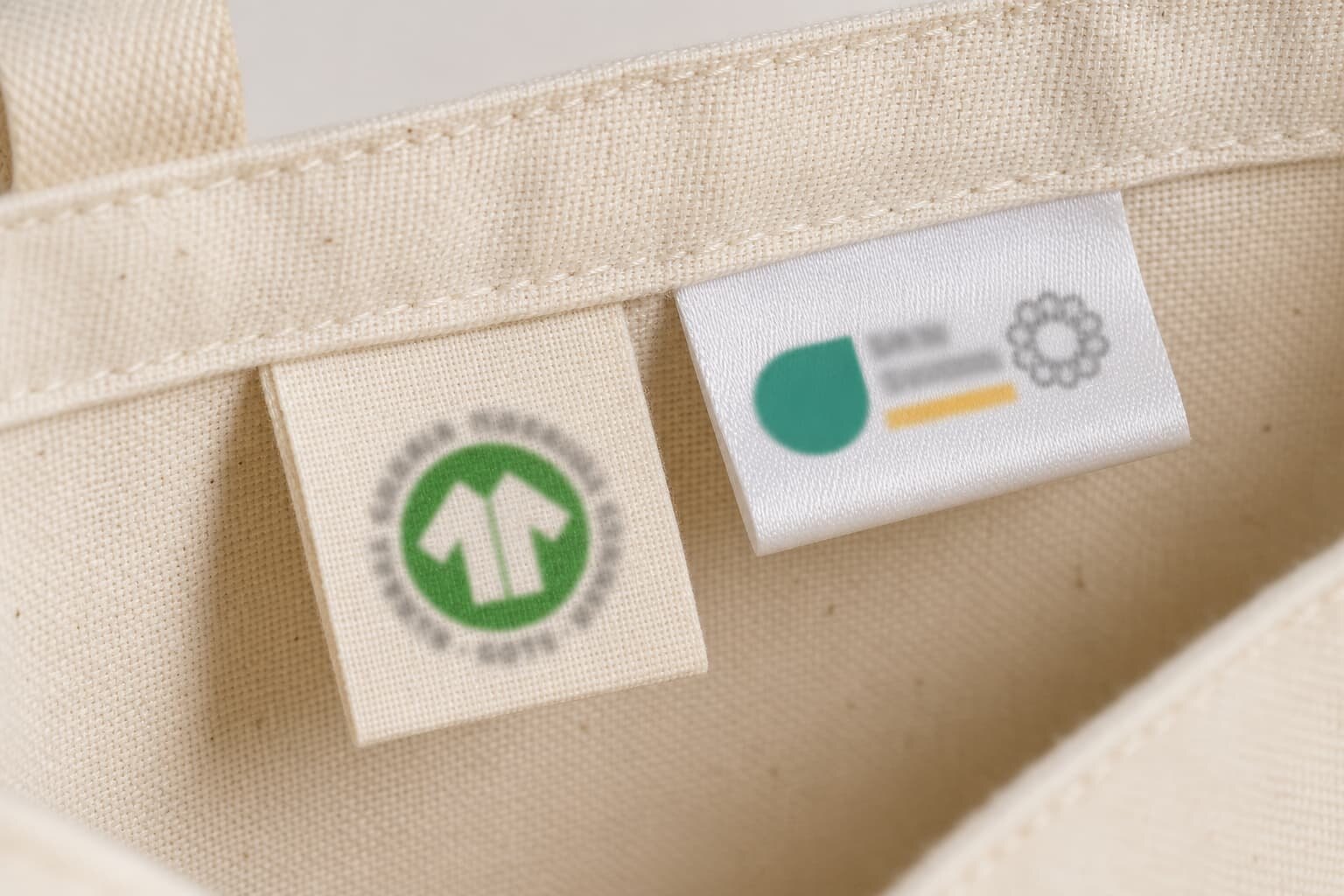
GOTS and OCS are often discussed together, but they are not the same. GOTS covers organic textile processing with environmental and social criteria across certified processing stages. OCS tracks verified organic material content through the supply chain. A scope certificate shows what a company is certified to handle; it does not by itself prove that a specific shipment is certified. A transaction certificate, when applicable, connects a specific order or shipment to certified material through the chain of custody.
Procurement teams should also control label and wording rules. A bag cannot automatically carry a certification logo, hangtag claim, or “GOTS certified” statement just because one upstream fabric mill has a certificate. The finished product, the seller, and the labeling use must fit the standard’s rules. If the buyer needs a certified product claim, confirm this before sampling and pricing, because document handling, certified processing, and approved labeling can affect supplier choice, cost, and lead time.
- Ask for the supplier’s current scope certificate and check company name, validity date, standard, product categories, and process scope.
- Confirm whether cut-and-sew bags are included in the certified scope, not only yarn or fabric trading.
- Request transaction certificate availability if the order must support a certified organic cotton product claim.
- Check whether printing, dyeing, washing, embroidery, labels, and packing are within the required certified chain when claims depend on it.
- Separate material claims from product claims: “made with organic cotton fabric” may require different evidence than a certified finished bag claim.
- Avoid unapproved logo use on labels, hangtags, cartons, product pages, or marketplace listings.
- Treat missing transaction documents, expired certificates, name mismatches, and reluctance to identify supply chain steps as red flags.
5. Qualify suppliers before trusting the quote
The cheapest organic cotton bag quote is not useful if the supplier cannot hold the specification, document the material, or cooperate with inspection. Supplier qualification should happen before price negotiation becomes too detailed. Ask what similar bags the factory makes, which fabric weights are stable for them, whether they sew heavy canvas in-house, and whether certification documents come from their own scope or an upstream partner.
A good supplier will answer in concrete terms: available fabric widths, actual finished GSM, MOQ by color, sample timing, print limitations, inspection method, and packing details. A weak supplier may only repeat broad claims, avoid document questions, or push conventional cotton as an easy substitute when organic stock is tight. Alternative suggestions can be useful, but substitutions must be visible, priced separately, and approved before sampling or bulk production.
Documentation review is part of supplier qualification. Compare the supplier name on the quote, invoice, certificates, sample labels, and proposed shipping documents. If the certified entity is a fabric mill while the quoting company is a trader or sewing factory, ask how chain of custody will be maintained. Also ask how fabric rolls are identified during cutting and whether leftover stock or mixed cotton fabric can enter the order.
- Good qualification signs: clear fabric options, current certificates, consistent sample quality, written tolerances, realistic lead times, and willingness to support inspection.
- Documentation checks: scope certificate validity, product scope, company names, standard type, transaction certificate process, and label-claim approval route.
- Production checks: in-house sewing capability, heavy-fabric needle capacity, print partner experience, roll identification, and fabric storage separation.
- Red flags: unusually low price without fabric details, expired certificate, refusal to provide document copies, vague GSM, no pre-production sample, and pressure to approve by photo only.
- Substitution risks: conventional cotton offered as “same look,” recycled blend quoted without approval, lower GSM supplied after approval, or natural shade changed without swatch confirmation.
6. Specify construction details that determine strength
Two organic cotton bags with the same fabric weight can perform very differently. Construction details such as handle width, handle drop, seam allowance, top hem, stitch density, gusset shape, and reinforcement type affect strength and cost. If the RFQ leaves these items open, suppliers may simplify them to reduce price, and the buyer will not discover the difference until sample review or bulk inspection.
Handle attachment is one of the highest-risk areas. A handle sewn only into a light top hem may be enough for a low-load giveaway, but bags used for books, groceries, or retail resale should normally use cross-stitch, box-stitch, or bar tack reinforcement. Wider handles increase comfort but use more fabric. Longer shoulder handles improve usability but may change carton folding and logo placement.
A technical drawing does not need to be complex. A clear sketch with finished width, height, gusset, handle drop, handle width, logo size, logo location, seam type, and tolerance is far better than a reference photo alone. If the buyer has an approved conventional cotton bag, send it as a benchmark and ask the supplier to explain any changes needed for organic cotton fabric.
- Handle width: 2.5 cm is common; 3-4 cm may improve comfort for heavier bags but increases fabric use.
- Handle drop: 25-30 cm often works for shoulder carry; shorter drops fit hand-carry or packaging bags.
- Top hem: folded top hem improves edge strength and appearance compared with raw or simple overlocked edges.
- Gusset: bottom gusset adds volume; side-and-bottom gusset creates a boxier shape but adds sewing time and tolerance risk.
- Reinforcement: cross-stitch, box-stitch, or bar tack should be specified for bags expected to carry meaningful weight.
- Stitch density: define a target stitches-per-inch range if appearance and strength are critical.
- Thread and seam color: confirm contrast or matching thread, especially on natural cotton where stitching is visible.
7. Match logo method to fabric, artwork, and claim rules
Organic cotton bags are often bought because they carry a brand in public, so logo execution deserves procurement attention. Rough canvas, slubs, and natural seed specks can make fine text, thin lines, and small registration marks harder to print cleanly. Natural fabric also changes color perception compared with a white digital proof. The artwork should be reviewed on the actual fabric, not only on a screen mockup.
Screen printing is usually efficient for one to three solid colors and repeat programs. Water-based ink can give a softer handfeel, but opacity on natural or dark fabric must be tested. Digital printing can handle complex artwork and gradients, but cost, colorfastness, and handfeel vary by process. Heat transfer may create sharp graphics, but some buyers dislike the surface feel on cotton canvas. Embroidery and woven labels can look premium, yet they add setup, placement control, and possible colorfastness issues.
Certification and claim control also apply to branding. A hangtag, woven label, or printed statement that says “organic,” “GOTS,” or “certified” may trigger documentation and approval requirements. Procurement teams should approve claim wording with compliance or sustainability teams before printing. It is cheaper to correct a phrase before sampling than to replace labels after bulk production.
- Screen print: strong choice for solid logos, but test ink coverage, edge sharpness, and cracking on the chosen canvas.
- Water-based ink: softer appearance, often suitable for natural cotton, but may need extra testing for opacity and rubbing.
- Digital print: useful for multi-color artwork, gradients, or small batches, but quote must define print area and durability expectations.
- Heat transfer: can support sharp artwork, but approve surface feel, edge lift risk, and compatibility with the buyer’s sustainability policy.
- Embroidery: durable and premium, but can pucker light fabric if backing and stitch density are not controlled.
- Woven label: good for subtle retail branding; approve label material, edge finish, size, placement, scratch feel, and wash behavior.
- Claim wording: approve organic and certification statements before labels, hangtags, belly bands, or product pages are finalized.
8. Use a sample path that catches problems early
A reliable sample path protects both buyer and supplier. Do not jump straight to a fully printed approval sample when the fabric, certification route, or construction is new. First approve the fabric swatch. Then approve the blank bag construction. Then approve the printed or labeled pre-production sample. Finally approve packing if retail presentation, barcode application, or warehouse handling matters.
Each sample should answer a specific question. The fabric swatch confirms weight, weave, color, specks, opacity, handfeel, and surface suitability for printing. The blank sample confirms dimensions, handle comfort, seam construction, gusset, and general sewing quality. The printed sample confirms artwork size, position, ink color, print clarity, registration, label placement, and claim wording. The packing sample confirms folding, banding, hangtag, barcode, carton marks, and unit presentation.
The pre-production sample should become the control sample for bulk production and inspection. Record what was approved: fabric weight, finished measurements, tolerances, handle drop, print colors, logo position, stitch color, label placement, packing, and any accepted natural variation. Photo approval alone is risky for organic cotton bags because shade, handfeel, thickness, and print surface are difficult to judge accurately in photos.
- Fabric swatch approval: confirm finished GSM, weave, shade range, handfeel, opacity, natural specks, and print surface.
- Lab dip approval: required for dyed fabric; review shade under consistent lighting and keep an approved standard.
- Blank sample approval: confirm finished size, gusset, handle width, handle drop, seam type, reinforcement, and load feel.
- Printed sample approval: confirm logo size, color, placement, registration, edge sharpness, ink handfeel, and rubbing behavior.
- Packing sample approval: confirm folding method, belly band, hangtag, barcode, carton quantity, carton mark, and presentation.
- Control sample storage: keep one approved sample with the buyer, one with the supplier, and one available for inspection reference when possible.
9. Build packing, carton, MOQ, and lead time into the specification
Packing is often treated as an afterthought, but it changes cost, labor, carton volume, and warehouse performance. A bulk-packed event tote may only need neat folding and export cartons. A retail tote may need a belly band, hangtag, barcode sticker, size or color label, individual polybag alternative, recycled paper wrap, or specific shelf presentation. Each component has its own MOQ, artwork approval, and lead time.
Export cartons should be specified before shipment planning. Heavy canvas bags can quickly increase carton gross weight, while large flat totes can create oversized cartons that waste container or courier space. Ask for carton dimensions, pieces per carton, gross weight, net weight, carton ply, carton marks, pallet requirements, and any retailer routing requirements. If the buyer has sustainability rules for packaging, confirm material choices early rather than after packing components are ordered.
Lead time should be broken into gates, not quoted as one vague number. Stock natural fabric may move quickly, while custom dyed organic cotton depends on lab dips, dyeing, finishing, testing, and document review. Logo screens, embroidery programs, woven labels, hangtags, and barcodes also affect timing. MOQ negotiation works best when buyers know which part creates the minimum: fabric roll, dye lot, print setup, label weaving, packing component, or factory sewing line.
- Unit packing: define flat fold, half fold, roll fold, belly band, hangtag, barcode, individual bagging, or no unit packing.
- Carton plan: request carton size, pieces per carton, gross weight, net weight, carton marks, SKU separation, and pallet option if needed.
- Retail readiness: confirm barcode readability, hangtag attachment method, price label position, and warehouse pick-pack needs.
- Packaging policy: approve recycled paper, FSC paper, polybag avoidance, compostable claims, or no-plastic requirements before quote finalization.
- MOQ split: separate MOQ for fabric color, print design, label, hangtag, belly band, and carton marking.
- Lead time gates: track fabric approval, lab dip approval, artwork approval, pre-production sample approval, bulk production, inspection, and shipment booking.
10. Set measurable QC standards and compare quotes by total procurement value
Organic cotton has natural characteristics, but “natural” should not become a loose quality standard. Procurement teams should agree acceptance criteria before bulk cutting begins. The standard should cover dimensions, fabric weight, shade range, print tolerance, stitch quality, stains, loose threads, load performance, shrinkage, colorfastness, and packing accuracy. This is where a procurement specification turns into an inspectable product.
Use an AQL approach when order size and risk justify third-party inspection. Define critical, major, and minor defects before inspection. Critical defects might include wrong material, wrong claim label, unsafe contamination, or severe seam failure. Major defects might include incorrect size beyond tolerance, visible stains, broken handle reinforcement, wrong print color, unreadable barcode, mixed SKUs, or missing required documents. Minor defects may include small loose threads or slight cosmetic irregularities within the approved natural fabric range.
A strong final quote lets the buyer understand the number. If one supplier includes organic documentation handling, sampling, print setup, woven label sewing, export cartons, and packing labor while another excludes them, the lower unit price may not be the better option. Ask for structured quotes that separate material, construction, logo, packing, MOQ, samples, lead time, certification documents, inspection support, and exclusions. The goal is not to over-specify every order; it is to control the details that affect performance, claim accuracy, price comparison, and delivery reliability.
- Measurement tolerance: agree width, height, gusset, handle drop, and logo position; plus or minus 1 cm may be practical for many sewn cotton bags, but confirm by design.
- Fabric tolerance: compare bulk fabric with the approved swatch and define finished GSM tolerance, commonly around plus or minus 5 percent when practical and agreed.
- Load test: fill or hang the bag with the agreed kilogram weight for the agreed time; check handle seam, top hem, side seam, and bottom gusset after testing.
- Print inspection: check adhesion, rubbing, color match, registration, cracking, smudging, and position against the approved sample.
- Packing inspection: verify count, SKU separation, folding method, barcode readability, carton strength, carton marks, and gross weight.
- Quote comparison: review unit price together with sample cost, setup fees, document fees, packing cost, carton size, gross weight, and expected freight impact.
- Final RFQ structure: include intended use, quantity tiers, fabric spec, construction drawing, artwork, certification requirement, packing plan, inspection standard, target delivery date, and required quote exclusions.
Specification comparison for buyers
| Spec decision | Recommended option | When it fits | Buyer risk to check |
|---|---|---|---|
| Low-cost event giveaway | 5-6 oz / about 140-170 GSM organic cotton sheeting or light canvas | Conference inserts, one-day campaigns, low freight weight programs, simple one-color print | Lowest unit cost and fast stock-fabric lead time may be possible, but opacity, shape retention, and load strength are limited. |
| Balanced retail or brand tote | 10 oz / about 280-300 GSM organic cotton canvas | Bookstore bags, brand merchandise, reusable shopping bags, staff welcome packs | Good durability and perceived value, but confirm finished GSM, shade tolerance, shrinkage, and print result on the actual fabric. |
| Premium resale or heavy-use tote | 12-16 oz / about 340-450 GSM organic cotton canvas or duck canvas | Fashion retail, museum stores, grocery programs, premium packaging reused by customers | Higher fabric cost, slower sewing, thicker seams, fewer pieces per carton, higher freight cost, and longer sample timing. |
| Natural unbleached color | Approved swatch range rather than one exact shade | Sustainability-led programs, fast development, minimal processing appearance | Seed specks, slubs, and roll-to-roll shade variation are normal; define the acceptable range before bulk cutting. |
| Custom dyed organic cotton | Lab dip approval and colorfastness test on actual fabric | Brand color programs, retail collections, multi-SKU launches | Higher MOQ, longer lead time, shade mismatch risk, and added checks for dyes, labels, and certified process scope. |
| Simple logo branding | Screen print with suitable water-based or low-impact ink | One to three solid colors, repeat orders, medium or large logos | Rough canvas can reduce edge sharpness; test small text, registration, rubbing, ink cracking, and print position tolerance. |
| Complex artwork | Digital print or transfer after fabric test | Gradients, photographs, many colors, short runs, seasonal artwork | Confirm handfeel, wash/rub resistance, color match on natural fabric, setup cost, and whether the process fits claim requirements. |
| Premium branding detail | Woven side label, embroidery, or small print plus label | Retail resale, gift packaging, fashion or lifestyle programs | Label MOQ, sewing placement, scratch feel, backing, colorfastness, and claim wording must be approved in sample stage. |
| Heavy-load construction | Folded top hem, reinforced handles, cross-stitch or bar tack, adequate seam allowance | Grocery, bookstore, utility, and employee-use bags | Ask for a measurable load-test target and failure criteria; decorative reinforcement is not enough. |
Buyer checklist before sampling
- Define the buying purpose: event giveaway, retail resale, packaging, grocery, staff item, loyalty gift, or distributor program.
- Specify fabric type and finished weight, for example 10 oz organic cotton canvas or 170 GSM organic cotton sheeting.
- State whether the cotton must be certified organic and whether GOTS, OCS, scope certificates, transaction certificates, or approved label wording are required.
- Confirm finished bag width, height, gusset, handle width, handle drop, seam type, stitch color, reinforcement type, and target load.
- Request fabric swatches before bulk approval, including natural shade range, dyed lab dip, opacity, handfeel, weave, and surface texture for printing.
- Ask whether the quoted GSM is greige fabric, finished fabric, or washed fabric weight, and state the acceptable tolerance.
- Match logo method to artwork: screen print for solid marks, digital print for complex artwork, embroidery or woven labels for premium detail.
- Require a pre-production sample using actual fabric, actual logo method, actual thread color, actual label, and final packing components.
- Agree measurable QC tolerances for dimensions, logo position, fabric weight, stitch quality, shade range, print durability, load test, and packing count.
- Request a structured quote showing material, construction, logo, packing, certification documents, samples, MOQ, lead time, inspection support, and exclusions.
Factory quote questions to send
- What organic cotton fabric options are available now, and what are the exact finished GSM or ounce weights after finishing?
- Is the fabric stock organic cotton, custom woven organic cotton, custom dyed organic cotton, or a conventional cotton alternative?
- Which certification standard applies to the fabric or product: GOTS, OCS, another standard, or supplier-declared organic cotton only?
- Can you provide your valid scope certificate and confirm whether cut-and-sew bags are included in the certified product scope?
- For this order, can you provide a transaction certificate or other chain-of-custody document if our claim requires it?
- Can you provide fabric composition, weave, yarn count if available, width, shrinkage range, rubbing fastness, washing fastness, and colorfastness information?
- What is the MOQ for natural stock fabric, dyed fabric, custom fabric weight, each bag color, each print design, woven labels, hangtags, and belly bands?
- What logo methods do you recommend for our artwork size, number of colors, and fabric texture, and what setup charges apply?
- Can you quote the bag with folded top hem, specified seam allowance, cross-stitch or bar tack handle reinforcement, and our requested gusset?
- What practical load test do you use for this construction, what load in kilograms can you test, and how long is the test held?
Quality-control points to confirm
- Measure finished bag width, height, gusset, handle drop, handle width, and logo position against the approved specification and tolerance.
- Check finished fabric weight against the signed swatch; confirm handfeel, opacity, weave density, and surface texture match approval.
- Inspect handle attachment for cross-stitch, box-stitch, bar tack, seam security, loose threads, broken stitches, skipped stitches, and reinforcement symmetry.
- Check top hem folding, side seam alignment, bottom gusset symmetry, stitch density, seam allowance, thread color consistency, and thread trimming.
- Perform a practical load test based on intended use, such as filling or hanging the bag at the agreed kilogram weight for the agreed time without seam, handle, or fabric failure.
- Run shrinkage or wash testing when the bag may be washed, dyed, softened, or sold as reusable merchandise with care instructions.
- Test print adhesion, registration, edge sharpness, color match, ink cracking, rubbing resistance, and logo placement after handling.
- Review natural cotton shade variation under consistent lighting and compare bulk goods with the approved swatch range or lab dip.
- Check rubbing and colorfastness on dyed fabric, printed panels, woven labels, embroidery thread, and dark handles that may contact light garments.
- Check stains, oil marks, rust marks, dirt, weaving slubs beyond agreed tolerance, needle holes, odor, mold risk, and contamination on natural fabric.