Why MOQ And Pricing Go Wrong On Organic Cotton Bags
Organic cotton bag sourcing often becomes confusing because buyers ask for one number: “What is your MOQ and price?” That question is too broad for a factory to answer accurately. MOQ depends on fabric availability, bag size, fabric weight, color, print method, artwork quantity, sewing complexity, packing method, and documentation requirements. If these points are missing, different suppliers will quote different assumptions, and the cheapest quote may not match the bag you actually need.
The real buying problem is not only getting a low MOQ. It is making sure the MOQ, unit price, sample approval, and production risk are based on the same specification. A 5 oz flat natural cotton tote with one-color screen print is a different product from an 8 oz certified organic cotton gusseted retail bag with individual packing and barcode labels. Both may be called an organic cotton bag in a quote, but the cost structure is not the same.
- Low MOQ usually means the factory can use available fabric, standard dimensions, and simple printing.
- Custom dyed organic cotton often requires a higher fabric MOQ than natural or stock white cotton.
- Several artwork versions can create MOQ per print design even when the total order quantity looks acceptable.
- Retail packing and documentation can add cost even when the bag itself is simple.
Start The RFQ With The Bag Use, Not Only The Size
A useful RFQ starts with how the bag will be used. Procurement teams often list width, height, and logo only, but the factory also needs to know whether the bag is for an event giveaway, grocery retail, apparel packaging, subscription box insert, corporate merchandise, or resale. Use affects fabric weight, handle strength, seam reinforcement, print durability, and packing requirements.
For example, an event tote used for brochures can be lighter and packed in bulk. A retail tote sold in stores needs better sewing consistency, cleaner fabric appearance, stronger handles, and more controlled packing. A grocery tote may need a gusset and heavier fabric because the bottom and side seams carry more stress. When the use is clear, suppliers can quote a more practical specification instead of only chasing the lowest unit price.
- For brochure or conference use, ask for 5 oz / about 140 GSM or 6 oz / about 170 GSM options.
- For daily retail use, compare 8 oz / about 270 GSM against 10 oz / about 340 GSM.
- For grocery or book carrying, request reinforced handle stitching and consider a bottom gusset.
- For premium brand merchandise, ask whether fabric washing, heavier canvas, woven label, or inner seam finishing is needed.
Fabric Weight Is The First Price Driver
Fabric weight changes both material cost and how the bag feels in hand. Buyers often ask for “thick organic cotton” without defining GSM or oz, which leads to unclear quotes. In cotton bag sourcing, oz per square yard and GSM are both used. Ask the supplier to show both units where possible. This helps your team compare quotes from factories that use different measurement habits.
The same bag size in 5 oz and 10 oz fabric can have very different material consumption cost, sewing behavior, carton weight, and freight impact. Heavier fabric may require stronger needles, slower sewing, different folding, and larger cartons. It may also reduce the number of bags per carton. If a quote is much lower than others, check whether the supplier used lighter fabric, smaller handles, thinner thread, or a simplified construction.
- 5 oz / about 140 GSM: economical, light, suitable for simple promotional use.
- 6 oz / about 170 GSM: slightly better hand feel while still cost-sensitive.
- 8 oz / about 270 GSM: common for reusable tote programs and retail giveaways.
- 10 oz / about 340 GSM: stronger canvas feel for retail, bookstore, and lifestyle brands.
- 12 oz / about 410 GSM: premium structure, higher cost, heavier shipping weight.
Clarify What Organic Cotton Means In The Quote
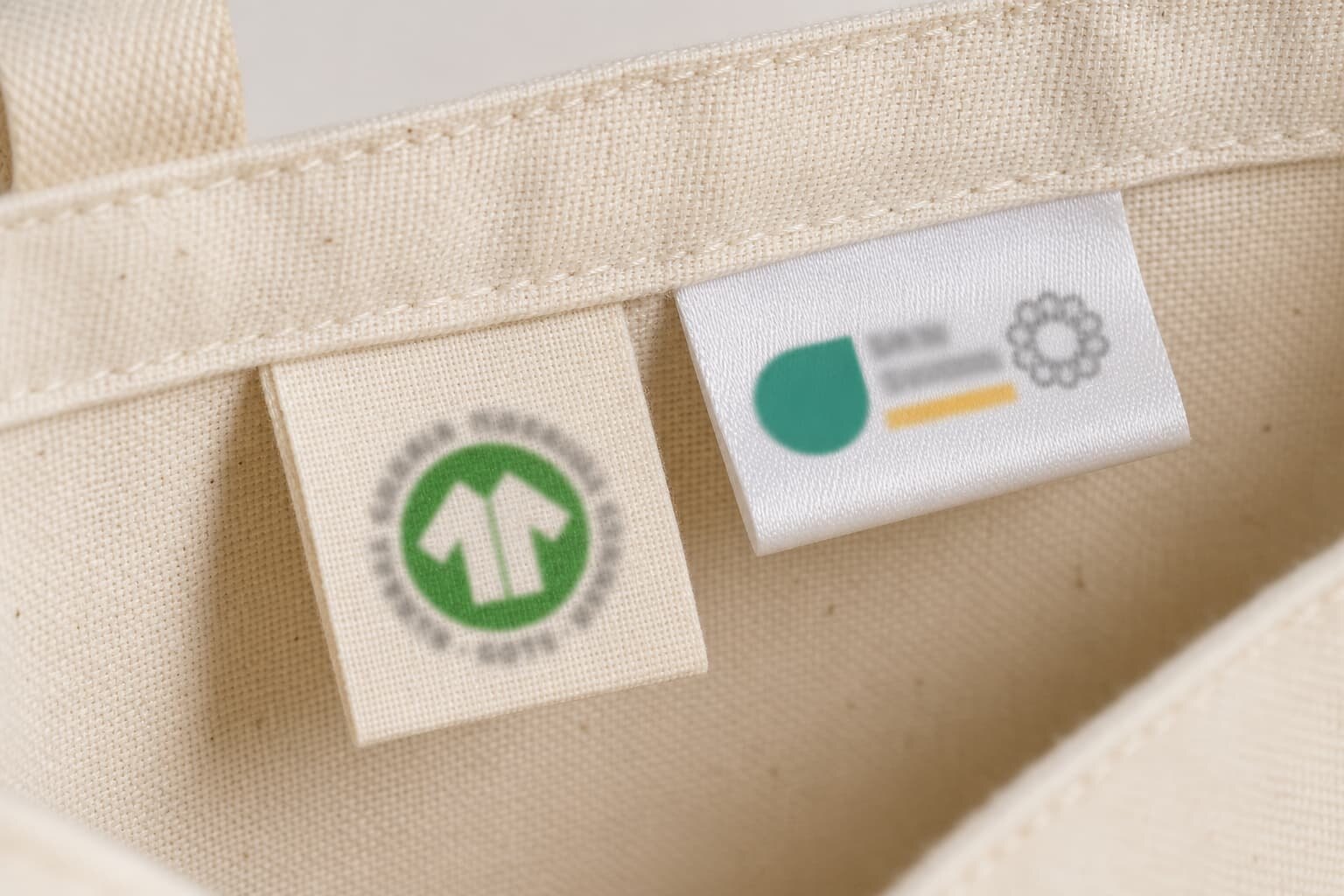
Organic cotton is not just a fabric color. Natural unbleached cotton, recycled cotton, conventional cotton, and certified organic cotton can all look similar in photos. If your brand or retailer will make an organic claim, the quote must state what kind of organic cotton is being supplied and what documentation is available. Do this before sampling, not after the purchase order is issued.
Factories may be able to source certified organic fabric, but certificate scope, transaction documents, and labeling rules vary by supply chain. Some buyers only need an organic cotton material claim for internal purchasing. Others need formal documents for retailer compliance. These are different requirements and may affect MOQ, lead time, and cost. Write the documentation requirement in the RFQ so suppliers can confirm feasibility before quoting.
- Ask whether the certificate covers fabric, yarn, dyeing, printing, sewing, or only one upstream stage.
- State whether your bag needs an organic content label, hangtag claim, or only internal documentation.
- Confirm whether dyed organic cotton is available or whether natural fabric is the practical option.
- Check whether printing ink, labels, and packing must meet any separate compliance requirement.
How MOQ Is Usually Calculated By The Factory
MOQ is not one fixed number for all organic cotton bags. A factory thinks in material purchasing, cutting efficiency, print setup, sewing line changeover, packing labor, and export handling. A simple natural tote made from stock fabric may be possible at a lower MOQ because the factory can combine fabric use with other orders. A custom dyed fabric or uncommon GSM may require a fabric mill minimum that is much higher than the sewing factory’s preferred quantity.
Print method also affects MOQ. One-color screen printing has setup time, but it is efficient once production starts. Multi-color screen printing needs more screens, registration control, drying time, and waste allowance. Heat transfer can be practical for small batches with detailed artwork, but the transfer film and application process must be checked for hand feel and durability. Embroidery may have a lower artwork setup barrier for small logos, but it is slower and not suitable for every cotton bag style.
- MOQ per fabric: driven by fabric roll availability, color, GSM, and organic documentation.
- MOQ per bag size: driven by cutting pattern and sewing setup.
- MOQ per print design: driven by screen, plate, transfer film, or embroidery program setup.
- MOQ per colorway: driven by dyed fabric minimums and separate packing control.
- MOQ per shipment: driven by export carton handling, documentation, and freight efficiency.
Print Method Choices That Change Price And Risk
Printing is often where an attractive organic cotton bag quote becomes incomplete. Buyers should not only ask whether printing is included. They should define artwork size, number of colors, print placement, ink type if required, and whether both sides are printed. A front print of 18 cm wide is not the same cost as a full-panel print close to the side seams. A one-color logo is not the same production risk as a four-color illustration.
Screen printing is usually the most practical choice for solid logos and medium to large orders. It gives a clean result on cotton if the artwork is prepared correctly and the fabric surface is suitable. Heat transfer can reproduce detailed graphics, gradients, or smaller batches, but buyers should approve hand feel, edge finish, and wash or rub resistance. Embroidery, woven labels, and sewn labels can look premium, but they add labor and sometimes require reinforcement or backing.
- State exact print size in centimeters or inches, not only “standard logo print.”
- Show print position from top edge, side seam, or bottom seam to avoid placement arguments.
- Ask if the quote includes one side or two sides, and whether print setup is included.
- Request a strike-off when color accuracy, fine lines, or retailer approval matters.
- For natural cotton, allow some shade interaction between fabric color and printed ink.
Build A Quote Comparison Sheet That Catches Hidden Cost
A good comparison sheet should make assumptions visible. If Supplier A quotes 8 oz certified organic cotton with individual recycled polybag, and Supplier B quotes natural cotton look fabric with bulk packing, the prices should not sit in the same column as if they are equal. Add columns for fabric status, GSM, bag size, print method, packing, sample cost, setup charges, lead time, and quote validity.
Ask suppliers to break out cost only where it helps decision-making. You do not need every internal factory cost. You do need to know whether print screens, labels, hangtags, barcode stickers, individual packing, carton marks, and inspection support are included. A transparent quote helps your team understand whether a higher unit price is actually safer or whether a lower price is missing buyer requirements.
- Compare unit price at the same quantity, same GSM, same bag size, and same print requirement.
- List one-time charges separately so reorders can be calculated correctly.
- Show packing cost separately if your sales channel may change from bulk to retail packing.
- Include estimated carton quantity and gross weight to support freight planning.
- Record quote validity because cotton fabric and freight-related costs may change.
Sample Approval Should Prove More Than The Logo
Many production disputes begin because the sample was approved only for appearance. A useful organic cotton bag sample should confirm fabric weight, fabric shade, finished dimensions, handle length, stitching method, print position, print color, and packing direction if retail presentation matters. If you approve only a photo, you may miss fabric thickness, odor, uneven sewing, or weak handle attachment.
For new programs, use two stages when time allows: first confirm material and print direction, then approve a pre-production sample made with the intended bulk materials. A stock sample can show workmanship, but it may not prove your final fabric or logo. A printed strike-off can show ink color and print detail, but it may not show final sewing. Tell the factory which sample is for reference and which sample is the production standard.
- Measure sample width, height, gusset, handle drop, and print position before approval.
- Check whether the fabric weight matches the quoted GSM or oz class.
- Inspect inside seams, loose threads, handle reinforcement, and bottom corner finishing.
- Rub the printed area lightly with a white cloth to check obvious ink transfer.
- Keep an approved sample in your office and ask the factory to keep a sealed duplicate.
Packing Details Affect Cost, Lead Time, And Damage Rate
Packing is easy to overlook because the bag itself gets most attention. But packing affects labor time, carton size, warehouse handling, and retail readiness. Bulk packing is suitable for distributors, events, and internal use. Individual packing may be needed for online fulfillment, retail stores, or products that must stay clean before sale. Each additional item, such as hangtag, barcode, paper band, silica gel, or warning label, creates another production checkpoint.
Organic cotton bags can wrinkle, absorb odor, and show stains if packing is poorly controlled. Natural fabric especially makes oil marks and dust easier to see. Ask how many pieces are packed per inner bag and per export carton. If your warehouse uses carton scanning, confirm carton marks and SKU labels before production. If bags are folded, approve the folding method so the logo is not creased in the wrong place.
- Bulk pack: lowest packing cost, good for events and wholesale handling.
- Individual polybag: cleaner presentation, higher labor and material cost.
- Paper band or belly band: useful for retail display, but needs artwork and packing approval.
- Hangtag and barcode: requires placement instruction and barcode verification.
- Carton marks: should match PO, SKU, quantity, destination, and any retailer requirement.
Lead Time Planning For Better Purchasing Decisions
Lead time should be split into stages. A single answer such as “30 days” is not enough for procurement planning. Ask for sample making time, sample approval time, fabric preparation, printing, cutting, sewing, finishing, inspection, packing, and export booking. If organic fabric must be sourced or documented specially, the material stage may be the longest part of the schedule.
For seasonal launches and retailer deadlines, build approval buffers into the calendar. Artwork revision, print color adjustment, sample shipping, and internal buyer approval can take longer than expected. If you need a short lead time, reduce variables: choose stock natural fabric, standard size, simple print, bulk packing, and fewer SKU versions. A rushed custom dyed organic cotton bag with multiple print designs and retail packing is where mistakes become expensive.
- Ask which stage starts only after deposit, artwork approval, or sample approval.
- Confirm whether lead time is for production completion or shipment departure.
- Add time for third-party inspection if required by your company or retailer.
- Avoid changing artwork, size, packing, or label details after bulk material is cut.
- For reorders, ask the factory to compare the new production against the previous approved sample.
Specification comparison for buyers
| Spec decision | Recommended option | When it fits | Buyer risk to check |
|---|---|---|---|
| Fabric weight | 5 oz / 140 GSM for light promo, 8 oz / 270 GSM for retail use, 10-12 oz / 340-410 GSM for premium reusable bags | Use lighter GSM for events and inserts; use 8 oz and above when the bag carries groceries, books, or merchandise | Some suppliers quote a low MOQ on thin fabric, then the approved sample feels weaker than the buyer expected |
| Cotton status | State organic cotton requirement clearly: certified organic fabric, organic cotton yarn, or organic cotton look-and-feel | Useful when the brand has sustainability claims, retailer documentation, or product labeling requirements | Do not assume every natural cotton bag is organic; request certificate scope and transaction document requirements before ordering |
| Bag construction | Flat tote for lowest cost; bottom gusset for retail capacity; boxed bottom for better shape | Choose flat tote for catalogs and giveaways; choose gusseted bags for grocery, apparel, and gift packaging | Gussets increase fabric consumption and sewing time, so MOQ and unit price may change from a flat tote quote |
| Printing method | Screen print for solid logos; heat transfer for multi-color detail; embroidery or woven label for premium branding | Screen print works best for simple artwork and larger quantities; transfer works for gradients and small batches | Compare setup charges, color limits, wash durability, and whether print size is included in the quoted price |
| MOQ logic | Confirm MOQ by fabric, bag size, print method, and color instead of asking only for one minimum order quantity | Best for buyers comparing several designs, colorways, or retailer programs | A factory may accept low total quantity but require MOQ per design, per fabric roll color, or per print artwork |
| Packing | Bulk polybag or carton packing for wholesale; individual recycled polybag or paper band for retail programs | Use bulk packing for distributor stock; use retail packing when the bag is sold or shipped directly to stores | Retail packing adds labor, material, carton volume, and inspection points that affect both cost and lead time |
Buyer checklist before sampling
- Define bag style: flat tote, bottom gusset tote, drawstring pouch, shoulder bag, or custom shape.
- List finished dimensions in width x height x gusset, plus handle length and handle width.
- Specify organic cotton requirement: certified fabric, certification document needed, labeling claim, and certificate scope.
- Confirm fabric weight in oz and GSM, not only one unit, so suppliers quote the same material class.
- State fabric color: natural, bleached white, dyed solid color, or custom dyed Pantone reference.
- Attach artwork in vector format and state print size, print position, number of colors, and print method preference.
- Ask whether MOQ is per order, per size, per color, per print design, or per fabric batch.
- Request sample type: stock fabric sample, pre-production sample, printed strike-off, or full approval sample.
- Define packing: bulk pack quantity, individual bag requirement, hangtag, barcode, carton mark, and pallet need if any.
- Ask for lead time split by sample making, material preparation, printing, sewing, packing, inspection, and export booking.
Factory quote questions to send
- What is your MOQ for this exact organic cotton fabric weight, and is it per color, per design, or per total order?
- Is the quoted fabric certified organic cotton, and what document can be supplied with shipment if required by our retailer?
- What fabric width and shrinkage allowance are you using to calculate material consumption for this bag size?
- Does the unit price include fabric, cutting, sewing, printing, trimming, quality inspection, inner packing, export carton, and carton marks?
- Are screen setup charges, film charges, mold charges, or label setup fees included or listed separately?
- What is the price change if we move from 5 oz to 8 oz, or from flat tote to bottom gusset tote?
- Can you provide a printed strike-off before bulk production, and how many days does it take after artwork confirmation?
- What measurement tolerance do you use for finished bag width, height, gusset, handle length, and print position?
- How do you pack the bags by inner polybag and export carton, and what are the estimated carton dimensions and gross weight?
- What inspection standard do you recommend before shipment, and can you support AQL inspection with our checklist?
Quality-control points to confirm
- Check fabric weight by cutting a measured sample or using a GSM cutter; do not rely only on hand feel.
- Compare natural fabric shade against approved sample because organic cotton can vary by batch.
- Measure finished size after sewing and pressing, especially gusset depth and handle drop.
- Pull-test handle attachment and inspect bar-tack or cross-stitch reinforcement where specified.
- Check print color, registration, edge sharpness, ink penetration, cracking risk, and print position from seam lines.
- Inspect sewing lines for skipped stitches, broken thread, loose ends, crooked seams, and puckering.
- Check stains, oil marks, fabric slubs, odor, wet cartons, and mixed packing before shipment.
- Verify carton marks, SKU labels, barcode labels, inner packing quantity, and total carton count against the PO.
- Keep one approved pre-production sample and one random bulk sample for future reorder comparison.