Organic Cotton Bag OEM Product Development Capability for Australian Buyers
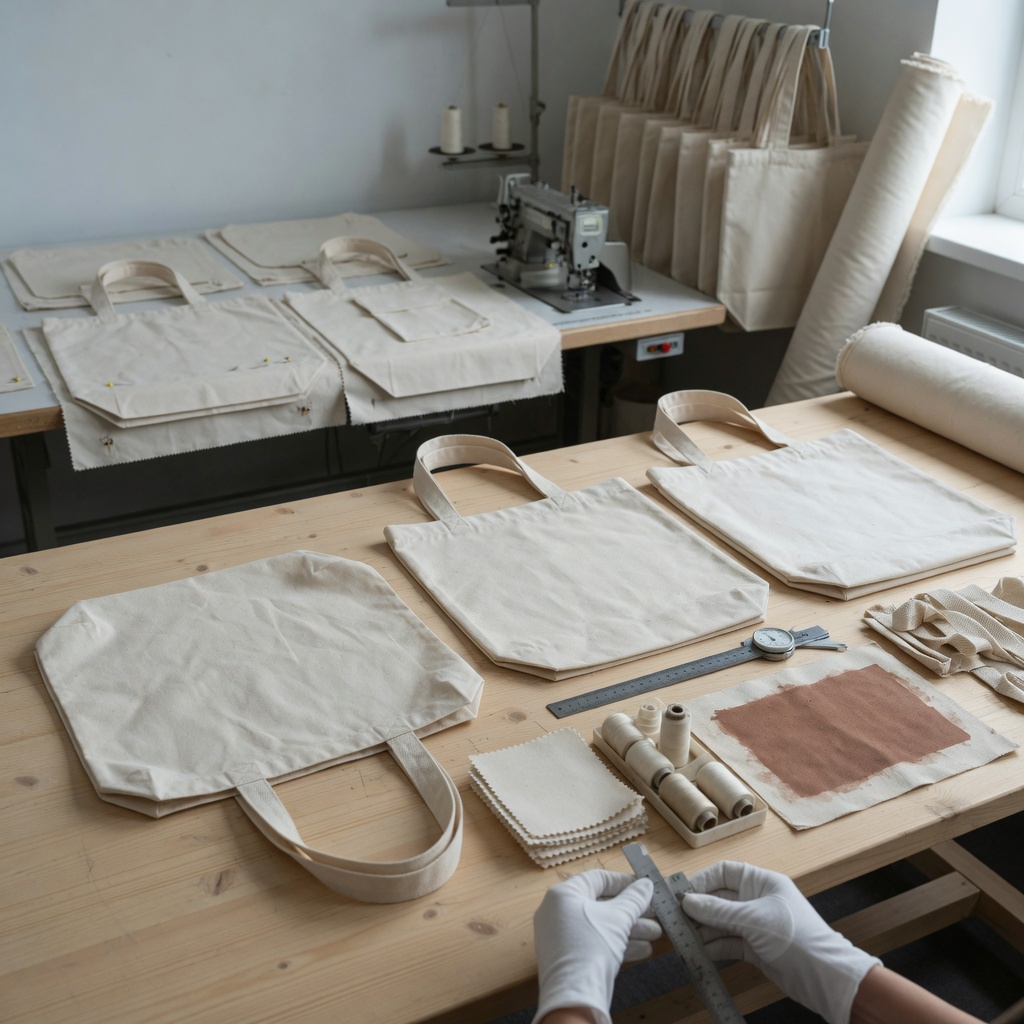
Byline: Vincent Xi, Editorial Author, CottonToMaker author profile. This page is an editorial procurement brief compiled from published OEM process pages. It does not claim first-person factory work, unpublished tests, awards, certifications, named customers, or CottonToMaker production results.
Direct answer for Australian B2B buyers. Treat organic cotton bag OEM product development capability as a gated manufacturing sequence, not a catalogue tote. Freeze the brief, reserve certified organic cotton, issue a tech pack, approve a construction prototype, then approve a pre-production sample (PPS) sewn from the bulk fabric, thread, trim, and print system. Release bulk cutting only after that PPS is signed. If a factory cannot show segregated handling, a measurement sheet, and lot documents, it is not yet offering OEM manufacturing for an organic cotton bag.
Score the first reply before anyone pays a sampling fee. Pass means a named tech-pack owner, a mill-lot reservation, a PPS on that lot, a written contamination rule, and a quotation line that names an Australian port or 3PL. Fail means “eco cotton,” a stock-canvas photo, mixed-table sewing, or “global shipping” with no destination. Published ranges below are comparison inputs for Australian retail, hospitality, and corporate bag programs. Re-state every figure in the written quote. Page copy is not a contract, a scope certificate, or a landed cost to an Australian warehouse.
Product development capability gates for an organic cotton bag OEM order
One published end-to-end bag OEM product-development page lists this stage sequence: ideation and requirement collection, certified material sourcing, design and technical spec sheets, prototype sampling, bulk production, quality control, packaging, and logistics support for B2B brands. That page states prototype sampling in 5–7 days (unit: days; scope: custom bags on that page, with organic cotton listed as a sustainable material option; as-of: as published on the cited product-development page; re-check the live URL on the RFQ date) and bulk production with MOQs from 100–300 pieces (unit: pieces; scope: custom bags on that page; confirm whether the band is per colourway; as-of: same published page). Jundong Factory product development
Convert those stage names into files an Australian buyer can approve or reject:
- Requirement collection. Silhouette, finished size, handle spec, target fabric weight, print or embroidery, label pack, carton marks, Incoterm, and Australian delivery node.
- Certified material sourcing. Mill, fabric construction, colour, finish, organic scheme, and lot reservation. A generic “eco cotton” line is not a reservation.
- Technical spec sheets. Stitch type, stitches per inch (SPI), seam allowance, handle junction, shrinkage allowance, bill of materials, and artwork placement from panel edges.
- Prototype sampling. A physical or video-measured sample with recorded cut size and fabric hand.
- PPS on reserved bulk materials. Fabric, thread, trim, labels, and print together.
- Bulk, QC, pack, logistics. Inspection plan, packed-carton photos, and a quote line that names Australia rather than “worldwide.” Order this block only after PPS approval.
A look-alike sample can be cheaper in week one, but it leaves handle junctions, shrinkage, and print behaviour unproven on the reserved organic lot. A tech pack plus PPS adds development days and moves construction risk before bulk cutting. A 100–300 piece bag MOQ, as published on the cited product-development page, can still fail commercially if a mill’s minimum finished metres exceed the bag order. That metre minimum is not stated on the cited pages; write leftover-fabric ownership into the RFQ and require the mill reservation memo before anyone cuts. Do not release fabric money until gates 1–3 have named owners and written files.
Fabric weight, GOTS handling, and contamination control
Two manufacturer pages publish organic cotton bag fabric bands and describe GOTS-oriented floor practice. Those pages are comparison documents, not certificates for your lot.
One guide describes certified mill sourcing of 5 oz to 14 oz fabrics (unit: ounces of fabric weight as stated on that page; confirm on the mill ticket whether the mill means oz/yd² and record GSM as a second unit; scope: GOTS-oriented organic cotton for custom bags as described on that guide; as-of: as published on the cited guide; re-check the live URL). It also describes segregated storage, cutting, and sewing to prevent contamination, GOTS-approved threads, and water-based inks, and it states that brands can use the GOTS logo on verified products. FYBagCustom organic cotton bags guide
A second OEM page describes GOTS-certified organic cotton canvas in 6 oz to 16 oz weights (unit: ounces of canvas weight as stated; scope: eco tote OEM as published on that page; as-of: as published on that OEM page) and sampling in 3–12 days (unit: days; scope: that page’s sampling window, not bulk production; as-of: same page). It also states certified production with 25-plus engineers (unit: people; scope: manufacturer-stated staffing on that eco-tote OEM page, not an audited headcount; as-of: same page), multi-layer QC, sustainable packaging, and global shipping. Lovrix eco-friendly tote bag OEM
Name GOTS only when the Australian program actually needs that claim on goods. A scheme’s requirement is whatever the current certificate lists for identity preservation, approved inputs, and certified facilities covering the process steps you buy. That is not the same thing as a factory’s published practice. A blog description of segregated sewing is not a current scope certificate for your lot, and it is not permission to print a GOTS logo.
Put these trade-offs on the spec sheet:
- 5–6 oz versus 12–16 oz, as published on the cited pages. An ounce band is not drape, print opacity, handle strength, or freight. Specify oz and GSM together, plus weave and width, so the mill cannot “meet oz” on a different construction. Require metres per piece, packed units per carton, carton dimensions, and gross kg on the quote.
- Segregated line versus shared line. The FYBagCustom guide describes segregated storage, cutting, and sewing. A cheaper quotation that shares cutting tables with conventional cotton is a different manufacturing product. Ask for the contamination rule in writing before sampling fees.
- Water-based, scheme-approved inks versus a wider ink set. The same guide names GOTS-approved threads and water-based inks as the described input route. Approve a strike-off on the actual organic canvas, not on a coated test card.
- Logo and hangtag claims. Treat GOTS logo artwork as a controlled extra allowed only on verified products, matching the manufacturer guide. If certificates will not cover the goods, forbid the logo in the print file.
Example calculation (assumption to verify in the supplier quote, not measured goods): if one colourway uses 12 oz canvas and another uses 6 oz, packed carton gross weight can differ even at the same piece count. Do not invent a kilogram figure in the PO. Require the factory to state units per carton, carton dimensions, and gross kg on the PPS pack-out. Freeze mill, weight (oz plus GSM), colour, and segregation rule before cutting a full tote.
Sampling speed versus what the sample can prove
Cited sampling windows are 5–7 days for prototypes on the Jundong product-development page and 3–12 days on the Lovrix eco-tote OEM page. Those day counts help only after the RFQ names the sample type and the clock-start event (deposit, frozen artwork, or fabric in house).
| Sample type | What it can prove | What it cannot prove | Buyer action before the next fee |
|---|---|---|---|
| Mill swatch or print strike-off | Colour, hand, ink holdout on a candidate organic cotton | Handle strength, wash shrinkage, carton yield | Freeze mill colour before cutting a full tote |
| Development prototype | Pattern, handle drop, stitch appearance | Bulk-lot shrinkage, trim dye lot, packed efficiency | Measure the sample; write deviations on the spec |
| PPS on reserved bulk materials | Fabric, thread, print, labels, and construction together | Statistical quality of the full lot | Written PPS approval before bulk cutting |
| Top-of-production (TOP) | Early bulk matches PPS | Later drift if a second fabric lot is substituted | Hold a signed TOP; ban silent lot changes |
A short sample sewn from stock conventional canvas does not prove organic cotton bag manufacturing. A longer sample on the reserved organic lot costs calendar time and is the only sample type in this table that can support bulk approval. For an Australian launch, count backward from the in-warehouse date: PPS sign-off, bulk sew, QC, pack, export, main-leg freight, and local delivery. Do not treat a 5–7 day prototype window as bulk lead time, and do not assume sampling days include courier time to Australia. The cited pages do not state Australian transit time.
If the sample stays at the factory, require a measurement sheet: cut width, cut height, gusset, handle length, handle width, SPI, and actual fabric weight. A photo without a ruler is not an approval record. Bulk cutting starts on a dated PPS signature, not on a chat photo.
Decision table for organic cotton bag OEM manufacturing
Score factories on evidence you can file. Every row is a specify, compare, verify, approve, or order action.
| Decision factor | Why it changes the PO | Specify in the RFQ | Verify before PPS approval | Published comparison input (re-check the live page) |
|---|---|---|---|---|
| Development sequence | Stops sample-only vendors | Named gates: brief, mill, tech pack, proto, PPS, bulk, QC, pack, logistics | Dated plan with a named owner per gate | End-to-end stages on the Jundong Factory product-development page |
| Fabric weight band | Drape, print, seam, and packed mass must be quoted, not assumed | Target oz plus GSM, weave, width, finish, colour | Mill ticket versus sample weight | 5 oz to 14 oz fabrics (FYBagCustom guide); 6 oz to 16 oz canvas (Lovrix OEM page) |
| Organic identity | Claim integrity | Scheme name, process steps in scope, no mixed fibre | Current scope certificate and transaction certificates for the lots | Segregated storage, cutting, sewing; GOTS-approved threads and water-based inks (FYBagCustom) |
| Sample calendar | Launch date | Sample types, revision rounds, hold-at-factory versus ship to Australia | Clock-start definition in writing | 5–7 days prototype sampling (Jundong); 3–12 days sampling (Lovrix) |
| MOQ versus mill lot | Unit cost and leftover fabric | Pieces per colour, mill metre minimum, leftover owner | Fabric reservation memo | MOQs from 100–300 pieces (Jundong page; confirm per colour) |
| Engineering coverage | Who owns construction risk | Named contact for stitch, handle, and print | A person on the spec comments, not a slogan | 25-plus engineers as a Lovrix published staffing claim, not an audit |
| QC definition | What “pass” means | Measurements, visual plan, handle pull method, print checks | Blank QC report template | QC stage (Jundong); multi-layer QC (Lovrix) |
| Pack and Australian delivery | Landed condition | Incoterm, named Australian port or 3PL, carton board, inner poly | Packed carton photo, dimensions, gross kg | Logistics support (Jundong); global shipping (Lovrix)—still name Australia |
| Claim artwork | Scheme and retail risk | GOTS logo in or out of artwork | Certificate covers these goods | Logo only on verified products (FYBagCustom) |
Australian delivery, packing, and label copy in the tech pack
Keep the product decision first. Australia is the receiving and retail context for this RFQ, not a separate country essay.
The cited pages mention logistics support and global shipping. That language still does not name your warehouse. Put delivery inside the development file:
- Named Incoterm and node. Quote to a named Australian port or 3PL. “Global shipping” is not a line item.
- Carton spec for the packed goods. Board grade, strapping, inner poly, units per carton, carton dimensions, and gross kg. The cited pages do not publish Australian freight, climate, or receiving-lift limits; those values must come from the quote and from your receiving team.
- Label pack as buyer artwork. Fibre content, care, origin, and any legal copy your Australian retail team already uses. The factory’s job is to sew and photograph those labels on the PPS. This brief does not restate Australian labelling statutes; attach counsel-approved copy.
- Approval location. Courier PPS units to the Australian merchandiser, or require a live video measurement against the spec. Approval is a dated signature.
Air-freighting PPS units to Australia can shorten comments and raises development cost. Holding PPS at the factory is cheaper and increases the chance bulk is cut while comments are still open. Write the approval location on the PO before sampling fees are paid. Neither cited sampling window includes courier time to Australia unless the quotation says so.
RFQ checklist to specify, verify, and order
Issue the RFQ as a file pack, not a paragraph email. Each item is something a buyer can attach, compare, refuse, or put on the purchase order.
- Style identity: silhouette, end use, and whether hardware is in scope.
- Size block in cm: width, height, gusset, handle drop, handle width, plus a tolerance (example assumption to confirm in the quote: ±0.5 cm).
- Fabric: organic cotton; target oz and GSM; weave; width; finish; colour reference.
- Scheme: GOTS required or not; if required, the process steps that must appear on the scope certificate.
- Contamination rule: segregated storage, cutting, and sewing; dedicated thread; no conventional cotton remnants on the table.
- Trims: thread, labels, interlining, and inks that stay inside the chosen scheme; water-based ink if that is the print route named on the quote.
- Artwork: method, colour count, maximum coverage, placement from edges; embroidery stitch count if used; GOTS logo in or deleted.
- Construction: stitch type, SPI, seam allowance, handle join (bar-tack or box-X), extra reinforcement.
- Tech pack due date, format (PDF plus a measurement sheet), and named tech-pack owner.
- Frozen bill of materials at PPS: mill, fabric lot, thread, trim, ink, and labels; ban silent substitution.
- Sample matrix: swatch, prototype, PPS, TOP; quantity; who pays freight to Australia.
- Sampling clock: start event and included revision rounds. Treat 5–7 days and 3–12 days as published comparison windows only until they are restated in the quote.
- Measurement protocol: ruler-in-frame photo or video; cut width, height, gusset, handle length, handle width, SPI, actual fabric weight.
- MOQ: pieces per colour; mill metre minimum; leftover fabric owner; whether 100–300 pieces applies per colourway.
- Bulk lead time from written PPS approval, not from first email.
- QC: measurements, visual plan, handle check, print check, carton-mark check; blank report template attached.
- Traceability pack: mill tickets, transaction certificates, sewing-lot codes, packing list mapped to cartons.
- Pack: inner poly, carton size, units per carton, gross kg, marks including PO and Australian destination.
- Incoterm and Australian destination on the quotation line.
- Extra-revision price, extra-sample price, and rejection rule if PPS fails weight, size, documents, or contamination controls, stated before work starts.
Hold fabric money until items 3–6, 9, and 12 are answered in writing.
Method, source context, and what to verify
Source contexts. This brief uses three public manufacturer pages as comparison documents: an end-to-end bag product-development workflow (organic cotton as a material option; prototype sampling 5–7 days; MOQ 100–300 pieces), a GOTS-oriented organic cotton bag manufacturing guide (5 oz to 14 oz fabrics; segregated storage, cutting, and sewing; GOTS-approved threads; water-based inks; logo only on verified products), and an eco tote OEM page (6 oz to 16 oz GOTS canvas; sampling 3–12 days; 25-plus engineers; multi-layer QC; global shipping).
How the data were derived. Figures were copied with their units from those pages, mapped onto buyer gates (specify, sample, segregate, inspect, pack, deliver to Australia), and separated from contract language. No factory visit, instrument test, customer outcome, or CottonToMaker production result is claimed. Author attribution is limited to Vincent Xi, Editorial Author; no years of experience, mill tour, or personal sampling story is attached.
Limitations / what to verify before PO
- Certificates move faster than websites. Demand current scope certificates that include the actual process steps, plus transaction certificates for the lots.
- Day-count sampling windows may exclude weekends, colour comments, peak season, and courier time to Australia.
- Piece MOQs may exclude colour minimums, print setups, hardware, or mill metre minimums. The cited pages do not state leftover-fabric ownership.
- Fabric oz bands are not a mill test report for weight, width, colour, or shrinkage. Record GSM from the mill ticket.
- “25-plus engineers” is published staffing language, not proof an engineer is assigned to the style.
- Logistics adjectives are not an Australian landed cost. Require carton kg, dimensions, and a named Incoterm.
- This page does not restate Australian labelling, biosecurity, or consumer-law text. Attach counsel-approved label copy.
- This page does not state, estimate, or imply search volume, CPC, difficulty, traffic, or ranking for the query.
If a quotation cannot name a tech-pack owner, a reserved organic lot, a PPS on that lot, and a segregation rule, it is not yet organic cotton bag OEM product development capability.
Discuss Your Requirements
Review our manufacturing capabilities, then share your specifications for a supplier-fit review.