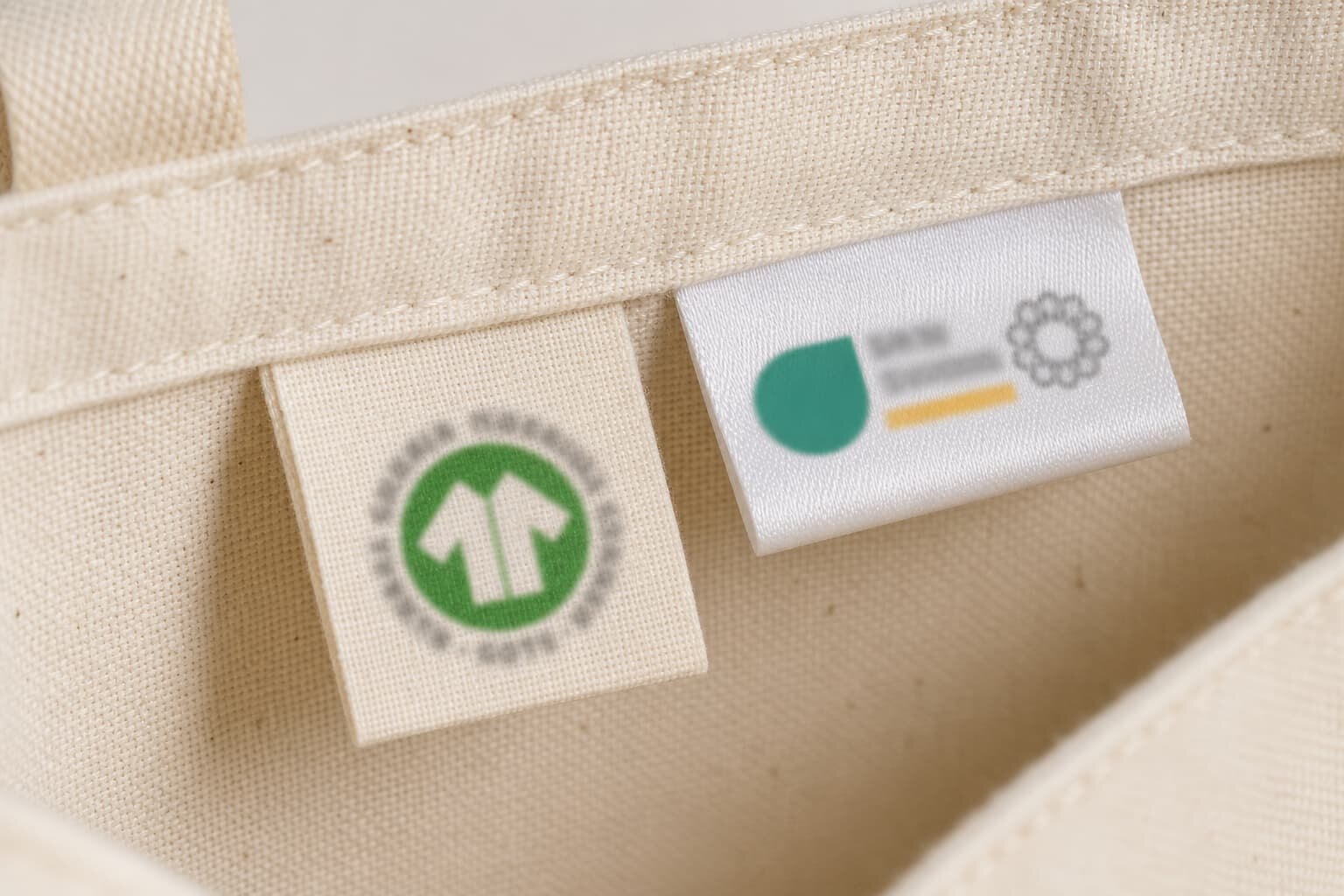
Why handle reinforcement becomes the hidden failure point
In organic cotton bags, handle failure usually starts long before the bag looks worn out. Buyers often approve the fabric, artwork, and overall dimensions, but the handle zone is where the real load concentrates. A bag can pass a visual sample check and still fail in use if the seam allowance is too narrow, the reinforcement stitch is too light, or the handle attachment sits too close to the top edge.
This is why handle reinforcement should be treated as a load path, not a sewing detail. The buyer needs to define how the bag will be used, how much weight it must carry, and how often it will be reused. A retail shopping tote, a trade show giveaway, and a grocery bag all need different reinforcement logic even if they start from the same organic cotton body.
- Common warning signs include handle stretch, seam puckering, and thread popping after a few uses.
- The weakest point is often where the handle joins the top hem, not the middle of the strap.
- If the factory only says reinforced handle without a stitch detail, the spec is incomplete.
Start with the use case, not the pattern
The fastest way to improve RFQs is to define the use case before choosing the bag pattern. A 200 gsm organic cotton tote for brochures has a very different stress profile from a 320 gsm retail shopping bag carrying boxed product or bottles. If the buyer only asks for a green, organic cotton tote with a logo, the factory will usually default to the easiest structure instead of the right one.
The RFQ should say how the bag will be carried, what the expected fill weight is, and whether the bag will be reused daily or only for events. Shoulder carry puts different strain on the handle entry point than hand carry. If the bag will be folded and packed often, the handle needs to resist repeated flexing as well as static weight.
- State target fill weight in the RFQ, even if it is only an example load.
- Specify handle drop length, since short handles and long shoulder handles fail differently.
- Call out whether the bag is for retail checkout, promotional use, or mixed daily use.
Reinforcement constructions that actually work
For most organic cotton bags, the best starting point is an X-box with bar-tacks at the stress points. That construction spreads load better than a simple top stitch, especially on bags in the 280 to 340 gsm range. For lighter bodies, adding internal twill tape or herringbone tape can reduce stretching without changing the outside look too much. If the bag is meant to feel premium, the reinforcement should be strong but visually tidy.
A stronger stitch pattern is not always the best answer if the bag is being positioned as a soft, natural, lifestyle item. In that case, the buyer may accept visible bar-tacks, but should still ask for a stitch map and a sample with the actual construction. If the factory uses webbing or a reinforcement patch, confirm where the added layer starts and ends so it does not create a lump inside the hand grip.
- X-box plus bar-tack is usually the safest all-around choice for medium and heavy totes.
- Internal tape helps with load control on softer fabrics that would otherwise stretch.
- A visible reinforcement patch can be strong, but it changes the look and hand feel.
Fabric GSM, thread, and handle width need to be approved together
Handle performance is tied to the body fabric, not just the handle itself. A bag with a 5 oz or 170 gsm body may still be fine for inserts or lightweight leaflets, but the same handle style will struggle if the bag is expected to carry heavier retail product. On the other end, a 10 oz or 340 gsm bag can still fail if the stitching is weak or the handle width is too narrow for the load. Buyers should ask for finished GSM, not only nominal ounce claims or yarn counts.
Handle width should increase as load and reuse go up. Many promo totes work at 25 to 30 mm finished handle width, but a heavier shopping bag is often more comfortable and more durable at 35 to 40 mm. Thread spec matters as well. In the handle zone, stronger sewing thread is often more reliable than basic cotton thread, even when the face fabric itself is organic cotton. The body can stay organic while the sewing system uses the thread that gives the right performance.
- Ask for finished GSM and fabric weave type on the quote, not only the fabric name.
- For heavier retail use, wider handles reduce hand bite and distribute force better.
- Confirm whether the factory uses the same thread in the body seam and the reinforcement area.
Print method and logo placement can weaken the handle zone
Artwork placement is part of the structural review because decoration can change fabric behavior. A heavy ink deposit, heat transfer film, or embroidered patch can stiffen the area near the handle and create a crack line where the bag folds. If the logo sits too close to the handle seam, the bag may look fine on day one and then start to fail after repeated lifting and folding. Buyers should review decoration and reinforcement together instead of approving them as separate steps.
Screen print usually gives the cleanest bulk result on organic cotton bags, but it still needs to be checked for curing, flex resistance, and any added stiffness around the print area. Heat transfer can work for short-run jobs, yet buyers should confirm whether the film survives folding without lifting at the edge. Woven labels and embroidery can look premium, but they also introduce needle holes or backing material, so the factory should show where the logo sits relative to the load path. If you need a simple sample identity mark, keep the CTM/CottonToMaker logo on a side label or seam label where it does not interfere with the handle stress area.
- Do not place heavy decoration directly on the handle entry point unless the construction is designed for it.
- Ask the factory to show both the decoration map and the reinforcement map.
- Check print cracking after the sample is flexed, folded, and loaded.
What a useful factory quote should include
A quote for an organic cotton bag should break out the engineering choices, not hide them inside one unit price. Buyers need to see the body fabric, handle construction, reinforcement method, print method, packing style, and sample cost as separate items. Otherwise two suppliers can quote the same tote, but one is using a simple single stitch while the other is using an X-box with internal tape. Those are not comparable offers.
The quote should also show what is excluded. Many disputes start when the buyer assumes the price includes labels, barcode stickers, carton marks, or special folding, but the factory priced only the bag body. A good quote makes it easy to compare labor-heavy details such as extra sewing steps, woven labels, or a tighter packing method. As a practical example, moving from a plain top stitch to X-box plus bar-tack may add sewing time and thread consumption, which matters much more on a low MOQ order than on a full container run.
- Require separate lines for fabric, sewing, print, packing, and sampling.
- Ask whether the MOQ changes with handle reinforcement or print placement.
- Confirm if the quote includes carton specs, inner packing, and final pressing.
How to audit the sample before you approve mass production
The sample should be treated like a test piece, not a display item. Load the bag with a realistic weight and lift it repeatedly by both handles. Then inspect the handle entry point, top hem, stitch backtracking, and any seam distortion. If one handle is slightly shorter or attached at a different angle, the bag can feel uneven in the hand even when it passes a casual look test. Buyers should also flex the printed area near the handle, because some failures only appear after the fabric is bent a few times.
Every approved sample should become a reference document. Record the finished handle width, handle length, drop length, top hem width, seam allowance, and reinforcement pattern. If the buyer wants a specific stitch count or reinforcement patch size, write it on the sample sheet. When those details are left verbal, production can drift as soon as the factory changes an operator, a machine, or a cutting batch.
- Check both handles under the same load so asymmetry is obvious.
- Measure the stitch placement against the top hem, not only against the edge of the fabric.
- Keep a signed sample with notes on acceptable and unacceptable variation.
MOQ, lead time, and packing logic affect handle quality
Handle reinforcement can change MOQ logic more than buyers expect. A factory may accept a smaller order for a simple tote with a basic seam, but require a higher MOQ once the bag needs extra tape, a custom woven label, a special print method, or a more complex handle entry. The reason is setup time and machine handling, not just material consumption. Buyers should ask whether the MOQ is tied to color, artwork, or construction method, because those are not the same thing.
Lead time should include fabric booking, sampling, printing, sewing, final inspection, and packing. If the reinforcement area needs a separate sewing step or a special jig, production may slow down even if the body fabric is in stock. Packing deserves the same attention. If the bag is folded too tightly, the handle mouth can hold a crease right at the stress point, which makes the bag look tired before it reaches the customer. Ask the factory to explain how each piece will be folded and whether the polybag will protect the handle entry from compression.
- Confirm whether MOQ is per color, per artwork, or per construction change.
- Ask how many extra sewing operations the reinforcement adds to the line.
- Specify a fold method that avoids hard creases at the handle mouth.
Bulk QC acceptance criteria for handle reinforcement
Bulk inspection should treat handle reinforcement as a measurable checkpoint. The buyer should define what a pass looks like in structural terms: stitch count per bar-tack, reinforcement patch size, allowable skipped stitches, and the maximum difference allowed between left and right handles. If the bag is a premium retail item, also define how much puckering is acceptable. A structurally strong bag can still be rejected if the top hem looks distorted or sloppy.
A good inspection plan separates appearance from strength. The factory should not argue that a visible wrinkle is acceptable just because the seam holds, and the buyer should not reject a minor cosmetic issue if the construction is otherwise solid and the bag is meant for low-risk use. Test a sample lot under load, flex the handle area, and check the top hem again after repeated lifting. If the fabric is softer or more open-weave, the buyer may need a slightly broader cosmetic tolerance but a tighter structural limit.
- Set a pass or fail rule for needle skips, thread breaks, and loose ends.
- Define symmetry limits for handle placement and handle angle.
- Test the bag after flexing, not only when it is still and empty.
Common mistakes that create expensive rework
The biggest mistake is assuming all organic cotton totes can use the same handle construction. A second common error is approving artwork first and reinforcement later, which forces the decoration too close to the load path. Buyers also run into trouble when they compare only fabric weight and ignore stitch architecture, thread quality, and handle width. Those details are where most real failures come from.
The safer workflow is to freeze the functional spec before artwork approval. Then confirm the sample, quote, and packing spec in one document so the factory cannot quietly simplify the bag after the order is placed. If you are sourcing from more than one supplier, use the same handle audit checklist on every quote. That keeps the comparison honest and stops the cheapest price from hiding the weakest seam.
- Do not let print placement drive the handle layout unless the structure was designed for it.
- Do not compare quotes without the same stitch detail and packing detail.
- Do not approve a sample without a load test and a written reference sheet.
Specification comparison for buyers
| Spec decision | Recommended option | When it fits | Buyer risk to check |
|---|---|---|---|
| Handle attachment pattern | X-box plus two bar-tacks | Medium to heavy totes that will carry retail goods or catalogs | Confirm stitch density, backstitch length, and whether the reinforcement passes through the top hem cleanly |
| Handle reinforcement material | Self-fabric handle with internal twill tape | When the buyer wants an organic look with better load support than plain folded fabric | Check that the tape does not twist and that the handle edge stays flat after pressing |
| Body GSM | 280 to 340 gsm organic cotton twill or canvas | Retail shopping bags, reusable promo bags, and light merchandising bags | Do not rely on nominal ounce claims; ask for finished GSM and weave density |
| Print method near handles | Screen print or woven label placed away from the stress zone | When brand visibility matters but the handle area must keep flexibility | Watch for cured ink stiffness, cracking at fold lines, or print overlap with stitch paths |
| Packing fold method | Flat fold with handle mouth protected from pinch points | When bags ship in bulk cartons and must open cleanly for retail use | Check whether the fold creates a hard crease right where the handle enters the body |
Buyer checklist before sampling
- Define the bag use case, target fill weight, and expected carry style before asking for quotes.
- Specify body GSM, handle width, handle length, and handle drop in the RFQ.
- Choose the reinforcement method in writing: X-box, bar-tack, tape, patch, or a combination.
- State where print or embroidery may sit relative to the handle seam.
- Ask for sample photos of the inside and outside of the handle attachment point.
- Request the exact thread type, stitch count, and sewing order for the reinforcement area.
- Confirm whether the quoted MOQ is per color, per artwork, or per construction method.
- Ask how the factory will fold, polybag, and carton-pack the handles to avoid creasing.
- Approve a realistic load test on pre-production samples, not just a visual review.
- Lock the final spec sheet before mass production starts so the factory cannot simplify the sewing.
Factory quote questions to send
- What reinforcement structure are you quoting exactly, and can you show the stitch map?
- What is the finished body GSM, handle width, and handle length after sewing?
- Which thread type do you use in the handle area, and is it different from the body seam thread?
- How many sewing operations are needed per bag, and which step drives the price most?
- Is the quoted MOQ based on fabric color, artwork, handle construction, or packing style?
- Can you provide a sample with the same print method and the same reinforcement method as production?
- What is the expected lead time for fabric booking, sampling, bulk sewing, and packing?
- How will the bags be folded and packed to keep the handle entry point from creasing?
- What inspection standard will you use for skipped stitches, symmetry, and pull resistance?
- What items are excluded from the quote, such as labels, barcode stickers, cartons, or special packing?
Quality-control points to confirm
- Check left and right handle symmetry, including exact attachment position and angle.
- Measure the finished handle width after sewing and pressing, not just the cut width.
- Verify stitch density and bar-tack length at each stress point.
- Inspect for puckering, skipped stitches, or thread breakage around the top hem.
- Test the sample under realistic load and repeat the lift several times.
- Look for print cracking, whitening, or stiffening near the handle zone after flexing.
- Confirm the inside reinforcement tape stays flat and does not twist in the seam.
- Check that the top hem and handle seam do not overlap in a way that creates bulk.
- Review carton packing so the fold does not press a hard crease into the handle mouth.
- Separate cosmetic defects from structural defects in the inspection report.