1. Why ecommerce reorders need procurement control
An organic cotton bag reorder can look like a routine repeat purchase, but ecommerce packaging has more moving parts than the phrase reorder same as last time suggests. The bag may be touched by sourcing, design, brand, fulfillment, finance, customs, marketplace operations, and the customer. A small change in GSM, fabric shade, drawcord length, print position, carton label, or SKU packing can create a visible brand issue or a warehouse receiving problem.
The safer approach is to treat each reorder as controlled repeat production. The goal is not to make the RFQ complicated. The goal is to remove the assumptions that cause batch drift. Organic cotton is a natural material, and fabric can vary by yarn, weaving, bleaching, dyeing, finishing, and storage conditions. Reorders also happen under commercial pressure: inventory is running down, a campaign date is fixed, and the buyer wants speed. That is exactly when unclear specifications become expensive.
A strong organic cotton bag for ecommerce brands bulk reorder plan should answer four questions before the purchase order is released: what must match the previous batch, what can change for cost or timing, what documents are needed to support organic claims, and what inspection result will be accepted. If those answers live only in old emails, the reorder is not controlled.
- Create a SKU-level reorder file with the last PO, quote, approved sample photos, fabric swatch, artwork file, print strike-off, carton label, packing photo, and inspection report.
- Ask the supplier to confirm every changed input before production, including fabric source, GSM tolerance, dye lot, print method, accessory, thread, and export carton.
- Separate brand-critical details from negotiable commercial details. Logo size, fabric claim, and warehouse label may be fixed; carton quantity or inner bundle count may be adjustable.
- Use the reorder discussion to capture risk, not just price. A supplier should tell you if the old fabric is unavailable, if the certification scope changed, or if the previous carton size is inefficient.
2. Build the reorder trigger from real usage
MOQ matters, but it should not be the first number in the reorder plan. Start with consumption. Ecommerce teams should know the average weekly usage by SKU, the highest expected weekly usage during promotions, the confirmed supplier production lead time, the freight lead time, inspection time, warehouse receiving time, and the safety stock target. Without those inputs, a buyer may place a reorder that satisfies MOQ but still arrives too late.
A simple reorder trigger is: weekly usage multiplied by total replenishment lead time, plus safety stock. If a brand uses 2,500 organic cotton pouches per week, the factory needs 5 weeks after sample approval, sea freight and customs take 4 weeks, inspection and release take 1 week, and warehouse receiving takes 1 week, the replenishment lead time is 11 weeks. At 2,500 pieces per week, the business needs 27,500 pieces just to cover the pipeline. If safety stock is 7,500 pieces, the reorder trigger becomes 35,000 pieces. When inventory falls to 35,000 pieces, the reorder should already be released, not merely discussed.
This calculation also prevents misleading MOQ conversations. A factory may quote a 10,000 piece MOQ, but if the reorder trigger is 35,000 pieces, ordering only MOQ creates a cycle of emergency orders. On the other side, if a seasonal design uses only 400 bags per week, the buyer may need to consolidate artwork, accept a higher unit cost, or change packing so the order does not create excess inventory.
- Forecast by SKU, not only by total bag quantity, because one sold-out pouch size can stop a product bundle even when total bag inventory looks healthy.
- Separate evergreen packaging from seasonal graphics, influencer drops, paid merchandise, and regional marketplace versions.
- Ask the supplier for MOQ logic by fabric color, size, print design, packing style, and destination label so you can consolidate intelligently.
- Share a rolling 3 to 6 month forecast when repeat production is expected. Ask the supplier whether fabric can be reserved, whether phased delivery is possible, and what written confirmation they can provide.
- Request written confirmation for fabric booking: fabric type, color, estimated quantity, planned production window, whether the fabric is reserved for your PO, and what happens if your forecast changes.
3. Specify GSM, weave, size, and construction without guesswork
The most common reorder dispute begins with a loose fabric description. Organic cotton bag quotes should not say only cotton bag, natural bag, or same as last order. They should identify fabric GSM, weave, color, finishing, construction, handle or drawcord detail, stitching thread, and finished size tolerance. A natural 140 GSM plain weave drawstring pouch and a 220 GSM organic cotton canvas tote are both organic cotton bags, but they serve different commercial purposes and create different MOQ, cost, freight, and QC requirements.
For lightweight ecommerce pouches, 120-140 GSM can work when the product is not heavy and opacity is not critical. This range is often used for apparel accessories, small boxes, jewelry, or promotional inserts where low freight weight matters. For more durable pouches or dust bags, 140-160 GSM gives a more substantial hand feel. For reusable totes, 180-220 GSM canvas or twill is usually a more practical starting range. Heavier fabric can improve structure and reuse value, but it also increases carton volume, print drying or curing considerations, sewing stress, and freight cost.
Finished size should be treated as the controlled dimension. Cutting size is not enough because cotton can shrink during finishing, printing, pressing, or washing if those steps are used. The RFQ should define width, height, gusset if any, handle drop, drawcord length, top hem, seam type, seam allowance, and allowed tolerance. For ecommerce operations, even a small opening-size change can slow packing if warehouse staff must insert boxed products quickly.
- For pouches and dust bags, define whether the product must slide in easily, whether opacity matters, and whether the drawstring closure must fully cover the product.
- For totes, confirm handle drop, handle width, cross-stitch or bar-tack reinforcement, bottom seam strength, and whether the bag needs to carry a stated product weight.
- For natural organic cotton, decide whether seed specks, small slubs, or shade variation are acceptable, and approve a fabric standard before production.
- For dyed fabric, request a lab dip or bulk swatch approval and clarify the allowed shade tolerance before fabric cutting.
- For every reorder, compare the new pre-production sample with the retained approved sample from the last batch, not with a memory of what the bag looked like.
4. Check organic certification before making claims
Organic certification guidance has to be precise because the buyer's public claim may be more demanding than the supplier's material description. A fabric can contain organic cotton without the finished bag being certified as a finished product. A factory may have a scope certificate for certain processes but not for the exact product category or claim the brand wants to use. A trader may offer certified fabric but be unable to provide a transaction certificate for the finished shipment. Procurement should resolve this before the PO, not after goods are packed.
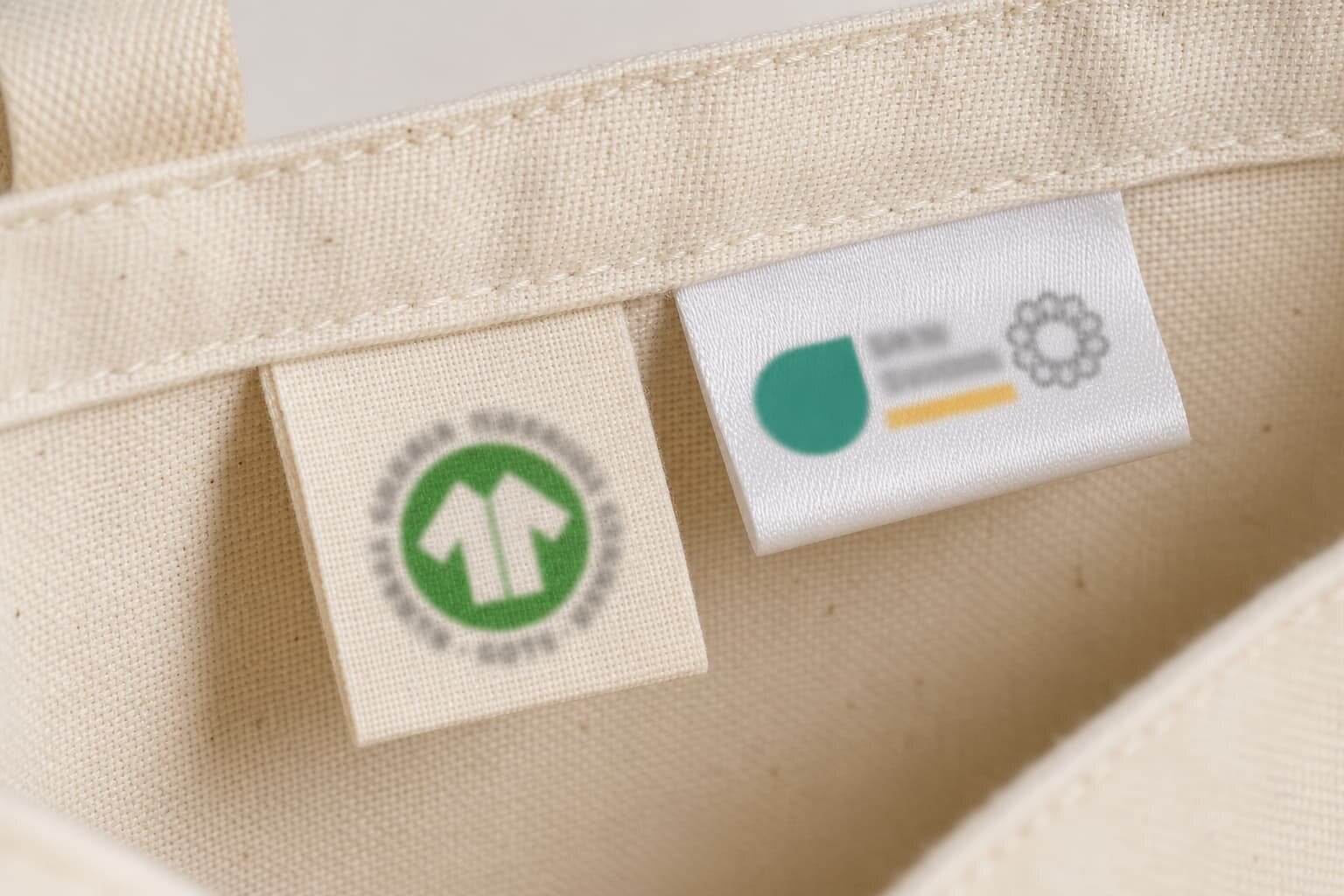
For many buyers, the key schemes to check are GOTS and OCS. GOTS is a broader textile processing standard with requirements beyond fiber content, while OCS is a chain-of-custody standard for organic material content. The right requirement depends on the brand's claim, retailer requirement, and compliance policy. Buyers should ask for the supplier's current scope certificate, confirm the certified entity name, check the product category and processing steps covered, and ask whether a transaction certificate can be issued for the specific PO. The transaction certificate is often the document that connects the certified material or product to your shipment.
The wording of the claim matters. Organic cotton, made with organic cotton, GOTS certified, OCS certified, and certified organic cotton can imply different things. The claim should match the certificate scope and the actual certified supply chain. If the brand only needs internal material traceability, fabric-level documentation may be enough. If the brand will print a certification logo, use a hangtag claim, or make a product-page claim, the buyer should confirm approval requirements and label rules with the certification body or qualified compliance contact.
- Request the current scope certificate and check the certificate holder name, expiry date, standard, product categories, process categories, and whether the supplier you are paying is covered.
- Ask whether certification applies to raw fiber, yarn, fabric, processing facility, trader, or finished bag production. Do not assume one level covers all levels.
- For GOTS or OCS orders, ask whether a transaction certificate can be issued for your PO, what data must appear on the invoice, and how long TC issuance normally takes.
- Confirm whether the finished bag can carry the intended claim, especially if you plan to use certification logos, percentage-content wording, marketplace claims, or retailer compliance documents.
- Keep certification documents in the reorder file and recheck them each reorder, because scope certificates expire and supplier coverage can change.
5. Control artwork like a production specification
Artwork control is one of the easiest ways to protect reorder consistency. A repeat logo should not be produced from a screenshot, low-resolution image, or old proof with unclear scaling. The reorder package should include the original vector artwork, print size in millimeters, print position measured from fixed bag edges, ink color reference, print method, approved strike-off, and photos of the approved production sample. This is especially important when the bag is part of the unboxing experience and customers will compare it visually across orders.
Screen printing is usually efficient for stable repeat artwork because setup cost is spread across the bulk quantity and the process can be controlled with an approved screen, mesh count, ink formula, curing standard, and print placement template. Water-based ink is common on cotton bags because it gives a softer hand feel than heavier ink systems. Digital pigment printing can be useful for seasonal designs, many SKUs, or shorter runs, but buyers should expect different unit cost, color behavior, and hand feel. A digital print that looks good on white fabric may look muted on natural cotton.
The most useful print approval tool is a strike-off on actual bulk fabric. A paper proof cannot show ink absorption, fabric shade, slub interference, edge sharpness, or hand feel. For repeat orders, compare the new strike-off against the retained previous strike-off. If a Pantone target is used, remember that Pantone is not the same as a guaranteed result on unbleached cotton. The buyer should approve a practical production match, not an impossible paper-standard match.
- Specify print placement as a measurement, such as centered between side seams and 90 mm below the top edge, with an allowed tolerance.
- Record print width and height in millimeters and identify whether the measurement includes fine lines, registration marks, or only visible artwork.
- For screen print, ask the factory to confirm ink type, color reference, mesh count where relevant, curing or drying standard, and whether the same print supplier is used as last time.
- For digital print, approve color and hand feel on the final fabric, and ask whether pre-treatment, curing, or fabric shade will change the result.
- Treat wrong artwork, wrong logo size, and wrong print position as major or critical defects depending on brand impact and whether the goods can be reworked.
6. Compare quotes by landed cost per usable bag
A low FOB unit price can be a poor procurement decision if the shipment creates freight waste, warehouse relabeling, excess defects, or unusable mixed cartons. Organic cotton bags are soft goods, but GSM, handle shape, drawcord thickness, pressing, individual packing, and carton compression all change carton volume. Ecommerce buyers should compare quotes using landed cost per usable received bag, not only unit price on the supplier quotation.
A worked example makes the difference clear. Supplier A quotes 20,000 drawstring bags at USD 0.62 FOB, packed 500 pieces per carton, with 0.060 CBM per carton. Total goods cost is USD 12,400. There are 40 cartons and 2.40 CBM. If freight and local handling average USD 145 per CBM, inbound freight is USD 348. The warehouse accepts the carton labels, and inspection finds 1.5 percent unusable pieces, so usable received quantity is 19,700. Landed cost before duty and tax is USD 12,748, or about USD 0.647 per usable bag.
Supplier B quotes USD 0.59 FOB, which looks cheaper. But packing is 300 pieces per carton at 0.052 CBM per carton, creating 67 cartons and 3.48 CBM. Freight at the same rate is USD 505. Carton labels do not match the 3PL requirement, so relabeling costs USD 0.025 per piece, or USD 500. Inspection finds 3 percent unusable pieces, leaving 19,400 usable bags. Landed cost before duty and tax is USD 11,800 plus USD 505 plus USD 500, or USD 12,805. The usable landed cost is about USD 0.660 per bag. The lower FOB price became more expensive because the packing and usable yield were worse.
This kind of comparison does not require perfect cost accounting. It requires the buyer to request carton dimensions, pieces per carton, gross weight, packing method, label requirements, expected defect handling, and included charges. If two suppliers quote very different prices, the buyer should verify that GSM, fabric construction, certification scope, print method, sample stages, carton quality, and packing rules are truly comparable.
- Request estimated carton dimensions, gross weight, net weight, pieces per carton, total cartons, and total CBM before approving a quote.
- Confirm whether individual polybags, kraft bands, barcode labels, inserts, master carton labels, screen charges, sample charges, testing, and export cartons are included.
- Ask the warehouse or 3PL what relabeling, sorting, receiving delay, or mixed-carton charges apply when packing instructions are not followed.
- Estimate usable received quantity by accounting for likely defects, shortages, and rejected cartons, then compare cost per usable piece.
- Document which quote assumptions are fixed in the PO so a supplier cannot win on a low quote and later change GSM, packing, or certification scope.
7. Use sampling to prevent batch drift
Buyers often sample carefully on the first order and then skip samples on the reorder to save time. That shortcut can work only when the last order was recent, the same materials are still available, the same production route is used, and the buyer accepts the risk. For most ecommerce brands, at least one pre-production sample is worth the time because it catches the exact issues that repeat orders are prone to: changed fabric shade, thinner hand feel, different drawcord, shifted logo, weaker seam, or new packing method.
The best pre-production sample is made with intended bulk fabric, bulk thread, bulk accessory, final artwork, final print method, and final packing. If bulk fabric is not ready, the supplier should say so clearly and identify what the sample does and does not prove. A sample made from substitute fabric can approve construction, but it cannot approve final color, GSM, shrinkage, print absorption, or hand feel. Procurement should record that limitation instead of treating the sample as full approval.
Approval should be comparative. Put the new sample beside the retained previous sample and check fabric shade, GSM, weight, dimensions, opening size, handle drop, drawcord thickness, logo size, print position, ink coverage, stitching, pressing, and packed appearance. If a difference is acceptable, write it into the approval record. If it is not acceptable, correct it before mass production starts. The approval record should be short but specific enough that inspection can use it later.
- Request sample stages based on risk: fabric swatch or lab dip, blank construction sample, print strike-off, pre-production sample, and packed sample.
- Use a sample approval form that records dimensions, GSM, fabric color, print method, print size, print position, accessory, packing, and deviations from the previous batch.
- Approve a packed sample when the order needs inner bundles, barcode labels, marketplace-ready labels, kraft bands, individual bags, or special carton marks.
- Do not release cutting if the buyer has not approved the fabric and finished size standard for the exact SKU.
- Retain at least one approved sample and fabric swatch for inspection and the next reorder.
8. Make packing rules fit the fulfillment workflow
Packing is not an end-of-line detail for ecommerce brands. It determines whether inventory can be received, counted, stored, picked, and inserted into orders without manual rescue work. A shipment can be well sewn and well printed but still commercially poor if cartons arrive with mixed SKUs, missing labels, unclear quantities, crushed cartons, or inner bundles that do not match warehouse practice.
A 3PL or ecommerce warehouse typically needs carton labels with PO number, SKU, color, size, artwork version, quantity, carton sequence, and sometimes barcode, destination, or marketplace code. If one PO ships to multiple warehouses, packing instructions should identify carton counts by destination. If the same design has several size variants, the factory should not mix them in one carton unless the buyer provides a controlled assortment plan. The packing list should match the physical carton labels so receiving can reconcile quickly.
Packing also affects product appearance. Over-compressed cartons can leave hard creases, especially on heavier canvas totes or printed panels. Individual packing can protect cleanliness and presentation but increases labor, material, carton volume, and sometimes sustainability concerns. Bulk packing is efficient for fast-moving warehouse consumption but requires clean cartons, inner bundle control, and dust protection. The right choice depends on whether the bag is a customer-facing product, an order insert, a retail item, or a warehouse consumable.
- Define pieces per inner bundle, pieces per export carton, whether bundles are tied, banded, bagged, or loose, and whether carton quantities must be identical.
- Provide a carton label template and ask the factory to submit a label proof before mass packing.
- Ask for packed-carton photos showing inner packing, carton mark, label placement, carton condition, and carton sealing before shipment release.
- For marketplace or 3PL shipments, confirm barcode readability, destination labels, carton sequence, and whether mixed cartons are prohibited.
- Include packing defects in inspection: wrong count, mixed SKU, missing carton label, unreadable barcode, wrong destination, wet carton, crushed carton, and loose inner packing.
9. Set AQL, defect classes, and pass/fail handling
Quality control becomes stronger when the buyer defines acceptance criteria before production. For organic cotton bags, inspection should cover fabric defects, stains, shade variation, GSM, finished measurements, sewing strength, print quality, print placement, packing accuracy, carton condition, and documentation. A general request for good quality does not give the factory or inspector a usable standard.
Many buyers use AQL inspection for bulk soft goods. The exact level should match order risk, but a common approach is to use a general inspection level for visual and workmanship defects, with separate handling for critical issues. The buyer, supplier, and inspector should agree on sample size logic before inspection: the total shipment quantity determines the sample size under the selected inspection level, and the AQL limits determine how many defects are allowed for each class. Critical defects often have zero tolerance because they can make the shipment unsellable, unsafe, noncompliant, or impossible to receive.
Defect classification should be practical. Critical defects may include wrong certified-claim label, wrong artwork that cannot be reworked, mold, contamination, hazardous sharp object, or carton labels that make the entire shipment unreceivable. Major defects may include open seams, broken stitches at handles, wrong size beyond tolerance, wrong print position beyond tolerance, severe stains, holes, incorrect drawcord, or mixed SKUs. Minor defects may include small loose threads, slight slub variation within the approved standard, minor removable lint, or small print specks that do not affect brand presentation.
Pass/fail handling should also be agreed before inspection. If the lot passes, shipment can proceed subject to document review. If it fails, the factory should sort, rework, replace, or request a written concession for specific defects. Re-inspection should be at the factory's cost when failure is due to workmanship or packing errors. For recurring reorders, keep defect photos and measurement summaries so the next production run can target the real pattern, not a vague complaint.
- Define critical, major, and minor defects in writing before mass production, and include examples relevant to fabric, print, sewing, packing, and certification.
- Set measurement tolerance for width, height, gusset, handle drop, drawcord length, print size, and print position using millimeters or percentage as appropriate.
- Use retained approved samples, fabric swatches, and print strike-offs as inspection references, not only the written quote.
- Require inspection photos of defects, measurements, carton marks, packing, labels, and randomly selected samples from different cartons.
- Agree on pass, fail, rework, replacement, discount, concession, and re-inspection rules before the goods are due to ship.
10. Send an RFQ that makes the reorder easy to quote correctly
A clean reorder RFQ is commercially useful because it reduces supplier guesswork and makes competing quotes easier to compare. It should identify the previous PO, the SKU list, target quantity by SKU, delivery window, required Incoterm, fabric specification, certification requirement, finished dimensions, artwork files, packing rules, inspection requirement, and any changes from the last order. If the order must match the previous batch, say that directly and attach the approved reference photos.
The RFQ should also state what is flexible. If 150 GSM is preferred but 140 GSM is acceptable for a lower cost or faster lead time, ask suppliers to quote both options clearly. If natural fabric can be used instead of dyed fabric, identify that as an alternate. If the warehouse can accept either 250 or 500 pieces per carton, ask for the carton data for both. This gives the supplier room to solve commercial constraints without quietly changing the specification.
For repeat ordering, the buyer should ask for a written risk note with the quote. The supplier should identify whether the same fabric is available, whether the previous certification route can be repeated, whether the same print method and ink can be used, whether MOQ is driven by fabric or printing, and whether the packing method creates any cost or lead-time issue. A good quote does not only give a price; it shows the assumptions behind the price.
Before releasing the PO, match the quote against the reorder file. Check that the article name, SKU, quantity, GSM, fabric color, certification scope, print method, artwork version, size tolerance, packing, carton data, lead time, sample schedule, payment terms, and inspection standard are all present. That final procurement check is what turns a reorder from a hopeful repeat into a controlled production plan.
- Include SKU, finished size, bag type, fabric GSM, weave, color, handle or drawcord detail, stitch color, print method, print size, print position, and packing method.
- Attach vector artwork, approved sample photos, prior inspection report, carton label template, barcode requirements, and any marketplace or 3PL receiving rules.
- Ask for price breaks by realistic quantities and ask the supplier to show MOQ drivers by fabric color, size, artwork, and packing style.
- Request sample timeline, production timeline, certification-document timeline, carton dimensions, gross weight, total CBM, payment terms, quote validity, and excluded charges.
- Ask the supplier to list every assumption and every difference from the previous order before you approve the PO.
Specification comparison for buyers
| Spec decision | Recommended option | MOQ impact | Cost impact | Lead-time impact |
|---|---|---|---|---|
| Light product pouch or mailer insert | 120-140 GSM organic cotton plain weave | Usually easier if natural fabric is available; dyed colors may create fabric-color MOQ | Lower material cost and lower freight weight, but less opacity | Shorter when greige or natural fabric is in stock; longer for custom dyeing |
| General ecommerce drawstring bag | 140-160 GSM organic cotton plain weave or light canvas | Moderate MOQ by fabric color, size, and print design | Balanced unit cost; better hand feel than very light fabric | Sampling and print approval usually drive timeline more than sewing |
| Reusable tote or merchandise bag | 180-220 GSM organic cotton canvas or twill | Higher fabric booking quantity may apply, especially for dyed fabric | Higher material cost and carton volume; stronger perceived value | Can add time for fabric finishing, printing cure, and pressing |
| Premium structured tote | 240 GSM and above organic cotton canvas | Higher MOQ and fewer fabric options may be available | Higher unit price, higher freight volume, and more sewing time | Longer if special fabric width, wash, dye, or heavy print is required |
| One-color repeat logo | Water-based screen print using approved vector file, ink reference, mesh count, and placement template | Efficient MOQ when artwork is stable across the run | Low setup cost per unit at bulk quantity; screen charge may apply | Fast after screen approval and strike-off signoff |
| Many seasonal graphics | Digital pigment print with strike-off approval on production fabric | MOQ can be lower by design, but unit cost is higher | Higher print cost; no screen charge advantage at larger stable volumes | File preparation and color approval may add time across many SKUs |
| Certified organic claim on bag | Confirm GOTS or OCS scope, transaction certificate availability, and allowed labeling claim before PO | Certified supply may raise MOQ if fabric or finished-product certification is limited | Certification, traceability, and audit handling can add cost | Longer if supplier must source certified fabric or coordinate TC documents |
| Warehouse-ready packing | Bulk packed by SKU with inner bundles, carton marks, PO/SKU/barcode labels, carton sequence, and packing list | Packing style can create MOQ by SKU, destination, or label version | Labels, inner packing, individual bags, and cartons add labor and material cost | Warehouse label approval and packed sample review can add several days |
Buyer checklist before sampling
- Confirm the commercial purpose of the bag: order packaging, gift pouch, dust bag, reusable tote, paid merchandise, or marketplace-ready insert.
- Lock the bag type, finished size, GSM, weave, fabric color, handle or drawcord detail, stitching thread, and acceptable tolerance before asking suppliers to quote.
- Define whether the cotton must be certified organic, and specify whether you require GOTS, OCS, fabric-only certification, finished-product certification, transaction certificates, or approved labeling claims.
- Ask the factory to explain MOQ by fabric color, bag size, artwork version, print method, accessory, packing style, and destination label instead of giving only one total MOQ.
- Provide vector artwork, print size in millimeters, placement from fixed edges, ink color reference, approved sample photo, and any required logo-clear-space rule.
- Request a pre-production sample made with intended bulk fabric, bulk accessory, stitching thread, print method, and packing before mass production release.
- Approve a packed sample when carton count, inner bundle count, barcode labels, kraft bands, individual packing, or marketplace receiving rules matter.
- Build the reorder trigger from weekly usage, confirmed lead time, inspection time, inbound transit, receiving time, and safety stock, not from the supplier MOQ alone.
- Compare quotes by landed cost per usable received bag, including freight volume, relabeling, inspection, defects, short shipment, and warehouse handling.
- Set AQL inspection levels, critical/major/minor defect examples, sample size logic, measurement tolerances, and pass/fail handling before production starts.
Factory quote questions to send
- What exact organic cotton fabric is quoted: GSM, weave, yarn count if available, fabric width, color, finish, shrinkage expectation, and fabric source?
- Is the MOQ calculated by total order, greige fabric booking, fabric color, dye lot, bag size, print design, accessory, packing method, or destination label?
- Does the quoted organic certification apply to raw cotton, fabric, processing facility, trading scope, or finished bag, and can you provide current scope certificate details?
- Can you provide a transaction certificate for this order if required, and what information must be included on our PO and invoice to support it?
- What labeling claim is allowed for the finished bag, and are there restrictions on using GOTS, OCS, organic cotton, certified organic cotton, or percentage-content wording?
- Can you use the same fabric mill, fabric construction, dyeing standard, thread, drawcord, handle tape, ink formula, and carton packing as the previous production batch?
- Which print method is included in the quote, and what screen charges, setup charges, digital file charges, strike-off charges, curing steps, and color tolerances apply?
- What sample stages are included: fabric swatch, lab dip for dyed fabric, blank sample, print strike-off, pre-production sample, and packed sample?
- What are the tolerances for finished width, height, gusset, handle drop, drawcord length, print size, print position, GSM, and carton quantity?
- How many pieces are packed per inner bundle and export carton, what are the carton dimensions, gross weight, net weight, and estimated CBM for the total order?
Quality-control points to confirm
- Verify actual GSM from bulk fabric against the approved sample, quote, and allowed tolerance before cutting.
- Check certification documents before shipment: valid scope certificate, product category coverage, supplier name match, transaction certificate if required, and claim wording consistency.
- Measure finished bag width, height, gusset, handle drop, drawcord length, and opening size using the agreed measurement method and tolerance.
- Compare fabric color under consistent lighting against the approved swatch or previous batch, especially for natural, bleached, dyed, and black organic cotton.
- Inspect for fabric defects including holes, stains, oil marks, broken yarns, excessive slubs beyond the approved standard, shade panels, and contamination.
- Perform rub, tape, scratch, wash, or crocking checks where appropriate for printed logos before final packing approval.
- Check print placement from fixed points such as top edge, side seam, bottom seam, drawstring channel, or handle centerline instead of judging by eye only.
- Inspect print defects including wrong artwork, wrong color, blurred edges, pinholes, poor coverage, ink cracking, registration shift, and print stains.
- Check seam strength at handles, side seams, bottom corners, drawstring channels, zipper ends, and stress points using the approved construction sample as reference.
- Verify that no mixed SKUs, mixed sizes, mixed colors, or mixed artwork versions are packed together unless the packing instruction specifically allows it.