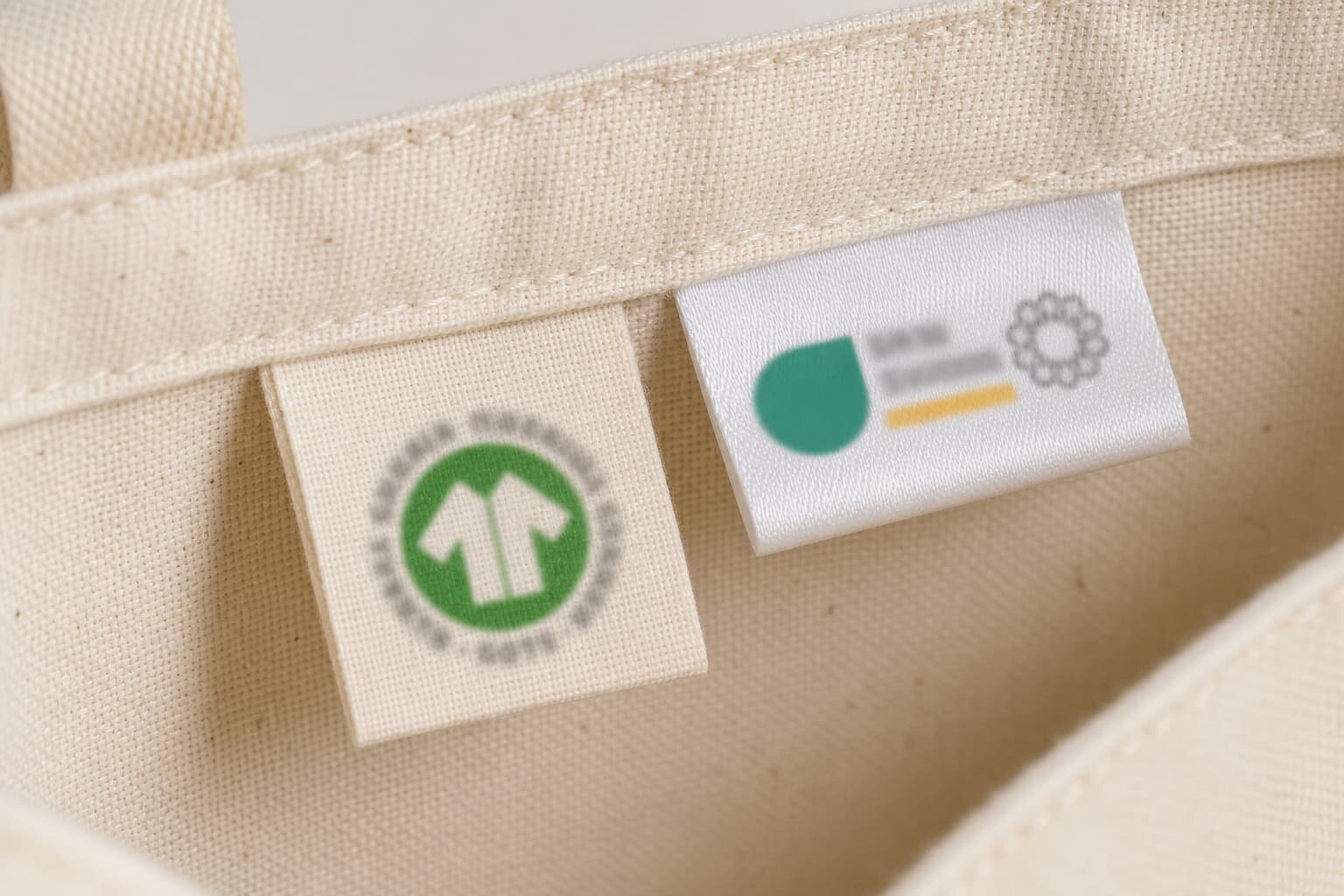
Why organic cotton bag quotes do not line up by default
When buyers run an organic cotton bag bulk quote comparison, the biggest mistake is assuming that two prices describe the same product. In reality, one factory may be quoting lighter fabric, simpler stitching, looser tolerances, or a different print method. Another may include setup charges in the unit price while the first leaves them out. If the base assumptions are different, the quote spread tells you almost nothing about true value.
A usable quote must show the exact bag specification and the exact commercial basis. That means fabric weight, dimensions, handle style, print details, packing format, MOQ logic, sample stage, lead time, and trade term. If any of those are missing, the quote is incomplete, not cheaper. For organic cotton bags, even the phrase organic cotton can hide differences in material sourcing, finishing, and documentation expectations, so the buyer has to make the comparison structure before asking for price.
- Compare only when size, fabric, print, and packing are matched.
- Treat missing line items as risk, not savings.
- Ask every supplier to use the same quote basis before you score the price.
Start with one base spec, not three versions
A clean RFQ begins with one base spec that all suppliers can quote against. If you send one drawing, one sample photo, and one note that says similar quality is fine, the replies will drift in different directions. One factory may quote a flatter tote with shorter handles, another may add a gusset, and a third may quietly move the logo placement to reduce print cost. The result looks comparable on paper but fails the first approval meeting.
Fix the core spec before you request pricing. Lock the finished bag size, gusset depth, handle length, panel count, inside finish, and the exact location of the artwork or label. If your team is considering more than one version, split them into separate quote lines so the differences are obvious. That makes it easier to compare true alternates instead of accidentally mixing a promo bag spec with a retail bag spec.
- State the finished dimensions, not only the flat panel size.
- Define whether the bag is gusseted, boxed, or flat.
- Confirm handle construction and label placement before asking for unit cost.
Use GSM and weave to compare the bag body
For organic cotton bag sourcing, fabric weight is one of the most important cost and performance drivers. A 120-140 GSM bag can work for light promotional use, but it will feel thinner, wrinkle more easily, and show print differences faster. Many retail buyers move to 140-160 GSM for a better balance of handfeel, durability, and print coverage. For heavier carry or premium resale, 180-220 GSM gives more body, better shape retention, and a stronger perceived value, though the sewing and cutting cost may rise with the heavier cloth.
GSM alone does not tell the full story. A loose weave at the same weight can still feel weak, and a tighter weave can hold shape better even when the number looks similar. Ask whether the fabric is pre-shrunk or finished after wash, because shrinkage changes final size and print registration. If the bag is meant for daily reuse, ask for reinforcement at the handle join, the side seams, and the bottom corners. Those details often separate a low quote that fails from a slightly higher quote that ships cleanly.
- Ask for finished GSM with an acceptable tolerance range.
- Confirm shrinkage behavior after washing or steam finishing.
- Request weave density or fabric construction details if the bag is sold as premium.
Compare print and branding costs separately
The print method can change the quote as much as the fabric choice. For most bulk cotton bags, one- or two-color screen printing remains the safest commercial option because it is durable, repeatable, and usually cost-effective at volume. More colors increase setup work, registration risk, and reject risk. Large solid fills also need better curing control so the print does not crack, stick, or feel overly stiff. If the supplier offers digital or heat-transfer methods, ask whether those are true production options or only sampling shortcuts.
Branding cost is not limited to the logo ink itself. Woven labels, side seam labels, inner tags, embroidery, or woven patches all add process steps and may change the sewing sequence. If one factory includes screens, plates, or digitizing and another treats them as extras, the lower quote can be misleading. To compare fairly, give every supplier the same artwork size, the same logo colors, the same print placement, and the same finish expectation. That is the only way to see whether the price gap comes from process quality or from hidden add-ons.
- Fix the artwork size in centimeters and the maximum color count.
- Ask if screens, plates, or digitizing are one-time or repeat charges.
- State whether the logo prints on one side or both sides of the bag.
MOQ logic changes the unit price more than buyers expect
MOQ is rarely a single number. For organic cotton bags, the real minimum can change by fabric color, print color, size, label type, or packing format. A factory may be comfortable at 1,000 pieces for one natural tote with one print color, but raise the price or minimum when you add a second logo location, a different handle length, or a retail polybag. Buyers should ask what exact combination creates the quoted unit price instead of reading MOQ as a fixed promise.
This matters even more when the order has several launch variants. A slightly higher unit price on one shared base bag can be cheaper overall than a lower price split across three small SKUs. The hidden cost is usually setup, not sewing. If the order may grow later, ask for breakpoints at 500, 1,000, 3,000, and 5,000 pieces, and keep those numbers in the same quote worksheet. That makes it easier to see where the price curve becomes efficient.
- Check whether MOQ applies per design, per size, or per purchase order.
- Ask for the surcharge on mixed sizes, mixed print colors, or mixed handles.
- Confirm whether the sample fee is credited back on bulk orders.
Sample checks that prevent bulk rejection
Do not approve a blank sample if the final order depends on print, label, or packing detail. The useful approval sample for a bulk quote comparison is a pre-production sample made from final fabric, final stitching, final artwork, and final packing method. Only that sample reveals how the fabric feels after finishing, how the print sits on the weave, whether the logo placement is centered, and whether the handle balances well in the hand.
Measure the sample against the spec, not against memory. Check the finished size after pressing or a light wash if your market expects that behavior. Confirm seam appearance, print opacity, and the way the bag folds for packing. If the sample deviates from the original request, ask the factory to explain why before bulk starts. A good supplier will tell you when a fabric lot, stitch path, or print coverage needs adjustment. That discussion is cheaper at sample stage than after 5,000 pieces have already been sewn.
- Verify logo placement on a finished bag, not on a flat panel.
- Check thread color, stitch count, and handle reinforcement at stress points.
- Confirm whether the sample was hand-made or line-produced.
Packing and carton data change landed cost
Packing is not a minor line item. A bag that ships loose in bulk looks cheap on a quote, but it can raise warehouse labor, dust risk, and repacking work after arrival. Individual polybags add cost, but they may be necessary if your distribution center needs barcode labels, size stickers, or shelf-ready units. If your retail team wants a clean presentation, ask the factory to quote the pack-out exactly, not just the sewing cost.
Carton data matters just as much as unit packing. Carton size affects freight efficiency, pallet build, and storage space, while carton count affects receiving time. Ask for units per inner pack, units per master carton, gross weight, and estimated CBM so your logistics team can estimate landed cost accurately. If you need recycled packing, barcode stickers, or country marks, keep those as separate quote lines. That way you can decide what is required for compliance and what is optional for presentation.
- Confirm units per inner pack and units per master carton.
- Ask for carton dimensions, gross weight, and estimated CBM.
- State whether polybags, hang tags, or barcode labels are required.
Lead time usually slips in the approval chain
A lead time number only helps if every supplier starts the clock at the same point. One factory may count from deposit, another from artwork approval, and another from signed sample approval. Those are very different schedules. For custom organic cotton bag orders, the slowest step is often fabric confirmation or print screen preparation, not the sewing itself. If you compare lead times without checking the start point, the shortest quote may simply be the least honest.
Build the schedule around the real bottlenecks: fabric booking, print approval, sample sign-off, bulk cutting, sewing, inspection, and packing. Typical planning windows for custom bulk bags often sit in the 30-45 day range after approval, but that can move quickly if fabric must be woven, print colors need extra testing, or packing is customized. If a supplier promises a much faster schedule, ask which step they are compressing and what quality control they are skipping. Speed is only helpful when the bag still passes inspection.
- Ask what date the lead time starts and ends.
- Confirm whether stock fabric is available or needs to be sourced.
- Ask if rush orders change MOQ, cost, or packing method.
Build a like-for-like quote comparison matrix
The cleanest way to compare quotes is to put every offer into one worksheet with identical columns. At minimum, include fabric GSM, finished size, handle type, print method, sample stage, MOQ, packing, lead time, trade term, and exclusions. Once those fields sit side by side, the hidden differences become obvious. A quote that looks lower on the factory line can become more expensive the moment you add freight, packing, or setup charges that were not included.
Compare the full commercial picture, not just the factory gate number. Include screens, sample fees, carton fees, inner pack charges, and any artwork revision costs. If one supplier quotes FOB and another quotes EXW, you do not yet have a real comparison. Ask them to rewrite the quote on the same basis if needed. That extra step is worth it because it prevents later arguments about what was or was not included in the original price.
- Normalize all quotes to one trade term and one packing basis.
- Highlight every allowance, exclusion, and optional charge.
- Keep one approved spec sheet and one approved artwork file for all suppliers.
Set acceptance criteria before you release the PO
The best purchase order is the one that already defines pass or fail. State your acceptance criteria for size tolerance, stitch quality, print registration, color consistency, and packing count before production starts. That protects both sides. The factory knows what it has to hold, and your receiving team knows how to inspect without arguing over vague terms like good finish or acceptable look. Clear standards reduce rework and make dispute resolution much easier.
For organic cotton bag bulk orders, the most common problems are fabric variation, uneven print density, weak handle stitching, and pack count errors. Write the thresholds into the RFQ and repeat them in the PO so the final approved sample and the bulk run are tied together. If the supplier knows the exact limits in advance, it is easier to correct the process before the order leaves the factory. In practice, that is usually more valuable than squeezing one more cent out of the unit price.
- State measurable tolerances instead of vague finish comments.
- Tie bulk acceptance to the signed pre-production sample.
- Require a correction plan if the first inspection fails.
Specification comparison for buyers
| Spec decision | Recommended option | When it fits | Buyer risk to check |
|---|---|---|---|
| Fabric weight / GSM | 140-160 GSM for standard retail, 180-220 GSM for heavier carry | When you need body, better print opacity, and fewer shape complaints | Check finished GSM and shrinkage after finishing, not only yarn count |
| Print method | 1-2 color screen print with proper curing | Best balance of cost, durability, and repeatability for bulk runs | Ask whether screens, setup, and registration are separate charges |
| Handle build | Self-fabric handles with box-X or cross-stitch reinforcement | Reusable tote, grocery, or promo bags that will be carried often | Confirm stitch density, handle width, and pull-test expectation |
| MOQ logic | One base bag, one artwork, one colorway per production run | Best way to keep unit price and factory setup simple | Verify whether MOQ applies per design, per size, or per print color |
| Packing format | Bulk-packed or simple fold with carton marks | When warehouse handling matters more than retail presentation | Check unit count, carton size, and whether extra packaging adds plastic or labor cost |
| Sample level | Pre-production sample in final fabric, final print, and final label | Any order that needs a real approval before bulk sewing starts | Make sure the sample follows the real production route, not a hand-made one-off |
| Lead time basis | Quoted from sample approval or artwork approval, stated in writing | Useful when comparing factories on the same scheduling basis | Confirm what starts the clock and whether fabric booking or print prep adds delay |
Buyer checklist before sampling
- Lock one finished size, one gusset depth, and one handle length before requesting quotes.
- State the target GSM and whether the bag should feel soft, structured, or heavy-duty.
- Define print method, print size, number of colors, and exact placement on the bag.
- Ask each supplier to quote the same trade term, packing format, and carton assumption.
- Request a pre-production sample with final fabric, final label, and final artwork.
- Confirm MOQ by size, color, artwork version, and packing style.
- Ask for lead time from the same milestone across all factories.
- Keep one approved spec sheet and one approved artwork file for all quote comparisons.
Factory quote questions to send
- What fabric GSM, weave, and finished shrinkage are you quoting for this bag?
- Does your price include screens, setup, labels, and carton packing, or are any of those extra?
- What is the MOQ per size, per color, and per artwork version?
- Can you quote the same bag with bulk packing and with individual polybag packing?
- What sample stage is included in your sample lead time, and is the sample made from final materials?
- What tolerances do you hold for finished size, seam alignment, and print placement?
- From which milestone does your bulk lead time start: PO, deposit, artwork approval, or sample approval?
- Can you separate material, sewing, printing, and packing costs so we can compare quotes line by line?
Quality-control points to confirm
- Finished size, gusset, and handle length match the approved spec within agreed tolerance.
- Fabric weight and handfeel match the quoted GSM and sample reference.
- Stitch density, seam allowance, and handle reinforcement are even and consistent.
- Print placement, color density, and curing quality match the signed sample.
- No loose threads, oil stains, needle damage, or puckering on visible panels.
- Labels, woven tabs, and side seams are clean, centered, and secure.
- Unit pack count and carton count match the packing list and shipping mark.
- Bulk production matches the approved pre-production sample for fabric, print, and finish.