Why AQL Must Be Set Before the Organic Cotton Bag Order
For organic cotton bags, many disputes start because the buyer and factory agree on the product name but not on the inspection standard. A natural cotton tote, a certified organic cotton shopping bag, and a premium 12 oz canvas retail bag may all look similar in a quotation. During final inspection, however, the buyer may reject shade variation, print movement, loose threads, or label wording that the factory considered normal. A clear AQL checklist turns these subjective points into measurable acceptance rules.
AQL is not only a final inspection tool. It should influence sampling, quotation, artwork confirmation, packing design, and production scheduling. If the factory knows the buyer will inspect handle strength, print curing, GSM, carton marks, barcode placement, and organic claim labels, they can price the job correctly and allocate the right production line. If AQL is introduced only after goods are packed, rework becomes slow, expensive, and sometimes impossible.
- Set AQL levels in the RFQ and purchase order, not after production.
- Separate critical, major, and minor defects so the inspection result is not decided by opinion.
- Use the approved sample as a physical reference, but do not rely on the sample alone.
- Ask the factory to confirm which tolerances are realistic before mass production.
- Avoid booking final inspection too close to vessel cut-off because organic cotton bags often need repacking or thread cleaning.
Recommended AQL Levels for Organic Cotton Bag Orders
A practical starting point for reusable organic cotton bags is Critical 0, Major 2.5, and Minor 4.0 under general inspection level II. This is common for many textile accessory exports where the product is not highly technical but still needs consistent visual and functional quality. For premium retail bags, heavier canvas bags, or bags sold with strict brand presentation standards, buyers may tighten major defects to AQL 1.5. For low-cost giveaway bags, some buyers accept Major 4.0, but that should be a conscious commercial decision rather than a default.
The inspection level also matters. General level II is usually suitable for normal shipments. Level I may reduce inspection cost, but it also reduces the sample size and can miss mixed defects across cartons. Level III gives a larger sample size and is useful for first orders, new factories, tight launch windows, or products with multiple print colors and SKU variations. If the order has several styles, colors, or logo versions, the inspection plan should spread samples across all variants instead of checking only the easiest carton.
- Critical defects: AQL 0, meaning no critical defect is acceptable in the inspected sample.
- Major defects: AQL 2.5 for normal reusable bag orders, or 1.5 for premium retail programs.
- Minor defects: AQL 4.0 for small appearance issues that do not affect saleability or function.
- Inspection level: General level II for regular orders; level III for first production or high-risk launches.
- Special checks: Measure dimensions, GSM, handle load, print rub resistance, carton marks, and barcode scan separately.
Define Critical, Major, and Minor Defects Clearly
The most useful inspection checklist is not the longest one. It is the one that tells the inspector how to classify defects consistently. For organic cotton bags, critical defects usually relate to safety, compliance, and severe contamination. Examples include mold, insect contamination, sharp metal pieces, wrong fiber claim, missing legally required country-of-origin label, or print ink that transfers heavily to skin or other products. These defects should not be accepted because they can affect import clearance, retail sale, or consumer safety.
Major defects are issues that make the bag difficult to sell or use as intended. Wrong bag size, weak handle stitching, serious print misplacement, open seams, heavy stains, wrong logo color, incorrect barcode, or missing retail label should normally be major. Minor defects include small thread ends, slight natural cotton specks, small shade variation within the approved range, or tiny print pinholes that are not visible at normal viewing distance. Natural organic cotton has more visible character than bleached synthetic fabric, so the buyer should define acceptable natural specks before inspection.
- Critical: mold, sharp contamination, wrong organic claim, unsafe odor, severe ink transfer, missing legal label.
- Major: open seam, broken stitch, wrong size, wrong handle length, print off-position, wrong SKU label, barcode failure.
- Minor: small loose thread, slight cotton seed speck, mild wrinkle, small shade variation within approved limit.
- Not a defect if approved: natural unbleached cotton tone, small seed flecks, slightly uneven hand feel from low-chemical finishing.
- Buyer action: include photo examples of acceptable and unacceptable natural cotton appearance in the sample approval file.
Fabric GSM, Construction, and Shrinkage Checks
Organic cotton bag quality starts with the fabric, not the sewing line. A 5 oz muslin bag, a 7 oz canvas tote, and a 12 oz heavy canvas shopper cannot be inspected with the same expectation. Light muslin is suitable for dust bags, produce bags, and low-load packaging. Standard canvas around 6 oz to 8 oz fits many promotional and retail tote orders. Heavier 10 oz to 12 oz canvas is better for premium grocery bags or bookstore bags, but it increases sewing difficulty, carton weight, and freight cost.
The RFQ should state both fabric weight and construction. GSM alone is not enough because weave density, yarn count, finishing, and washing can change hand feel and shrinkage. If the bag is dyed, washed, or steam finished, the factory should confirm whether the quoted GSM is greige fabric, finished fabric, or after-wash fabric. During inspection, measured fabric weight should be checked against the approved bulk fabric or lab dip sample. For natural organic cotton, shade can vary slightly between fabric lots, so the buyer should set a tolerance rather than demand impossible perfect uniformity.
- 5 oz to 6 oz: light packaging bags, produce bags, dust bags, low-load giveaways.
- 6 oz to 8 oz: standard reusable totes, brand merchandise, retail shopping bags.
- 10 oz to 12 oz: premium canvas shoppers, grocery programs, heavier daily-use bags.
- Check GSM from finished fabric when possible, not only the fabric mill's initial quotation.
- Ask for shrinkage data if the bag is washed, dyed, enzyme finished, or steam pressed.
Size, Handle, and Sewing Acceptance Criteria
Bag size should be measured flat on a table without stretching the fabric. A common tolerance for cotton tote bags is plus or minus 1 cm for width and height, and plus or minus 1.5 cm for gusset or handle length, but this depends on construction and fabric weight. Heavy canvas is less forgiving, while soft muslin can move more during cutting and sewing. If your retail display, insert card, or gift box requires an exact fit, state the tolerance in the PO and ask the factory whether cutting dies or templates will be used.
Handle quality deserves special attention because it is the most common functional failure point. The inspector should check handle length, handle width, stitch density, reinforcement pattern, and symmetry between left and right sides. X-box stitching, cross-stitch reinforcement, or bar-tack reinforcement should be confirmed during sample approval. A simple pull test or load test can be added when the bag will carry books, groceries, glass bottles, or other heavy goods. The test method should be realistic; an unclear instruction such as strong handle is not enough for a factory production team.
- Measure finished width, height, gusset, handle drop, handle width, and print position.
- Check seam allowance and whether raw edges are properly overlocked, folded, or enclosed.
- Reject open seams, skipped stitches, broken thread, severe puckering, and loose handle attachment as major defects.
- Define stitch density, such as approximate stitches per inch, when the bag needs a premium finish.
- Use a practical load test based on intended use, for example light retail goods versus grocery carrying.
Print Inspection for Organic Cotton Bags
Most organic cotton bag complaints are not about the cotton itself; they are about decoration. Screen printing is usually the best option for solid logos, stable color, and repeat orders. Digital printing can help with gradients or small batches, while heat transfer may work for short promotional runs but needs careful testing for edge cracking and film feel. The buyer should confirm the print method, ink type, number of colors, print size, print position, and curing process before approving the sample.
The AQL checklist should include print color, placement, registration, opacity, ink coverage, hand feel, rub resistance, and contamination. Natural cotton is absorbent and uneven compared with coated synthetic fabric, so small texture differences are normal. However, heavy pinholes, blurred edges, wrong Pantone direction, off-center placement, ink marks on the back panel, and poor curing should be major defects. If the brand requires low-impact ink, water-based ink, or special compliance testing, that requirement must be quoted and confirmed before production.
- Screen print: best for solid color logos and medium to large order quantities.
- Digital print: useful for detailed artwork, but check color depth and wash resistance.
- Heat transfer: suitable for some low MOQ jobs, but check film edge, cracking, and breathability.
- Print placement tolerance should be stated, for example plus or minus 5 mm from approved position.
- Inspect rubbing and ink transfer, especially on dark prints, heavy ink coverage, and folded packing.
Labels, Organic Claims, and Compliance Details
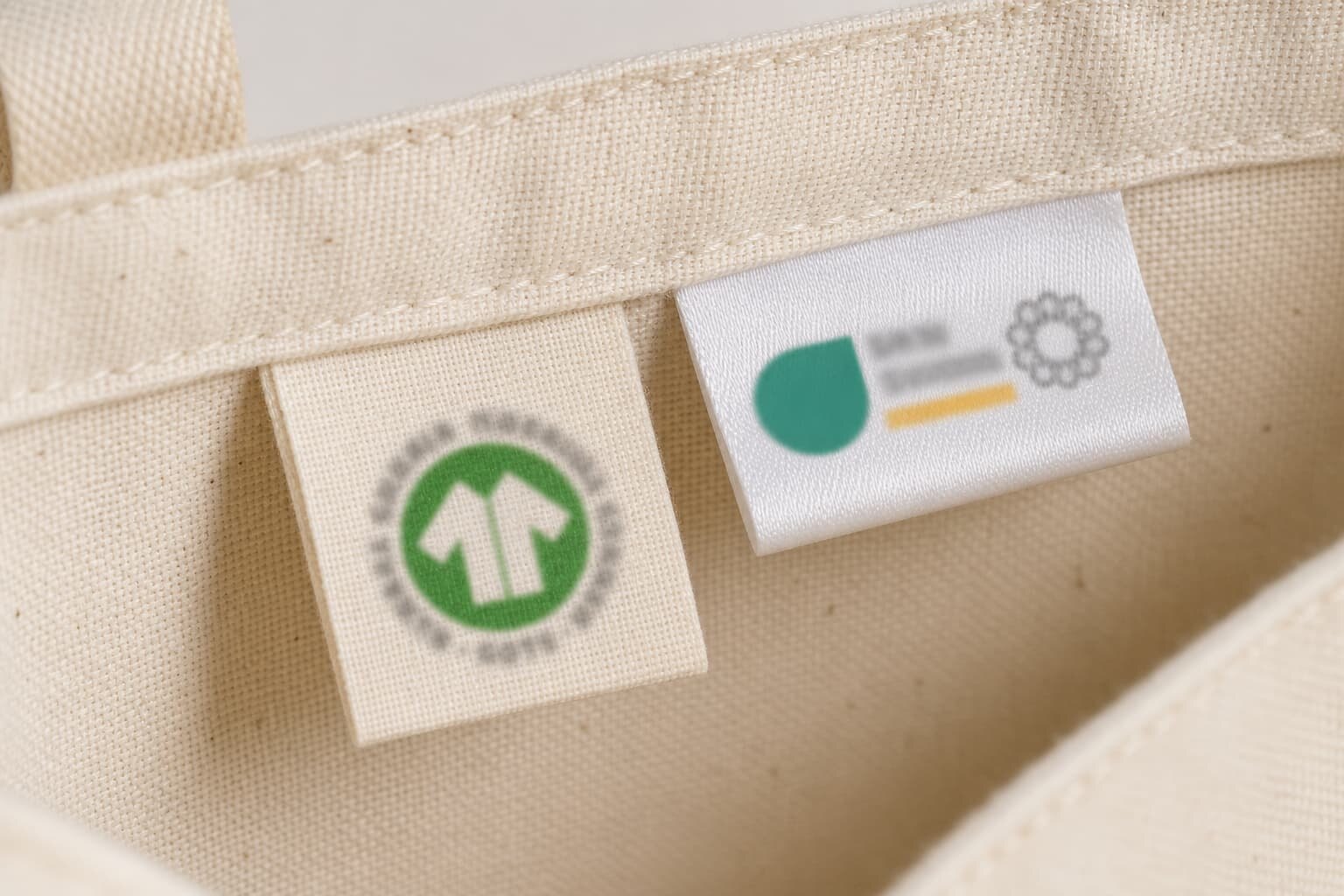
Organic cotton bags often carry sustainability claims, and these claims create inspection risk. The factory should not add certification wording, organic logos, recycled icons, or compliance statements unless the buyer has approved the exact artwork and documentation. A bag can be made from organic cotton fabric without the finished product being eligible to carry every organic claim in every market. Procurement teams should align with compliance staff before printing labels, hangtags, care labels, or retail packaging.
During inspection, labels should be checked against the approved sample and artwork file. This includes woven labels, printed labels, side seam labels, care labels, barcode stickers, hangtags, and carton labels. Wrong spelling, wrong SKU, missing country-of-origin information, unreadable barcode, or incorrect fiber content can create more commercial damage than a small sewing defect. If the buyer requires certification documents, test reports, or transaction certificates, those should be listed as required shipping documents rather than left as informal email promises.
- Check exact wording for organic cotton, fiber content, care instruction, country of origin, and importer details.
- Do not allow the factory to substitute label material, size, or placement without buyer approval.
- Scan retail barcodes from finished packed goods, not only from the artwork proof.
- Confirm whether certification documents are needed for fabric, transaction, finished product, or marketing claim.
- Treat wrong claim label or wrong legal label as critical or major depending on the market requirement.
Packing Inspection and Carton Protection
Organic cotton bags are vulnerable to dust, moisture, odor, and carton abrasion. Natural unbleached fabric shows stains quickly, especially if bags are packed without inner protection. At the same time, many brands want to reduce plastic packaging. The buyer should decide early whether bags will be individually packed in recycled polybags, bundled with kraft paper bands, packed loose in master cartons, or folded into retail sleeves. Each choice affects labor cost, carton size, inspection time, and store presentation.
Packing inspection should check folding method, quantity per inner pack, quantity per carton, carton strength, carton marks, SKU separation, moisture protection, and barcode placement. If several designs are shipped together, mixed cartons need clear packing lists and separation marks. Export cartons should not be overfilled because cotton fabric compresses, wrinkles, and can distort printed areas. If the goods will be stored for a long time or shipped in humid seasons, ask the factory how they control moisture and odor before sealing cartons.
- Confirm folded size and whether the print area is folded against another ink surface.
- Check carton quantity and gross weight against the packing list and freight booking data.
- Use clean, dry cartons and avoid direct contact with dirty warehouse floors.
- Define whether silica gel, inner liner, recycled polybag, kraft band, or no individual packing is required.
- Inspect carton marks for PO number, SKU, item description, quantity, carton number, and destination marks.
Sampling, MOQ, Lead Time, and Quote Data That Affect Inspection
A good inspection result depends on a good quotation and a controlled sample process. The first sample may be made from available fabric, available ink, and hand-cut panels. That is useful for checking shape and approximate appearance, but it is not enough for bulk approval. For organic cotton bag orders, buyers should request a pre-production sample using bulk fabric, actual print method, final label, real handle construction, and intended packing. This sample becomes the inspection reference.
MOQ logic should be separated by component. The sewing MOQ may be low, but organic cotton fabric MOQ, dyeing MOQ, printing setup, label MOQ, and packing MOQ can drive the real order requirement. Lead time also has several parts: material sourcing, fabric finishing, sample approval, printing, sewing, thread cleaning, packing, final inspection, and export booking. A quote that gives only one total lead time may hide risk. Ask the factory to break down the schedule and identify the last date when artwork, barcode, and label changes can be accepted.
- Quote data should include fabric weight, bag size, handle size, print method, number of colors, label type, packing method, carton quantity, and estimated carton size.
- Sampling should confirm bulk fabric, bulk ink, stitching reinforcement, label wording, folding method, and barcode scan.
- MOQ should be checked for fabric, dyeing, print, labels, packing material, and export carton printing.
- Lead time should separate sample time, material time, production time, inspection time, and shipping handover.
- Do not compare supplier quotes only by unit price if one quote excludes testing, special labels, recycled packing, or inspection rework.
How Buyers Should Use the Checklist at Final Inspection
At final inspection, the inspector should pull cartons randomly across the shipment, not only from the front of the warehouse. Samples should cover all colors, logo versions, sizes, and packing types. The inspection should start with carton condition and packing list accuracy, then move to product workmanship, measurements, print quality, labels, and function checks. Any serious defect pattern should trigger deeper checking, even if the first few samples look acceptable.
The final report should include defect photos, defect classification, measured results, carton count, packing photos, barcode scan result, and comparison against the approved sample. If the shipment fails AQL, the buyer needs a practical rework plan: who sorts the goods, which defects can be repaired, how many days are required, and whether re-inspection is needed. Some issues, such as loose threads or dirty marks, may be reworked. Others, such as wrong print color, wrong label claim, or undersized fabric panels, may not be commercially recoverable.
- Inspect packed goods when at least 80 percent to 100 percent of the order is finished, depending on buyer policy.
- Pull samples from different carton positions, production dates, and SKU groups.
- Record actual measurements instead of writing pass without data.
- Separate repairable defects from non-repairable defects in the inspection report.
- Keep approved sample, PO spec, artwork, packing instruction, and AQL table available during inspection.
Specification comparison for buyers
| Spec decision | Recommended option | When it fits | Buyer risk to check |
|---|---|---|---|
| Fabric weight | 6 oz to 8 oz organic cotton canvas for standard retail totes | Promotional retail bags, grocery bags, brand packaging, event merchandise | Confirm actual GSM after washing or finishing; light fabric can shrink, distort print, or look transparent |
| Heavy-duty version | 10 oz to 12 oz organic cotton canvas with reinforced handle stitching | Book bags, grocery programs, premium brand merchandise, repeat retail use | Higher GSM affects unit cost, carton weight, freight cost, and needle hole visibility |
| Print method | Screen print for solid logo colors and stable repeat orders | One to four spot colors, large print areas, strong brand color control | Check ink hand feel, crocking, registration, curing, and color tolerance against approved swatch |
| Small batch decoration | Digital print or heat transfer only when artwork needs gradients or low MOQ | Short runs, multi-color artwork, seasonal promotions, sampling before full launch | Check edge cracking, wash resistance, film feel, and whether supplier can match bulk consistency |
| Handle construction | Self-fabric handles with X-box or cross-stitch reinforcement | Most organic cotton tote bag orders where carrying strength matters | Verify handle length tolerance, attachment strength, stitch density, and symmetry between both sides |
| Seam construction | Inside overlock plus topstitch, or French seam for premium finish | Retail packaging bags, boutique totes, reusable shopping bags | Loose threads, skipped stitches, puckering, and seam slippage should be classified before inspection |
| Packing method | Flat packed by inner polybag or paper band, then export carton | Orders needing clean presentation, barcode control, and efficient carton loading | Organic positioning may conflict with plastic packing; define recycled polybag, kraft band, or no individual packing |
Buyer checklist before sampling
- Attach the approved sample, artwork file, Pantone reference, fabric swatch, and packing layout to the purchase order before bulk production starts.
- State the AQL levels in the PO, including separate limits for critical, major, and minor defects.
- Define organic cotton fabric weight by oz and GSM, and ask the factory to confirm tolerance after finishing.
- Confirm finished bag size tolerance, handle length tolerance, print placement tolerance, and carton quantity tolerance.
- List which defects are critical, including wrong organic claim label, sharp contamination, mold, severe color bleeding, and unsafe packaging.
- Decide whether fabric slubs, seed specks, natural shade variation, and hand-feel differences are acceptable for organic cotton.
- Require pre-production sample approval for fabric, stitching, print, label, barcode, and packing, not only the bag shape.
- Ask for inline inspection photos before the print or sewing team completes the full batch.
- Check carton marks, SKU labels, retail barcodes, and country-of-origin labeling against the import document requirements.
- Reserve enough time for rework after final inspection instead of scheduling inspection on the same day as vessel cut-off.
Factory quote questions to send
- What organic cotton fabric construction are you quoting: plain weave, canvas, twill, or muslin, and what are the finished GSM and oz values?
- Is the quoted fabric certified organic cotton, organic cotton blend, or conventional cotton with natural color only?
- What is the MOQ for the fabric, dyeing, printing, sewing, and packing method separately?
- Which print method is included in the price, and how many colors, print positions, and curing steps are included?
- What finished size tolerance, handle length tolerance, and print placement tolerance can your QC team control in bulk?
- Which AQL standard and inspection level do you normally use for cotton bag export orders?
- What defects do you classify as critical, major, and minor for organic cotton bags?
- Can you provide an approved pre-production sample made with bulk fabric, bulk ink, actual labels, and final packing?
- How many days are needed for sampling, fabric preparation, printing, sewing, packing, inspection, and export booking?
- What quote data is excluded, such as testing cost, certificate documents, barcode labels, recycled polybags, carton drop test, or inland freight?
Quality-control points to confirm
- Fabric GSM and construction must match the approved sample and PO tolerance, not only the supplier's quotation sheet.
- Bag dimensions should be measured flat without pulling the fabric, and shrinkage risk should be considered if washing or steam finishing is used.
- Handle attachment should be checked by visual stitch quality and practical load test based on the intended product use.
- Print must be checked for color, placement, registration, curing, cracking, crocking, and contamination on the reverse side.
- Organic claim labels must be checked carefully because wrong certification wording can create compliance and customs problems.
- Packing must protect natural cotton from moisture, odor, dust, carton abrasion, and barcode mis-scanning during distribution.