Start With The Gift Use Case
A quote for an organic canvas tote should start with the item it will carry, not with the bag itself. Gift buyers often need the tote to hold boxed candles, glassware, notebooks, cosmetics, bottles, or mixed sets, and each of those changes the right fabric weight, handle construction, and carton plan. If the factory only receives a vague size request, it will fill the gaps with its own default spec, which is how quotes look cheap at first and expensive later when the sample is wrong.
The other point buyers miss is presentation. A tote used as a retail gift bag is not the same as a tote that ships flat inside an ecommerce box or sits inside a curated hamper. Ask the supplier to quote the bag as a standalone item and, separately, to quote the pack-out method you actually need. That keeps the unit price honest and makes later comparisons easier.
- State the contents and the maximum expected load.
- Define whether the tote is retail packaging, a gift insert, or a reusable carry bag.
- Say if the bag must stand up, fold flat, or nest inside another gift set.
- Identify the brand position: promotional, mid-tier, or premium.
Lock The Fabric Weight And Size
For organic canvas, fabric weight matters more than the word canvas on its own. A common starting point is 10 oz, or about 340 gsm, because it gives a balanced feel for gift use without becoming too heavy to quote or too soft to stand up. An 8 oz fabric can work for light inserts and low-cost gifting, but it may feel too limp when the tote is part of a premium set. A 12 oz fabric, around 407 gsm, is better when the bag needs a more structured profile or has to support heavier contents.
Size needs the same level of precision. Buyer's drawings often mix finished size, cut size, and internal capacity, which creates disputes later. Give the factory the finished width, height, and gusset after sewing, then allow for seam allowance and normal shrinkage. If the tote is part of a gift box or set, include the product dimensions in the RFQ so the factory can confirm the bag is not just large enough on paper but actually usable in production.
- Specify fabric weight in both oz and gsm.
- Give finished dimensions, not only approximate size.
- State gusset depth if the bag needs volume.
- Ask the factory how shrinkage affects the final measurement.
Set Handle And Stitch Specs
Handles drive both comfort and cost. A tote with short hand-carry handles looks and quotes very differently from a tote with longer shoulder carry handles, especially if the buyer needs the bag to sit comfortably over outerwear or around a gift box. Handle width, length, and fold-over construction should all be in the RFQ. If the bag will carry bottles, boxed sets, or heavier merchandise, the handle spec should include reinforcement points rather than relying on a standard stitch line.
Stitching is not just a cosmetic detail. For reusable gift bags, the buyer should ask how the handles are attached, how many stitch rows are used, and whether bar tacks or cross-stitches are added at the stress points. That affects both durability and appearance. A good sample should show the exact stitch pattern the factory intends to use in bulk, because a clean sample with weak production stitching is a common failure mode in canvas tote sourcing.
- Define handle drop, not only handle length.
- Specify whether the handle is self-fabric, folded, or webbing.
- Ask for reinforcement at the top join and base join.
- Agree on a pull-test target that matches the gift load.
Choose Decoration That Fits The Order
Decoration is where many tote quotes drift away from the buyer's real intent. For a simple brand mark, a one-color screen print is usually the cleanest way to control cost and keep the quote readable. If the artwork is small and the order volume is decent, screen print gives the factory a stable process and gives the buyer a clear comparison point. Multi-color artwork, large coverage, and special effects can all push the quote up fast because they add setup time, drying, and rejection risk.
Other decoration methods can make sense, but they need to be chosen for the right reason. A woven side label gives a premium look and removes ink concerns, but it adds label MOQ and sewing steps. Embroidery can look strong on heavier canvas, yet it can pucker lighter fabric and increase labor. For buyer comparison, the key is to define the method first, then ask for the exact artwork size, placement, and number of colors so the factory is pricing the same thing you are.
- State the exact print method, not just 'logo decoration.'
- Provide artwork in vector form when possible.
- Specify the number of colors and the print area.
- Ask whether the price includes strike-off or color matching.
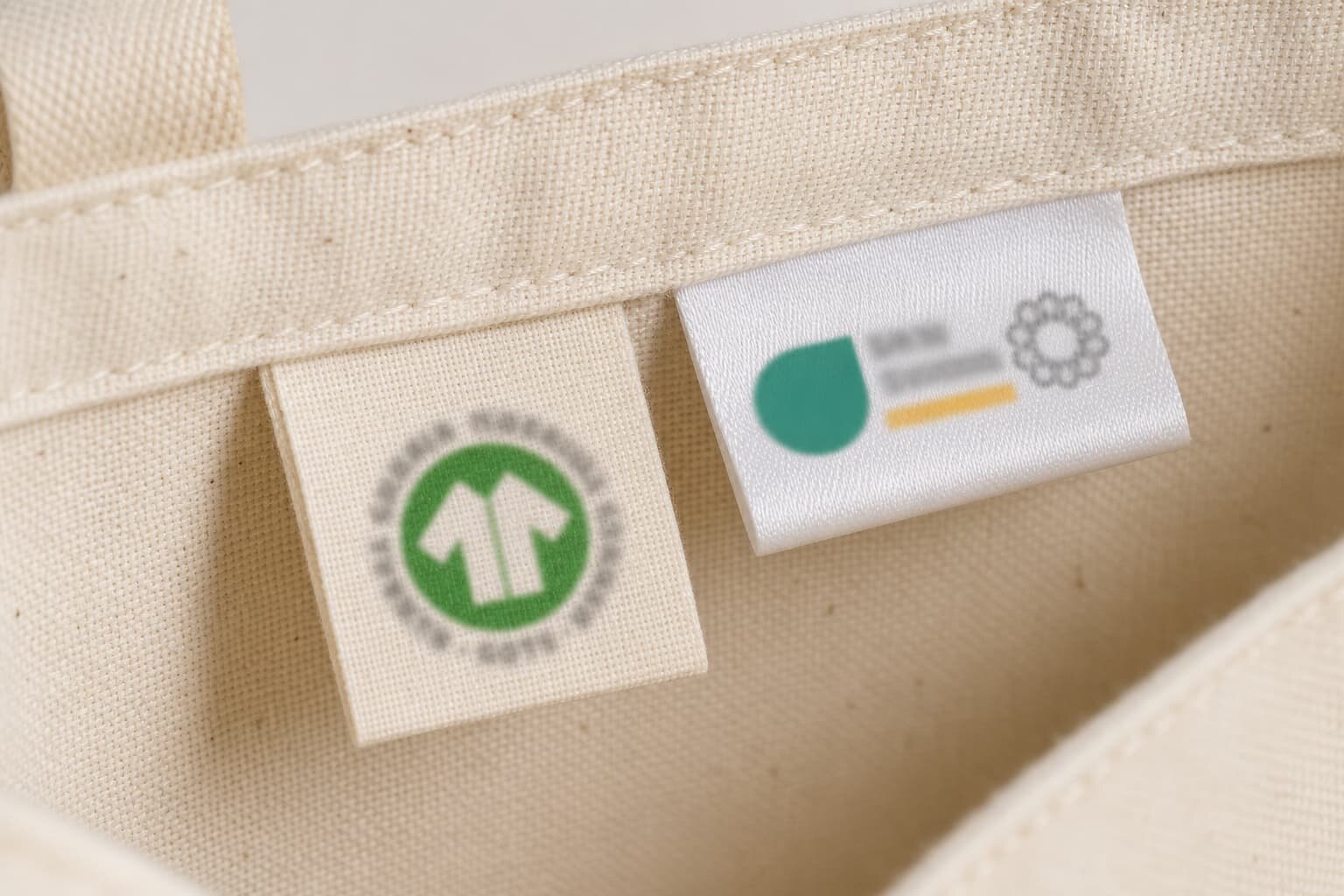
Confirm Organic Material Traceability
The word organic has to be handled carefully in a quote. For a real buyer, it is not a marketing adjective; it is a material requirement that may affect yarn sourcing, fabric mill choice, dye process, and paperwork. Ask the factory whether the quote is for organic cotton canvas, a blended fabric, or a natural-look fabric that is only called organic in sales language. If your program needs traceability, the supplier should state what stage is covered and what document set comes with the order.
This matters because a tote can look correct and still fail the program if the underlying material chain is not what the buyer expected. Ask whether the fabric is undyed natural, dyed, or bleached, because those choices change shade, hand feel, and lead time. If the order requires proof of origin or third-party organic documentation, ask for the exact scope, the lot control method, and whether the certificate applies to the fabric, the yarn, or only part of the supply chain.
- Ask what part of the supply chain is actually covered.
- Confirm whether the bag is made from one fiber type or a blend.
- State if the bag should be natural, bleached, or dyed.
- Request lot traceability if the program needs it.
Understand MOQ And Price Breaks
MOQ is not a fixed law; it is usually a production rule shaped by fabric availability, print setup, and packing complexity. A factory may be comfortable quoting a lower MOQ for one-color screen print on natural canvas, then raise the minimum when the order needs multiple colors, custom labels, or special folding. Buyers should ask whether the MOQ is per design, per color, or per shipping pack, because those are very different commitments even if the unit price looks similar on paper.
Price breaks should be read as a production map, not a sales promise. A low quote at a small volume may assume stock material, minimal packing, and no special approval steps. Once you add a heavier fabric, a different handle, or a retail-ready fold, the quote should move. The clean way to compare suppliers is to ask each one to price the same spec at your realistic annual volume, then check whether the unit cost changes because of fabric weight, decoration, or packing rather than because the factory padded the number.
- Ask whether MOQ is by design, color, or artwork version.
- Request stepped pricing at your expected volume bands.
- Check whether sample charges are part of the unit price.
- Verify whether the base quote assumes stock packing or custom packing.
Sample Before You Release Bulk
A sample is not just a formality. For organic canvas gift totes, the sample is where you confirm the real size, the drape of the fabric, the print finish, and the way the handles sit when loaded. A buyer should ask for the sample stages that matter: a simple development sample if the design is new, then a pre-production sample that uses the intended fabric, print, and label placement. If the bag is going into a gift set, test it with the actual insert product, not with an empty bag sitting on a desk.
The approval note should be written, not implied. Include the exact dimensions, acceptable tolerance, color reference, print position, stitching standard, and packing method. If the factory wants to substitute a different fabric roll, a different handle stitch, or a different fold, that should trigger a fresh approval. That discipline saves time later because it removes guesswork during bulk production, when changes are more expensive and harder to explain.
- Check the bag with the real gift item inside.
- Inspect print alignment, opacity, and curing.
- Review handle symmetry and top stitch quality.
- Approve the sample with written tolerances.
Pack For Shelf, Set, Or Shipment
Packing can change the quote as much as decoration. A tote packed loose in bulk is very different from a tote folded to a retail standard with tissue, a barcode sticker, a hangtag, or an insert card. If the tote is going into a branded gift set, the fold direction and surface protection matter because the bag has to arrive neat, not just intact. Buyers should ask the factory to quote packing separately so they can see the cost of presentation instead of hiding it inside the unit price.
Carton data is also part of commercial control. Ask for the number of pieces per inner pack, the outer carton dimensions, and the gross and net weight assumptions used in the quote. That information is needed for freight planning and for comparing landed cost across suppliers. If one factory quotes a lower unit price but uses inefficient carton packing, the real cost can be higher once shipping and warehouse handling are included.
- State the fold method if presentation matters.
- Ask whether each bag is individually polybagged or left open.
- Request carton size, piece count, and weight assumptions.
- Make sure barcode or SKU labels match your item list.
Compare Quotes Like A Buyer
The best way to compare tote quotes is to build a like-for-like matrix before you look at price. Every supplier should be pricing the same fabric weight, the same finished size, the same handle spec, the same decoration method, the same packing, and the same sample scope. If one quote looks dramatically cheaper, the most likely explanation is not that the factory is more efficient; it is that one line item is missing or downgraded. A buyer who compares only the bottom line usually discovers the missing detail after the sample, not before the order.
Use the quote to ask structured questions. If the fabric is identical but the price still differs, check whether one supplier included pre-production sampling, woven labels, carton marks, or stricter stitch standards. If the lead time is shorter, ask whether the factory is using stock fabric or a pre-booked production line. A clean quote should let you see what is fixed, what is optional, and what changes the unit cost. That is what helps a procurement team defend the choice internally.
- Match fabric weight, size, handle, print, and packing before comparing price.
- Check sample cost, tooling cost, and carton cost separately.
- Ask whether the quote includes overrun or underrun tolerance.
- Verify shipping terms so the comparison is not distorted.
Prevent The Usual Gift-Program Mistakes
The most common mistake is treating the tote as a simple accessory instead of part of the gift system. Buyers approve artwork before size, then find the logo is too close to the seam or the bag does not fit the product. Another recurring issue is assuming that all natural canvas looks the same. In reality, shade, stiffness, and surface texture can shift by lot, and those shifts become obvious when the tote sits next to a premium gift item. The fix is to define acceptable variation before bulk starts.
The second mistake is leaving quality thresholds vague. If the factory does not know how many loose threads, print shifts, or sewing flaws are acceptable, every inspection becomes a dispute. For a gift program, the buyer should define the inspection method, the defect types that are not acceptable, and the escalation path if the first bulk lot is off target. That is especially important when the tote will be handed to customers or placed in a retail environment where the bag itself is part of the brand experience.
- Do not approve artwork until the size and seam layout are fixed.
- Do not assume all natural canvas lots will match exactly.
- Do not skip carton and packing approval.
- Do not leave defect thresholds undefined.
Specification comparison for buyers
| Spec decision | Recommended option | When it fits | Buyer risk to check |
|---|---|---|---|
| Fabric weight | 10 oz / 340 gsm organic canvas | Standard gift totes, retail kits, and event use | Confirm finished hand feel after seam allowance and shrinkage |
| Fabric weight | 12 oz / 407 gsm organic canvas | Premium gift sets or heavier contents | Check handle reinforcement and higher carton weight |
| Decoration | 1-color screen print | Simple brand mark, clean quote, larger runs | Confirm curing, rub resistance, and print area |
| Decoration | Woven side label plus no print | Minimal premium look and lower visual risk | Check label MOQ and sewing placement |
| Structure | Double-needle top stitch with bar tacks | Reusable bags and heavier gift loads | Verify stitch density and pull-test standard |
Buyer checklist before sampling
- Confirm finished size, gusset depth, and seam allowance before asking for a price.
- State the fabric weight in both oz and gsm.
- Define whether the bag is for retail gifting, corporate sets, or standalone sale.
- Choose the print method, number of colors, and exact artwork placement.
- Specify handle length, width, and reinforcement at the stress points.
- Decide whether you need a woven label, side label, hangtag, or no extra branding.
- Ask for the MOQ per design, per color, and per print variation.
- Request a sample approval path with written tolerances.
- Provide packing instructions, inner pack count, and carton target data.
- Ask the factory to quote lead time separately for sampling and bulk production.
Factory quote questions to send
- Is your price based on finished size or cut size?
- What exact fabric weight and weave are included in the quote?
- What handle length, width, and reinforcement method are priced?
- Which print method is included, and how many colors are allowed in the base price?
- What is the MOQ per design, per colorway, and per artwork version?
- Are sample costs, strike-offs, or pre-production samples included or separate?
- Does the quote include polybag, tissue, barcode sticker, or insert card packing?
- What carton size, pcs per carton, and gross weight are assumed?
- What tolerances do you allow on size, color, stitching, and print placement?
- What organic material documentation can you provide for this order?
Quality-control points to confirm
- Fabric weight matches the approved spec within the agreed tolerance.
- Natural shade or dyed shade is consistent across the lot.
- Finished dimensions, gusset, and handle drop match the approved sample.
- Stitching is even, with no skipped stitches or loose thread tails.
- Handle reinforcement is present, centered, and secure at both ends.
- Print register, opacity, and curing pass the agreed rub check.
- Side label or woven label is fixed at the approved position and orientation.
- The bag folds cleanly and fits the agreed packing method.
- Carton count, SKU marks, and shipping labels match the packing list.
- Random pull testing confirms the seams and handles hold the intended load.