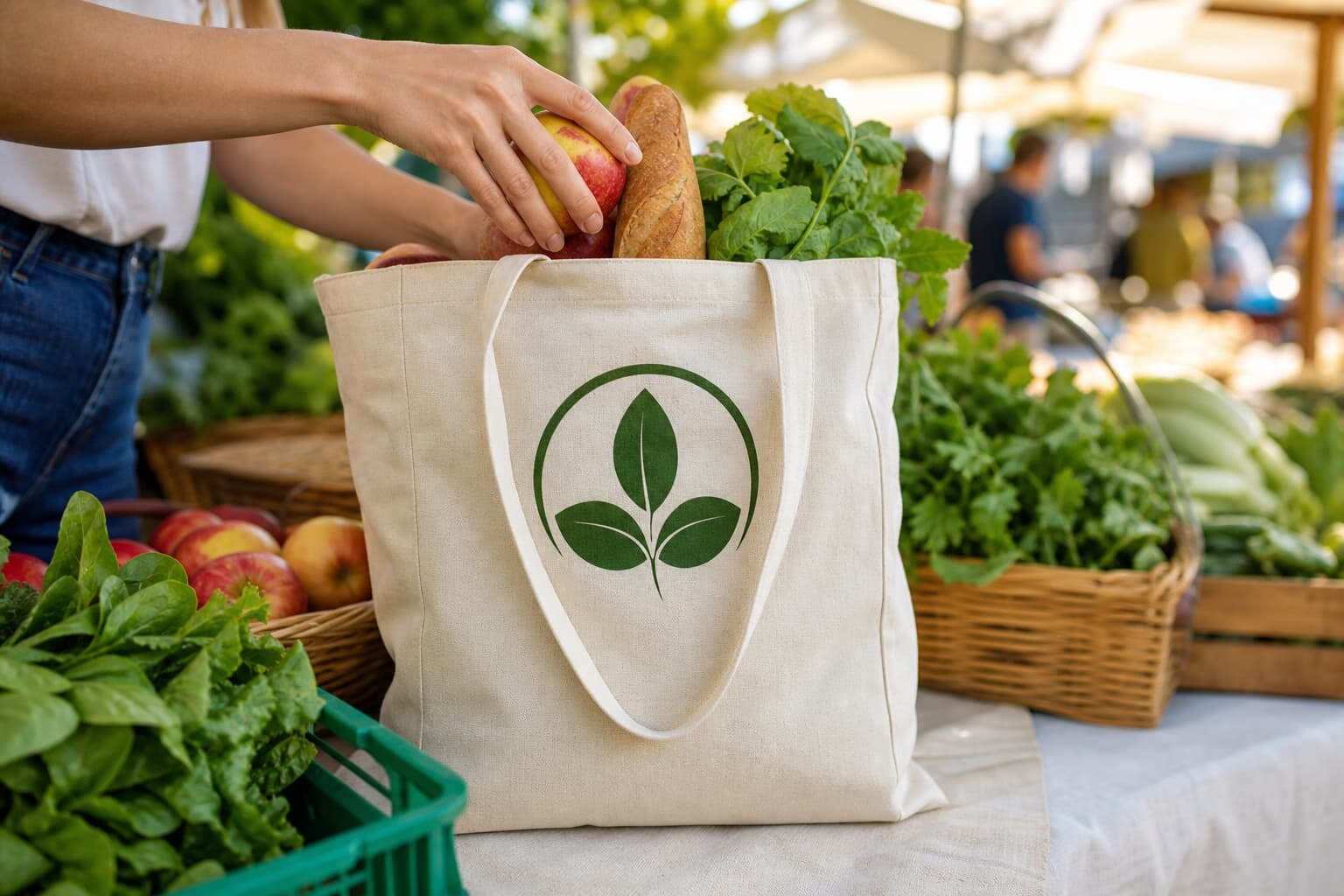
1. Start With The Quote Problem
Most organic canvas tote RFQs fail for the same reason: the buyer asks for a price before the factory knows the exact bag. Two quotes can look similar on paper and still describe very different products. One may use a lighter canvas, shorter handles, and a simple bulk pack. Another may include pre-shrunk fabric, stronger stitching, woven labels, and a retail-ready polybag. If those details are not fixed, the cheapest quote is often the least useful.
For wholesale buyers, the real job is not to get a low number. It is to make each supplier quote comparable so you can see where the cost comes from and where the risk sits. A good RFQ for an organic canvas tote should define the finished size, fabric weight, print method, packaging, and delivery terms. Once those items are clear, the quote becomes a sourcing tool instead of a guess.
- Ask every supplier to quote on the same finished spec.
- Separate bag cost, print cost, packing cost, and freight assumptions.
- Do not accept a quote that says only "organic canvas tote" with no fabric or finish detail.
2. Define The Bag Before You Price It
The fastest way to improve quote accuracy is to lock the basic bag construction first. Organic canvas tote buyers should specify finished dimensions, gusset depth if any, handle length, handle width, seam type, and whether the bag is washed, enzyme-finished, or left raw. A bag with a 12 oz body and reinforced handles is a different production item from a 10 oz promo tote, even if both look similar in a product photo.
Fabric weight is one of the most important commercial decisions. In the market, organic canvas often sits around 8 oz to 12 oz for standard tote programs, with heavier weights used when the buyer wants a more premium hand feel or better print opacity. Ask the factory to state the weight in both GSM and oz if they can, then confirm whether the quoted weight is before or after washing. That small detail affects cost, shrink behavior, and how the bag looks after packing.
- Use one measurement system in the RFQ, then ask the supplier to repeat it back in their own sheet.
- Confirm whether the bag is single-layer, lined, or reinforced at the bottom.
- State if the tote must hold a retail hangtag, barcode, or care label.
3. Choose Fabric Weight For The Use Case
A quote guide has to connect fabric weight to the real end use. A lightweight organic canvas tote for event distribution does not need the same body as a book tote sold through retail. If the customer will carry groceries, catalogs, or heavier merchandise, the bag needs enough structure to stand up, sew cleanly, and survive repeated use. If it is for promotional distribution, overbuilding the fabric can raise unit cost without adding value.
The practical move is to ask for two or three fabric options in the same quote. For example, a supplier can quote 8 oz, 10 oz, and 12 oz bodies against the same size and print layout. That gives procurement a clear tradeoff between hand feel, strength, and price. It also exposes whether the factory really understands the construction difference or is only changing the fabric label in the quote. If the supplier cannot explain how GSM affects sewing speed, print absorption, and carton weight, the quote is not ready for final comparison.
- Use lighter fabric for events and short-term promotions.
- Use mid-weight fabric for most wholesale retail programs.
- Use heavier fabric when the tote must feel premium or carry weight reliably.
4. Match Print Method To Artwork And Volume
Print method can change both the quote and the defect risk. For a simple logo on organic canvas, screen print is usually the cleanest commercial option at wholesale volume because it gives stable color, low unit cost at scale, and predictable repeatability. If the art has many colors, gradients, or photographic detail, the factory may propose digital printing or heat transfer, but those methods should be checked carefully for feel, opacity, and wash performance.
Do not compare a screen-printed quote with a transfer-print quote as if they are equal. The setup cost, color accuracy, and durability are not the same. Ask for the print area size, number of colors, ink type, and whether the quoted price includes screen setup or art preparation. If the design sits close to a seam or edge, make the supplier confirm print placement tolerance. A tote can pass inspection and still look wrong if the logo is shifted by a small amount on the face panel.
- For one to three spot colors, screen print is usually the clearest baseline.
- For fine detail or small short runs, get the exact method named in the quote.
- Ask for a blank fabric or preproduction print strike-off before bulk approval.
5. Understand MOQ Logic And Price Breaks
MOQ is not just a number. It is the point where the factory stops losing efficiency and begins getting repeatable output from cutting, sewing, printing, and packing. A low headline MOQ can be real, but only if the supplier can explain what is being minimized. Some factories quote a low bag MOQ but require a much higher print setup quantity, while others accept lower totals only if the buyer uses standard materials and simple packing. The useful question is not "What is your MOQ?" but "What drives your MOQ?"
For procurement teams, the best quote format shows separate thresholds for fabric, print, labels, and packaging. That lets you see whether a small reorder is possible later or whether the first run must be large enough to cover all setup costs. It also helps when comparing suppliers across regions. A factory with a slightly higher unit price but lower repeat MOQ may be better for a brand testing a new channel. A supplier with a low unit price but rigid minimums can create inventory pressure if the order does not sell through as planned.
- Ask for MOQ by color, print design, and pack format.
- Check whether the same MOQ applies to repeat orders.
- Request a price ladder with clear volume breaks.
6. Compare Sample Stages Before You Approve Bulk
A sample is not only about approval; it is about confirming that the quote matches reality. For organic canvas totes, the sample should show the final fabric weight, print clarity, handle construction, seam quality, and packaging style. A flat artwork proof is not enough. Ask for a physical preproduction sample or at least a well-documented production reference sample if the bag is simple. The sample should be checked under the same expectations as bulk, especially where the quote included a specific finish or accessory.
Good sample control prevents late surprises. For example, a factory may quote woven side labels, but the first sample could place the label too close to the seam or use a label size that causes puckering. Another common issue is that the print looks correct on paper but too faint on the actual canvas because the ink load was not adjusted for the fabric weave. Build the sample process into the RFQ so the supplier knows what has to be approved before they cut bulk fabric.
- Check size, stitch quality, label placement, and print opacity on the sample.
- Require the sample to reflect the quoted packing method if possible.
- Do not approve bulk from a mockup alone when the bag has any decorative finish.
7. Quote Packing As A Real Cost Driver
Packing looks minor until it causes receiving problems. A tote bag can be cheap at factory gate and still expensive if the pack format is wrong for your distribution center. The quote should clearly state whether the bags are bulk packed, individually polybagged, bundled by count, or packed with inserts. It should also define carton count, carton dimensions, and whether the master carton carries item codes, country of origin, and lot information. These details affect warehouse handling, freight density, and compliance.
For retail buyers, packing can influence the perceived quality of the product as much as the fabric weight. A clean folded tote in a simple polybag with the correct label position can reduce damage and speed store receipt. For B2B distribution, overly elaborate packaging can waste labor and space. The best quote shows packing as an option, not an assumption. If the supplier cannot state the pack-out method in writing, the quote is incomplete.
- Confirm pack count per carton and whether it is fixed or adjustable.
- Ask if the quote includes polybags, barcode stickers, and shipping marks.
- Check carton size against your freight and warehouse receiving limits.
8. Build The Lead Time Around Real Production Steps
Lead time should be broken into stages, not given as one vague number. A realistic organic canvas tote schedule usually includes sample approval, material booking, cutting, sewing, printing, finishing, packing, and final inspection. If the supplier only gives a total number of days, procurement cannot see where the order may slip. The useful quote shows which steps are dependent on buyer approval and which can run in parallel. That helps you control the order instead of waiting for a single end-date promise.
This matters more when the bag uses organic cotton fabric that must be sourced to a specific spec. If the factory has to book fabric after artwork approval, the schedule can move quickly or slowly depending on stock, color, and order size. Add time for print strike-off and packing confirmation if the program has a new logo, a new label, or a custom carton mark. Buyers often lose a week because they approve the bag body but forget that the packing artwork still needs sign-off.
- Ask for a timeline with sample, material, production, inspection, and dispatch milestones.
- Clarify what starts production: deposit, sample approval, or both.
- Do not assume the same lead time applies to repeat orders and first orders.
9. Compare Quotes Line By Line
Once the supplier replies, compare quotes in a way that makes hidden differences visible. Start with fabric weight, finished size, and construction. Then compare print method, color count, setup charges, packing, and lead time. Finally compare MOQ, overrun tolerance, and defect policy. If one supplier gives a lower unit price because they excluded labels or used a lighter canvas, the gap should be obvious. A disciplined comparison saves more money than negotiating off a single number.
A simple buyer rule helps here: if two quotes cannot be explained in one sentence each, the RFQ was not specific enough. Ask the supplier to list every assumption, including what is not included. This is especially important for organic canvas totes because small differences in stitching, label placement, and print method can change both the cost and the final shelf appearance. The best quote is not the cheapest line. It is the one that leaves the fewest unanswered questions before production starts.
- Compare like for like: same size, same fabric, same print, same pack.
- Mark any excluded item and decide whether to add it back or remove it from all quotes.
- Use one internal scorecard for cost, quality risk, and delivery confidence.
Specification comparison for buyers
| Spec decision | Recommended option | When it fits | Buyer risk to check |
|---|---|---|---|
| Fabric weight | 10 oz to 12 oz organic canvas | Most wholesale programs that need a durable retail-ready tote | Too-light fabric can look thin after printing; too-heavy fabric can raise cost and make sewing slower |
| Handle construction | Self-fabric or reinforced self-fabric handles | When the tote needs a cleaner retail look and stable carrying strength | Check handle length, stitch count, and whether the handle seam is bar-tacked at stress points |
| Print method | Screen print for 1 to 3 spot colors, heat transfer or digital for complex art | Simple logos, large repeat orders, or designs with tight color control | Artwork changes can create extra screens or setup charges; ask how the quote handles revisions |
| Closure option | Open top for standard retail use; zipper or snap only when needed | When the buyer wants a lower base price and faster sewing | Add-ons change labor and packing flow; confirm they are included in the quoted price |
| Packing format | Bulk pack with clean polybag and carton mark spec | When the buyer ships to a DC or distribution center | Wrong pack counts or barcode placement can cause receiving delays and chargebacks |
| MOQ structure | Quote separate MOQs for fabric, print, and packing options | When the program may reorder or split by color | A low headline MOQ can hide high minimums for print setup or accessory add-ons |
Buyer checklist before sampling
- Approve the exact fabric weight in oz and GSM, not only the word "organic canvas".
- Confirm finished size, seam allowance, handle width, and handle drop.
- Ask for print method, print area, color count, and setup charge in writing.
- Request sample photos of stitching, label placement, and edge finishing before bulk approval.
- Verify carton pack count, carton dimensions, net/gross weight, and barcode position.
- Get a clear lead-time split for sample, raw material booking, production, and packing.
- Check whether the quote includes woven labels, care labels, hangtags, and polybags.
- Ask for defect limits, overrun/underrun tolerance, and replacement policy.
Factory quote questions to send
- What is the exact fabric spec, including GSM, yarn count if available, and whether the canvas is pre-shrunk or raw finish?
- Does the quote include screen setup, digital file prep, and color matching, or are those extra charges?
- What is the MOQ by color, by print design, and by order repeat?
- What is the estimated sample lead time, and what sample stages are included before bulk approval?
- How is the tote packed: individual polybag, bundle pack, carton count, and shipping mark placement?
- What quality checks do you perform on stitching, dimensions, print alignment, and needle damage?
- What is the tolerance on size, weight, and quantity, and how are defects handled in the final shipment?
- Which parts of the lead time depend on fabric booking, trims, or print approval?
Quality-control points to confirm
- Fabric matches the approved GSM, hand feel, and color before cutting.
- Finished size stays within the agreed tolerance for width, height, and gusset if included.
- Handle length, symmetry, and stitch reinforcement are consistent across the order.
- Print placement, opacity, and cure quality match the approved sample.
- Inside seams are trimmed cleanly with no loose threads, skipped stitches, or oil marks.
- Labels, care instructions, and country-of-origin marking are in the correct position.
- Carton count, bundle count, and master carton marking match the packing list.
- Random carton opens confirm the bag folds correctly and the print does not crack or transfer.