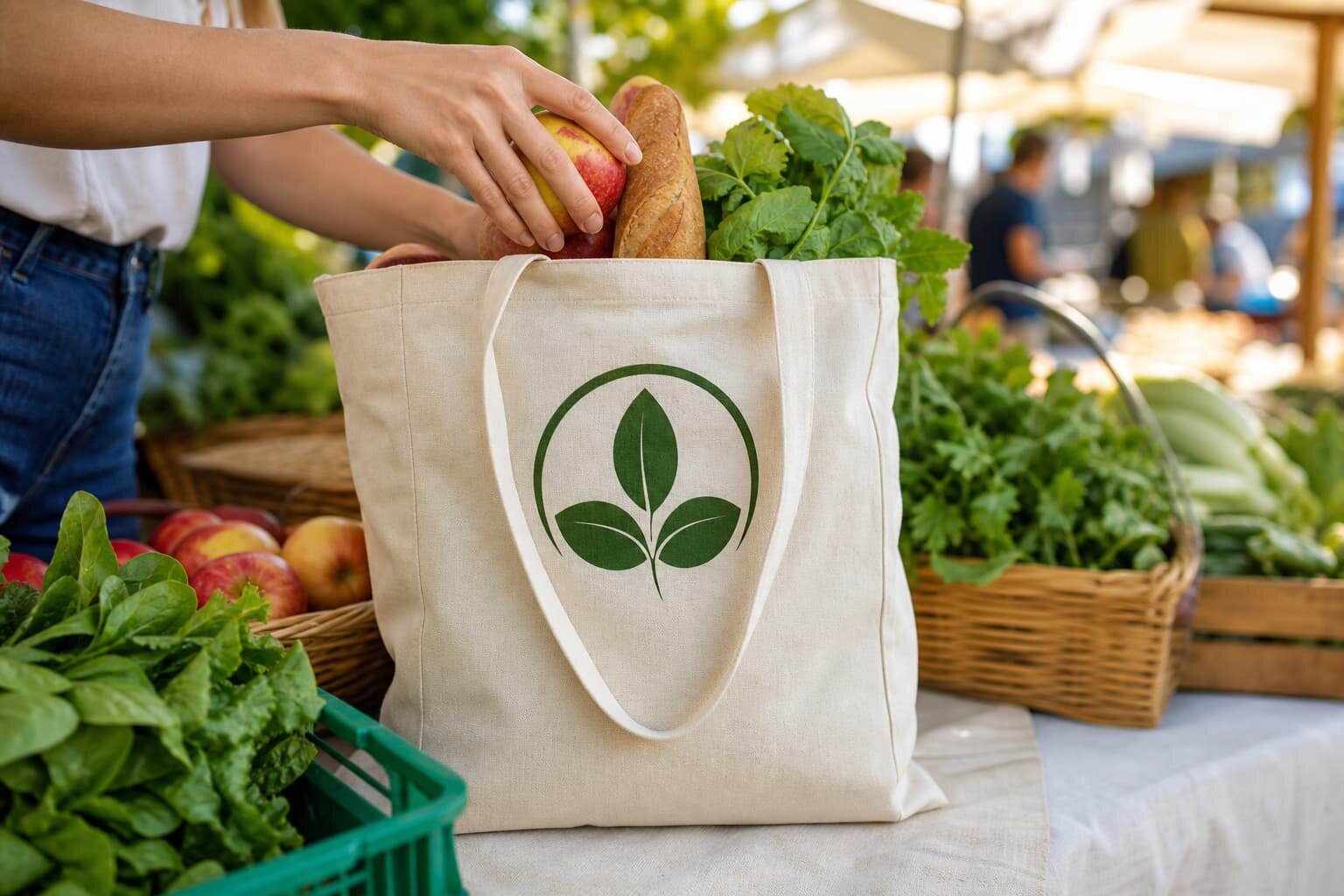
Start with the claim you are actually buying
A useful organic canvas tote for brand owners wholesale quote guide starts with the claim, not the bag shape. Before anyone talks about price, decide whether the program needs a certified organic content claim, a broader textile certification path, or simply an organic-fiber story with no retail-facing certification. Those are different buying jobs, and they should not be bundled into one vague request.
The quotation needs to reflect the real end use. A tote for a museum shop, a supermarket promo, a trade-show kit, and a premium retail program all tolerate different fabric weights, print methods, and packing rules. If the RFQ only says 'organic tote,' suppliers fill in the blanks themselves, and the quote comparison loses value.
The first document should read like a control sheet: quantity, target market, claim requirement, decoration method, pack spec, delivery date, and the exact approval path. Once that is fixed, every quote can be compared against the same target instead of against a supplier's assumption.
- State the end use before asking for unit price.
- Separate organic fiber claims from branding language.
- Name the delivery window and the approval path in the RFQ.
- Use one dated spec version for sample, quote, and production.
Verify the organic certification chain before discussing price
Organic procurement fails quickly when the claim trail is incomplete. For many buyers, the question is not only whether the cotton is organic, but whether the entire quoted chain is eligible to support the claim your market needs. Ask which facilities are covered, which process steps are certified, and whether the cut-and-sew, printing, or packing site sits inside the scope certificate or relies on a subcontractor.
If the program needs lot-level claim support, ask for the transaction certificate tied to the exact order. That document should not be treated as an afterthought. It is the bridge between a certified facility and the goods that actually ship, and it should align with the PO quantity, lot identity, and facility name. Also check certificate validity dates; an expired certificate is not a small paperwork problem, it breaks the chain.
Labeling matters just as much as fiber content. Confirm what wording is allowed on the bag, hangtag, carton, and insert, and who approves the final artwork. If the supplier uses mixed inventory, ask how certified and conventional stock are segregated, stored, and traced. A clean audit trail is what keeps an organic claim from turning into a dispute later.
- Request the current scope certificate for every certified facility involved.
- Ask whether a transaction certificate will be issued for the specific lot.
- Confirm certificate validity dates before sample approval.
- Verify segregation and traceability for certified and non-certified material.
Lock the fabric spec, finish, and shrinkage range
Fabric is where quote drift usually begins. For an organic canvas tote, the buyer should define the canvas weight in gsm or ounces, weave type, yarn finish, and acceptable tolerance. The common range is often around 8 to 12 oz, but the right choice depends on carry weight, hand feel, print coverage, and the brand's price point. A lighter cloth can look fine in a photo and still feel weak in use.
Organic canvas also needs finish clarity. Ask whether the fabric is raw, washed, softened, pre-shrunk, dyed, or bleached, because each choice changes appearance and cost. If the bag color matters, request a swatch or lab dip reference. If the fabric is natural and undyed, ask how shade variation is handled so one lot does not arrive visibly different from another.
Shrinkage deserves a line of its own. If the tote will be reused, washed, folded, or sold in retail channels that care about shape retention, define the acceptable shrinkage after the agreed test. The point is not to promise perfection; the point is to know the tolerance before the first cut is made.
- Ask for the actual cloth reference, not only a written description.
- Define whether the fabric is raw, washed, pre-shrunk, dyed, or bleached.
- Write the shrinkage tolerance into the quote request.
- Ask for shade control if the tote is natural, ecru, or lightly dyed.
Specify the build like a product engineer, not a shopper
The tote's durability comes from the build, not the logo file. Ask for seam type, seam allowance, stitch density, handle width, handle length, gusset depth, and the reinforcement used where the handles meet the body. If the supplier cannot describe those details, the quote is not ready for comparison.
For higher-load bags, the buyer should also define the expected carry weight and the test method. That can be a static load, a repeated carry simulation, or a handle pull test, but the load, duration, and failure point must be written into the spec. A bag that survives a light pull is not necessarily suitable for books, groceries, or catalog packs.
Useful checks include seam slippage, thread breakage, loose edges, and distortion after loading. Ask whether the factory uses bar tacks, an X-box, double stitching, or another reinforcement pattern at the stress points. The cheaper option is not always the weaker one, but the quote should show why the build is lighter or stronger rather than hiding it.
- Define the load target and test method in the RFQ.
- Ask for stitch density and reinforcement details at every stress point.
- Confirm handle geometry and gusset depth before pricing.
- Require the supplier to state the expected failure point or carry limit.
Treat decoration and labeling as controlled production steps
Decoration should be quoted as a manufacturing process, not as an artwork upload. Screen print, embroidery, woven label, transfer, and direct garment-style marks all behave differently on canvas. Each method has its own cost structure and its own failure modes, so the buyer should specify which one is in scope and how the finished result will be judged.
For print, ask about rub resistance, ink coverage, cure method, and how fine lines will behave on the chosen canvas. For embroidery, ask about puckering, thread tension, backing, and the risk of needle marks on lighter cloth. For labels and inserts, make sure the exact wording is approved against the claim path. It is easy to let a nice-looking mockup overrule the actual compliance requirement.
Label placement also needs tolerance. If the logo or claim text can drift by several millimeters without causing a problem, write that down. If it cannot, write that down too. The same is true for bag, hangtag, and carton wording. A quote becomes useful when the supplier can tell you what is allowed instead of guessing after artwork approval.
- Specify method, size, color count, and placement tolerance.
- Check rub, crocking, or embroidery distortion on the final fabric.
- Approve the claim wording for bag, label, carton, and insert separately.
- Ask the supplier which decoration risks are most likely on this canvas.
Compare quotes on the same landed basis
A strong price comparison breaks the offer into fabric, construction, decoration, sample cost, setup cost, packing, carton work, and freight term. That prevents one supplier from looking cheaper only because it omitted a line item another supplier already included. Procurement teams get better decisions when the quote is normalized to the same spec and same service level.
When one offer lands materially below the group, do not argue from instinct. Open the spec line by line and ask what changed: fabric weight, stitch density, certification support, packing method, or inspection scope. That is a concrete way to test whether the price is efficient or simply thin. The cheapest number is only useful if the same tote is actually being quoted.
The comparison should also include lead time and risk. A quote with a shorter shipping promise may be less attractive if it requires more approvals, deeper sample cycles, or weaker QC evidence. For a brand owner, a slightly higher unit price can be the better purchase if the supplier can actually ship the same approved tote on time and without claim confusion.
- Split the quote into unit cost, setup, sample, packing, and freight terms.
- Compare only after the fabric, build, and decoration method match.
- Challenge unusually low prices by reviewing the exact spec changes.
- Treat lead time and QC evidence as part of the landed cost.
Use samples as the control record
A sample is not just a preview; it is the physical reference that production must match. For a new tote program, the sequence should usually be prototype sample, pre-production sample, then golden sample. Each stage has a job. The first proves the idea, the second proves the final materials and decoration, and the third becomes the standard for the lot.
Every approval should be versioned. Record the date, supplier name, sample type, revision number, and any deviations that were accepted. If a logo moved two millimeters or a shade was accepted within a narrow band, note that clearly. That way the buyer does not have to reconstruct the decision when the next order ships or a receiving team finds a mismatch.
Photo approval is fine for repeat work with low risk, but new fabric or a new decoration method deserves a physical sample. Canvas hand feel, seam firmness, and print rub behavior are easy to misread on a screen. The sample file should hold front, back, seam, inside, logo, and packed-carton photos together so the record is complete.
- Keep a physical golden sample for any new fabric or logo method.
- Record sample version numbers and accepted deviations.
- Ask for a full photo set, not a single hero image.
- Tie bulk release to the approved sample and the approved spec together.
Build QC around measurable defects and actual tests
A good QC plan names the defect classes before inspection starts. Critical defects are the ones that make the tote unsafe, unusable, or plainly wrong, such as open seams, wrong logo, contamination, or a missing handle. Major defects affect function or brand acceptance, like a large size miss, loose reinforcement, or severe print shift. Minor defects are cosmetic issues that do not change use, such as a stray thread or slight folding mark.
Tote QC should not stop at visual checks. Ask for a handle pull or static load test using the agreed weight and duration, then inspect for seam slippage, tearing, or permanent distortion. Add a wash or steam shrinkage check if the tote will face repeat use. For decorated bags, include print rub or crocking so the logo is not only pretty on day one.
The carton matters too. Check gross weight, carton count, moisture protection, odor, crushing, and SKU separation. A carton that arrives damp, overpacked, or mislabeled can create more labor cost than a small product defect. The inspection report should show counts, photos, and the decision to hold, rework, or release the lot.
- Classify defects as critical, major, or minor before inspection begins.
- Define the load, duration, and failure point for handle testing.
- Include shrinkage, print rub, and crocking checks when relevant.
- Open cartons and verify count, moisture, and SKU separation before release.
Control packing, documents, and release before the truck moves
Packing is part of the product, not a shipping afterthought. Ask how each tote is folded, how many go into each inner pack or carton, what the carton dimensions and gross weight will be, and whether the logo will be creased by the packing method. A quote that leaves those items open is not fully landed.
The document set should also be complete before release. For an organic program, that usually means the approved spec, the current certificate copies, the transaction certificate if used, the final artwork, the inspection report, and the packing list. If those pieces do not line up, the shipment can still be physically ready and commercially unsafe.
Set the release rule in advance. The balance payment or shipment approval should wait until the sample is matched, the carton photos are checked, the documents are attached, and the inspection result is acceptable. That sounds basic, but it prevents a lot of hurried decisions when deadlines get tight.
- Specify fold style, carton count, carton size, and gross weight.
- Confirm whether the packing method will crease the print or label.
- Collect the certificate copies, artwork, inspection report, and packing list in one file.
- Hold release until the physical tote and the paperwork match.
Finish with a supplier scorecard and a repeat-order file
Once the quotes are normalized, score suppliers on the things that matter most: certification proof, spec match, sample match, QC evidence, price transparency, and delivery confidence. That gives the team a fair way to choose between a lower number with gaps and a slightly higher number that is easier to control. For a brand owner, predictability is often worth more than a tiny unit saving.
Keep the winning quote as a reusable order record. The next RFQ should start from the approved fabric, build, artwork, packing, and inspection notes rather than from a blank page. That makes the next comparison cleaner and keeps changes visible instead of buried in casual emails. Reorders go much faster when the best version of the tote already exists as a dated file.
The final check is simple: if a new quote cannot be traced back to the approved sample, certificate path, and inspection standard, it is not ready for release. Once that chain is clear, the rest of the buying process becomes much less dramatic. The tote can be boring in the good way, which is usually the right outcome for procurement.
- Score suppliers on proof, transparency, sample match, QC, and delivery.
- Use the approved tote file as the starting point for every reorder.
- Reject any quote that cannot be tied back to the approved sample and documents.
- Keep the record boring, dated, and easy to audit.
Specification comparison for buyers
| Spec decision | Recommended detail | How to ask it in the RFQ | Quote red flag |
|---|---|---|---|
| Organic fiber proof | Current scope certificate for each certified facility, plus lot-level transaction certificate if the order needs claim support | Ask for the certifying body, certificate number, scope, expiry date, and the transaction certificate number tied to the PO | A quote that says 'organic' but provides no current certificate, no scope detail, or no lot documentation |
| Fabric | Exact canvas weight in gsm or oz, weave type, yarn finish, and allowed weight tolerance | State the target fabric weight, weave, and finish, then ask for a swatch or mill reference from the quoted cloth | A cheaper quote with no fabric code, no weight tolerance, or no confirmation of the actual mill cloth |
| Shrinkage and wash behavior | Expected shrinkage limit, prewash or heat-set treatment, and whether the tote will be sold as unwashed or stabilized | Ask for the acceptable shrinkage range after wash or steam and whether the quote includes any anti-shrink finishing | No shrinkage note at all, especially when the tote will be reused, laundered, or packed tightly |
| Construction | Seam type, seam allowance, stitch density, handle attachment, gusset depth, and reinforcement method | Request seam construction, stitches per inch or centimeter, and the exact reinforcement at handle and bottom stress points | A vague promise of 'strong stitching' with no load-path detail or reinforcement description |
| Durability testing | Handle pull/load test, seam slippage check, print rub, crocking, and carton moisture checks | Ask what load, duration, and failure point were used, and whether test photos or reports are available | No test method, no failure criteria, and no evidence behind the durability claim |
| Decoration | Screen print, embroidery, woven label, or transfer with size, placement, and color count | Specify artwork size, color count, placement tolerance, and the exact method to be quoted | A supplier that leaves the method open or refuses to commit to placement tolerance |
| Labeling and organic claim wording | Bag, hangtag, carton, and insert wording approved against the certification model and market rules | Ask which claims can appear on each surface and who approves final artwork before print | Using 'organic' on labels or cartons without confirming the claim path and approval language |
| Sampling and version control | Proto sample, pre-production sample, and golden sample with revision tracking | Request one sample for design signoff and one final sample that becomes the bulk reference | Photo-only approval or an unversioned sample that cannot control production later |
| Packing and carton rules | Fold method, inner pack count, carton size, gross weight, SKU split, and moisture protection | Ask for packed unit count, carton dimensions, marks, and a packed-carton photo | Packing missing from the quote, or a carton plan that will crease the logo or overload the box |
Buyer checklist before sampling
- Decide whether the program needs GOTS, OCS, or another accepted organic claim path before comparing quotes.
- Collect the current scope certificate for every facility in the chain that handles certified material.
- Ask whether a transaction certificate will be issued for the specific lot and PO.
- Write the fabric spec in measurable terms: fiber content, canvas weight, weave, finish, and shrinkage limit.
- Lock the seam build, handle attachment, and reinforcement method before asking for pricing.
- State the logo method, artwork size, placement tolerance, and color count in the RFQ.
- Require a physical prototype or pre-production sample for any new fabric or decoration method.
- Agree the inspection plan in advance: defect classes, sample size, AQL target, and photo evidence.
- Confirm fold style, carton count, carton marks, and moisture protection before release.
- Keep the approved spec, sample photos, certificates, and inspection notes in one dated order file.
Factory quote questions to send
- Which organic standard applies to this order, and do you have a current scope certificate for each certified facility involved?
- Can you issue a transaction certificate for the lot, and what PO or lot number will it reference?
- Is certified material segregated from conventional stock during storage, cutting, printing, and packing?
- What exact canvas weight, weave type, and finish are included in the quoted cloth?
- What shrinkage range should we expect after wash or steam, and what test method supports that figure?
- What seam type, stitch density, and reinforcement are quoted for the handle and bottom stress points?
- What load was used for the handle pull or carry test, how long was it held, and what failure criterion was checked?
- Which decoration method is quoted, and what rub, crocking, or print durability target did you use?
- Which wording is allowed on the bag, label, carton, and insert under the selected certification model?
- What sample will serve as the golden reference, and what are the lead times for sample, approval, bulk, and handoff?
Quality-control points to confirm
- Verify that the supplier name, facility name, certificate number, and expiry date match the documents attached to the order.
- Confirm the transaction certificate quantity, lot identity, and destination against the PO before production is released.
- Measure fabric weight against the approved spec and inspect for shade variation, contamination, slubs, or uneven weave.
- Check shrinkage after the agreed wash or steam test and compare it with the allowed tolerance in the spec.
- Run a handle pull or static load test using the agreed weight and duration, then inspect for seam slippage, tearing, or distortion.
- Inspect seam allowance, stitch density, bar tacks or X-box reinforcement, and any loose or skipped stitches at the load points.
- Test print rub, crocking, or surface abrasion on decorated areas and verify that the logo still meets placement and color expectations.
- Check label wording, placement, and claim language against the approved artwork and the chosen certification path.
- Open cartons to confirm fold method, packed quantity, carton count, moisture protection, and whether the goods smell damp or stored.
- Grade defects as critical, major, or minor, and require photos plus counts for every defect class before shipment is cleared.