Why the audit matters before the quote
An organic canvas tote looks simple until procurement has to approve a real order. The visible product is a rectangle of canvas with handles and a logo, but the buying risk sits in less visible details: whether the cotton claim is verifiable, whether the factory can repeat the dimensions, whether the print will survive normal handling, whether the handles can carry the intended weight, and whether the quoted price includes all export and packing requirements.
For a startup brand, the first tote run often becomes a launch asset, retail add-on, event giveaway, welcome kit item, or ecommerce packaging piece. If the first batch arrives with thin fabric, crooked print, weak handles, or unsupported organic claims, the cost is not only the rejected inventory. It also affects launch timing, customer perception, and the ability to reorder with confidence. A supplier audit checklist gives the buyer a disciplined way to compare suppliers before the purchase order, not after problems appear in cartons.
The keyword phrase organic canvas tote for startup brands supplier audit checklist should not mean a generic sustainability checklist. It should mean a procurement process that checks the supplier, product, documents, quality system, and quote structure together. A low unit price is only useful if the factory can prove what it is making, how it controls production, and what evidence it can provide before shipment.
- Audit the supplier first, then negotiate the quote; a cheap quote from an unclear supplier is not a controlled sourcing option.
- Use one RFQ pack for all factories so every supplier prices the same fabric, construction, print, packing, and inspection standard.
- Treat the approved pre-production sample as a control sample, but support it with written tolerances and document checks.
- Do not rely on product photos alone; ask for certificate scope, production flow, capacity, subcontracting details, and QC records.
Supplier-level audit criteria
A supplier audit for canvas tote bags should begin with the business behind the product. Ask for the legal company name, business license, factory address, export registration if applicable, and the role the company will play in the order. Some suppliers are true cut-and-sew factories. Some are trading companies that coordinate fabric mills, printers, and sewing workshops. Both models can work, but the risk profile is different. Procurement needs to know who controls each step and who is accountable if something fails.
Production capacity is another basic audit point. A supplier that can sew 2,000 standard totes per week may not be able to handle 10,000 pieces with custom labels, individual packing, and a tight ship date. Ask the factory to describe its production flow: fabric sourcing, cutting, printing, sewing, thread trimming, inspection, pressing or folding, packing, and cartonization. The answer should be specific enough to reveal bottlenecks. Printing, label attachment, and final packing often slow down a custom tote order more than basic sewing.
Subcontracting must be transparent. If weaving, dyeing, printing, washing, sewing, or packing is outsourced, ask how the supplier approves and monitors those partners. For startup buyers, this is not about demanding a large-corporate audit program from every small factory. It is about knowing whether the supplier can trace your order through the real production chain and correct issues quickly. A supplier that refuses to explain subcontracting, compliance records, or corrective actions is hard to manage when the shipment is under time pressure.
- Request business license, legal name, factory address, and export experience before sample approval.
- Ask which processes are in-house and which are outsourced: fabric, dyeing, printing, sewing, washing, packing, and final inspection.
- Confirm available monthly or weekly capacity for your tote type, not only general factory capacity.
- Review the supplier's corrective-action process: defect record, root cause, rework plan, replacement timing, and re-inspection rule.
- Ask whether the factory has recent compliance audit records, safety policies, or retailer documentation if your sales channel requires them.
Verify the organic claim properly
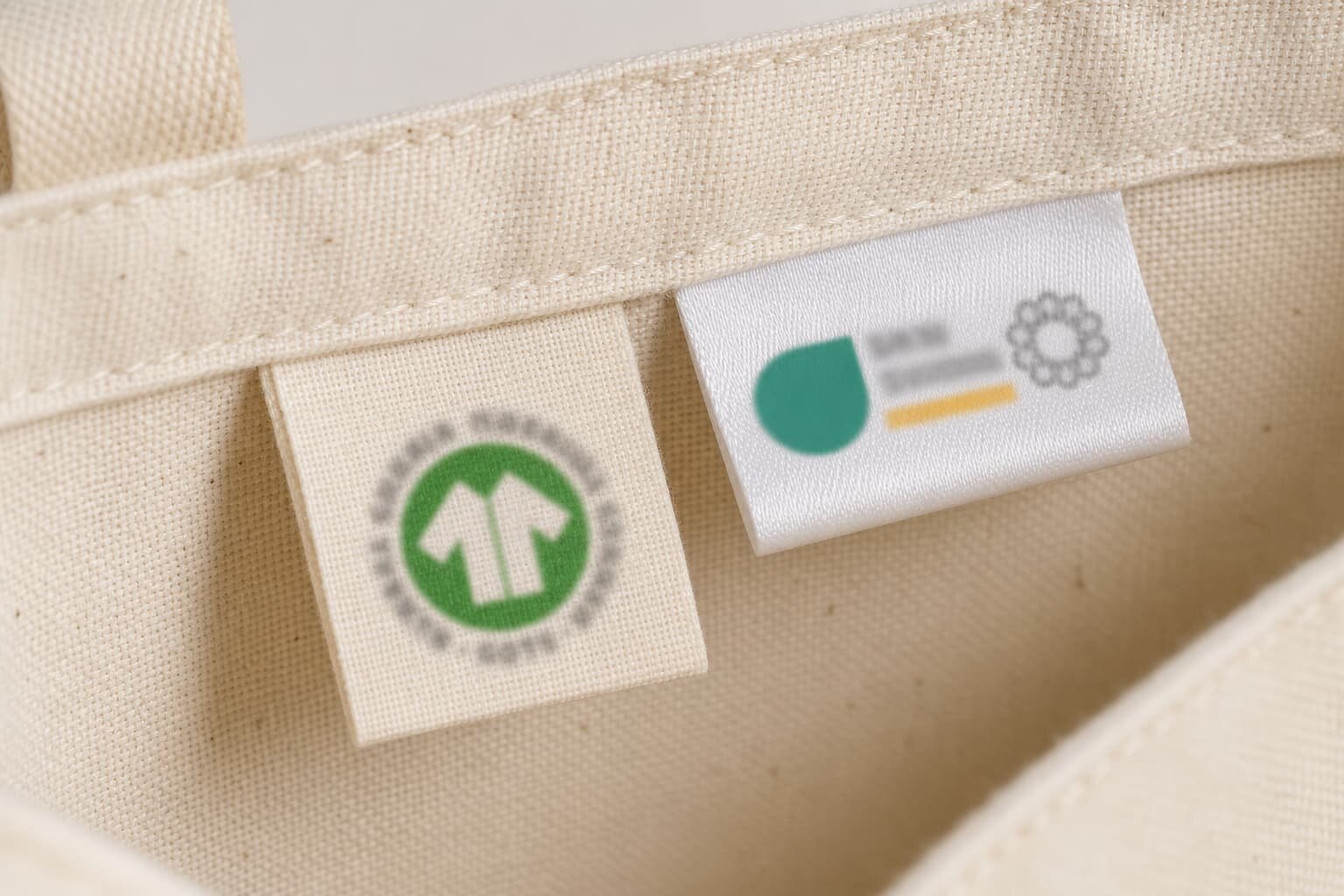
The word organic is easy to print on a quote and harder to verify in a production order. For procurement, the first rule is to separate fabric appearance from certified content. Natural-colored canvas, unbleached cotton, recycled-looking fabric, or a beige tote is not automatically organic. A supplier should be able to state whether the cotton is certified organic and under which standard, most commonly GOTS or OCS depending on the product and supply chain.
Ask for the current scope certificate from the relevant certified entity. Check the company name, certificate number, issuing certification body, product categories, processing scope, and expiry date. The scope must cover the activity being claimed. A mill certificate may prove certified fabric production, but it does not automatically prove the cut-and-sew factory or trading company can sell the finished bag as certified unless the chain of custody is handled correctly. If your brand will make an organic claim in marketing, packaging, or retail listings, ask early whether transaction certificates can be provided for the order.
Traceability should be practical and documented. For a startup order, ask the supplier to identify the cotton canvas source, fabric lot, dyeing or finishing process if any, and how certified organic fabric is separated from conventional fabric in storage and cutting. Avoid vague phrases such as eco canvas, organic feel, natural cotton, green material, or sustainable style unless the quote removes the organic claim entirely. If the supplier cannot support the claim, you can still buy a cotton canvas tote, but you should not market it as organic.
- Check whether the supplier offers GOTS, OCS, or another recognized organic chain-of-custody document, and confirm the certificate is current.
- Match the certificate holder to the seller, mill, or factory role; do not assume a fabric mill document covers the finished tote claim.
- Ask whether transaction certificates are available for the exact order, material lot, or shipment quantity when required by your claim or customer.
- Require fabric lot traceability from incoming roll through cutting, sewing, printing, and packed cartons.
- Remove unsupported words such as organic, certified, eco-certified, or sustainable from the PO and artwork if documentation is not available.
Build the product spec before sourcing
A strong supplier audit depends on a clear product specification. Without it, suppliers quote different bags and procurement ends up comparing prices that do not describe the same product. Start with the body size, gusset, handle length, handle width, fabric weight, cotton content, color, seam type, print method, logo size, label, hangtag, packing method, and carton requirements. Every item should be written in measurable terms, with tolerance where possible.
For startup brands, a 10-12 oz organic cotton canvas is often a practical starting range for a premium but still cost-controlled tote. That roughly equals 340-405 GSM, but buyers should not treat oz and GSM conversions as perfect across all suppliers because finishing, weave density, and measurement method can vary. Ask suppliers to quote the exact same finished GSM or oz target and provide a swatch from the intended material. If you are comparing an 8 oz promotional tote against a 12 oz retail tote, the price difference is not a supplier efficiency difference; it is a different product.
Construction choices should follow the end use. A flat tote may be enough for event handouts, document carry, or lightweight merch. A gusseted tote adds volume and can improve practical daily use. Longer handles suit shoulder carry, while short handles suit hand carry and may reduce material cost. The audit question is whether the supplier can explain these choices and hold them consistently in production.
- Write body size as finished width x height x gusset in centimeters, with tolerance.
- Specify handle length as total loop length or drop length; do not let suppliers interpret it differently.
- Define fabric as certified organic cotton canvas with target GSM or oz, color, weave, and shrinkage expectation.
- State print artwork size, placement from top and side edges, color reference, and acceptable placement tolerance.
- Include label, hangtag, barcode, country-of-origin label, and retail packing requirements at RFQ stage, not after price approval.
Compare quotes with a decision framework
The most useful quote comparison is not a list of unit prices. It is a decision framework that shows what each supplier included, what they excluded, and what risk remains. Ask every supplier to quote from the same RFQ sheet and to separate fabric, sewing, printing, labels, packing, sample fee, setup fee, tooling, export carton, inspection support, and freight terms where possible. Some suppliers will not disclose a full cost breakdown, but they should still confirm what is included in the unit price.
A simple comparison can change the buying decision. Supplier A may quote a lower unit price but exclude transaction certificate support, use lighter canvas, charge separately for custom labels, and require a higher MOQ for printed bags. Supplier B may look higher but include 12 oz certified canvas, one-color print, woven side label, carton marks, and pre-shipment photo report. Supplier C may have the best documentation but a longer lead time because certified fabric must be booked from a specific mill. The right choice depends on launch date, organic claim risk, budget, and reorder plan.
Use a scoring approach to keep the decision objective. Give more weight to certificate support, sample accuracy, print durability, capacity, and corrective-action responsiveness than to small unit price differences. A supplier who answers audit questions clearly is often easier to manage across reorders. A supplier who avoids document questions or changes details between quote and sample should be treated as higher risk even if the first price looks attractive.
- Compare landed and production-ready cost, not just FOB unit price.
- Mark each quote as included, excluded, optional, or unclear for fabric certification, printing, labels, packing, cartons, inspection, and documents.
- Ask suppliers to requote after sample changes; do not assume the first quote survives a fabric weight or print size revision.
- Use a 100-point scorecard: 25 points for organic documentation, 20 for sample/spec accuracy, 20 for QC process, 15 for capacity and lead time, 10 for quote transparency, and 10 for communication.
- Set a minimum pass score before PO approval, such as no approval below 75 and no approval if organic documentation is missing for an organic claim.
Audit MOQ, capacity, and lead time
MOQ is rarely one number. For canvas totes, the minimum can be driven by fabric lot size, cutting efficiency, print setup, label production, carton configuration, or the supplier's sewing line plan. A factory may accept 300 blank pieces but require 1,000 pieces for custom dyed fabric, 500 pieces per artwork, or a higher minimum for a custom woven label. Ask suppliers to break MOQ down by driver so your SKU plan is realistic.
Lead time should also be separated into stages. A controlled timeline includes document review, fabric sourcing, sample making, sample shipping, sample revision, pre-production sample approval, bulk fabric booking, cutting, printing, sewing, inline inspection, final inspection, packing, and export handover. Startup buyers often underestimate how much time artwork revision, organic document confirmation, or label approval can add before bulk production even begins.
Capacity matters most when the launch date is fixed. Ask the supplier what weekly output they can allocate to your tote, not their total factory capacity across all products. A factory may be busy with other orders, or the printing line may be the bottleneck. If your order has multiple logo colors, several SKUs, or retail packing, confirm whether those variants will run sequentially or in parallel. The audit should expose schedule risk before the deposit is paid.
- Ask MOQ per fabric color, bag body, artwork, print color, label type, packing method, and shipment lot.
- Confirm whether several designs can share the same base bag and fabric lot to reduce MOQ pressure.
- Separate sample lead time from bulk lead time and ask when the production clock starts.
- Request a production schedule with milestone dates for fabric arrival, print start, sewing start, inline inspection, final inspection, and packing.
- Ask what happens if the pre-production sample is rejected: revised sample timing, cost responsibility, and impact on delivery date.
Sampling and pre-production approval
A sample is not only a visual confirmation. It is a test of supplier control. The best sample is made with the actual fabric, actual handle material, actual thread color, actual print method, actual label, and intended fold. If the first sample uses substitute fabric or a digital mock print, label it clearly as a reference sample and do not treat it as production approval. Bulk should only start after a pre-production sample matches the final purchase order.
Measure the sample carefully. Check body width, height, gusset depth, handle loop or drop, handle width, top hem depth, seam allowance, print size, print placement, label placement, and folded size. Photograph the sample with a ruler and record the acceptable tolerances. Keep one approved sample with the buyer and one with the factory. If a third-party inspector will inspect the order, the inspection company should receive the same spec sheet and approved sample photos.
A practical use test is also valuable. Load the tote with the expected contents: books, apparel, boxed goods, bottles, event materials, or ecommerce inserts. Hold it by the handles, hang it for a short period if relevant, and check stress around the handle joints and top hem. Fold and unfold the bag to see whether the logo cracks, the canvas creases badly, or the structure distorts. These simple checks do not replace lab testing, but they reveal issues that photos often hide.
- Approve a pre-production sample only when fabric, construction, print, label, and packing match the final order.
- Record sample measurements and tolerances before the PO is released to bulk.
- Check handle symmetry, seam straightness, thread trimming, label alignment, print centering, and carton fold impact.
- Ask for a sealed control sample or signed sample tag so factory production, buyer review, and inspection use the same reference.
- If the sample changes fabric weight, print size, label, gusset, or packing, require a revised quote and revised delivery schedule.
QC plan, AQL, and defect classification
Quality control should be agreed before production. For a first order, many buyers use a final random inspection based on AQL, often general inspection level II for appearance checks, while setting critical defects at zero acceptance. The exact standard depends on customer requirements and order risk, but the important point is to define it in advance. If the supplier only says quality will be checked carefully, procurement has no inspection rule to enforce.
Defect classification should be specific to tote bags. Critical defects may include wrong organic claim, unsafe contamination, mold, severe odor, broken needle risk, wrong artwork, wrong material, or handle failure. Major defects may include open seams, broken stitches, print cracking, severe stains, wrong dimensions outside tolerance, visible shade mismatch, missing labels, wrong packing, or carton count errors. Minor defects may include small loose thread ends, slight print specks outside the logo area, or tiny cosmetic marks within agreed limits. These categories prevent arguments during inspection.
The QC plan should include more than final appearance. Use incoming fabric checks for weight, shade, odor, stains, and weave defects. Use inline checks after cutting, after printing, during sewing, and before packing. Use final checks for measurement, load strength, print durability, rub resistance, packing, carton labels, and quantity. For printed canvas totes, dry rub and wet rub checks are especially useful, and a simple wash or hand-wash simulation can help evaluate whether ink curing is adequate for repeated-use claims.
- Set AQL level, inspection sample size, and defect definitions before bulk production starts.
- Require incoming fabric inspection for GSM, shade, weave defects, stains, odor, and certification lot separation.
- Use inline inspection after print curing and during handle attachment, because these are common failure points.
- Perform practical load testing on finished bags based on intended use; record weight, duration, and failure criteria.
- Check print durability with dry rub, wet rub where relevant, fold resistance, and wash or hand-wash simulation if repeated washing is implied.
- Verify needle control records if required by your retailer or compliance program, especially for cut-and-sew factories.
- Do not ship if critical defects appear, even if the overall defect percentage looks low.
Packing, labeling, and export readiness
Packing is part of the product, not an afterthought. A tote can pass sewing inspection and still arrive with hard creases through the logo, moisture marks, mixed SKUs, wrong carton labels, or inflated freight volume. Ask the supplier to propose the fold method at sampling stage. The fold should protect the print area and fit the intended carton without forcing the handles into sharp bends that deform the bag.
Cartonization affects cost and warehouse handling. Confirm pieces per inner pack, pieces per carton, carton dimensions, gross weight, net weight, carton strength, and carton marking format. If the shipment goes by sea, ask whether desiccants or moisture-control packing are needed. If the bags are individually polybagged, confirm whether that is required by the retailer or simply the supplier's default. Some brands avoid individual polybags for sustainability reasons, but retail and warehouse requirements may still require barcodes, dust protection, or grouped inner packs.
Labeling needs early approval. Country-of-origin labels, fiber content labels, care labels, brand labels, hangtags, barcode stickers, and carton marks should be shown in the sample or packing mockup. The label should not cover the logo, distort the bag, or create a compliance issue. If organic certification marks will appear anywhere, confirm permission and usage rules with the certification body or your compliance advisor before printing them.
- Approve fold method, inner pack, carton quantity, carton dimensions, and gross weight before mass packing.
- Check that packing does not crease the print panel or transfer ink between bags.
- Confirm barcode, hangtag, country-of-origin label, fiber label, care label, and carton mark placement.
- Separate SKUs clearly by carton and carton label; mixed cartons should be approved only when your warehouse can receive them.
- Review moisture protection for sea freight, long storage, humid origin areas, or unwashed natural canvas.
- Ask for final packing photos and carton label photos before shipment release.
Pass or fail audit scorecard
A structured audit scorecard turns supplier selection into a repeatable procurement decision. It does not need to be complicated. For a startup brand, the scorecard should show whether the supplier can support the organic claim, make the product to spec, control quality, meet the schedule, and communicate commercially. The score should be recorded before deposit, then updated after sample review and final inspection.
Use pass or fail gates for non-negotiable items. If the product will be marketed as organic, missing certificate support should be a fail, not a small deduction. If the handles fail a basic load test, the supplier should not move to bulk until the construction is corrected. If the quote excludes packing, labels, or print setup, it should be marked incomplete until revised. This protects the buyer from approving a supplier based on an attractive but unfinished quote.
A practical scoring model is 100 points. Organic documentation can carry 25 points, sample and specification accuracy 20 points, QC and inspection process 20 points, production capacity and lead time 15 points, quote transparency 10 points, and communication or corrective-action quality 10 points. Set a minimum score for approval and keep the record with the PO. That scorecard becomes the baseline for reorders, negotiations, and supplier development.
- Pass/fail gate: organic claim supported by current scope certificate and traceability plan, or remove the organic claim.
- Pass/fail gate: pre-production sample matches final fabric, construction, print, label, and packing requirements.
- Pass/fail gate: supplier agrees to AQL, defect classification, inspection access, and corrective-action process.
- Score 90-100: strong approval candidate with clear documents, accurate sample, transparent quote, and realistic schedule.
- Score 75-89: possible approval with corrective actions documented before deposit or bulk start.
- Score below 75: high-risk supplier for a launch order unless the spec is simplified or missing controls are resolved.
Specification comparison for buyers
| Audit area | Procurement-grade requirement | How to verify | Cost or lead-time implication |
|---|---|---|---|
| Organic claim | Supplier should provide valid GOTS or OCS scope certificate covering the correct company, facility, product category, and validity date; transaction certificate should be available for the ordered material when required | Check certificate number, issuing body, certified entity name, product scope, expiry date, and whether the seller is a trader, mill, or cut-and-sew factory | Certified material may cost more and require earlier booking; missing scope can delay approval or force a spec change |
| Fabric weight | 10-12 oz organic cotton canvas, roughly 340-405 GSM, with finished GSM tolerance agreed before PO | Ask for swatch, fabric test report or mill specification, and bulk roll inspection record; weigh a measured fabric area if needed | Higher GSM increases fabric cost, sewing time, needle wear, carton weight, and freight cost |
| Construction tolerance | Body width and height typically +/-0.5 cm to +/-1.0 cm depending on size; handle length and gusset tolerance must be written in the spec sheet | Measure pre-production sample and first bulk pieces; confirm tolerances on the approved sample tag and inspection checklist | Tighter tolerance may require slower sewing and stronger inline inspection; unclear tolerance causes rejection disputes |
| Print method | Screen print for simple 1-2 color logos; water-based, pigment, or discharge-style ink only after confirming opacity, curing, and rub resistance on canvas | Review artwork size, Pantone or lab dip target, ink type, curing process, and bulk print test; request rub and wash or hand-wash simulation where relevant | More colors, larger print areas, and extra curing time increase setup cost and may extend sampling |
| Handle strength | Self-fabric or cotton webbing handles with reinforced X-box, bar-tack, or dense back-stitching at stress points | Inspect stitch density, seam allowance, thread trimming, skipped stitches, and perform a practical load test using the intended carry weight | Weak reinforcement is a high-risk defect; stronger stitching adds small labor cost but reduces failure risk |
| Supplier capability | Factory should show business license, export experience, production capacity, subcontracting policy, compliance records, and corrective-action process | Request company documents, recent export carton labels with confidential data removed, capacity statement, production flow, and sample QC report | Better-documented suppliers may quote higher but reduce launch risk, rework, and late shipment exposure |
| Inspection standard | Final inspection should use agreed AQL level, defect classification, carton count check, measurement check, print check, and packing verification | Set AQL before production, commonly general inspection level II for appearance with critical defects at 0 acceptance; define major and minor defects clearly | Third-party inspection adds cost and time but helps protect the first PO and future reorder baseline |
| Packing and export | Fold method, inner pack, carton quantity, carton dimensions, gross weight, labels, moisture protection, and barcode placement must be approved | Review packing mockup, carton marks, drop risk, moisture plan for sea freight, and SKU separation before mass packing | Poor cartonization can increase freight cost, damage print areas, and create warehouse receiving problems |
Buyer checklist before sampling
- Confirm the supplier's legal company name, business license, factory address, export role, and whether production is handled in-house or subcontracted.
- Verify the organic claim with a valid GOTS or OCS scope certificate and clarify whether transaction certificates can be supplied for the ordered material.
- Ask for cotton canvas details in writing: fiber content, certified organic content percentage, finished GSM or oz, weave, yarn count if available, shrinkage, washing or pre-shrink process, and fabric color.
- Require a dimension sheet showing body width, height, gusset depth, handle length, handle width, seam allowance, print placement, label placement, and acceptable tolerances.
- Separate MOQ by fabric lot, bag body, print design, print color count, label, packing format, and carton configuration so the startup SKU plan is realistic.
- Request a pre-production sample made with actual fabric, actual print method, actual handles, actual label, and proposed packing fold before approving bulk.
- Set inspection rules before production: AQL level, critical major minor defect definitions, measurement sample size, load test, colorfastness or rub test, print wash test, seam strength check, and carton count verification.
- Confirm the supplier's corrective-action process: who approves fixes, how defects are recorded, when replacement pieces are made, and how failed inspection is handled.
- Compare supplier quotes line by line using the same RFQ sheet, including tooling, print setup, sample fee, label, packing, export carton, bank charges, freight terms, and validity period.
- Lock all approved details in the purchase order and attach the spec sheet, artwork file name, approved sample photos, packing standard, inspection standard, and delivery schedule.
Factory quote questions to send
- What is your legal company name, factory address, export license status, and role in this order: manufacturer, trader, printer, or cut-and-sew subcontractor?
- Can you provide current GOTS or OCS scope certificates, and will the ordered organic canvas be covered by transaction certificates or traceability documents?
- What is the exact fabric specification, including certified organic content, GSM or oz, weave, yarn count if available, color, shrinkage, and whether the canvas is pre-shrunk or washed after weaving?
- Is the quoted price based on blank bags, one-color print, full finished bag, sewn label, hangtag, barcode, inner packing, export carton, and carton marks? Please separate optional items.
- What is the MOQ by fabric color, print design, print color count, label type, packing method, and total shipment quantity? Can multiple artworks share the same base bag body?
- What production capacity can you allocate to this tote style per day or per week, and what other steps could become bottlenecks during peak season?
- Do you use subcontractors for weaving, dyeing, printing, sewing, washing, packing, or inspection? If yes, which steps are outsourced and how do you control them?
- What are the dimensions, handle length, handle width, stitch count, seam allowance, gusset depth, print placement, and measurement tolerances used for this quote?
- Which print method do you recommend for this artwork, what ink system will be used, how is the print cured, and what durability tests can you perform before bulk approval?
- What is the sample charge, sample lead time, production lead time after approval, and what changes if the first sample requires fabric, print, or construction revision?
Quality-control points to confirm
- Organic documentation should match the selling entity and product scope; do not accept vague claims such as organic style, eco cotton, natural cotton, or sustainable canvas without certificate support.
- Fabric weight must match the approved range within written tolerance; a practical bulk check should include random piece measurements and fabric hand-feel comparison against the approved sample.
- Canvas weave should be even, with no thin streaks, heavy slubs in the logo area, visible yarn gaps, oil stains, mold, odor, or shade difference across panels.
- Finished dimensions, gusset depth, handle length, handle width, and print placement should be checked against the approved spec sheet, not against supplier photos.
- Handle attachment should pass a practical load test based on intended use; inspect X-box or bar-tack density, skipped stitches, loose threads, seam allowance, and signs of fabric tearing near stress points.
- Seam strength should be checked at side seams, bottom seam, top hem, and handle joint; classify open seams, broken stitches, needle holes, and skipped stitches by severity before inspection.
- Print quality should be centered, sharp, opaque enough for the fabric color, and free from cracking, bleeding, pinholes, tackiness, ghosting, registration shift, or ink transfer.
- Print durability should include dry rub, wet rub where relevant, fold resistance, and a wash or hand-wash simulation if the tote is marketed for repeated use.
- Colorfastness should be reviewed for dyed canvas, contrast handles, and printed areas, especially if bags may contact light clothing or be shipped in humid conditions.
- Needle control should be confirmed for cut-and-sew production: broken needle records, needle replacement process, and metal contamination prevention should be available where retailer compliance requires it.