Why this audit matters before you price the order
An organic canvas tote looks simple until a buyer has to compare three supplier quotes that all seem to mean something different. One factory may quote by nominal fabric weight, another by finished GSM, and a third may include print and packing in a unit price that hides where the money really sits. If you do not audit the spec first, you end up comparing numbers that cannot be trusted. For retail buyers, that is how margin leaks into the order before the first sample is even approved.
The goal of this audit is not to turn the sourcing process into paperwork theater. It is to force a supplier to describe the bag in the same language you will use when the goods are inspected, re-ordered, or explained to a store team. An organic canvas tote for retail needs to hold shape, carry a clean print, survive handling, and arrive packed in a way that matches the channel. Once those points are locked, the quote becomes readable and the production risk drops fast.
- Compare apples to apples: finished spec, not vendor shorthand.
- Separate bag cost from decoration, packing, and compliance cost.
- Treat the sample as a contract draft, not as a casual preview.
Lock the base construction first
Start with the cloth. For a retail tote, a common working range is 8 oz to 12 oz organic cotton canvas, with 10 oz to 12 oz giving a firmer hand and better shelf presence. If the product is meant for light promotional use, 8 oz may be enough. If it is going into a store assortment, the buyer usually wants enough body that the bag stands open, keeps its shape after folding, and does not feel flimsy in the hand. Ask the factory whether the listed weight is nominal fabric weight or finished GSM after washing and finishing, because the two can differ in a way that matters on the floor.
Construction details matter just as much as fabric weight. Handle width, handle length, seam allowance, side gusset depth, hem width, and the stitch pattern at the stress points all affect how the bag performs. A retail buyer should ask for a measured drawing with tolerances, not just a picture. If the tote has a bottom gusset, request the exact gusset depth and whether the bottom seam is single-stitched, double-stitched, or bound. A clean-looking tote with weak reinforcement is still a bad tote.
- Ask for finished GSM, not only pre-finish cloth weight.
- Confirm handle width, handle drop, and reinforcement stitch pattern.
- Request tolerances for finished dimensions, especially width and gusset depth.
Verify organic and compliance paperwork early
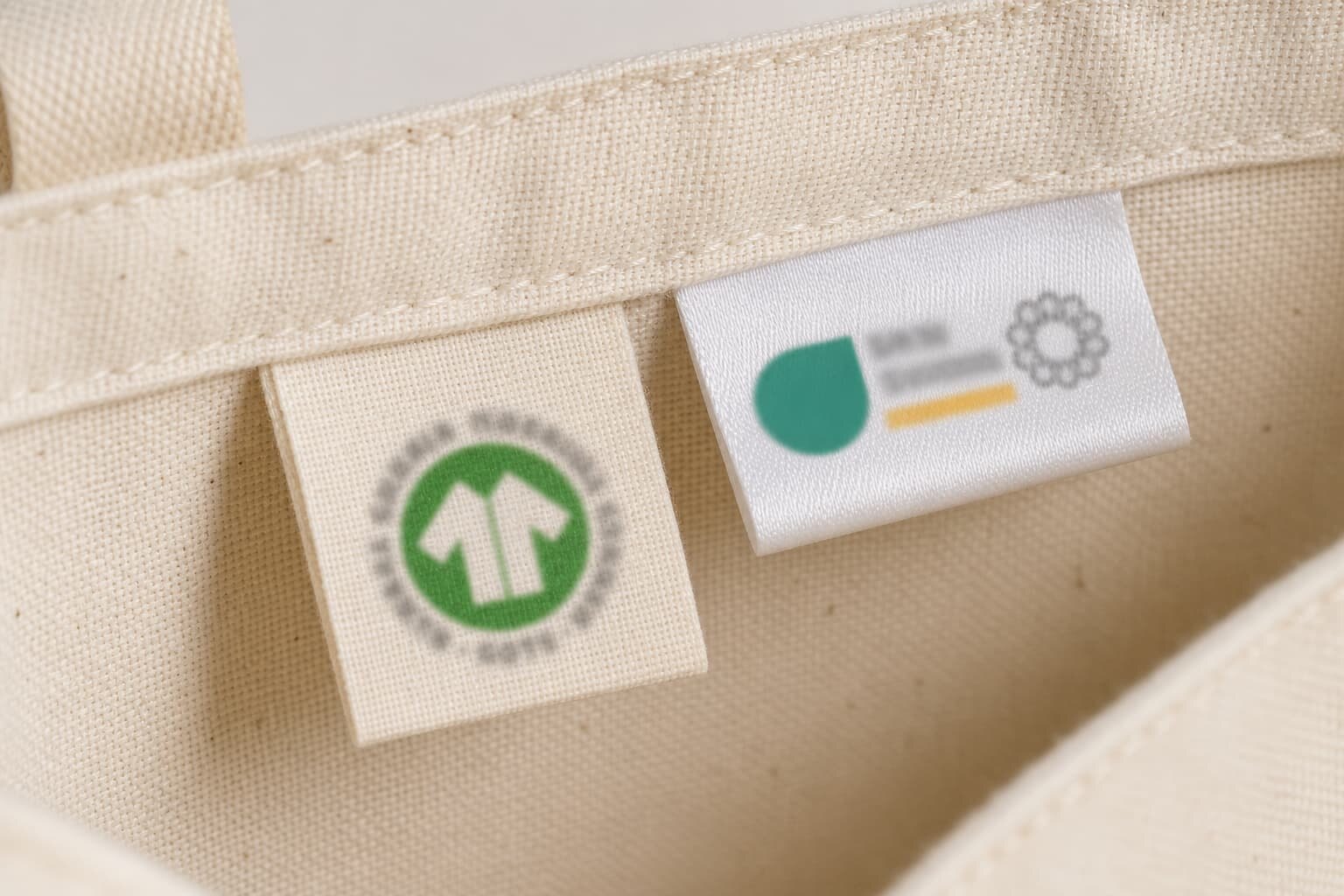
If the bag is being sold as organic, the documentation has to be tied to the actual order. Retail buyers should ask what fiber certificate applies, whether the cotton source is traceable to the fabric lot, and whether the factory can keep documentation aligned from yarn or fabric through packing. A supplier that only says the cotton is organic but cannot show matching paperwork for the specific production run is creating an avoidable risk. The file should make sense to a compliance reviewer who was not part of the sourcing discussion.
Do not stop at a certificate image in a quotation email. Ask what test or source records are available before bulk production, what the factory can provide for the booking file, and whether names on the paperwork match the supplier entity, fabric source, and shipment documents. If your retail customer or internal compliance team asks for support later, you want a clean paper trail. The best time to discover a documentation gap is before sample approval, not after cartons are on the water.
- Match the certificate to the actual supplier and production lot.
- Confirm whether source, processing, and shipment documents line up.
- Ask what can be issued before bulk and what will be issued with the shipment.
Choose the print method for the selling channel
For an organic canvas tote, decoration is usually where the quote starts drifting. Screen print is often the best option for simple retail graphics with one to three colors because it gives good opacity and a controlled cost structure at scale. Heat transfer can work for short runs or highly detailed artwork, but buyers should be careful about hand feel, edge lift, and long-term fold marks. Embroidery can be attractive for premium branding, but it adds cost and can distort lighter canvas if the stitch density is too high. Woven or sewn labels are useful when the brand wants a restrained, durable mark rather than a large printed front panel.
Ask the supplier how the print is cured, what ink system is used, and whether the print will be tested for rubbing, cracking, and wash or fold performance. If the artwork sits near a seam or gusset, ask for the exact placement margin so the print does not drift onto a seam line during sewing. The best retail tote is the one that still looks intentional after folding, stacking, and repacking. That is where weak print control shows up.
- Use screen print for simple, repeatable logo work.
- Use heat transfer only when artwork detail or low quantity justifies it.
- Check print placement against seams, folds, and gusset lines.
Read the quote like a production engineer
A useful tote quote breaks down the cost instead of hiding it. You want to see fabric, cutting, sewing, print setup, per-piece print cost, label application, inner packing, carton packing, and any test or compliance fees. If the supplier bundles everything into one line, it is hard to know what changes when you adjust the handle length, add a side label, or switch from one-color to two-color print. Retail buyers need that visibility because their margins are usually calculated before the order is fully locked.
MOQ logic is often attached to multiple variables, not just the final bag count. A factory may have a fabric MOQ, a color MOQ, a print screen MOQ, and a carton or packing MOQ. Ask which element is driving the number. If the quote gets sharply cheaper above a threshold, find out whether that is a material usage break, a sewing efficiency break, or simply a setup amortization break. That distinction helps you decide whether to consolidate artwork, reduce color changes, or hold a stock fabric base for reorder speed.
- Demand a line-by-line quote for bag, print, packing, and testing.
- Ask which MOQ is driven by fabric, color, or decoration setup.
- Compare price change against specification change, not only volume change.
Use a sample process that exposes weak spots
Do not approve a tote from a single pretty photo. Ask for a development sample first, then a pre-production sample made with the final fabric, final artwork, final label, and final packing method. The sample should be measured, weighed, folded, and inspected for stitch consistency. A buyer should check handle symmetry, seam straightness, gusset shape, label placement, and print registration. If the bag is washed, dyed, or finished after sewing, ask for the sample in the exact process sequence the bulk order will use.
A good sample check also includes function. Fill the bag to a realistic load and look at how the bottom seam behaves, whether the handles bite into the hand, and whether the print distorts when the bag is full. Review the sample under the same lighting the receiving team will use, because natural canvas can hide lint, slub, or minor shading differences under certain light. Once the approved sample is signed off, keep one sealed reference sample on the buyer side and one at the factory. That simple habit saves arguments later.
- Approve a development sample and a final pre-production sample separately.
- Measure and weigh the sample, then test it under realistic load.
- Keep sealed reference samples on both sides.
Inspect packing before you inspect cartons
Retail buyers often focus on the bag and leave packing vague. That creates problems at shipment time when the factory chooses a folding method, carton count, or polybag size that does not match store expectations. Confirm whether the tote is bulk packed, individually polybagged, labeled, or insert-packed with a care card. If the bag has a natural cotton smell, ask whether the factory uses ventilated storage or a moisture barrier. Organic canvas can still pick up warehouse odors if it is packed carelessly.
Carton planning is not decorative detail. Ask for carton dimensions, gross weight, pieces per carton, pallet plan if needed, and how the outer label will read. If the product goes to retail distribution, barcode placement and carton mark readability matter. A supplier who can quote a clean pack-out and show a carton spec is usually more organized on the floor. A supplier who treats packing as an afterthought often behaves the same way in production.
- Confirm fold method, inner packing, and carton count.
- Check moisture, odor, and label handling rules.
- Ask for carton size and gross weight before approval.
Set realistic lead time expectations
Lead time should be stated from the right start point. For an organic canvas tote order, the clock may begin after sample approval and deposit, but only if the fabric is already in hand. If the factory still needs to source organic canvas, arrange weaving, or reserve a print slot, the true timeline is longer. Good suppliers break the schedule into fabric booking, sampling, bulk cutting, sewing, printing, packing, and final inspection. That breakdown lets the buyer see where delay risk actually lives.
As a working habit, ask what can move in parallel and what cannot. Fabric approval may need to finish before bulk cutting, while carton printing and label prep may start earlier. If your launch date is fixed, the supplier should tell you which step is critical path and what change in artwork or pack-out would extend it. The aim is not to squeeze the factory unrealistically. It is to make the launch date honest enough that the retail plan can survive it.
- Ask for a step-by-step schedule, not one vague lead time number.
- Confirm whether fabric is in stock or still needs sourcing.
- Identify the critical path before approving artwork changes.
Score the factory on control, not charm
A supplier audit is really a control audit. You are checking whether the factory can repeat the same bag across the order and across the next reorder. Look for how they measure incoming fabric, how they store approved samples, how they separate production lots, and how they react when a spec changes. Good factories keep records that make a dispute easier to resolve because the record already exists. Weak factories rely on memory, which is a bad production system in a busy month.
Red flags are usually plain once you know what to look for. If the quote changes after every small question, if the sample and the quotation do not match, if the factory cannot explain its MOQ logic, or if the packing answer keeps shifting, that is all useful information. Retail buyers do not need a perfect supplier. They need a supplier whose process is clear enough that the next order is not a mystery. The audit should tell you that.
- Check recordkeeping, sample control, and lot separation.
- Watch for quote drift when you ask detailed questions.
- Favor suppliers who can explain the process without changing the story.
Build a buyer-side acceptance standard
Before you place the order, turn the approved sample into a written acceptance standard. Include finished dimensions, fabric weight, seam type, stitch count if relevant, print placement, label type, carton count, and packing method. Add the tolerance range you are willing to accept, because no production run is absolutely identical. This is especially useful for organic canvas totes, where natural fiber variation is normal but still needs a boundary. The goal is to distinguish acceptable natural variation from avoidable defect.
The simplest buyer standard is the one production can actually follow. Keep the document short enough that a merchandiser can use it at receiving and a factory supervisor can use it on the line. If you need a visual point of reference, mark the approved sample with the key specs and store it with the order file. For retail buyers, that small amount of discipline pays back every time you reorder, change a color, or move the bag into a different store program.
- Convert the approved sample into a written acceptance standard.
- Include tolerances so normal variation is not treated as a defect.
- Keep the standard short enough to use in receiving and production.
Specification comparison for buyers
| Spec decision | Recommended option | When it fits | Buyer risk to check |
|---|---|---|---|
| Fabric weight | 10 oz to 12 oz organic canvas | Retail programs that need a sturdier hand and better shelf shape | Confirm actual finished GSM, not only nominal fabric weight, and check shrinkage after washing |
| Handle construction | Self-fabric handles with reinforced X-box stitching | Branded retail totes that need a clean look and higher load confidence | Ask for stitch count, strap width, and seam allowance so handles do not twist or tear |
| Print method | Screen print for simple art, heat transfer only for short runs | Logo-driven retail programs with limited colors or tight unit cost control | Check ink penetration, cure quality, and whether the print cracks after folding or rubbing |
| Interior finish | Clean turned seams or binding with no loose fibers | Retail bags sold to consumers, not just used as giveaway items | Inspect inside seams for fraying, skipped stitches, and thread color bleed |
| Packaging | Bulk packed with one inner polybag per piece only if required by retail spec | Programs that need shelf-ready consistency or barcode labels | Confirm carton count, bag labeling, and moisture protection before approving pack-out |
| Certification file | Fiber and process documents matched to the order lot | Retail buyers needing compliance records for private label or store audits | Check that certificates, test reports, and invoice names all align with the supplier and fabric source |
Buyer checklist before sampling
- Confirm the exact fabric specification: organic cotton canvas, finished GSM, weave count, color, and whether the weight is before or after finishing.
- Ask for a clear sample reference with seam type, handle width, print size, and any label or hangtag placement already marked.
- Require a quote that separates fabric, sewing, printing, labeling, packing, testing, and carton charges instead of a single blended unit price.
- Check whether the MOQ is tied to fabric color, print color count, or total order value, not just to bag quantity.
- Review shrinkage, wash, and colorfastness expectations before approving the pre-production sample.
- Confirm retail pack-out details, carton size, master carton quantity, barcodes, and any polybag or warning label requirements.
- Ask for production lead time in calendar days from sample approval and deposit, plus the time needed for fabric sourcing if the cloth is not in stock.
- Request one sealed golden sample and one annotated production reference sample before bulk cutting begins.
Factory quote questions to send
- Is your quoted fabric weight measured as finished GSM or nominal cloth weight, and can you confirm the weave and shrinkage allowance?
- What is included in the unit price: fabric, cutting, sewing, thread, print, label, packing, and carton marks?
- What is the minimum order quantity by fabric color and by print color, and what happens to price if we change handle length or artwork size?
- Which print method are you proposing for this design, and what is the expected ink hand feel, durability, and curing method?
- Can you share a pre-production sample schedule and tell us what will be checked before bulk approval?
- What packing configuration is standard, and can you quote retail-ready pack-out with our barcode or hangtag if needed?
- What testing can you support for fabric, seams, and print, and which reports are available before shipment?
- How many production days do you need after sample approval, and what risks could extend the timeline?
Quality-control points to confirm
- Fabric weight matches the approved range and feels consistent across the lot.
- Canvas weave is even, with no thin strips, slubs beyond tolerance, holes, or oil marks.
- Seams are straight, the stitch density is consistent, and stress points are reinforced.
- Handle length, handle placement, and symmetry match the approved sample.
- Print registration, color density, and edge sharpness match the approved artwork and do not crack when folded.
- All labels, side marks, and care content are placed correctly and secured cleanly.
- Carton count, polybag count, and barcode labels match the packing spec.
- Finished bags are folded consistently and pass load, appearance, and odor checks before carton sealing.