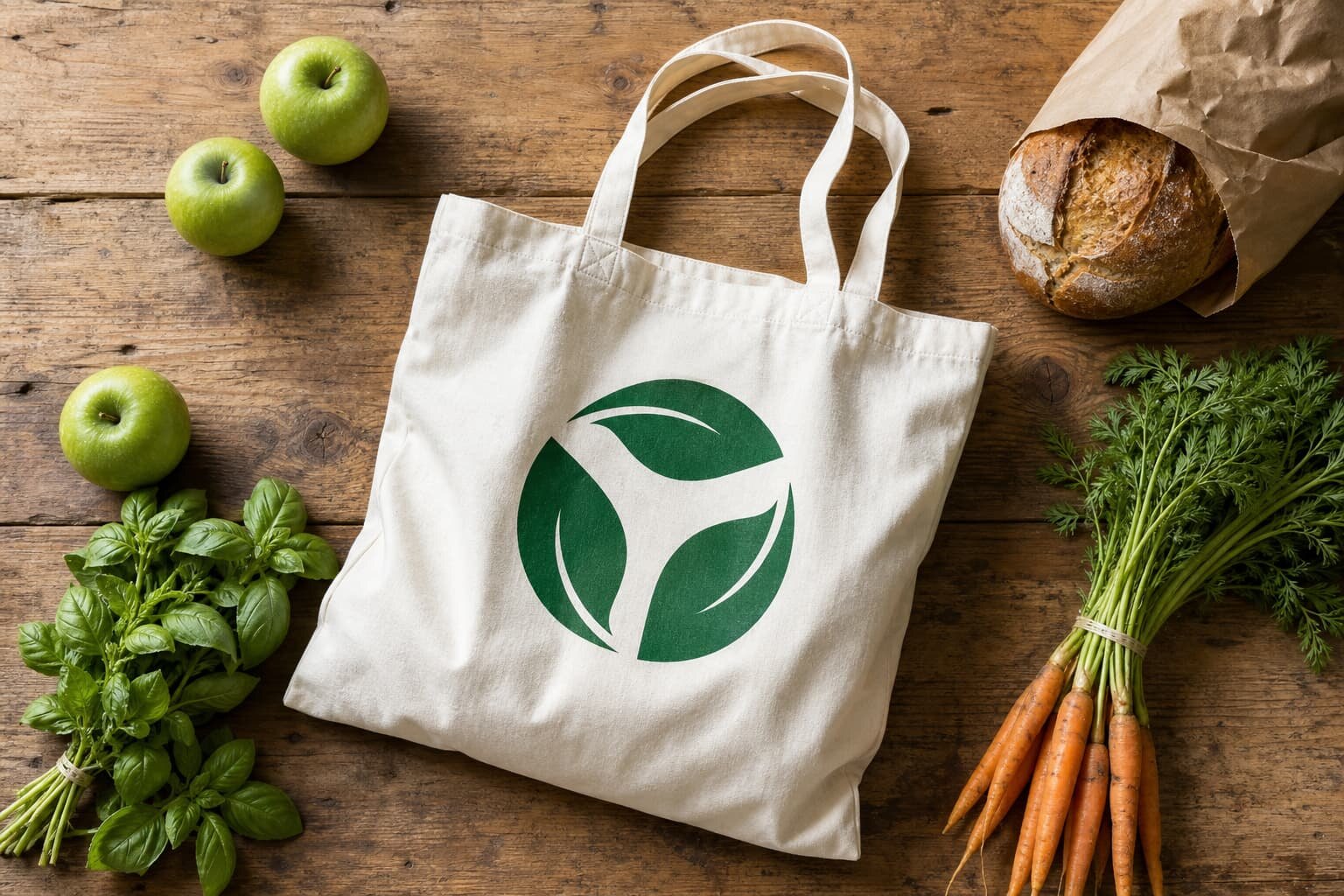
Why the approval memo matters before you lock the order
A sample approval memo is the document that turns a tote bag sample from a general reference into a production instruction. For an organic canvas tote, that matters more than buyers sometimes expect, because small differences in GSM, weave density, sewing allowance, or print cure can change the final result enough to cause a warehouse rejection or a retail complaint. If the sample was approved only by email with loose language like "looks good" or "please proceed," the factory may treat the bulk order as flexible. That is where problems begin.
The memo should close the gap between the quote and the actual product. It tells the supplier what the buyer accepted, what must not change, and which details need formal re-approval before mass production. When the order involves organic canvas, the memo is also where you protect the buyer from vague terms such as "eco canvas" or "natural cotton" that sound fine in a sales call but mean very little in a cut-and-sew room.
- Use the memo to freeze the sample version, not just the product idea.
- Make it clear whether the approved sample is the color standard, print standard, or full production standard.
- Treat the memo as part of the RFQ trail, not as a courtesy note.
Start with the fabric, because everything else hangs off it
The first item in a sample approval memo should be the fabric spec. For most wholesale organic canvas totes, buyers will land somewhere around 10 oz / 340 gsm or 12 oz / 407 gsm. That is usually enough weight for shape and durability without making the bag unnecessarily stiff or costly. If the bag is meant for premium retail, you may want the heavier end. If it is for giveaways or club merchandising, the lighter option can be the better fit, as long as the print and handle construction still hold up.
Do not approve a tote sample without writing down the fabric details in plain manufacturing language. Ask for the exact canvas weight, whether it is single or double weave, whether the cloth is pre-shrunk or bio-washed, and whether the final piece is intended to be natural, bleached, or dyed. A buyer who leaves this open will often get a quote that looks competitive and a bulk result that feels different from the sample.
- Record GSM or oz, not just a marketing description like heavy canvas.
- Note whether the fabric is organic certified material supplied by the factory or buyer-nominated cloth.
- Ask for shrinkage behavior after wash or steam finish if the bag is expected to be laundered.
Use the print method to control both appearance and cost
For an organic canvas tote, the print method is not a decorative afterthought; it is one of the main cost and quality drivers. Water-based screen print is usually the most practical choice for simple logos, spot colors, and repeat wholesale runs. It gives a clean, retail-friendly look when the artwork is straightforward and the factory has stable screens and curing control. If the design is more detailed, the buyer needs to know whether the factory will simplify the art, adjust halftones, or reject the job altogether.
The approval memo should state the print size, print location, number of colors, and the acceptable range for color matching. If a buyer approves a sample with one ink lot and production runs with another, the result can shift enough to be noticeable on a shelf display. Also specify whether slight texture, visible hand feel, or minimal strike-through is acceptable. Those details sound small until the first bulk shipment lands.
- Define the artwork position with measurements from seams, top edge, and side gusset.
- State whether the print must be centered by eye or measured to a fixed tolerance.
- Confirm whether the sample uses one-off hand printing or a production method the factory can repeat.
Write the sample checks in the memo before anyone calls it approved
A strong sample approval memo does not just say the bag looks fine. It lists what was checked and what passed. For an organic canvas tote, the most useful checks are body dimensions, handle length, seam quality, stitch density, print placement, thread color, and overall appearance after pressing or folding. If the tote has a gusset, zipper, lining, or pocket, those pieces should be checked separately so they do not disappear into a general approval note.
The buyer should also include practical checks that relate to use, not just appearance. A tote might look correct on the table and still fail in transit if the handles stretch too much or the corners distort under fill. A pre-production sample should be treated like a controlled rehearsal for the bulk order. If it passes, the memo should say exactly what passed and under which conditions.
- Measure the finished sample against a spec sheet, not against memory.
- Check symmetry, handle drop, corner shape, and top-edge reinforcement.
- Do a real load test with the weight the bag is expected to carry in market use.
Compare MOQ logic before you assume the quote is comparable
MOQ on an organic canvas tote is rarely one number across the whole order. It can change by fabric color, print method, packaging style, and whether the factory must source a custom label or special woven tag. Buyers sometimes compare two supplier quotes that look similar on paper, only to find that one includes stock cloth and the other assumes a fresh fabric booking with a higher minimum. That is not a small difference; it changes the economics of the entire program.
When you build the approval memo, note the MOQ basis as well as the approved sample details. If the order is for a retail brand with multiple sizes or colors, the factory needs to know whether MOQ is applied per SKU, per artwork, or per colorway. The quote should also state whether sample costs are credited back, whether extra sample revisions are charged, and whether one approved sample can support a repeat reorder later.
- Ask whether MOQ is based on blank bags, printed bags, or packed retail bags.
- Confirm if changing print color or label type resets the MOQ.
- Separate the price of the bag from the price of artwork setup, labels, and packing labor.
Build the quote around the cost drivers buyers actually control
The cleanest way to compare supplier quotes is to break the tote into controllable cost drivers. Fabric weight, print area, sewing complexity, handle construction, and packing all move the price. If the factory quote is cheap because it assumes a lighter canvas, a smaller print, no inner packaging, or simpler stitching, the number is not directly comparable. A good approval memo helps prevent that by naming the features that must stay fixed after sample sign-off.
For sourcing teams, it is usually smarter to compare the quote on a line-by-line basis rather than as one flat unit price. Ask what is included in the sample stage, what changes after the pre-production sample, and what is still open for adjustment if the buyer needs a revised label or carton format. That keeps the conversation in manufacturing terms instead of sales shorthand.
- Compare fabric, print, sewing, labels, and packing as separate cost buckets.
- Watch for hidden extras such as label application, barcode stickers, or carton marks.
- Require the factory to say what could change the price after sample approval.
Packing is part of the product, not a shipping afterthought
Many tote problems show up after the bag has already been approved, packed, and shipped. If the bag is folded too tightly, the print can crease. If the carton count is not fixed, receiving teams lose time recounting goods. If the bag is packed without dust protection and the route is humid or long, the natural canvas may arrive looking tired even though the sewing is fine. The sample approval memo should capture the final packing method so the bulk order matches the presentation the buyer expected.
For wholesale buyers, the right packing spec depends on the channel. Retail orders may need individual polybags, inserts, or retail-ready hanging presentation. Distributor and warehouse orders may need bulk packs, strong carton marks, and easy count verification. The memo should specify whether the bag is to be folded flat, stacked by dozen, or packed by SKU and color. That level of clarity saves time on both sides.
- State whether the bag ships flat, folded once, or folded to a retail presentation size.
- Confirm carton pack count, carton dimensions, and label placement.
- Call out any moisture, dust, or scratch protection required for transit.
Set lead time in milestones, not one vague promise
A sample approval memo should turn lead time into a sequence of checkpoints. First comes sample confirmation, then material reservation, then print setup, then cutting and sewing, then packing and final inspection. If the supplier only gives a single delivery estimate, the buyer has no way to see where delays are likely to happen. With organic canvas totes, the risk often sits in fabric booking, print approval, or last-minute label changes rather than in sewing itself.
The buyer should ask for separate timing for sample revision and bulk production. If the first sample needs a correction to handle length, print alignment, or woven label placement, that revision time should not be buried inside the bulk estimate. It is also wise to state the latest acceptable approval date, because a delayed sign-off from the brand side often has the same effect as a delayed factory start.
- Ask for a milestone schedule from sample receipt to bulk shipment.
- Separate factory delay risk from buyer approval delay risk.
- Note whether lead time changes if the order needs custom fabric, labels, or special packing.
Close the memo with acceptance rules the factory can actually follow
The last part of the approval memo should explain what counts as acceptance and what requires correction. That is where buyers protect themselves from gray area. If the approved sample is the reference for bulk, say so. If minor natural variation in canvas color is acceptable but logo placement is not, say that too. The factory should not have to guess where tolerance ends and rejection begins.
The memo should also name the owner of final approval on the buyer side. Procurement, merchandising, brand, and warehouse teams often care about different risks. One person should be responsible for issuing the final sign-off, or the project can drift into circular comments. A practical approval memo ends the back-and-forth and gives the supplier a clean start.
- State whether the approved sample is a sealed golden sample or only a reference sample.
- List the defects that require remake, rework, or re-approval.
- Name the buyer contact who can authorize production release.
Specification comparison for buyers
| Spec decision | Recommended option | When it fits | Buyer risk to check |
|---|---|---|---|
| Fabric weight | 10 oz / 340 gsm organic canvas | Most wholesale programs that need a balanced tote for retail and promotional use | Check shrinkage after finishing, opacity under light colors, and whether the handfeel matches the brand position |
| Fabric weight | 12 oz / 407 gsm organic canvas | Premium retail programs, heavier fill, and bags expected to hold shape better on shelf | Check quote impact, sewing speed, and whether the thicker body makes corners bulky |
| Print method | Water-based screen print | Simple logos, solid spot colors, and repeat orders with stable artwork | Check ink strike-through, edge sharpness, cure quality, and whether the approved sample matches production screens |
| Handle construction | Self-fabric handles with reinforced stitching | General wholesale orders where buyers want a clean natural look and moderate cost | Check handle width, stitch density, bar-tack placement, and drop length after load testing |
| Packing format | Bulk packed with size-label carton marks and inner poly if required | Orders shipped to DCs, distributors, or retail receiving teams that want fast counting | Check carton pack count, compression risk, moisture protection, and how the bag folds after unpacking |
Buyer checklist before sampling
- Confirm the exact fabric spec in GSM or oz, plus whether the canvas is bleached, natural, dyed, or prewashed.
- Approve a dimension sheet with body width, body height, gusset, handle length, and tolerance on each key measurement.
- State the print method, number of colors, print size, print placement, and what counts as an acceptable ink appearance.
- Request a pre-production sample or golden sample that shows the final fabric, final artwork, final thread color, and final label application.
- Define packing requirements, including folding method, carton count, polybag use, barcode labels, and master carton mark format.
- Ask the factory to confirm whether the approved sample is a sealed reference for bulk comparison.
- Record the target MOQ, whether MOQ changes by color or print variation, and whether the quote is based on stock fabric or custom weave.
- Set the lead time in two parts: sample approval timing and bulk production timing.
- List the rejection triggers that require correction before mass production begins.
- Make sure the memo is signed off by sourcing, brand, artwork, and warehouse contacts before release.
Factory quote questions to send
- What fabric weight, weave count, and finish are included in this quote, and are they based on stock fabric or a custom run?
- Is the quote for a blank tote, printed tote, or fully packaged retail piece with labels and carton marks?
- What MOQ applies by color, print method, and size, and what happens if we split artwork across multiple SKUs?
- What sample stage is included in the schedule: fit sample, printed sample, or pre-production sample?
- What measurement tolerances do you allow for body size, handle length, and gusset depth?
- Which print method do you recommend for the artwork, and what artwork file format do you need?
- What packing method is included, and are inner polybags, tissue, inserts, or hang tags extra?
- What is the production lead time after sample approval, and what part of that time is fabric reservation, sewing, printing, and packing?
- What inspection standard do you use for stitching, print alignment, and carton count before shipment?
- What details must be written into the approval memo so the bulk order matches the sample without dispute?
Quality-control points to confirm
- Fabric weight matches the approved spec and does not vary enough to change drape, opacity, or bag structure.
- Body dimensions, gusset depth, and handle length remain within agreed tolerance after cutting and sewing.
- Stitching is even, thread tension is stable, and stress points such as handle ends are reinforced consistently.
- Print placement, color density, and edge sharpness match the approved sample under normal viewing conditions.
- Lining, pockets, zippers, snaps, or closures, if included, are installed in the correct position and function smoothly.
- The bag passes a practical load check without handle stretch, seam opening, or excessive distortion.
- Odor, dust, stains, loose threads, and surface defects are checked before packing.
- Cartons, labels, and pack counts match the packing list and buyer requirements.