1. Start with the selling role, not the tote label
An organic canvas tote can be a low-cost parcel insert, a paid merchandise item, a subscription-box gift, a retail carry bag, or a reusable packaging accessory. Those roles do not need the same specification. A gift-with-purchase may prioritize low carton volume and simple printing. A paid tote needs stronger fabric, cleaner trimming, better logo durability, and a more controlled sample process. Procurement should define the commercial role before asking for price, because the lowest quote often reflects a different product than the buyer imagined.
For ecommerce brands, the tote must also survive receiving, kitting, storage, pick-and-pack, and parcel shipment. A good sourcing brief therefore covers product quality and warehouse handling. The tote may look acceptable in a front-view sample photo but still create cost if carton marks are wrong, barcode labels do not scan, folds crush the print, or mixed SKUs slow receiving.
Begin the project with one short buying statement: quantity range, target ship date, market, selling channel, intended claim wording, budget role, and delivery route. This frames the supplier's decisions. It also helps internal teams align early: brand wants the claim and appearance, procurement needs a comparable quote, compliance needs evidence, and operations needs cartons the warehouse can receive.
- State the use case: order insert, paid merchandise, loyalty reward, subscription gift, retail carry bag, or event kit.
- Name the commercial tier: promotional, everyday reusable, premium retail, or heavy shopper.
- Record the route: factory to 3PL, factory to brand warehouse, factory to retailer DC, or direct event delivery.
- Separate non-negotiables from preferences: organic claim wording, delivery date, logo color, carton marks, barcode, and inspection standard.
2. Select the organic claim path before fabric is booked
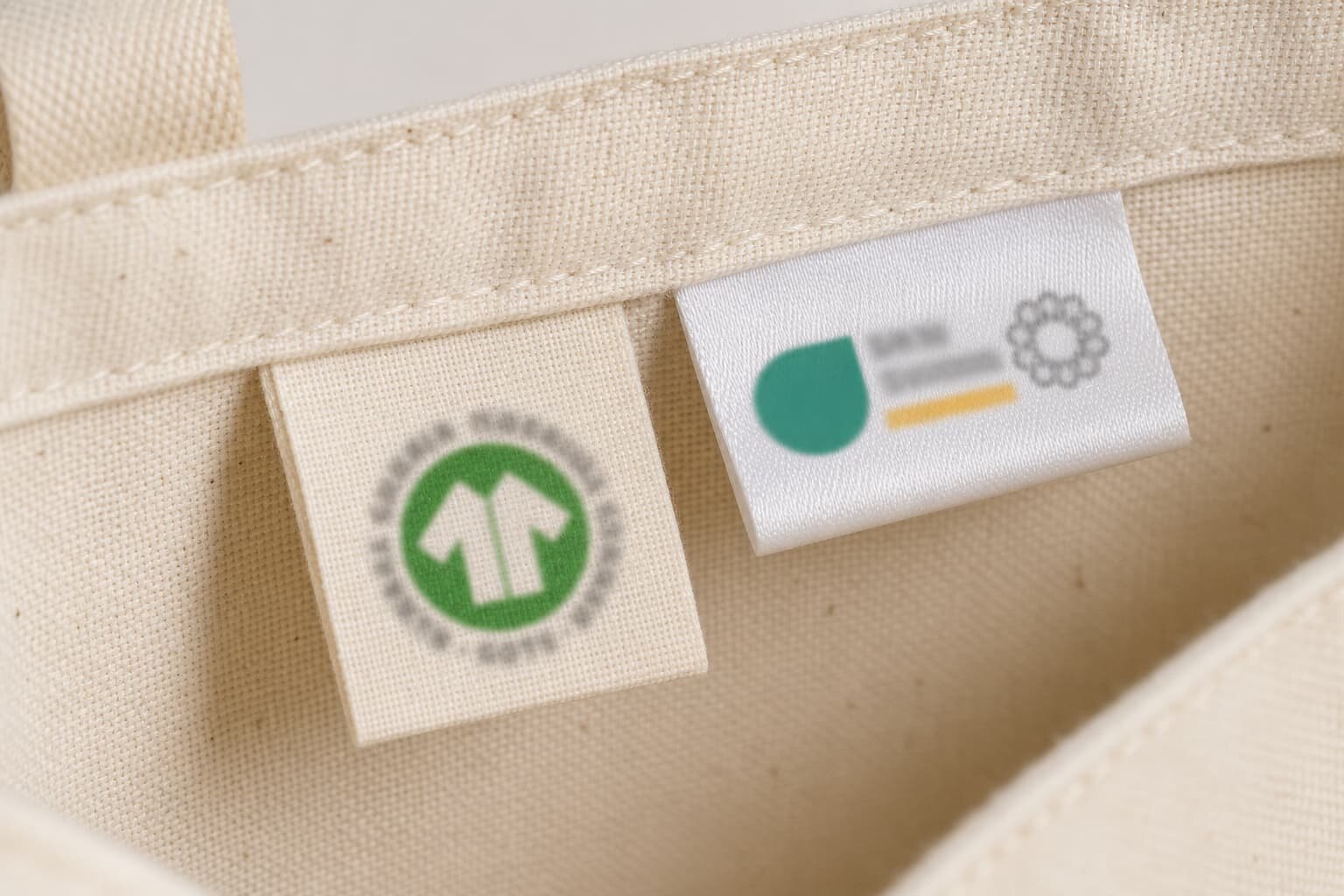
Organic cotton is a compliance decision, not only a material choice. Buyers should decide which claim they need before comparing suppliers. The most recognized chain-of-custody routes for textile products are GOTS, the Global Organic Textile Standard, and OCS, the Organic Content Standard from Textile Exchange. They serve different purposes. GOTS covers organic fibers plus processing criteria and has strict rules for labeling certified finished goods. OCS verifies organic material content and chain-of-custody but does not cover the broader processing criteria that GOTS does.
If the brand wants to sell a tote as a GOTS certified finished product or use GOTS labeling, the finished product and relevant processing stages must be within the certified chain, and the supplier must provide valid scope certificates and transaction certificates according to the certifier's rules. If the brand's claim is closer to made with organic cotton canvas, OCS 100 or OCS Blended may be the more direct content-verification path, depending on composition. A supplier declaration alone may support internal material tracking, but it is usually weaker than certified chain-of-custody for public claims.
Market rules also matter. In the United States, environmental marketing claims should be reviewed against the FTC Green Guides and general truth-in-advertising principles. In the EU and UK, buyers should avoid vague sustainability claims and keep evidence for specific, verifiable statements; product teams should review local green-claims guidance before launch. The sourcing file should show the exact claim wording, the standard used, the certified entity, and whether trims, thread, ink, labels, and packaging are included or excluded.
- Use GOTS when the product and label claim require a certified organic textile product under GOTS rules.
- Use OCS 100 or OCS Blended when the key claim is verified organic content and chain-of-custody.
- Do not write organic tote if only the main fabric is documented; use narrower wording if thread, labels, ink, or trims are outside the claim.
- Collect current scope certificates before production and transaction certificates for the order when the standard and claim route require them.
3. Build the base spec: dimensions, fabric, color, and capacity
The base product specification should remove interpretation. Write finished width, height, gusset depth, handle width, handle drop, seam allowance, measurement tolerance, and target load. If the tote must hold a shoebox, apparel bundle, cosmetics kit, book set, or subscription-box components, include those dimensions. Capacity claims should be modest unless tested, but the supplier needs to understand the use so handle reinforcement and seam finishing are not underbuilt.
Canvas weight is a major cost and performance driver. Suppliers may quote ounces per square yard, GSM, or both. A buyer should not compare an 8 oz flat tote with a 12 oz gusseted tote as equivalent. For parcel inserts and light gifts, 8-10 oz canvas is often commercially practical because it folds compactly and keeps cartons lighter. For paid ecommerce merchandise, 10-12 oz is a common midweight direction. For premium or heavier reusable shoppers, 12-16 oz may be appropriate, but it raises material cost, sewing difficulty, carton size, and freight weight. Treat these as scenario-based starting points, not universal benchmarks.
Color needs the same discipline. Natural undyed organic canvas can vary by lot, with seed flecks, slubs, and shade differences. That can be acceptable and even desirable if the brand approves it. Dyed canvas needs a lab dip or approved swatch before bulk fabric is ordered. If the tote must match ecommerce packaging or campaign artwork, approve a physical swatch under realistic lighting rather than relying only on a screen proof.
- Record fabric as fiber content, certification path, weave, weight in oz and GSM, color, finish, and tolerance.
- Use practical tolerances such as body dimensions plus or minus 10 mm and logo placement plus or minus 3-5 mm only if the supplier confirms capability.
- Include product-fit requirements when the tote is designed around a box, kit, or retail bundle.
- Approve natural-canvas variation limits: slubs, seed flecks, shade range, odor, stains, and hand feel.
4. Specify construction in terms inspectors can verify
Construction is where many quote differences hide. A supplier can lower cost with narrower seam allowance, fewer stitches, lighter thread, a weaker handle attachment, or less trimming. These details are not always visible in a front photo, so the spec needs measurable workmanship requirements.
For many canvas totes, main seams use lockstitch construction with roughly 7-9 stitches per inch, though the right target depends on fabric weight and factory machinery. Inside seams may be overlocked, bound, folded, or otherwise finished. Handle attachment should be named: straight stitch, double-row stitch, bartack, box-x, or another approved pattern. Straight stitching may be enough for a light insert bag. Box-x or bartack reinforcement is more appropriate for reusable shopper loads, provided it is positioned cleanly and does not distort the fabric.
Thread, top hem, handle symmetry, and trimming should be part of approval. Loose threads may look minor, but excessive trimming problems create a cheap unboxing impression and can slow warehouse handling. Request photos of the side seam, bottom seam, top hem, inside finish, and handle reinforcement during sample review. A supplier that can explain its standard construction clearly is easier to manage than one that only sends a unit price.
- Define stitch density, seam allowance, thread color, inside seam finish, top hem, and handle reinforcement.
- Ask for close-up photos with a ruler or stitch counter, not only lifestyle sample photos.
- Set a trimming rule: no open seams, skipped stitches, needle cuts, long loose threads, or unsecured handle ends.
- Tie reinforcement to use: light gift, reusable daily tote, or heavier shopper.
5. Choose decoration around artwork and canvas behavior
Decoration is a production risk area because ink, thread, pressure, heat, and fabric texture interact. Screen printing is usually efficient for simple one- to four-color artwork and repeat programs. Digital printing can handle more complex graphics, but color and coverage on textured canvas need physical approval. Embroidery feels premium but can pucker lighter canvas and may require artwork simplification. Woven or printed labels are durable and consistent, but label edge quality, stitch alignment, and position must be controlled. Heat transfers can work for some designs, yet adhesion and cracking should be checked on the actual canvas.
The buyer should provide vector artwork, Pantone or brand color references, logo dimensions, placement from top edge and side seam, and placement tolerance. Color references are useful, but ink on natural canvas will not match coated paper exactly. The approval target should be the physical strike-off or pre-production sample, not the PDF proof. For ecommerce brands, the decoration should also be tested in the form customers will receive it. If totes are folded tightly into kits, check cracking, ink transfer, and visible crease lines after folding.
Testing does not need to be excessive, but it should match the promise. A washable tote needs wash, shrinkage, and print durability standards. A gift bag that is not marketed as washable still needs rub resistance, curing, and folding checks. Embroidery should be reviewed for puckering, thread tension, backing feel, and loose thread ends. Labels should be checked for edge fray, alignment, and whether the stitch line affects the tote interior.
- For screen print, specify ink type if required, color count, print size, curing, registration, and rub expectation.
- For embroidery, specify thread colors, approximate stitch area, backing, puckering tolerance, and simplification approval.
- For labels, specify woven or printed label, size, fold type, position, stitch color, and edge finish.
- Request a strike-off for new artwork, first-time suppliers, brand-critical colors, textured canvas, or folded packing.
6. Read MOQ and lead time by driver, not as fixed numbers
MOQ and lead time are not universal. A domestic decorator using stock blank totes may accept lower quantities and shorter turnarounds but may have limited certified documentation. An overseas cut-and-sew factory may require higher quantities because fabric is cut to order, labels are custom, and production lines need setup. A certified supply chain can add document steps and limit eligible material sources. Custom dyeing, custom-woven labels, special hangtags, multi-color screen printing, and plastic-free packing can each create separate minimums.
Useful quote ranges should therefore be tied to supplier class and decoration method. Stock natural totes with simple print decoration may be quoted at hundreds of pieces by some suppliers. Fully custom cut-and-sew organic canvas programs often become more economical at around 1,000 pieces and above, with stronger price breaks at larger volumes. Custom dyeing, certified finished-product labeling, or special trims can push MOQ higher because material mills, dye houses, and label suppliers have their own minimums. Buyers should ask which element sets the MOQ instead of treating the supplier's number as arbitrary.
Lead time should also be defined from the correct start point. A quote that says 30 days may mean 30 days after deposit, final artwork, sample approval, and material availability. Sampling can be a few working days when stock fabric and simple artwork are available, but custom dyeing, certification paperwork, or complex decoration adds time. Procurement should request a dated schedule for material booking, sample approval, cutting, printing, sewing, finishing, inspection, packing, and handover.
- Ask suppliers to name the MOQ driver: fabric, dyeing, certification, screens, labels, hangtags, packing, or carton size.
- Quote price breaks around real forecast levels, such as 500, 1,000, 3,000, 5,000, and 10,000 pieces when relevant.
- Separate setup fees from repeat-order unit price so reorder economics are clear.
- Define lead time from the last open item: deposit, artwork, approved sample, fabric readiness, and claim documents.
7. Compare quotes with a costed decision table
A procurement comparison should decide, not just list. Start by grouping suppliers by model: stock blank plus decoration, domestic converter, overseas cut-and-sew factory, certified textile supplier, or trading company managing several stages. Each model can be legitimate, but they carry different evidence, MOQ, and lead-time profiles. The best choice for a fast gift-with-purchase may not be the best choice for a certified retail product.
The quote table should tie every price to a written spec version. Include fabric weight, certification path, finished dimensions, handle reinforcement, logo method, label, packing, inspection, trade term, and documentation. Then add scenario recommendations: lowest acceptable cost, best repeat-order control, best certification coverage, fastest delivery, or best retail finish. This turns the table from a checklist into a sourcing decision.
Watch for hidden exclusions. A low unit price may omit screen fees, PP sample charges, barcode labels, carton marks, transaction certificate fees, hangtags, moisture protection, inspection allowance, or export packing. It may also assume lighter canvas, a different handle method, or no final inspection. Missing costs are not savings; they are unpriced work that will reappear later as change orders, delays, or quality disputes.
- Compare suppliers only against the same spec version and claim wording.
- Show total order cost, not only unit price: setup, samples, labels, packing, inspection, documentation, and freight handover.
- Add a recommendation column: use for fast stock program, retail-quality custom run, certified claim program, or repeat replenishment.
- Flag every quote assumption that affects price, MOQ, lead time, or compliance evidence.
8. Approve samples with a clear production reference
Sampling should match order risk. A blank construction sample can confirm size, handle drop, sewing, and hand feel. A decoration strike-off confirms print, embroidery, or label result. A full pre-production sample should represent the final fabric, dimensions, construction, decoration, label, fold, and packing. For first orders, certified claims, custom dyeing, retail merchandise, or new suppliers, the pre-production sample should become the inspection reference.
Each sample needs a version number and status: rejected, revise and resubmit, approved with deviation, or approved for production. Informal approval creates disputes when bulk goods differ from the buyer's memory. Keep photos of front, back, inside, side seam, bottom seam, handles, logo close-up, label, measurement points, and folded or packed form. If a deviation is accepted, write it into the production file before cutting starts.
Photo-only approval can be reasonable for low-risk repeat orders, but it should still include ruler photos, seam close-ups, decoration close-ups, and carton evidence. For a first order or claim-sensitive product, physical approval is better. When possible, keep one approved sample with the supplier and one with the buyer or inspection partner so final inspection has a concrete reference.
- Use sample names such as blank V1, print strike-off V1, PP sample V2, and approved PP sample.
- Do not release bulk cutting if the approved sample and written spec disagree.
- Document accepted deviations before production, including shade, placement, label position, or fold style.
- Make the approved sample part of the purchase order file, not a separate email trail.
9. Make packing and 3PL readiness part of the product
Ecommerce tote programs often fail at the packing level, not the sewing level. The product spec should define fold method, individual bag or bulk bundle, inner quantity, master carton quantity, carton dimensions, gross weight limit, SKU separation, barcode label, FNSKU if required, and outer marks. If the brand wants plastic-free packing, the carton and storage controls need to prevent moisture, dust, and abrasion.
Carton quantity should match warehouse handling. A 3PL may prefer consistent quantities such as 50 or 100 pieces per carton, but the right number depends on tote size, fabric weight, fold style, and handling limits. Overpacked cartons can crease the print, crush product edges, or exceed safe weights. Underpacked cartons increase freight and storage cost. Request first-packed-carton photos before mass packing so receiving issues can be corrected early.
SKU control deserves explicit rules. If the order includes multiple canvas colors, logo versions, sizes, marketplaces, or regional labels, cartons should not be mixed unless the packing plan allows it. Carton marks must match the purchase order and packing list. Barcode labels should be scanned before shipment, not discovered as unreadable at the warehouse door.
- Define fold method: flat, half-fold, roll, belly band, tissue, individual bag, or bulk bundle.
- Set carton rules: pieces per carton, dimensions, gross weight, no mixed SKUs unless approved, and moisture protection.
- Request first packed carton photos showing fold, inner pack, carton mark, barcode, and gross weight.
- Confirm marketplace labels, FNSKU, barcode format, label size, placement, and scan readability.
10. Set QC, release evidence, and repeat-order controls
Quality control needs enough detail for a factory, inspector, and remote buyer to reach the same decision. For many tote orders, buyers use ANSI/ASQ Z1.4 or ISO 2859-1 general inspection level II with AQL Critical 0, Major 2.5, and Minor 4.0. The purchase order can use different levels if the brand's risk requires it, but the plan should be written before production starts. Define measurement sample size, carton-opening rules, photo evidence, and who can approve shipment.
Defect classes prevent argument. Critical defects include safety, legal, claim, or brand-protection failures: mold, contamination, wrong customer artwork, incorrect organic claim label, missing required certification evidence, or mixed customer goods. Major defects include open seams, weak handles, holes, severe stains, logo cracking, dimensions outside tolerance, missing labels, unreadable barcodes, wrong carton quantity, or wrong SKU mix. Minor defects include appearance issues that do not normally affect use, such as small loose threads, light creasing, or natural slubs within the approved range.
Before balance payment or shipment release, collect a compact evidence pack: approved sample record, final inspection report, measurement table, defect photos, packed carton photos, packing list, carton label proof, barcode proof, claim documents, and deviation approvals. After delivery, record receiving issues and customer feedback. A strong repeat-order file lets procurement challenge unexplained price increases, correct quality drift, and reorder without rebuilding the spec from scratch.
- Hold shipment for critical defects or failed AQL unless the buyer signs a written deviation release.
- Require rework, sorting, replacement, concession approval, or reinspection steps after a failed inspection.
- Keep claim documents with the order file for future marketplace, retailer, or regulator questions.
- Update the spec after receiving: carton damage, barcode issues, shade concerns, print wear, or customer returns.
Specification comparison for buyers
| Brand scenario | Recommended spec direction | Evidence to request before approval | Commercial tradeoff to price clearly |
|---|---|---|---|
| Low-cost ecommerce insert or gift-with-purchase | 8-10 oz natural or stock-color organic cotton canvas; simple flat tote; one-color screen print; bulk bundle packing | Stock fabric swatch, supplier scope certificate, print strike-off, packed bundle photo, carton mark proof | Best for budget and compact cartons, but weaker retail feel and less structure; avoid strong durability claims unless tested |
| Paid branded merchandise or loyalty reward | 10-12 oz canvas, reinforced handles, tighter trimming, physical pre-production sample, color-controlled logo | Fabric weight check, approved PP sample, seam and handle photos, rub test or fold test for print, AQL report | Higher unit cost is justified by lower return risk and better perceived value; quote setup fees separately from repeat price |
| Premium retail tote or heavy reusable shopper | 12-16 oz canvas, gusset if needed, box-x or bartack reinforcement, upgraded label, stronger measurement control | Fabric test report where available, load or handle stress check, embroidery or print strike-off, carton compression or gross weight review | More material and freight cost; heavier fabric may need slower sewing and larger cartons, so confirm production capacity and carton weights |
| Brand using certified organic product claims | Use GOTS certified finished product route where the claim, label, and transaction certificate require it; otherwise use OCS for organic content claims | Current scope certificate for each certified supplier stage, transaction certificate for shipped goods where applicable, approved label wording | Certification scope limits suppliers and can raise MOQ or lead time; marketing language must match the standard and certified entity |
| Brand using made-with organic cotton canvas wording | Use OCS Blended or OCS 100 chain-of-custody for organic content, or GOTS material route if processing and labeling are certified | OCS or GOTS scope certificate, transaction certificate tied to order when available, fabric composition declaration, claim wording approval | More flexible than finished-product certification, but trims, ink, thread, and packing may not be covered; avoid implying the whole tote is certified |
| Amazon, marketplace, or 3PL-bound inventory | Stable carton quantity, barcode/FNSKU label, no mixed SKUs, scan-readable labels, gross weight limit, moisture control | First packed carton photos, barcode scan proof, packing list template, master carton label proof, final inspection packing check | Packing may add cost but prevents receiving delays, relabeling charges, and inventory quarantine |
Buyer checklist before sampling
- Define the commercial role of the tote: order insert, paid merchandise, subscription-box gift, retail carry bag, event kit, or reusable packaging accessory.
- Write the intended organic claim exactly as it will appear on the product page, hangtag, carton, or marketing material.
- Choose the compliance route before quoting: GOTS finished product certification, OCS 100 or OCS Blended content claim, or a limited internal material claim cleared by counsel.
- Record finished width, height, gusset, handle width, handle drop, seam allowance, and measurement tolerance.
- Specify fabric by fiber content, canvas weave, weight in oz and GSM, color standard, shrinkage expectation, hand feel, and accepted natural slub or seed variation.
- Define construction: side seam, bottom gusset, top hem, handle attachment, stitch density, thread color, inside finishing, trimming, and reinforcement method.
- Lock decoration details: method, artwork file type, print size, color reference, placement from edges, curing requirement, and fold/rub durability expectation.
- Ask suppliers to identify MOQ drivers separately: stock fabric, custom dyeing, certified chain-of-custody, screen count, label minimums, packing format, and carton size.
- Compare quotes on the same basis: fabric weight, certification path, construction, logo, label, packing, sample type, testing, inspection, trade term, and quote validity.
- Approve a physical pre-production sample for first orders, certified claims, new decoration, custom dyeing, or retail merchandise.
Factory quote questions to send
- Which organic claim route is included in your quote: GOTS certified finished product, GOTS certified material, OCS 100, OCS Blended, or non-certified supplier declaration?
- Can you provide current scope certificates for the certified entities involved and a transaction certificate for this order if the claim requires it?
- Does the quoted certification coverage apply to fiber, fabric, processing, finished tote, label use, or only your facility scope?
- What exact canvas weight, weave, fiber composition, color, and tolerance are included? Please state oz, GSM, and whether fabric is stock, custom dyed, or made to order.
- What stitch density, seam allowance, thread type, inside seam finish, and handle reinforcement method are included in the quoted construction?
- What finished tolerances do you accept for body size, gusset, handle drop, logo placement, label position, and carton quantity?
- Which decoration method do you recommend for this artwork on this canvas, and what failure modes should we test: rubbing, cracking, bleeding, puckering, or transfer lift?
- What is the MOQ by canvas color, certification route, logo version, print color count, label type, hangtag, packing format, and carton requirement?
- Please split the quote into unit price, sample charge, screen or setup fee, label or tag cost, certified documentation cost if any, packing cost, testing, inspection, and delivery term.
- When does your lead time start, and how many working days are needed for material booking, sample making, revision, bulk production, final inspection, and shipment handover?
Quality-control points to confirm
- Verify claim-sensitive materials before cutting: approved swatch, fabric roll label, fiber composition, canvas weight, color, weave appearance, and certification or transaction evidence required by the claim route.
- Measure finished tote dimensions against the approved spec: width, height, gusset, handle width, handle drop, logo position, label position, and tolerance by SKU.
- Use an agreed sampling plan such as ANSI/ASQ Z1.4 or ISO 2859-1 general inspection level II with AQL Critical 0, Major 2.5, Minor 4.0 unless the purchase order states another plan.
- Classify critical defects as safety, legal, or claim-risk issues: mold, contamination, sharp objects, wrong customer logo, incorrect organic claim label, missing required certification evidence, or mixed customer goods.
- Classify major defects as issues likely to cause returns or receiving failure: open seams, weak handle attachment, severe stains, holes, logo cracking, wrong dimensions beyond tolerance, wrong carton count, missing barcode, or unreadable barcode.
- Classify minor defects as appearance issues within functional use: small loose threads, slight creasing, minor slub variation within approved natural-canvas range, light print shade variation, or small trimming inconsistency.
- Check construction with measurable evidence: stitch-density photo with ruler, seam allowance, box-x or bartack reinforcement, handle symmetry, top hem consistency, thread trimming, and inside seam cleanliness.
- Check decoration quality: color match against approved strike-off, placement tolerance, registration, ink coverage, curing, rub resistance, fold cracking, embroidery tension, label alignment, and edge durability.
- Open cartons during inspection to verify fold style, inner bundle quantity, SKU separation, moisture protection, barcode readability, carton marks, carton count, carton dimensions, and gross weight.
- Record defect quantity, defect class, affected SKU, photos, rework decision, concession approval if any, reinspection requirement, and final shipment release status.