The buying problem: MOQ and price are not one number
When brand owners ask for an organic canvas tote quotation, the first answer they often receive is a unit price and a minimum order quantity. That is not enough for a serious buying decision. A tote bag price is built from fabric availability, fabric weight, color process, cutting loss, sewing difficulty, print setup, packing method, label work, inspection requirements, and carton volume. If two suppliers quote the same bag at very different prices, the difference is often hidden in these details, not in simple factory margin.
The goal is not to force every supplier into the lowest possible price. The goal is to make every supplier quote the same product. A procurement team should be able to see whether the MOQ is driven by organic fabric purchasing, dyeing minimums, print screens, label MOQ, or sewing line efficiency. Once those drivers are visible, you can adjust the specification without damaging the brand presentation.
- Use one written specification sheet for all factories before comparing quotes.
- Ask suppliers to separate fabric MOQ, print MOQ, label MOQ, and final bag MOQ.
- Do not compare a natural 10 oz tote quote with a custom dyed 12 oz quote as if they are the same item.
- Request carton data early, because freight can change the real landed cost more than a small unit price difference.
Start with the canvas specification, not the logo
For organic canvas totes, fabric is the main cost driver and the main quality signal. Many buyers describe a tote as cotton canvas but do not define the fabric weight. A factory then has to guess based on target price, and the quote may be based on a lighter fabric than the brand owner expects. For practical sourcing, state both ounce weight and GSM. Common tote weights are 8 oz around 270 GSM, 10 oz around 340 GSM, 12 oz around 410 GSM, and 14 oz around 475 GSM. Exact conversion varies by weaving and finishing, so the approved swatch matters more than a theoretical number.
Organic cotton also needs careful wording. If you require certified organic material, say what document you expect with the shipment and what claim will appear on the bag, label, or retail packaging. Some buyers only need organic cotton content for internal sourcing policy. Others need transaction documents or specific chain-of-custody support. The factory cannot price those requirements correctly unless they are clear before quotation.
- For event giveaways: consider 8 oz if the bag carries light items and a softer structure is acceptable.
- For retail merchandise: 10 oz to 12 oz is usually the practical middle range.
- For premium store totes: 14 oz or heavier can work, but sewing, printing, and freight costs rise.
- For custom dyed fabric: expect higher MOQ than natural canvas due to dye lot and color matching requirements.
How MOQ usually works for organic canvas tote orders
MOQ is rarely only a sewing line number. A simple natural organic canvas tote with one screen printed logo can often be quoted at a lower MOQ because the mill or factory may have fabric available. A custom color tote, heavy fabric tote, or multi-SKU retail program has different constraints. Dyeing one Pantone color may require a minimum fabric quantity. Woven labels may have their own MOQ. Hangtags, barcode stickers, and individual bags add more setup and administration.
For brand owners, the useful question is not only what is your MOQ. Ask what changes if the order is 300, 500, 1,000, 3,000, or 5,000 pieces. A factory sales engineer can often explain which cost drops at each level. Print setup is spread over more pieces. Fabric cutting becomes more efficient. Carton packing is planned more cleanly. However, if the order requires custom weaving or dyeing, the MOQ may not reduce just because the buyer accepts a higher unit price.
- Natural fabric with standard size usually has the most flexible MOQ.
- Custom dyed organic canvas can be limited by dye house minimums and lab dip approval time.
- Multiple artwork versions may create separate print MOQs even when bag construction is identical.
- Retail labeling and barcode work can make very small orders inefficient for both buyer and factory.
Price breakdown buyers should request
A reliable quote should show what is included. At minimum, ask whether the price includes fabric, cutting, sewing, printing, labels, normal bulk packing, export carton, and standard quality inspection. Then ask which items are extra. Common extras include screen charges, sample charges, color matching, lab dip, woven label setup, hangtag printing, individual packing, carton marks, testing, inspection company support, and freight to port.
This breakdown helps buyers avoid the classic low quote problem. A low unit price may exclude the print setup, use lighter fabric, omit individual packing, or assume no special label. By the time the purchase order is ready, the real price has moved. A clean quote may look higher at first, but it is easier to approve internally because fewer costs appear later.
- Ask for unit price by quantity tier, for example 500, 1,000, 3,000, and 5,000 pieces.
- Ask for one-time charges separately from repeat-order unit cost.
- Ask whether organic fabric documentation is included or charged separately.
- Ask for estimated carton quantity and gross weight so logistics can calculate landed cost.
- Ask the supplier to identify the biggest cost-saving change if your target price is not met.
Print method choices that affect price and rejection risk
Screen printing is usually the safest and most economical method for solid logos on canvas tote bags. Water-based ink gives a softer hand feel and fits the natural look many organic canvas buyers want. Plastisol can give stronger opacity on some dark fabrics but may not match the brand story or compliance preference. For multi-color artwork, every color can mean extra screens, setup, alignment risk, and longer production time.
Digital print, DTF transfer, and heat transfer can be useful for gradients, low quantities, or artwork with many colors. The tradeoff is hand feel, edge appearance, and durability on textured canvas. Canvas is not a flat coated paper surface. Ink can spread slightly into the weave, and heavy texture can break fine lines. Always approve print on the exact production fabric, not on a smooth cotton substitute.
- For one-color logos: request water-based screen print sample and rub check.
- For large solid print areas: ask about ink penetration, cracking risk, and drying time.
- For dark canvas: check opacity and whether an underbase is required.
- For fine text: confirm minimum line thickness after printing on the selected weave.
- For retail programs: keep print position tolerance realistic, especially near seams and gussets.
Construction details that should be locked before quoting
A tote bag looks simple, but small construction differences change cost and performance. The RFQ should specify width, height, gusset, handle drop, handle width, seam type, reinforcement, and whether the bag is flat packed or shaped with a boxed bottom. A 38 x 42 cm flat tote is not the same as a 38 x 42 x 10 cm gusseted tote. The gusset uses more fabric, adds sewing steps, increases carton volume, and changes how the print sits when the bag is filled.
Handle construction is especially important. A budget tote may have handles inserted into the top hem with simple stitching. A stronger retail tote should have box stitch, cross stitch, or bartack reinforcement. If the bag is intended for books, groceries, bottles, or event kits, request a load test standard or at least an internal pull test method. This should be agreed before production, not after a handle failure complaint.
- State handle drop, not only handle length, because buyers care about shoulder fit.
- Confirm whether handles use the same canvas or a lighter cotton webbing.
- Use reinforced stitching for heavy contents or premium retail positioning.
- Check bottom corner sewing on gusseted bags, where stress and shape defects often appear.
- Decide whether inner seams need overlock finishing for a cleaner retail appearance.
Sample approval: what the sample must prove
A sample is not only a photo confirmation. It should prove that the factory can combine your selected organic canvas, bag dimensions, sewing method, print process, label, and packing requirement into one repeatable product. A sample made from substitute fabric or a different print method is useful only for rough shape review. It should not be treated as production approval.
For a brand owner, the sample review should be documented with acceptance notes. Measure the bag flat and opened. Check handle drop. Check print size and position from the top seam and side seam. Rub the print with a white cloth. Look for odor, stains, loose threads, and uneven seams. If the sample is approved with comments, those comments must appear in the purchase order or pre-production approval sheet.
- Approve fabric swatch before approving bulk material purchase.
- Keep one signed or sealed sample at the factory and one with the buyer.
- Photograph print placement with a ruler for production reference.
- Check whether the packed sample fits the intended retail or shipping carton plan.
- Do not approve bulk production from a sample that uses different fabric weight or different ink.
Packing decisions that change cost and warehouse performance
Packing is often treated as the last detail, but it affects unit cost, carton volume, inspection speed, and buyer warehouse handling. Bulk packing is usually the most economical: bags are folded and packed by a fixed quantity per export carton. This works well for distributors, corporate buyers, and brands that will repack locally. Individual packing is better for ecommerce, retail stores, clean warehouse picking, or kits where each tote must remain clean until the end user receives it.
If the order uses individual recycled polybags, paper bands, belly bands, hangtags, barcode stickers, or size labels, include these details in the first RFQ. These items require artwork approval and sometimes separate supplier lead time. Carton marks should also be confirmed early, especially for importers shipping to a 3PL, retailer DC, or multiple destination warehouses.
- Ask for pieces per carton, carton size, gross weight, and net weight.
- Confirm folding method because deep creases can affect retail presentation.
- Set maximum carton weight if warehouse handling rules require it.
- Use carton marks that match purchase order, SKU, color, quantity, and destination.
- For retail cartons, ask whether inner moisture protection is needed for sea shipment.
Lead time planning without unrealistic promises
A practical production schedule has separate stages: artwork confirmation, fabric confirmation, sample making, sample freight, sample approval, material booking, cutting, printing, curing, sewing, trimming, inspection, packing, and export handling. When buyers ask only for delivery time, the answer can be misleading. A supplier may quote production time after sample approval, while the buyer assumes it includes sampling and artwork revisions.
For organic canvas totes, fabric availability is the main schedule variable. Natural fabric in a common weight is usually easier to plan than custom dyed organic canvas or a special heavy weight. Printing can also become a bottleneck if the design has large ink coverage or multiple colors. Build a calendar from the required in-hands date backward, and show the factory the fixed dates for sample approval, inspection booking, and vessel or air shipment.
- Ask for sample lead time separately from bulk production lead time.
- Confirm whether lead time starts after deposit, artwork approval, sample approval, or material arrival.
- Add time for lab dip approval if the fabric is custom dyed.
- Add time for buyer-side barcode, hangtag, or retail packaging approval.
- Do not book a launch date based only on an unapproved sample photo.
How to compare supplier quotes fairly
A fair comparison requires a quote matrix, not a pile of email prices. Put each supplier on the same rows: fabric weight, dimensions, gusset, handle reinforcement, print method, number of print colors, labels, packing, sample charge, setup charge, MOQ, lead time, carton data, payment term, and quote validity. Any blank cell is a risk. Any supplier unwilling to define the basics may not be ready for a brand program.
Do not automatically choose the lowest unit price. Choose the quote that matches the approved product and gives you predictable landed cost. A slightly higher factory price may be cheaper after fewer defects, better packing, correct carton weight, fewer rework delays, and a cleaner inspection result. The best quote is the one your procurement, marketing, logistics, and quality teams can all understand before the purchase order is issued.
- Normalize all prices to the same Incoterm before internal comparison.
- Compare total order value including setup, labels, packing, and sample costs.
- Compare carton volume and gross weight for freight impact.
- Mark any assumption made by the supplier and confirm it in writing.
- Keep the approved quote attached to the purchase order to avoid specification drift.
Specification comparison for buyers
| Spec decision | Recommended option | When it fits | Buyer risk to check |
|---|---|---|---|
| Fabric weight | 10 oz to 12 oz organic cotton canvas, about 340-410 GSM | Retail merchandise, brand campaigns, reusable shopping, subscription packaging | Confirm whether quoted weight is per square yard or GSM, and request fabric swatch after washing or finishing |
| Lighter budget option | 8 oz canvas, about 270 GSM | Events, giveaways, light retail goods, mailer inserts | Bag may collapse easily, show more transparency, and feel less premium than product photos suggest |
| Heavy premium option | 14 oz to 16 oz canvas, about 475-540 GSM | Boutique retail, books, wine accessories, premium brand store totes | Higher sewing difficulty, higher freight weight, larger MOQ pressure, and longer drying time for prints |
| Logo printing | Water-based screen print for solid one to four color logos | Most brand owners needing a clean natural-hand print on organic cotton | Ask for ink adhesion and rub check, because under-cured water-based ink can fade or transfer |
| Full color artwork | DTF transfer or digital print after sample approval | Small runs, gradients, photo artwork, online merchandise drops | Hand feel, wash resistance, and edge halo must be approved on the exact canvas color |
| Construction | Boxed bottom or flat tote with reinforced cross-stitch handles | Flat tote for low cost and packing efficiency; boxed bottom for retail use and better loading | Handle length, seam allowance, and load test are often missing from cheap quotes |
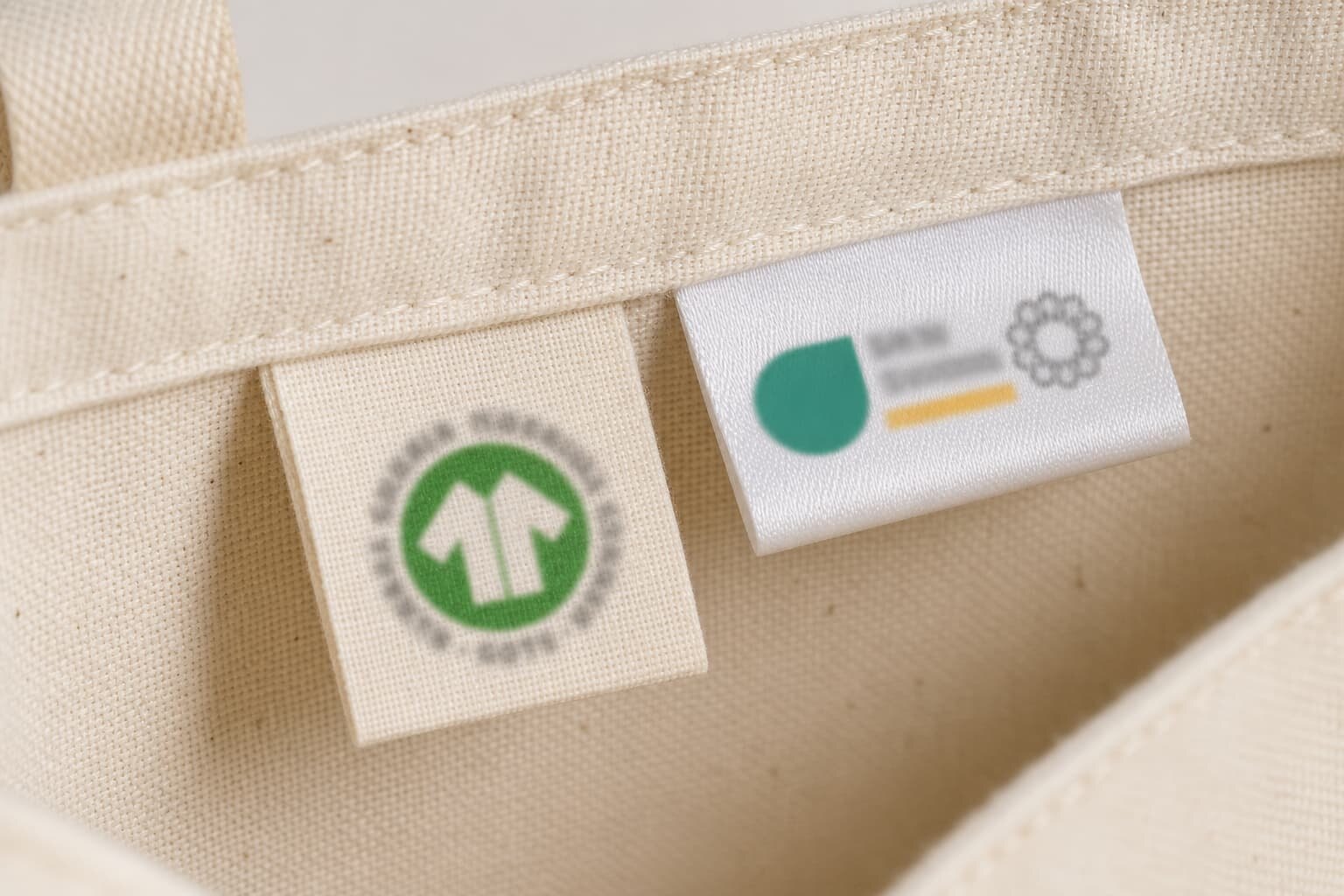
| Labeling | Woven side label or inside care label with organic claim handled carefully | Retail brands and distributors needing SKU identity and compliance marks | Do not print certification claims unless the chain of custody and wording are confirmed |
| Packing | Bulk pack by carton with optional individual recycled polybag or paper band | Bulk pack for B2B distribution; individual pack for retail, ecommerce, or clean warehouse handling | Individual packing adds labor, material cost, carton volume, and inspection points |
| MOQ setup | MOQ by greige fabric, dyed fabric, print setup, and sewing line efficiency | Brand owners comparing multiple suppliers and colorways | A quoted MOQ of 500 pieces may only apply to natural color with existing fabric, not custom dye or heavy canvas |
Buyer checklist before sampling
- Define final bag size in width x height x gusset, not only approximate capacity.
- Specify fabric as organic cotton canvas with target weight in oz and GSM, and ask whether the weight is before or after finishing.
- State natural, bleached, dyed, or custom Pantone fabric color, because MOQ changes heavily by color process.
- Confirm handle length, handle width, handle fabric weight, and handle reinforcement method.
- Decide flat tote, bottom gusset, side gusset, or boxed bottom before comparing quotes.
- Send vector artwork with print size, print position, number of colors, and Pantone references.
- Ask for the recommended print method based on canvas color, ink coverage, and expected use.
- Request a pre-production sample using the same fabric, print, thread, label, and packing as bulk order.
- Confirm carton packing quantity, carton dimensions, gross weight, and whether cartons need shipping marks.
- Ask for lead time split by sample time, material booking, bulk production, inspection, and packing.
Factory quote questions to send
- Is the quoted fabric in stock organic canvas or newly woven fabric, and what certificate documents can be provided with the shipment?
- What is the exact fabric weight in oz and GSM, and is it measured before washing, after finishing, or on the final bag?
- What MOQ applies to natural fabric, dyed fabric, each print design, each bag size, and each logo colorway?
- Which print method are you quoting, and what are the setup charges, print limitations, curing requirements, and wash or rub test expectations?
- Can you quote the same bag in 8 oz, 10 oz, 12 oz, and 14 oz canvas so we can compare unit cost and carton weight?
- What handle reinforcement is included in the price: X-stitch, box stitch, bartack, or simple top seam insertion?
- Are woven labels, care labels, hangtags, barcode stickers, and individual packing included or listed separately?
- What are the sample charges, sample lead time, and conditions for refunding sample cost after bulk order?
- What is the expected bulk lead time after sample approval and deposit, and what material or printing steps could delay it?
- What carton quantity, carton size, gross weight, and loading estimate are used in your quotation?
Quality-control points to confirm
- Fabric weight check against approved swatch, with tolerance agreed before production.
- Bag dimensions measured flat and expanded, including gusset depth and handle drop.
- Print color, print size, print position, edge sharpness, curing, rub resistance, and ink penetration checked against approved sample.
- Seam strength checked at handle joints, side seams, bottom corners, and gusset fold points.
- Thread trimming, needle holes, skipped stitches, and seam waviness checked under normal viewing distance.
- Stain, dust, oil mark, odor, mildew, and color contamination checks before packing.
- Label position, label wording, barcode sticker, hangtag, and care instruction verified by SKU.
- Packing method, pieces per carton, inner bag requirement, carton marks, carton strength, and carton weight confirmed before shipment.