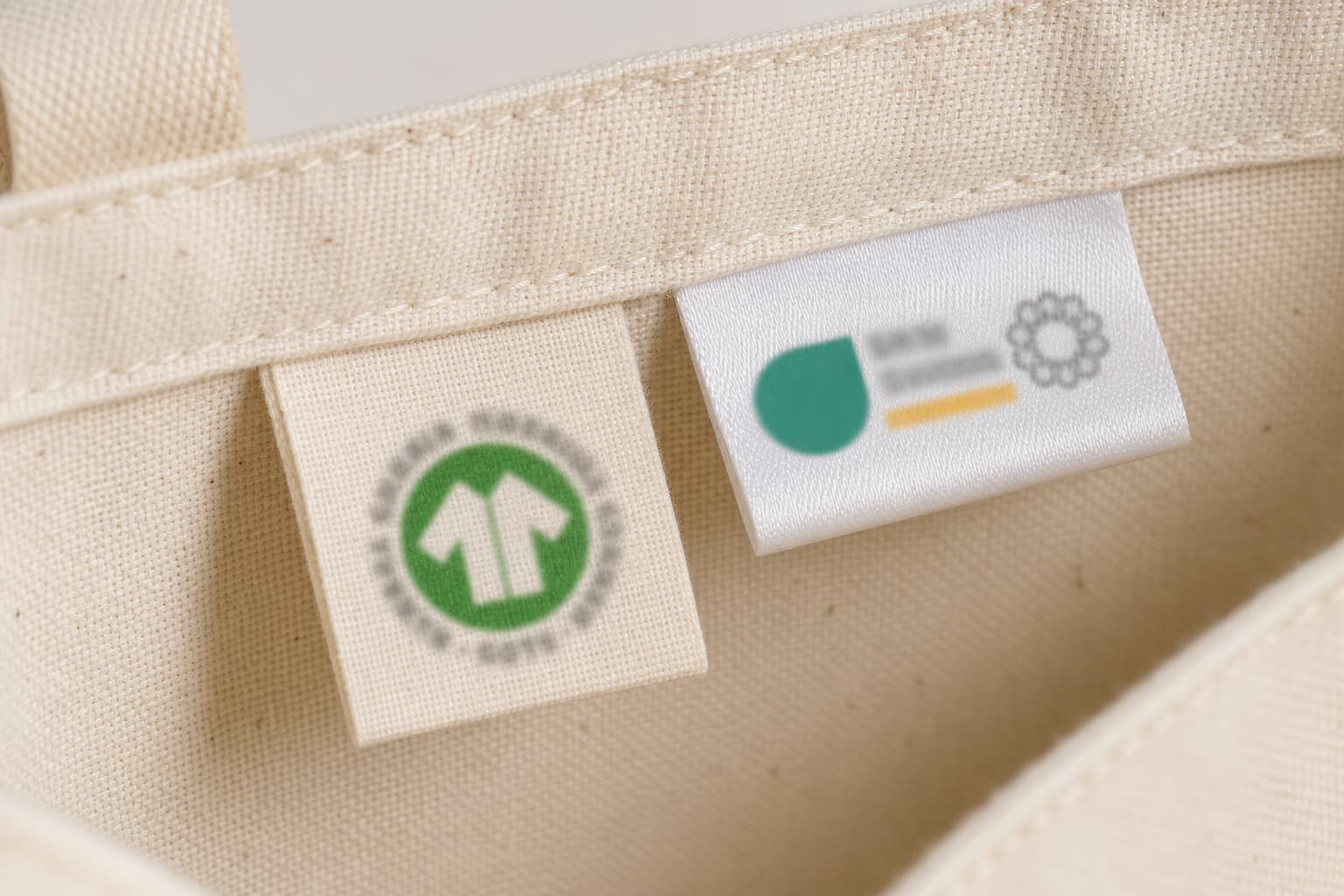
Start With the Event Job, Not the Bag
The fastest way to miss the right quote is to ask for a generic organic canvas tote and hope the factory fills in the blanks. Event buyers usually need a bag that is simple to produce, easy to distribute, and strong enough for the actual items going inside it. A tote for a trade show badge kit is not the same as a tote for a retail gift-with-purchase program, and the factory will price them differently even when the size looks similar.
Before you send an RFQ, define the job in plain terms: what the tote carries, how long it is expected to last, whether the bag is handed out flat or pre-packed, and whether the brand wants premium hand-feel or the lowest workable cost. That context determines fabric weight, handle construction, print method, carton load, and even how many cartons fit on a pallet. It also gives you a cleaner way to compare quotes, because you are comparing the same use case instead of several vague versions of a tote.
- State the event type, expected fill weight, and whether the tote is a giveaway or resale item.
- Specify whether the buyer values appearance, durability, or freight efficiency most.
- Note if the tote must hold inserts, brochures, bottles, sample packs, or apparel.
Choose the Right Fabric Weight and Build
Organic canvas tote pricing starts with the cloth. For most event programs, 8 oz to 10 oz organic canvas is the practical range. Lighter fabric reduces cost and shipping weight, but it can feel limp when the tote is loaded with brochures or product samples. Heavier fabric gives better shape and a more retail-ready hand, yet it adds material cost and can change how the bag folds, prints, and packs. If the tote is going into a premium event kit, you may want the body to hold form. If it is a high-volume conference handout, you may care more about keeping the landed cost under control.
Do not stop at fabric weight alone. Ask how the canvas is woven, whether the fabric is bleached or natural, and what tolerance the mill allows. A factory should also confirm seam allowance, stitch density, and reinforcement at the handle join. For event buyers, the common failure is not the panel tearing in half; it is the handle pull-out after repeated use or a bottom seam opening when the tote is overfilled. Those are construction details, not design details, and they belong in the quote.
- 8 oz to 10 oz works for most event totes; heavier builds are better for retail or reuse programs.
- Ask whether the quote uses ounces, GSM, or both, and make sure the units are not mixed loosely.
- Request reinforcement details at handle joins, bottom seams, and side gussets if the tote will carry weight.
Print Method Controls Both Cost and Appearance
The print method is often the place where buyers unintentionally compare unlike quotes. A simple one-color screen print can be efficient for large event runs and bold logos, but it is not the same as a multi-color process image or a full-panel decoration. Heat transfer can be useful for fine detail or lower-volume programs, while embroidery or woven labels may suit a more premium tote, though they add labor and can affect the inside feel of the bag. The right method depends on the artwork, quantity, and how exact the color match needs to be.
For organic canvas, keep the print brief and production-friendly. Natural canvas can show slight shade variation from batch to batch, so a buyer should ask whether the factory is quoting against a Pantone target, a visual standard, or a production strike-off. If the artwork is a logo with thin lines or tight type, confirm minimum line thickness and negative space. Ask for the print placement in millimeters from the top edge or side seam. A vague note like “front print” leaves too much room for a surprise later.
- Use screen print for simple logos and larger quantities where unit cost matters.
- Use transfer or embroidery when art detail, premium presentation, or small quantity justifies the extra cost.
- Ask for a strike-off or printed sample before mass production whenever color accuracy matters.
Understand MOQ Logic Before You Compare Prices
MOQ is rarely just a number pulled from the air. For organic canvas totes, it usually shifts with fabric source, print colors, labor steps, and carton setup. A factory may price one MOQ for a blank tote, a higher MOQ for one-color print, and a different threshold again for multi-color decoration or custom labels. If you change the tote size, handle length, or add a pocket, you may trigger a new cutting layout and a new minimum. That is normal. What matters is that the supplier explains the logic clearly.
Procurement teams should ask for the MOQ by spec line, not as a single blanket figure. Separate the quote into fabric, cutting and sewing, print, packaging, and accessories if needed. That lets you see where a supplier is protecting margin and where the real production constraint sits. If one factory offers a low MOQ but only with a much lighter fabric or simpler print, you are not comparing equivalent offers. You are comparing different products wearing the same name.
- Ask for MOQ by construction step, not only by finished bag name.
- Check whether MOQ changes with fabric color, print colors, or label type.
- Treat low MOQ offers carefully if the factory is vague on fabric source or packing method.
Use a Simple Cost Breakdown to Spot Hidden Gaps
A useful quote should let you see where the money goes. For an organic canvas tote, the main cost buckets are fabric, cutting and sewing, printing, trims or labels, packing, and inland or export handling. If the supplier gives you only a single total, ask them to break it out. You do not need a formal cost sheet with every needle and thread, but you do need enough detail to compare like with like. That is especially important when one factory includes a custom woven label or polybag and another leaves it out.
Event buyers often lose money in the small print. One quote may exclude inner packing, another may assume bulk packing when you need individual bagging, and a third may include shipping cartons that are too large for your storage plan. Ask whether the price includes pre-production sample making, lab dip or color approval if relevant, carton marking, and export documents. When a supplier resists that level of detail, the final number tends to move later in the project. A quote that is clear up front is usually easier to manage in production.
- Request separate pricing for bag body, decoration, label, and packing.
- Check whether inner polybags, tissue, desiccant, or inserts are included.
- Ask for carton dimensions and units per carton, because freight can change the landed cost materially.
Write the Spec Sheet the Factory Can Actually Build
A strong RFQ does not need to be long, but it must be specific. The factory needs finished size, fabric weight, handle style, print size, print location, and packing instructions. If you want the tote to fit a welcome kit or a bottle set, give the internal dimensions or the product mix the tote must hold. If you are comparing multiple suppliers, use the same spec sheet for each one. This avoids the quiet drift that happens when every quote responds to a slightly different request.
Do not leave the construction open-ended. Say whether the tote is open top or has a zipper, whether it needs a gusset, whether the handles should be self-fabric, cotton webbing, or another material, and whether the bag should be folded a certain way before packing. For organic canvas, the most practical spec sheet is one that a sample room can interpret without calling you back four times. That saves time, but more important, it reduces the chance that the final bulk order reflects a factory assumption instead of your requirement.
- Include finished width, height, and gusset depth in both inches and millimeters if possible.
- Name the artwork file type, print colors, and exact print area.
- State packing format, carton labeling, and whether each tote needs a polybag or insert.
Approve Samples Like a Production Buyer, Not a Shopper
A sample should answer specific production questions, not just look nice on a desk. For an organic canvas tote, check the fabric weight, the hand-feel of the canvas, the accuracy of the size, the handle length, the print registration, and the way the seams sit when the bag is loaded. If the sample is a print strike-off, check color density on natural cloth, because canvas often absorbs ink differently than paper proofs or digital mockups. A tote can look fine flat and still behave badly once you put weight into it.
Make the sample process match the risk of the order. For a simple event run, a blank sample plus a printed strike-off may be enough. For a higher-value retail program, ask for a pre-production sample built from the approved materials and decoration method. Keep one approved sample and mark it clearly with date, version, and sign-off notes. Then hold the factory to that reference during mass production. A tidy sample approval step is one of the cheapest ways to avoid an expensive remake.
- Check the tote under load, not only empty on a table.
- Measure size, handle drop, and gusset against the approved spec.
- Inspect print edges, stitch finish, and any label placement before signing off.
Packing and Fulfillment Matter More Than Many Teams Expect
A tote bag may look simple, but packing can change both labor cost and delivery performance. If the order is for an event, ask whether the bags need to be flat-packed, folded with tissue, individually polybagged, or packed in master cartons only. Each choice affects how many labor minutes go into the order and how much volume the cartons take up in shipping. Some buyers want the tote to arrive retail-ready; others want the most cube-efficient packing possible because they will repack them later anyway.
Tell the factory how the cartons will be handled after arrival. If the goods are going to a 3PL, distribution center, or show organizer, carton labels and pallet marks need to match that receiving workflow. Ask for carton size, carton weight, and whether the supplier can keep the total gross weight inside your receiving limit. For event buyers, a clean packing spec often prevents the most annoying problem in the chain: the bags are technically correct, but the cartons are awkward to move, store, or split across venues.
- Choose bulk packing only when your receiving team can manage the repacking step.
- Ask for carton dimensions before approving freight or warehouse allocation.
- Confirm whether palletization, barcodes, or outer carton marks are required.
Plan Lead Time Around Sampling, Not Just Sewing
Lead time should be read as a project timeline, not a single number. Organic canvas tote programs usually move through sampling, sample revision, material booking, production, inspection, and packing. If the artwork is simple and the fabric is in stock, sewing may be fast. But if the supplier must source a specific organic canvas weight, wait on print approval, or revise the sample after comments, the calendar stretches quickly. The real risk is not the sewing line; it is late clarity from the buyer side.
When you ask for lead time, ask for two versions: one from order confirmation to sample approval, and one from sample approval to shipment readiness. That split shows where the supplier can move and where the bottleneck is. It also helps you plan event deadlines more honestly. If your event has a hard receiving date, build in a buffer for inspection, repacking, and transit. A tote program that arrives technically on time but too late for kitting is still a miss.
- Separate sample timeline from bulk production timeline.
- Ask what happens to the schedule if artwork changes after sampling.
- Leave room for inspection and shipment booking, not only sewing time.
Compare Quotes the Way a Sourcing Team Should
Once the quotes arrive, compare them by spec line, not by headline unit price. Check fabric weight, print method, MOQ, sample type, packing, carton data, and lead time side by side. If two suppliers are close in price but one offers better control over construction and packing, that may be the better choice for an event program with little tolerance for mistakes. If a quote is much lower, ask which assumption changed. Usually it is one of three things: lighter fabric, simpler decoration, or less labor in packing.
A smart buyer also looks for omissions. Did the factory include pre-production sampling? Did they state the fabric weight in a way that matches the sample? Did they note what happens if the print area expands? Did they tell you whether the tote is sewn with reinforced handle attachment? Those details tell you whether the quote is ready for procurement or still needs cleanup. The goal is not to buy the cheapest tote. The goal is to buy the tote that will arrive as specified and still make sense when you add freight, duty, warehousing, and event handling.
- Normalize every quote to the same tote size, fabric weight, and print method.
- Flag missing line items before you compare prices.
- Use landed cost and production risk together, not price alone, to choose a supplier.
Specification comparison for buyers
| Spec decision | Recommended option | When it fits | Buyer risk to check |
|---|---|---|---|
| Fabric weight | 8 oz to 10 oz organic canvas | General event giveaways, conferences, retail resale programs | Too light can sag with catalogs or bottles; too heavy raises cost and freight |
| Handle build | Self-fabric handles with reinforced X or box stitch | Standard tote use, moderate fill weight, short lead times | Check handle length, drop, and stitch density for load failure |
| Print method | 1 to 2 color screen print or transfer for small runs | Simple logos, high-volume event orders, tight budgets | Confirm ink hand-feel, curing, and color match on natural canvas |
| Closure and extras | Open top unless function requires zipper, pocket, or gusset upgrade | Fast-turn promotional orders and broad event distribution | Each add-on changes MOQ, labor, and packing count; ask for separate pricing |
Buyer checklist before sampling
- Confirm target use case: event giveaway, resale, VIP gift, conference kit, or retail pack-in.
- State exact fabric weight in oz or GSM and whether the cotton must be certified organic by your own standard.
- Send logo art in vector format and specify print size, placement, and number of colors.
- Define finished size, handle length, gusset depth, and any pocket or closure requirements.
- Ask for a sample based on the final construction, not a generic tote.
- Request packing method, carton count, and carton dimensions before comparing landed cost.
- Ask how the factory calculates MOQ by print color, fabric color, and accessory changes.
- Build time into the plan for sample approval, production, inspection, and export booking.
Factory quote questions to send
- What fabric weight do you recommend for this event use, and is the quote based on finished GSM or greige fabric weight?
- Is the tote made from organic cotton canvas throughout, and what details define that claim in production?
- What are the finished dimensions, handle length, and seam allowance used in the quote?
- Which print method is included, how many colors are priced, and what is the surcharge for extra colors or oversized art?
- What is the MOQ for this exact spec, and how does it change if we change fabric color, print area, or add a pocket?
- What sample will you provide before mass production: blank sample, print strike-off, or pre-production sample?
- How are units packed inside each carton, and what carton dimensions and gross weight should we expect?
- What lead time applies after sample approval, and what factors could extend it?
Quality-control points to confirm
- Fabric weight matches the approved spec and feels consistent across rolls.
- Seams are straight, reinforced, and free of skipped stitches or loose thread tails.
- Handle attachment strength is checked at the stress points, not only by visual review.
- Print registration, ink opacity, and edge sharpness match the approved sample.
- Bag dimensions, gusset depth, and handle drop stay within agreed tolerance.
- No staining, oil marks, broken yarns, or color inconsistency appear on front panels.
- Carton count, label data, and inner packing match the approved shipping instruction.
- Pre-production sample and top-of-production sample are retained for comparison.