1. The inspection problem ecommerce brands often underestimate
An organic canvas tote for an ecommerce brand is not just a bag. It may be the first physical brand item a customer touches after checkout, a reusable product sold as merchandise, or a packaging component placed inside thousands of fulfillment orders. If the tote arrives with uneven printing, weak handles, fabric stains, or inconsistent folding, the problem moves from the factory to your warehouse, then to customer service, reviews, and replacement cost.
The buying mistake is usually not that the supplier cannot make the bag. The mistake is that the RFQ and approval sample do not define what must be inspected. Words like organic, durable, heavy canvas, and premium are not inspection standards. A factory can quote three different constructions under the same description, and each one may look acceptable in a photo. Procurement teams need measurable requirements before comparing prices.
- Define the tote’s commercial role before requesting price: gift-with-purchase, paid retail item, subscription insert, event giveaway, or shipping accessory.
- Convert brand expectations into measurable specifications: GSM, dimensions, print tolerance, seam type, handle strength, and packing method.
- Treat the approved sample as a control sample, not a design suggestion. Bulk inspection should compare production against it.
2. Start inspection planning with the fabric weight, not the logo
For organic canvas tote bags, fabric weight is one of the first cost and quality drivers. Buyers often describe the product as cotton canvas without specifying weight. That leaves the factory to choose a cloth that fits the target price. A 230 GSM canvas and a 360 GSM canvas can both be called canvas, but the hand feel, print result, folding behavior, and freight cost are very different.
For ecommerce use, 10 oz or around 280-300 GSM organic canvas is a practical middle range. It feels substantial enough for a branded tote, folds reasonably for warehouse packing, and supports most screen printed logos. If the tote will be sold as a premium product or carry heavier goods, 12 oz or around 340-360 GSM may be better. If the bag is a low-cost insert, 8 oz or around 230-250 GSM can work, but buyers should not position it as a premium reusable tote.
- Ask for both oz and GSM in the quote, because suppliers in different markets may use either measurement.
- Confirm GSM tolerance, for example whether the factory controls fabric within an agreed range rather than a single nominal number.
- Check whether natural unbleached canvas has visible cotton seed flecks. This can support an organic look, but it must be accepted by the brand team before bulk.
- If the tote must fold into a mailer or subscription carton, test the folded thickness during sampling, not after mass production.
3. Organic claim control: what procurement should verify before artwork approval
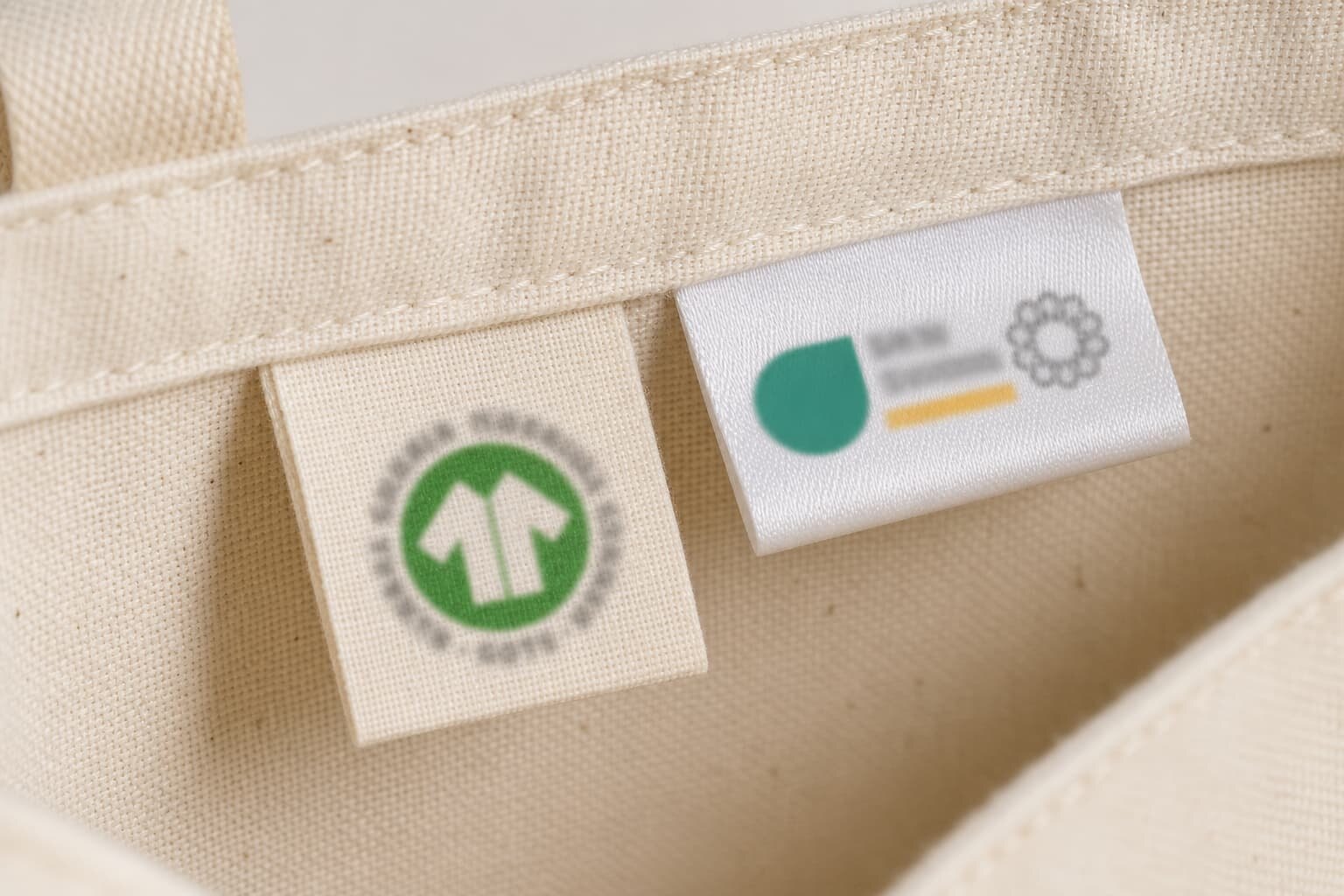
Organic canvas is a material claim, and different buyers need different levels of documentation. Some ecommerce brands only need a product made from organic cotton fabric. Others need chain-of-custody documentation for retail labeling, marketplace compliance, or internal sustainability reporting. The quote should separate the physical tote specification from the documentation requirement because the documentation route can affect MOQ, fabric sourcing time, and cost.
Avoid printing strong organic claims on the bag before your compliance team confirms what evidence is required in your sales market. A supplier may be able to buy organic cotton canvas, but that is not the same as guaranteeing that every claim on your website, hangtag, or product label is compliant. Procurement should ask for the available support documents early and keep them linked to the purchase order.
- Clarify whether you need organic cotton fabric only, certified production handling, transaction documentation, or branded labeling support.
- Do not assume recycled, natural, unbleached, and organic mean the same thing. They are separate claims.
- Ask whether the supplier’s quote includes certified fabric sourcing time or uses stock material.
- Keep the approved material reference, supplier declaration, and any certification documents in the same folder as the final artwork and PO.
4. Print method inspection: match the artwork to the canvas surface
The print method should be chosen after reviewing the artwork, fabric texture, color count, order quantity, and end use. For most ecommerce brand logos with one to three solid colors, water-based screen printing is a strong option on organic canvas. It gives a softer hand feel and fits the natural material position. However, natural canvas is not a smooth white paper surface. Slight texture break, lower contrast, or small color variation may be visible.
Digital pigment printing can be useful for detailed illustrations, seasonal ecommerce drops, or smaller batches with multiple artworks. It can reduce screen setup complexity, but it needs careful testing for rub fastness, color sharpness, and ink behavior on the chosen canvas. Heat transfer may give bright detail but can feel less aligned with an organic canvas story if the transfer film is obvious. Embroidery can work for premium bags, but it adds weight, cost, and risk of puckering on lighter canvas.
- Require a print strike-off on actual fabric before bulk printing, especially for natural canvas or brand-critical colors.
- Provide vector artwork, Pantone reference, print size, print location from bag edges, and acceptable color tolerance.
- Inspect for pinholes, ink bleeding, registration shift, smudges, uneven coverage, and print cracking after folding.
- If bags are packed tightly, confirm the ink is fully cured before packing to prevent blocking or transfer marks.
5. Construction details that decide whether the tote survives real use
Handle construction is where many cheap tote quotes hide the difference. A tote may look fine in a product photo, but fail when loaded with books, groceries, skincare kits, or event materials. For ecommerce brands, the handle joint is a high-risk area because customers use the bag outside the original purchase context. Cross-stitch or box-and-cross reinforcement is usually stronger than a simple straight stitch, but the correct choice depends on fabric weight and handle design.
Side seams, bottom seams, and gusset corners also need clear inspection standards. Overlock seams are common for cotton canvas totes, while binding or French seams may be used for a cleaner finish or heavier positioning. Buyers should check seam allowance, stitch density, skipped stitches, loose thread trimming, and whether the top hem is even. A heavy fabric with poor stitching is not a durable bag.
- Specify handle length for hand carry or shoulder carry. A common buyer mistake is approving a handle that looks good in a flat photo but feels too short in use.
- Define handle width and material. Self-fabric handles look consistent; webbing handles may add strength but change the product appearance.
- Ask for a practical load test, such as hanging a defined weight for a defined time, based on your expected use.
- Inspect bottom corner sewing carefully on gusseted totes because stress concentrates there when the bag is loaded.
6. Size tolerance and packing fit: the ecommerce warehouse angle
A retail buyer may focus mainly on shelf appearance, but ecommerce teams also need to know how the tote packs, folds, scans, and ships. A tote that is two centimeters wider than expected may not fit the intended subscription box. A stiff 12 oz canvas bag may increase parcel thickness. A tote packed in the wrong fold direction can hide the barcode or create deep creases across the printed logo.
Your inspection plan should include finished dimensions and packing checks, not only fabric and print checks. Finished cotton canvas products can vary because cutting, sewing, fabric shrinkage, and pressing all affect final size. A realistic tolerance should be agreed before production. For many tote orders, buyers set separate tolerances for body width, height, gusset depth, handle length, and print placement.
- Test the folded sample inside the actual mailer, gift box, or fulfillment bin before approving the production sample.
- Confirm whether each tote is packed loose, folded with a paper band, inserted into a recycled polybag, or bulk packed.
- If barcode labels are required, provide label size, placement, SKU code, and carton marking rules before mass packing.
- Ask for carton dimensions and gross weight in the quote so your logistics team can calculate storage and inbound handling.
7. MOQ logic: why the lowest minimum may not be the safest choice
MOQ for an organic canvas tote is not only a factory preference. It is affected by fabric sourcing, dyeing or washing, print setup, cutting efficiency, labor arrangement, packing materials, and inspection cost. A supplier may accept a very low MOQ by using available stock fabric, but that can create color variation and limited repeatability. Another supplier may quote a higher MOQ because they are sourcing bulk organic canvas specifically for your order.
For ecommerce brands testing a new merchandise item, a lower MOQ can be useful. But if the product is tied to a launch date, subscription campaign, or retail drop, procurement should evaluate reorder stability. Ask whether the same fabric can be reordered, whether the print screens are kept, and whether the supplier records the approved sewing and packing specifications. The cheapest pilot order is not always the best foundation for scale.
- Ask what part of the MOQ is driven by fabric, printing, sewing line setup, or packing materials.
- If splitting artwork, ask whether the MOQ applies per design, per fabric color, or per total order.
- For repeat ecommerce programs, request retained production records: fabric weight, print ink, handle spec, stitch type, carton pack, and approved sample photos.
- If using stock organic canvas, ask how much stock is available for reorder and whether future lots may vary.
8. Sample checks that prevent expensive bulk disputes
A sample should answer manufacturing questions, not only show a general shape. For an organic canvas tote, the pre-production sample should use the planned fabric weight, handle construction, print method, thread color, label, folding method, and packing format. If the sample uses substitute fabric or a different print process, the buyer should treat it as a development sample, not a production approval.
When reviewing the sample, involve merchandising, logistics, ecommerce operations, and brand design if the tote affects all of them. The design team checks print color and position. The operations team checks fold size and barcode placement. The procurement team checks whether the factory can repeat the construction at the quoted price. Written comments should be precise, because vague feedback such as make it better or more premium can lead to quote changes and timeline delays.
- Measure body size flat: width, height, gusset, handle drop, handle width, top hem width, and print location.
- Weigh the sample and compare it with expected fabric GSM and finished construction.
- Check whether the tote stands, folds, and packs as required for your ecommerce workflow.
- Rub the print with a dry and slightly damp white cloth as a simple early warning before formal testing.
- Keep one signed approved sample with the buyer and one with the factory for final inspection reference.
9. Final inspection acceptance criteria for organic canvas totes
Final inspection should not be a general visual check only. It should compare packed production against the approved sample and written specification. AQL inspection can be used for major, minor, and critical defects, but the defect list must be suitable for canvas totes. For example, a small natural cotton fleck may be acceptable on unbleached organic canvas, while an oil stain, sharp needle, broken seam, wrong artwork, or wet carton is not acceptable.
Inspection timing matters. If you inspect only after all bags are packed, rework is slower and more expensive. For first-time orders or strict launches, ask the factory to do an inline inspection after the first 100-300 pieces. This catches print position drift, handle sewing problems, or fabric defects before the entire order is completed. A final random inspection then confirms the shipment is consistent and correctly packed.
- Major defects: wrong fabric weight, wrong logo, serious print color error, broken seam, weak handle, wrong size beyond tolerance, visible stain, or incorrect packing quantity.
- Minor defects: small loose thread, slight crease, minor natural slub within approved range, or small non-prominent print speck if agreed.
- Critical defects: sharp object, mold, strong chemical odor, wet goods, contamination, or any safety issue.
- Inspection photos should show measuring tape, print close-up, handle reinforcement, inside seams, carton marks, and packed quantity.
10. Quote data you need before comparing suppliers
A usable tote quote should give procurement enough detail to compare like with like. If one supplier quotes 8 oz canvas with simple straight handle stitching and another quotes 12 oz canvas with cross-stitch reinforcement, the unit prices cannot be compared as the same product. The quote should identify material, construction, print method, packing, sample cost, setup cost, MOQ, lead time, and shipping terms.
Lead time should also be broken down. Sampling, fabric preparation, printing, sewing, inspection, packing, and export booking are separate steps. If artwork approval is delayed, fabric is custom sourced, or packaging labels arrive late, the production calendar moves. Ecommerce brands should build approval deadlines into the purchase order, especially when totes are linked to a campaign launch or fulfillment schedule.
- Request quoted Incoterm clearly, such as EXW, FOB, CIF, or DDP if offered, and do not compare them as equal.
- Ask whether screen charges, sample charges, label charges, carton printing, barcode labeling, and inner packing are included.
- Get carton quantity, carton size, gross weight, and estimated CBM before confirming freight budget.
- Ask for validity period of the quote, especially if organic cotton fabric cost or exchange rates are changing.
- Confirm whether inspection support and third-party inspection access are included before shipment.
Specification comparison for buyers
| Spec decision | Recommended option | When it fits | Buyer risk to check |
|---|---|---|---|
| Fabric weight | 10 oz / 280-300 GSM organic canvas | Most ecommerce merchandise, welcome kits, retail add-ons, and medium-weight shopping use | Too light may feel cheap; too heavy increases freight cost and can reduce foldability for mailer packing |
| Premium fabric weight | 12 oz / 340-360 GSM organic canvas | Higher perceived value, reusable retail bag, heavier gift sets, or paid merchandise | Confirm sewing machine capability at handle joints and carton weight for warehouse handling |
| Budget fabric weight | 8 oz / 230-250 GSM organic canvas | Light subscription inserts, simple giveaway bags, or low item weight | Higher risk of print show-through, weak body shape, and customer complaints if positioned as premium |
| Handle construction | Self-fabric handles with cross-stitch reinforcement | Most ecommerce brands needing strength and a consistent organic canvas look | Check handle GSM, handle width, stitch density, and reinforcement position |
| Print method | Water-based screen print for 1-3 solid colors | Brand logos, simple line artwork, sustainable positioning, soft hand feel | Color can look different on natural canvas; require lab dip or strike-off before bulk |
| Print method | Digital pigment print for multicolor artwork | Small runs, detailed illustrations, seasonal drops, variable designs | Confirm wash/rub fastness and edge sharpness on textured canvas |
| Inside finishing | Overlock seams plus folded top hem | Standard tote construction with acceptable durability and clean appearance | Loose threads, skipped stitches, and uneven top hem are common if not inspected |
| Packing format | Flat packed by unit, bulk in export carton | Fulfillment centers that sticker, kit, or insert bags into ecommerce orders | Bag creasing, dust contamination, barcode placement, and carton mix-up |
| Sampling stage | Pre-production sample using bulk fabric and approved print ink | Orders above pilot quantity or any brand-sensitive launch | Approval sample made from substitute fabric may not match bulk shrinkage or color |
Buyer checklist before sampling
- Confirm the organic canvas tote purpose: paid merchandise, free gift, ecommerce packaging insert, event item, or retail reusable bag.
- Specify exact fabric weight in oz and GSM, not only the word canvas.
- Request fabric composition, organic cotton claim basis, and whether any transaction certificate or scope documentation is required for your market.
- Define tote dimensions using width x height x gusset and confirm whether dimensions are measured flat before or after finishing.
- Specify handle length, handle width, handle fabric, reinforcement stitch type, and required load test target.
- Approve a pre-production sample made with intended bulk fabric, actual print method, actual handle construction, and actual packing method.
- Provide print artwork as vector file with Pantone or acceptable color tolerance, print position, print size, and whether slight texture break is acceptable.
- Confirm if the bag must fit a mailer, subscription box, shelf display, or 3PL bin location before approving size and folding.
- Set inspection acceptance criteria for fabric flaws, stains, print defects, seam strength, loose threads, size tolerance, and packing errors.
- Ask the supplier to quote unit price, sample charge, mold or screen charge, packing cost, carton details, lead time, and Incoterm separately.
Factory quote questions to send
- What organic canvas GSM and oz weight are you quoting, and what is the tolerance range after weaving and finishing?
- Is the quoted canvas greige, washed, dyed, or natural unbleached, and will the bulk color match the approved sample?
- What is your MOQ for this tote size and print method, and what changes if we split the order across two artworks?
- Which print method do you recommend for our artwork and why: water-based screen print, plastisol, pigment digital, heat transfer, embroidery, or woven label?
- Can you make the pre-production sample with the same fabric roll, ink type, handle material, and packing method planned for bulk?
- What size tolerance do you hold for width, height, gusset, handle length, and print placement?
- What load test method do you use for handle strength, and can you share the test weight and duration used during QC?
- How many pieces per polybag or carton are included in the quote, and what are the estimated carton dimensions and gross weight?
- What inline and final inspection steps are included before shipment, and when can our third-party inspector visit?
- What is the lead time for sampling, material preparation, printing, sewing, packing, and booking shipment under the quoted MOQ?
Quality-control points to confirm
- Measure fabric GSM from bulk material and compare with the approved specification, allowing only agreed tolerance.
- Check canvas color, slub level, weaving defects, oil marks, stains, and fabric odor before cutting.
- Verify finished bag size, gusset depth, handle length, handle width, and print position against the approved sample.
- Inspect seam security at side seams, bottom corners, top hem, and handle attachment points.
- Perform a practical handle pull or load test suitable for the intended ecommerce use case.
- Check print adhesion, coverage, registration, ink bleeding, pinholes, smudges, and color consistency across cartons.
- Confirm trimming quality: loose threads, skipped stitches, needle holes, and uneven seam allowance.
- Review packing: fold method, individual or bulk packing, barcode label, carton mark, carton strength, and carton quantity.
- Confirm the shipment mix: style, size, artwork, color, and quantity per carton match the packing list.
- Retain approved sample, bulk fabric cutting, print strike-off, and final inspection photos for reorder reference.