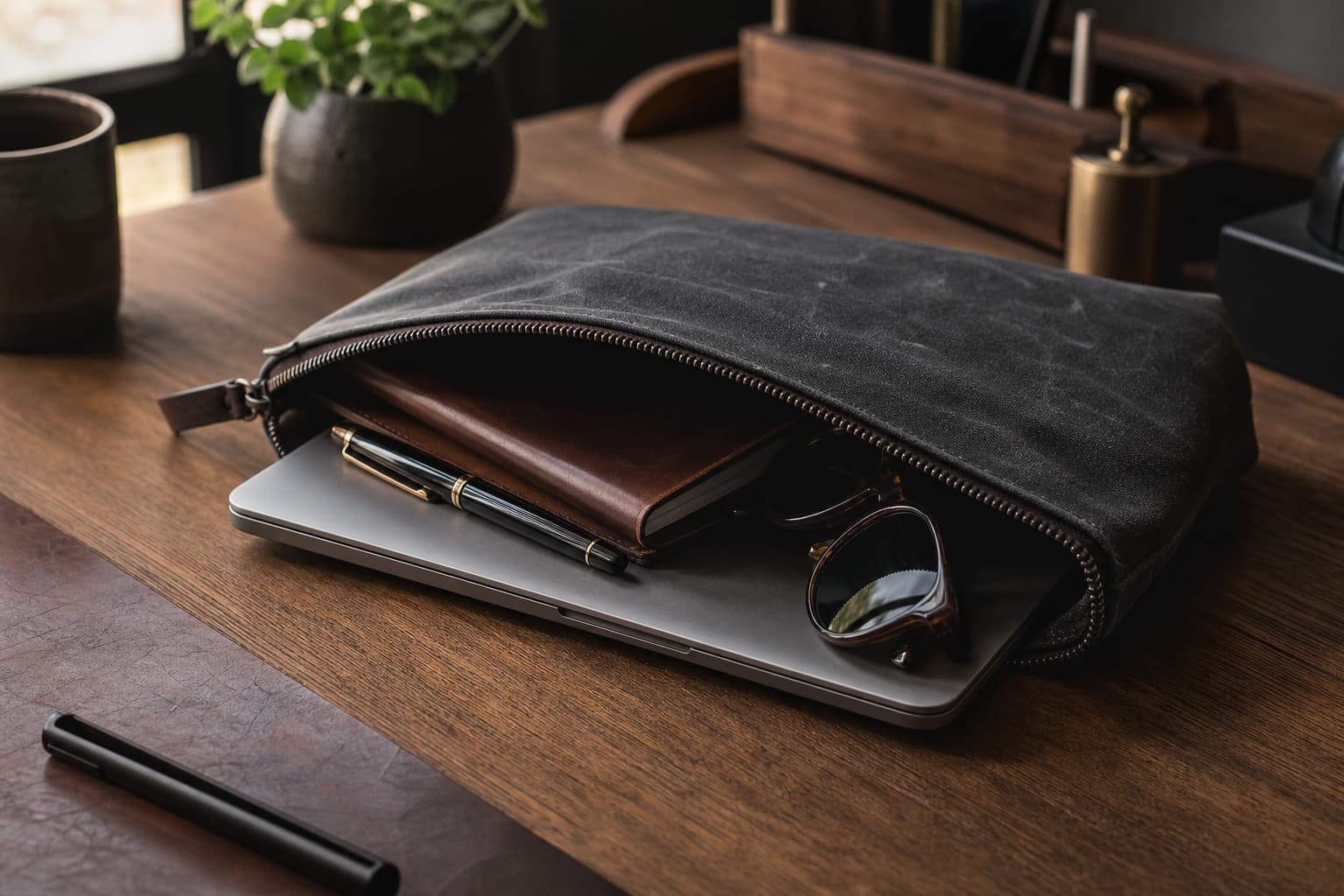
1. Define the use case before you ask for a price
The fastest way to get a bad quote is to ask for a nylon zipper document bag without explaining the job it must do. A bag for loose A4 paper, a legal file, a presentation kit, or a sales sample pack all need different capacity, structure, and zipper strength. Procurement teams should define the real contents first, then decide whether the bag is only for paper or also for pens, brochures, chargers, and small accessories. Once the use case is clear, the supplier can quote a proper shell fabric, zipper size, and reinforcement plan instead of guessing.
A good RFQ should state the document format, target thickness, expected daily use, and whether the bag is hand-carried, stored in cartons, or used as retail packaging. If the buyer only says document bag, every factory will interpret the request differently and the comparison becomes useless. Ask yourself whether the bag must protect contents from dust, light moisture, bending, or transit scuffing. Those choices determine whether you need a flat sleeve, a gusseted version, or a heavier-duty organizer style.
- Define contents by size and thickness, not by category name alone.
- State whether the bag is for office, retail, distributor, or field use.
- Note if the bag must stand up, fold flat, or fit into a master carton efficiently.
- Include any accessory pockets, inserts, or ID windows up front.
2. Pick the nylon construction that matches the load
Nylon is not a single spec. For zipper document bags, suppliers may offer 210D, 300D, 420D, or 600D nylon oxford, sometimes with PU or PVC backing. As a practical rule, 210D or 300D works for lighter paper carry and lower-cost programs, while 420D or 600D gives a firmer body and better abrasion resistance for repeated use. If the supplier only writes nylon without denier, coating, or fabric weight, you do not have enough information to compare quotes. Ask them to tell you whether they are quoting fabric gsm, denier, or a finished bag weight equivalent, because those numbers are often mixed up in trade communication.
The coating matters as much as the fabric face. Light PU backing can improve body and water resistance, but heavier coatings change hand feel, sewing behavior, and print appearance. A coated surface may also affect how a logo sits on the panel, especially if you are using silkscreen or heat transfer. For buyers, the real question is not whether nylon sounds stronger than polyester; it is whether the chosen construction survives your usage pattern, keeps the bag neat in packing, and stays within target cost. The cheapest fabric can become expensive if it wrinkles badly, scuffs fast, or needs extra lining to hide through-show.
- 210D to 300D is usually enough for light document carry and lower cost targets.
- 420D to 600D is safer for repeated use, heavier folders, or field kits.
- Confirm coating type because it affects feel, print, and water resistance.
- Ask for fabric swatches before approving a large production run.
3. Set the zipper and seam spec first, not last
On a zipper document bag, the zipper is not a minor accessory. It is the part buyers notice first when the bag opens and closes poorly, and it is often the first failure point in claims. For most business use, a #5 nylon coil zipper is a safer base than a very light zipper because it handles daily cycles better and gives the bag a more stable opening line. If the bag is small and low-load, a #3 zipper may be acceptable, but only if the contents are light and the usage is occasional. The slider should be auto-lock or a stable equivalent so the bag does not creep open in transit.
Seams matter just as much. Document bags often fail at the zipper ends, corner transitions, or top seam where stress concentrates. Ask the factory how they reinforce those points: bartacks, extra seam allowance, edge binding, or hidden tape reinforcement. If the bag has a gusset, the gusset corners need special attention because that is where the bag becomes wide and load-bearing. A quote that ignores zipper type, slider style, and reinforcement method is not a full quote; it is only a starting number.
- Prefer #5 nylon coil for most daily-use document bags.
- Ask for auto-lock sliders if the bag will be carried or shipped often.
- Require bartacks or reinforcement at zipper ends and stress corners.
- Check that zipper color either matches or is intentionally contrasted.
4. Choose branding that survives handling and transit
Branding on nylon document bags should be chosen for durability, not just appearance. Silkscreen is usually the most efficient for flat logos with one or two colors, especially on a smooth nylon face. Woven labels are a strong option when the buyer wants a clean, permanent brand mark without risking print cracking. Heat transfer can work when the artwork has more detail, but it needs proper testing on the actual fabric and coating. Embroidery can look premium on thicker panels, but on lightweight nylon it can distort the panel or create an uneven back side. A good supplier should tell you which method suits the fabric, not just accept whatever art file is sent.
Logo placement also affects quote comparison. A small front-panel print is not the same as a larger print area, a woven side label, or a zipper puller mark. Buyers should define one primary logo location and a backup placement in case the first option conflicts with seams, zipper tape, or pocket lines. If you are buying for retail, make sure the logo survives shelf handling and carton abrasion. If you are buying for internal corporate use, make sure the mark remains readable after repeated folding, stacking, and document insertion.
- Use silkscreen for simple, flat graphics and efficient repeat orders.
- Use woven labels when you want durability and a clean brand finish.
- Use heat transfer only after testing on the real nylon surface.
- Keep logo size and placement fixed before asking for a final quote.
5. Lock the size, gusset, and internal capacity
The biggest size mistake in document bag sourcing is assuming the finished dimension equals the usable space. Seams, zipper tape, folding allowance, and gusset construction all reduce the internal capacity. For A4 files, the bag may need a little extra width and height beyond the paper size so documents slide in without bending corners. For legal or US letter formats, the buyer should specify whether the fit must be snug or generous, and whether the bag should also take a thin folder or notepad. If the bag will hold a tablet or accessory pouch, the spec must say so clearly because the dimensions and panel strength change.
Gusset depth is the decision that changes function and cost the most. A flat sleeve is cheaper and easier to pack, but a 2 to 5 cm gusset creates real working volume for mixed contents. The more structured the bag, the more the factory needs to manage seam alignment and shape control. Buyers should ask for a sample made to the exact packed contents rather than approving a generic sample that only looks close. The best document bag spec is the one that fits the real item with a little tolerance, not the one that looks good on a drawing.
- Give both outer size and the minimum internal usable size.
- State whether the bag must fit A4, letter, or legal documents.
- Specify gusset depth if the bag carries more than loose paper.
- Check that seams do not steal too much room near the opening.
6. Read supplier quotes as a cost stack, not one number
A useful quote for a nylon zipper document bag should break out the cost drivers instead of hiding everything in one unit price. At minimum, you want the fabric spec, zipper spec, print method, packing format, and MOQ assumption shown clearly. If the supplier gives one price and says it can change later, the quote is not yet comparable. Ask for tiered pricing at realistic quantities such as 1,000, 3,000, and 5,000 pieces, because a real procurement decision depends on scale. The point is not to chase the lowest number; it is to see what the price includes and what it leaves out.
Watch for quote gaps that create surprise later. Sample fees, plate or screen setup, color matching work, custom zipper pulls, label sewing, carton marks, and individual polybagging can all shift the landed cost. MOQ logic matters too: some factories quote a low unit price but require a high MOQ because the logo setup or fabric dye run is expensive. That is fine if your volume supports it, but it is a problem if you only need a pilot order. The best RFQ asks the factory to separate material, labor, printing, packing, and any one-time charges so buyers can compare suppliers on the same basis.
- Ask for pricing at multiple quantities, not only one MOQ point.
- Separate one-time setup fees from recurring piece price.
- Make packaging and cartonization part of the quote.
- Confirm whether the quote covers color matching and sample approval.
7. Approve the sample with checks that catch claims later
Sample approval should not be a quick visual sign-off. For a nylon zipper document bag, the sample must prove fit, opening feel, logo placement, and seam behavior under real handling. Start with a soft sample or prototype to check size and content fit, then move to a pre-production sample once the actual zipper, print method, and packing are locked. If the supplier makes changes after approval, the buyer should treat that as a new sample round. A photo or video is useful, but it should never replace a physical sample when zipper travel, body stiffness, and print feel matter.
The sample check should be practical. Put the intended papers or items inside, zip the bag fully, and see whether the contents catch the seam or distort the panel. Rub the logo with a dry cloth to see whether the print sheds or smears. Open and close the zipper several times in a row, because many zipper issues only appear after repeated use. If the bag is supposed to be retail-ready, confirm that the packaging looks clean and that the logo face is positioned correctly in the carton. Once a golden sample is sealed, keep one copy on the buyer side and one on the factory side.
- Use a soft sample first, then a pre-production sample for final approval.
- Test the bag with real contents, not empty on a table.
- Check zipper cycles, logo rub, seam corners, and panel shape.
- Seal a golden sample so later production can be judged against it.
8. Specify packing, cartonization, and lead time in writing
Packing can quietly change both unit cost and damage rate. For B2B bulk orders, a simple polybag with a clear size label may be enough, but retail or distributor supply may need insert cards, barcode stickers, and cleaner carton presentation. Buyers should tell the supplier whether the bag is shipped flat, folded, or stuffed with paper to hold shape. If the document bag has a logo on the front panel, ask whether the factory will protect the logo face during packing so cartons do not scuff the print. The carton count should also be matched to the product size, because overpacking can crush zipper ends and underpacking wastes freight space.
Lead time should be discussed as a sequence, not a promise. A realistic supplier quote separates sample time, material sourcing time, and mass production time after approval. If the fabric or zipper is standard stock, the schedule may be shorter; if the buyer requests custom dyeing, special pulls, or a new print layout, time extends quickly. Procurement teams should ask for the expected production window and the assumptions behind it, such as approved sample date, order quantity, and seasonality. That makes it easier to compare one factory that is honest about timing against another that just gives a short number with no context.
- Confirm whether the bag ships flat, folded, or with shape support.
- Define carton count, carton size, and gross weight before PO release.
- Ask how the logo face is protected in bulk packing.
- Separate sample lead time from production lead time in the schedule.
9. Avoid the mistakes that make document bags expensive
Most sourcing problems on nylon zipper document bags come from assumptions that never got written down. The first mistake is using a fabric name without a denier, coating, or weight reference. The second is approving a zipper by appearance instead of by cycle behavior and slider type. The third is letting the supplier choose a logo method after the artwork is already final, which often leads to print distortion or an extra setup charge. Another common mistake is quoting only the outer size and ignoring seam allowance, which causes complaints when A4 files fit only after force. These are not small details; they are the exact points that create return rates and rework.
The better sourcing workflow is simple. Define use case, lock construction, compare apples-to-apples quotes, approve samples, then finalize packing and carton rules. If the order is important, ask the supplier to confirm what changed between prototype and production sample. Even a small change in zipper grade or fabric coating can alter the bag feel. A buyer checklist is useful only if it is strict enough to stop vague answers. When the supplier can answer all the material, printing, packing, and lead-time questions clearly, you are much more likely to get a repeatable product and fewer surprises in later orders.
- Do not accept a fabric quote that lacks denier or weight detail.
- Do not approve zipper quality by photo alone.
- Do not let the supplier change print method after artwork approval.
- Do not compare quotes unless the packing and MOQ assumptions match.
Specification comparison for buyers
| Spec decision | Recommended option | When it fits | Buyer risk to check |
|---|---|---|---|
| Shell fabric | 210D or 300D nylon oxford with light PU backing | Low to mid-duty document carry, tender packs, office handouts | Confirm actual denier, coating, and whether the supplier is quoting fabric weight or finished bag weight |
| Heavier shell fabric | 420D or 600D nylon oxford | Daily field use, distributor kits, thicker files, samples, or tablet carry | Check if the thicker fabric changes hand feel, folding, print sharpness, or lead time |
| Zipper spec | #5 nylon coil zipper with auto-lock slider | Most business document bags that need smooth opening and better durability | Ask for zipper brand or equivalent, puller style, and color match against the shell |
| Branding method | Silkscreen for flat logos, woven label for durability, heat transfer for detail | Brand-driven orders, simple logos, or multi-color artwork | Make sure the logo survives rub testing and does not crack on coated nylon |
| Bag construction | Flat sleeve for paper-only use or 2-5 cm gusset for mixed contents | A4, legal, catalogs, sample packs, or small accessories | Internal size after seams is often smaller than the drawing size |
| Packing format | Bulk polybag plus export carton for B2B, retail insert if needed | Distributor orders, warehouse storage, or store-ready supply | Confirm carton count, master carton size, and moisture protection |
| Sample control | Pre-production sample plus sealed golden sample | Any order where repeatability matters | Do not approve only a photo sample or a single hand-made sample |
Buyer checklist before sampling
- State the exact document size, including whether the bag must fit A4, letter, legal, or a folder with tabs.
- Choose the shell fabric by denier and coating, not by the word nylon alone.
- Lock the zipper size, slider style, and puller shape before sampling.
- Send vector artwork and define one primary logo location, one backup location, and the allowed print method.
- Confirm whether the bag is flat, gusseted, or multi-pocket, and give internal usable dimensions, not just outer size.
- Ask for a quote split that shows unit price, sample fee, setup fee, and packing assumptions.
- Request sample approval at least twice: a soft sample for fit and a pre-production sample for final sign-off.
- Define carton counts, carton dimensions, and whether inner polybags or hangtags are required.
- Set a clear lead time assumption for sample production, mass production, and shipment booking.
- Write down your defect limits for stitching, print alignment, zipper travel, odor, and fabric shade.
Factory quote questions to send
- What exact nylon construction are you quoting, including denier, coating, and approximate fabric weight or gsm equivalent?
- Which zipper type, slider type, and puller style are included in the base price?
- What are the finished outer dimensions and the expected internal usable dimensions after seams and zipper tape?
- Which print method is included, how many colors are allowed, and what is the setup cost if artwork changes?
- What is the MOQ per color and per logo version, and does the MOQ change if we choose a different zipper or fabric weight?
- What samples do you provide, what is the sample fee, and how long does sample approval normally take?
- What is the mass production lead time after approval, and what material stock assumptions does it depend on?
- How are goods packed, what is the carton count, and what is the gross weight and carton size for shipping planning?
Quality-control points to confirm
- Measure outer and internal dimensions on a finished sample and check that the usable space matches the RFQ allowance.
- Test zipper travel repeatedly and confirm that the slider does not catch, split, or tilt after a full opening cycle.
- Inspect seam density, bartacks, and corner reinforcement at the highest stress points.
- Check print alignment, color consistency, and rub resistance on coated or smooth nylon surfaces.
- Confirm there are no broken threads, oil stains, needle marks, or fabric slubs on the visible panels.
- Smell-check the sample for strong chemical odor, especially if the bag will be used for retail or office distribution.
- Verify packing count, carton labels, barcode position, and any inner polybag or insert requirements.
- Run a practical load check with the intended contents to see whether the zipper, gusset, and handles hold shape.