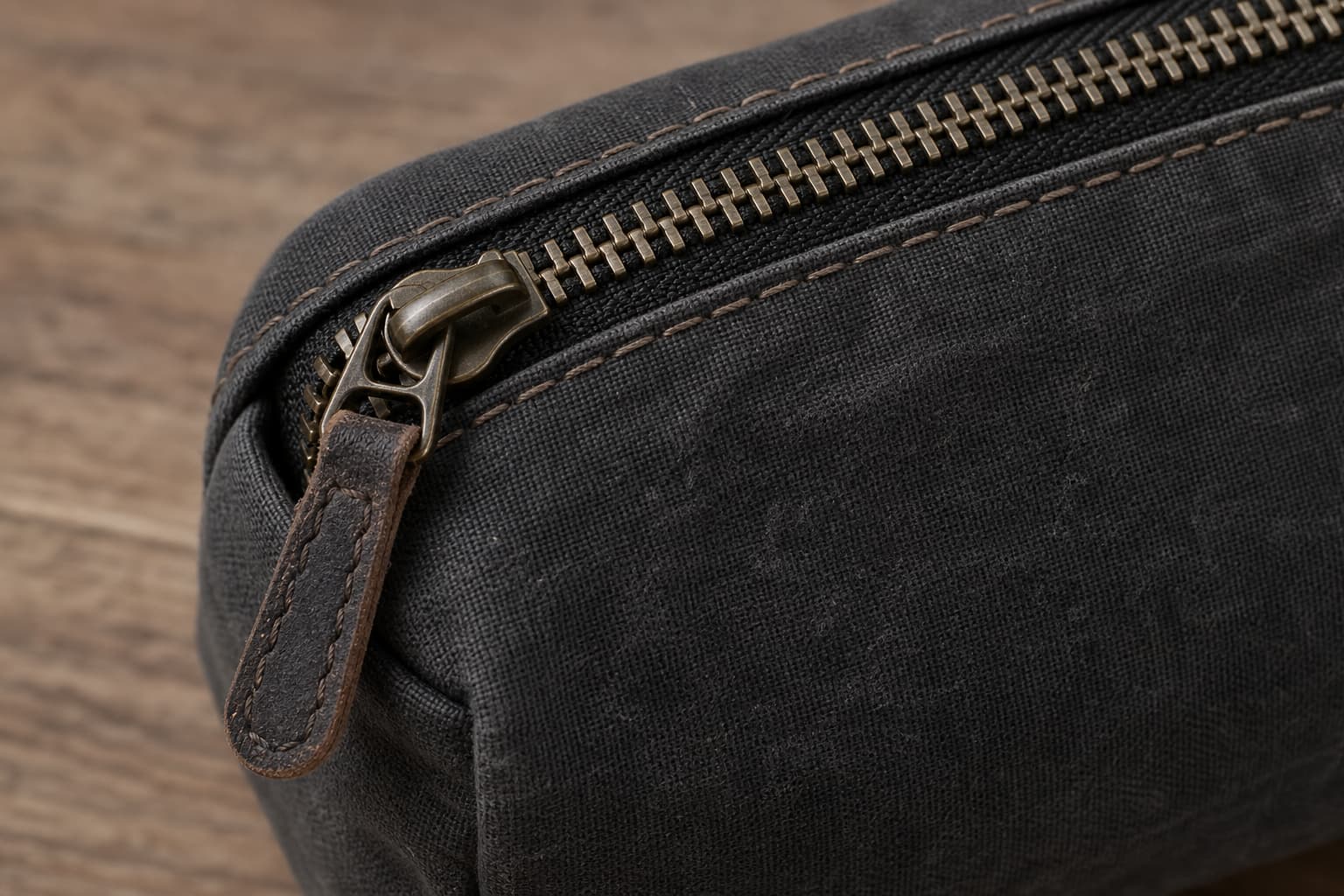
The Buying Problem: Logo Printing on Nylon Is Not Only Artwork
For nylon zipper business bags, logo printing problems usually come from incomplete RFQ data, not from the logo file itself. Buyers often send a bag size, a logo, and a target quantity, then receive quotes that are difficult to compare because each factory assumes a different fabric, zipper, coating, and print process.
The key buying problem is simple: nylon fabric can be smooth, coated, slippery, textured, thin, or heavy, and each surface reacts differently to ink, heat, and pressure. A logo that looks sharp on a cotton tote can peel, crack, bleed, or shift on a coated nylon business bag if the material and print method are not matched correctly.
A strong RFQ should make the factory quote the same bag construction, same logo method, same packing, and same inspection standard. That is the only way procurement teams can compare unit prices without accepting hidden quality risks.
- Define the bag use: document holder, conference kit, laptop accessory pouch, or office giveaway.
- State the expected loading weight, such as brochures, catalogs, samples, or training materials.
- Confirm whether the logo must look premium at close range or only needs event-level visibility.
- Ask the supplier to explain the print risk on the exact fabric, not on nylon in general.
Fabric Weight and Construction Specs to Put in the RFQ
For zipper business bags, common lightweight options include 210D nylon or polyester, while 300D and 420D provide a firmer hand feel and better shape retention. Some buyers ask for GSM, but many synthetic bag fabrics are traded by denier. A practical RFQ can include both the denier target and a request for the factory to confirm actual fabric weight.
A thin 210D fabric may be suitable for low-cost document bags and event handouts. For distributors or retail buyers who need a more durable office bag, 300D or 420D with PU backing is usually easier to control in sewing and packing. Heavier fabric can increase the unit cost and carton weight, but it may reduce wrinkles around the logo panel.
The coating matters. PU backing can improve body and light water resistance, but it can also affect heat transfer temperature and ink adhesion. If the buyer does not specify coating, one supplier may quote uncoated fabric and another may quote coated fabric, making the price comparison unreliable.
- Quote base option: 210D nylon or polyester with PU backing for lightweight document bags.
- Upgrade option: 300D or 420D fabric for better structure and a more professional hand feel.
- Confirm color fastness for dark colors, especially black, navy, and red.
- Ask for fabric swatches from the actual production lot when color matching is important.
Choosing the Right Logo Printing Method
Screen printing is often the most practical method for nylon zipper business bag logo printing when the logo uses one to three solid colors. It gives a clean result, controlled cost, and stable repeatability if the ink is suitable for coated fabric. For a large front-panel logo, screen printing is usually easier to approve than embroidery because it keeps the bag flat.
Heat transfer can handle gradients and small details, but buyers should be careful with coated nylon and high-temperature application. Too much heat can mark the fabric, create shine, or weaken the coating. It can be useful for multi-color brand artwork, but the sample must be checked for edge lifting and cracking after folding.
Woven labels, rubber patches, and sewn labels are good alternatives when the buyer wants a more retail-style branding result. These methods add setup steps and may increase MOQ, but they avoid some of the adhesion risks of direct printing.
- Use screen printing for simple corporate logos and cost-controlled bulk orders.
- Use heat transfer for detailed multi-color artwork, but test folding and rubbing first.
- Use woven labels when color consistency and durability matter more than a large logo area.
- Use rubber patches for a premium look, but confirm sewing position and patch thickness.
MOQ Logic: Why Quantity Changes the Best Specification
MOQ is not only a factory policy. It is linked to fabric availability, dye lot, zipper color, print setup, label production, and cutting efficiency. If the buyer requests a special nylon color, custom zipper puller, rubber patch, and retail packing, the MOQ will usually be higher than for a black bag with standard zipper and one-color screen print.
For smaller orders, buyers should reduce customization points. A standard fabric color, standard zipper, and screen printed logo can keep the order easier to produce. For larger annual programs, it may be worth locking a custom color, custom label, or reinforced construction because the setup cost can be spread across more pieces.
Procurement teams should ask suppliers to separate MOQ by component. This shows whether the limiting factor is fabric, zipper, label, print setup, or packing. Without this detail, buyers may overpay for features they do not need.
- Standard fabric color usually gives the lowest MOQ and fastest quotation.
- Custom dyed fabric may require a higher MOQ and longer lead time.
- Custom zipper pullers or rubber patches can create separate mold or setup charges.
- Retail packing and barcode labeling may add labor time even when the bag MOQ is met.
Sample Approval Checks Before Bulk Production
A digital artwork proof is useful, but it is not enough for nylon bags. The buyer should approve a physical sample using the final fabric, final logo method, final zipper, and final bag size. If the supplier sends a logo sample on a loose fabric panel, it can help check print color and adhesion, but it does not confirm placement on the assembled bag.
For business bags, the most common sample mistakes are wrong logo scale, logo placed too close to the zipper seam, fabric wrinkles around the print area, weak zipper pullers, and corner puckering. These are easier to fix before bulk cutting than after the goods are packed.
A good sample approval should include photos, measurements, and written tolerances. Procurement teams should not rely only on comments such as approved except minor changes. Every change should be listed clearly before the factory starts production.
- Measure finished bag size, zipper opening length, and logo position from fixed edges.
- Check whether the printed logo cracks when the bag is folded lightly.
- Rub the logo with a dry white cloth and a damp cloth to check transfer.
- Load the sample with expected contents and test zipper movement.
- Photograph the approved sample and keep it as the inspection reference.
Packing Specs That Prevent Creases and Warehouse Claims
Nylon zipper business bags are often packed flat, but flat packing can still create claims if the logo panel is folded or compressed. For printed nylon, the front panel should not be sharply folded across the logo area. If the bag has a large print, the packing method should be tested during sample approval.
The RFQ should define whether each bag is packed in an individual polybag, whether a warning mark is required, and how many pieces go into each export carton. Buyers who ship to retail or regional warehouses should also specify carton labels, SKU stickers, barcodes, and any inner carton requirements.
Carton weight is often overlooked. A carton that is too heavy may save a little freight handling cost but create warehouse damage or crushed bags. Buyers should ask for carton dimensions and gross weight in the quotation, not after production.
- Use one piece per polybag when the printed face must stay clean for retail or corporate distribution.
- Avoid tight bundling if the logo ink is thick or the fabric coating is sensitive.
- Request carton dimensions and gross weight before confirming the purchase order.
- Confirm carton marks, SKU labels, and barcode placement before packing starts.
Lead Time Planning for Printed Nylon Business Bags
Lead time depends on how many items must be approved before production. A standard black nylon bag with one-color screen printing can move faster than a custom color bag with patch branding and retail labels. Buyers should separate sample lead time from bulk production lead time, because delayed artwork approval often compresses production time and increases risk.
For planning purposes, the factory should explain the sequence: artwork checking, material sourcing, sample making, buyer approval, fabric cutting, printing, sewing, trimming, inspection, and packing. This gives procurement teams a realistic schedule and helps them see which approval is on the critical path.
If the order is for an event or product launch, buyers should ask the factory to identify the latest safe approval date. This is more useful than asking for the fastest possible delivery, because rushed approval increases the chance of logo or packing mistakes.
- Approve artwork before requesting a final sample timeline.
- Do not release bulk production until print color and logo placement are confirmed.
- Ask whether fabric and zipper are in stock or need production booking.
- Include final inspection and carton labeling time in the schedule.
Quote Data Needed to Compare Suppliers Fairly
A useful quotation should show more than a unit price. For nylon zipper business bags, the buyer needs to know what fabric, zipper, logo method, packing, sample charge, and setup charge are included. Otherwise, the lowest quote may be based on thinner fabric, cheaper zipper, lighter coating, or a different print process.
Procurement teams should request quotes in a structured format. Ask each factory to quote the same base specification and, if needed, one upgrade option. This makes negotiation more practical because the buyer can see which cost difference is caused by material, construction, branding, or packing.
The quote should also include carton data. Freight and warehouse costs can change when a bag is packed individually, when the fabric is heavier, or when the carton quantity is reduced to prevent creasing. These details affect landed cost even when the FOB unit price looks attractive.
- Ask for fabric denier, coating, and confirmed color in the quote.
- List logo method, logo size, number of colors, and setup charge separately.
- Request sample cost, sample lead time, bulk lead time, and production capacity.
- Include packing method, pieces per carton, carton size, gross weight, and carton marks.
- Ask for validity period of the quote because fabric and freight-related costs can change.
Specification comparison for buyers
| Spec decision | Recommended option | When it fits | Buyer risk to check |
|---|---|---|---|
| Main fabric | 210D to 420D nylon or polyester with PU backing | Document bags, conference kits, office gifts, and lightweight laptop accessory packs | Confirm actual fabric weight and coating; thin fabric can wrinkle around the printed logo |
| Logo method | Screen printing for 1-3 solid colors | Most corporate logos, distributor giveaways, and repeat B2B orders | Check ink adhesion on coated nylon and request a rub test before bulk approval |
| Premium branding | Woven label or rubber patch sewn on front panel | Higher-value retail or membership programs where the logo must survive heavy use | Confirm stitch position, label edge finish, and whether the patch changes packing thickness |
| Zipper style | Nylon coil zipper with metal or molded puller | Flat business bags that need smooth opening and lower defect risk | Ask for zipper sample and pull test; weak sliders create more claims than fabric issues |
| Bag structure | Single compartment with reinforced seams and optional inner divider | Document storage, training materials, brochures, catalogs, and onboarding packs | Avoid overspecifying pockets if the target unit cost is tight or MOQ is small |
| Packing | 1 pc per polybag, 50-100 pcs per export carton depending on size | Clean distribution to branch offices, events, or retail channels | Confirm carton weight, carton dimensions, and whether bags crease under compression |
Buyer checklist before sampling
- State the finished bag size in width x height x gusset, not only document size such as A4 or letter.
- Specify nylon denier or fabric GSM, coating type, color, and whether the fabric must be water-resistant.
- Provide vector logo artwork with Pantone references and confirm the number of print colors.
- Confirm whether the logo is printed on fabric before sewing or after the bag is assembled.
- Request a pre-production sample using final fabric, final zipper, final logo size, and final packing method.
- Define acceptable logo position tolerance, for example plus or minus 3 mm from the approved sample.
- Ask for carton packing details including pieces per carton, gross weight, and whether cartons use inner liners.
- Include intended use, target loading weight, sales channel, and any retail labeling or barcode requirements.
Factory quote questions to send
- Which nylon or polyester fabric options can you quote for this bag, and what are the actual weight, denier, and coating for each option?
- For our logo, do you recommend screen printing, heat transfer, woven label, rubber patch, or embroidery, and why?
- What is your MOQ for this bag size and logo method, and does the MOQ change by fabric color or zipper color?
- Can the logo be printed before sewing to keep the surface flat, or must it be printed after assembly?
- What sample types do you provide before bulk production: artwork proof, material swatch, printed panel, or full pre-production sample?
- What lead time should we plan for sample approval, material booking, bulk production, packing, and final inspection?
- What quote data will you provide: unit price, sample charge, mold or screen charge, carton size, carton weight, HS code, and packing method?
- What quality checks do you run for print adhesion, zipper strength, seam strength, color matching, and final packing?
Quality-control points to confirm
- Check fabric weight and coating against the approved swatch, because coated nylon can look similar but perform differently in printing and water resistance.
- Run a dry and wet rub test on the printed logo, especially for white or metallic ink on dark nylon.
- Measure logo size and placement on at least several pieces from different cartons, not only the top sample.
- Open and close the zipper repeatedly to check slider smoothness, teeth alignment, and puller strength.
- Inspect seam allowance, skipped stitches, loose thread, and corner reinforcement around the zipper ends.
- Check whether bags are packed flat without sharp folds across the printed logo.
- Confirm carton labels, barcode labels, polybag warnings, and retail stickers match the purchase order.
- Review final carton weight to avoid cartons that are too heavy for warehouse handling or parcel distribution.